Alice’s Ice Rescue
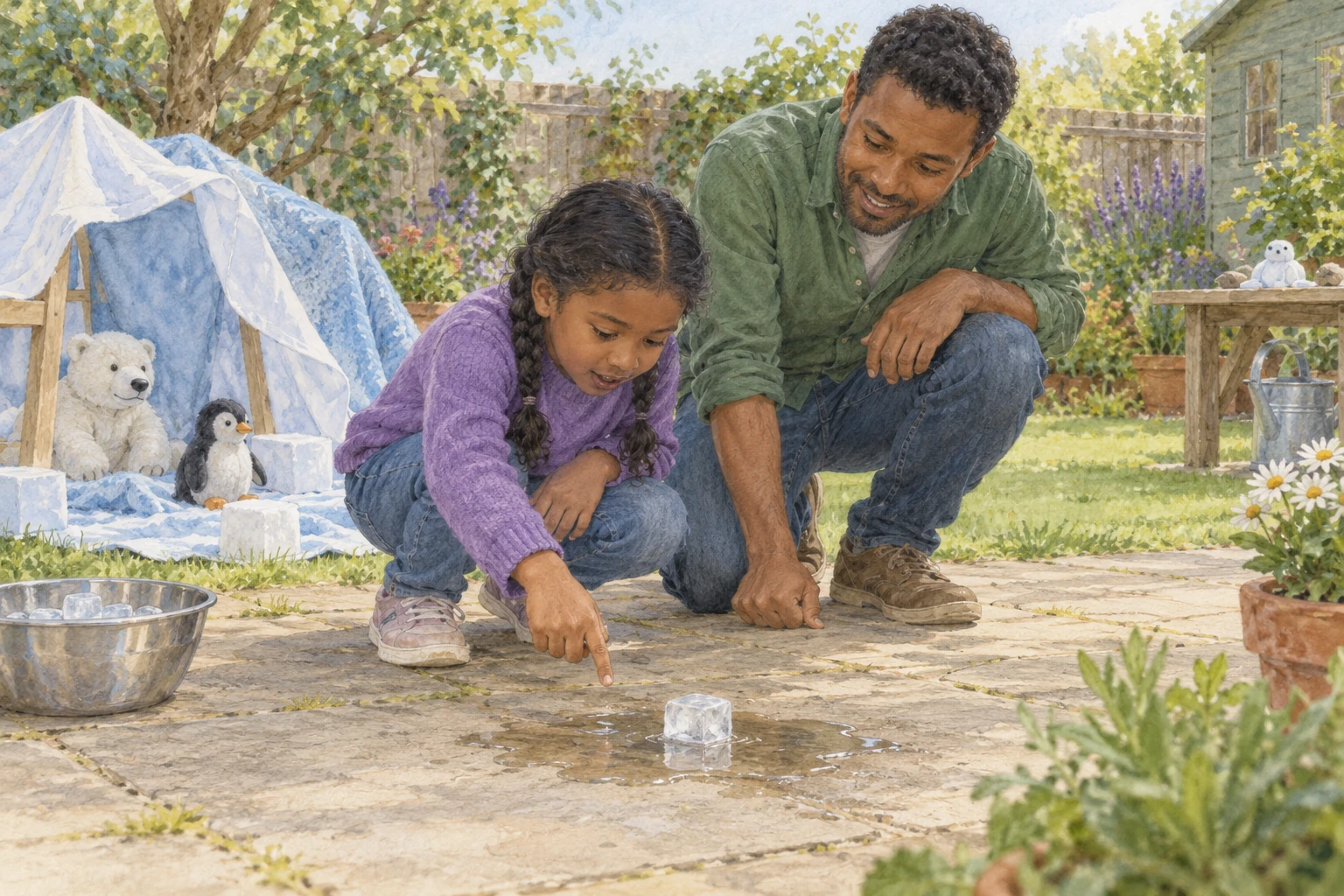
Shared Reading Books · Science · Year 2Alice builds a pretend polar island on a tray in the garden. Soon a shiny puddle spreads beneath her ice. The little toy seal has lost its island. “How can I slow the melting?” she asks Dad. They decide to compare two containers.
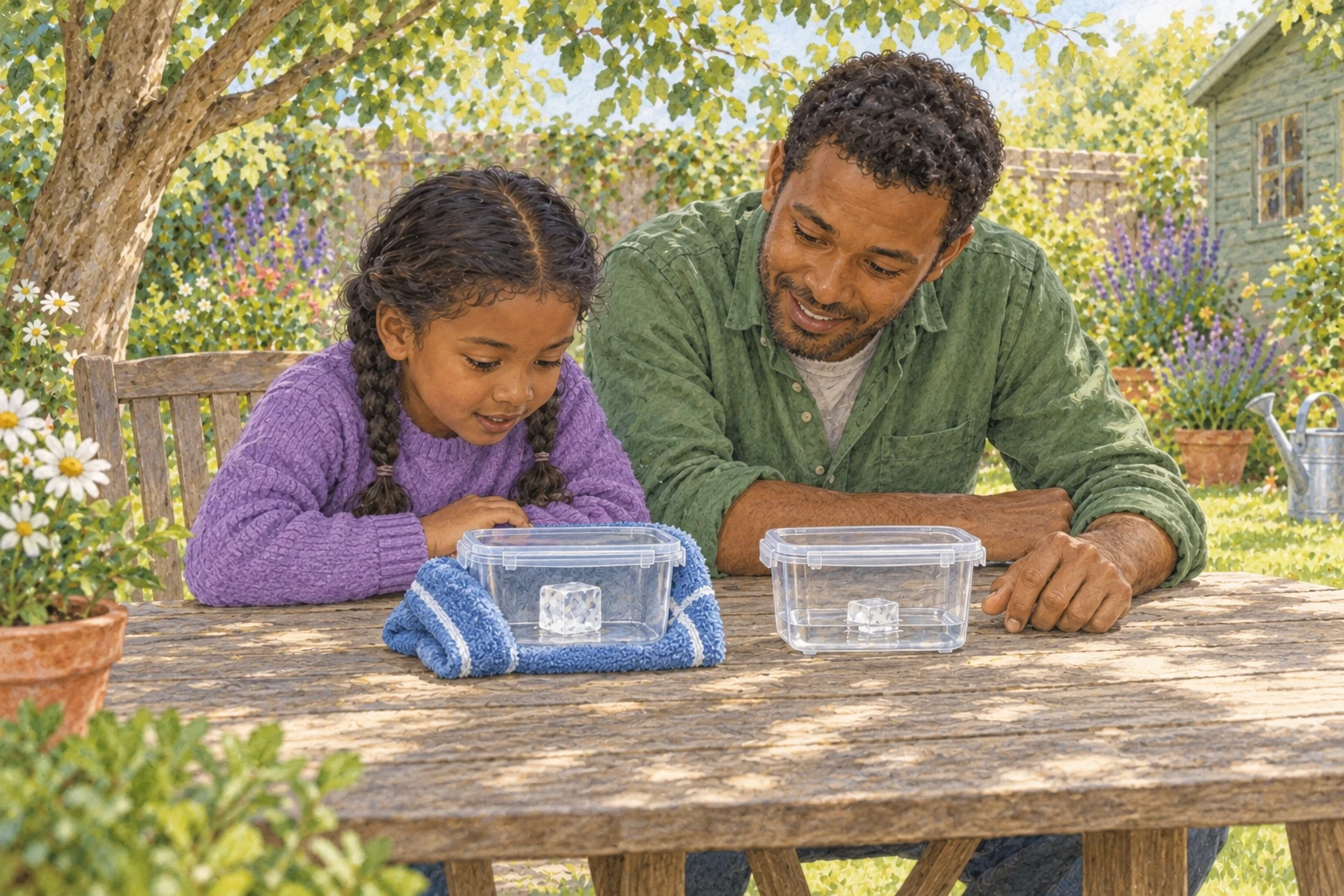
Dad puts matching ice cubes into two identical lidded containers. They stand together in the shade. Alice checks that neither gets extra sunshine. They will wait for the same amount of time before looking inside. One different condition should be enough to investigate.
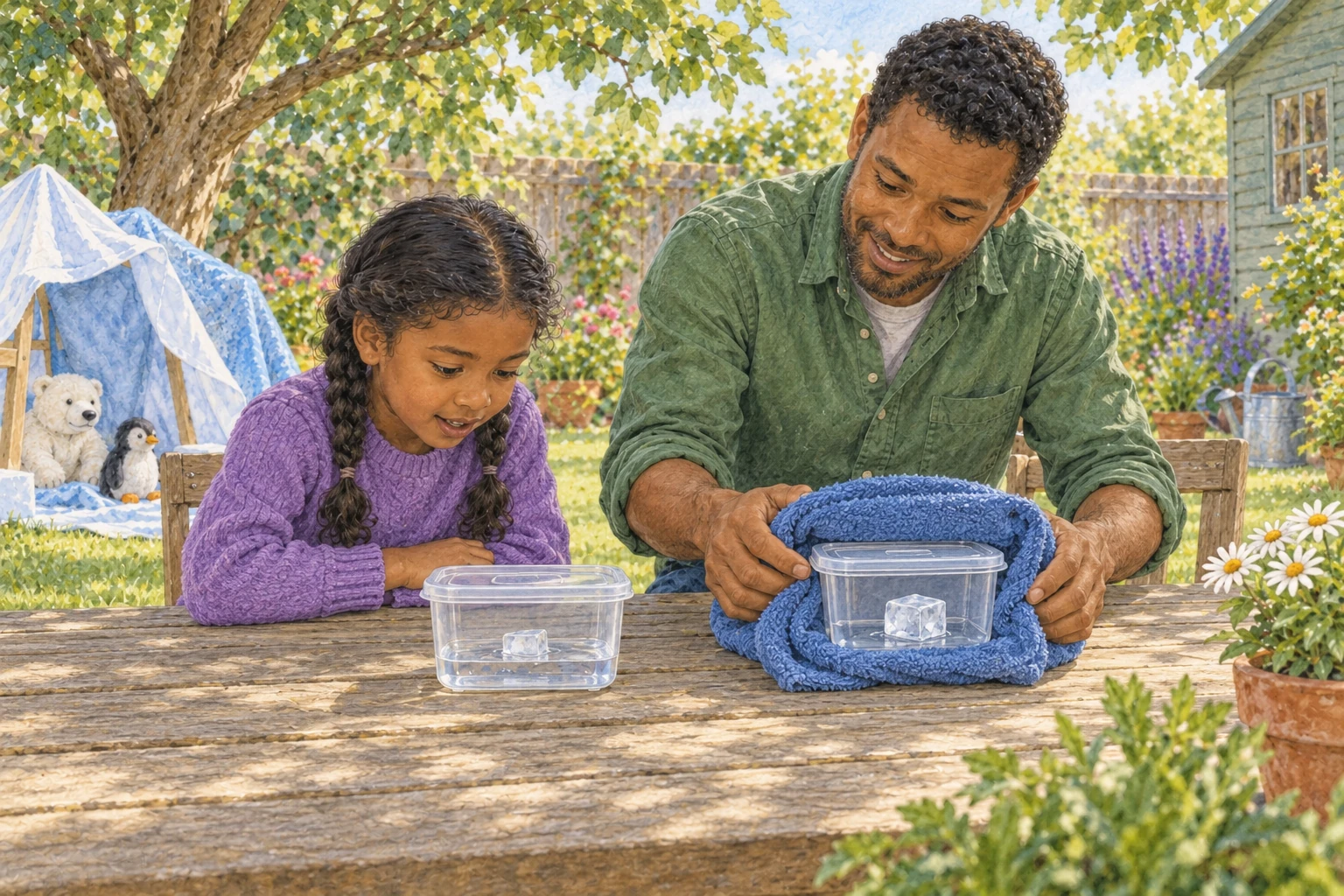
They wrap one container in a thick towel. The other stays unwrapped. “Will the towel make the ice warm?” asks Alice. Dad explains that insulation can slow energy moving from warmer surroundings towards the ice. The towel does not make new coldness.
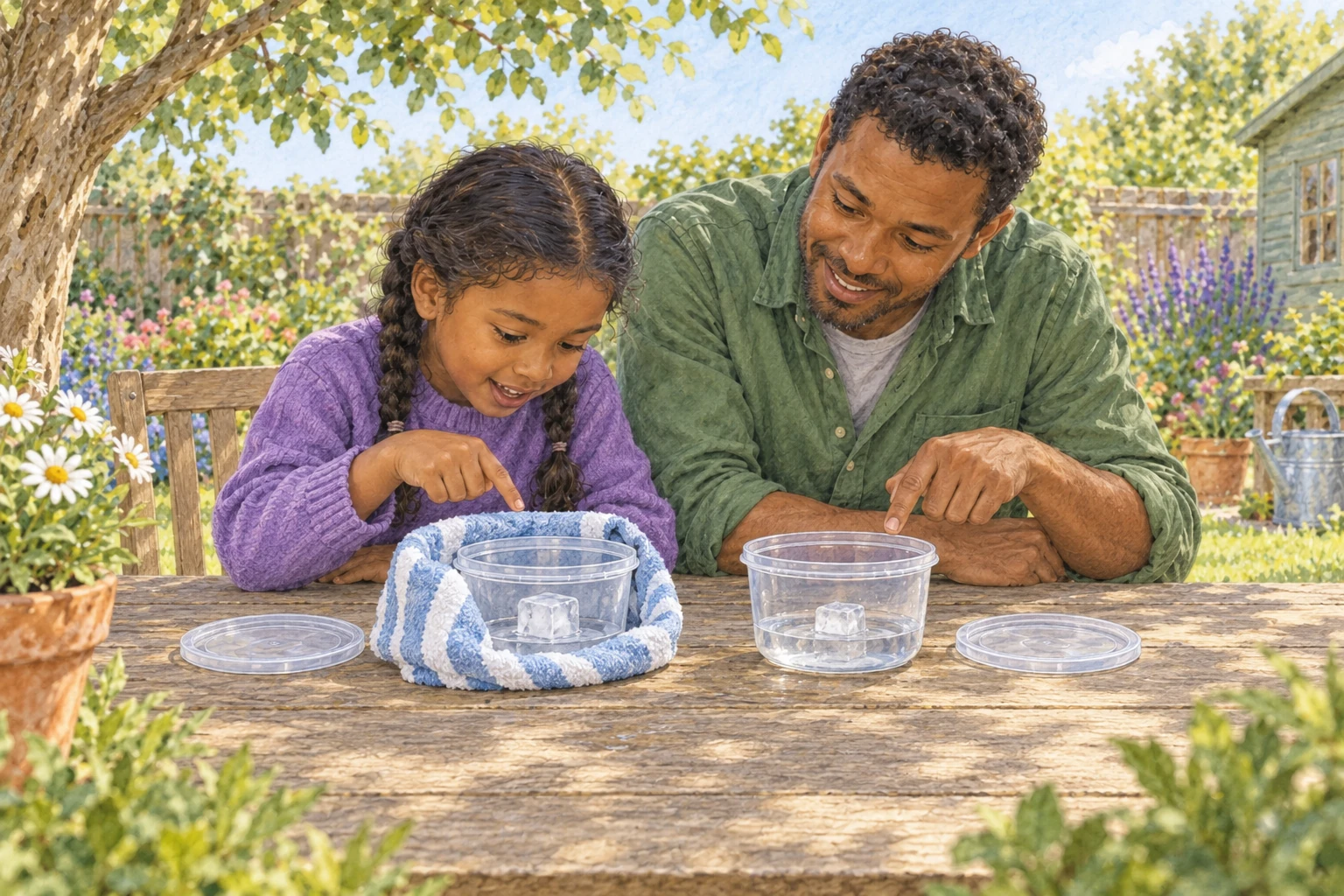
After their waiting time, they open both containers. There is more ice left in the wrapped one. The unwrapped one contains more meltwater. Both cubes have begun to melt. The towel slowed the change in their test; it did not stop time.
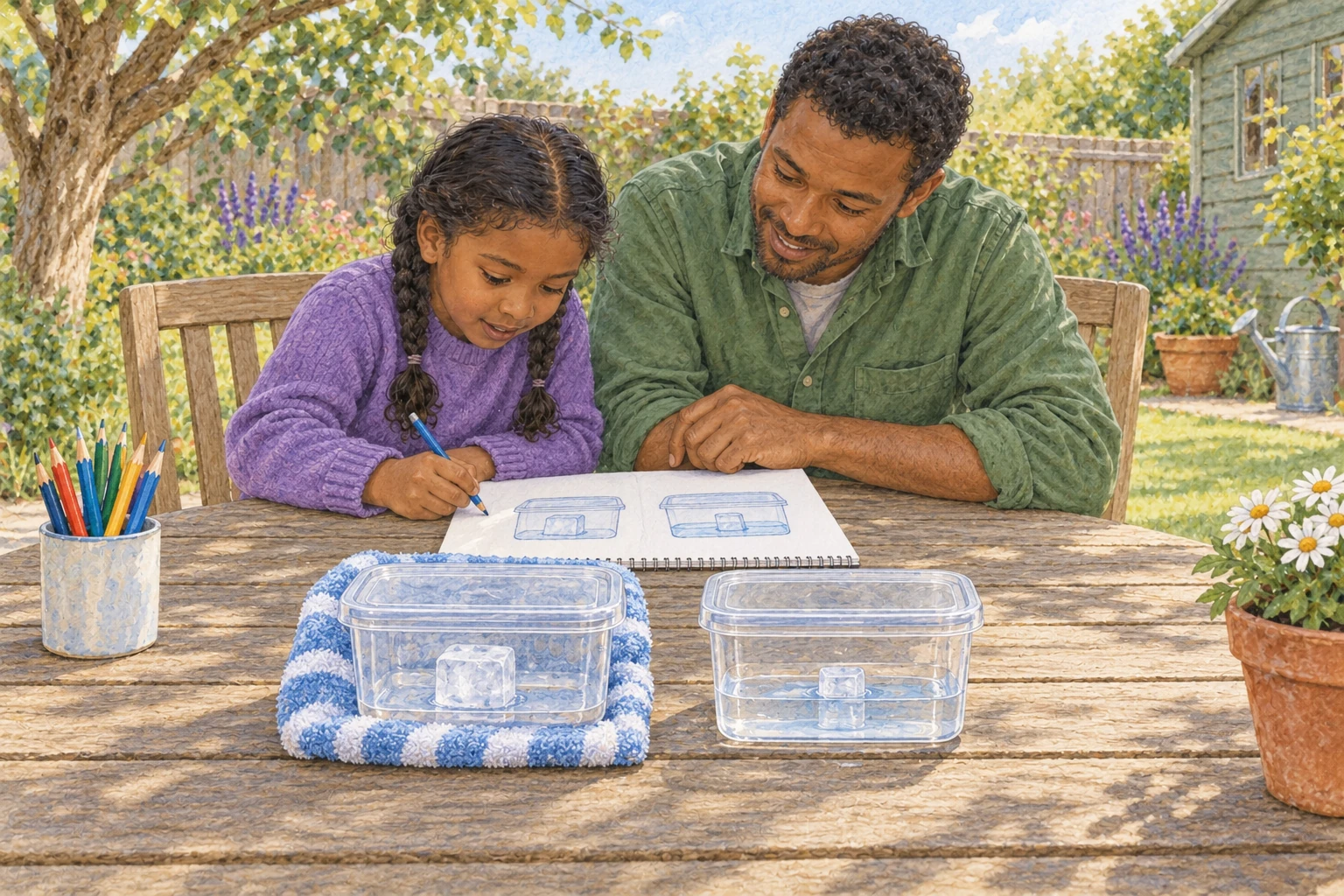
Alice draws the results before the remaining ice changes again. She includes the towel, the containers and the time they waited. “One quick look is useful,” says Dad. “Trying the comparison again would help us check that our result was not just chance.”
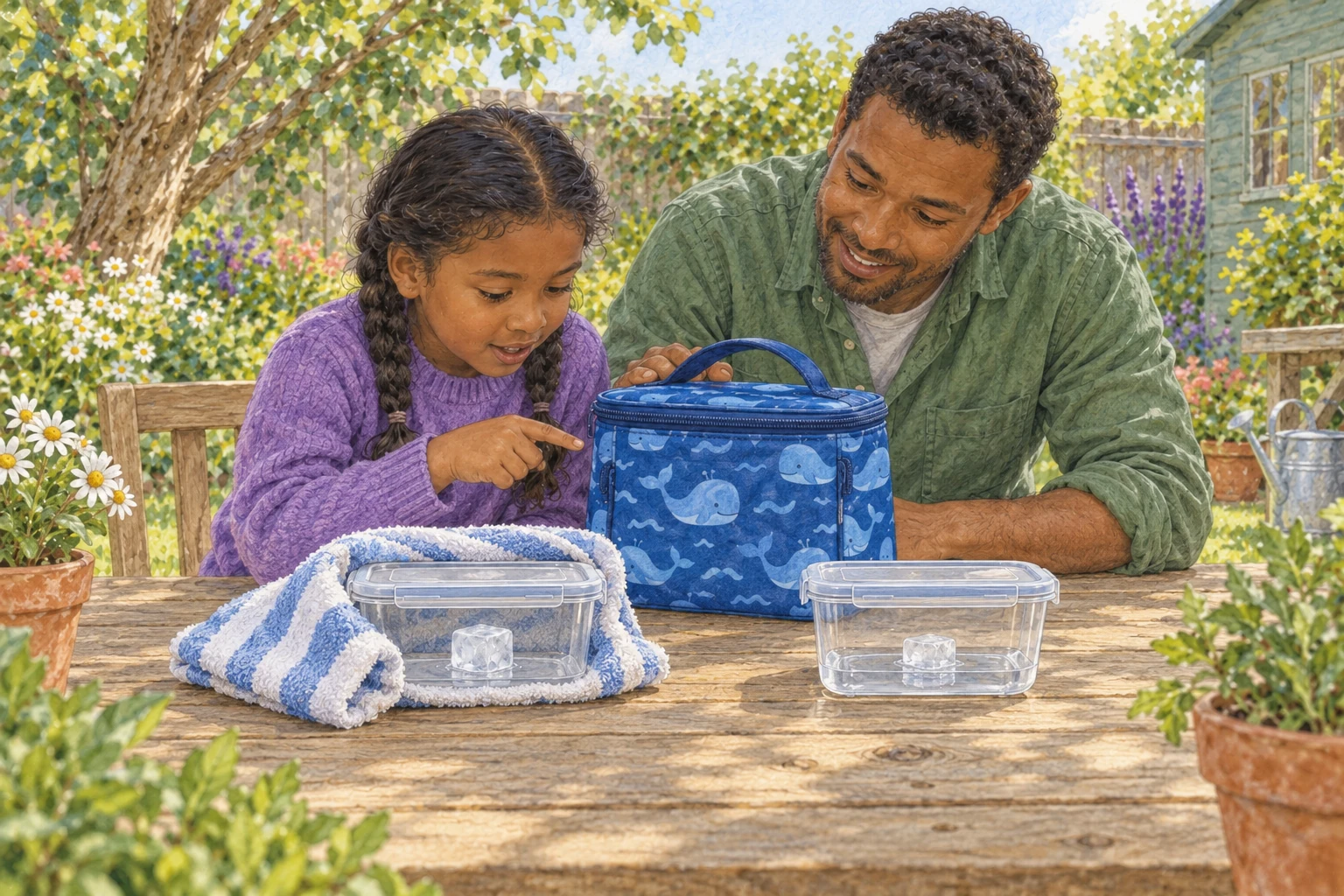
They examine an insulated lunch bag. Its layers help slow warming too. It works best with food already cold and suitable cold packs. Alice realises that a bag cannot keep everything cold forever, especially when it is opened again and again.
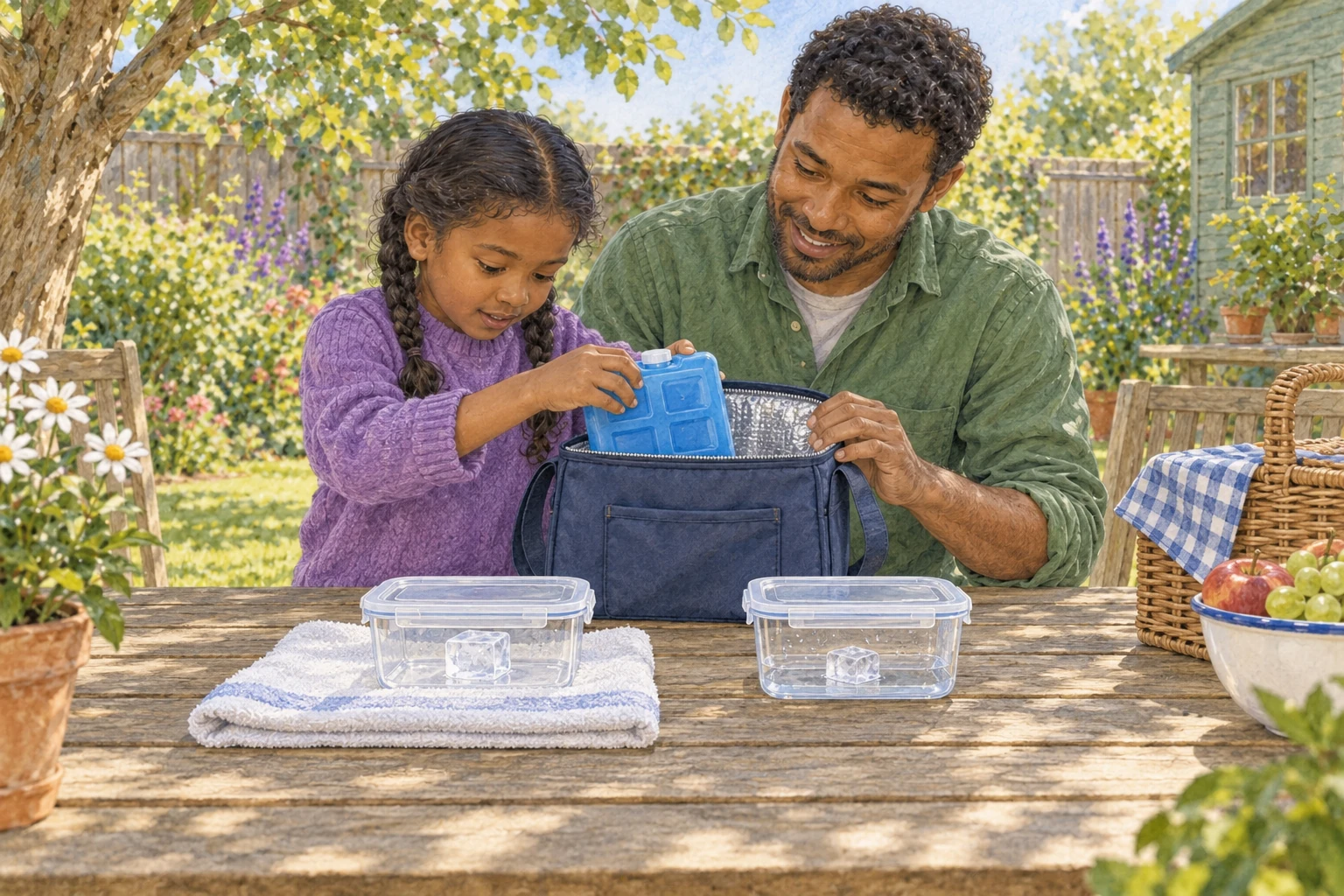
For their picnic, Dad packs a sealed cold pack beside the food and closes the bag. Alice puts her toy seal safely in a pocket. Their test has helped them choose how to pack the picnic. Dad checks that the food will stay safely cold for the trip.

Later, both ice cubes have become water. Alice wipes the tray and tidies the towel. “We rescued some ice for longer,” she says. “We did not stop it melting.” A careful result can be interesting even when it is smaller than a wish.