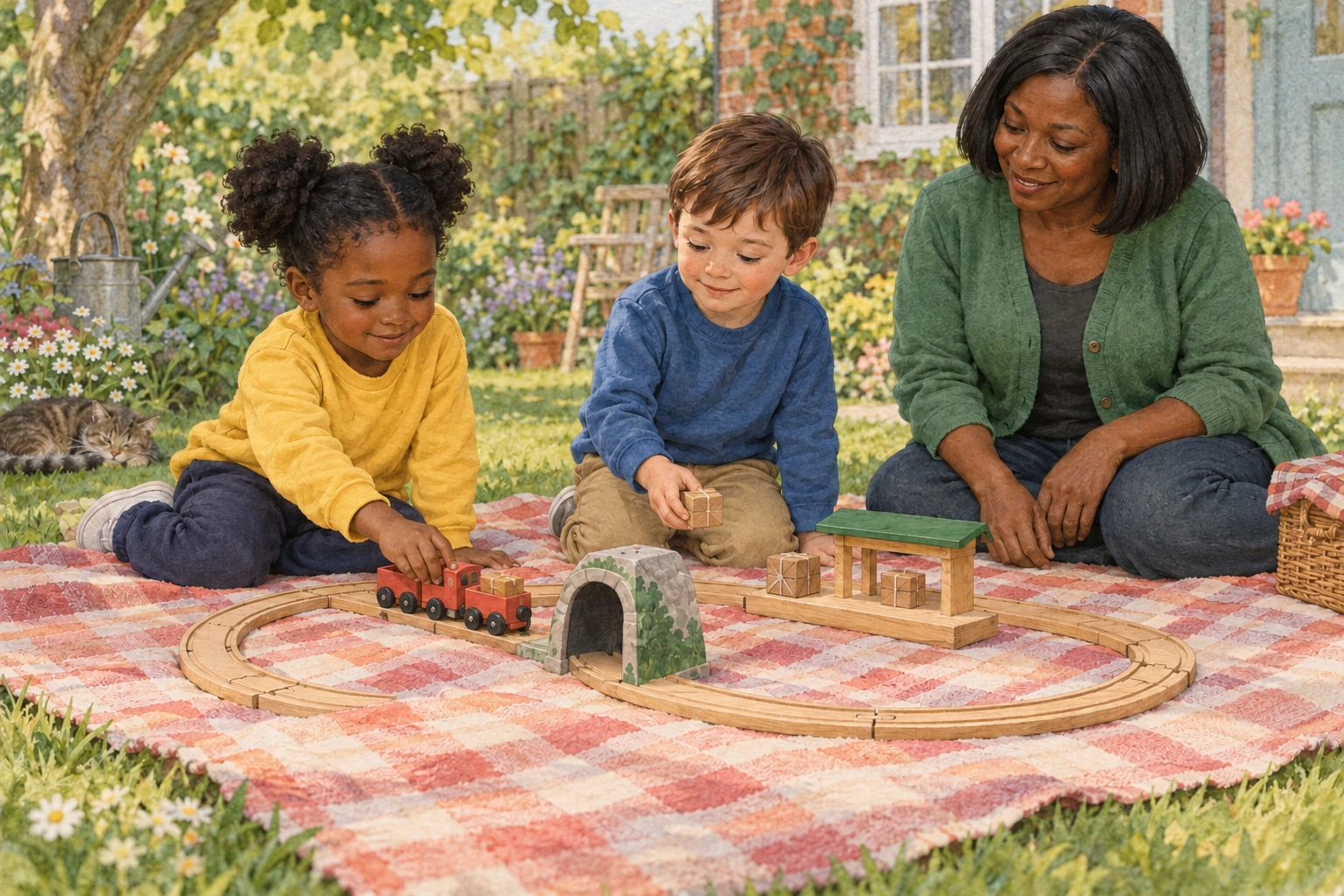
Annabel’s Train Signal
School Readers · Level 17Annabel and Kit build a wooden railway on a blanket in Aunt Rose’s garden. Their red train carries pretend parcels around a loop and through a narrow tunnel. They decide that one person will drive while the other collects parcels beside the station.
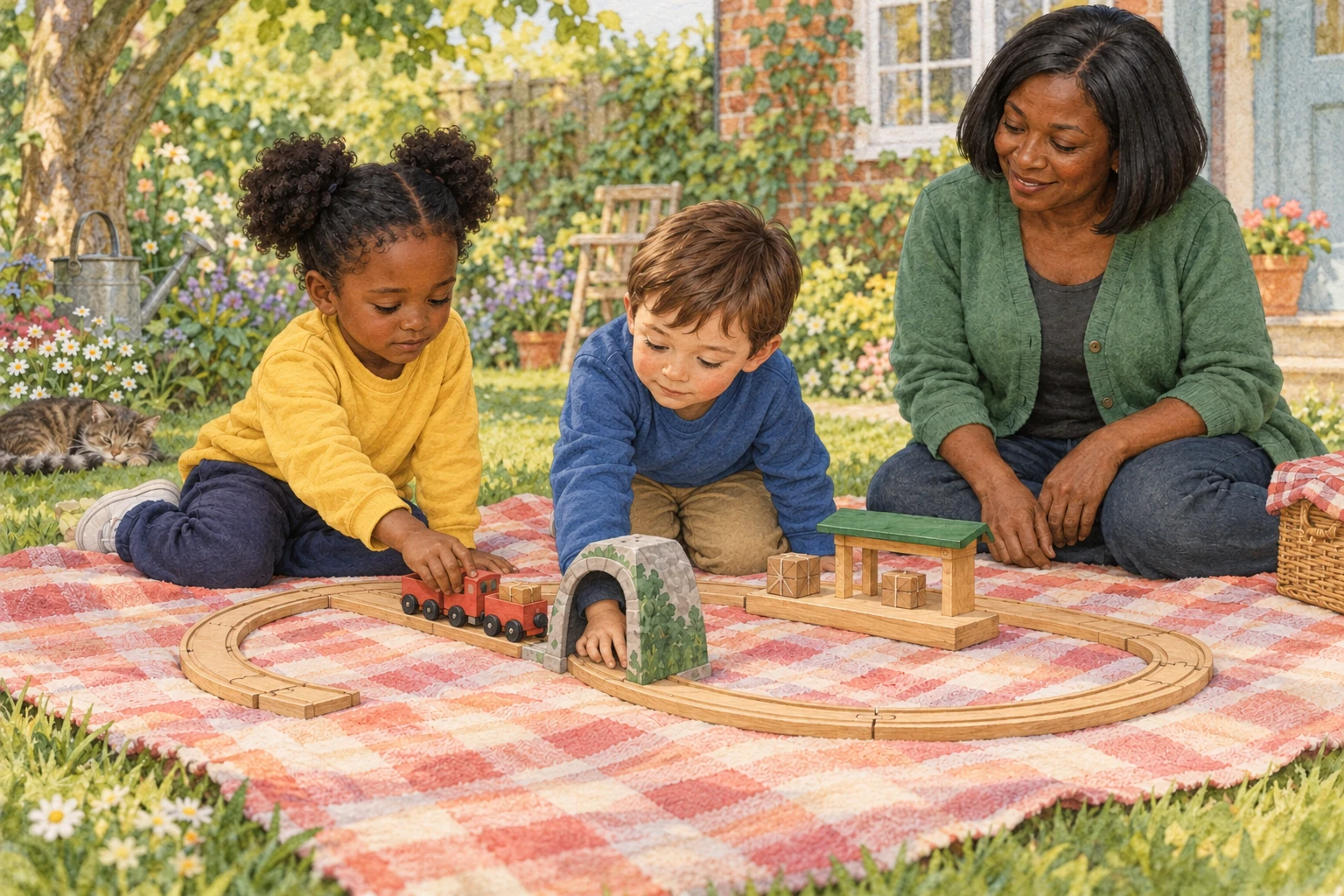
At first the game runs smoothly, but Kit reaches into the tunnel just as Annabel sends the train towards it. She stops short of his hand. No one is hurt, yet both children realise that the driver cannot always see what is happening beyond the tunnel.
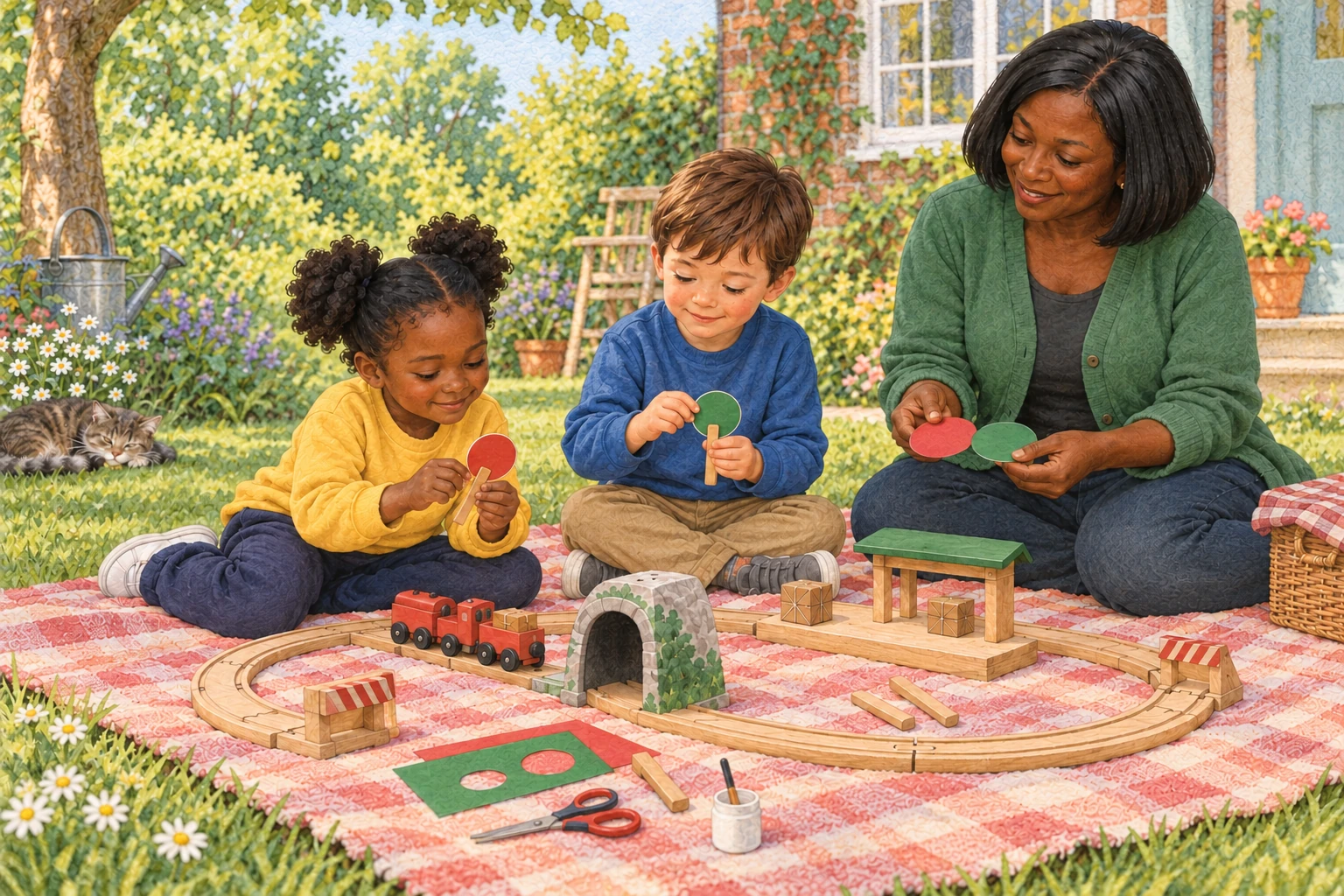
“We need a way to tell each other when the track is clear,” Annabel says. Aunt Rose suggests making signals for their model railway. She gives them red and green card, two short handles and a pair of wooden blocks to mark stopping places.
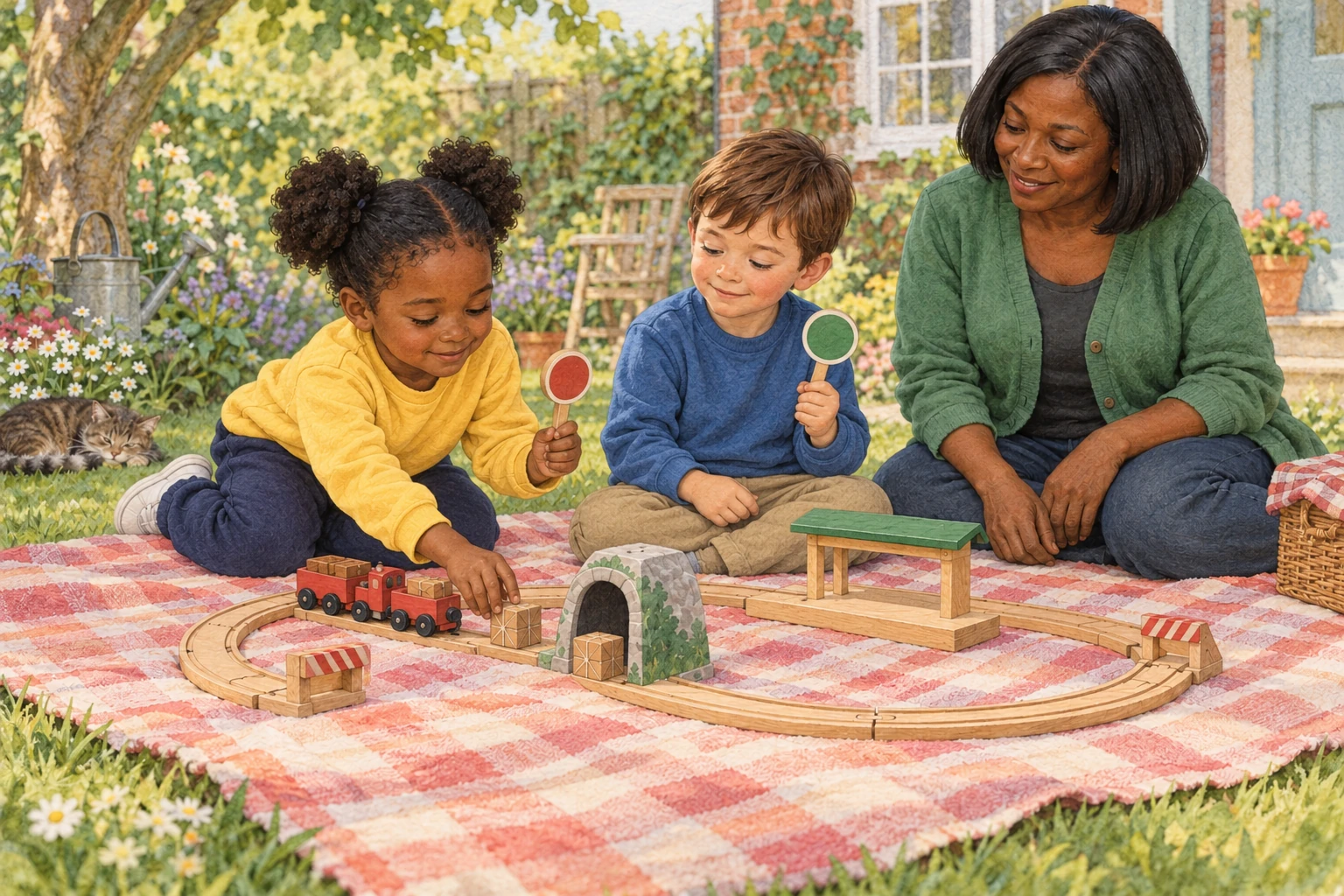
The children agree that red will mean stop before the block and green will mean the way is clear. Kit makes the first signal while Annabel places a block before each tunnel entrance. They practise changing the signals without moving the train, checking that both understand.
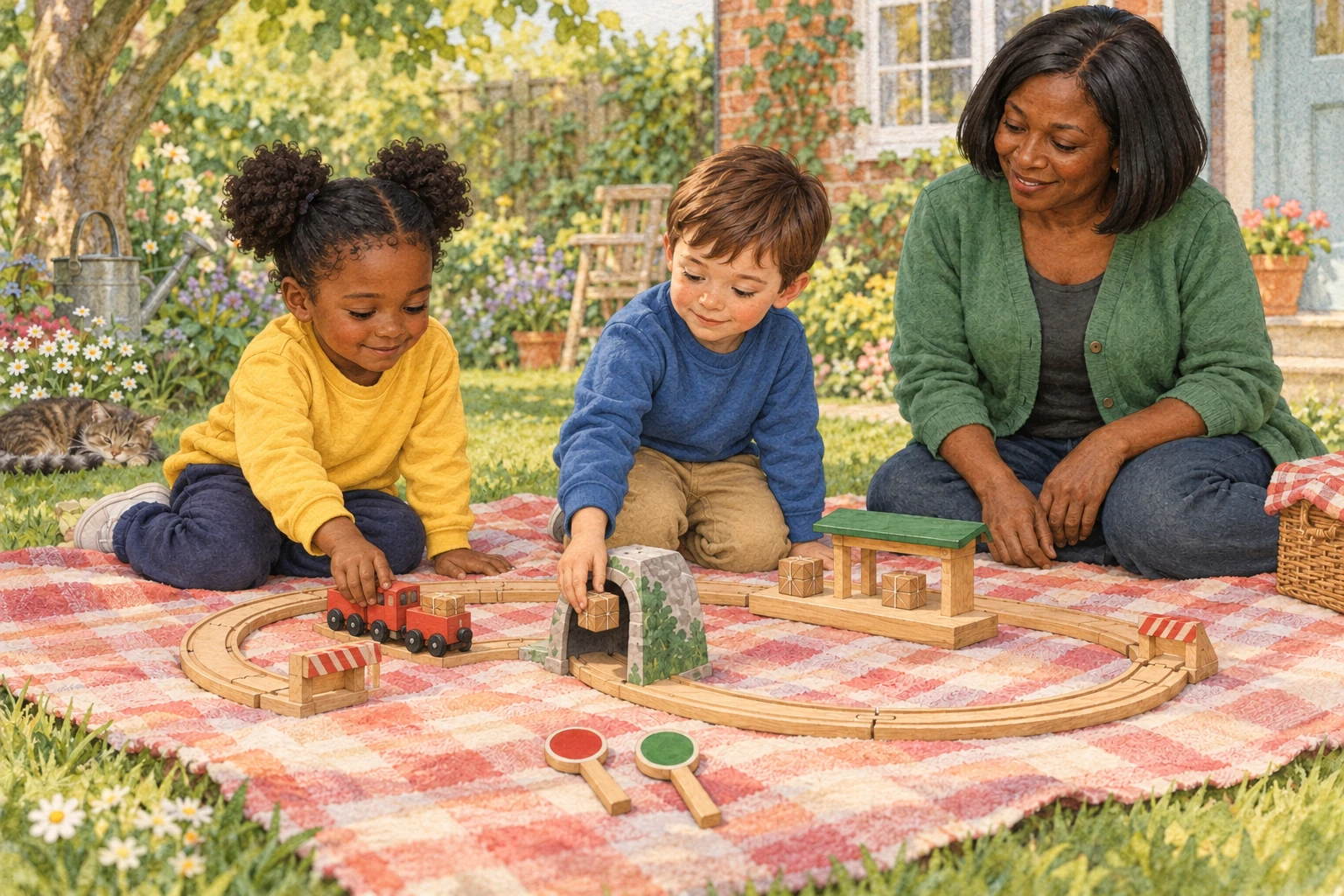
Annabel drives the train towards a red signal and stops beside the block. Kit retrieves a pretend parcel from the tunnel, takes his hands away and looks along the track. Only when he is ready does he turn the signal to green for Annabel to continue.
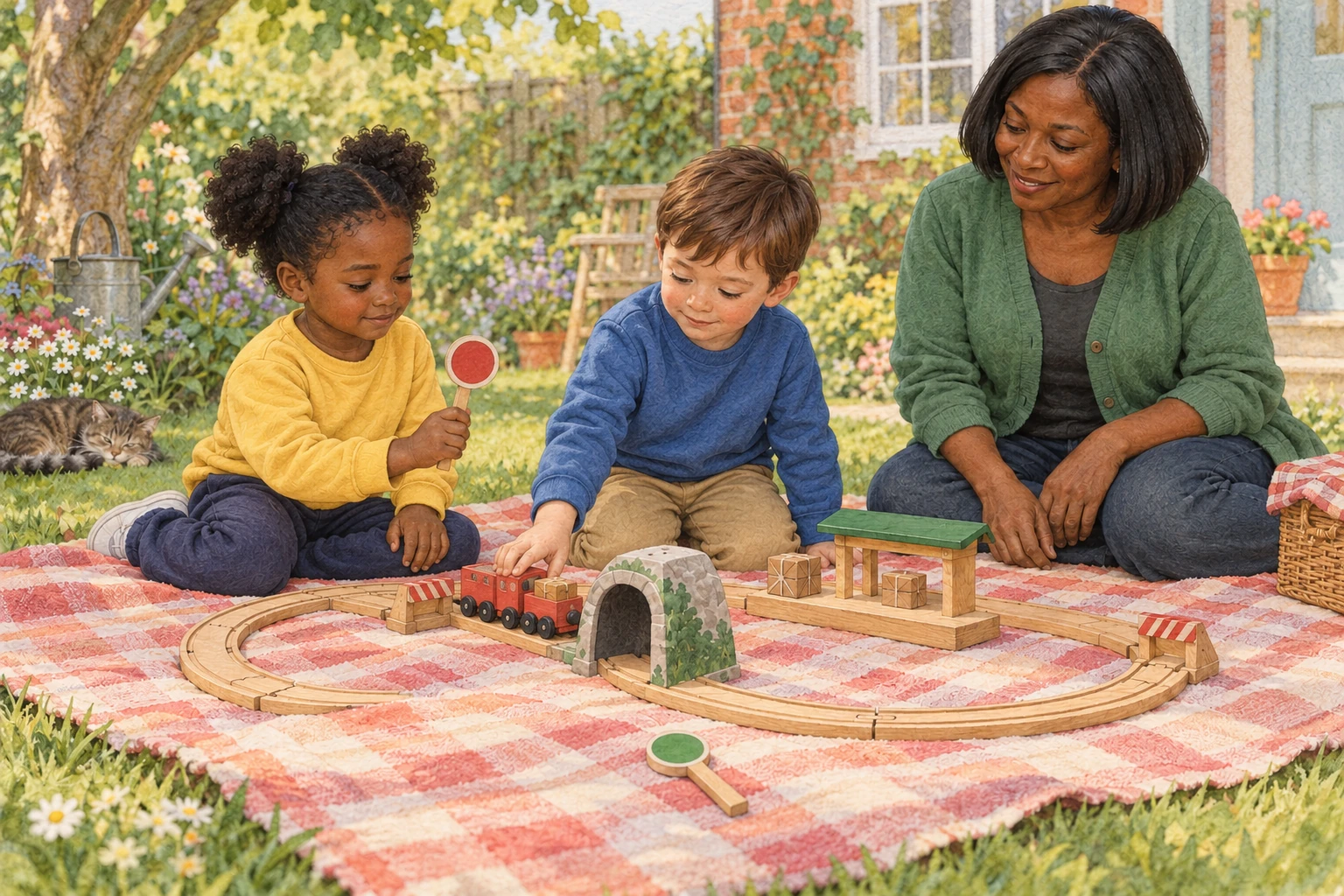
When they swap jobs, Kit begins to move before Annabel has finished checking. She keeps the red signal showing and asks him to wait. Kit returns the train to its stopping place. This time he watches the signal instead of guessing from the sound of her voice.
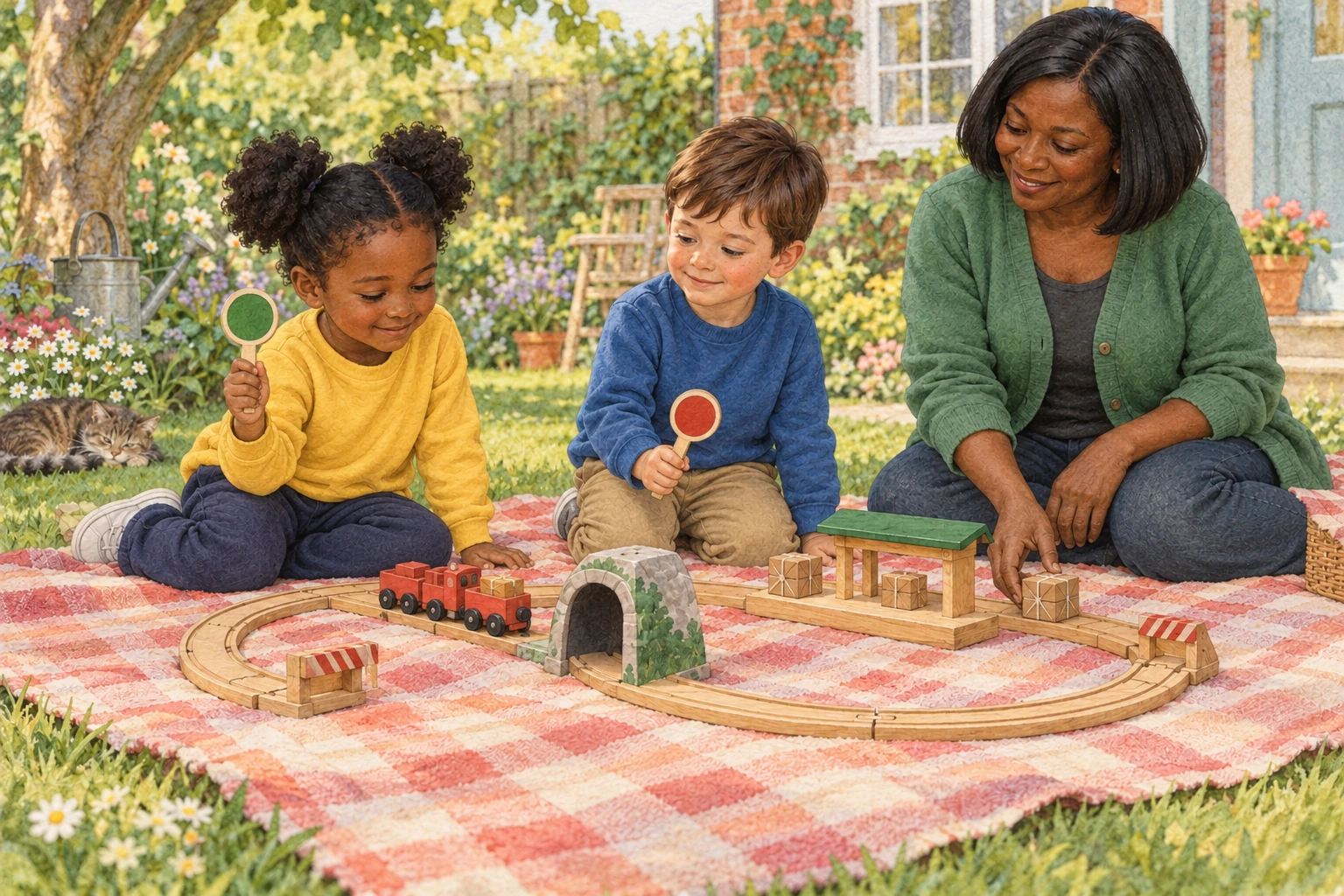
Aunt Rose brings another parcel for the station, and the children work out where it should wait. They put it beside the platform, away from the track. Annabel notices that a clear signal is useful only when the space beyond it really is clear.
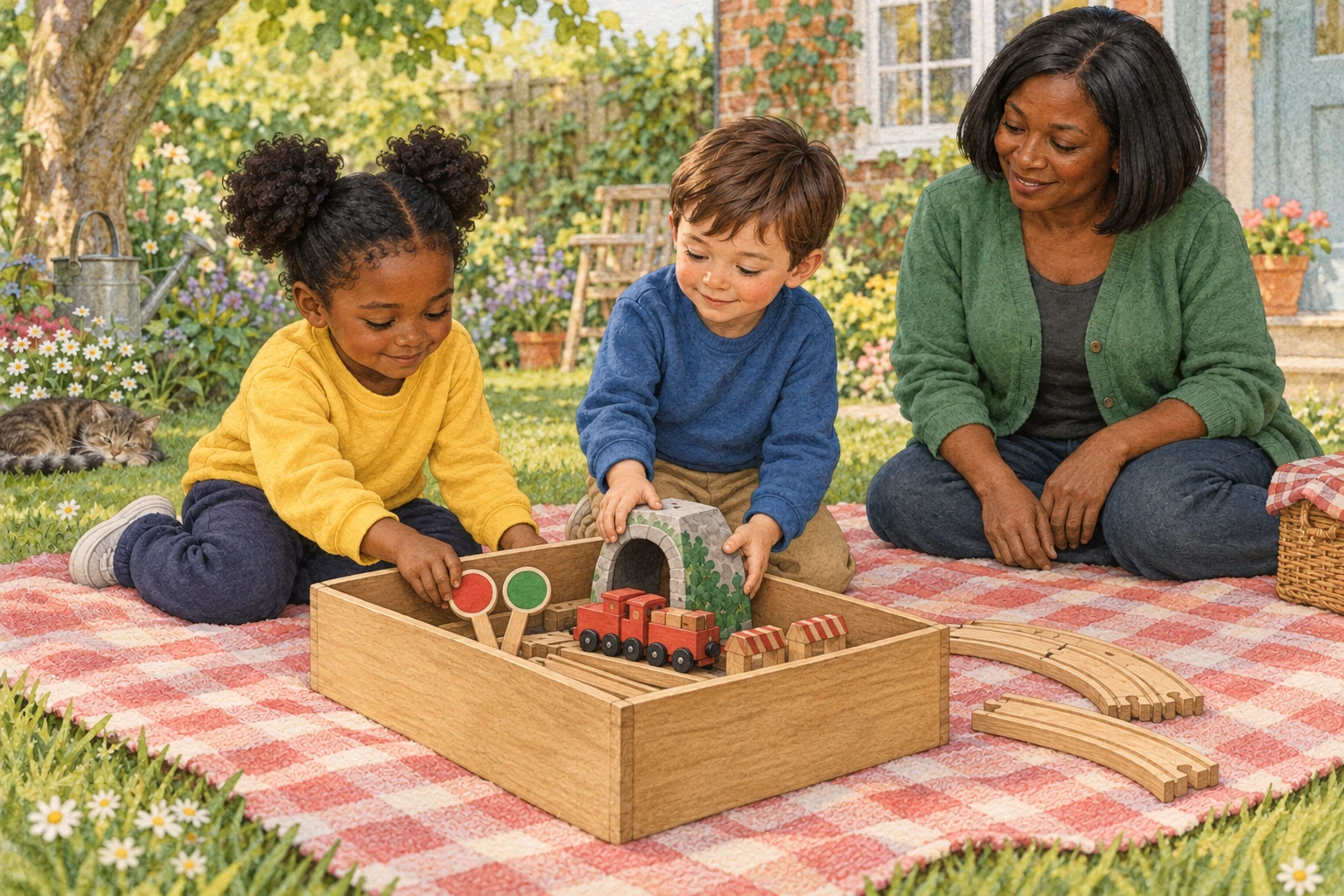
At packing-up time, Kit asks to save the signals for their next railway. Annabel puts the red and green cards beside the tunnel in the box. Their game has become more interesting because they have different jobs, a shared rule and a reason to pay attention.