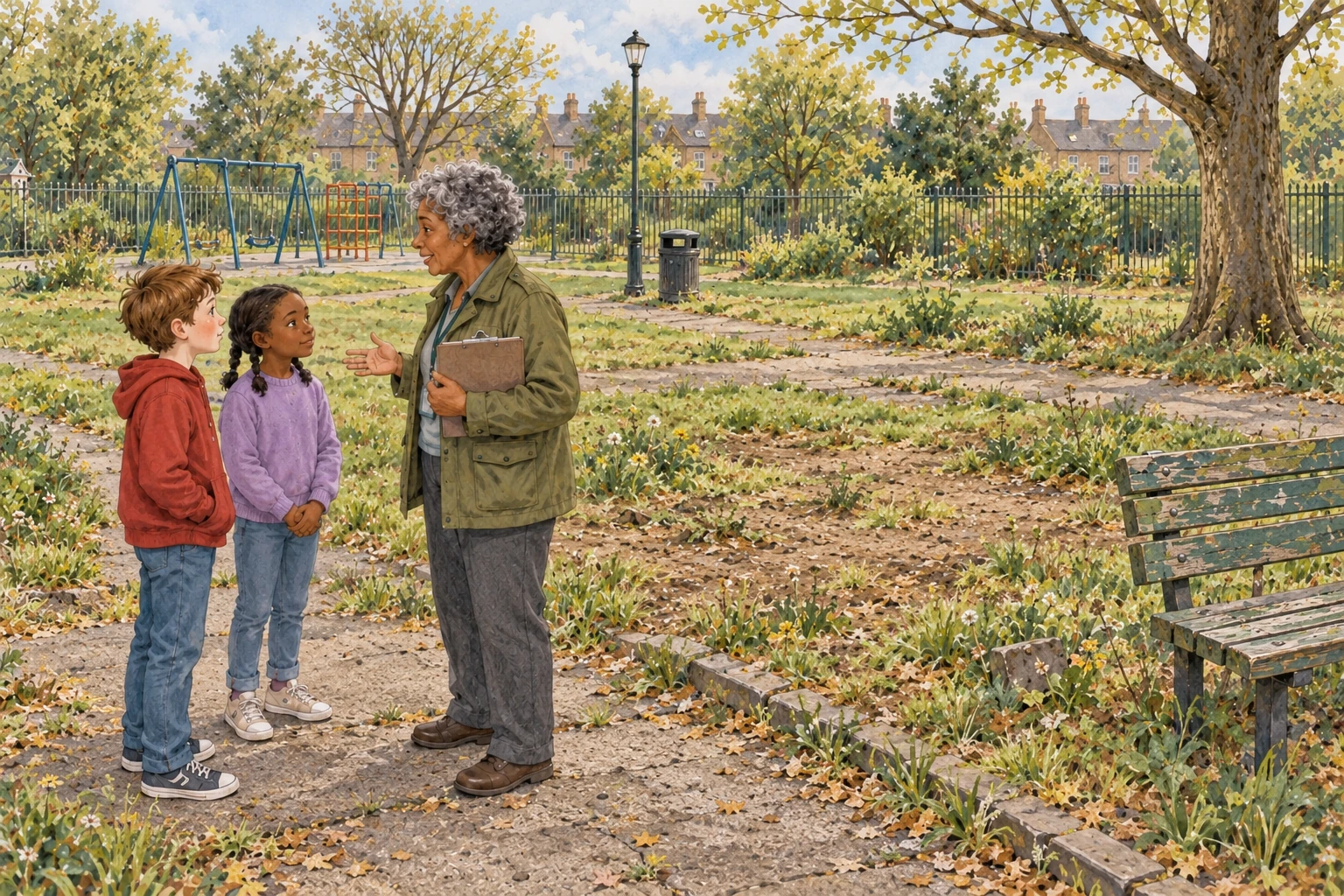
Arthur’s Quiet Corner
Shared Reading Books · Social Science · Year 4Arthur and Nina paused beside an empty corner of the park. Its old equipment had been removed, and Ms Green was asking neighbours what might come next. Arthur pictured a fast ball game. Nina wanted room for drawing outdoors. Both were eager to see their favourite idea fill the space.
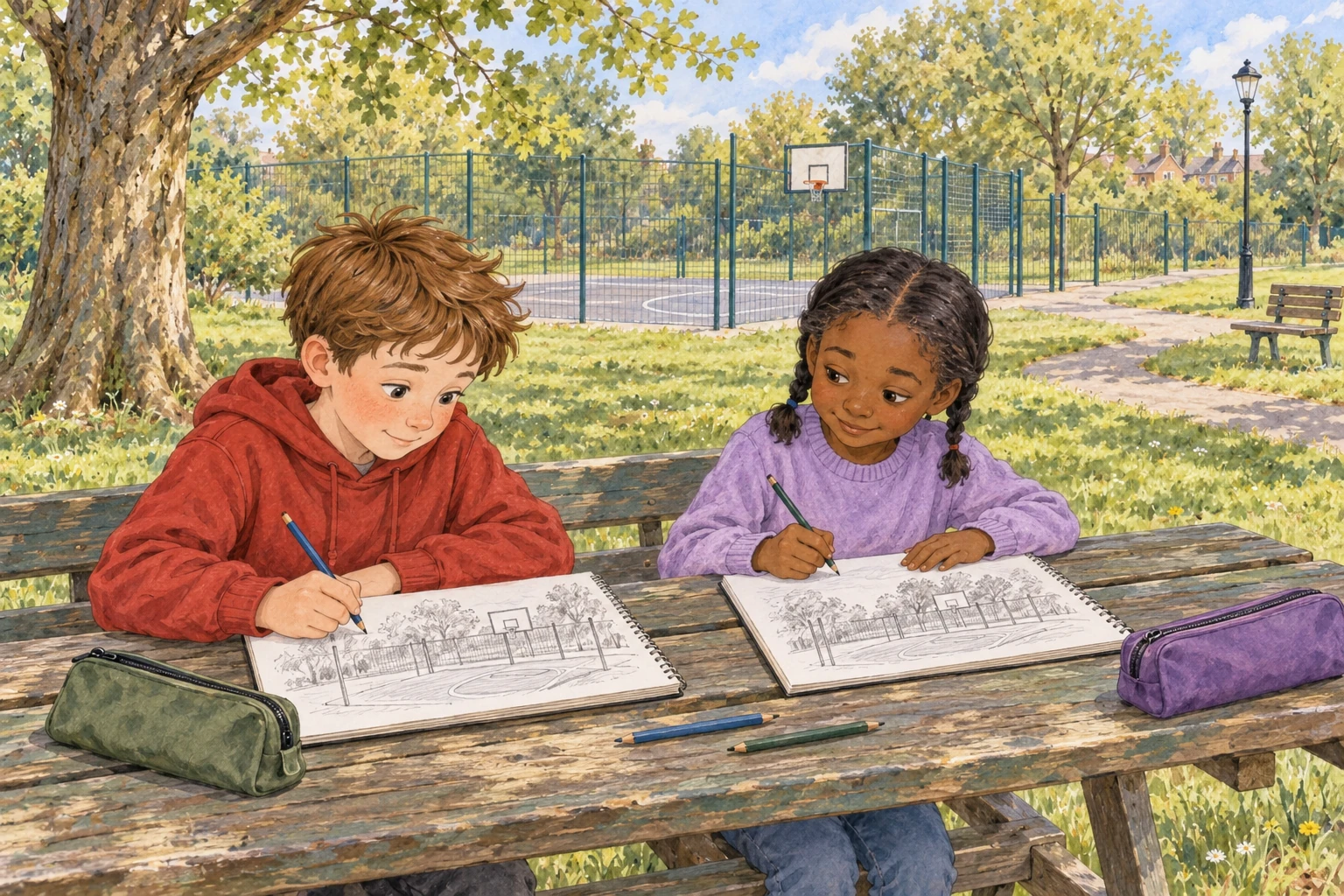
At a picnic table, they sketched a large game area and a row of drawing tables. Then Ms Green asked whose ideas they had not heard. Arthur looked across the park. The people who used it were not all children from his class, and not everyone wanted to spend a visit playing.
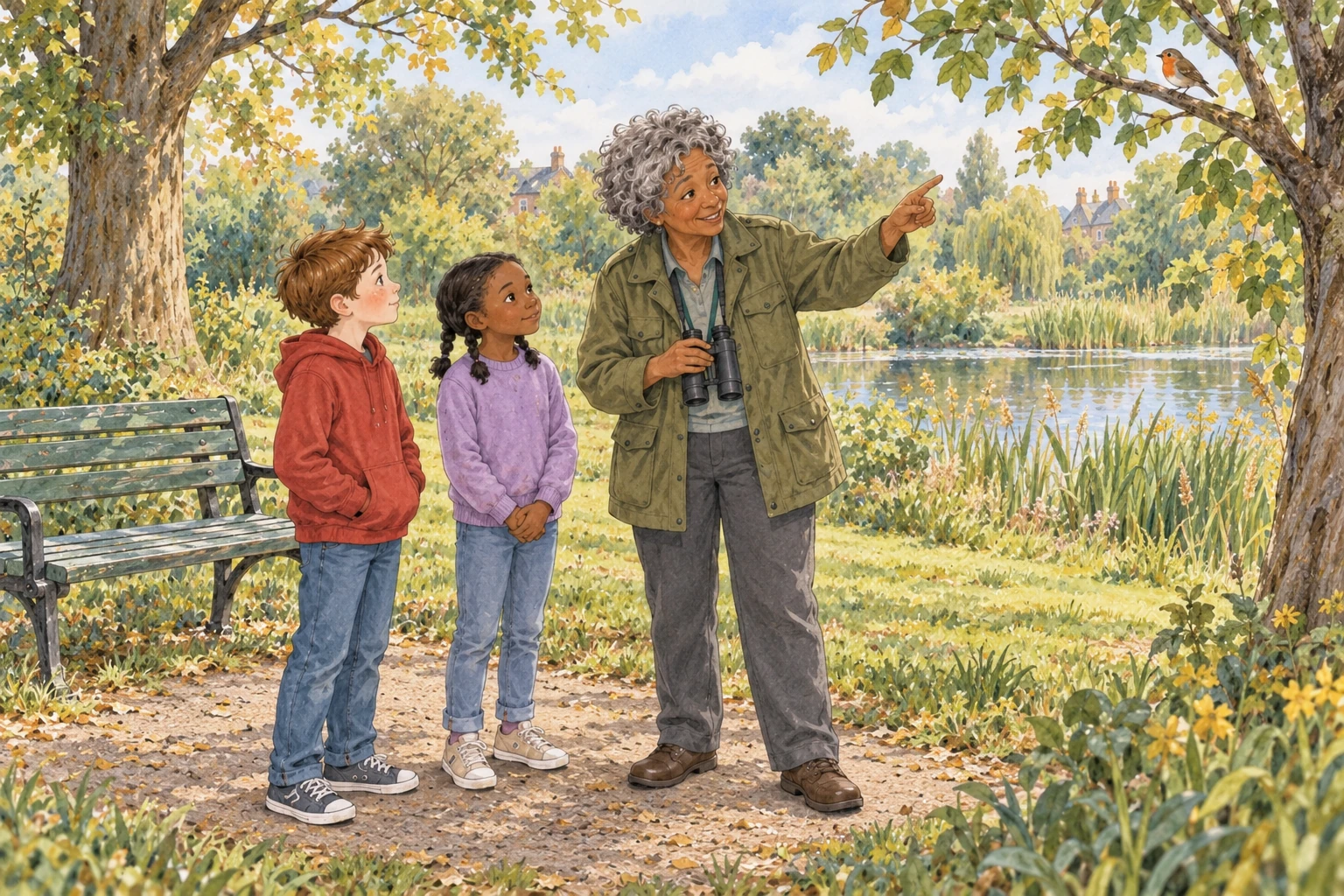
An older visitor explained that the nearby bench was a quiet place to watch birds. A noisy game close beside it might change that experience. Arthur had thought an empty corner affected nobody. Listening helped him notice uses that were less obvious than running or kicking a ball.
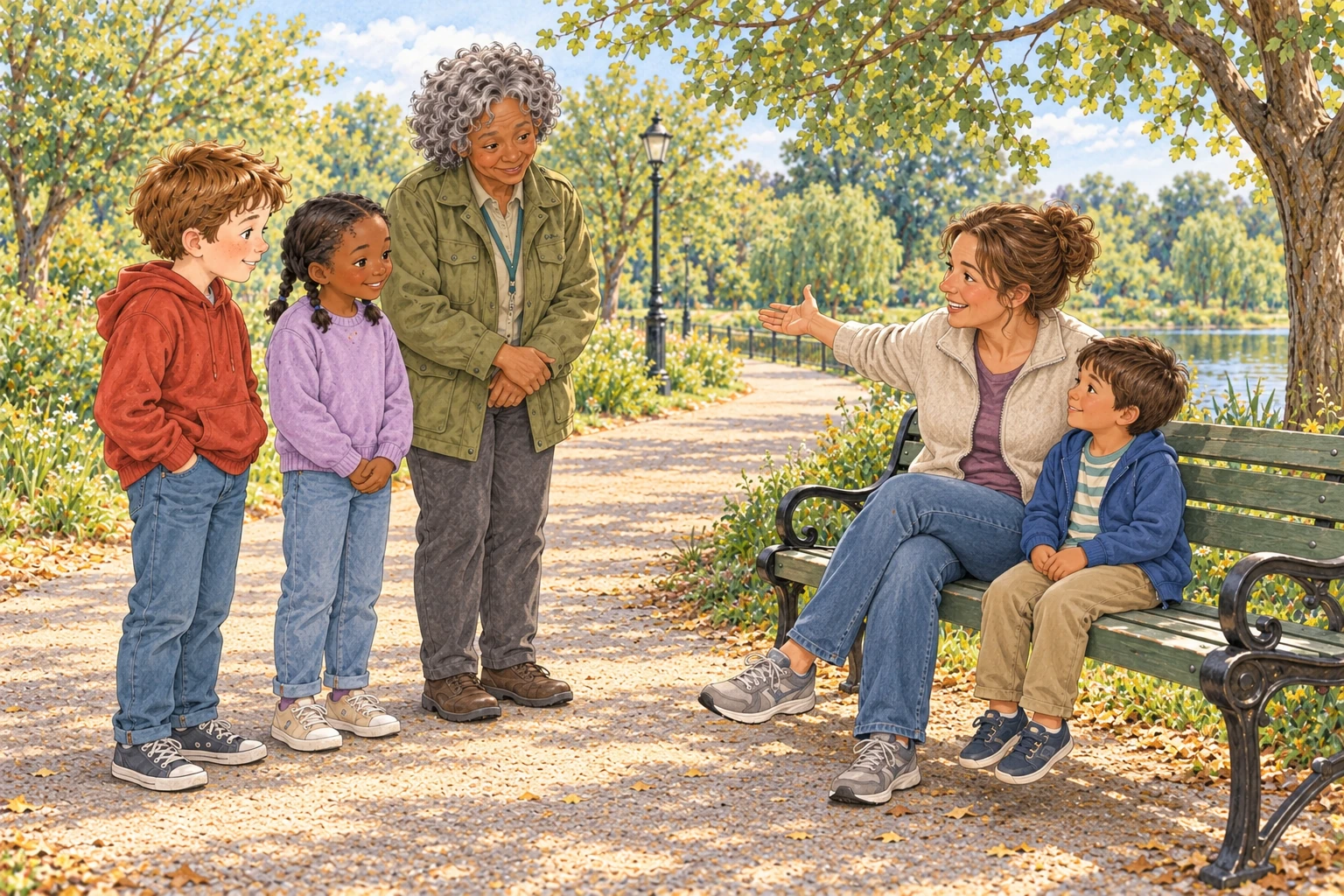
A family stopped along the broad path for a rest. They wanted clear access and somewhere comfortable to sit. Nina added those needs to their notes. The same small space could not contain every suggestion. Choosing would require reasons, priorities and attention to how nearby areas already worked.
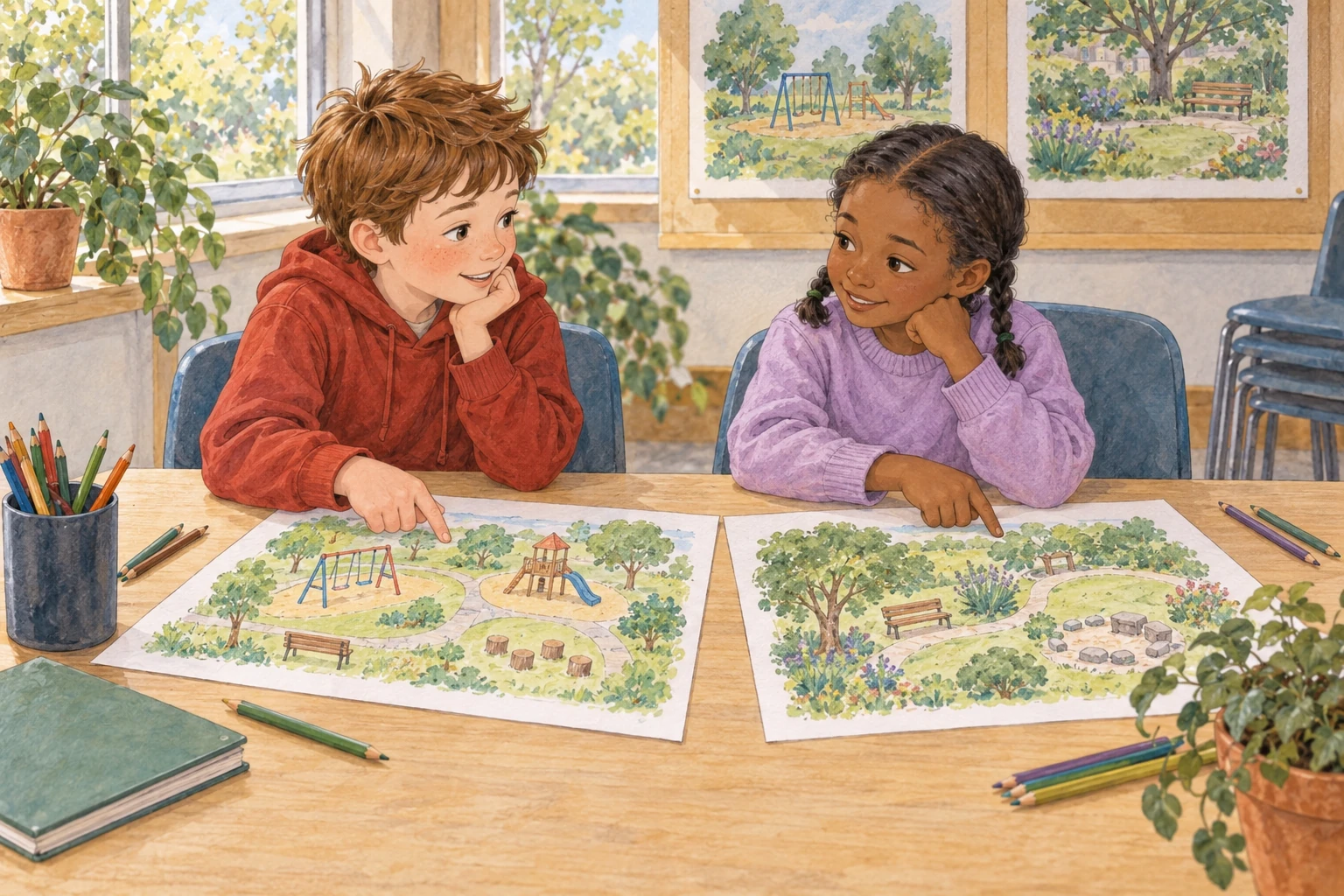
At a community meeting, people compared several layouts. Some supported a game space; others asked for planting or quiet seating. Ms Green kept the discussion focused on needs rather than calling one group more important. Arthur explained his idea, then practised describing another person’s reason fairly.
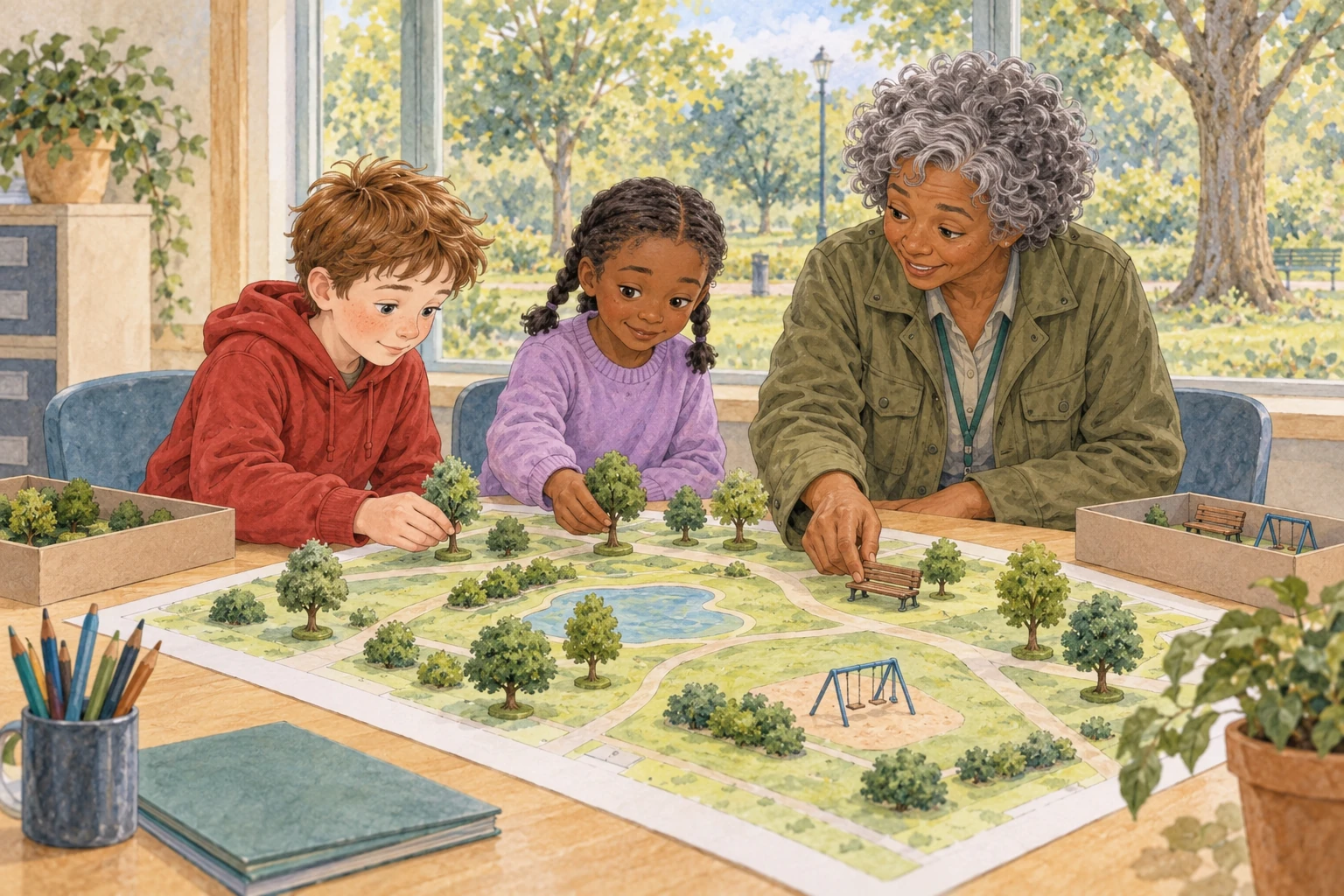
They arranged simple model areas on a layout sheet. Moving the game space farther from the bench might reduce noise there. Keeping the broad path clear left less room for tables. Each adjustment changed something else. A compromise required careful choices, rather than pretending every wish could be met completely.
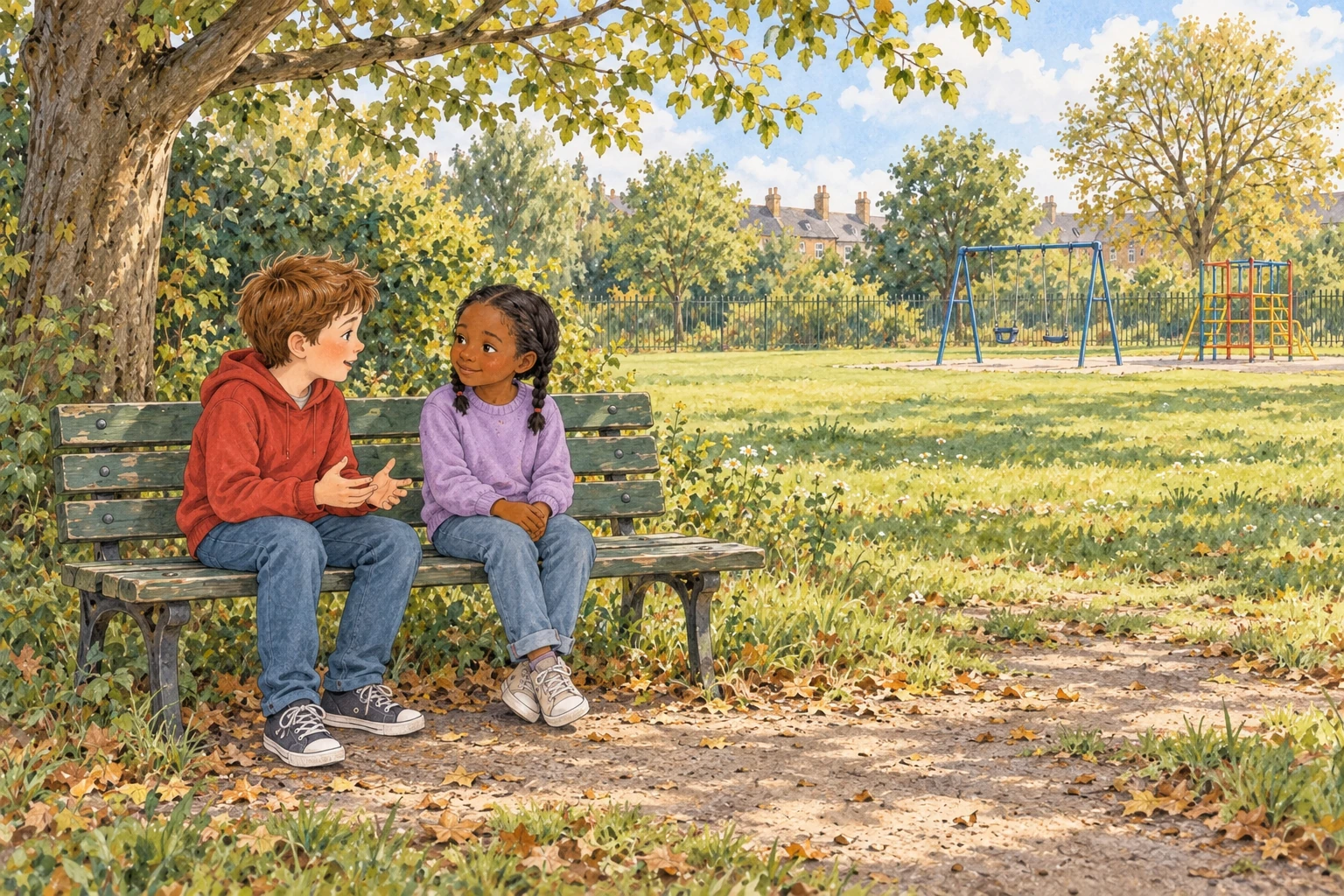
The adults organised a small, supervised trial using temporary seating and a marked game space. Arthur played, then visited the quiet corner with Nina. They watched how people moved and asked for comments. Some distances needed adjusting. Trying a layout helped test ideas before making a more lasting change.
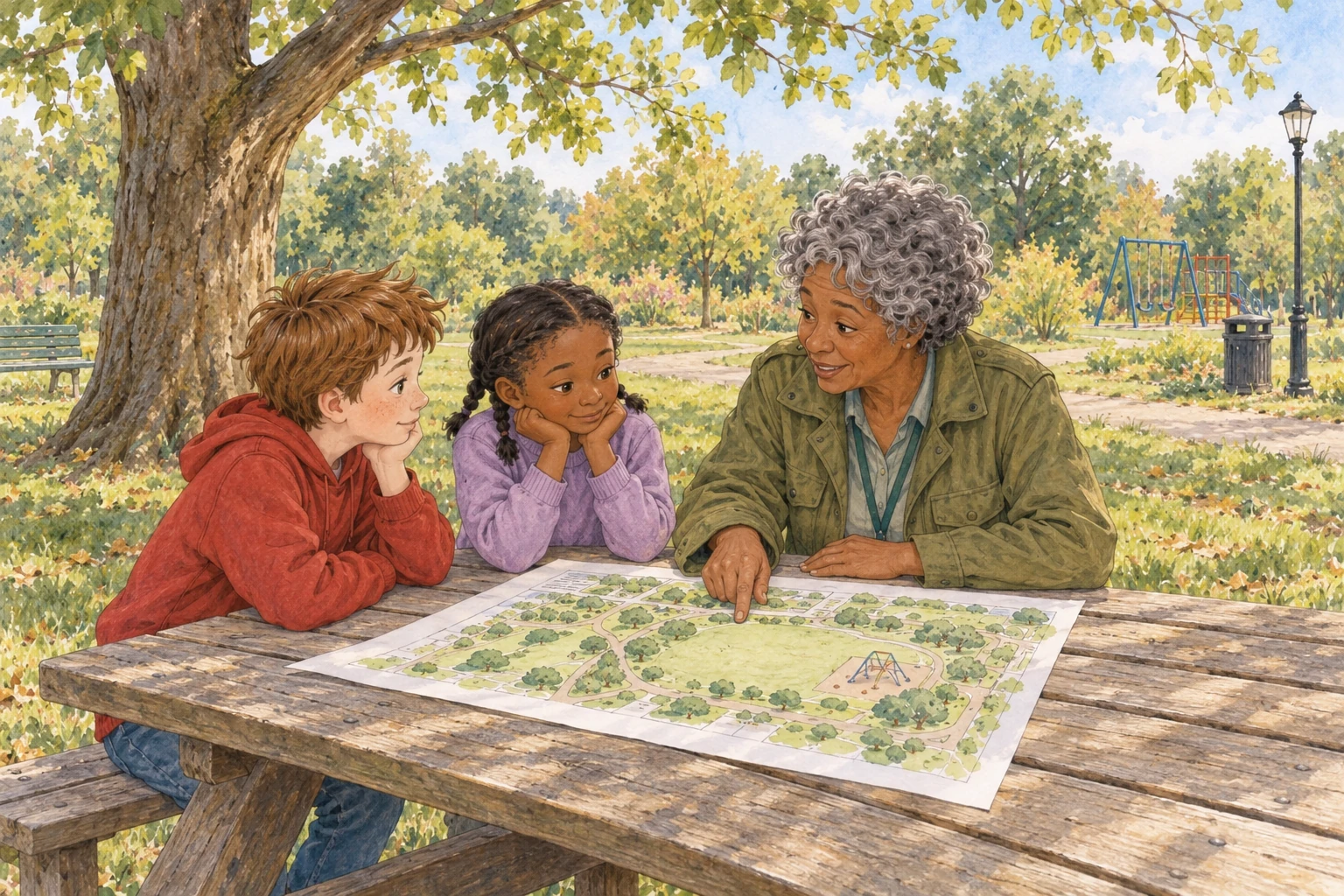
At the review, Arthur still wanted games, but his drawing now included other uses too. Ms Green would take the findings into the next planning stage. The final decision was not his alone. He had learned that sharing a place meant helping make room for experiences different from his own.