Ben’s Bean Puzzle
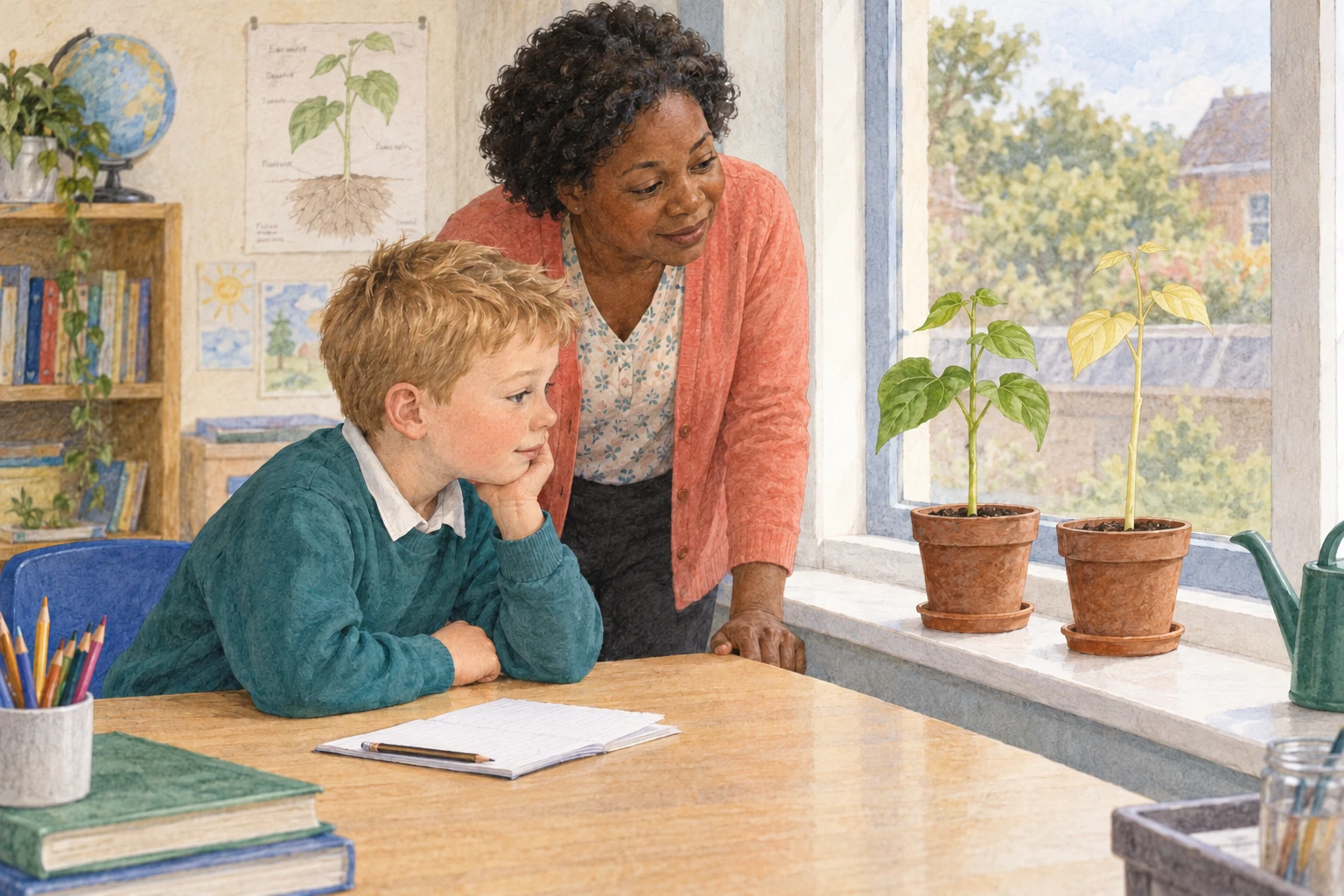
Shared Reading Books · Science · Year 2Ben wants a tall bean plant for the classroom garden. Two seedlings stand in matching pots. One is green and sturdy. The other is pale and thin. “It is taller,” says Ben. “Does that mean it is healthier?” Mrs Reed suggests investigating.
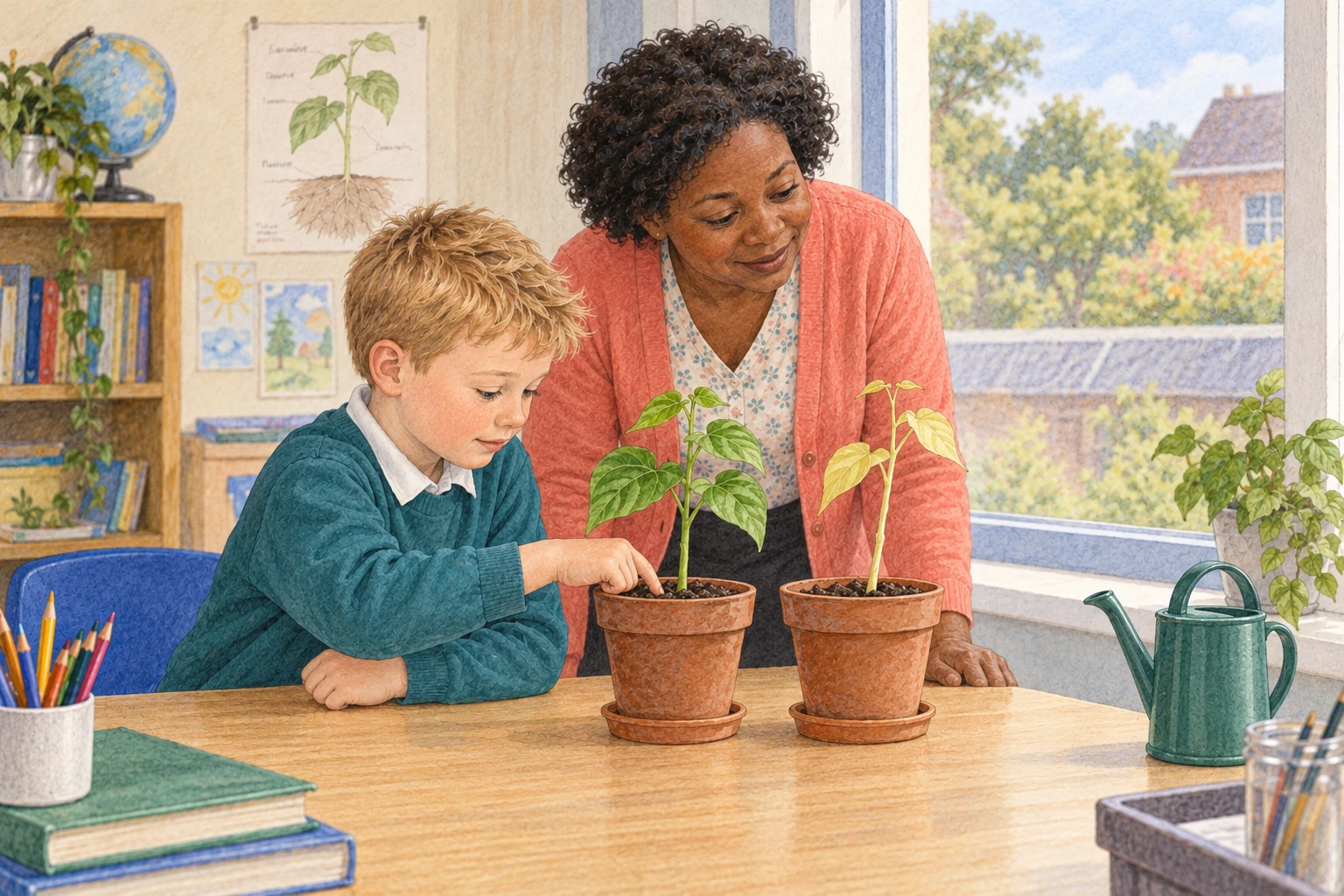
They check the soil. Both pots feel lightly damp, with space for extra water to drain away. The plants began at a similar size. Ben remembers that one stayed by the window while the other spent several days in a dark cupboard.
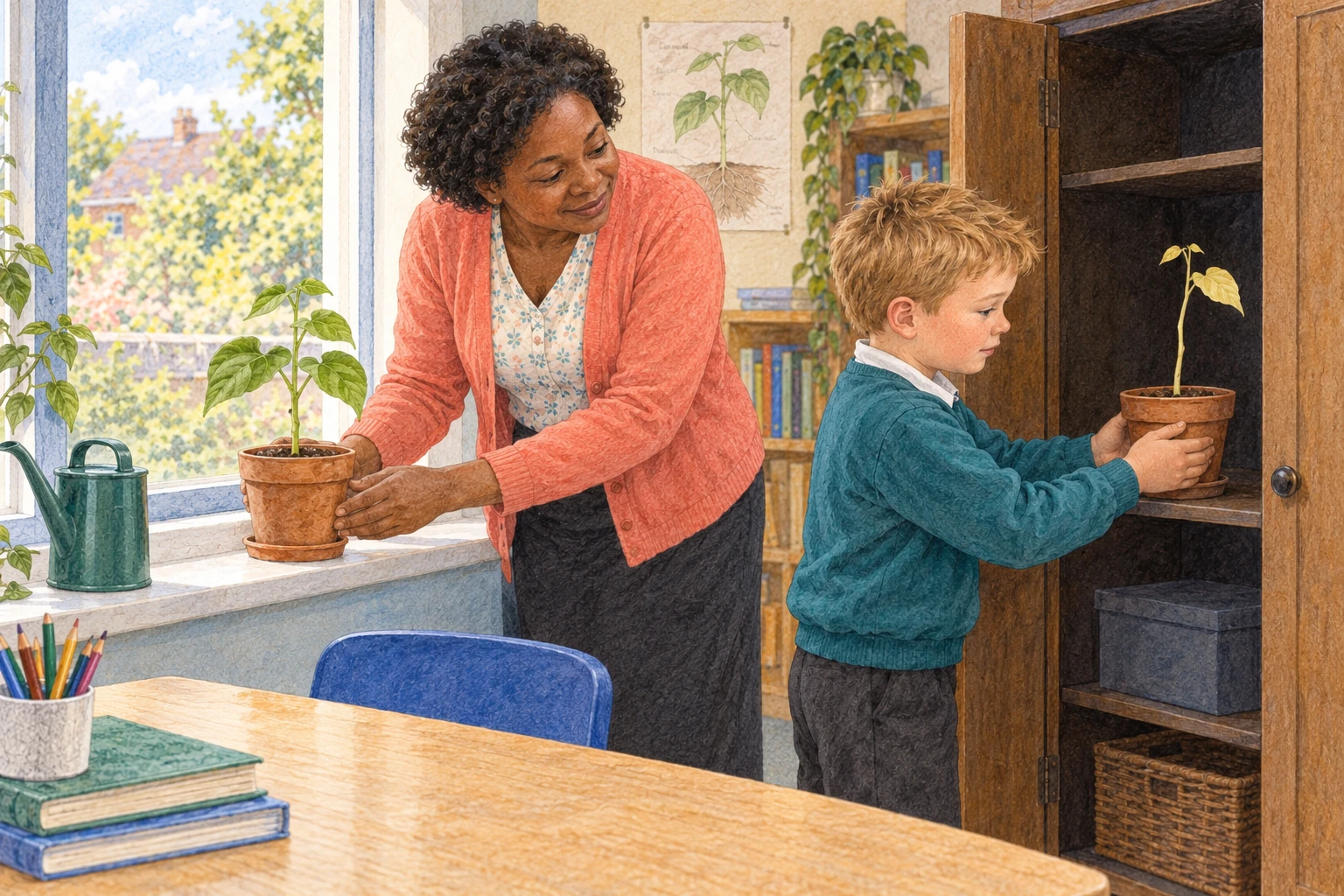
“A seed can begin to germinate using its stored food,” Mrs Reed explains. “It needs suitable water, air and warmth. Once a seedling has leaves, light helps it make more food.” The cupboard was never meant to be the plant’s permanent home.
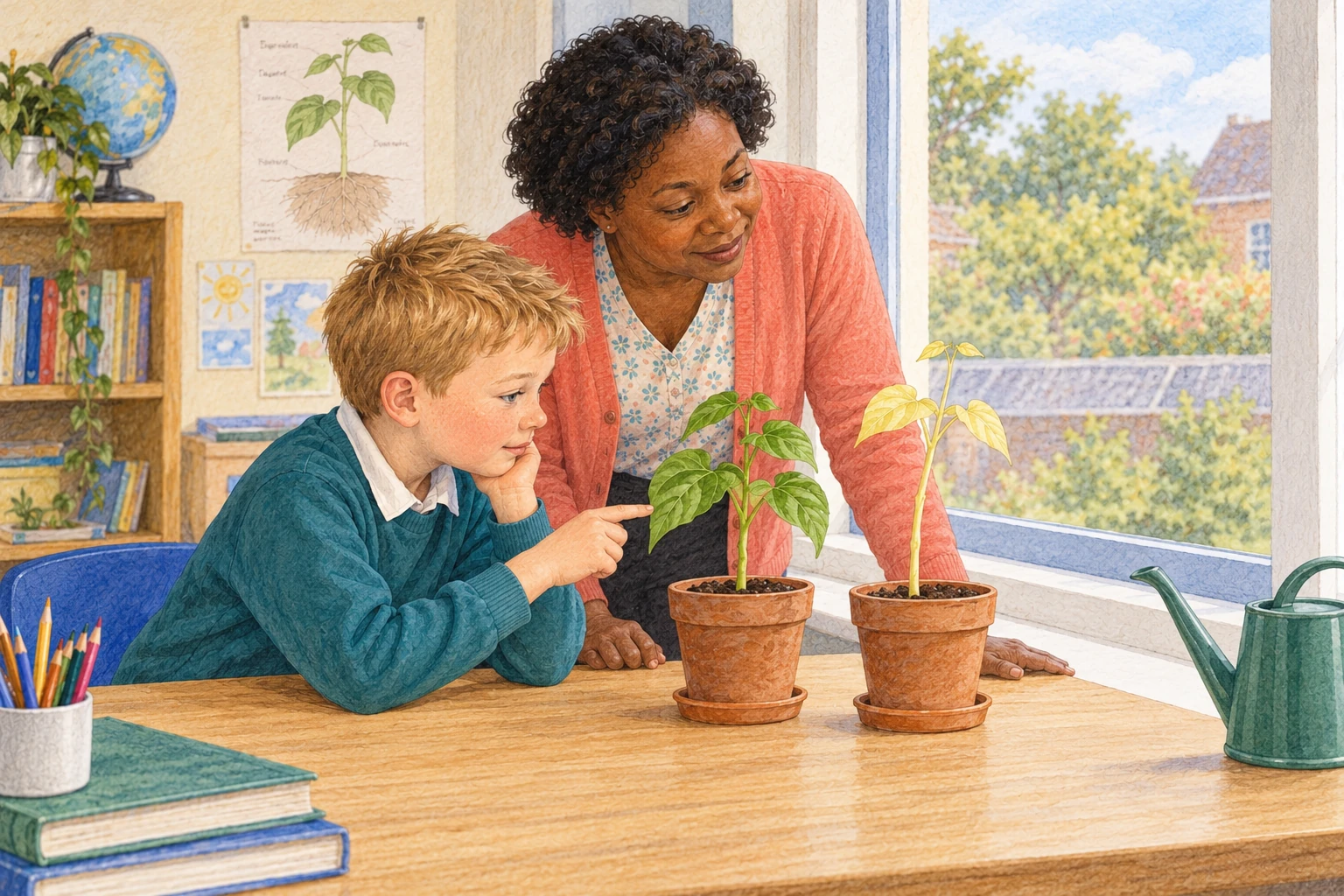
The plant grew tall and thin in the dark cupboard, but its leaves look pale. The window plant has greener leaves. Ben notices that height alone did not tell the whole story. He looks at colour, leaves and the firmness of each stem as well.
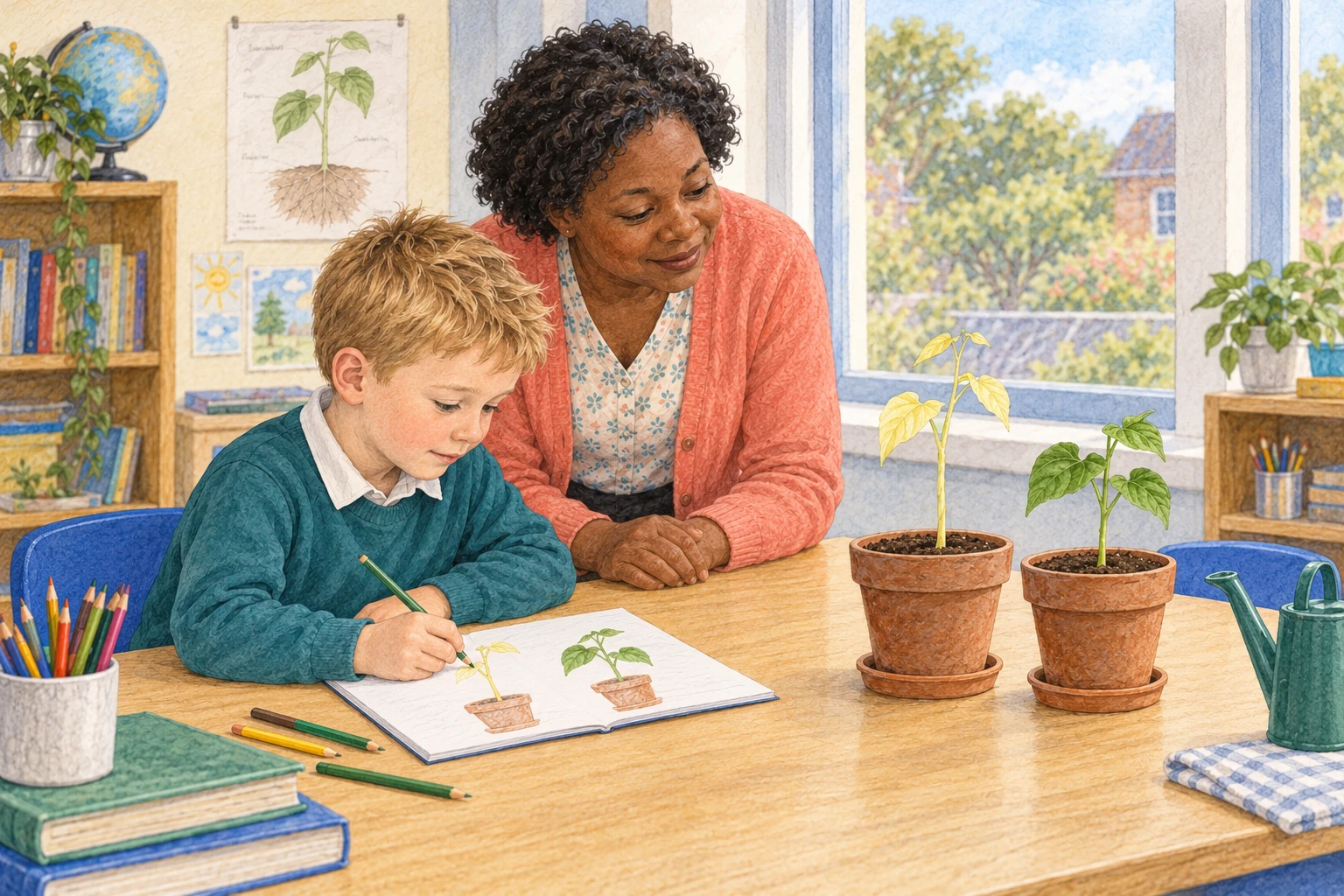
Ben draws both seedlings and records where each grew. They kept the pots, soil and watering similar. Mrs Reed says that two plants cannot answer every question. Repeating a comparison with more plants would help them look for a reliable pattern.
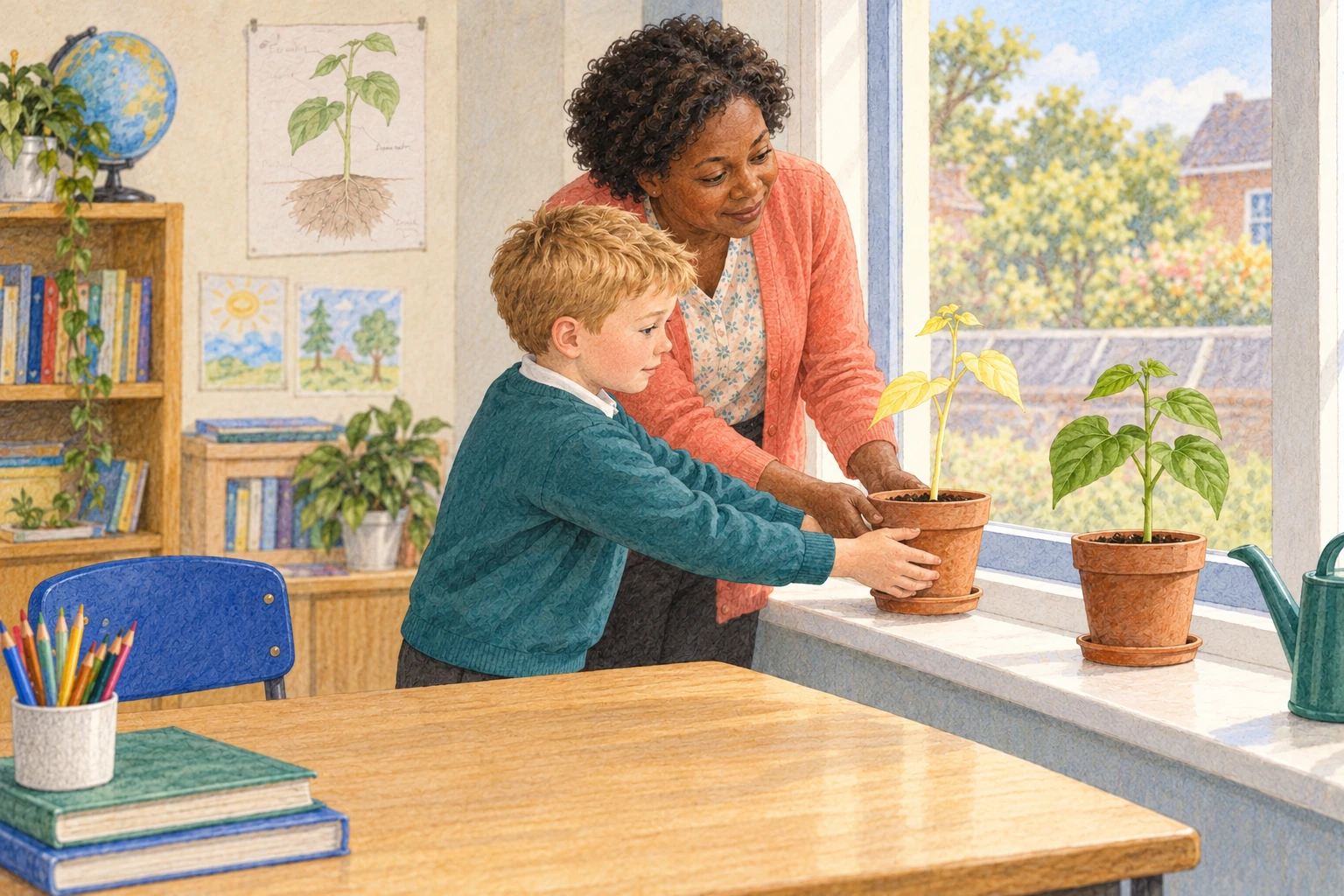
They move the pale seedling into a bright place beside the other plant. They keep the soil damp rather than soaked. Ben will observe it over several days. The leaves need time to change; extra water will not make them turn green at once.
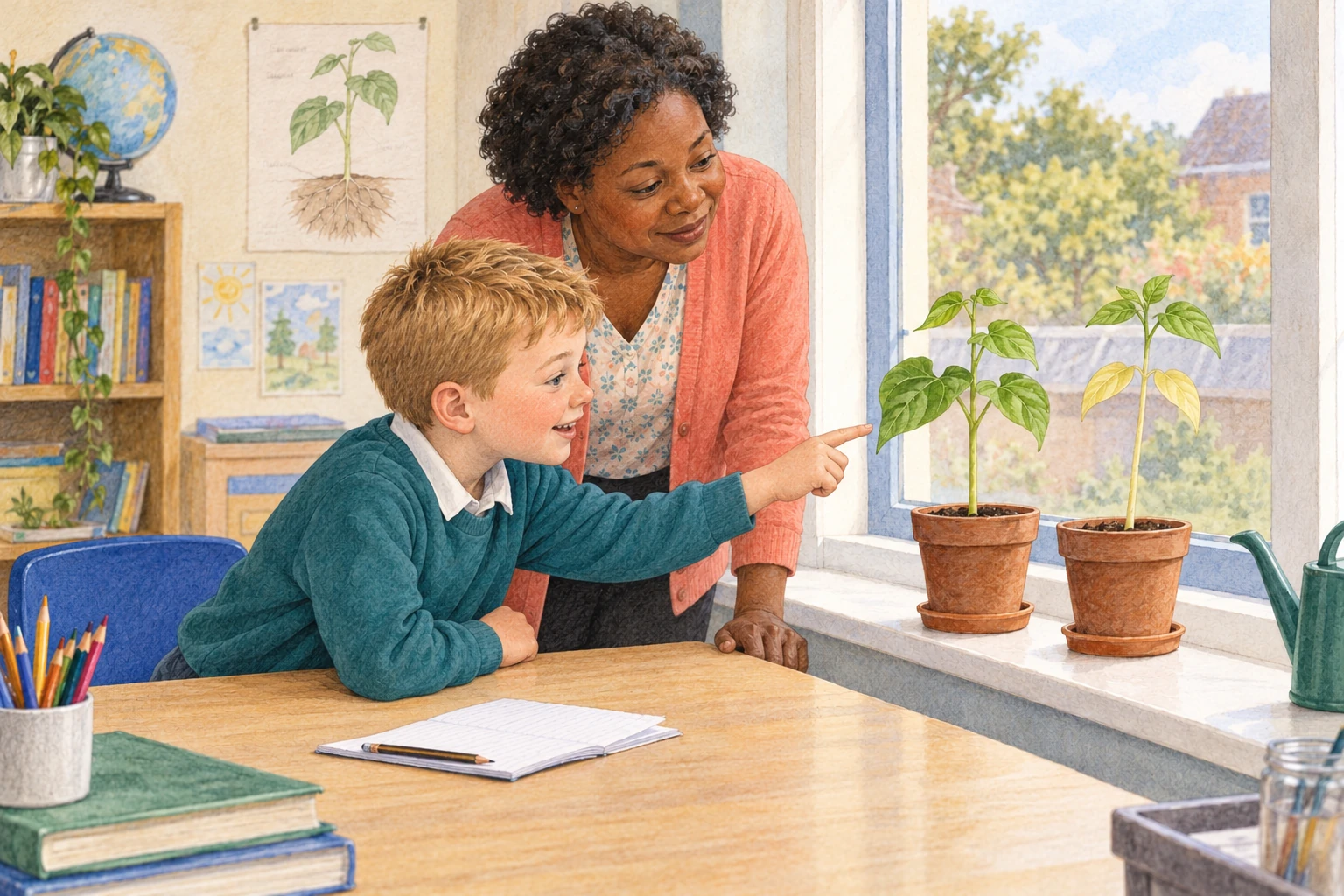
New growth begins to look greener. Ben is pleased, but he keeps checking. Plants need time to respond, and not every damaged plant recovers. He adds a fresh drawing instead of rubbing out the pale plant in his first record.
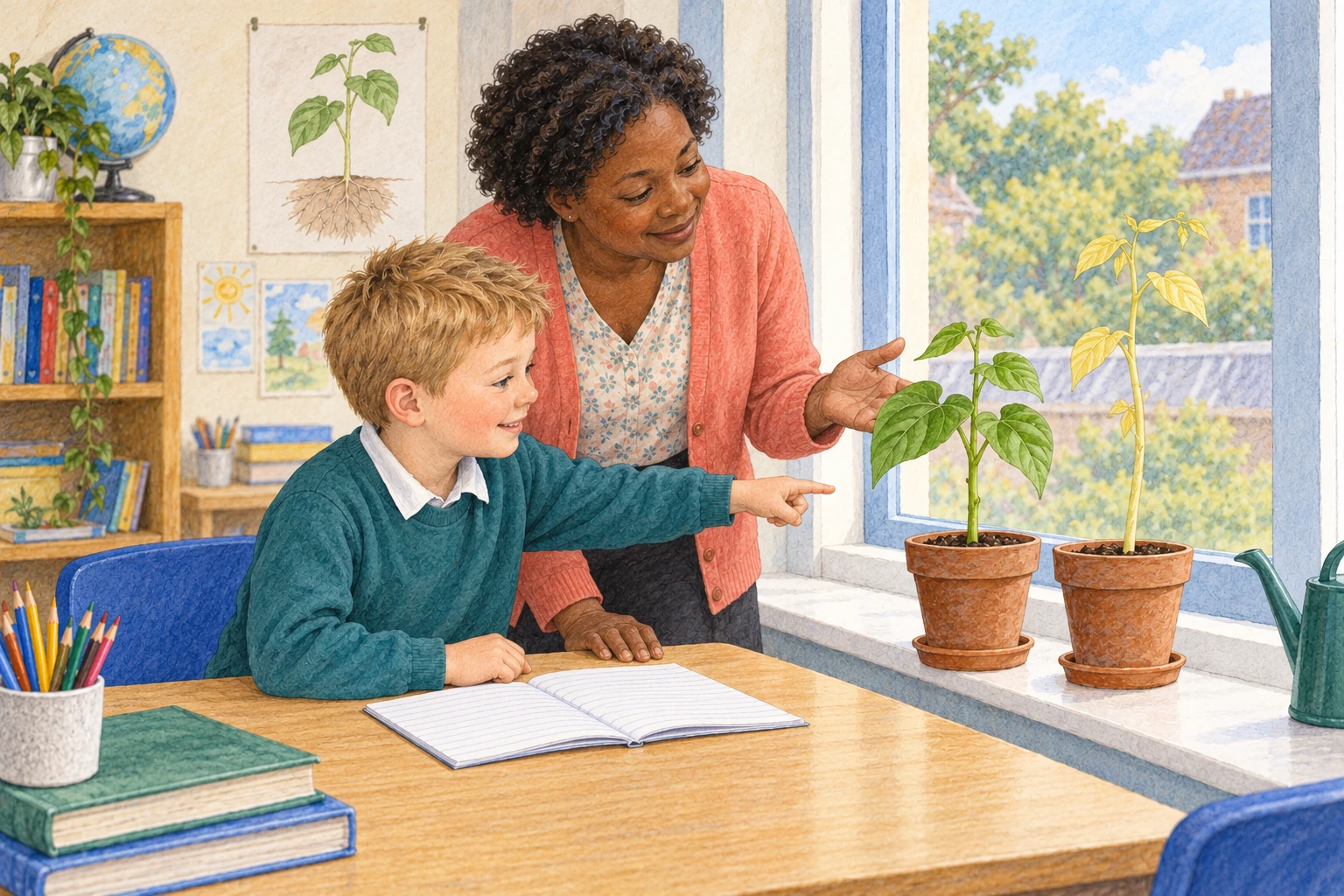
At planting time, Ben chooses sturdy growth as well as height. “My tallest plant was a puzzle,” he tells the class. “Looking at more than one feature helped.” The two bean plants have given him a better question than simply asking which won.