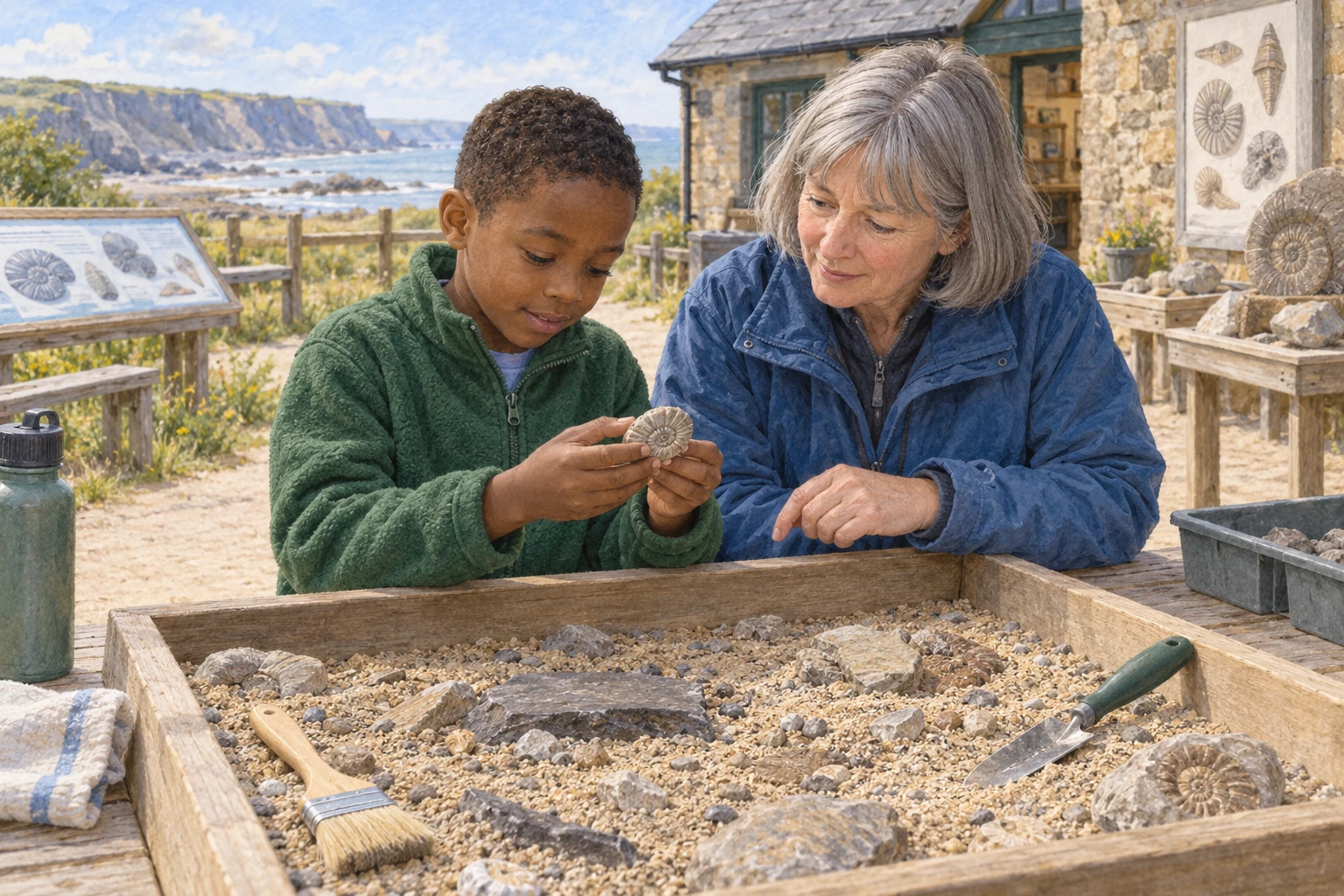
Charlie’s Fossil Clue
Shared Reading Books · Science · Year 3Charlie finds a shell shape inside a rock at the museum discovery table. “Who pushed a shell into this?” he asks. Ranger Mrs Lake smiles. The rock is a real fossil specimen. Charlie can handle it gently here, but he must not chip pieces away.
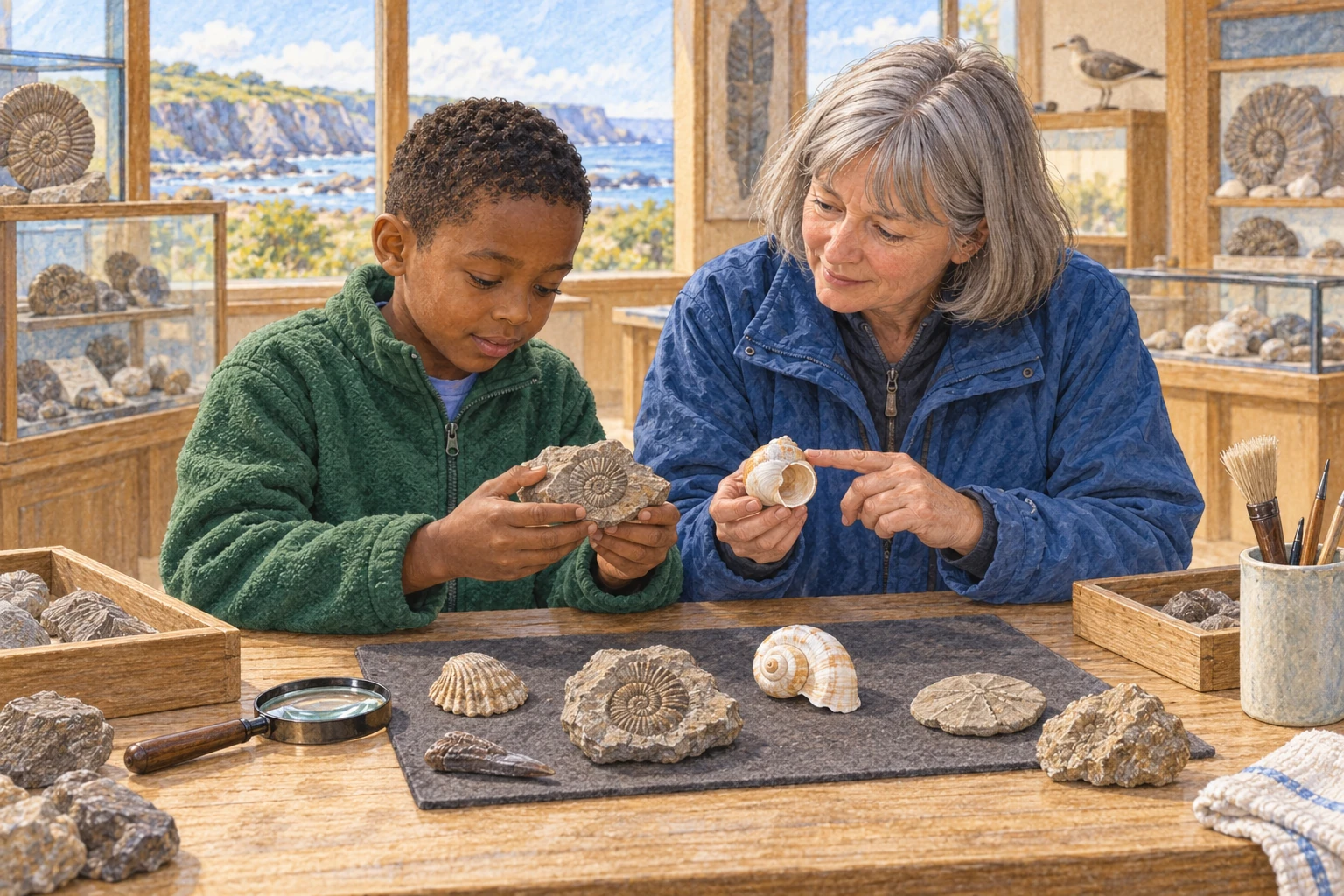
Beside it lies a modern empty shell. Charlie compares the curved lines and shape. A fossil is evidence of life from long ago, preserved in rock or other material. It may be a body part, an impression or a trace such as a footprint.
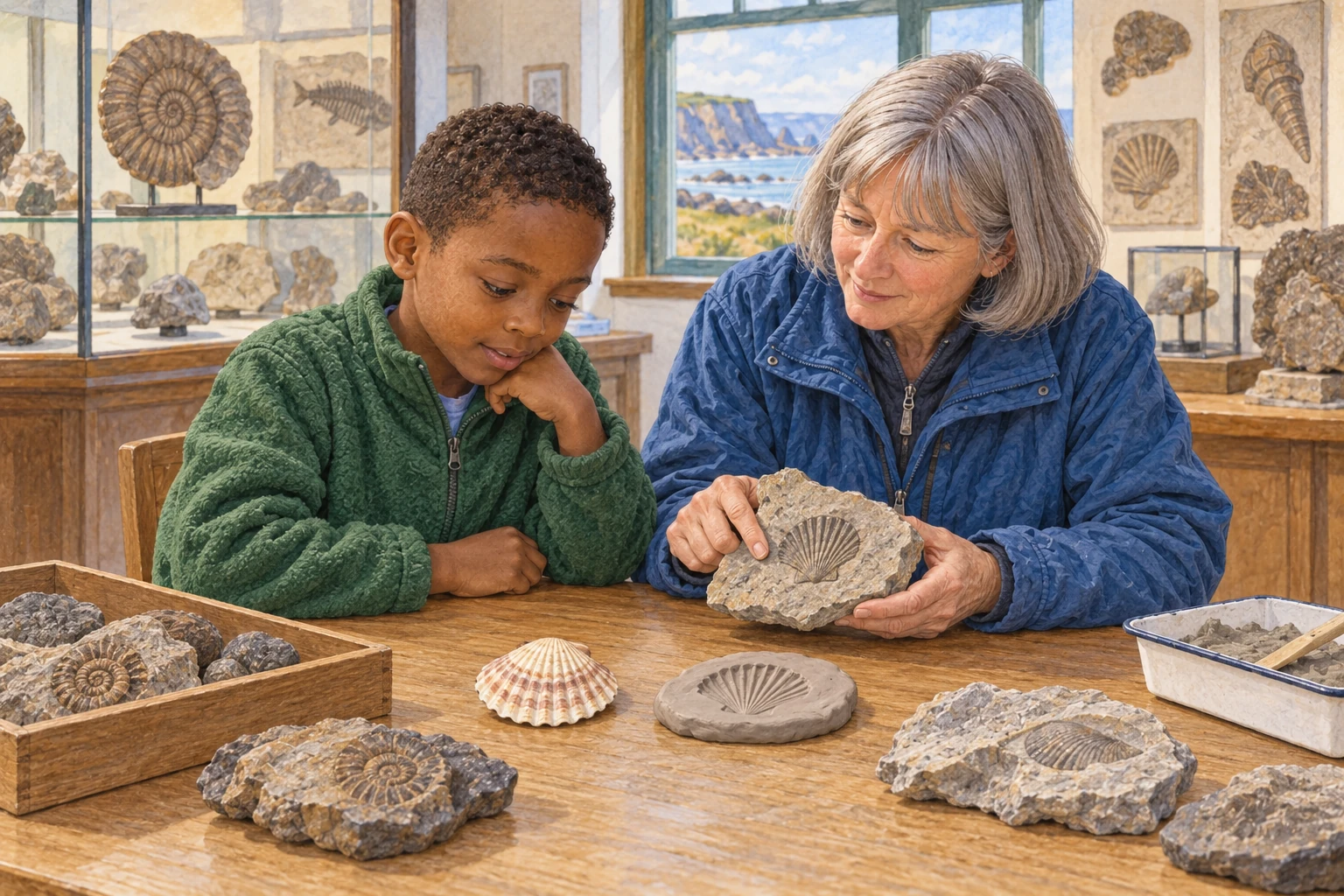
Mrs Lake shows another sample with a hollow shell impression. Long ago, sediment covered a shell. Over a very long time, some sediments became rock. The original shell could dissolve away, leaving its shape behind. Not every buried shell becomes a fossil.
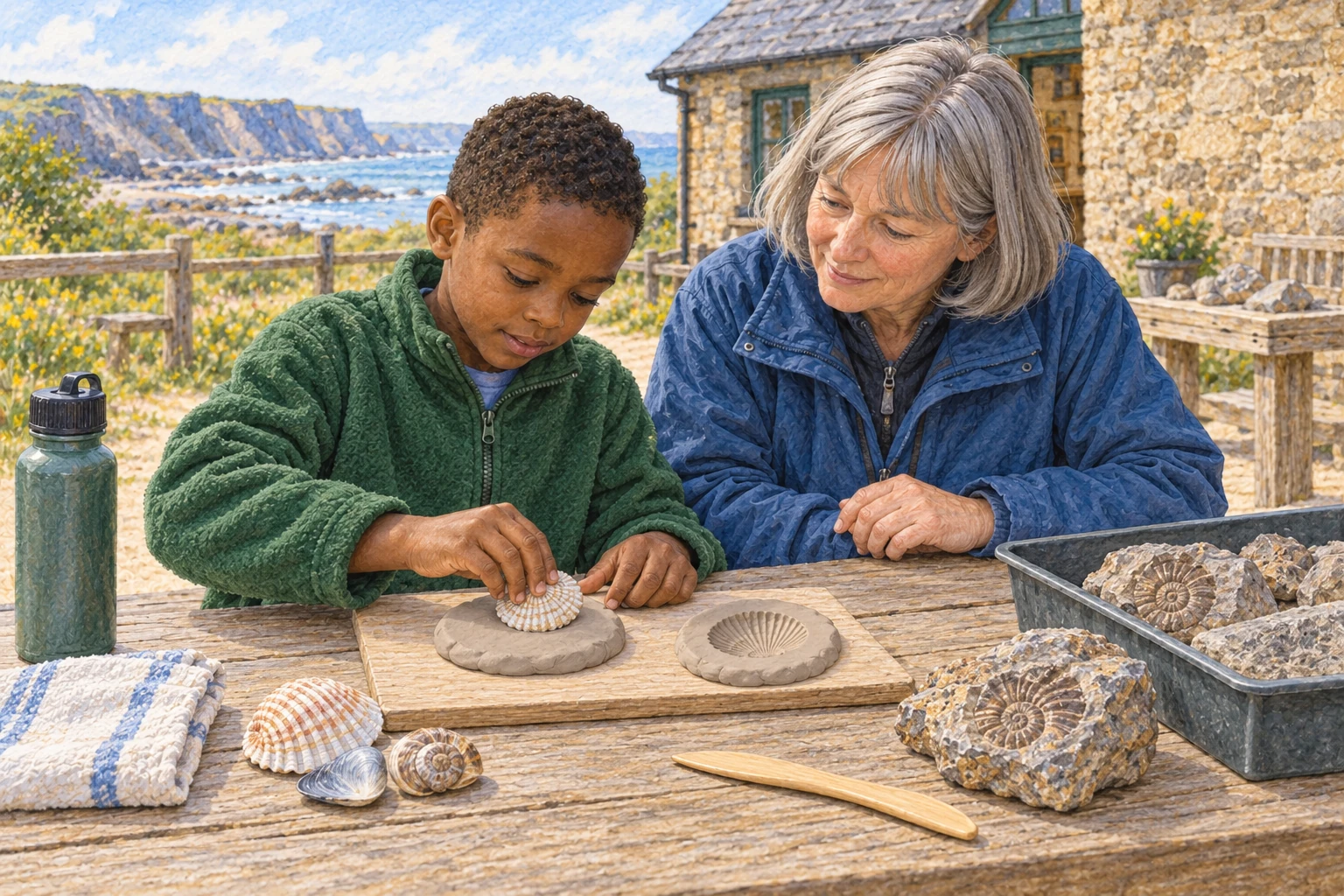
“Can we make one today?” Charlie asks. Mrs Lake gives him modelling clay and a clean modern shell. He presses the shell into the soft surface. Then he lifts it carefully. A curved impression remains, with little ridges showing where the shell touched.

Charlie is delighted. “My fossil!” he says. Mrs Lake explains that it is a model impression, not a newly made ancient fossil. It helps show how a shape can be left behind. Real fossil formation involves conditions and timescales their quick model does not reproduce.
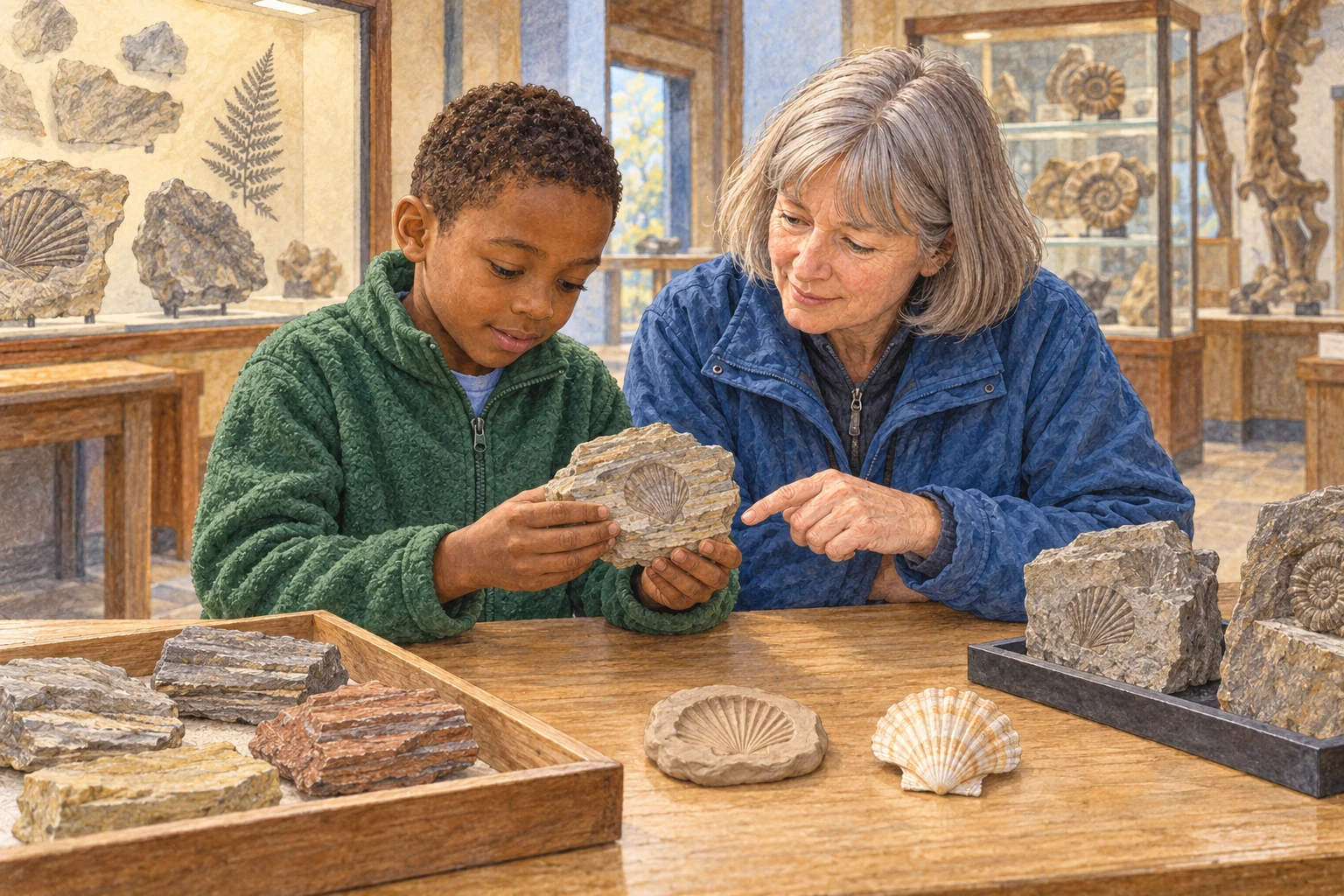
They examine a layered rock specimen. Some sedimentary rocks form from particles settling, then becoming joined together over time. Fossils can help scientists investigate past life and environments. A shell fossil high above today’s sea can provide a clue to a place’s distant history.
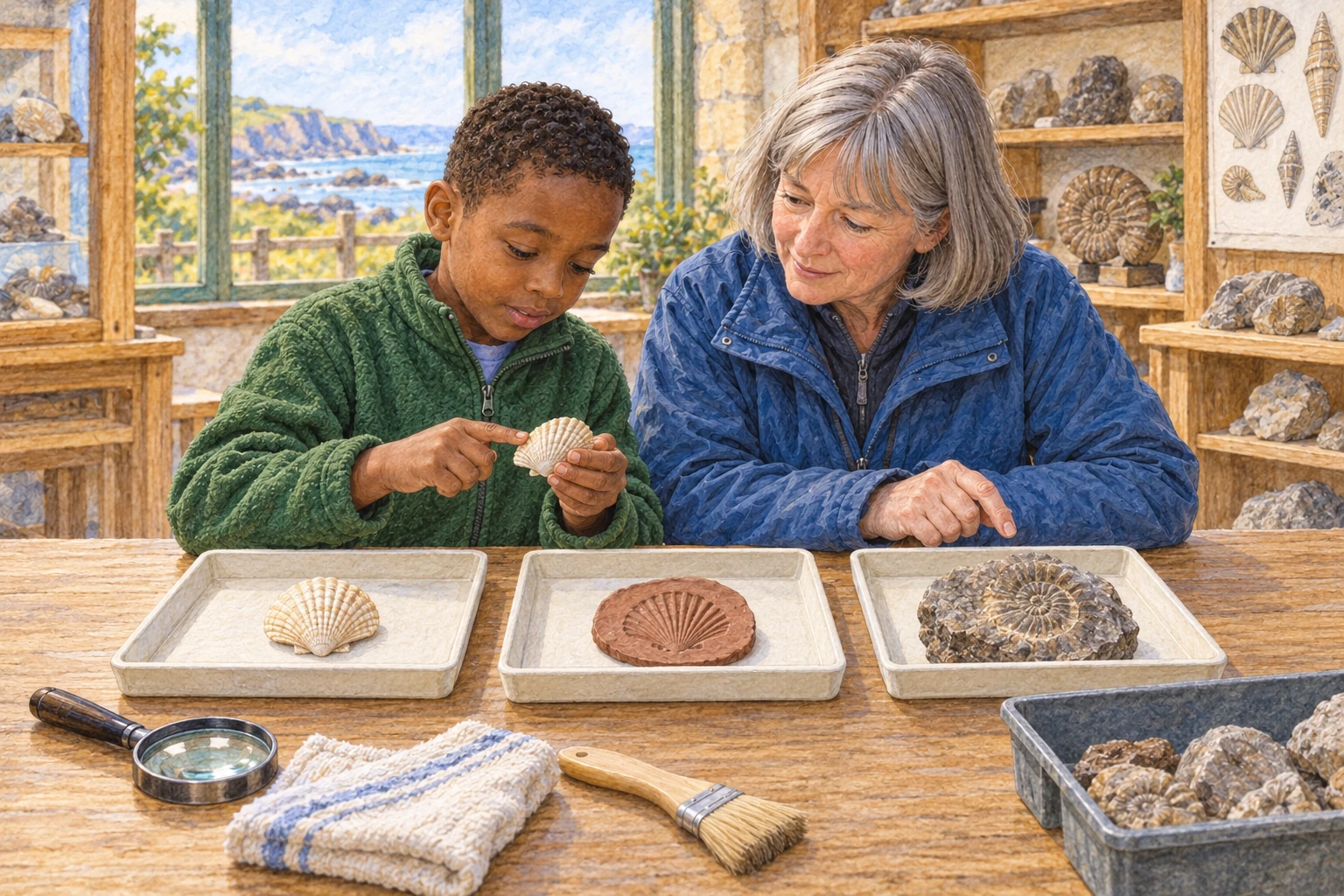
Charlie sorts three objects: the modern shell, his clay impression and the fossil rock. He can explain the differences without calling any of them useless. The shell shows a present-day shape. The model shows an impression process. The fossil supplies evidence from the past.
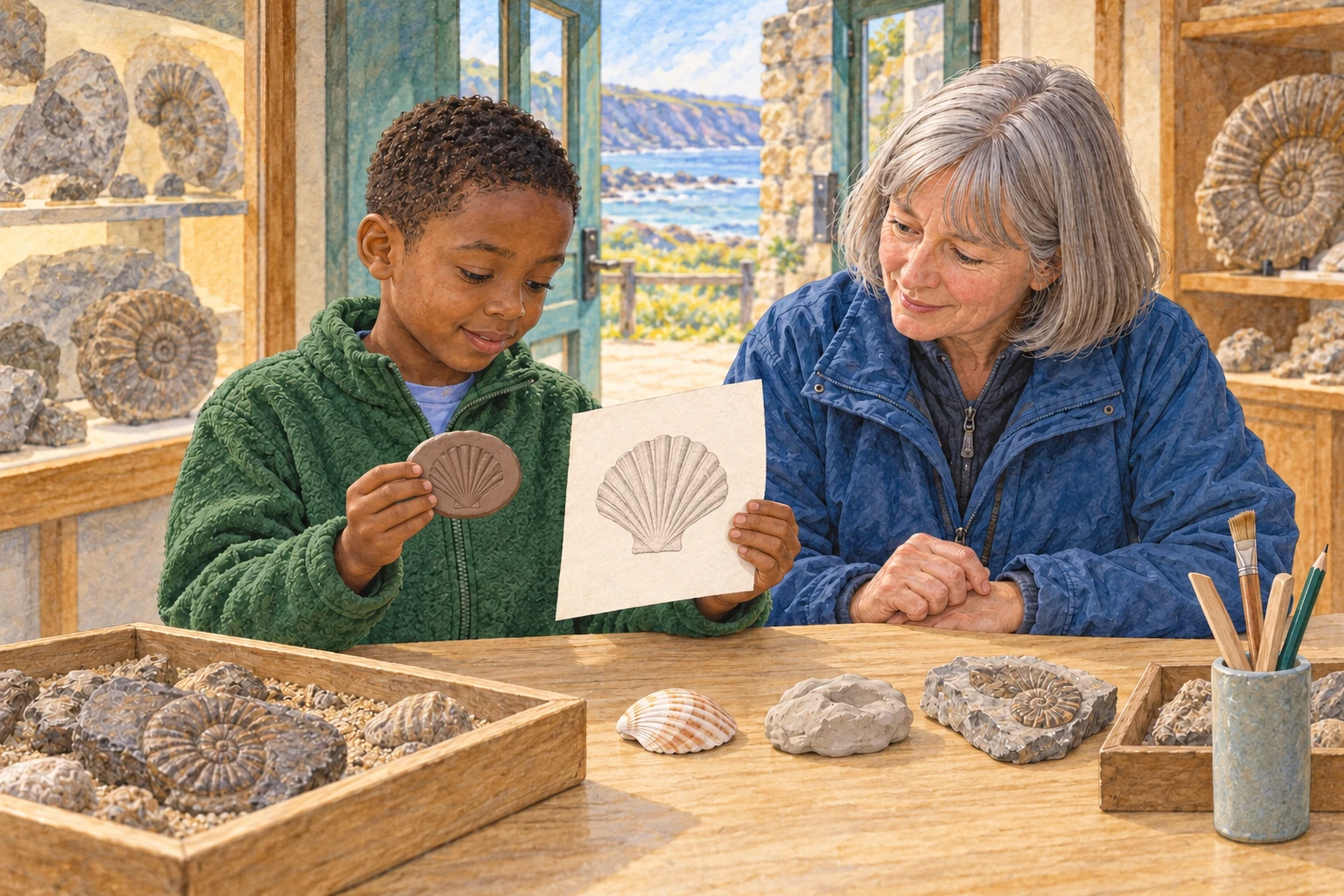
At the exit, Charlie shows Mrs Lake his sketch and clay model. He leaves the real specimen at the museum. “I made a clue about a clue,” he says. Mrs Lake laughs. His small clay shape has helped him ask a much bigger question about long ago.