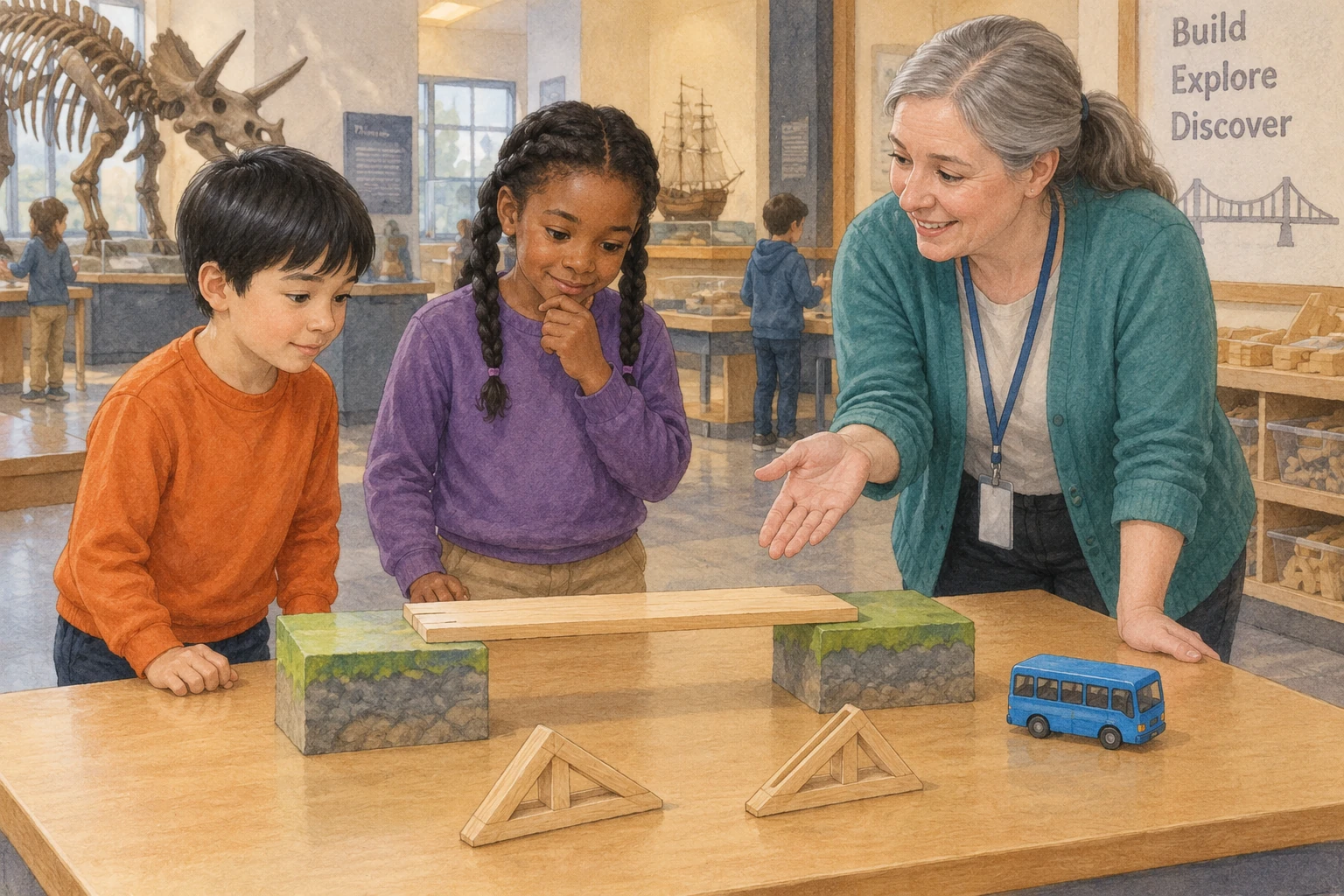
Colin’s Museum Bridge
School Readers · Level 17Colin and Violet visit the museum’s building room, where children can test small bridges. On one table, a flat wooden deck rests between two blocks representing riverbanks. A blue toy bus waits beside it. Ms Ford invites them to find a way to carry the bus across.
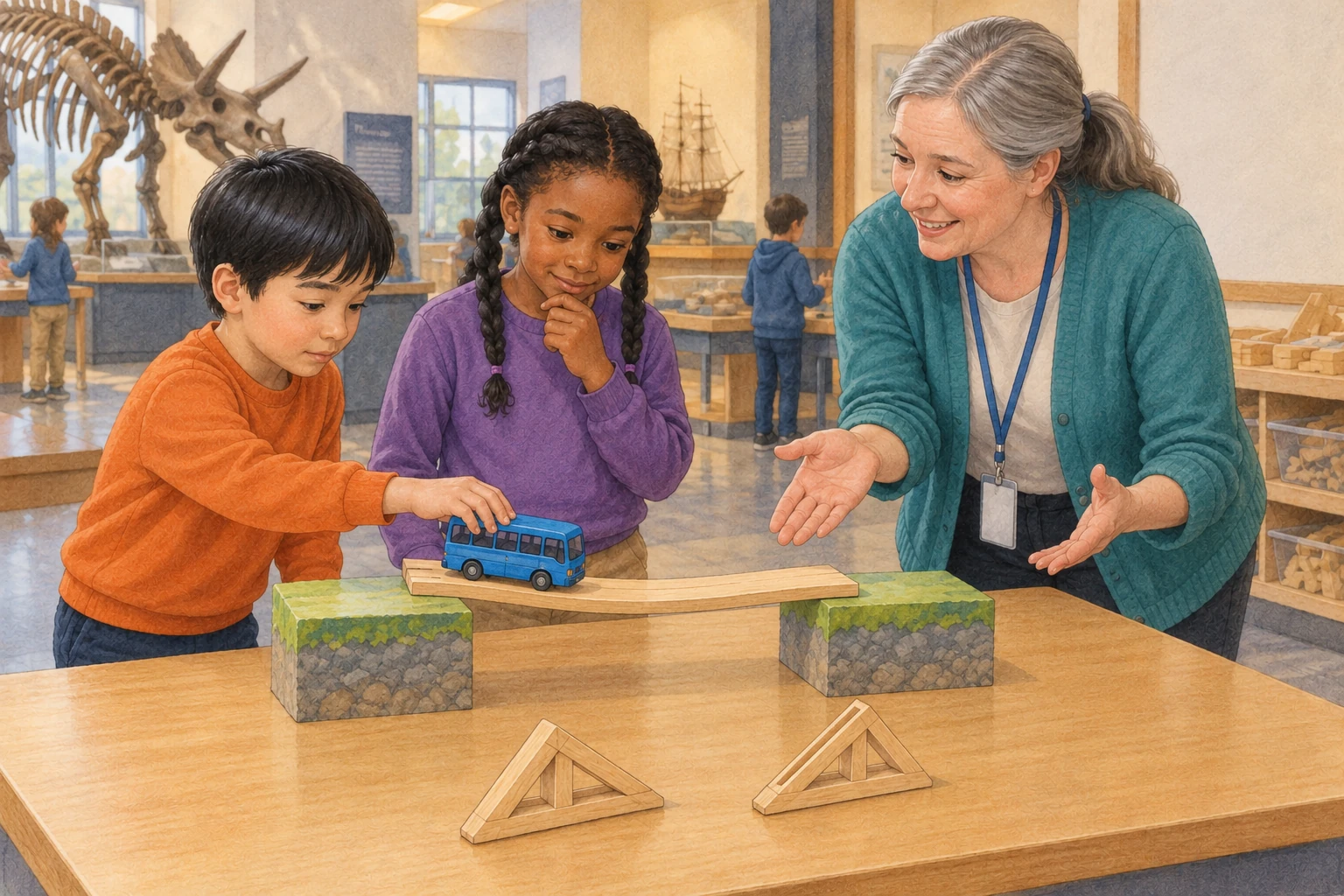
Colin rolls the bus onto the middle of the deck. The thin wood bends, so he brings the bus back before it falls. Violet suggests adding another riverbank block underneath. Ms Ford explains that the model needs to leave the river channel open for boats.
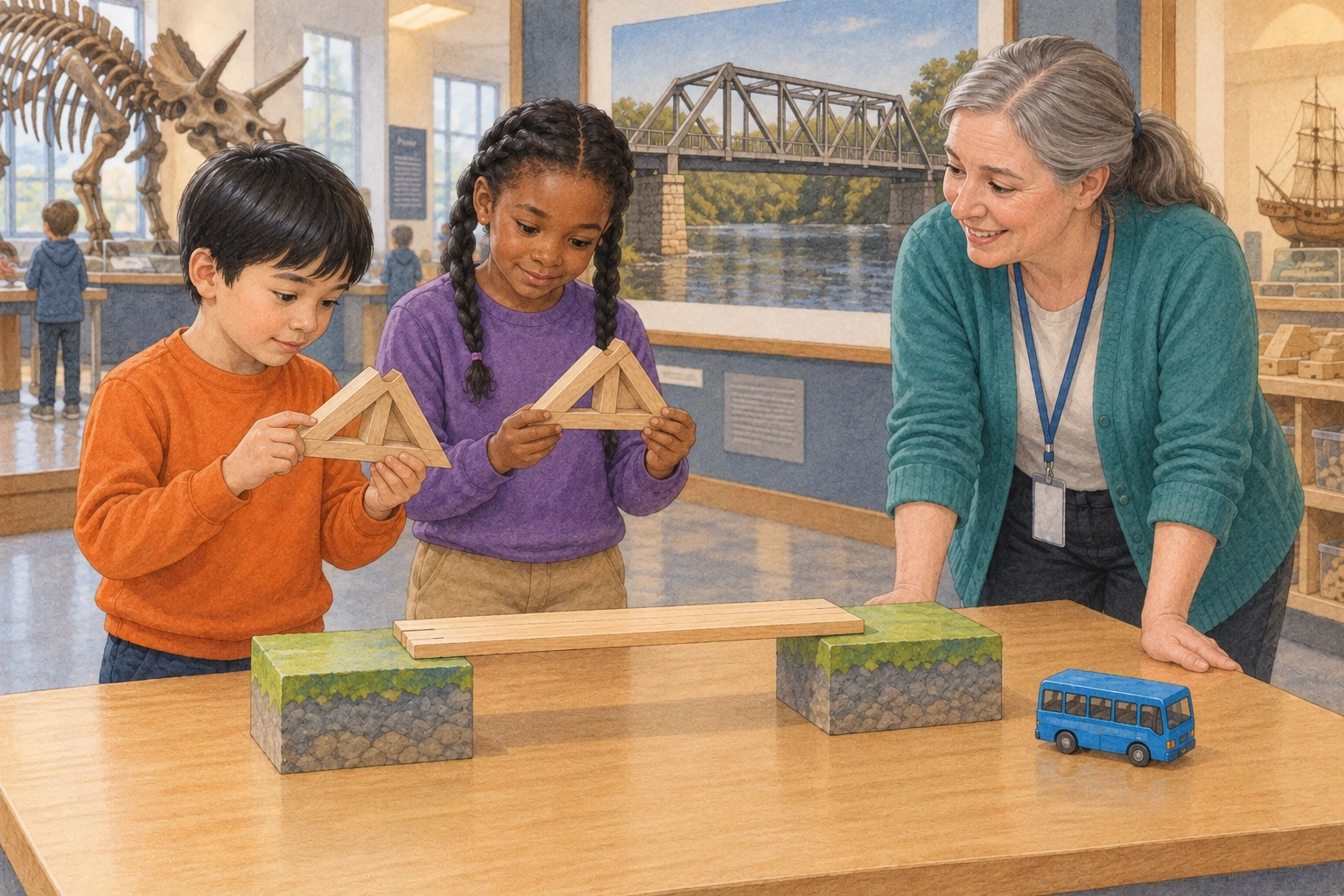
They examine the pieces laid out beside the table. There are two triangular supports with notches that fit the deck. Colin notices a photograph of a real bridge on the wall. Its strong shapes are not only across the top; some reach down beneath the road.
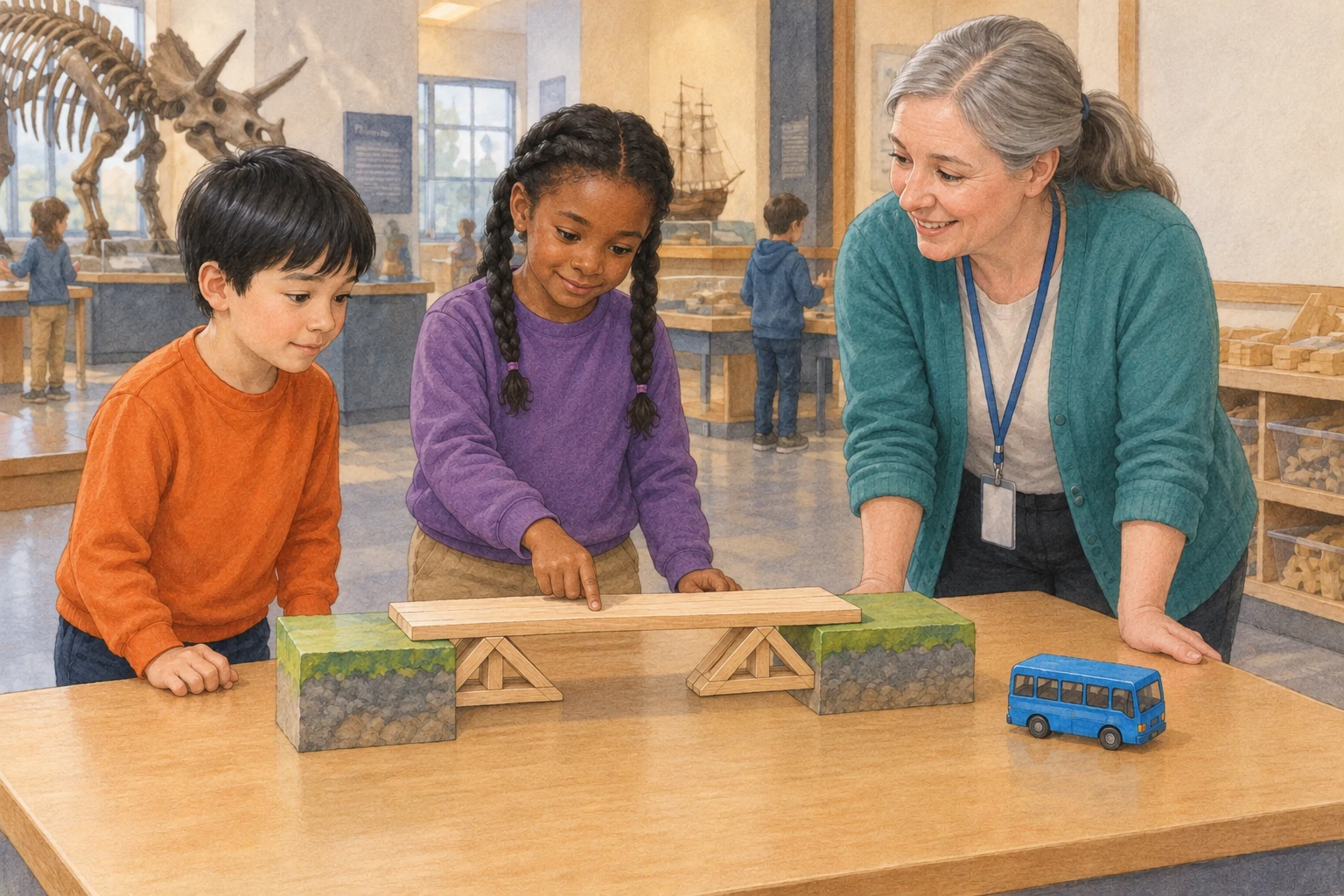
With Ms Ford’s help, the children fit one triangular support beneath each side of the deck. They make sure the supports rest firmly at the riverbanks rather than standing in the channel. Violet presses lightly with one finger, noticing that the middle bends much less.
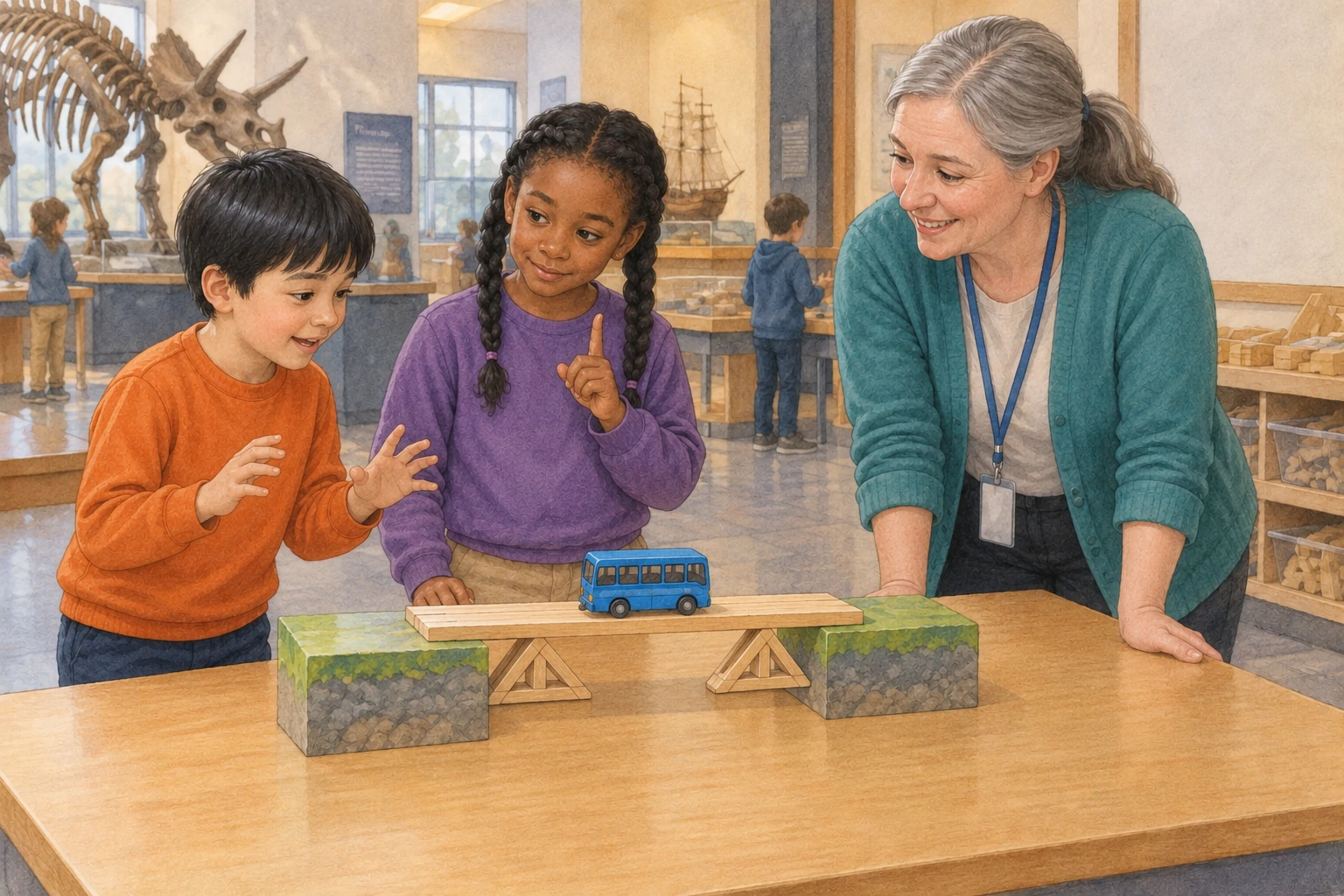
They send the blue bus across again, stopping it briefly at the middle. This time the deck holds its shape. Colin wants to add more toys straight away, but Violet suggests repeating the same test first so they can be sure what their change has done.
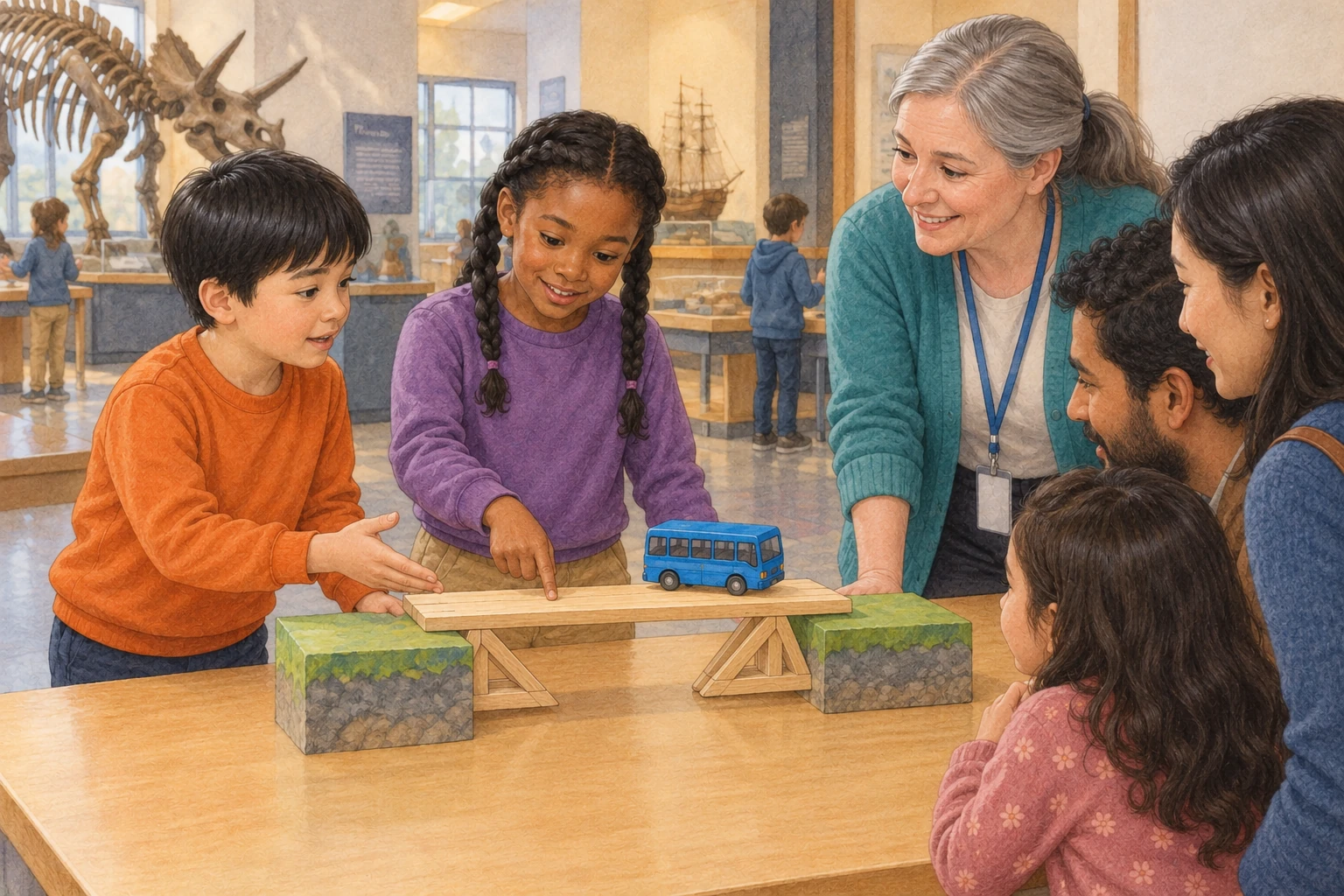
After a second crossing, Ms Ford asks them to explain their design to another family. Violet points to the open space beneath the bridge. Colin shows how the triangular supports carry the deck while leaving a route through the pretend river, unlike their first idea.
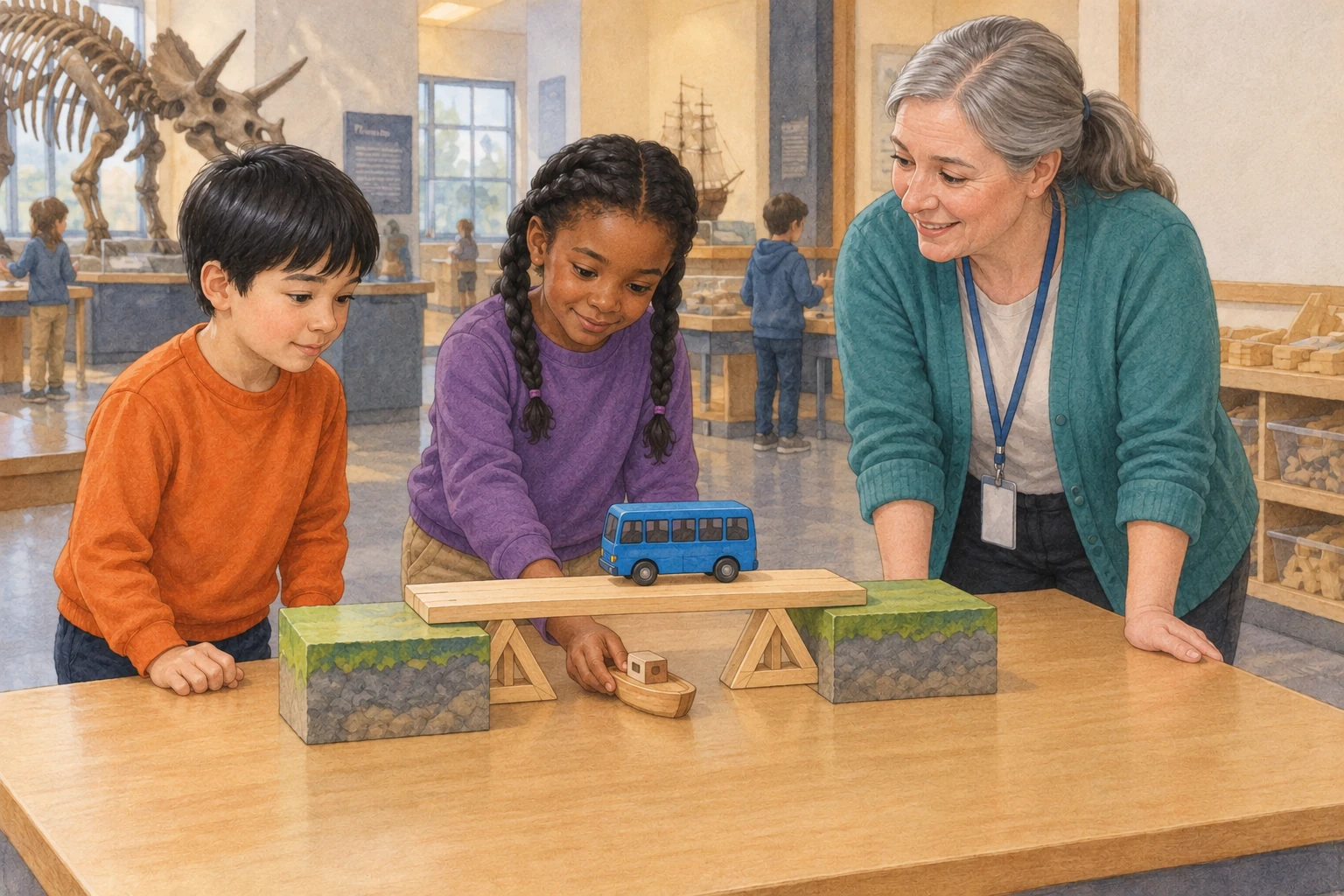
The other child chooses a small wooden boat and slides it through the channel without touching the supports. Colin and Violet watch from the sides. Their bridge has passed two different checks: the bus can travel above, and a boat can still travel below.
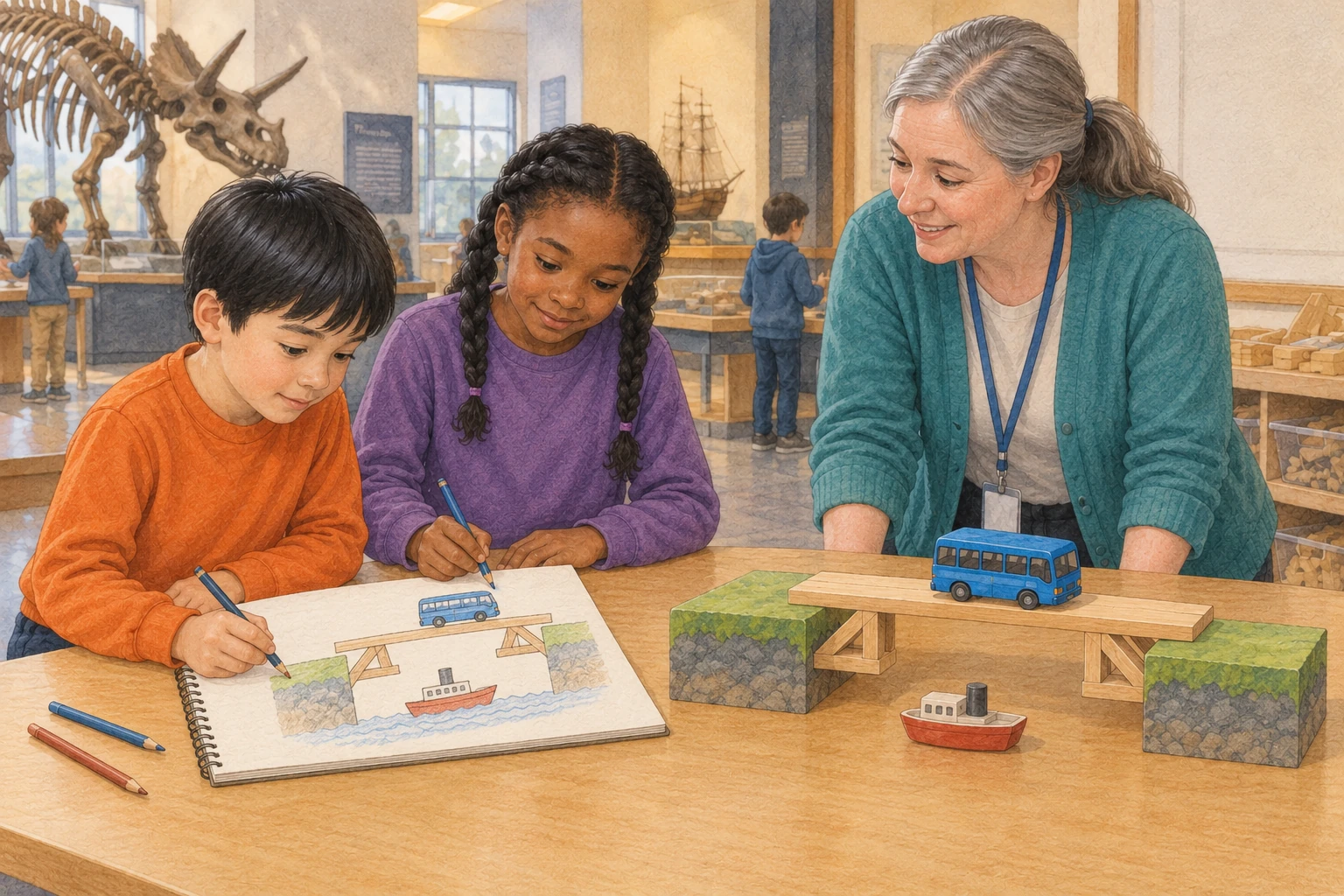
Before leaving, they draw the bridge in the museum notebook. Violet adds the bus and Colin adds the boat, showing why both spaces matter. “A strong bridge was only part of the problem,” Colin says. “It also had to leave room for the river.”