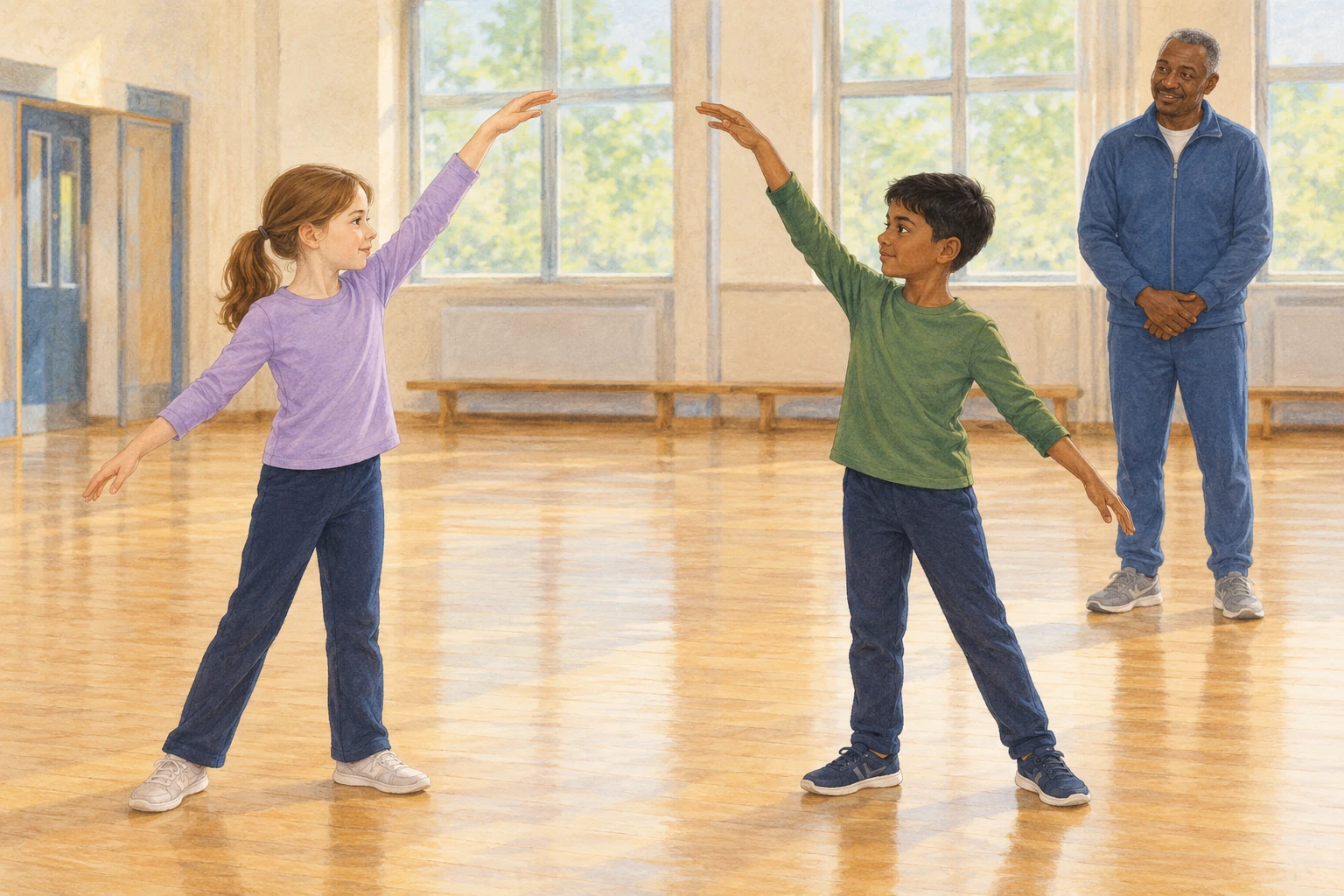
Daisy’s Mirror Dance
Shared Reading Books · Arts · Year 3Daisy and Oliver face each other in the hall. Their dance begins like a mirror: one person moves and the other follows. Daisy lifts an arm slowly. Oliver lifts the arm opposite hers, keeping his eyes on the shape between them.
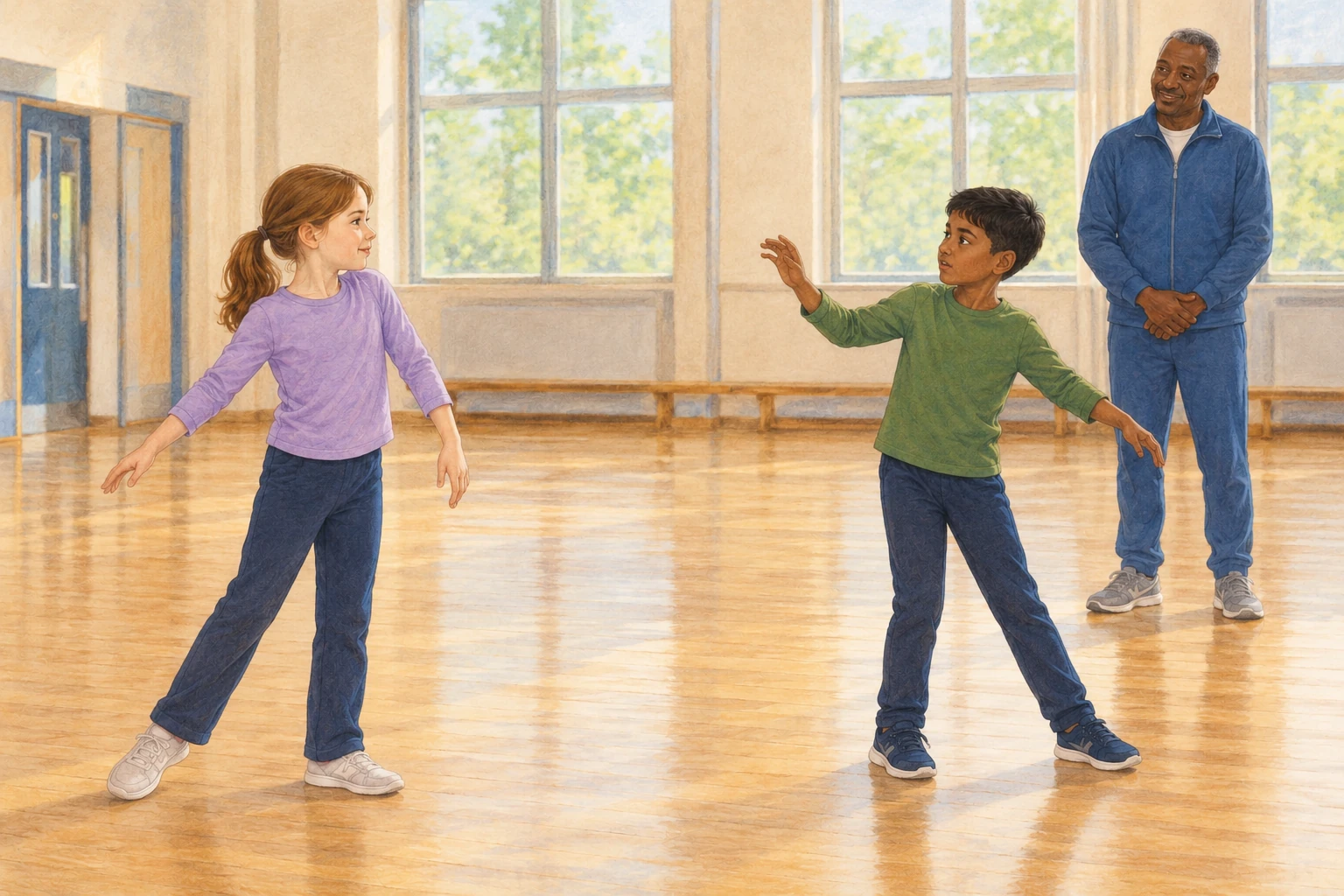
When Daisy turns quickly, Oliver loses the movement. He tries to catch up, but now they are doing different things. “I could not see where you were going,” he says. Daisy had been thinking about an impressive turn, not about her partner.
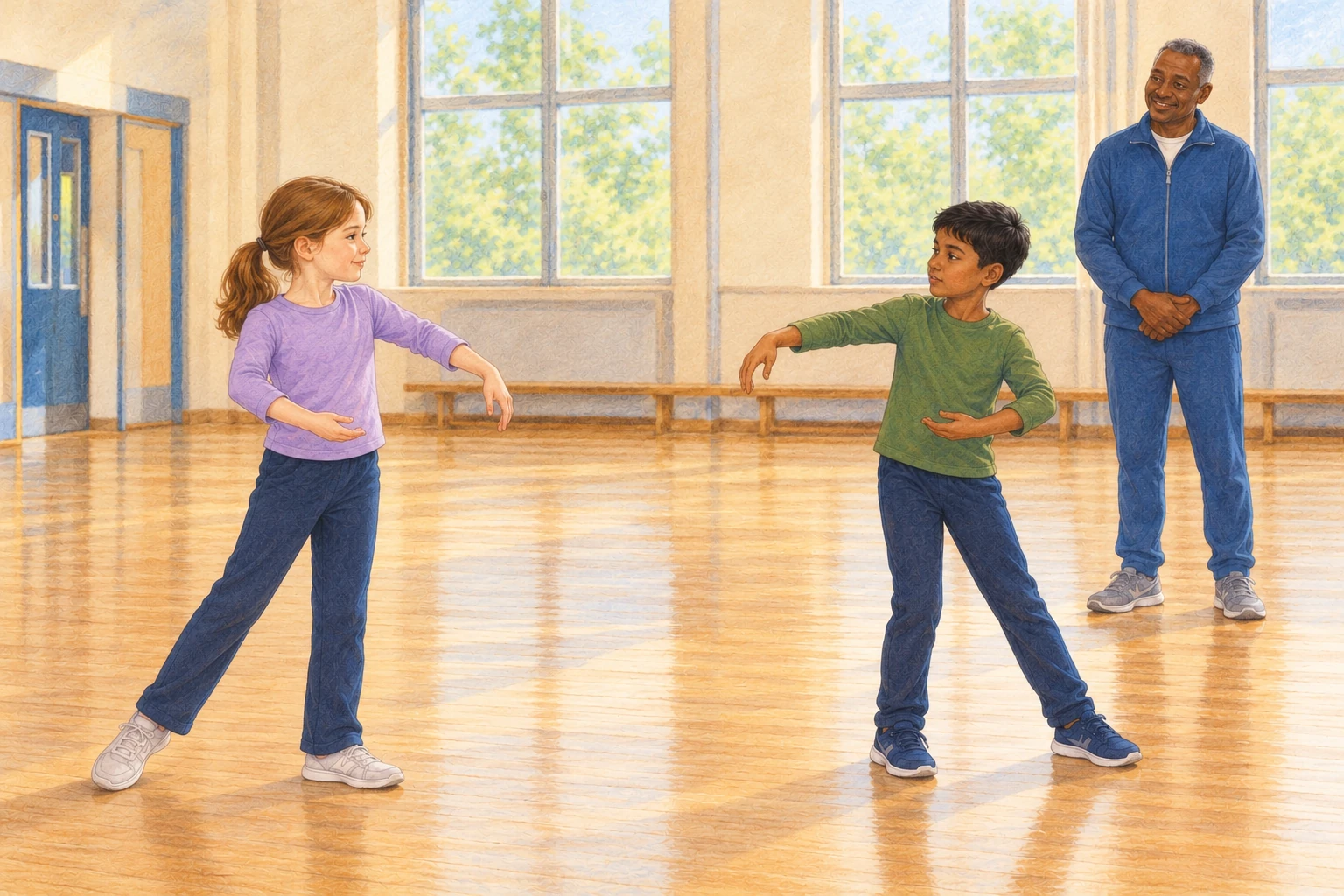
Mr Reed asks them to choose movements both people can see and manage comfortably. Daisy lowers her arms and begins again with a gentle curve. This time, she waits long enough for Oliver to find the same shape.
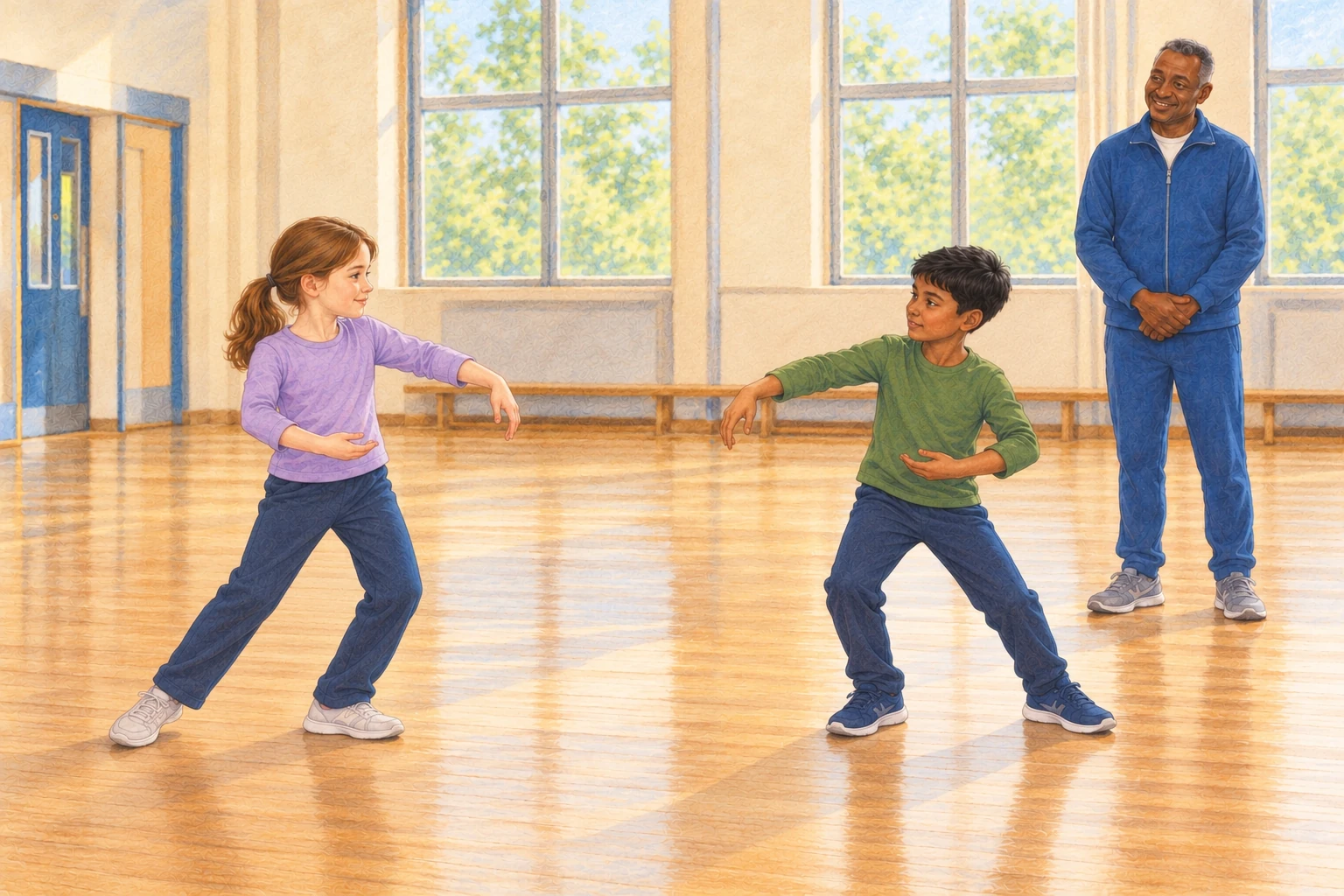
They build a short phrase: reach, curve, pause. Oliver suggests changing the level by bending their knees a little. Daisy follows his idea. The phrase feels different when the person who began as the follower makes a choice.
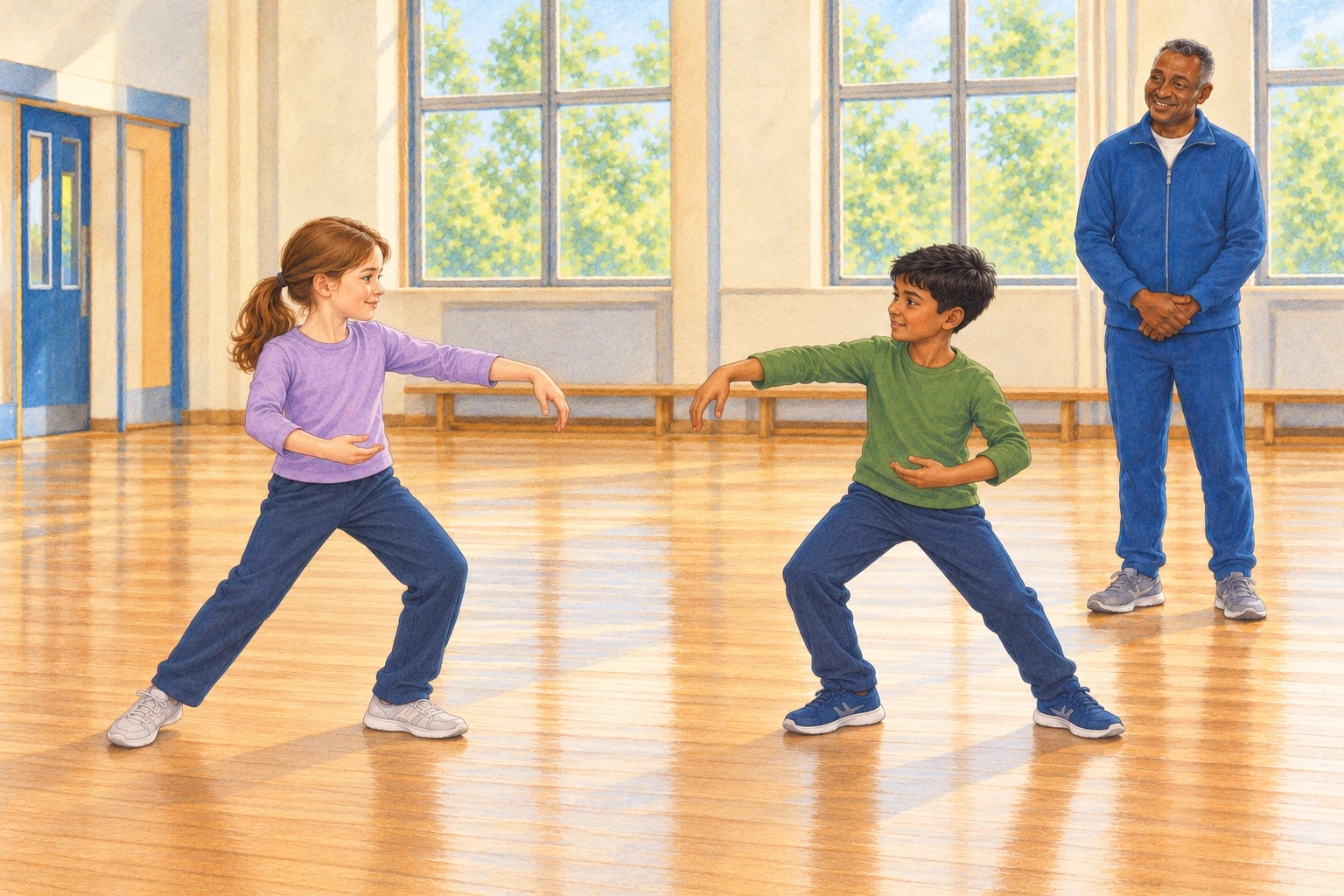
They swap the leader, but the change is abrupt. Oliver begins a reach while Daisy is still finishing her curve. They decide to hold their shared shape for one breath before the new leader moves. That small pause makes the handover clear.
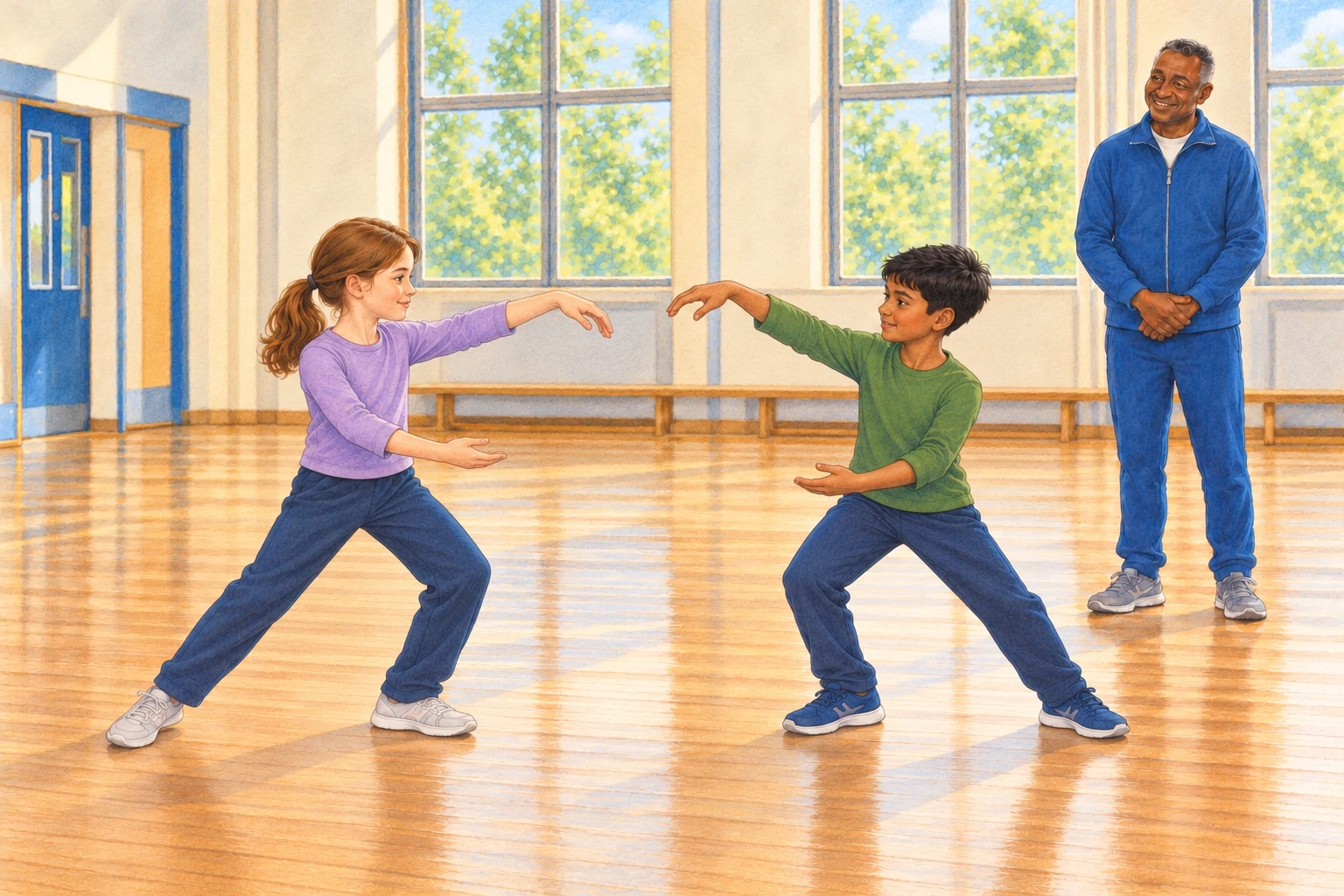
After several tries, they leave the leading role open. Each person watches for a small beginning from the other. Sometimes Daisy starts; sometimes Oliver does. They keep the phrase slow enough to respond instead of guessing what comes next.
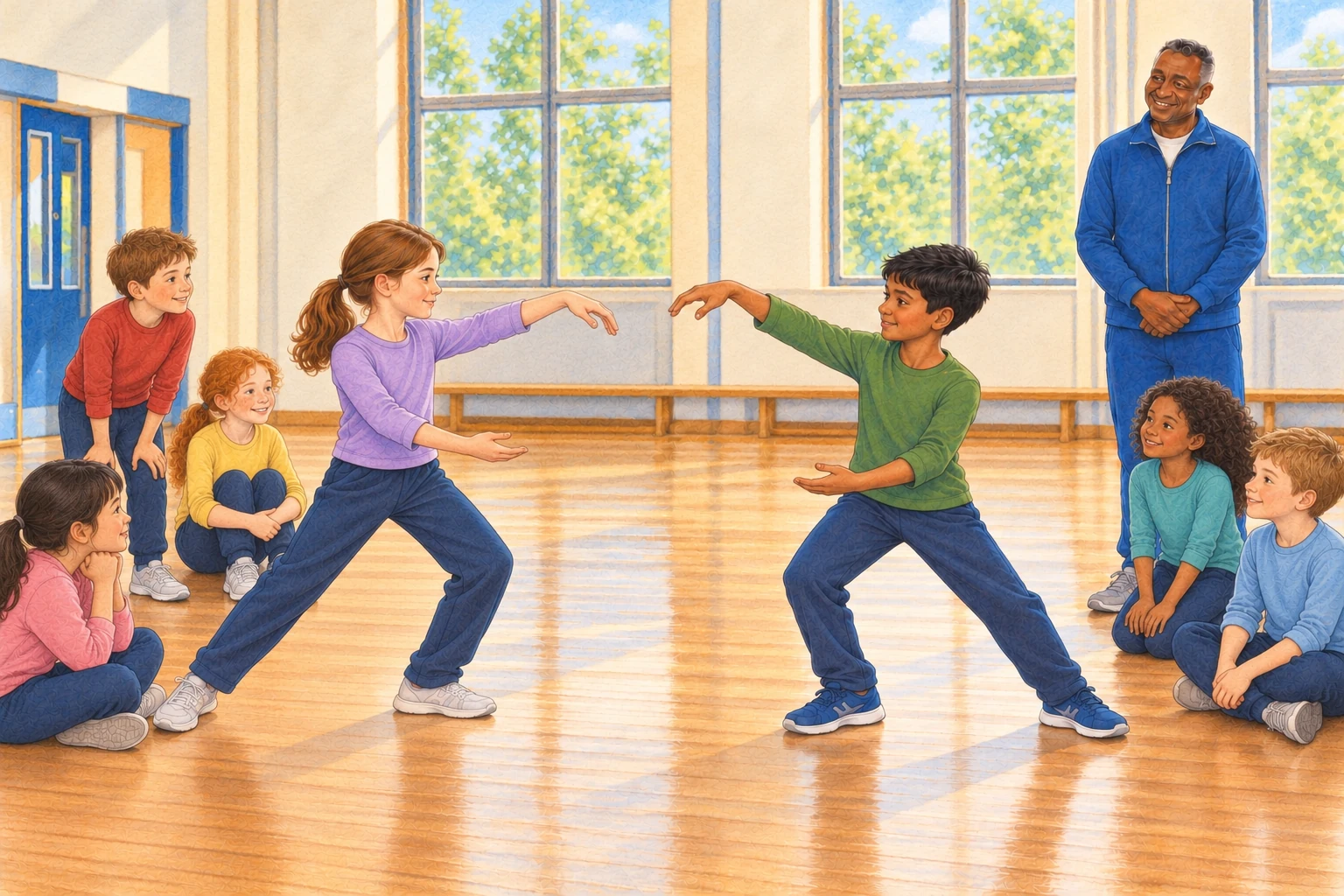
A few classmates watch without being told who leads. One thinks Daisy does; another thinks Oliver does. When they learn the answer, they ask to see it again. Daisy and Oliver choose a shorter phrase so the change is easier to notice.
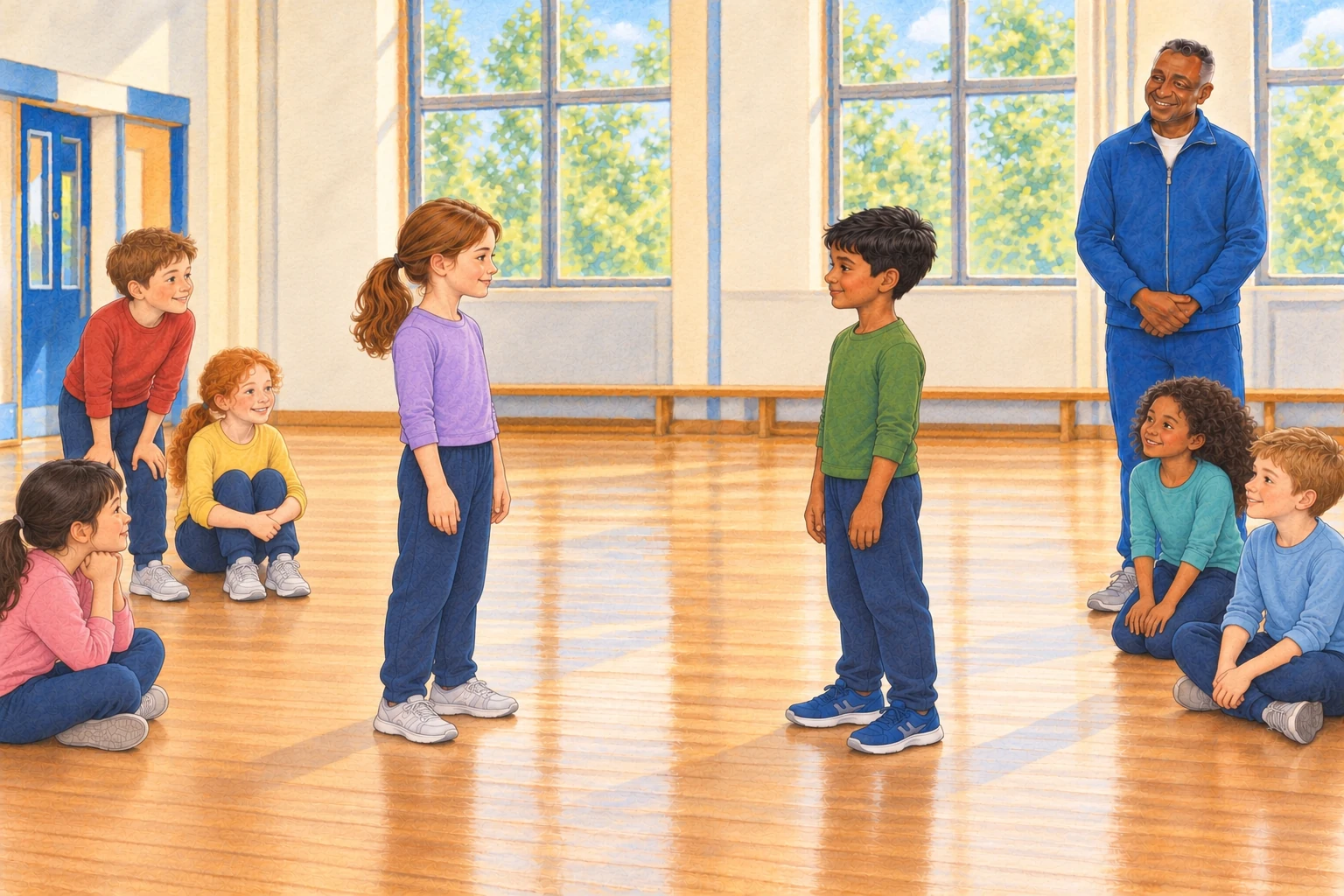
They finish facing each other, hands resting and feet steady. Daisy still likes her big turn, but she saves it for another dance. In this one, the interesting part is harder to see: the moment when a choice passes quietly between two people.