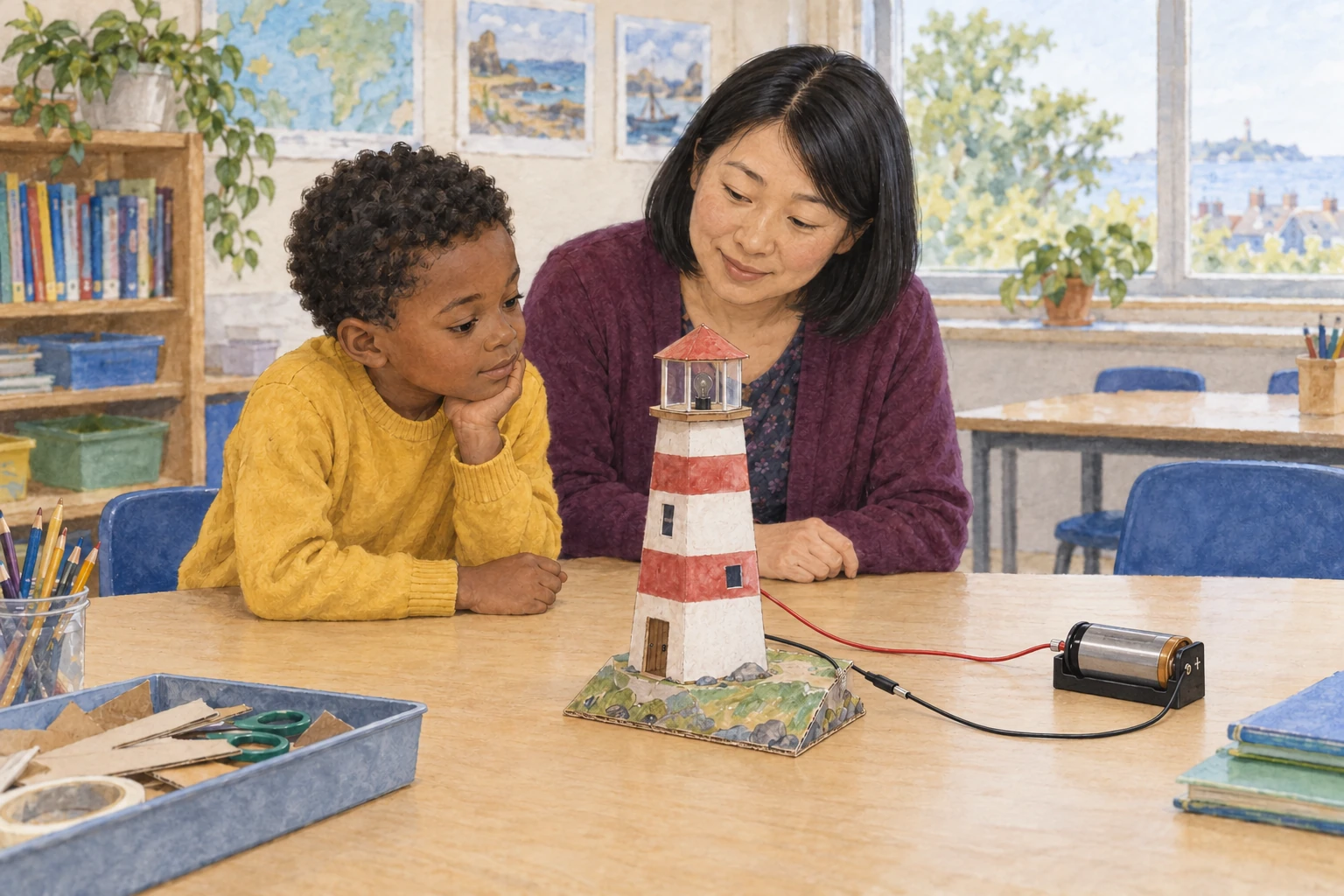
Daniel’s Bright Idea
Shared Reading Books · Science · Year 2Daniel’s cardboard lighthouse is ready for the toy boats, but its tiny lamp will not light. Mrs Clarke joins him at the classroom table. They are using a small low-voltage cell and matching school equipment. “Let us trace the connections,” she says.
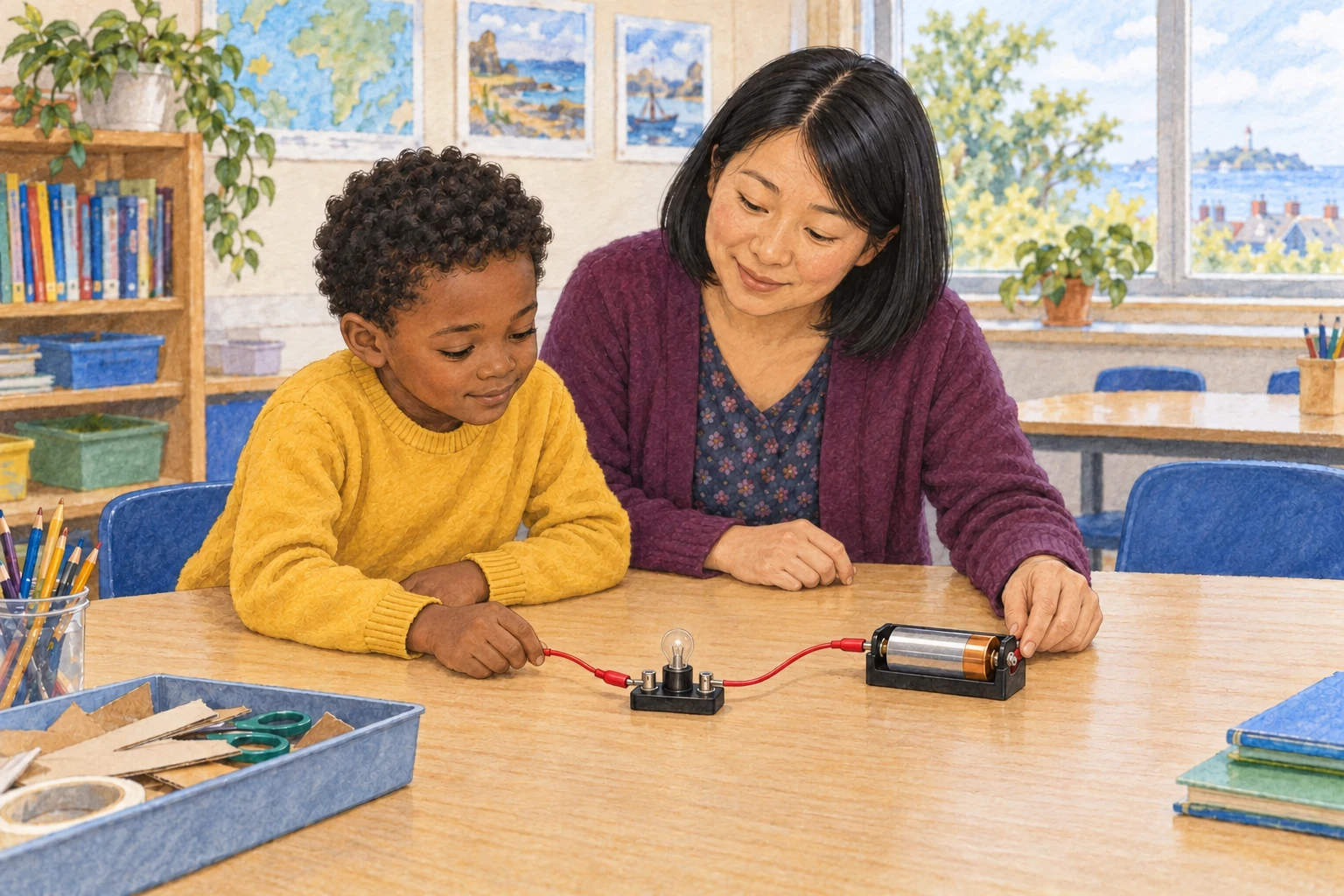
They set out the cell in its holder, two insulated leads and a small bulb in a holder. Mrs Clarke checks that the parts are suitable and undamaged. The cell can provide energy for the lamp when the components form the right kind of complete circuit.
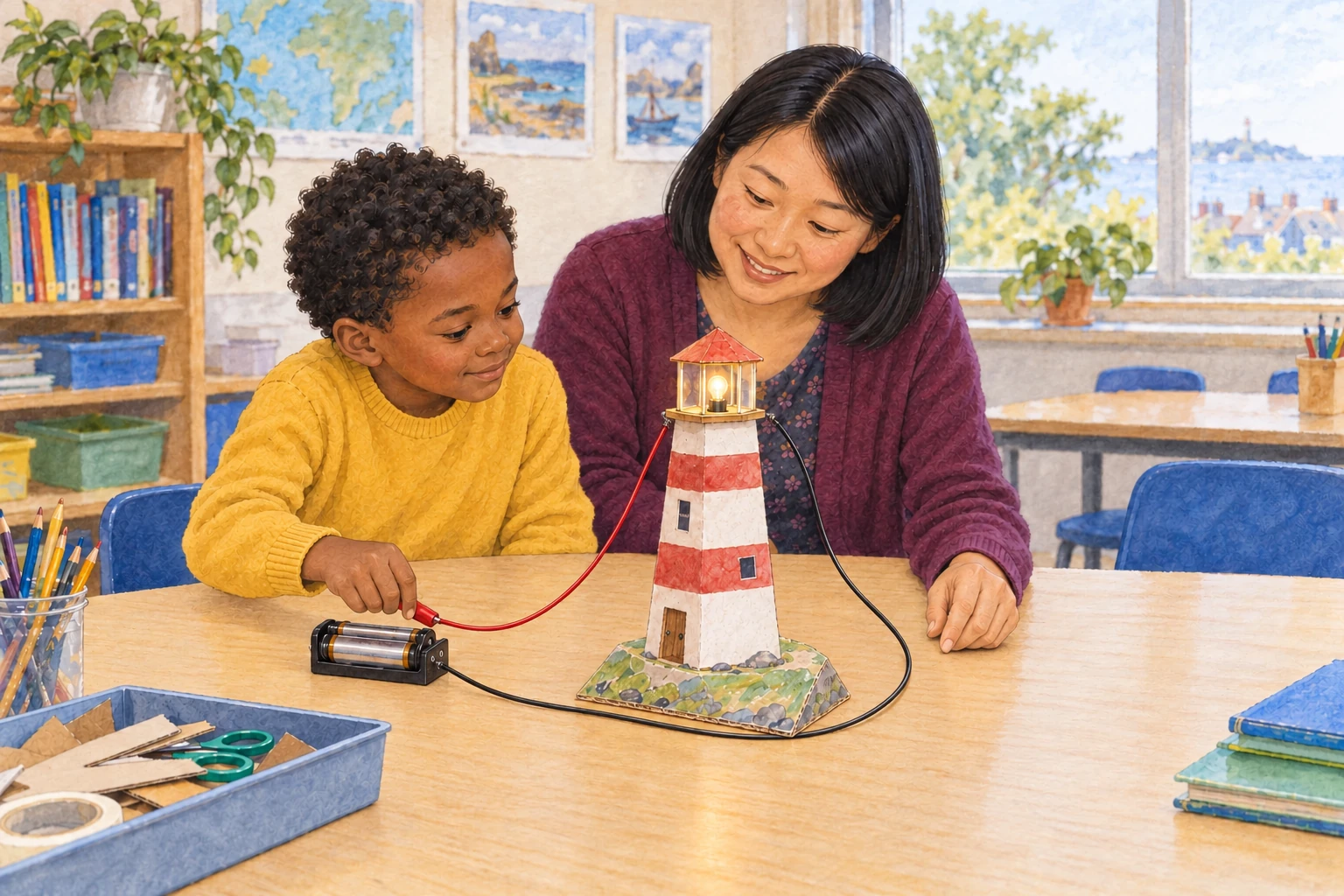
Together, they connect one lead from each cell terminal to the two bulb-holder contacts. The bulb glows. “The path goes all the way round,” says Daniel. Mrs Clarke calls this a closed circuit. Each connection is part of the same loop.
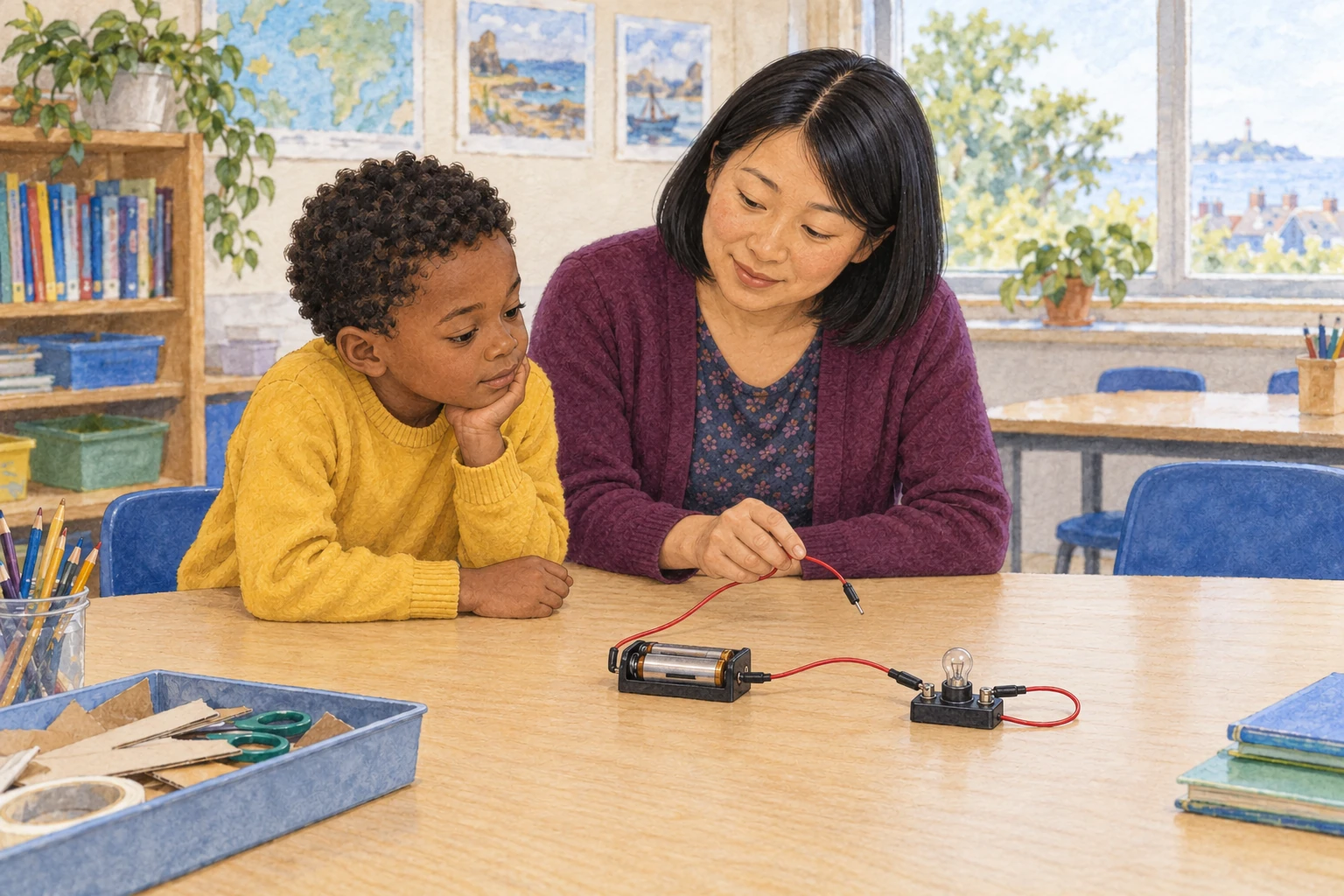
When Mrs Clarke opens one connection, the light goes out. The bulb has not used up all its light. The gap has broken the complete path. Daniel follows the route with his finger held above the equipment, rather than tugging at the leads.
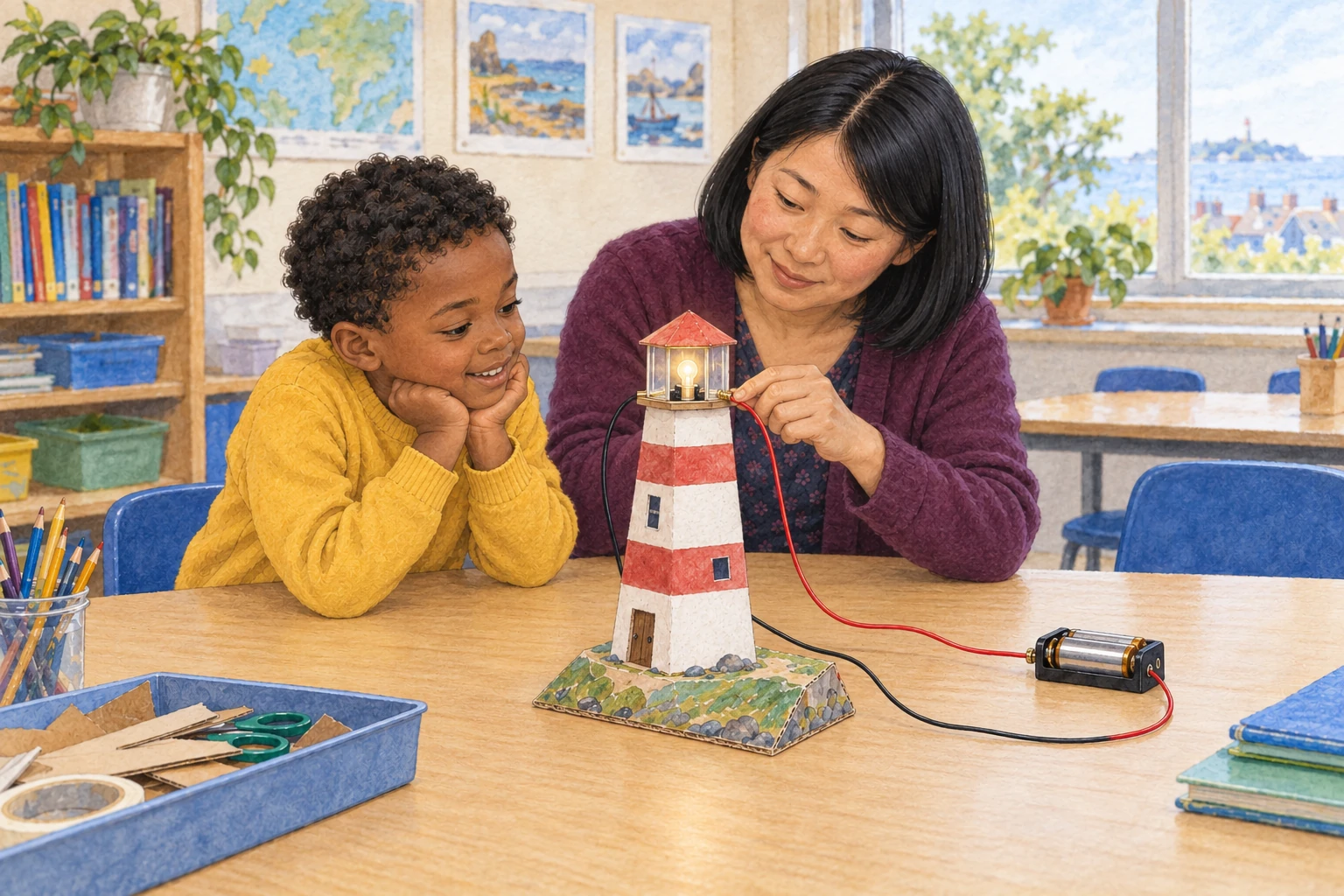
They find a loose clip in the lighthouse model. Mrs Clarke reconnects it securely, and the bulb glows again. Daniel records both arrangements in a drawing. A picture of the gap helps explain why a model that looked finished had not worked.

Next, Mrs Clarke adds a simple switch to the loop. Opening it makes a gap; closing it completes the circuit again. Daniel can control the lamp without pulling wires apart. A switch changes the path, not the colour or shape of the cell.
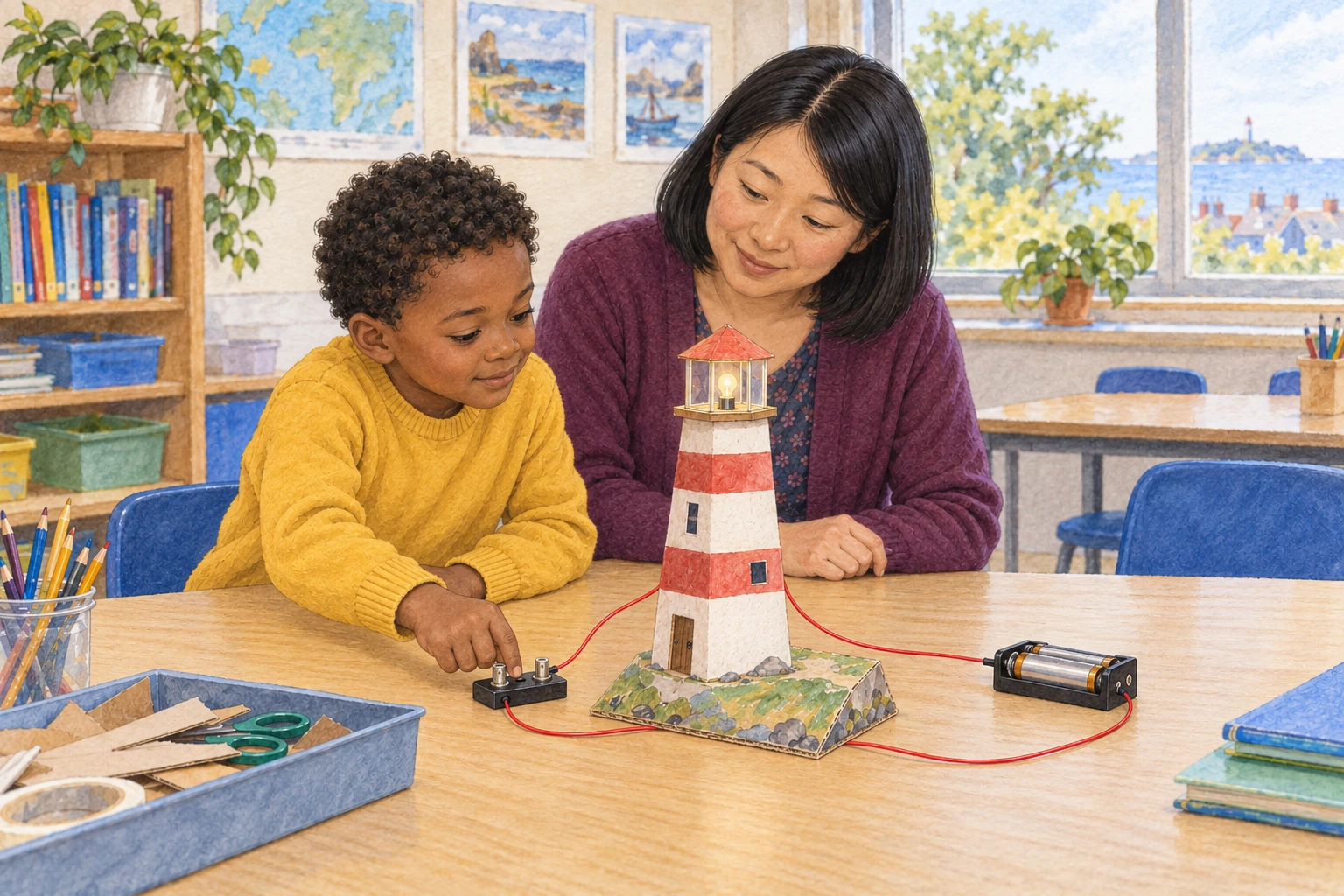
The toy boats now have a working light for their game. Daniel turns it off when the game pauses. Mrs Clarke disconnects the equipment afterwards and checks it. This small supervised circuit is for classroom investigation, never an invitation to experiment with household sockets.

Daniel adds the switch to his drawing. “I looked for a broken path instead of blaming the lighthouse,” he says. His bright idea began with noticing one small connection. The cardboard tower stayed the same, but his explanation became much clearer.