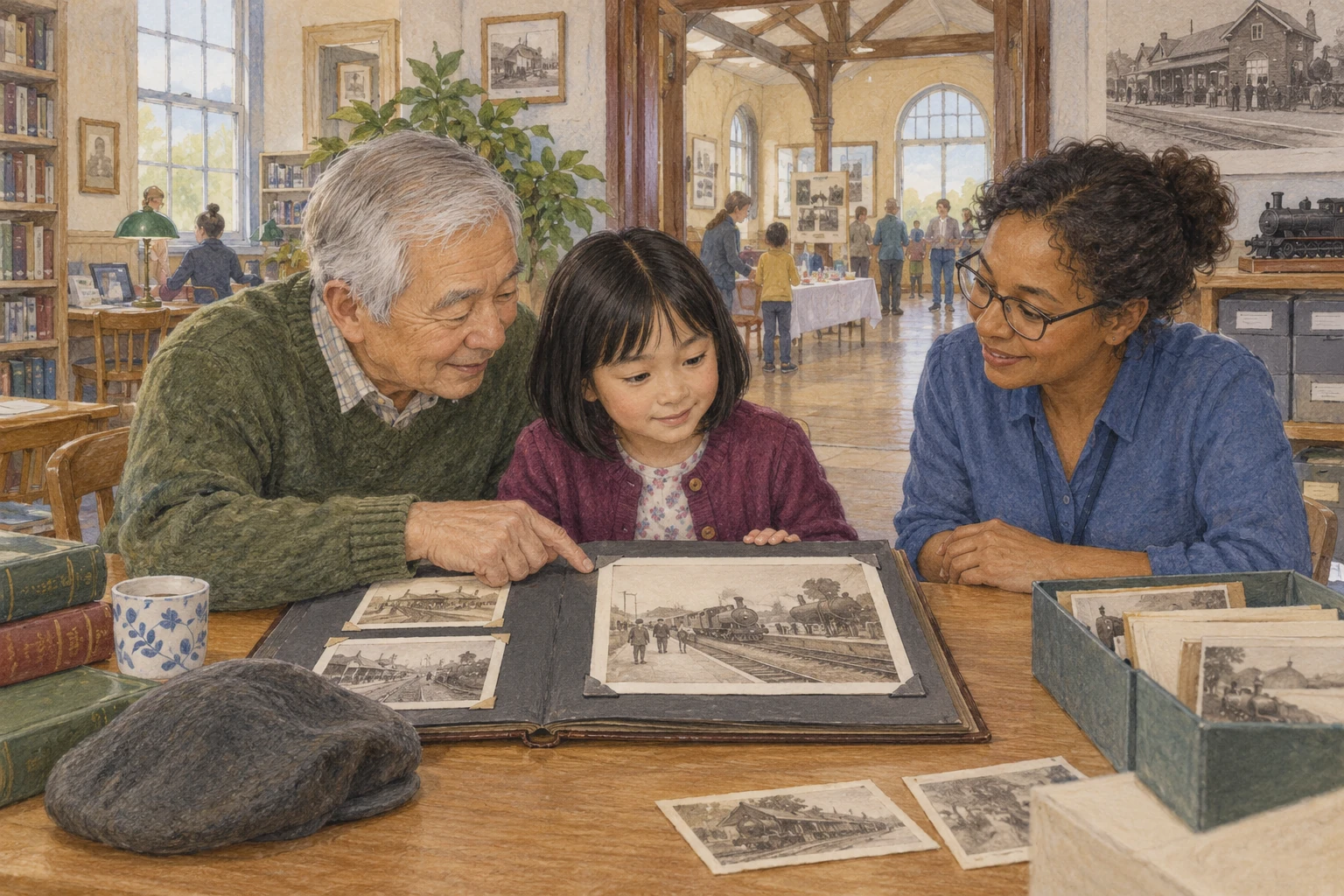
Ella’s Old Photo
Shared Reading Books · Social Science · Year 3Ella found a photograph in Grandad’s album. It showed a busy railway station where the community hall stood today. A small child waved beside the platform. “Is that you?” asked Ella. Grandad smiled. “We need more clues than a wave.”
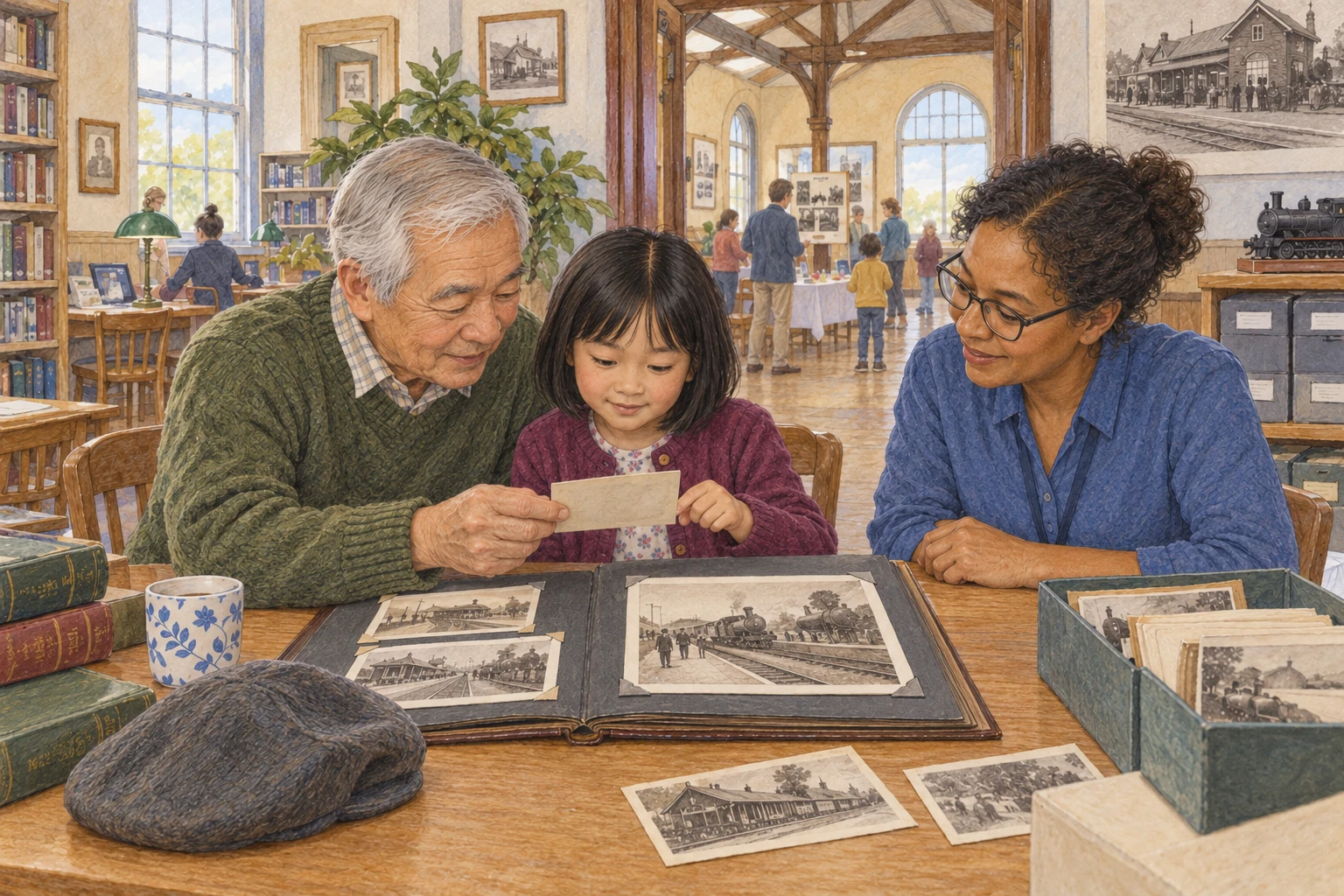
They examined the photograph together. A date was written on its back. Grandad had not been born then. Ella put her first guess aside. The date was evidence that helped her change her mind. The waving child remained a mystery.
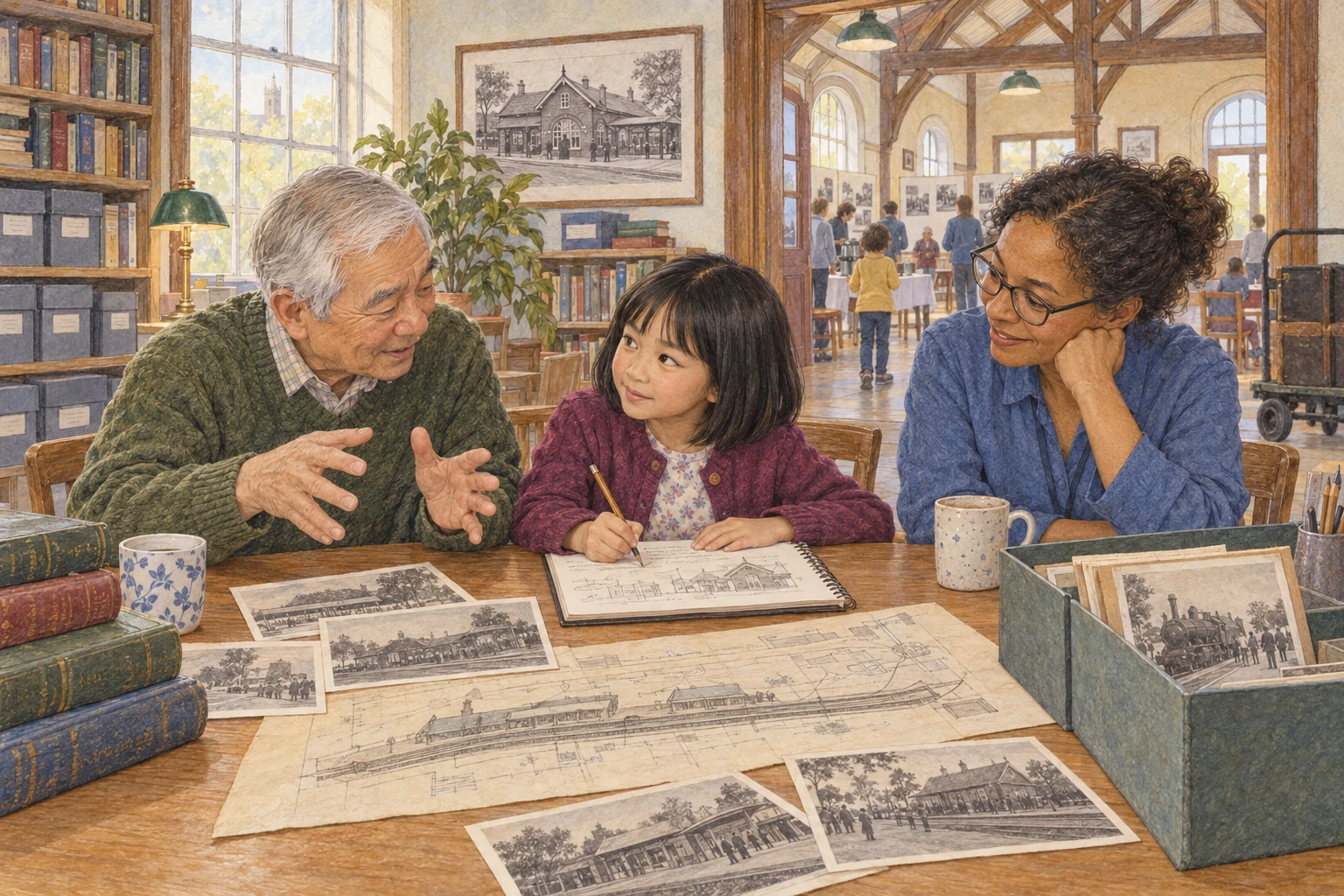
Grandad remembered visiting the station when he was young. He described steam and the sound of wheels. Ella recorded his memory. “Was the roof always that shape?” she asked. Grandad was unsure. A memory could be useful without answering every question.
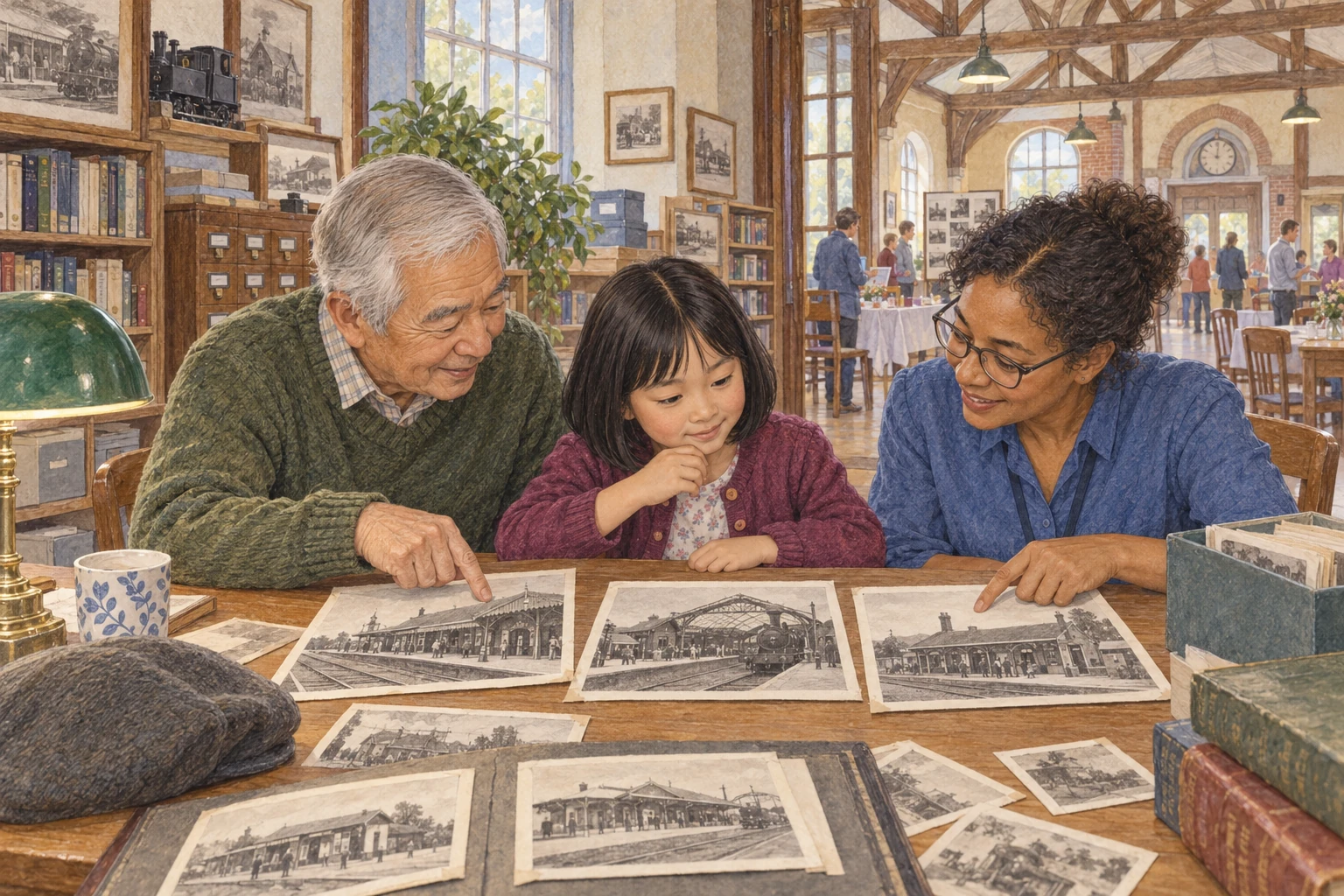
At the library, Ms Cole found a later photograph. It showed a new roof above the same doorway. Ella compared the pictures. The building had changed before it became a hall. One photograph could not tell its whole story.
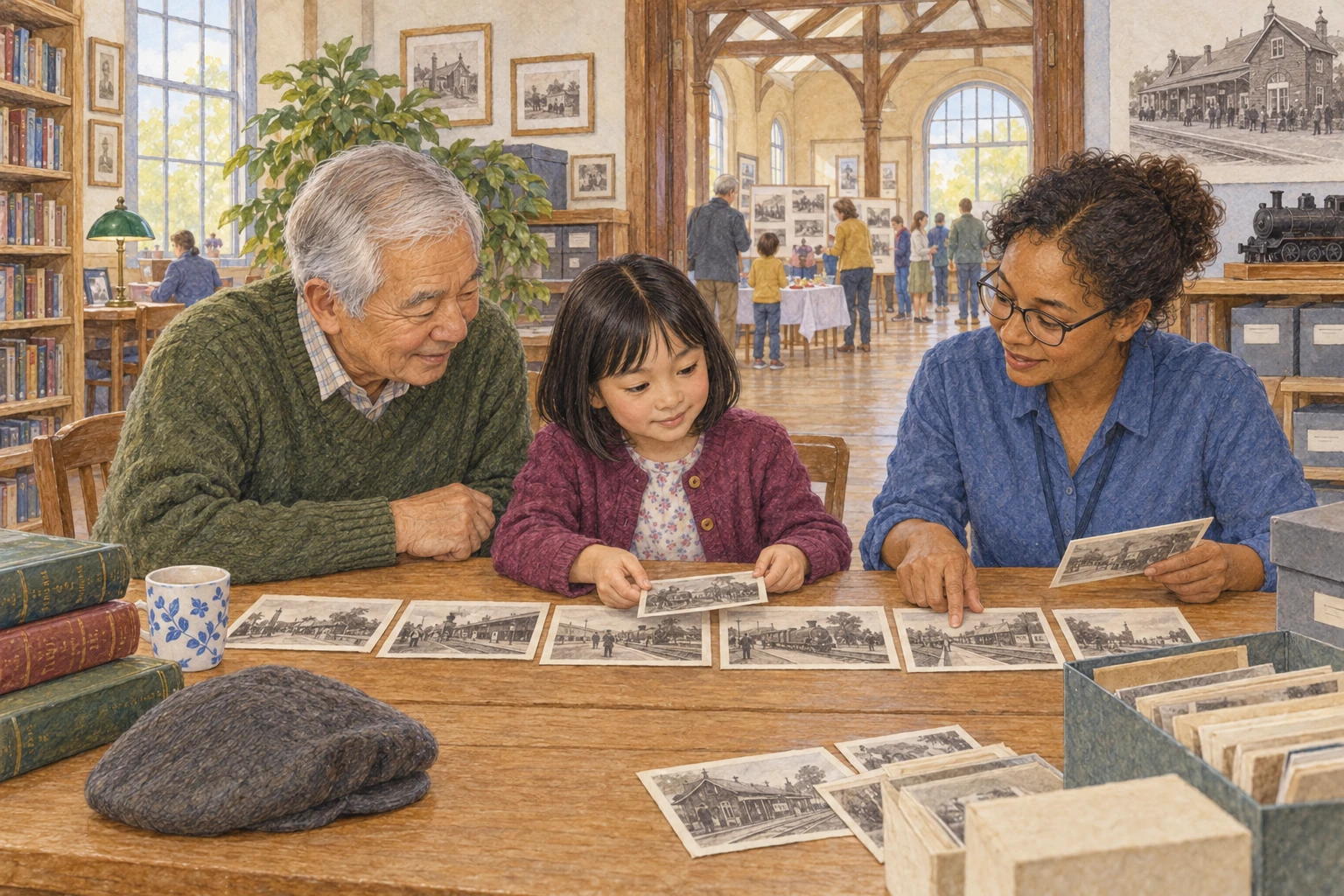
An old timetable showed that trains once stopped several times a day. A newspaper report described the line closing much later. Ms Cole helped Ella arrange copies in date order. Different sources could answer different questions. Some questions might remain unanswered.
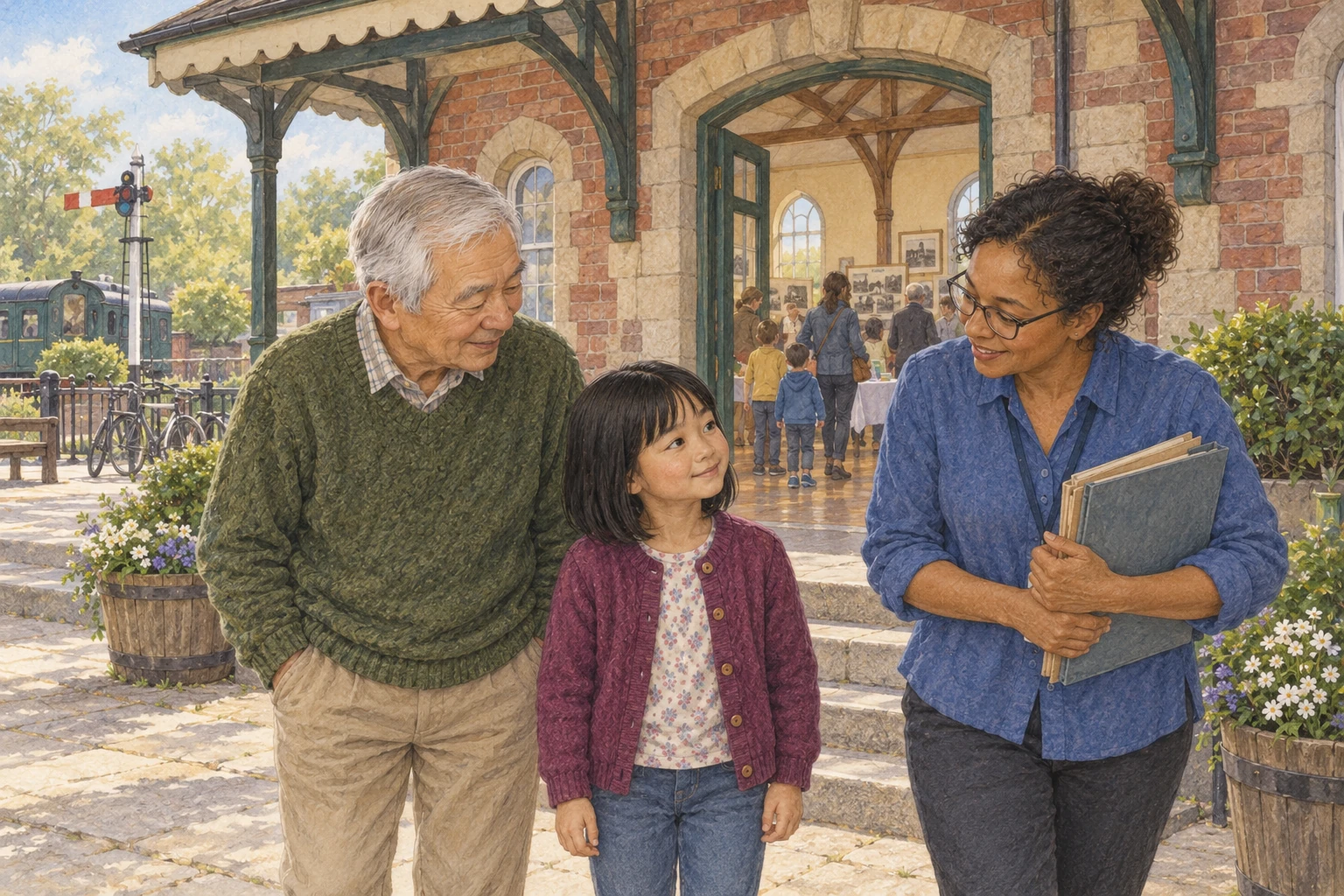
Ella and Grandad visited the hall. The doorway matched both photographs, though the platform was gone. People were setting up a dance class inside. “The place has a new purpose,” said Ella, “but parts of the old building are still here.”
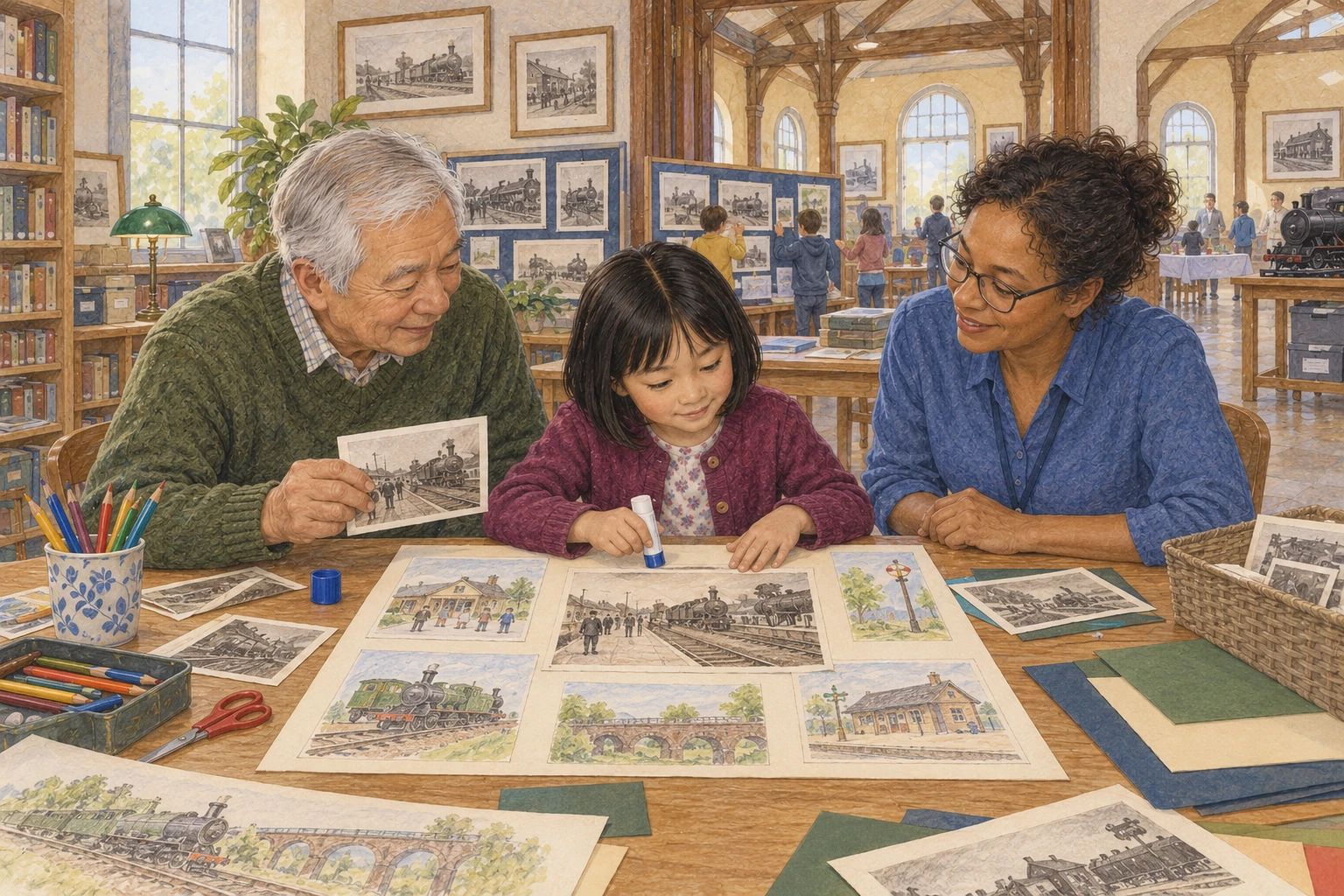
For her class display, Ella used drawings, dates and short explanations. She labelled Grandad’s memory as a memory and the timetable as a printed source. She left the unknown child unnamed. “We have not found evidence for that answer,” she explained.
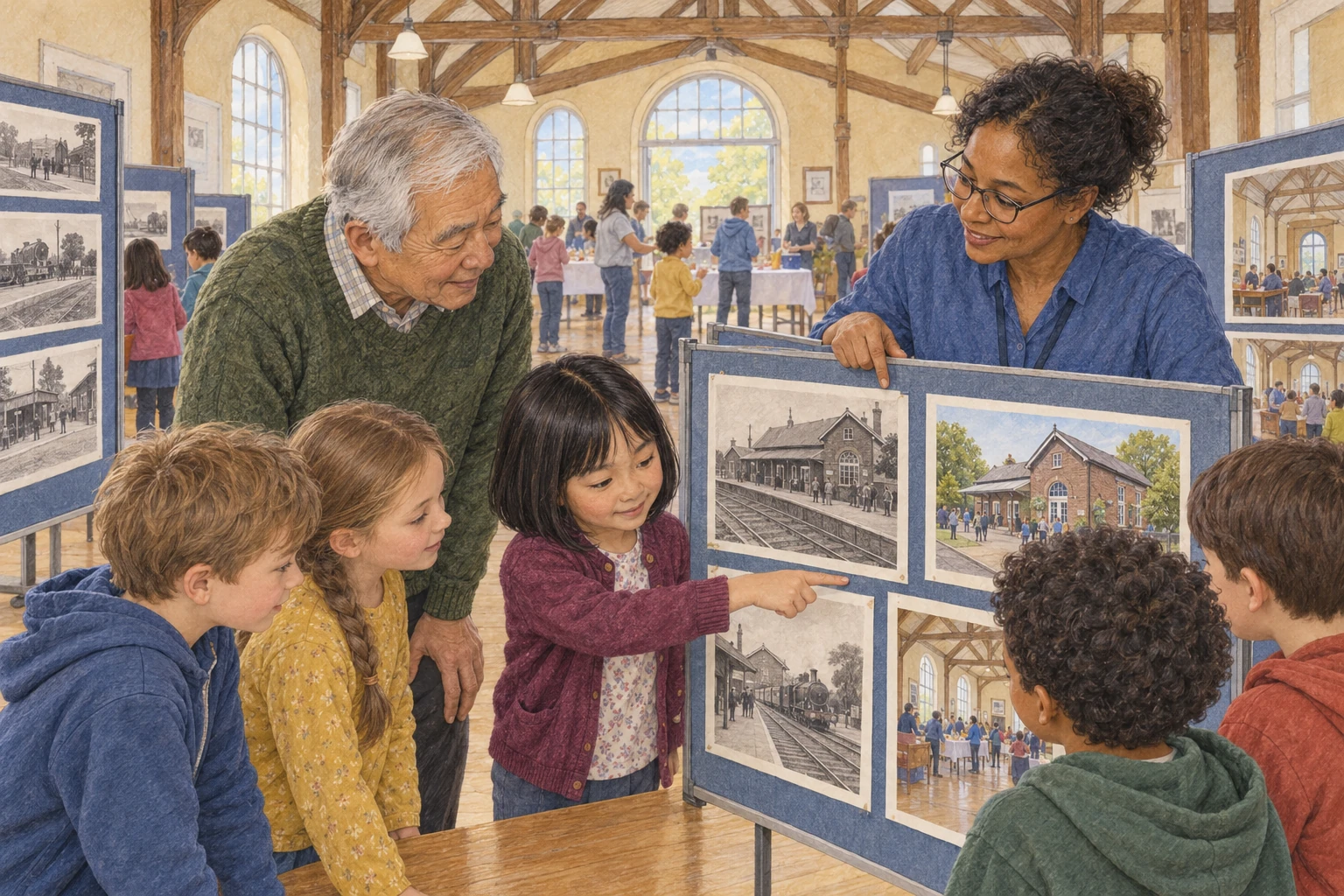
Her classmates spotted the old doorway in a new picture. Ella was pleased they noticed. The mystery child remained a mystery, but the building’s story was clearer. Learning about the past meant asking questions, comparing clues and being honest about uncertainty.