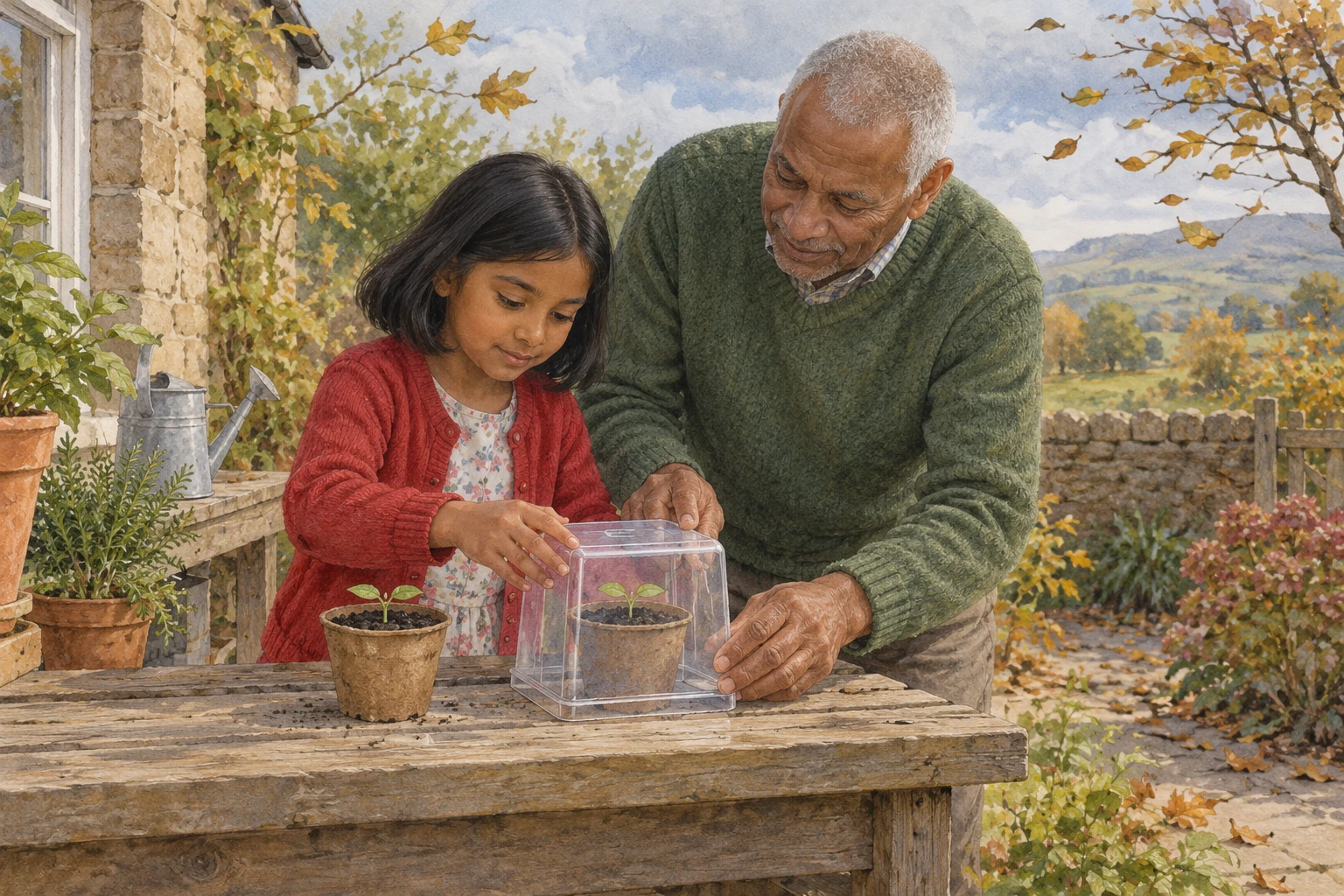
Elsie’s Seedling Shelter
Shared Reading Books · Technology · Year 3Elsie and Grandad grow seedlings on a sheltered outdoor bench. One windy afternoon, leaves bend and the compost dries quickly. Elsie puts a clean clear cover over one pot. “It can still get light,” she says. Grandad checks that the cover is secure.
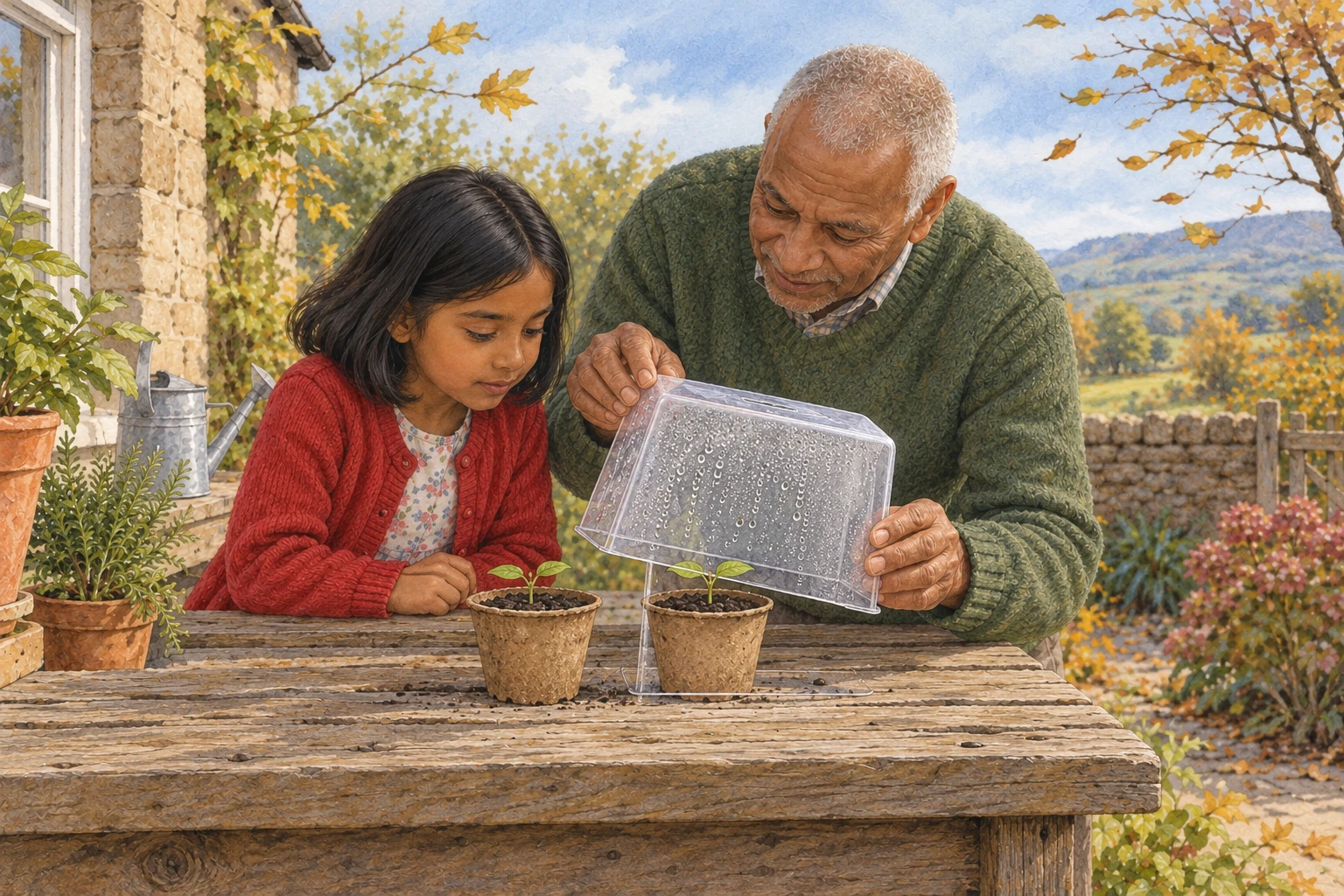
The next morning, tiny drops cover the inside. The air beneath feels warmer than the air outside. Grandad lifts the cover with Elsie beside him. They decide that protecting the seedling from wind is not the only thing to consider.
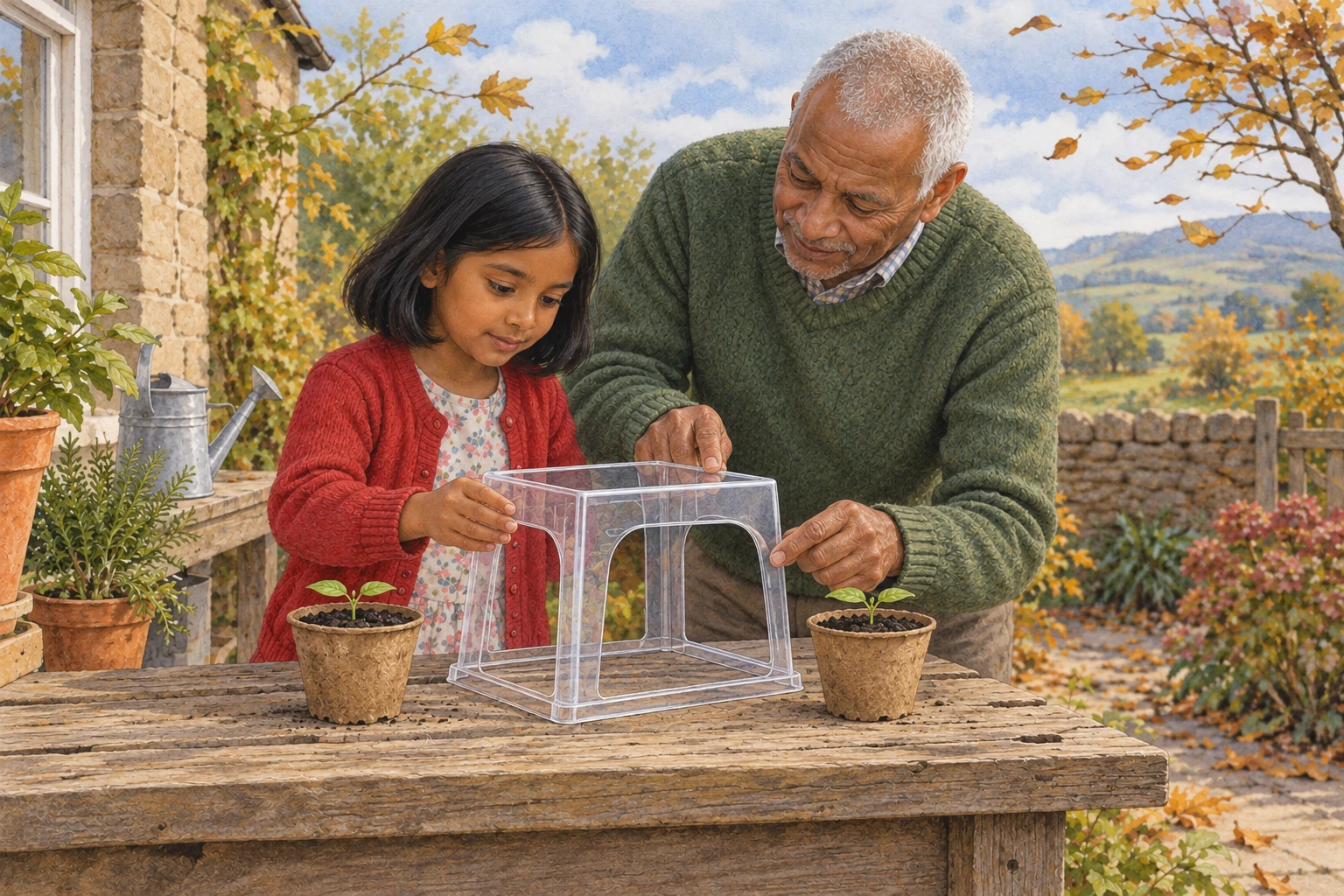
They list the jobs a shelter must do. It should soften the wind, let air move through and allow watering. Grandad shows Elsie a rigid plastic plant shelter with wide side openings. All the edges have been prepared and checked by an adult.
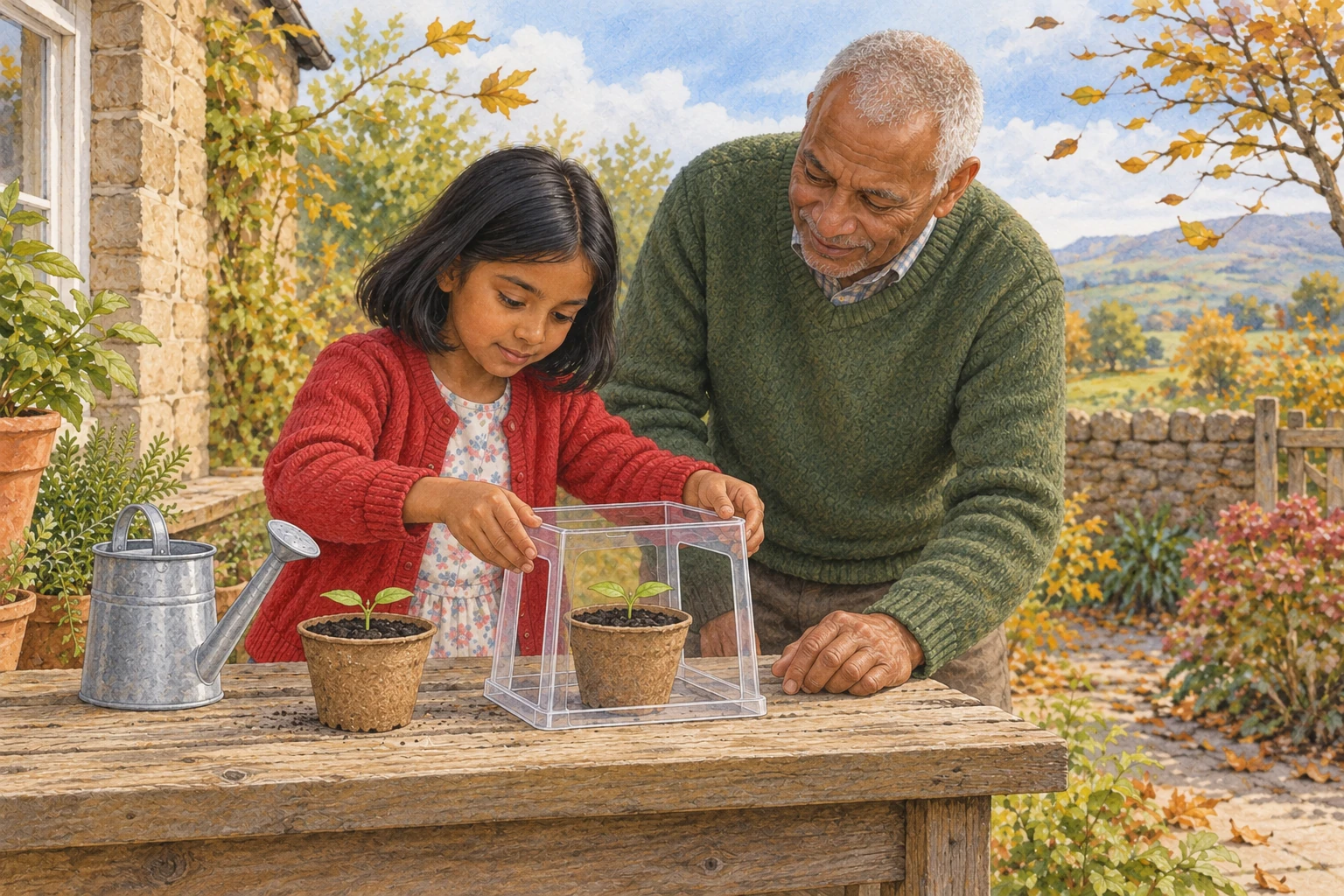
Elsie puts the ventilated shelter around the pot. Its broad base sits firmly on the bench. She can reach the compost with a small watering can without taking the whole shelter apart. They leave the top opening clear.
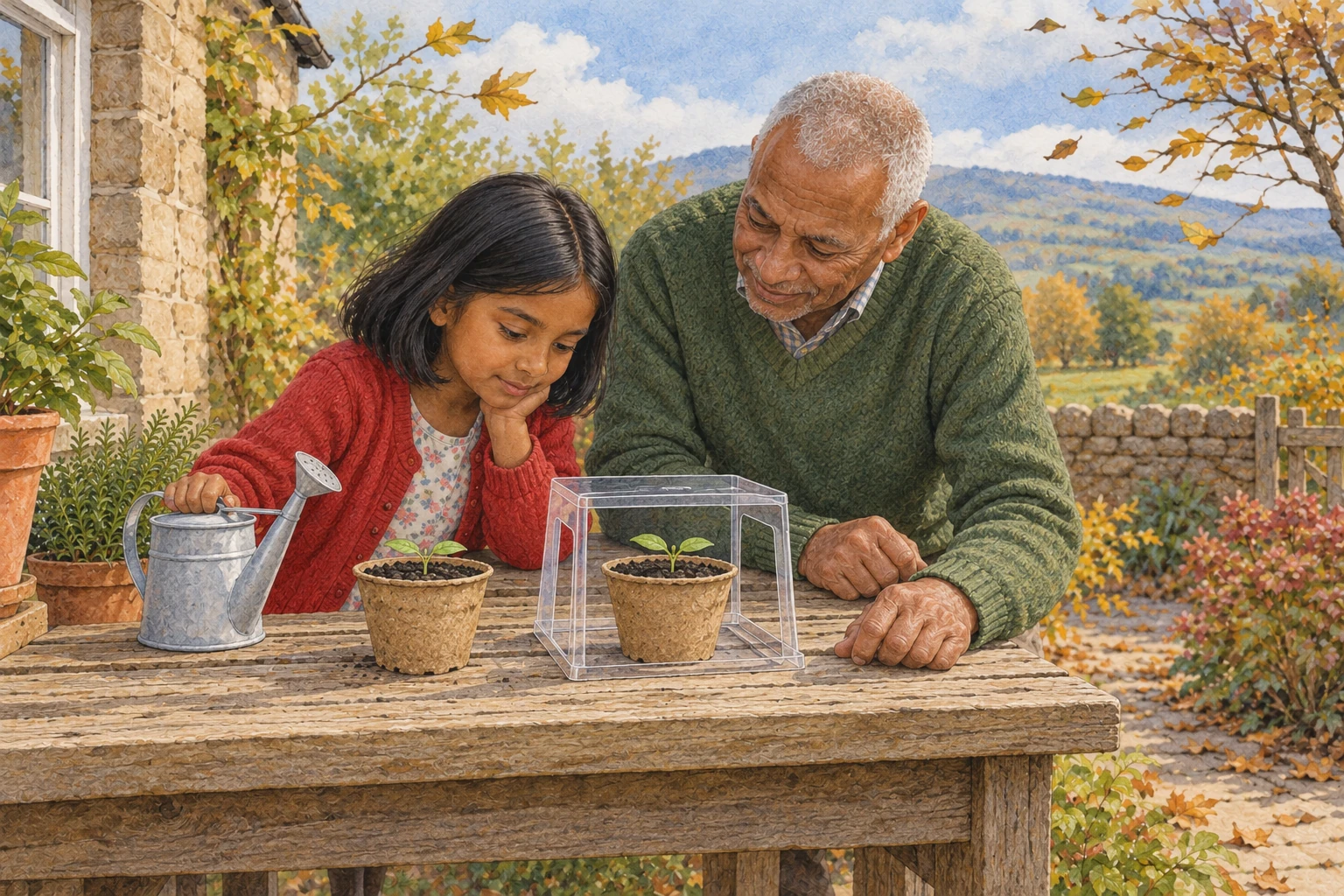
For the next few days, they observe two similar seedlings on the same bench. One is inside the ventilated shelter; the other is uncovered. Grandad helps give each the same amount of water when needed. They note the wind, the moisture inside the shelter and how the leaves look each day.
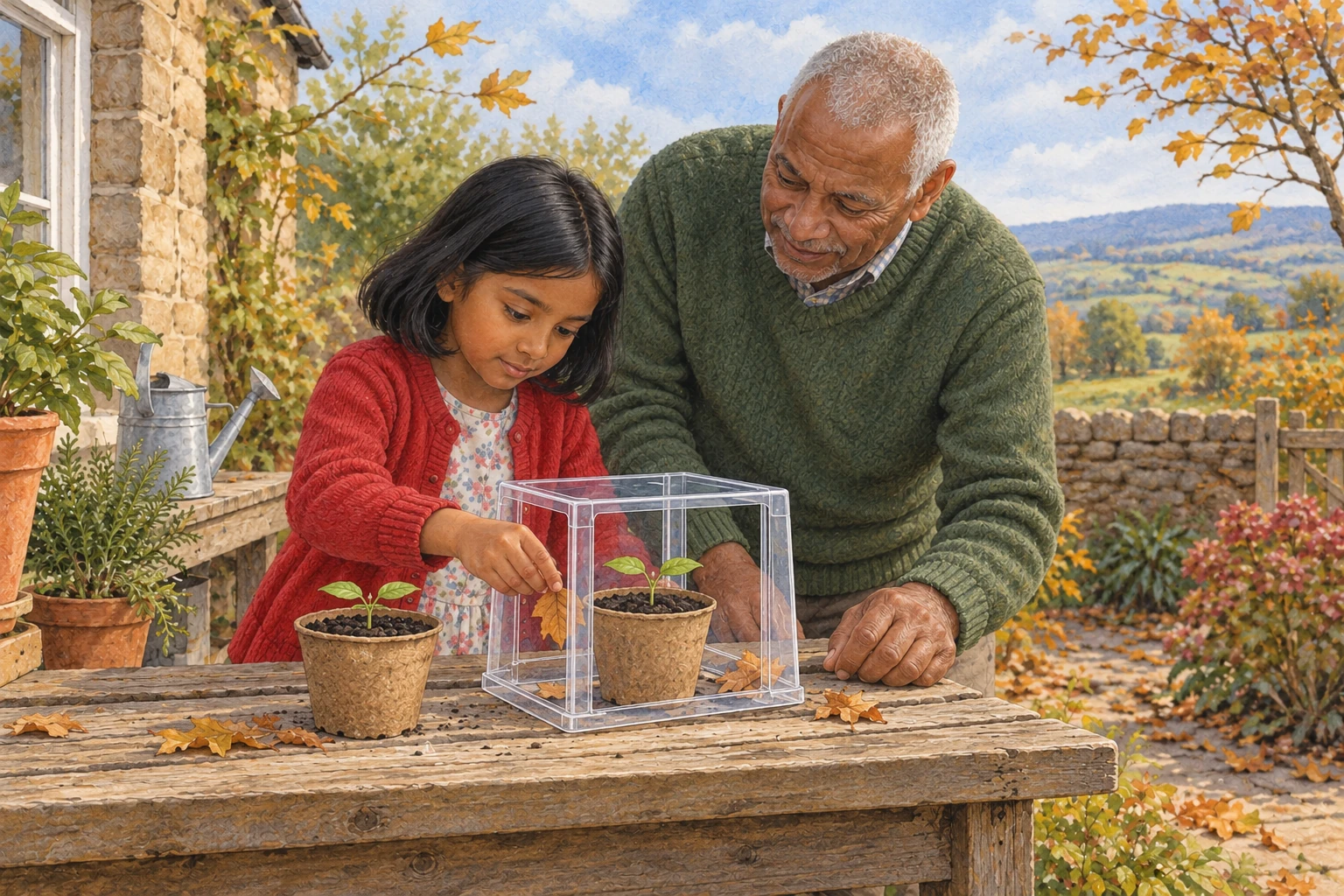
The ventilated shelter has fewer drops inside than the closed cover had. The seedling’s leaves are not being pushed about so much by the breeze. Elsie checks the side openings each day to make sure fallen leaves have not blocked them.
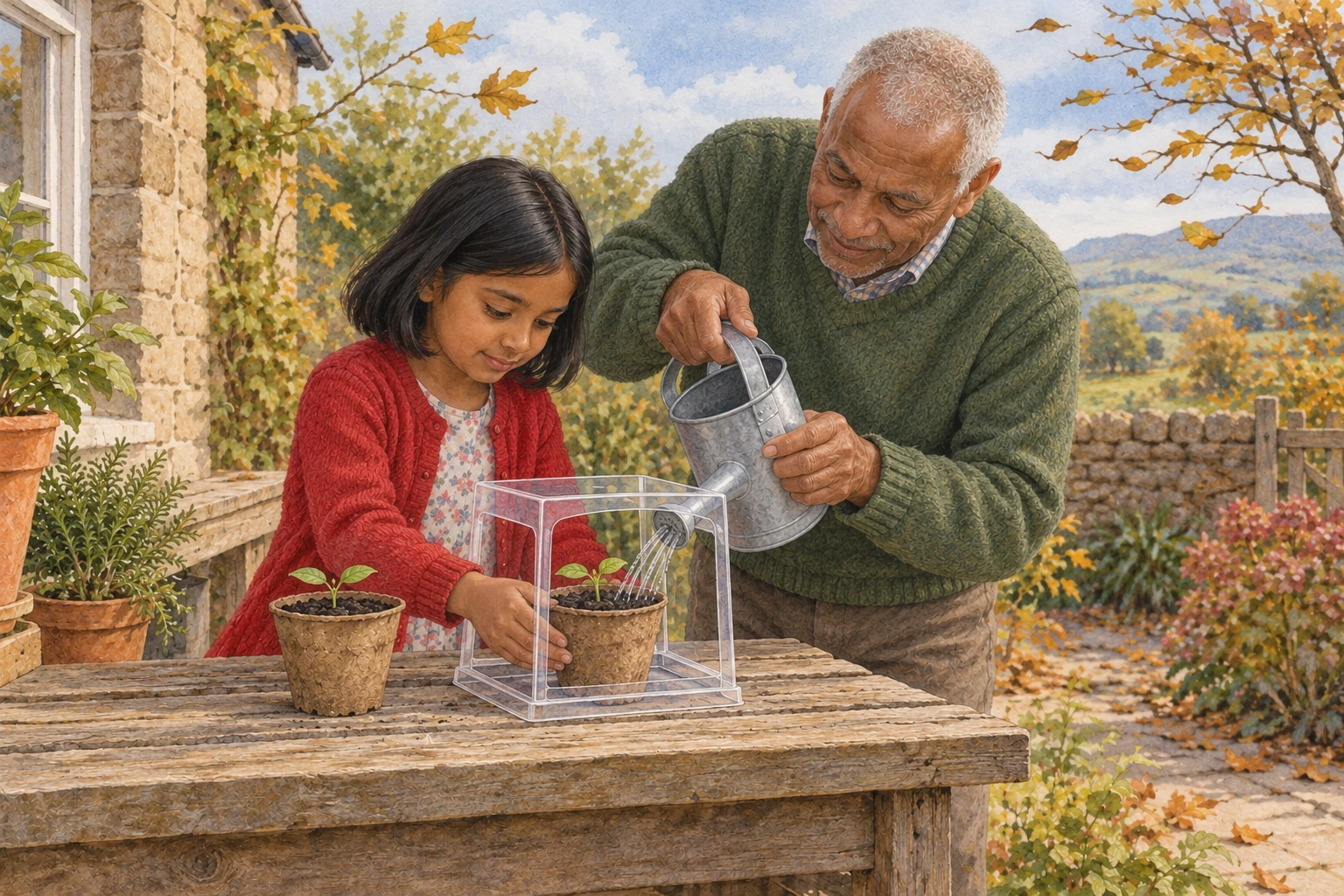
Grandad tries watering through the opening. It is easy to reach, but he suggests moving the pot slightly so water reaches the compost without splashing the plastic. Elsie makes the small adjustment and checks the shelter still sits securely.
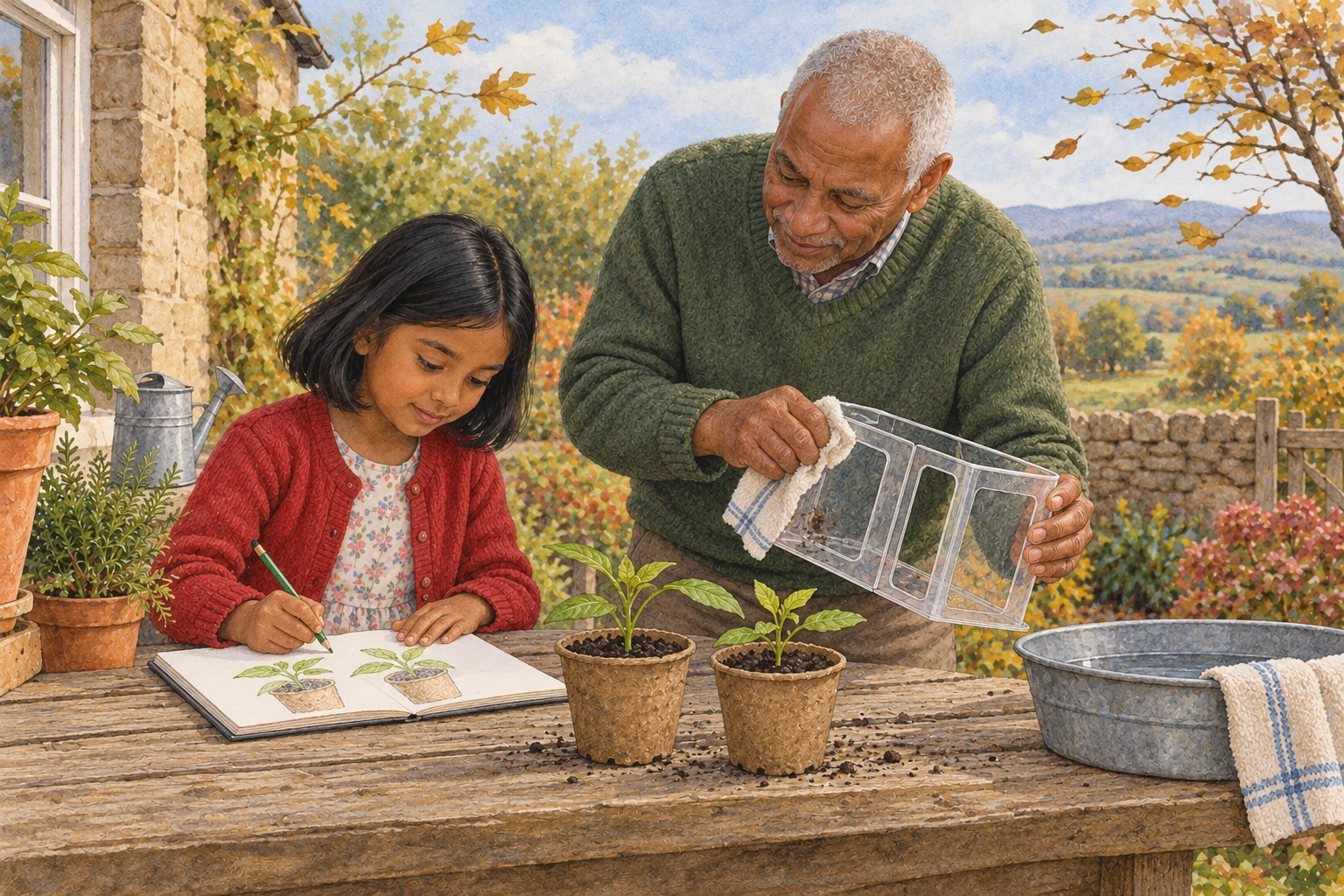
When the stronger plants are ready for a different spot, they remove and clean the shelter. Elsie keeps their observation pictures. “We needed time to see what happened,” she says. Grandad nods. The shelter had to protect the seedling while leaving room for air and watering.