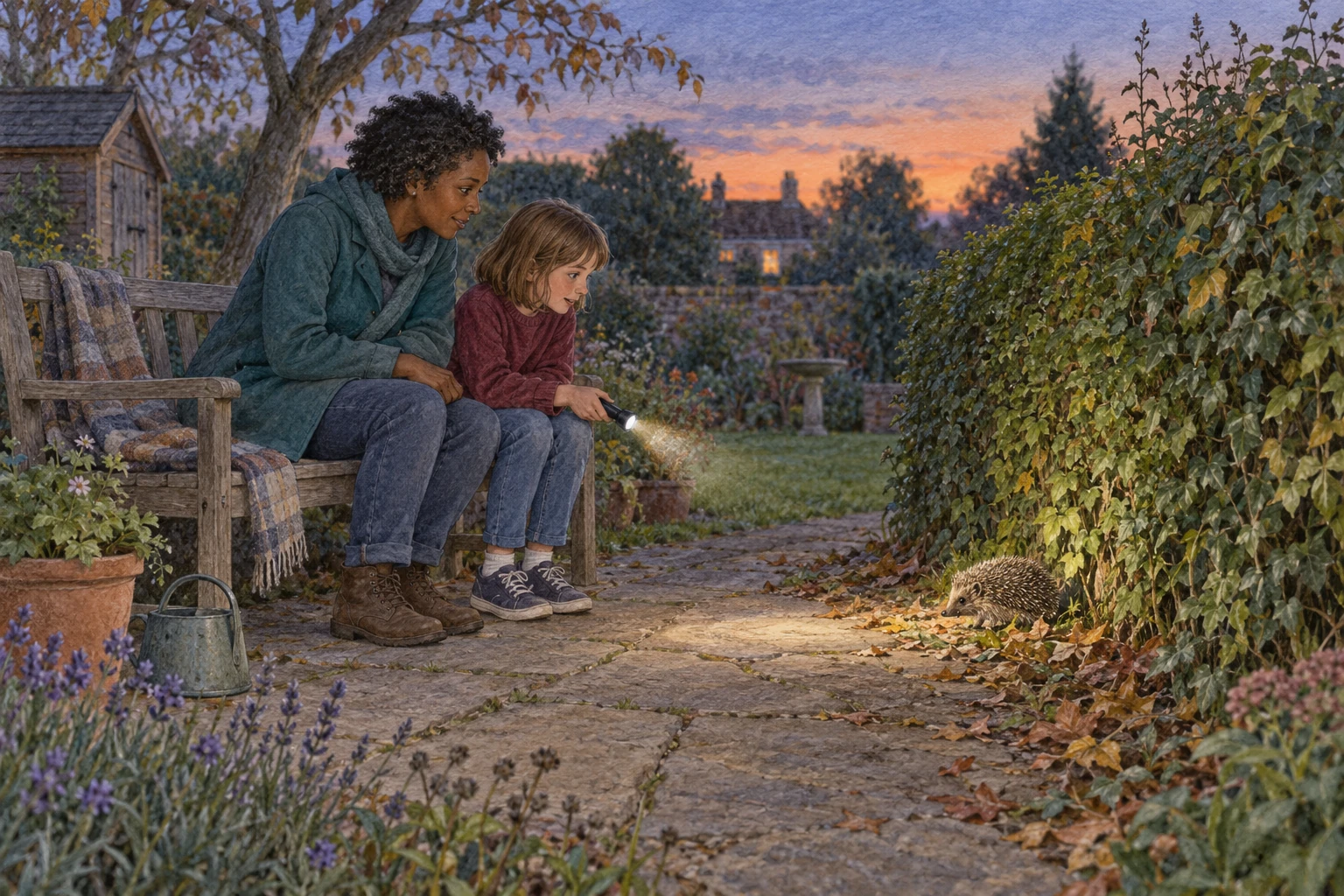
Emma’s Night Garden
Shared Reading Books · Science · Year 2Emma thinks she knows every corner of the garden. Then a rustle comes from the hedge at dusk. She stops beside Mum. A small shape moves through the leaves. “Who is using our garden now?” she whispers. They sit on the bench to watch.
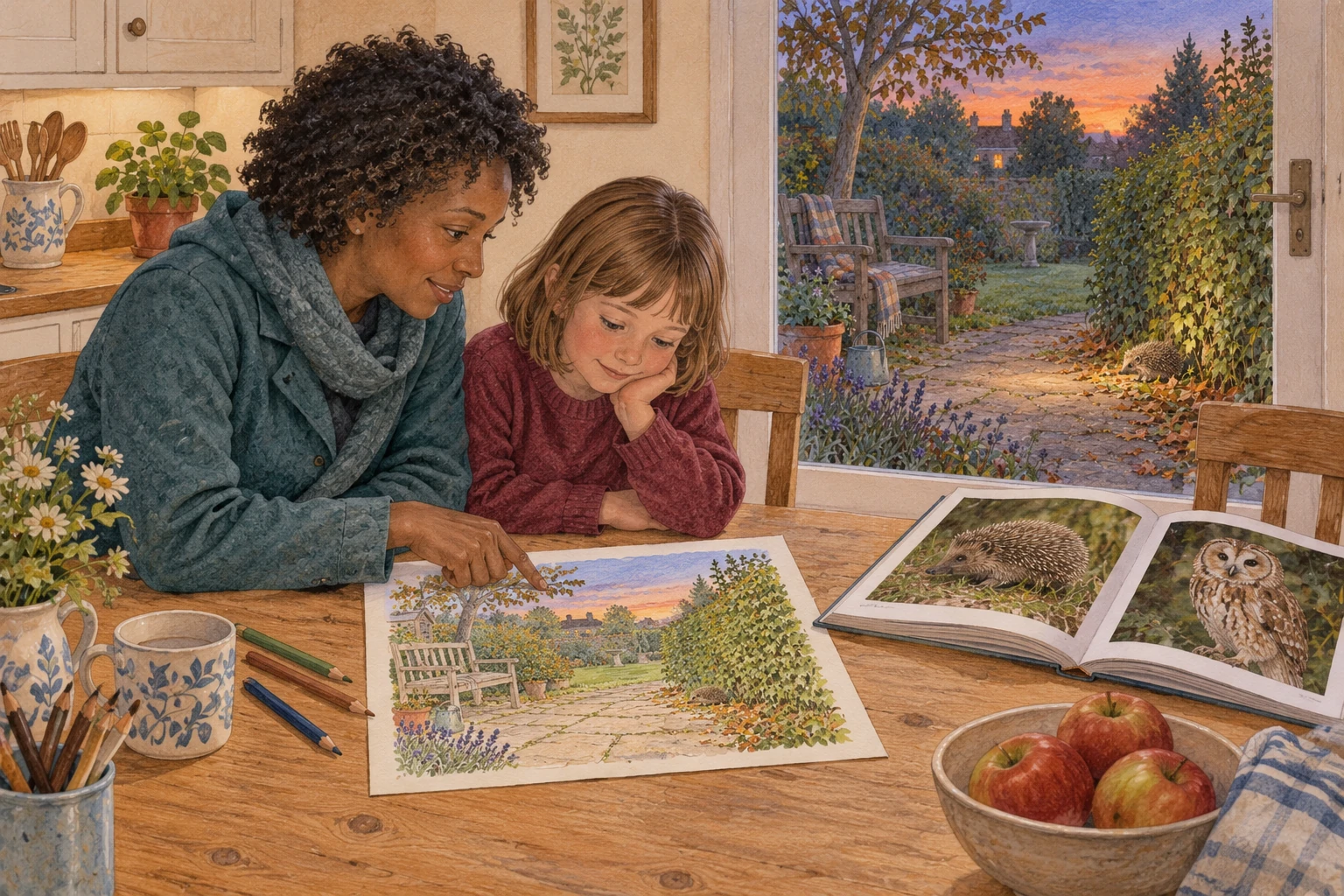
Earlier, Emma drew birds feeding and bees visiting flowers in daylight. Now the light is fading and the garden feels different. Mum explains that some animals are most active at night, while others are busy around dusk or dawn. They do not all follow one timetable.
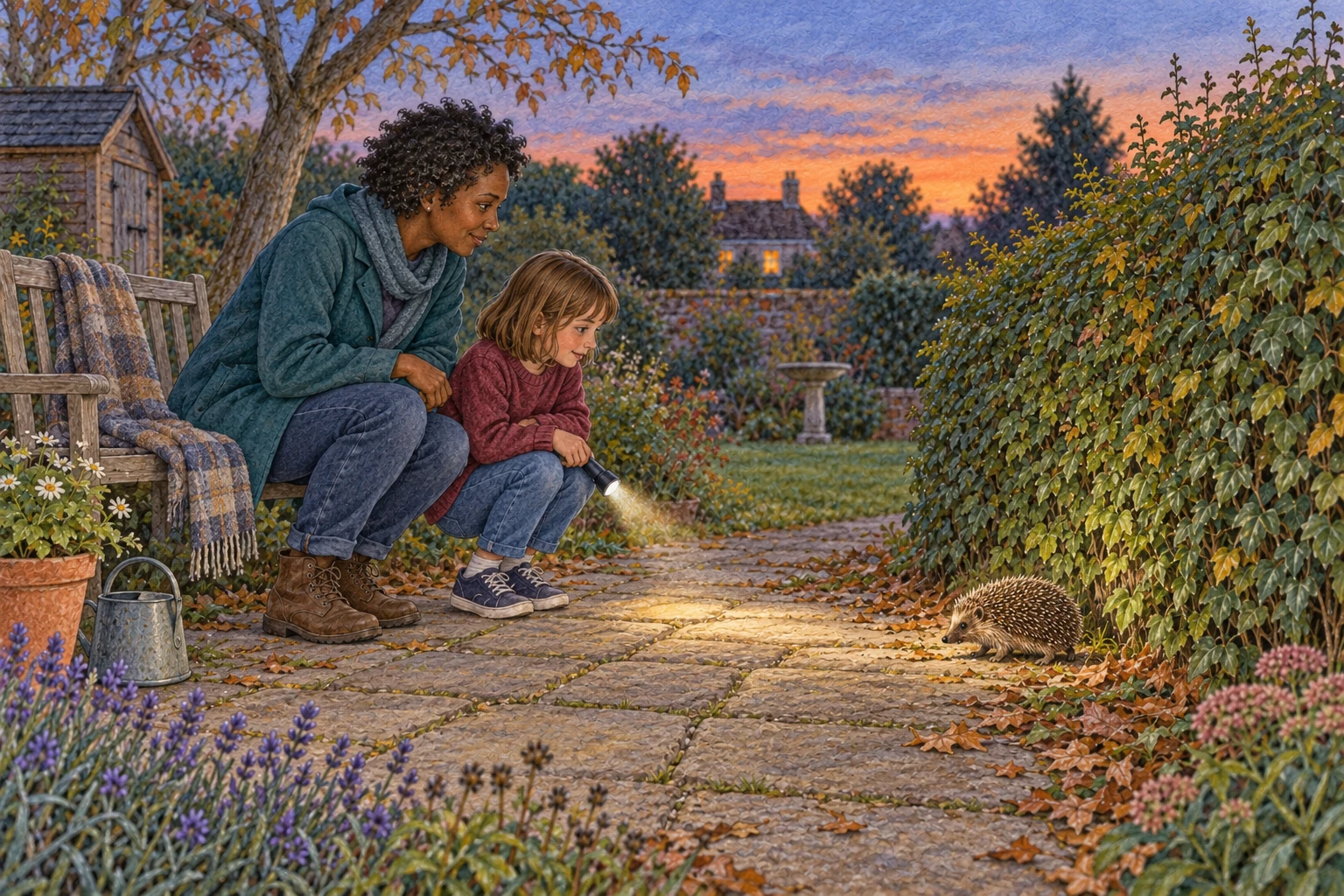
A hedgehog walks slowly along the hedge. Emma stays back rather than reaching towards it. Its nose moves close to the ground as it searches for food. “It is a wild animal,” Mum says. “We will give it space and leave it to find its own food.”
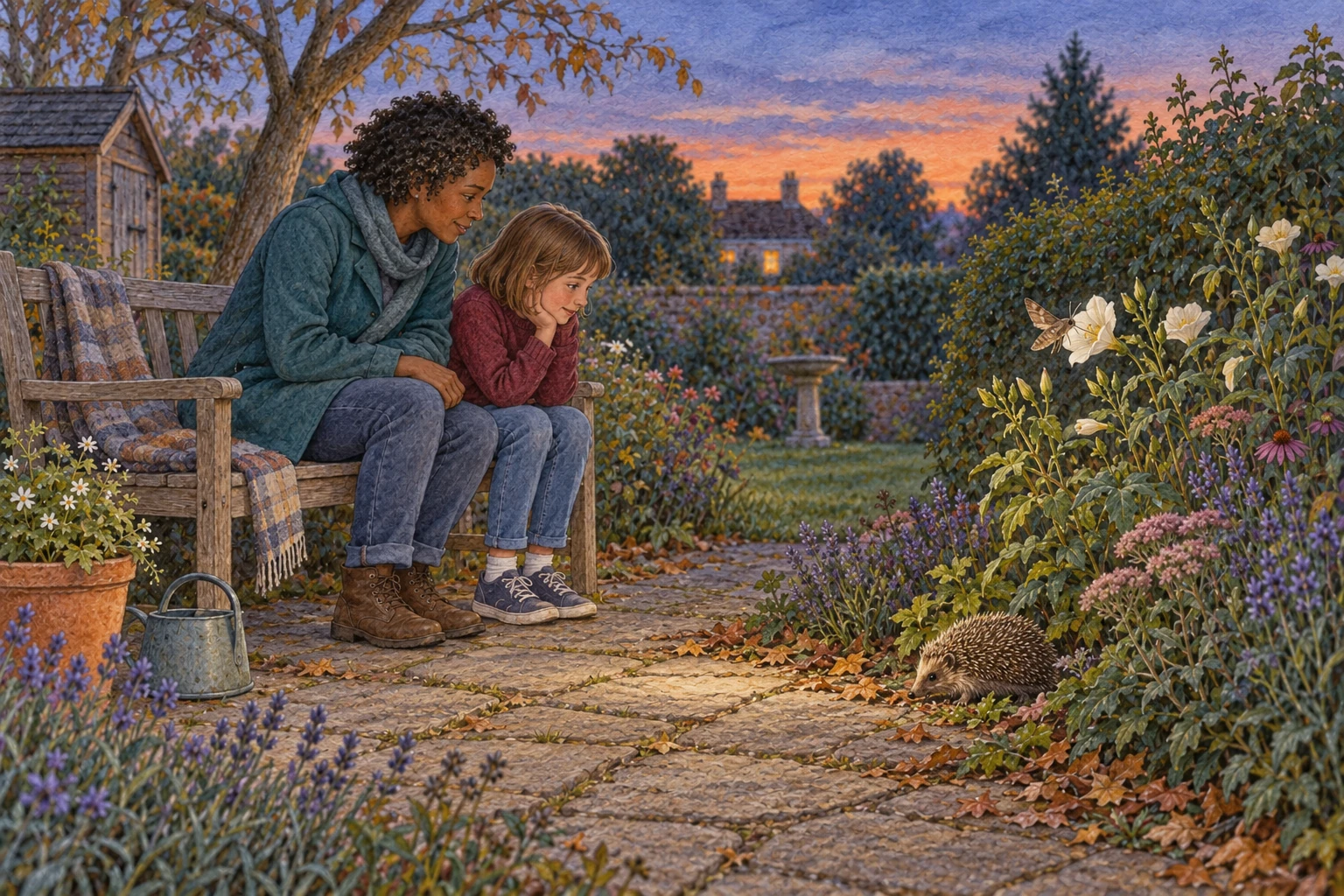
A moth visits a pale flower. Emma had mostly noticed butterflies during the day. Mum explains that many moths are active at night, although some fly by day. Quiet watching gives them better clues than deciding from an animal’s name alone.
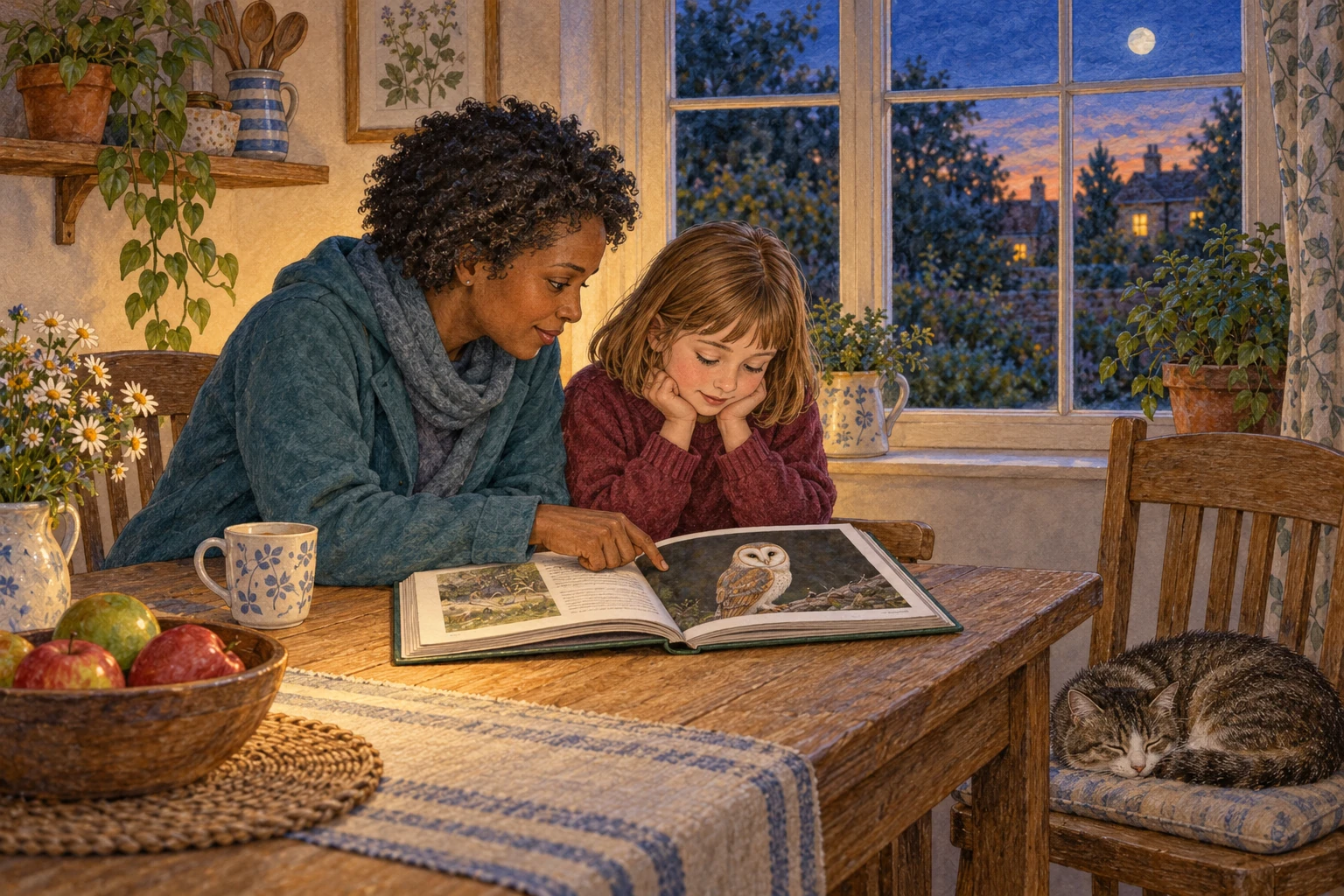
Indoors, they open a wildlife book to an owl. It describes how good hearing and vision can help many owls hunt in dim light. Emma notes that she learned about the owl from the book. She has not seen one in the garden tonight.
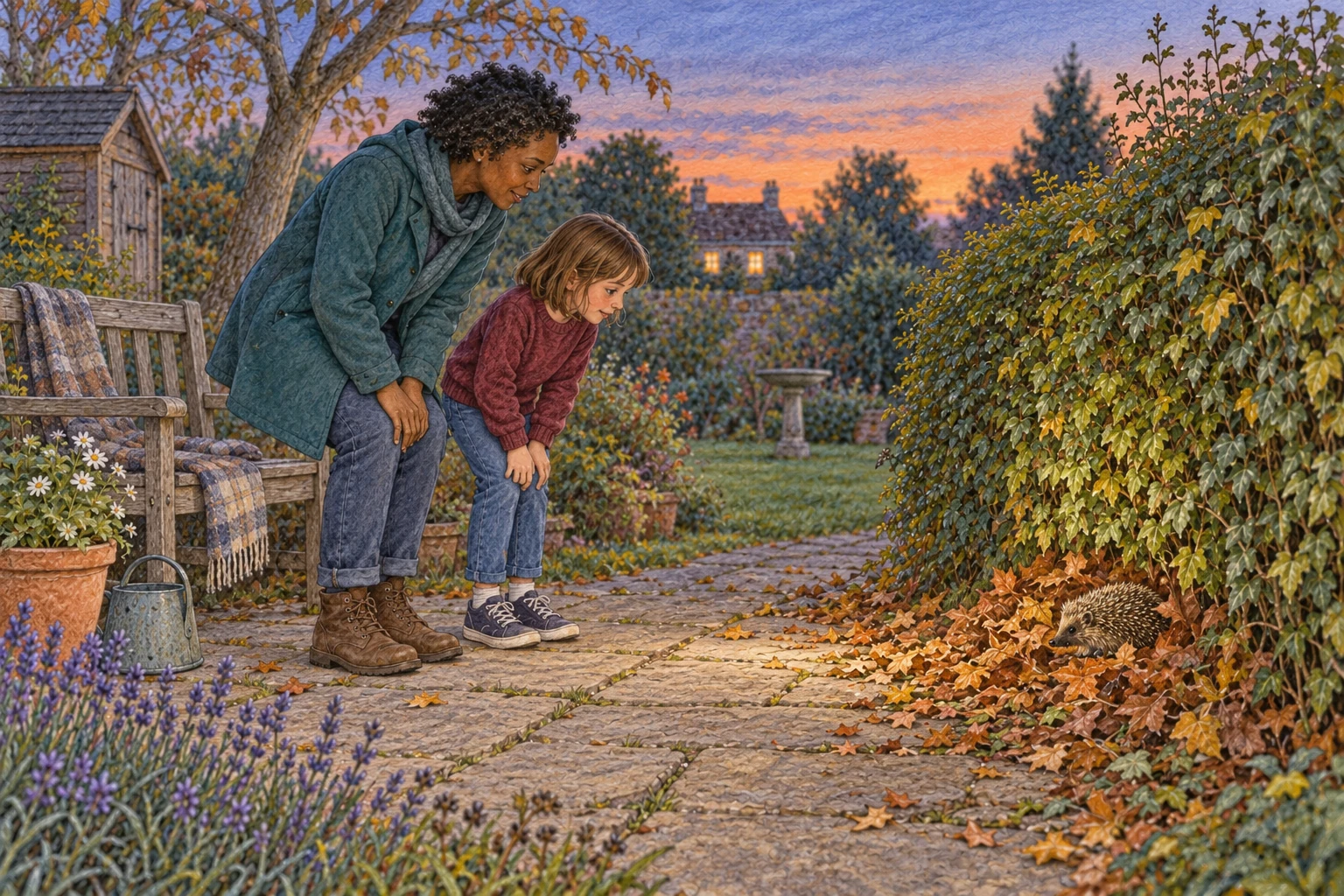
From the path, Mum points out a sheltered leaf pile beneath the hedge. It could provide shelter for small animals. They leave it alone. Emma keeps the torch directed at the walking path and avoids shining it at wildlife. Darkness is part of this habitat.
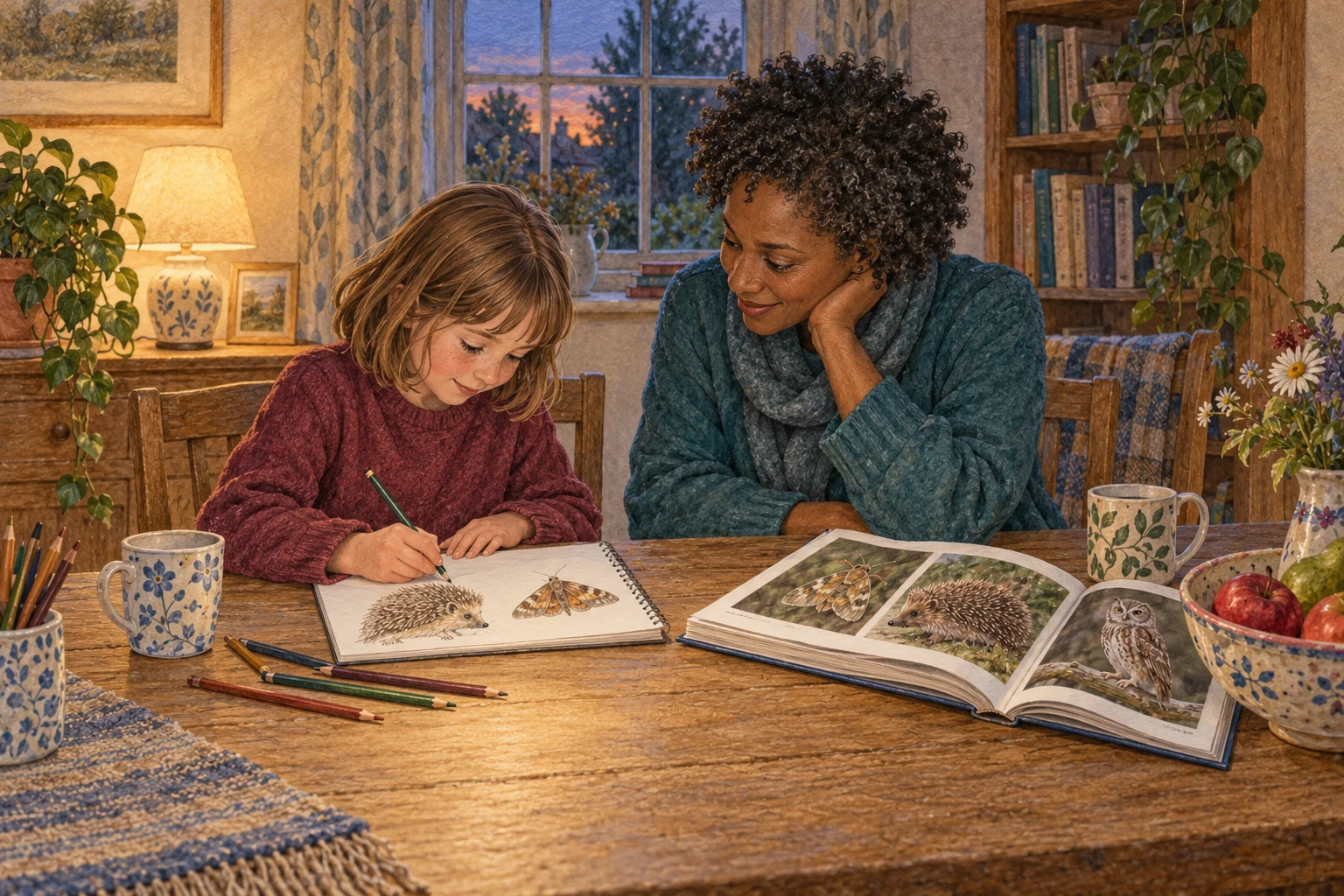
Emma draws the hedgehog and moth she watched. Beside her earlier daytime picture, the garden now has a second story. One evening cannot reveal every visitor. She can observe quietly with Mum on another suitable night and compare what they notice.
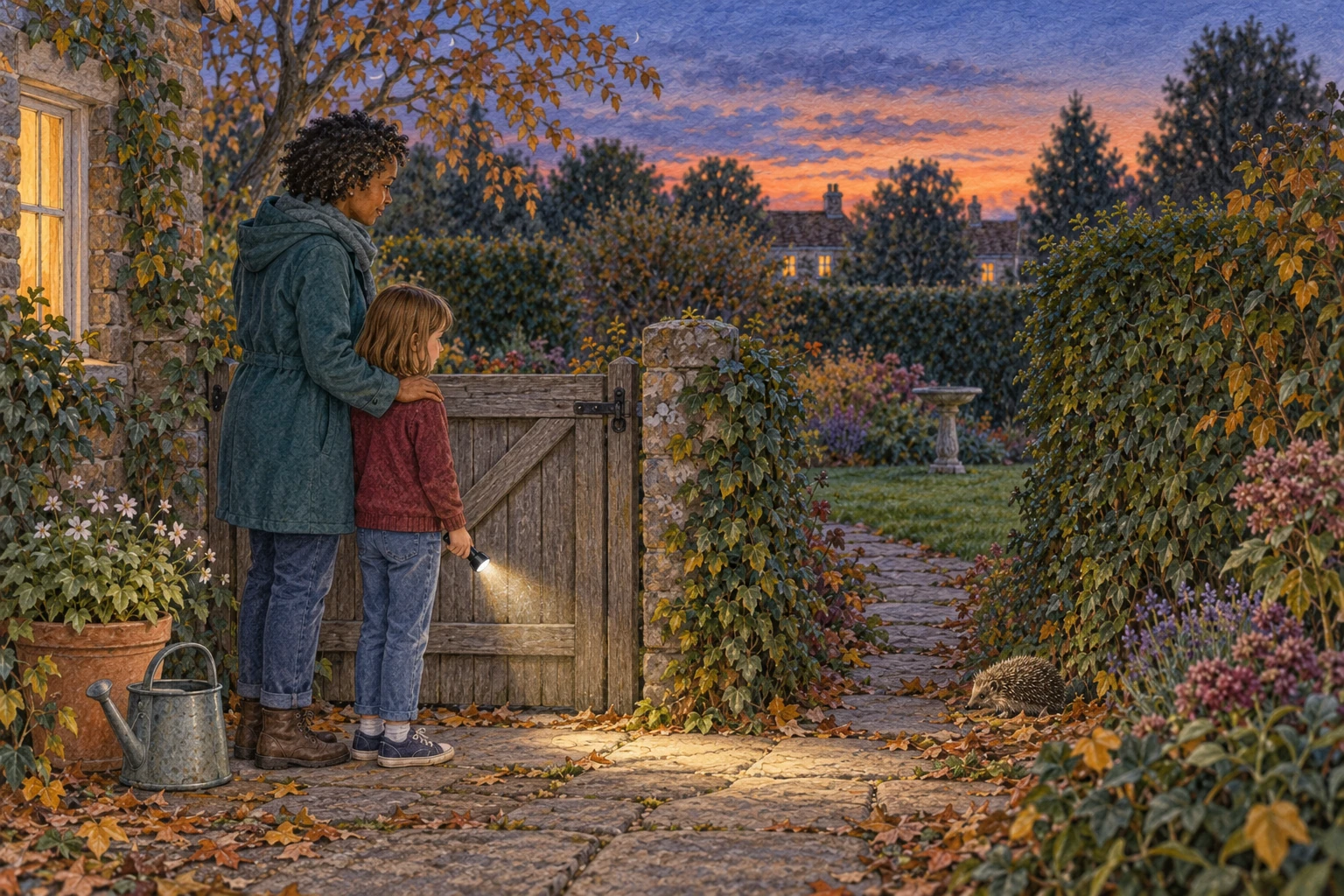
They close the garden door and let the dark stay peaceful. “My garden did not go to sleep all at once,” says Emma. Some lives continued while others rested. Knowing more has made her want to disturb the visitors less, not follow them everywhere.