
Esther’s Shadow Clock
School Readers · Level 17Esther and Felix notice a long shadow beside the classroom door. Mr Dale asks whether it will stay in the same place all morning. Esther thinks a shadow must remain still if the object making it does not move. Felix is not so sure.
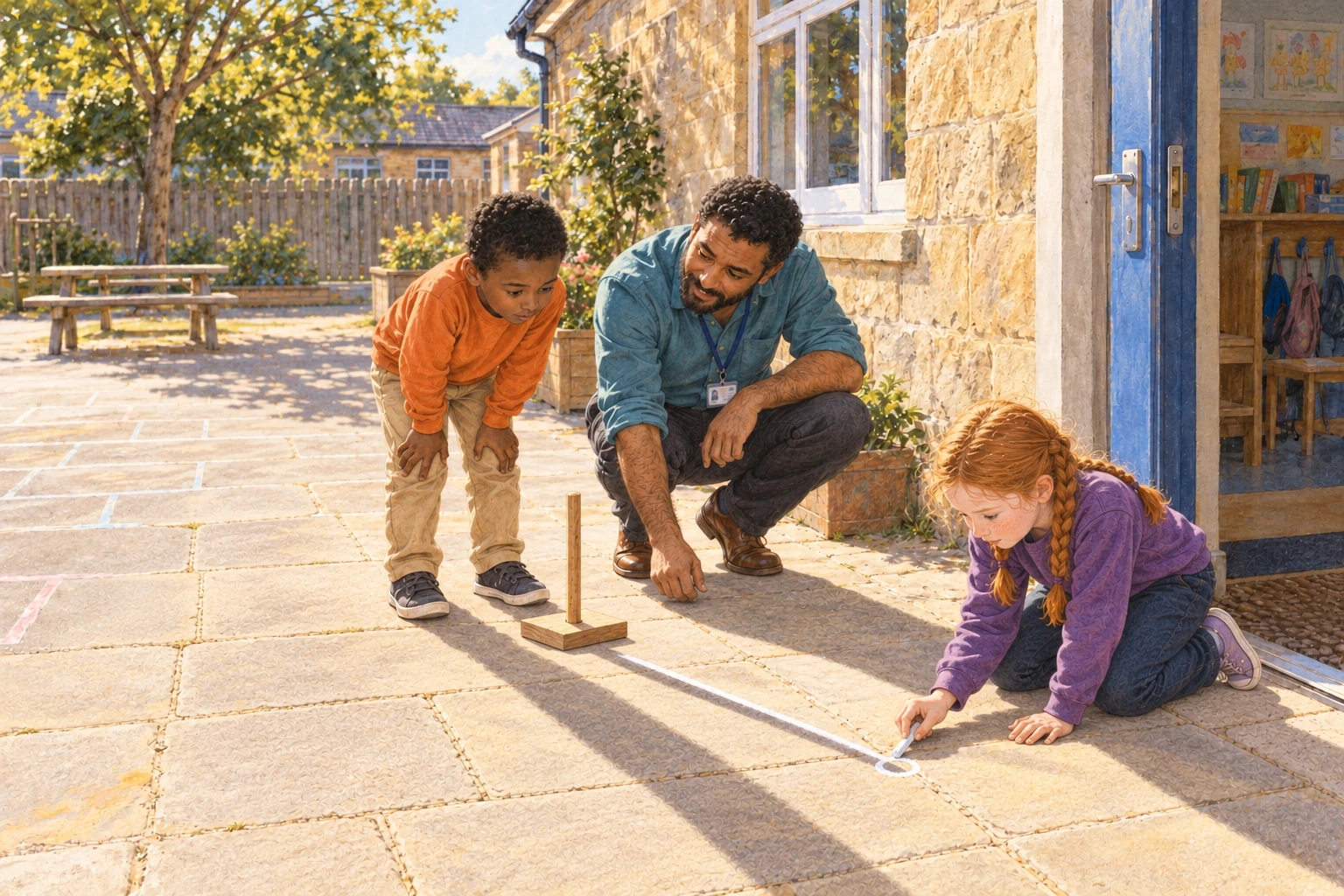
They set a short wooden stick upright in a firm base on the courtyard paving. Mr Dale checks that it cannot fall. Esther draws a chalk line along its shadow and marks the tip with a circle. They leave the stick exactly where it stands.
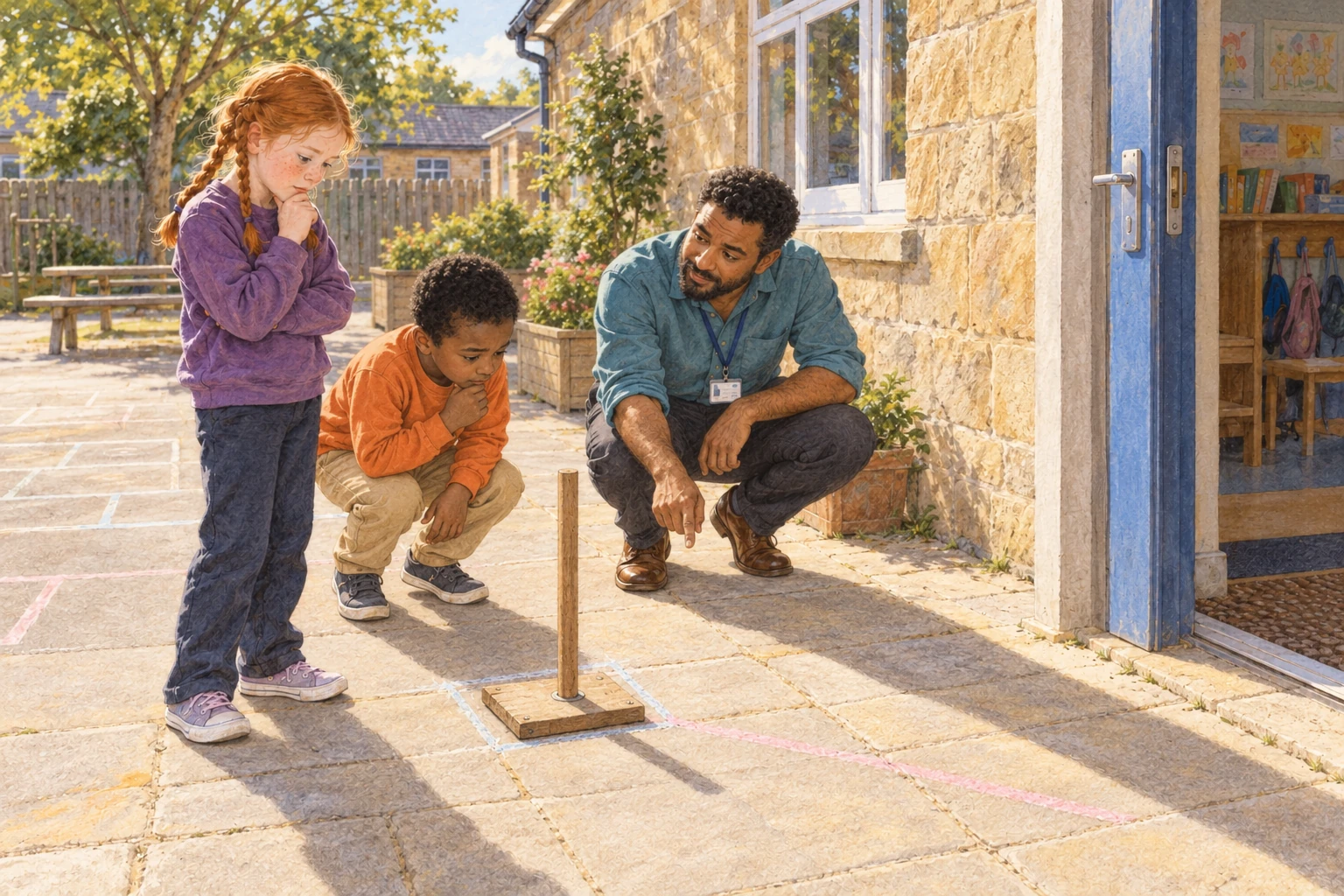
After reading time, the children return. The shadow no longer lies along their first chalk line. Felix wonders whether someone has moved the base, but its corners still fit the outline Mr Dale drew around it. The stick itself has not changed position.

Esther adds a second line and compares it with the first. The new shadow is shorter and points in another direction. Mr Dale explains that shadows change as the sun appears to move across the sky. They can observe the shadows without looking straight at the sun.
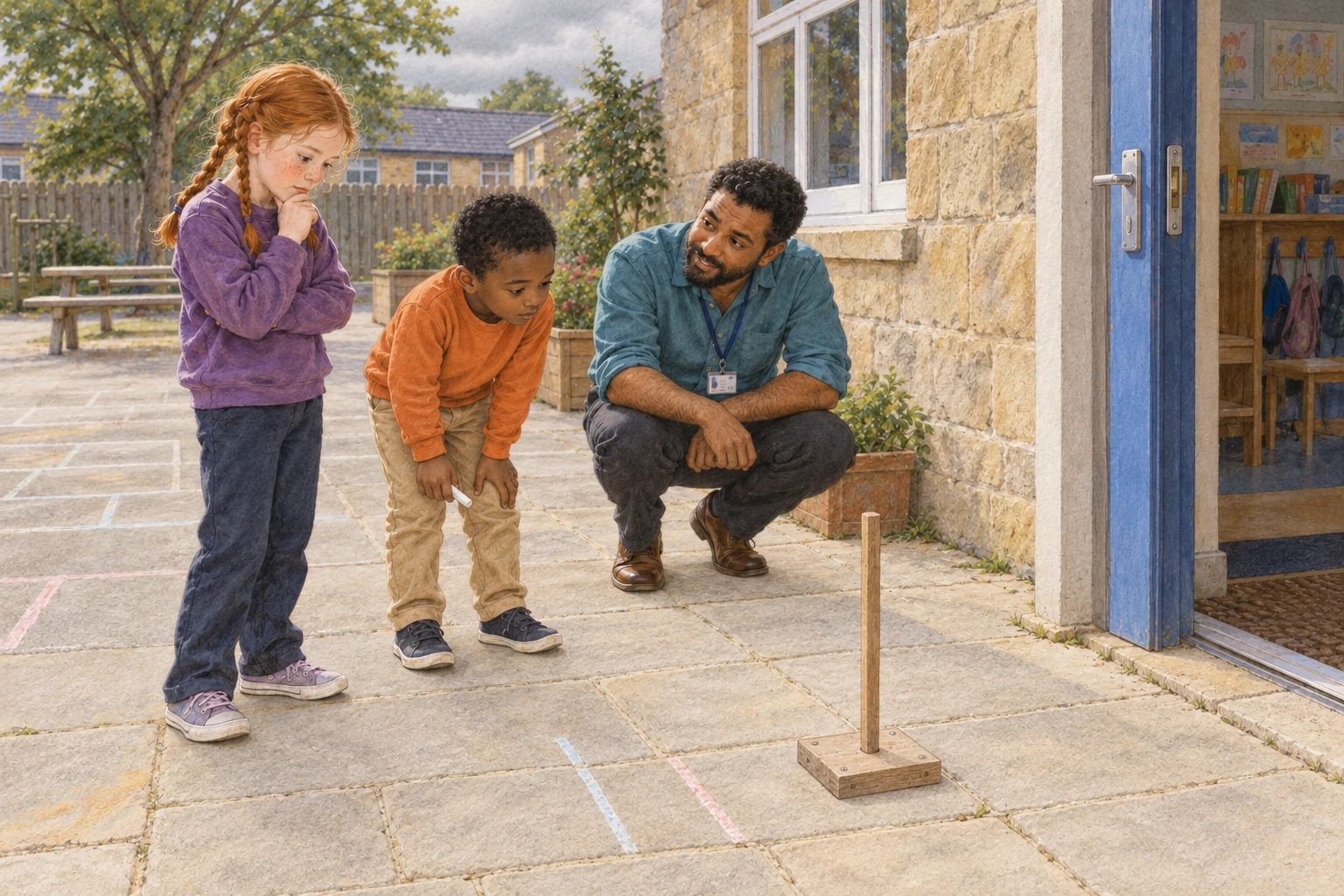
Before lunch, a cloud covers the sun and the clear shadow fades. Felix starts to draw where he thinks the tip should be, then stops. “We cannot measure a shadow we cannot see,” he says. They wait indoors until sunshine reaches the courtyard again.
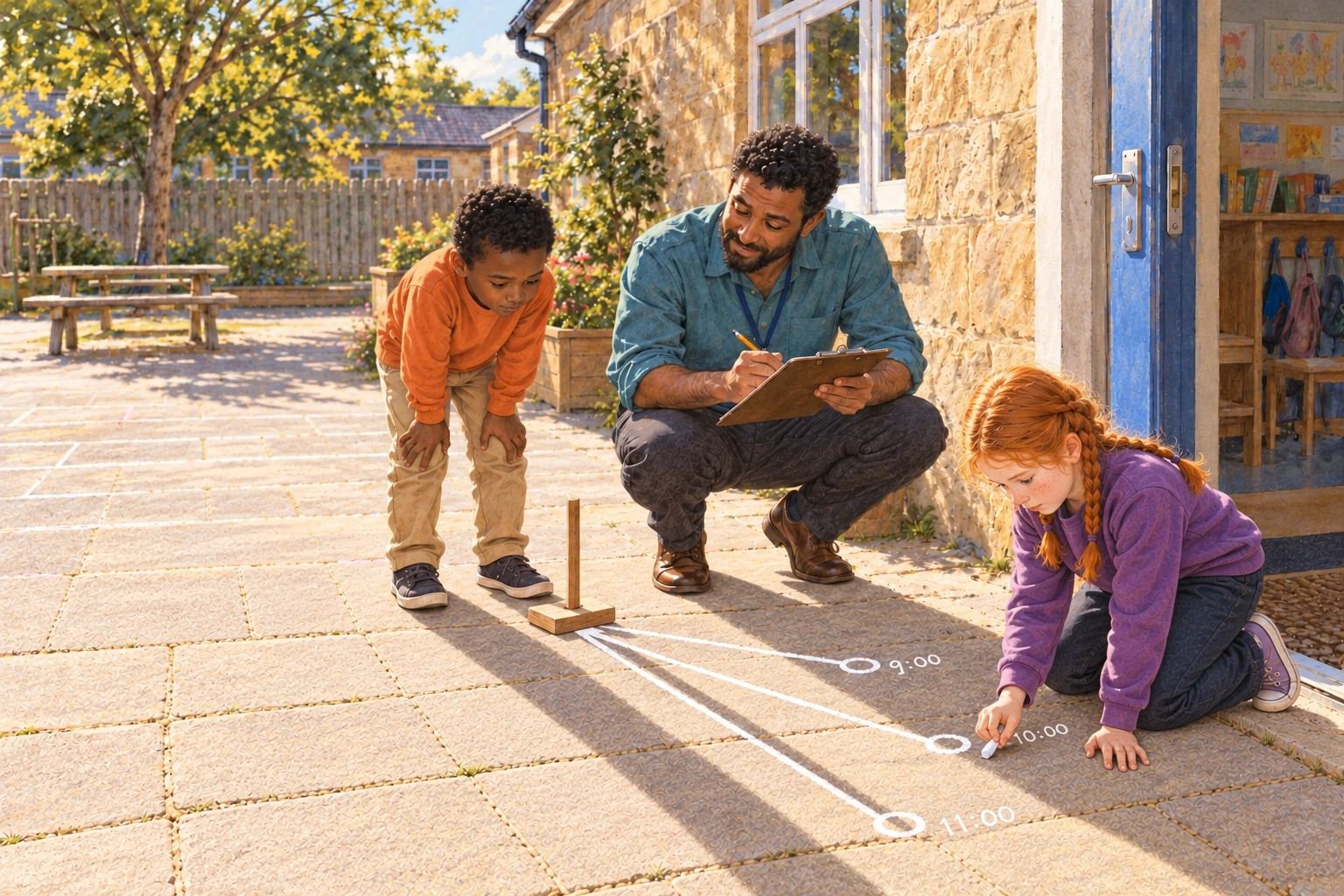
When the light returns, they mark the next clear shadow. Mr Dale writes the time beside each of their three lines. Esther sees that the marks make a record of the morning, although they have not drawn every moment between the visits.

The children use their record to predict where the next shadow might fall. Later they return to check rather than deciding that their guess must be right. Their new line follows the same changing pattern, helping them understand what the earlier marks were showing.

At the end of the day, Esther sketches the lines in her notebook before they clear the paving. “The stick stayed still, but its shadow travelled,” she says. Felix adds a cloud to their drawing, remembering why one visit had not given them a useful measurement.