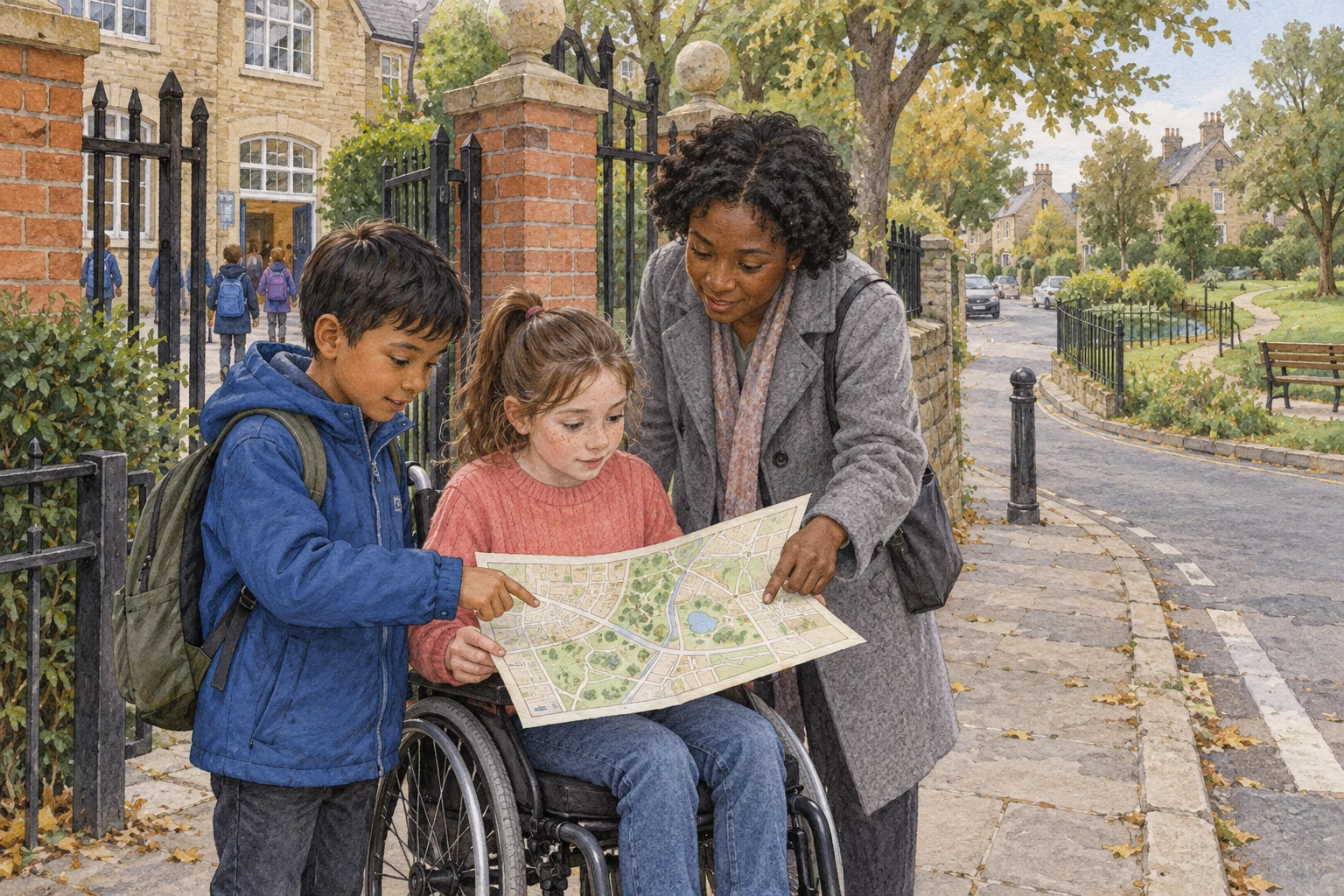
Finn’s Safe Shortcut
Shared Reading Books · Social Science · Year 4Finn found a narrow path on the neighbourhood map. It appeared to cut straight through the park to the library. “That must be our best route,” he told Hazel. Their teacher, Ms Frost, suggested checking it together before planning the class walk. A short line on paper could hide important details.
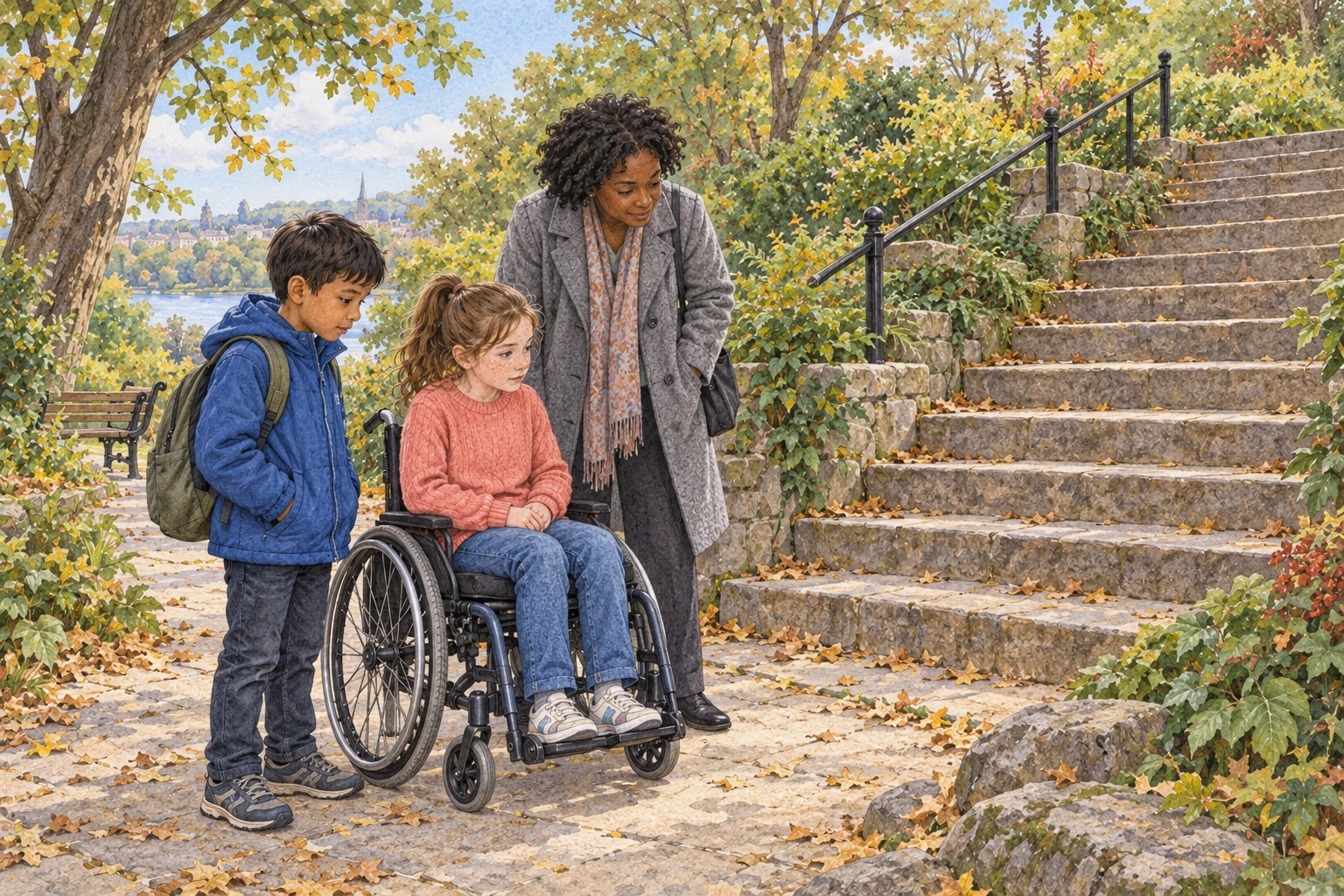
The path began smoothly, then ended at steep steps. Hazel stopped her wheelchair well before them. Finn stared at the map. No steps were marked on his copy. He had compared distance without checking whether everyone could travel the route. Ms Frost led them back to the level pavement.
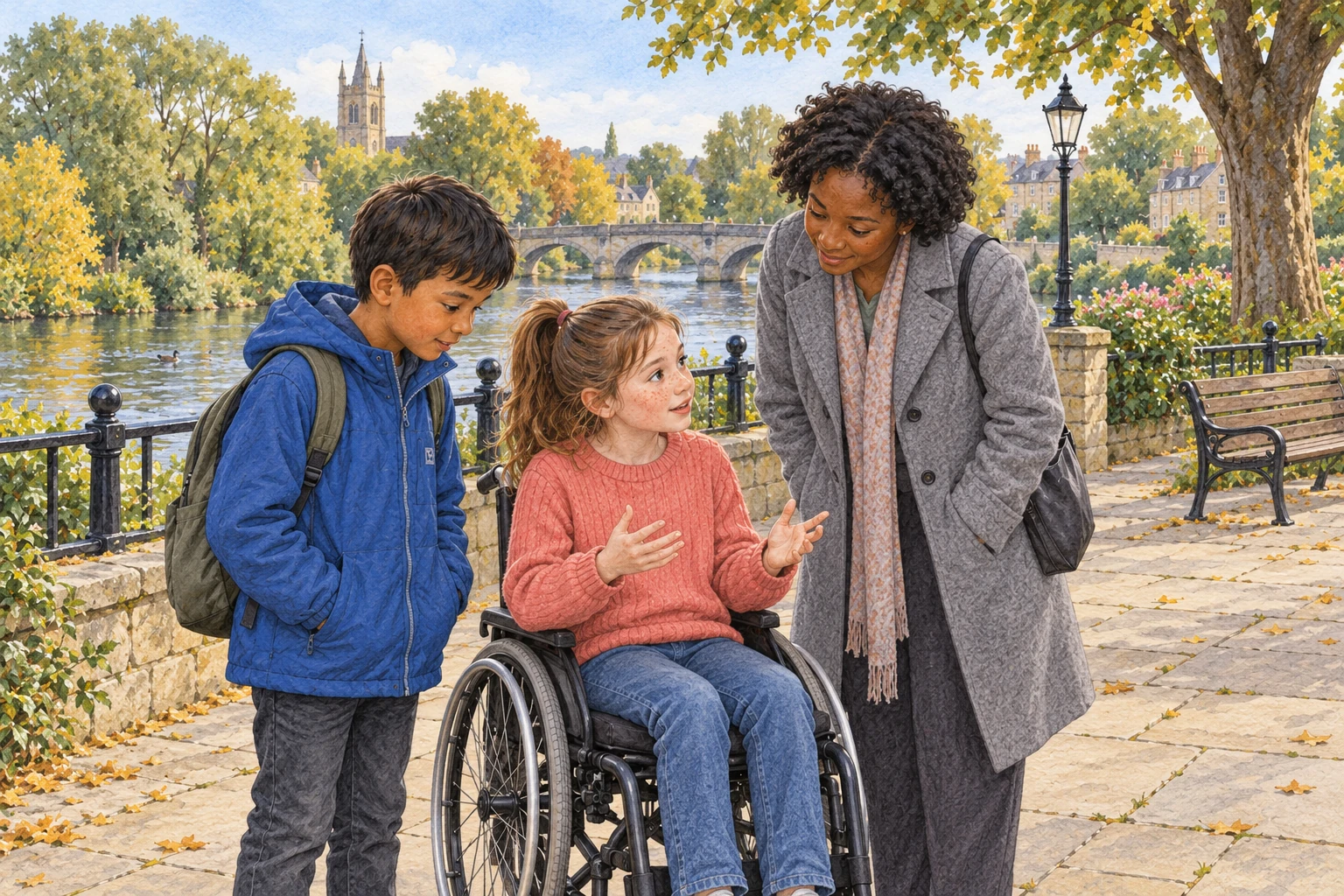
“What would make the journey work for you?” Finn asked Hazel. She explained that broad paths and suitable kerbs helped her move independently. She did not want people deciding for her or lifting her chair. Finn listened. A useful plan needed the experience of the person who would use it.
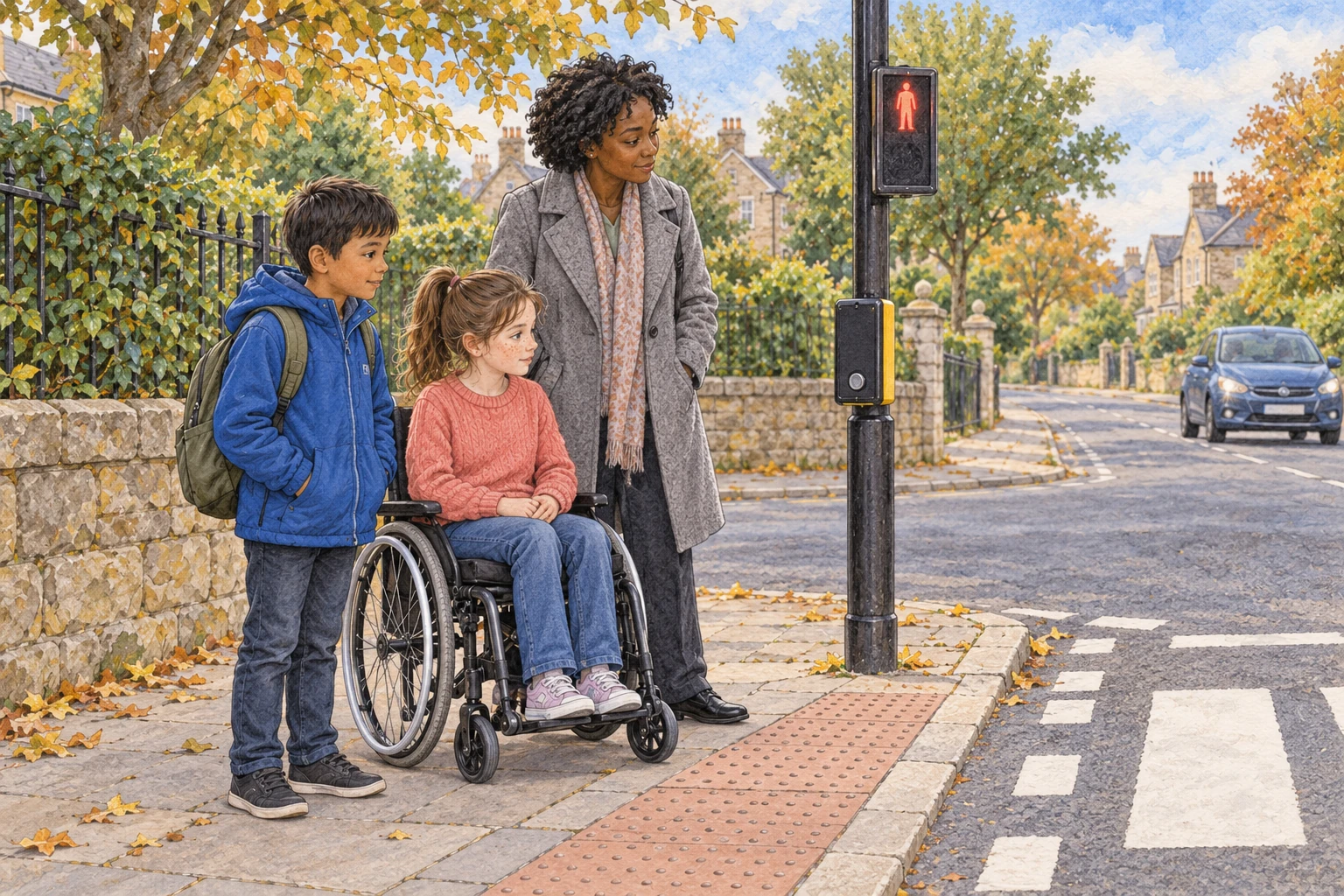
The alternative route reached a busy road. They waited safely back while Ms Frost checked the crossing. A dropped kerb helped, but the class would also need enough crossing time and adult supervision. No single feature could tell them everything about a journey. Several details had to work together to provide safe access.

At school, Finn and Hazel compared the routes. They added steps, surfaces, crossings and resting places to their drawings. The longer route was not automatically perfect either. They marked a damaged pavement section for adults to report, then looked for a suitable way around it.
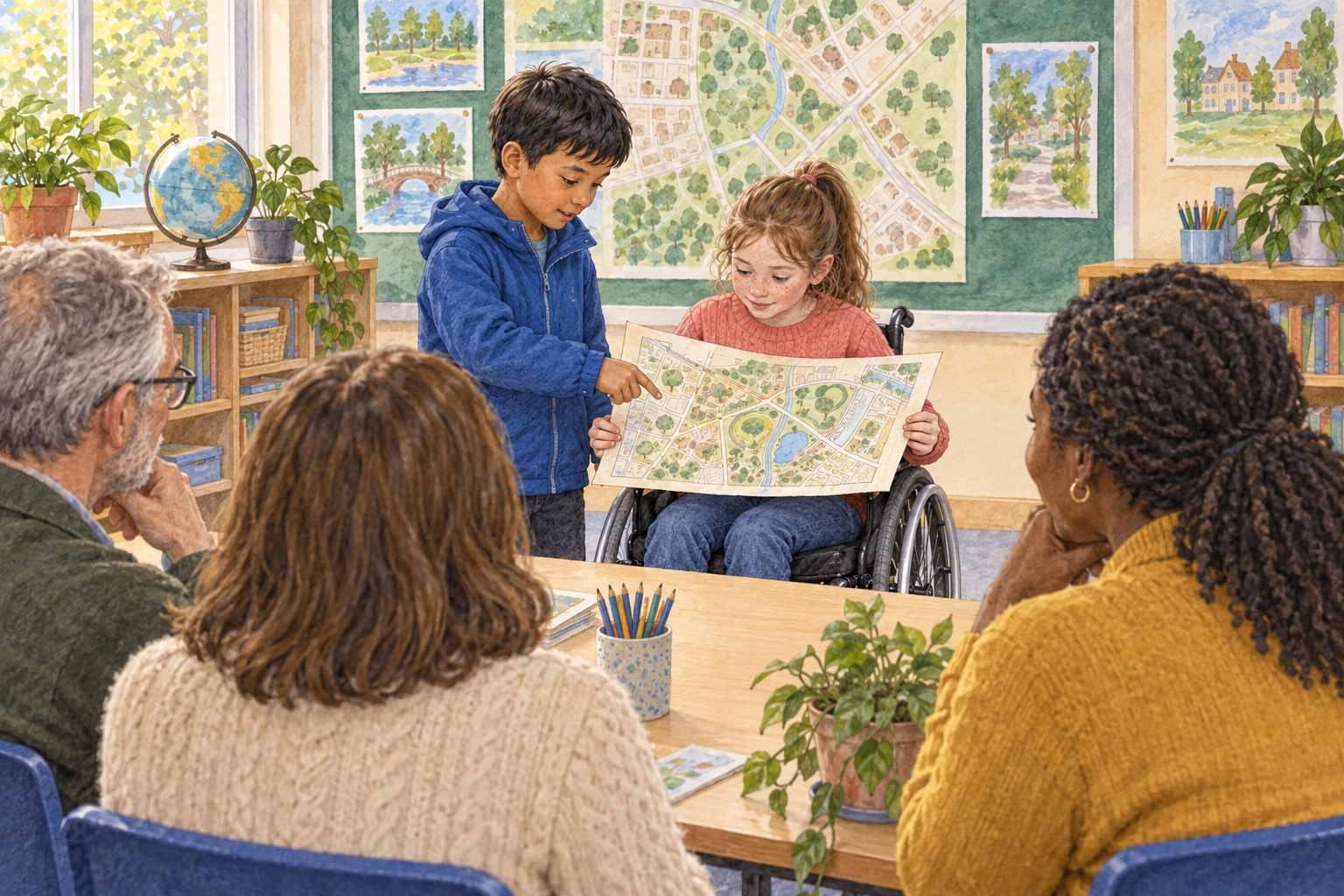
Two community visitors came to hear the class’s findings. Finn explained the difference between what they had observed and what they were requesting. Their drawing showed a barrier; it did not authorise them to repair public paths themselves. Adults would pass the information to the people responsible.
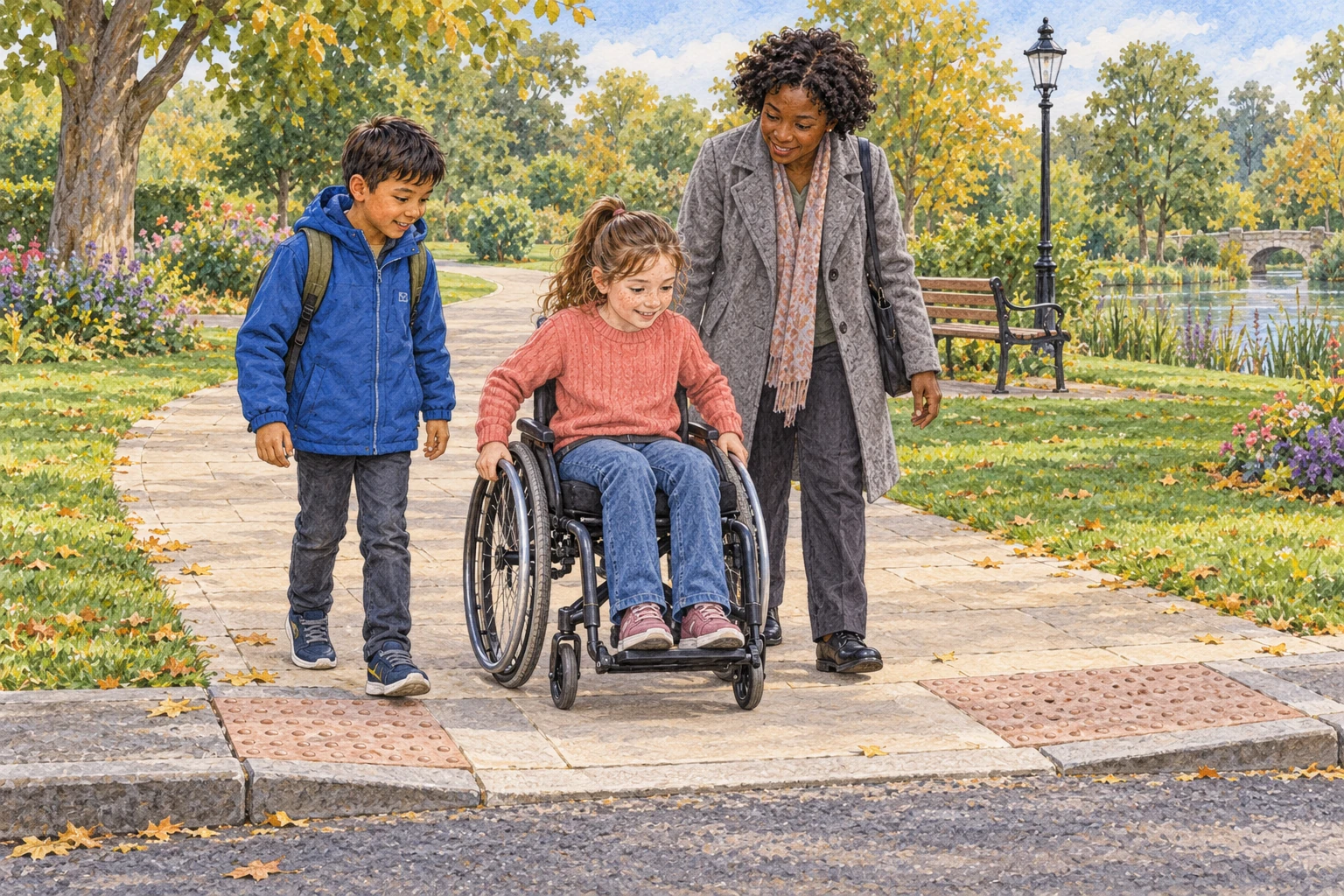
On another supervised visit, the class tried the broad paved route. Hazel travelled independently beside her friends, with space to turn. They paused at the agreed places and noticed where the map needed clearer detail. Testing the plan revealed things they had missed while sitting at a table.
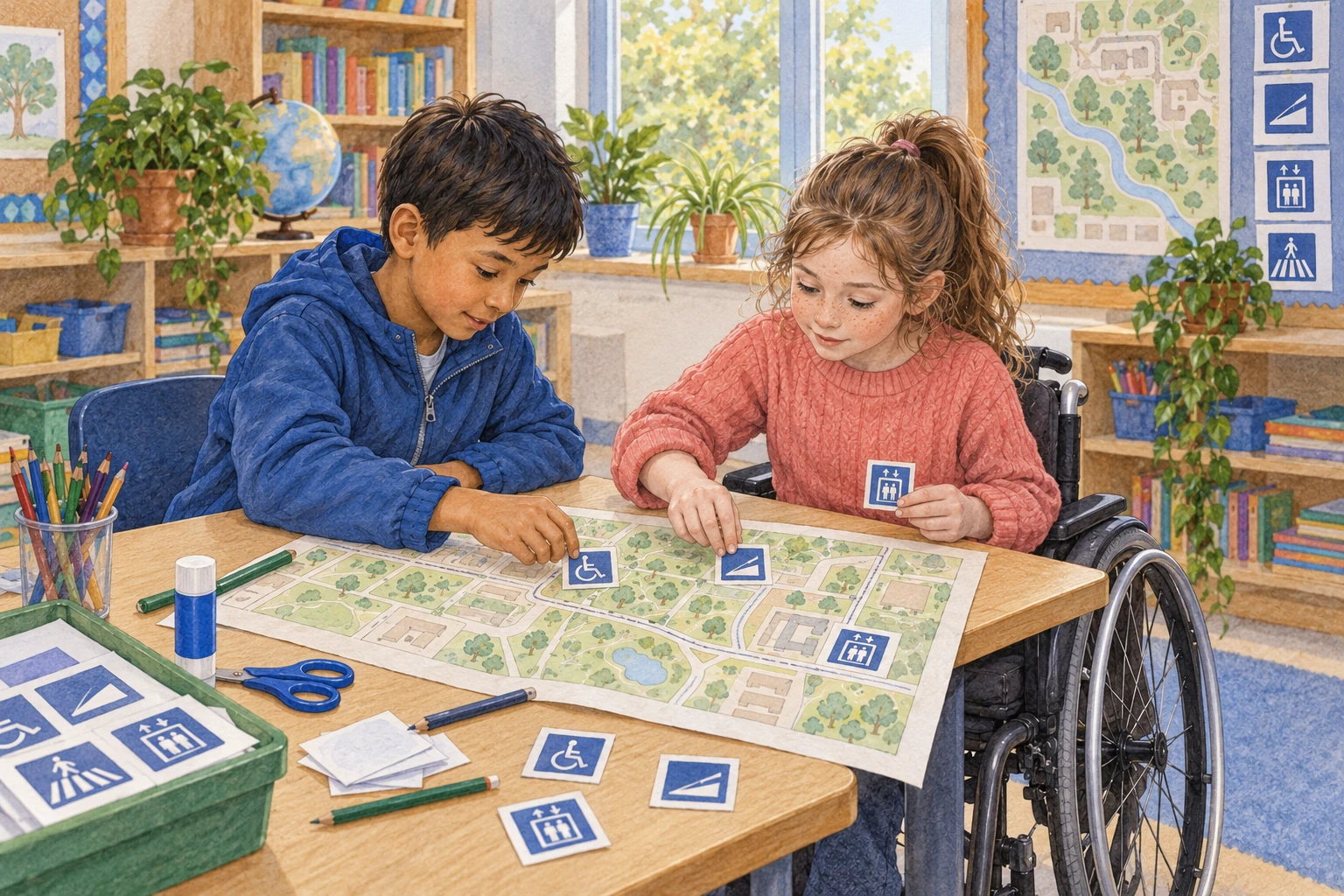
Finn added the final notes with Hazel. The shortest line had looked obvious at first. Now their map described a journey people could actually consider using. Planning fairly meant asking, checking real conditions and understanding that the same route could create different experiences for different travellers.