Harriet’s Art Folder
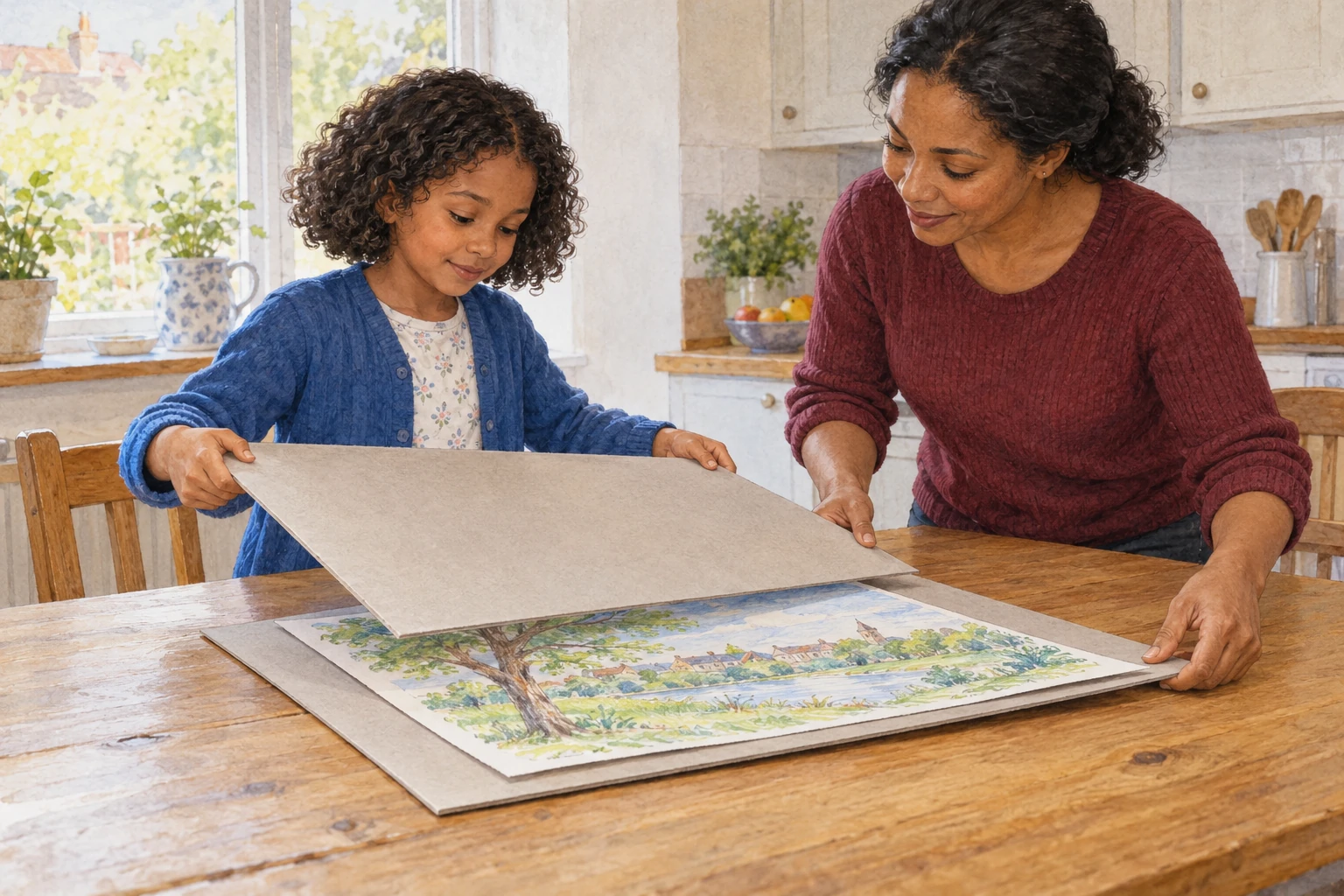
Shared Reading Books · Technology · Year 4Harriet has a drawing to take to the school exhibition. It is too large for her book bag. Aunt Rose finds two pieces of stiff card and lays the drawing between them. “A folder could protect it,” Harriet says, lifting the sandwich carefully.

At the kitchen doorway, the loose covers slide apart. One corner of the drawing peeps out and bends against the frame. Harriet stops. She puts everything flat on the table before the crease gets worse. The covers need to stay together.
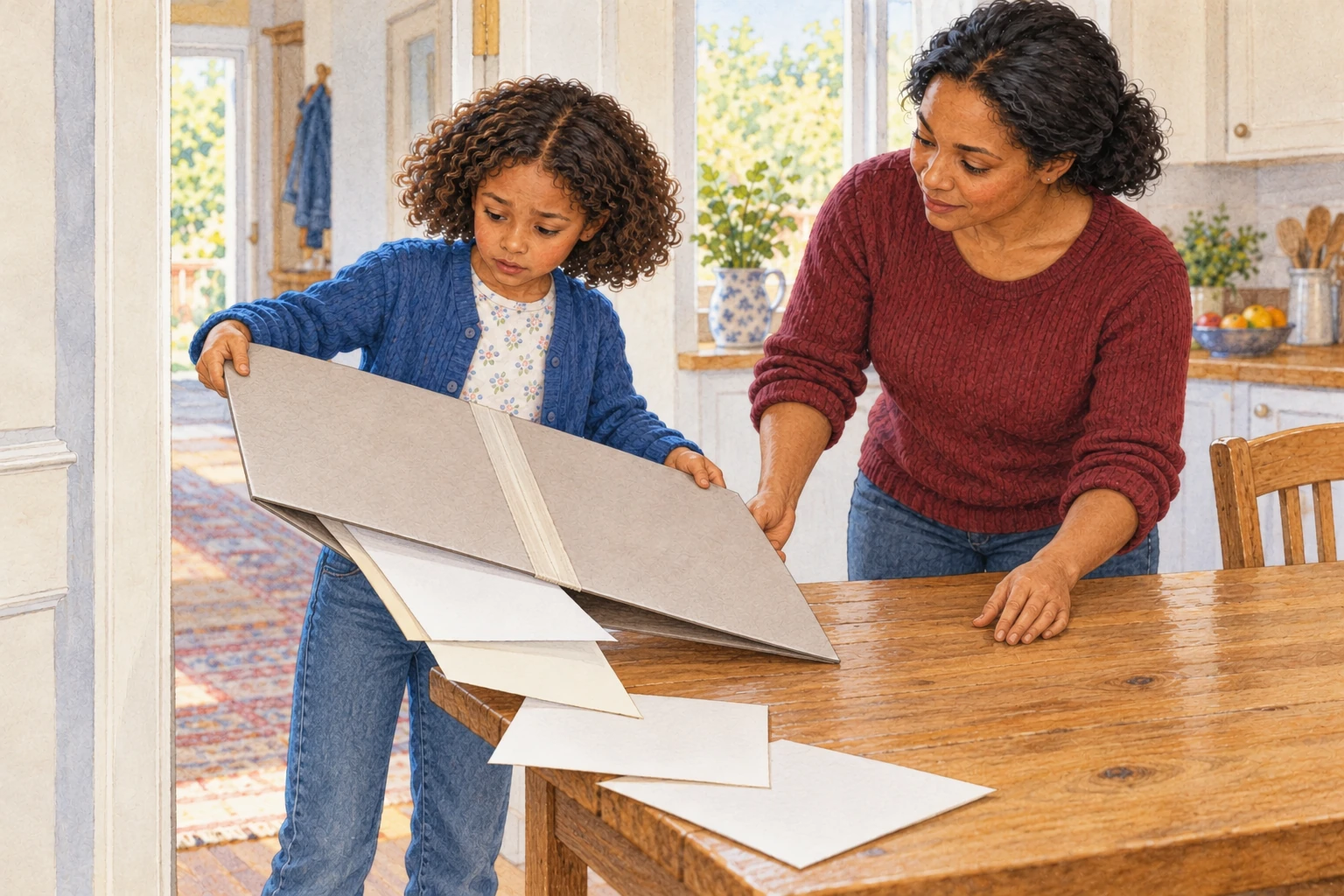
They join one long edge with broad fabric tape, leaving space for the folder to close around the paper. Harriet tries again with scrap sheets instead of her drawing. The hinge works, but the sheets slip out through the open ends when she tilts it.
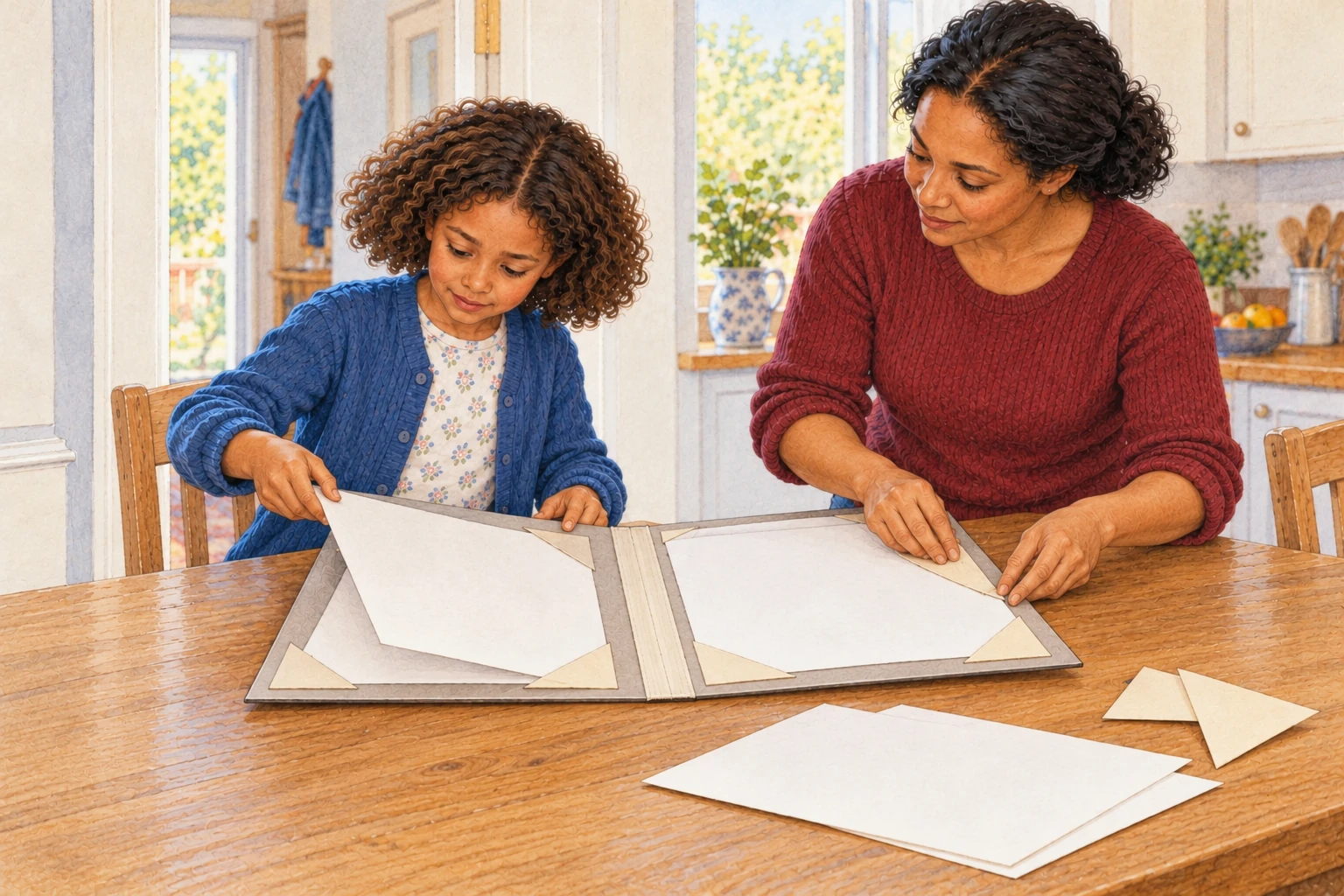
Aunt Rose folds shallow corner pockets from strong paper and fixes them inside. They overlap the scrap sheets at the corners without covering much of the picture. Harriet checks that she can slide a sheet out gently rather than pulling against the pockets.

This time she closes the folder, carries it to the doorway and turns slowly. The scrap sheets stay inside. Aunt Rose checks the edges when it is opened. No corner has been caught. They use the same route so the comparison is useful.
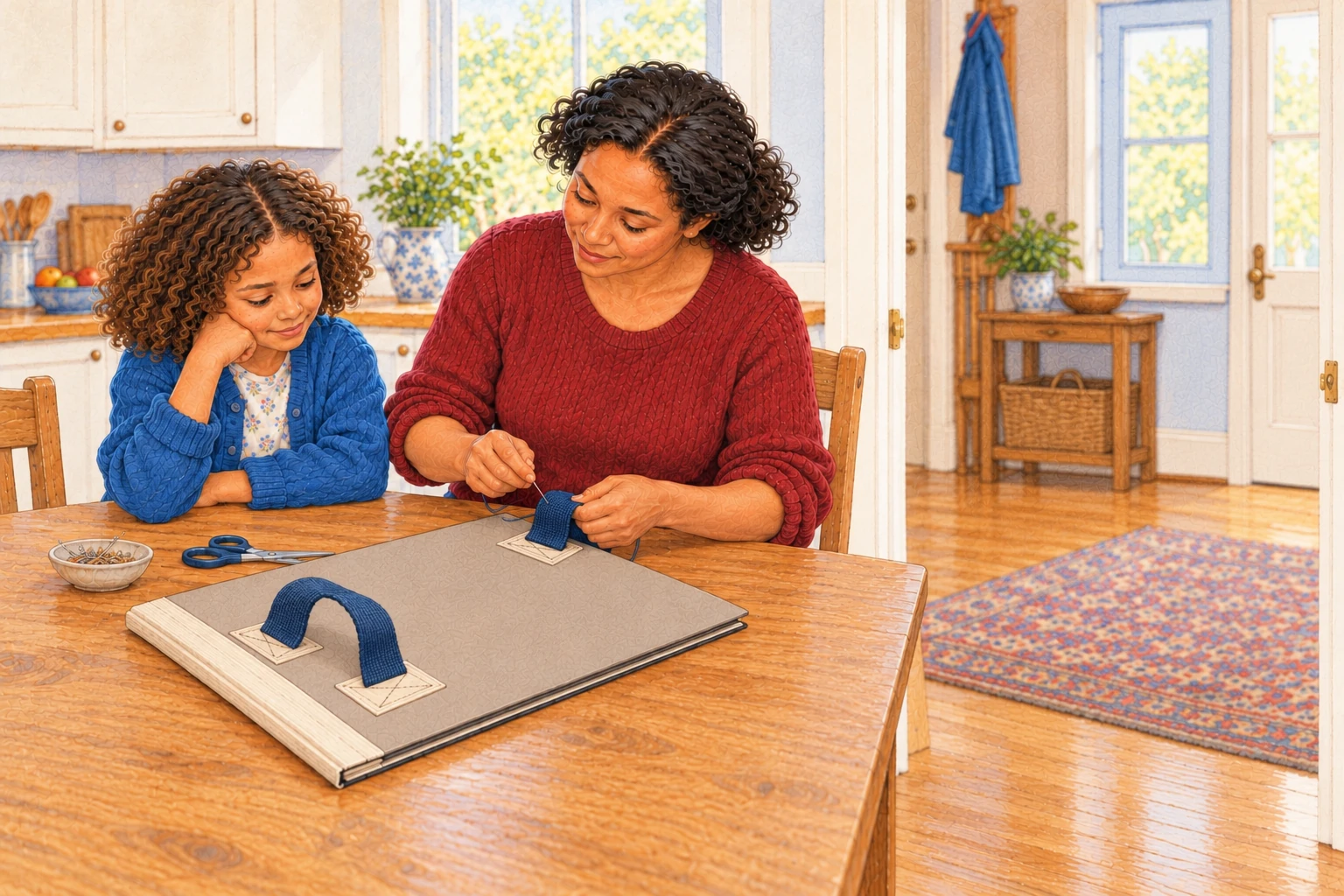
The folder is still awkward to grip under one arm. Aunt Rose attaches two short, broad fabric handles to reinforced areas of the covers. Harriet tries them with the same small load. They are comfortable, but she must carry the wide folder upright through the doorway.
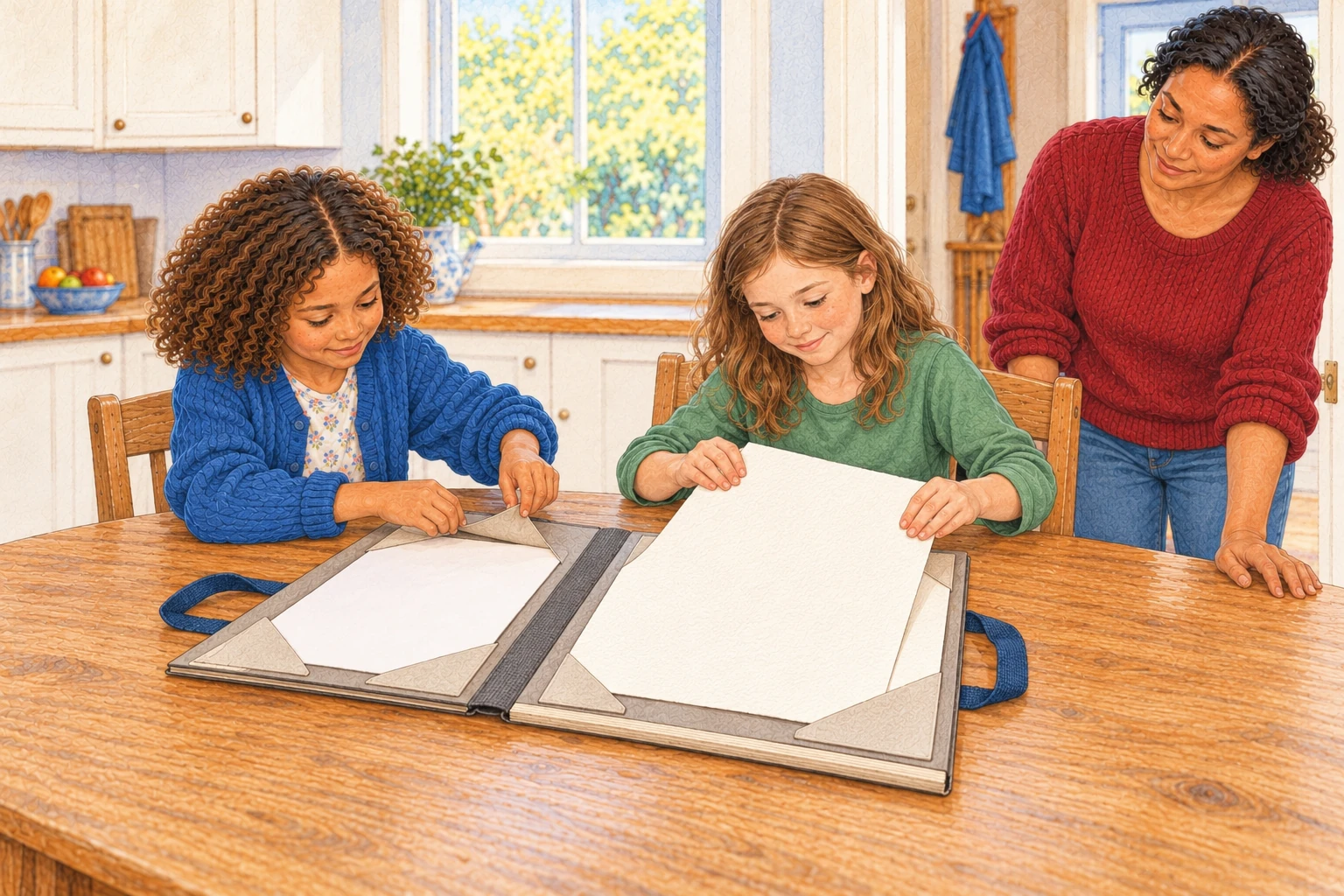
Her cousin Grace borrows the sample. She can reach the handles, but one pocket is too tight for her thicker painting paper. Harriet loosens that fold a little and retests both kinds of paper. Protection should not make the artwork hard to remove.
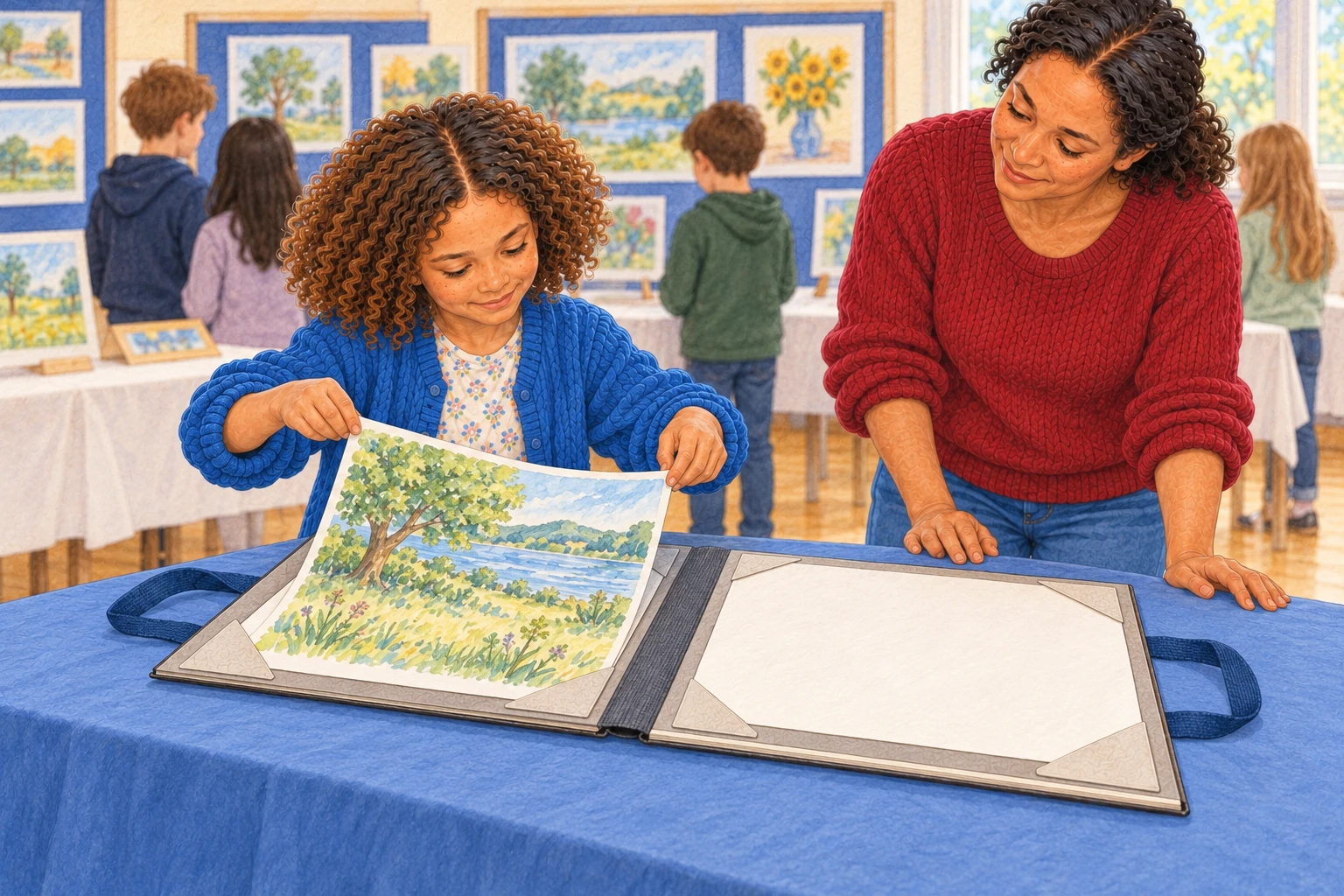
Only then does Harriet put her exhibition drawing inside. At school, she opens the folder flat and lifts the paper out by its clear edges. Aunt Rose keeps the scrap sheets for future tests. “We practised the risky parts without risking the real picture,” Harriet says.