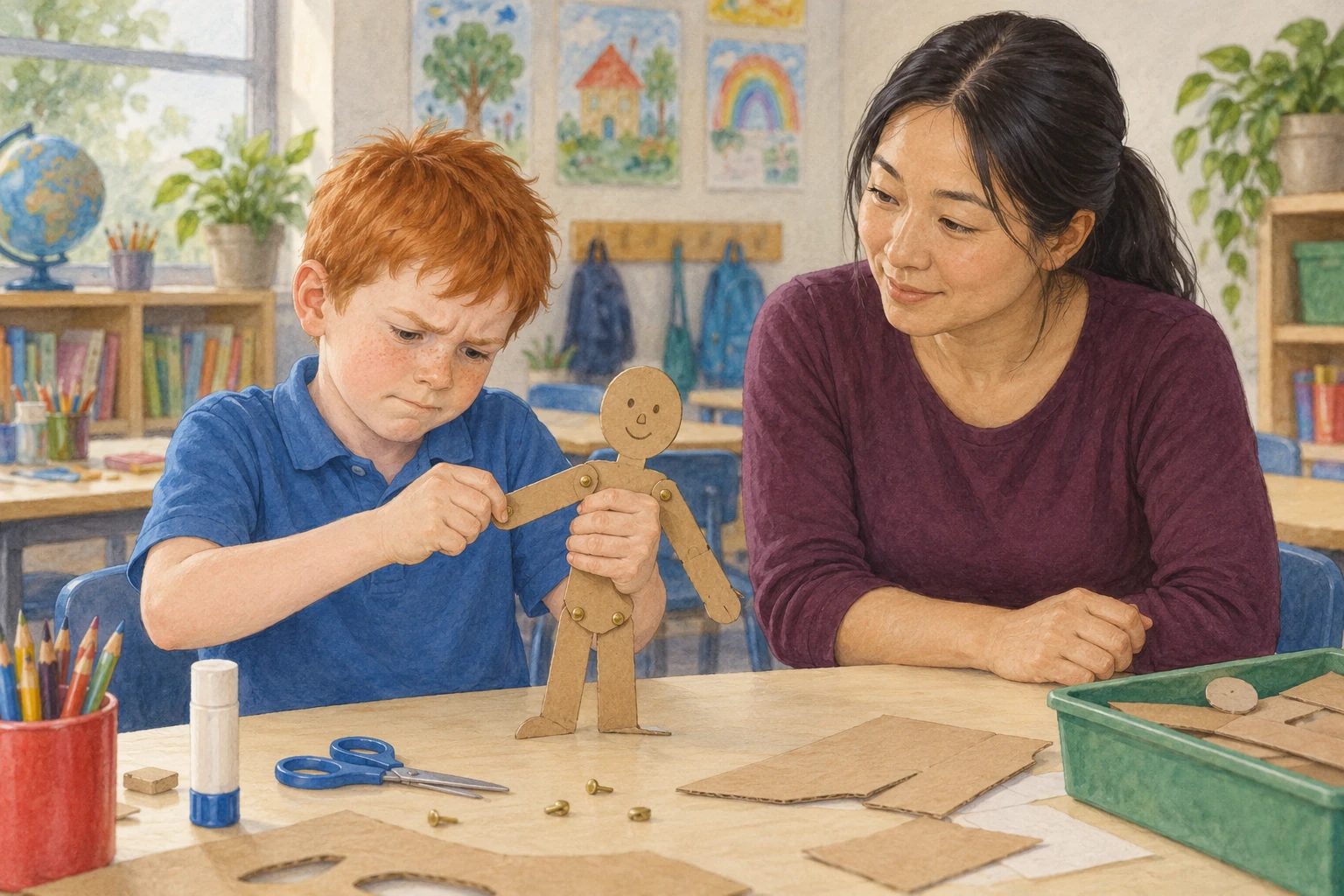
Henry’s Bending Arm
Shared Reading Books · Science · Year 3Henry has made a cardboard puppet for the class show. Its arm sticks straight out and knocks the scenery. “It needs to wave,” he tells Ms Wood. He tries bending the thick card, but the whole arm creases in the wrong place.
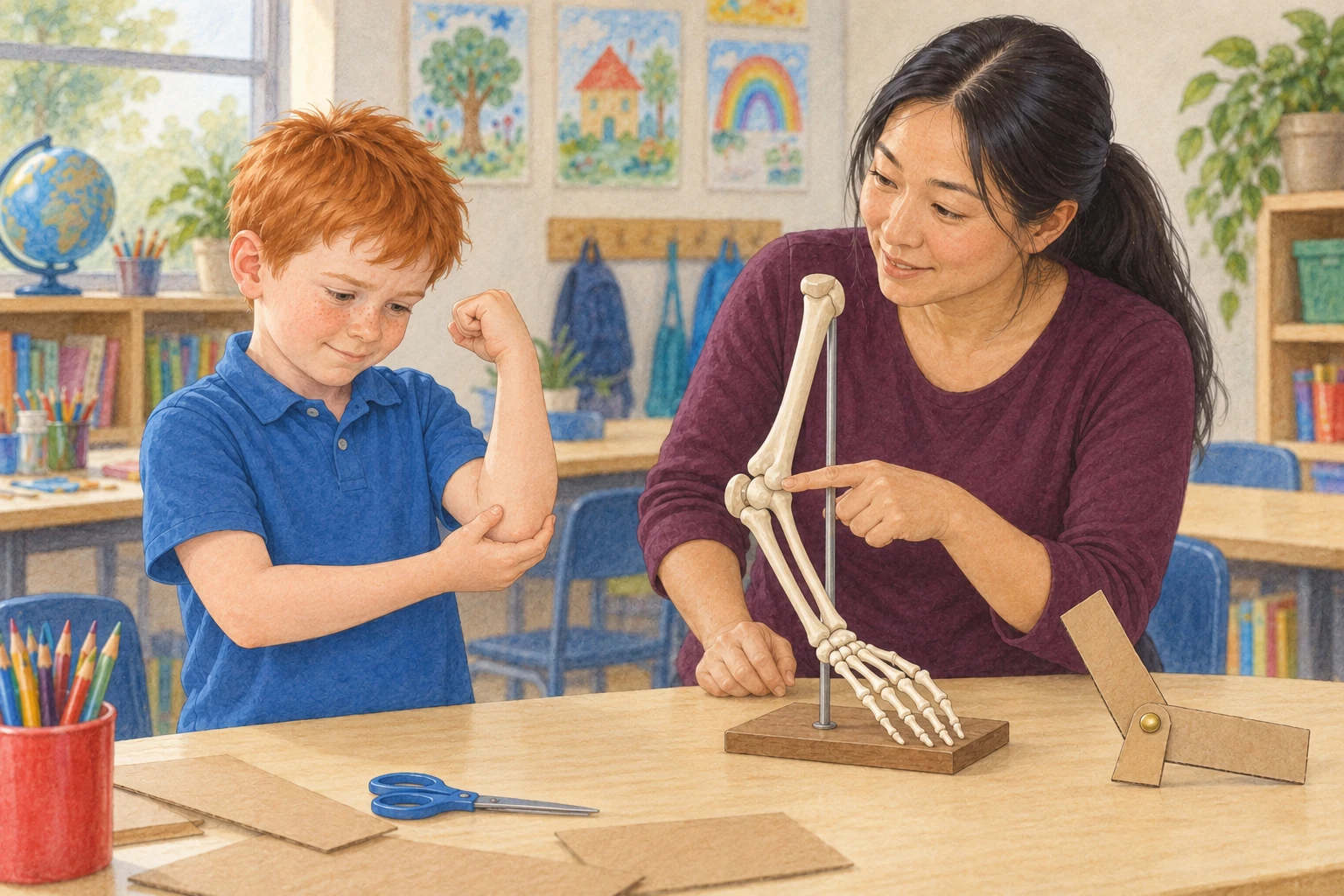
Ms Wood asks Henry to move his own arm gently. His elbow bends while the long parts above and below it keep their shape. Beneath his skin, bones help support his body. A joint is a place where bones meet, allowing different kinds of movement.
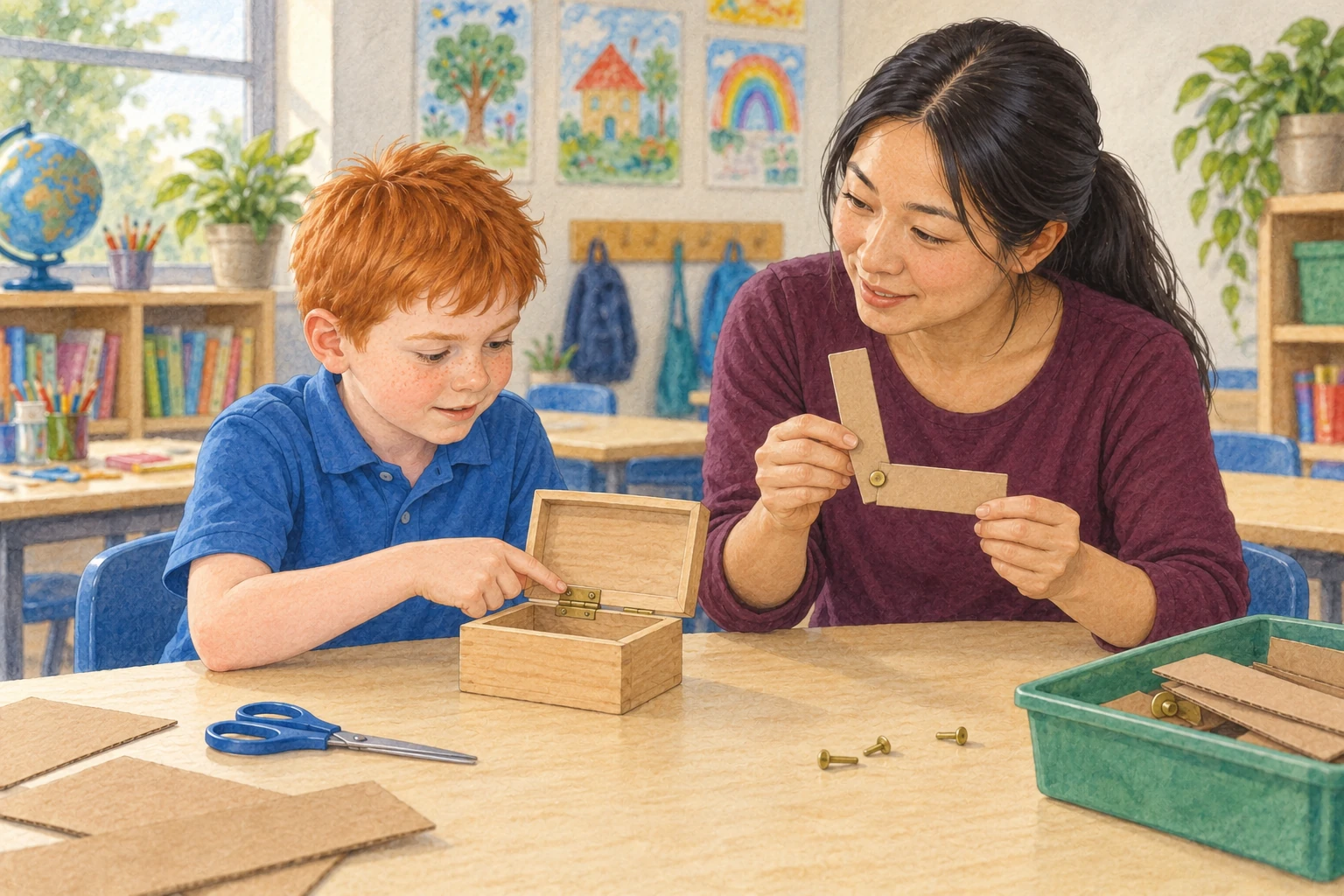
Henry looks at a small skeleton model. His elbow works rather like a hinge, although a real elbow is much more complicated than a box lid. He decides to give the puppet separate upper and lower arm pieces instead of one stiff strip.
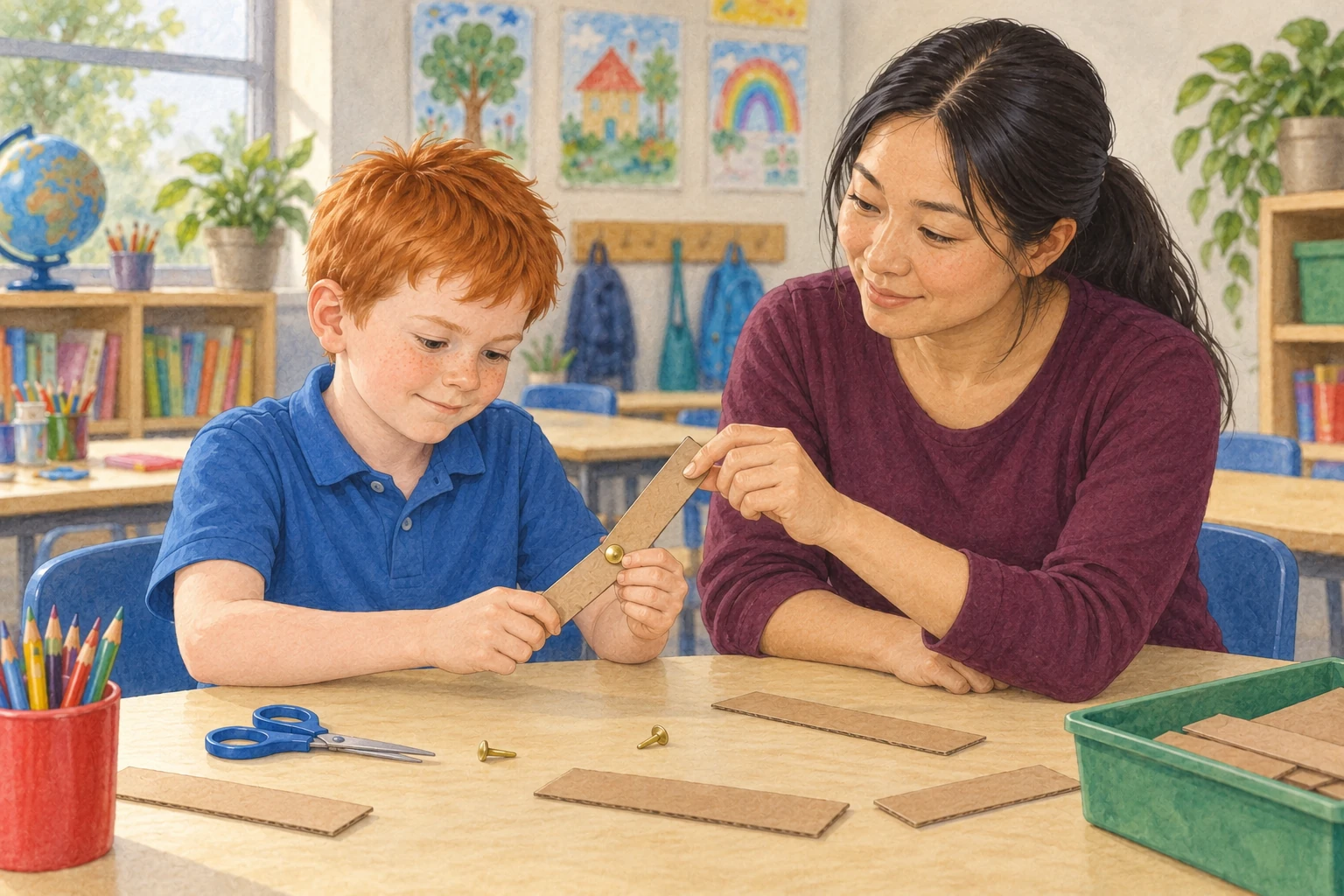
Ms Wood makes a safe hole in each card piece. Henry joins them with a paper fastener. Now the lower arm can turn at the cardboard elbow. “It bends!” he says. But when he lets go, it hangs down. A joint alone cannot pull it upwards.
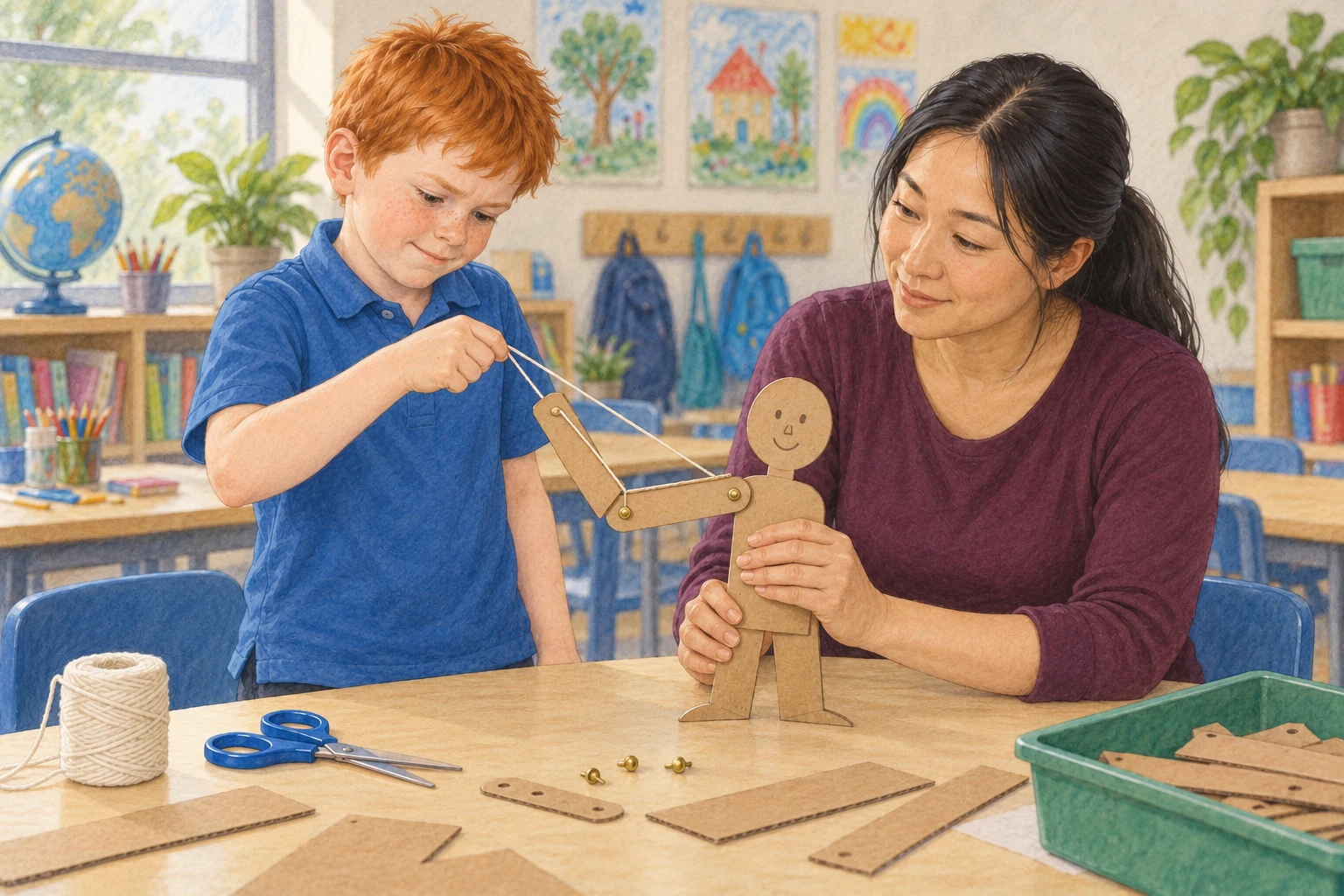
They attach strings to their simple model. Henry pulls one string, and the lower piece rises. Pulling the other helps it move back. The strings represent a pulling action. They are not real muscles, and they do not show everything happening inside an arm.
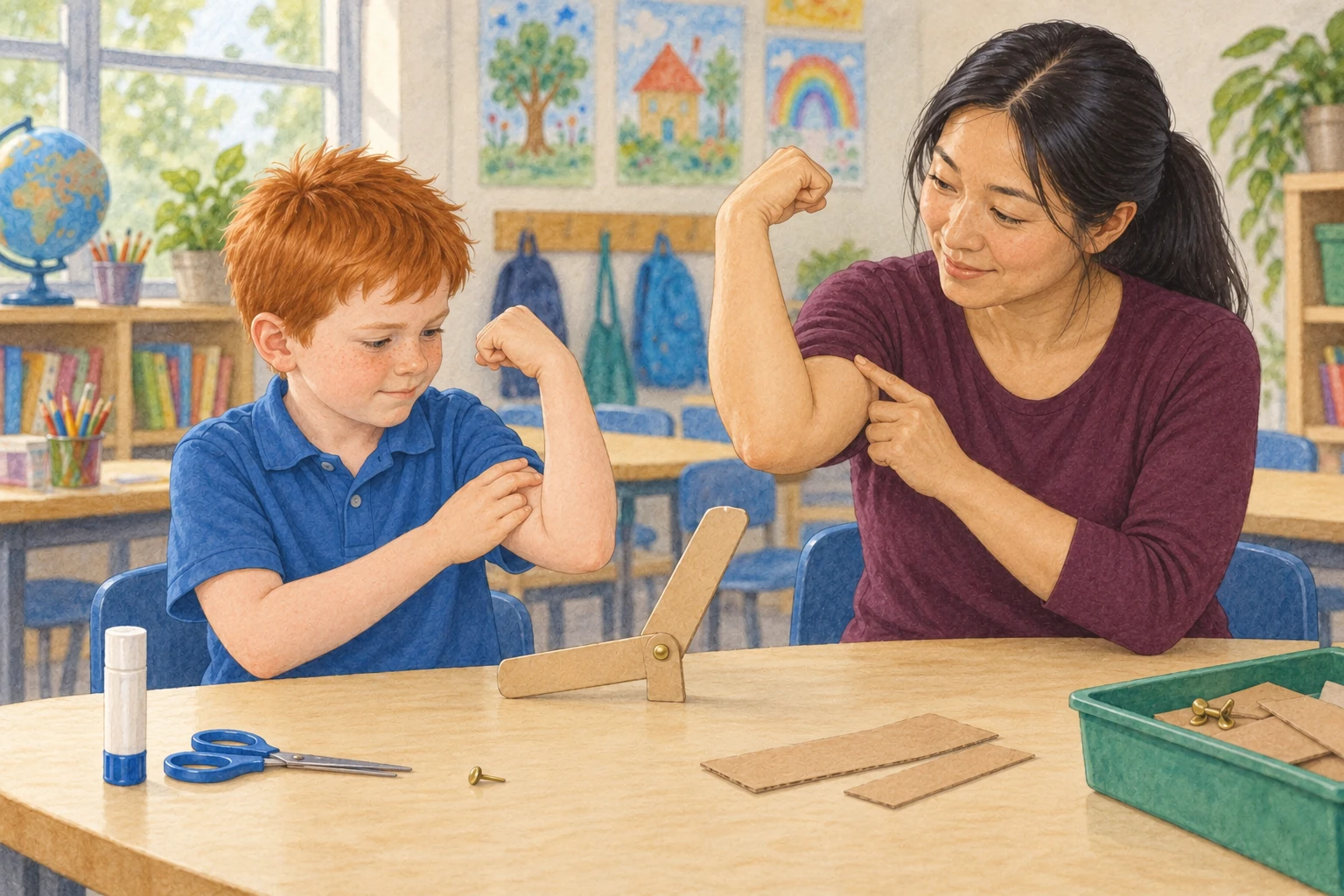
Henry gently feels his upper arm as he bends his elbow. One muscle becomes firmer. Muscles pull on bones to make them move at joints. They work in groups, often with one contracting while another relaxes. Henry does not need to force or stretch his arm.
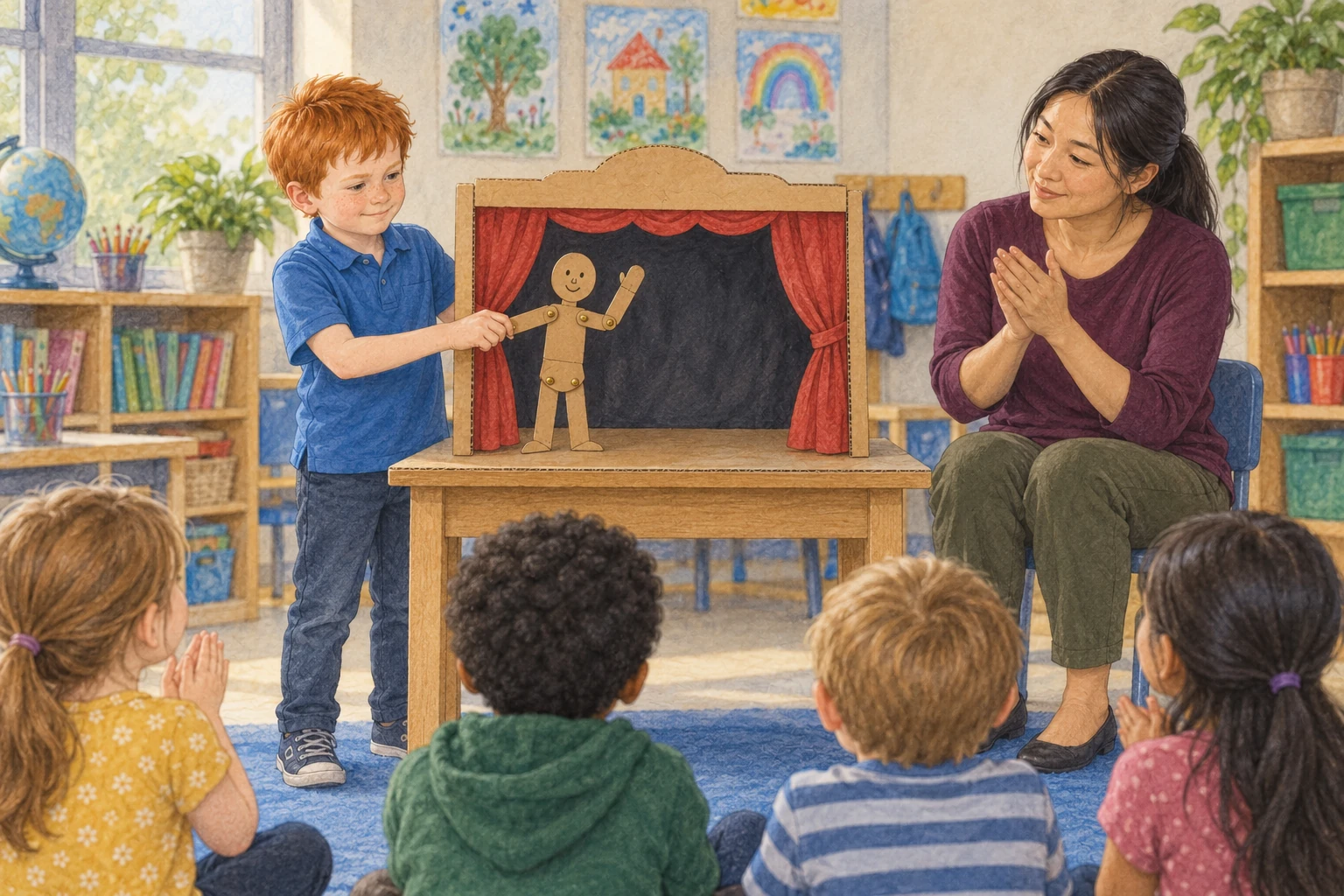
At rehearsal, Henry moves the puppet’s new elbow with its string. The little hand waves without sweeping the scenery away. Ms Wood asks what fixed the problem. “Separate pieces, a joint and something to pull,” Henry explains. The class tries a wave together.
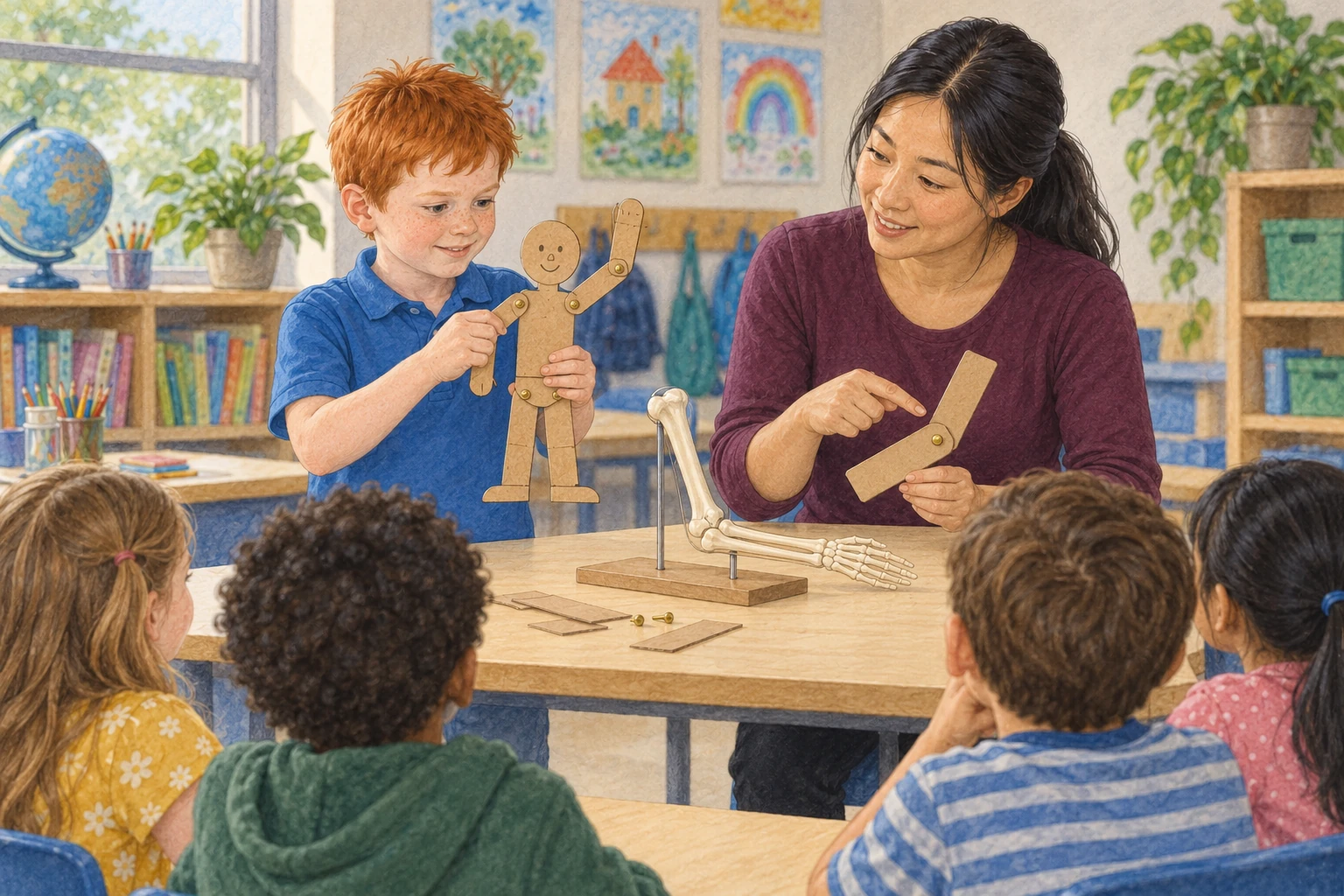
After the show, Henry leaves the model beside his puppet. “My arm is not made of card and string,” he tells a friend. “But this helped me think about movement.” The puppet takes one final bow, and this time all the scenery stays standing.