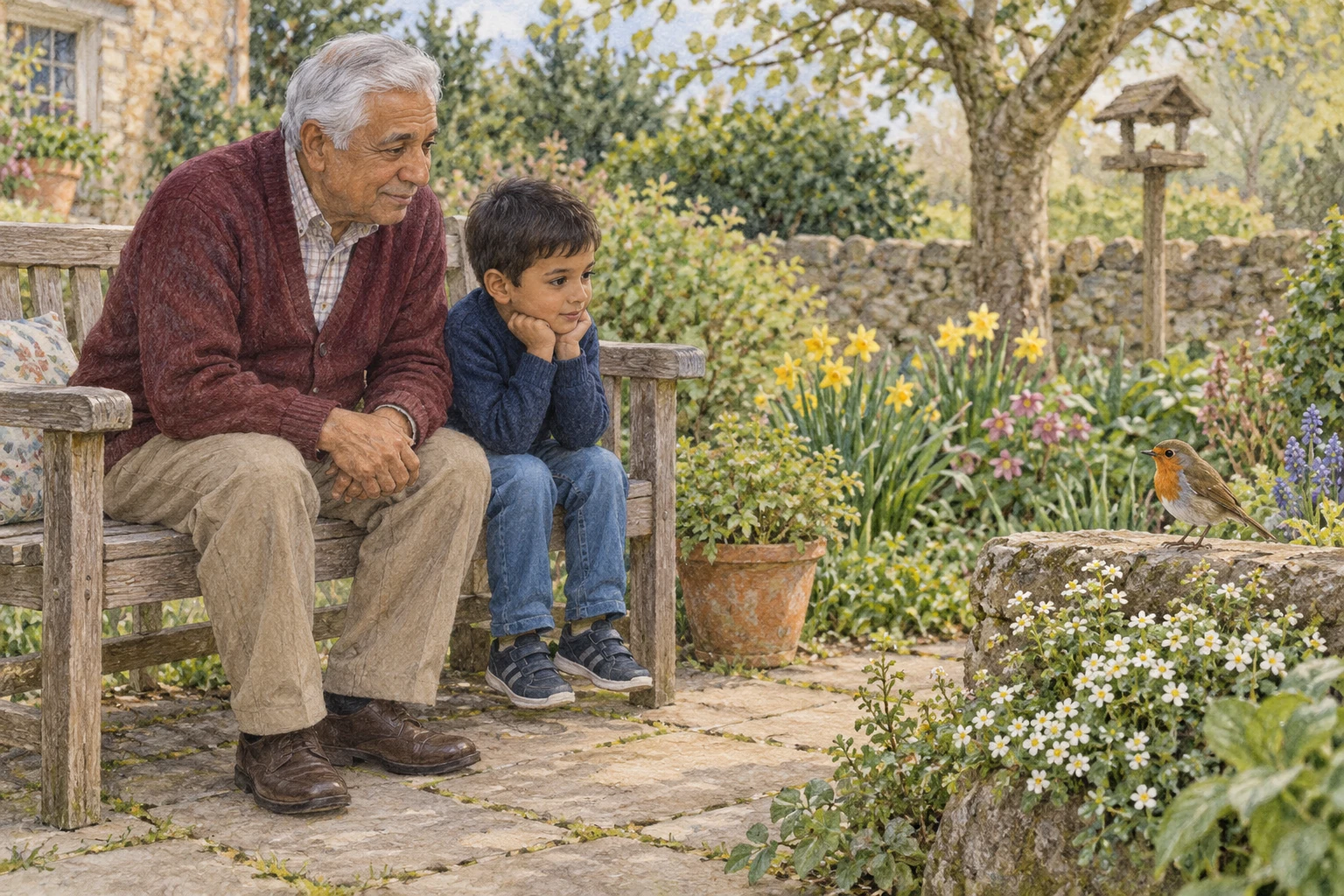
Henry’s Bird Watch
Shared Reading Books · Science · Year 1Henry watches a robin from the garden bench. A butterfly flutters past too. “They both fly. Are they both birds?” he asks Grandad. They sit quietly rather than chasing either animal across the garden.
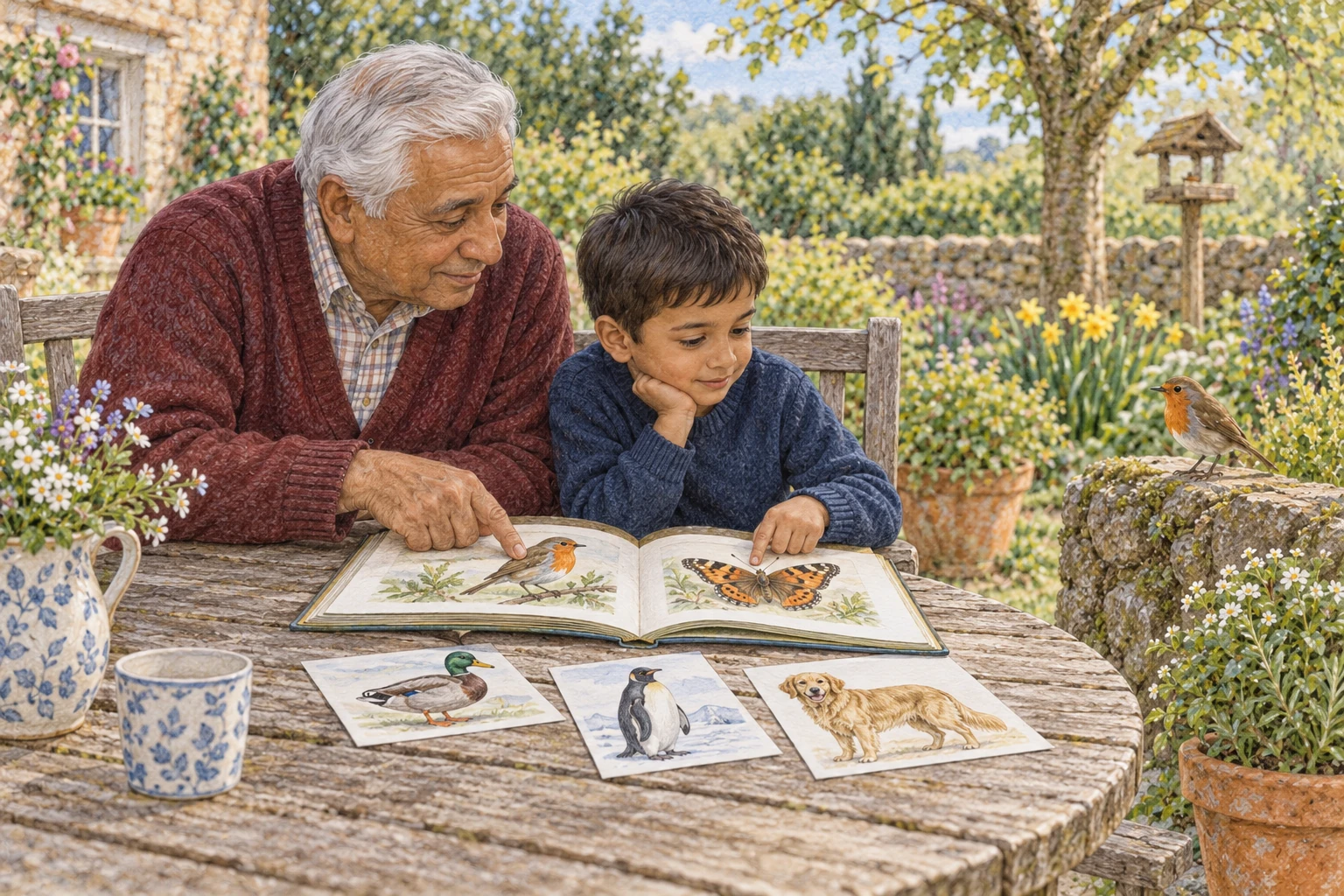
Grandad opens a wildlife book. Henry can compare the pictures without getting closer to the animals. The robin and butterfly have different bodies. Flying is something they can both do, but one shared action does not make them the same.
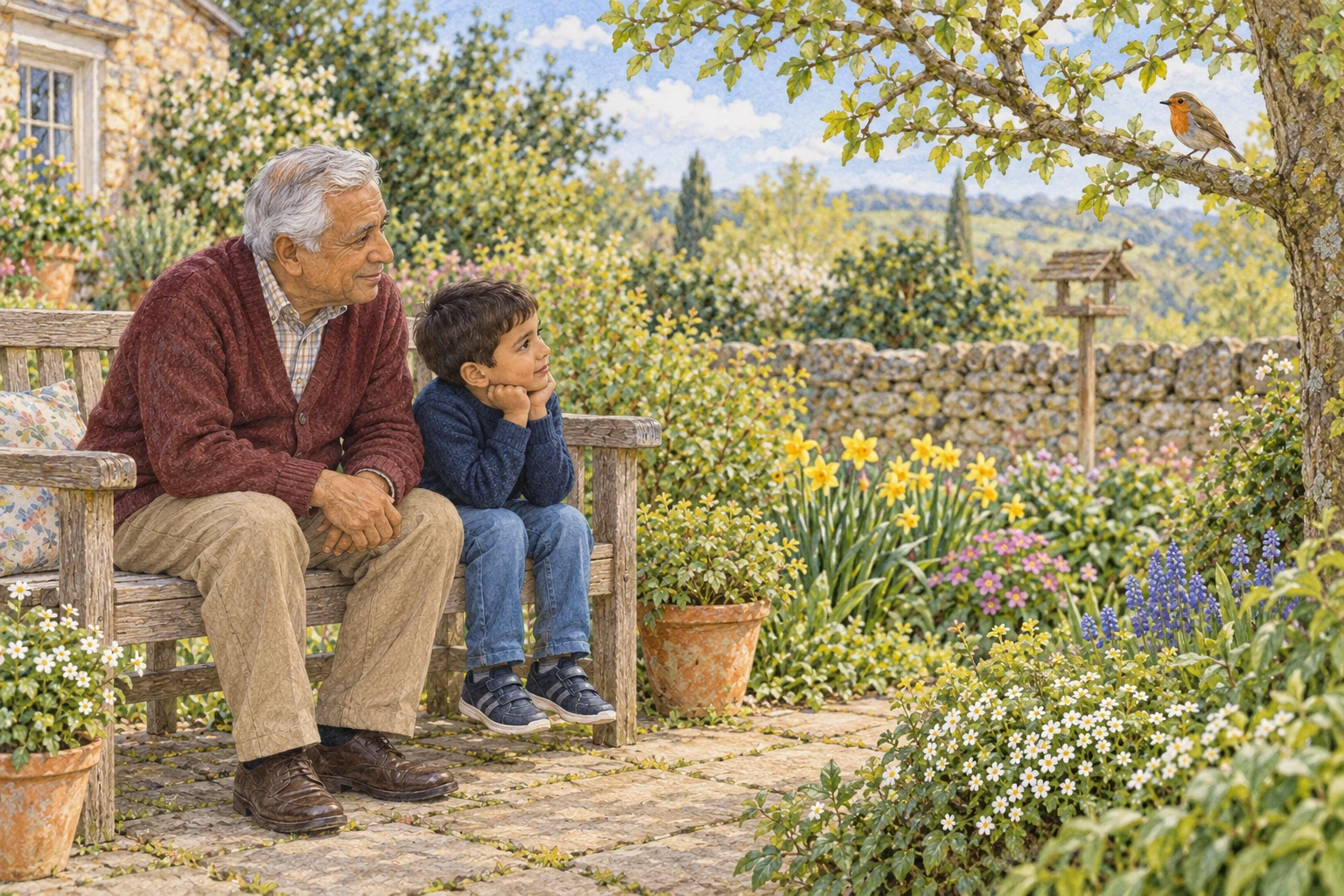
They look again at the robin on a branch. Henry notices feathers, a beak, two legs and wings. Grandad explains that all living birds have feathers. A bird’s features give them better clues than flight alone.
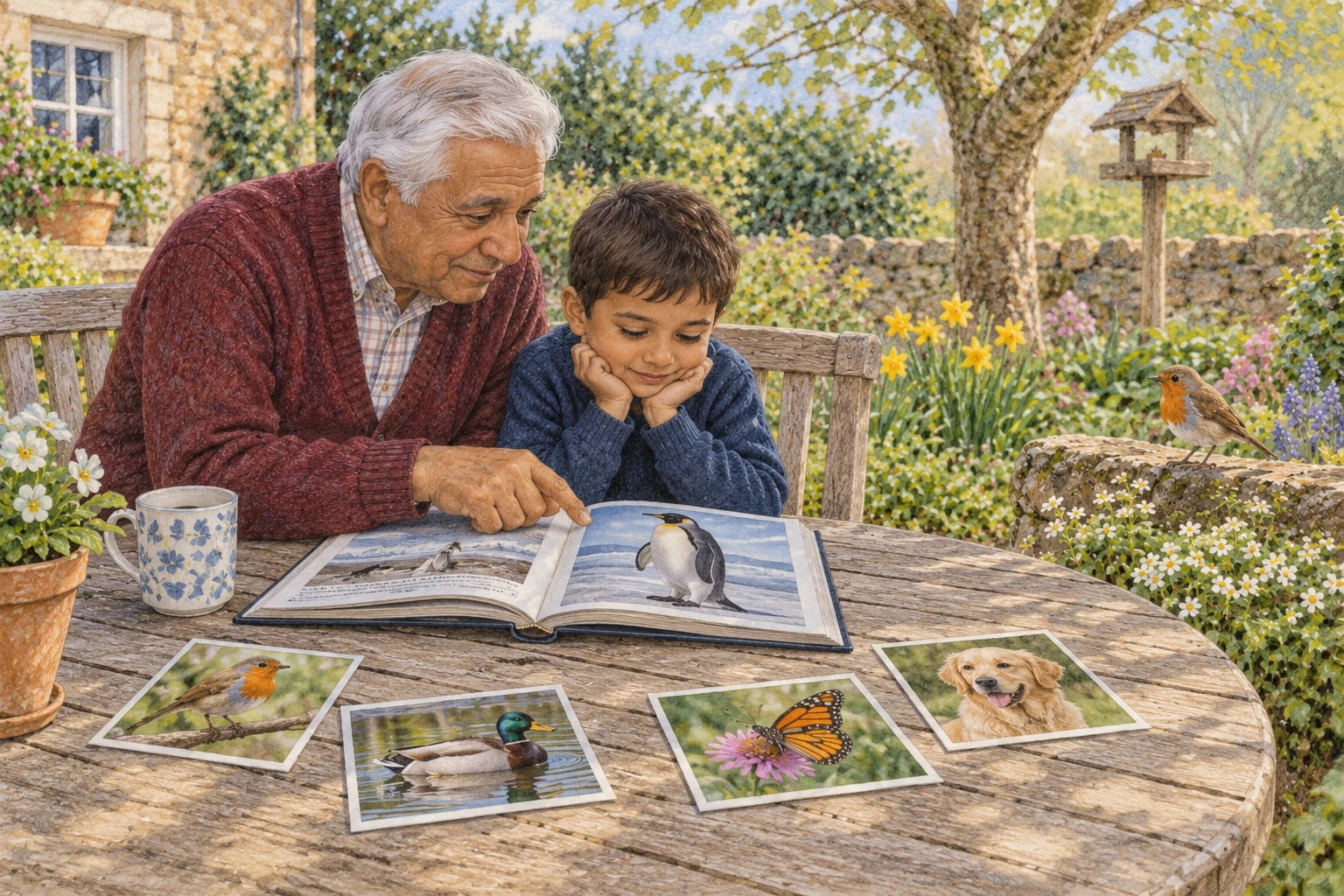
In the book, a penguin stands beside the sea. It has feathers and wings, but it does not fly through the air. “Still a bird,” says Henry. Grandad nods. Not every bird uses its wings in the same way.
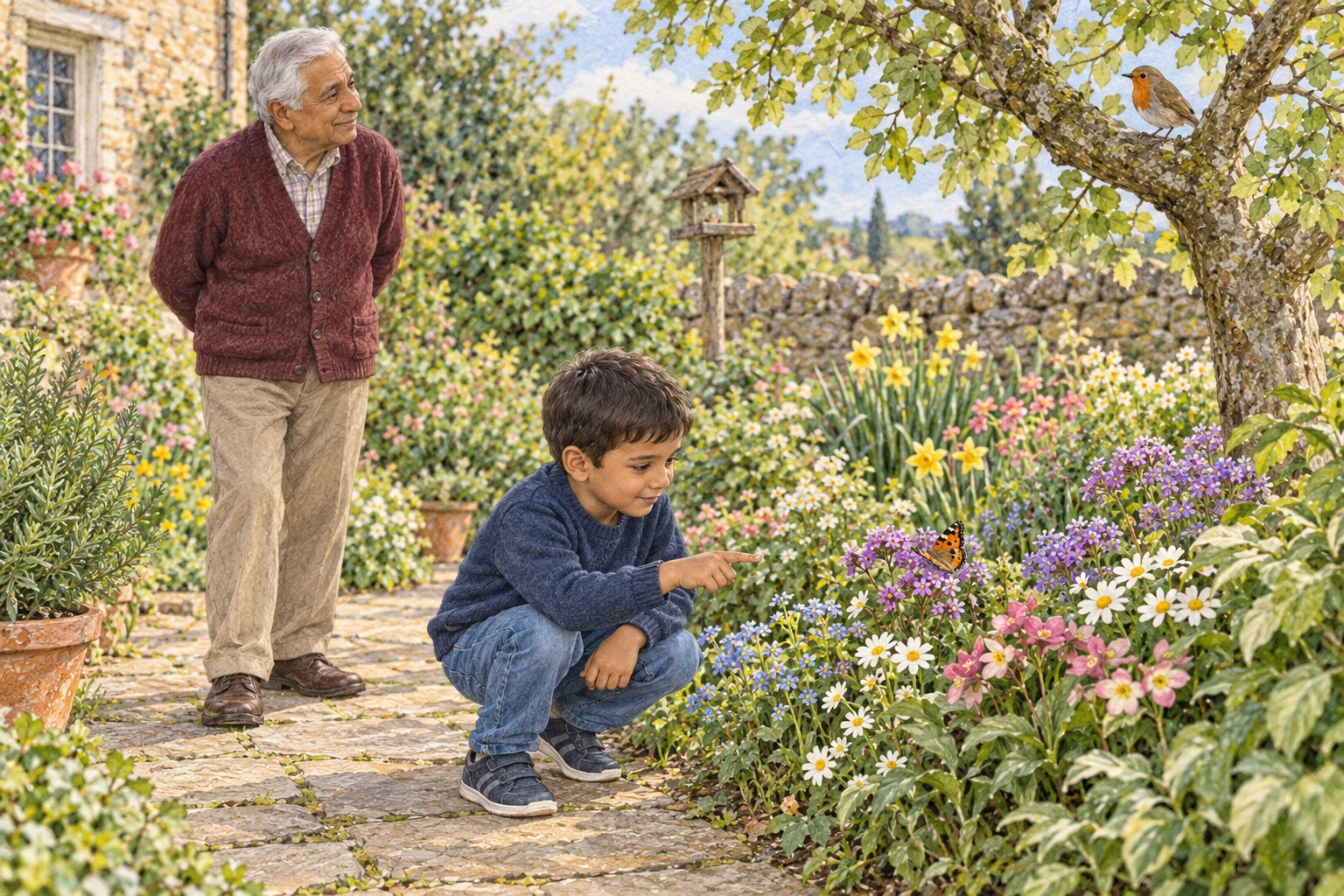
The butterfly settles above the flowers. It has wings, but no feathers or bird’s beak. Henry now knows why flying was not enough to answer his first question. He needs to look for several useful features.
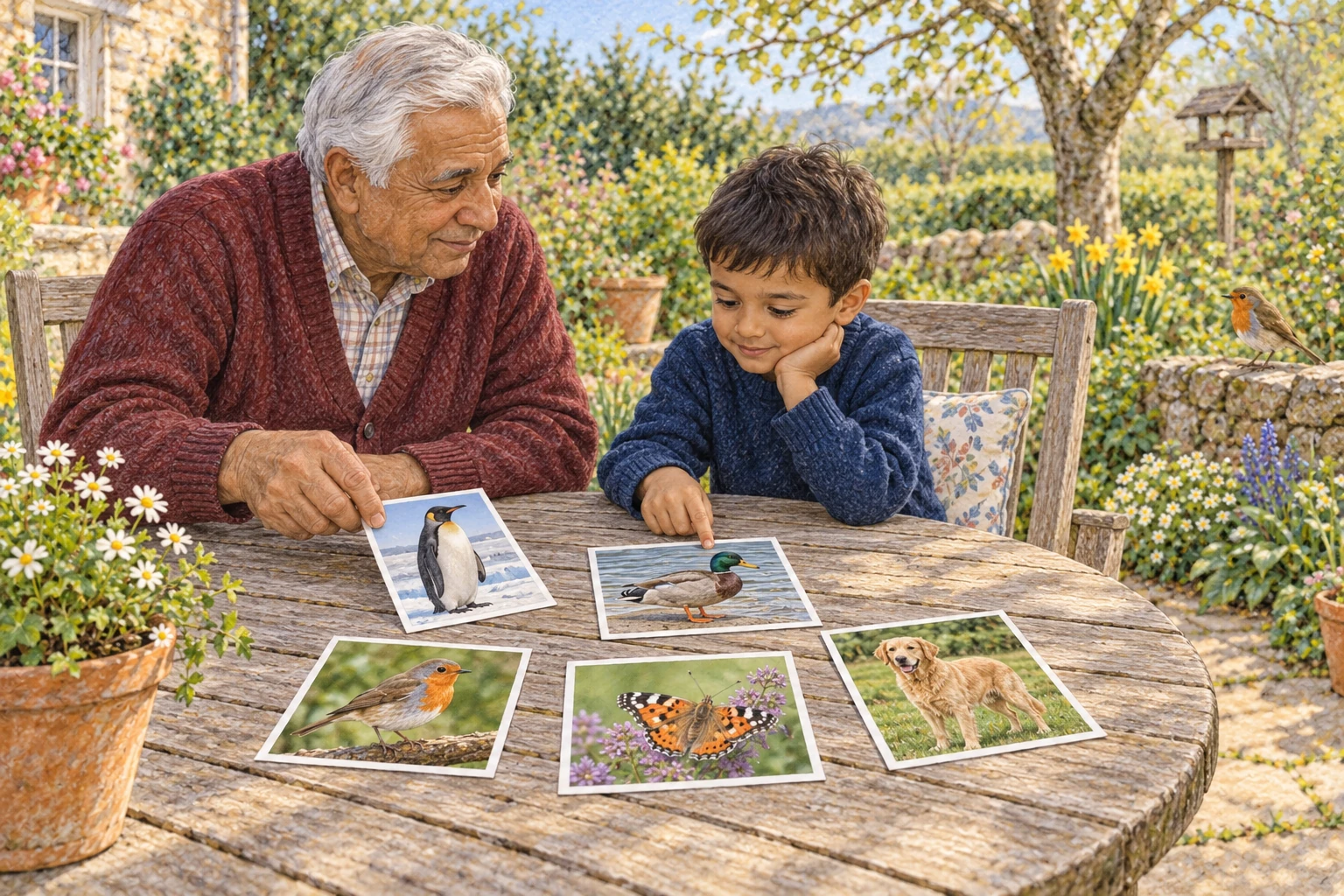
They sort picture cards of a robin, duck, penguin, butterfly and dog. Henry puts the three birds together. He explains his choice by pointing to feathers and other features. Sorting is more useful when he can give a reason.
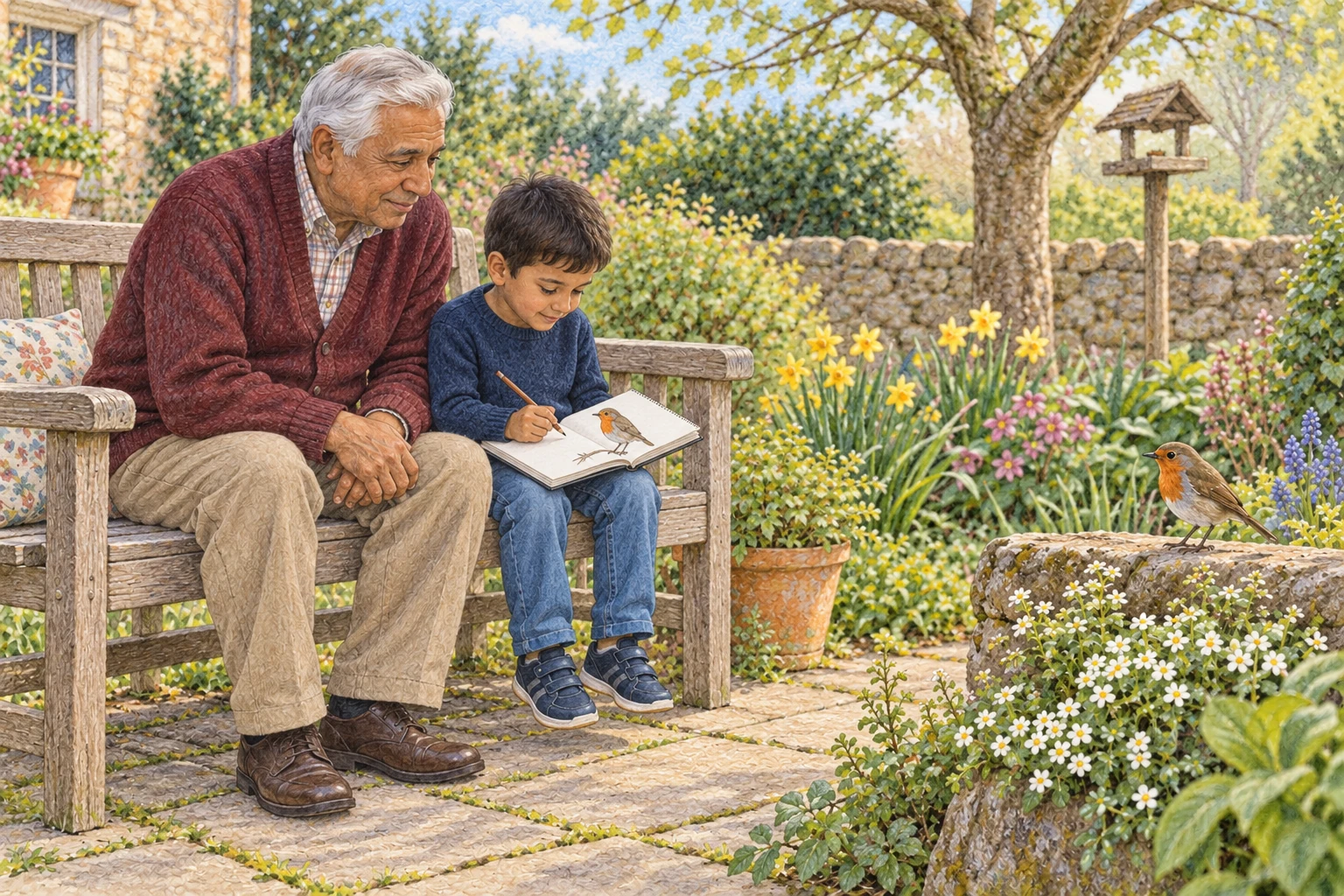
Henry draws the robin in his notebook. He does not need a real feather or a captured bird. Watching from a distance and using clear pictures have helped him notice things he could describe.
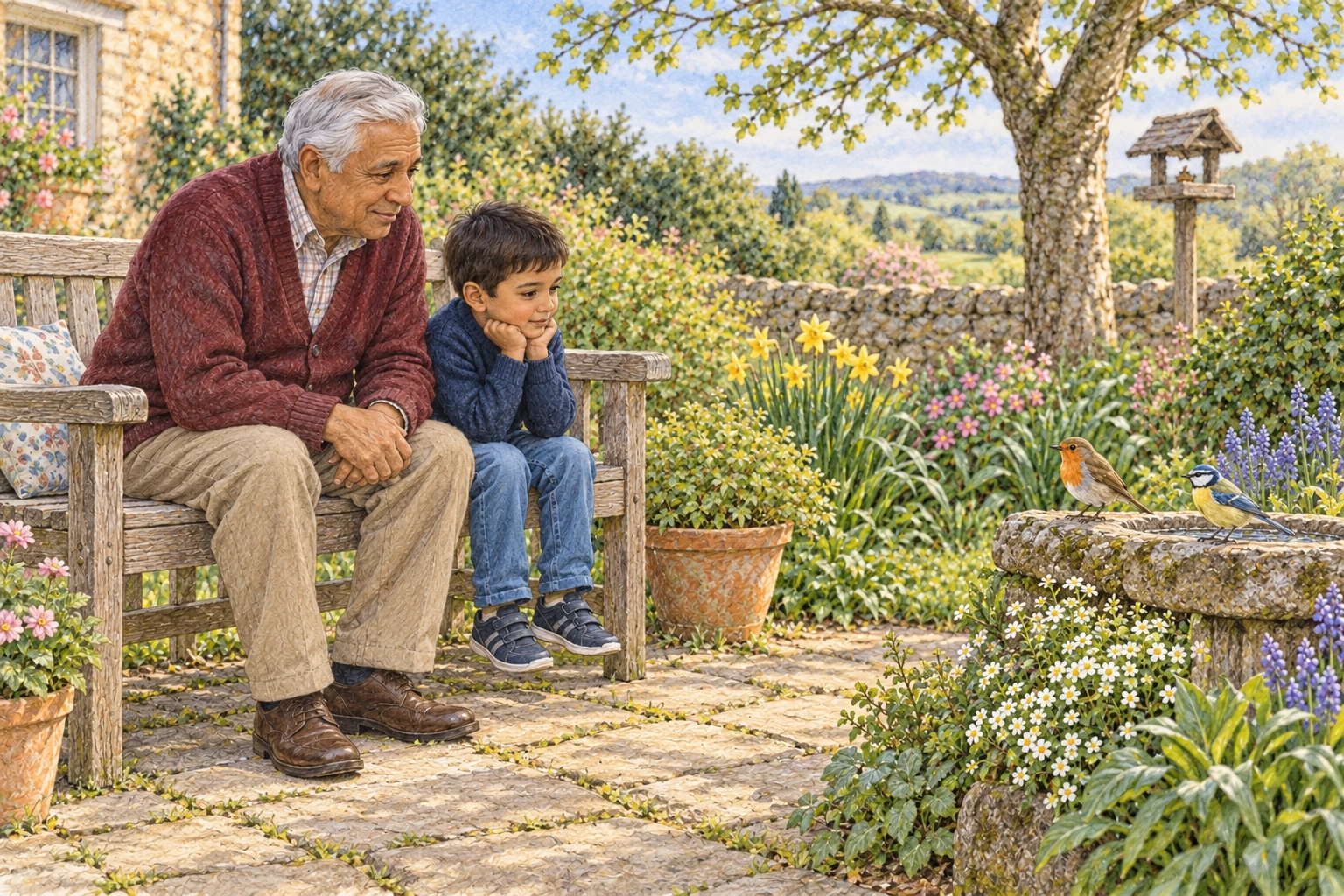
Another small bird lands nearby. Henry waits beside Grandad. “I will look at its features,” he whispers. His first question has become a better way to investigate. He can compare living things without expecting every one to move alike.