Hugo’s Market Trail
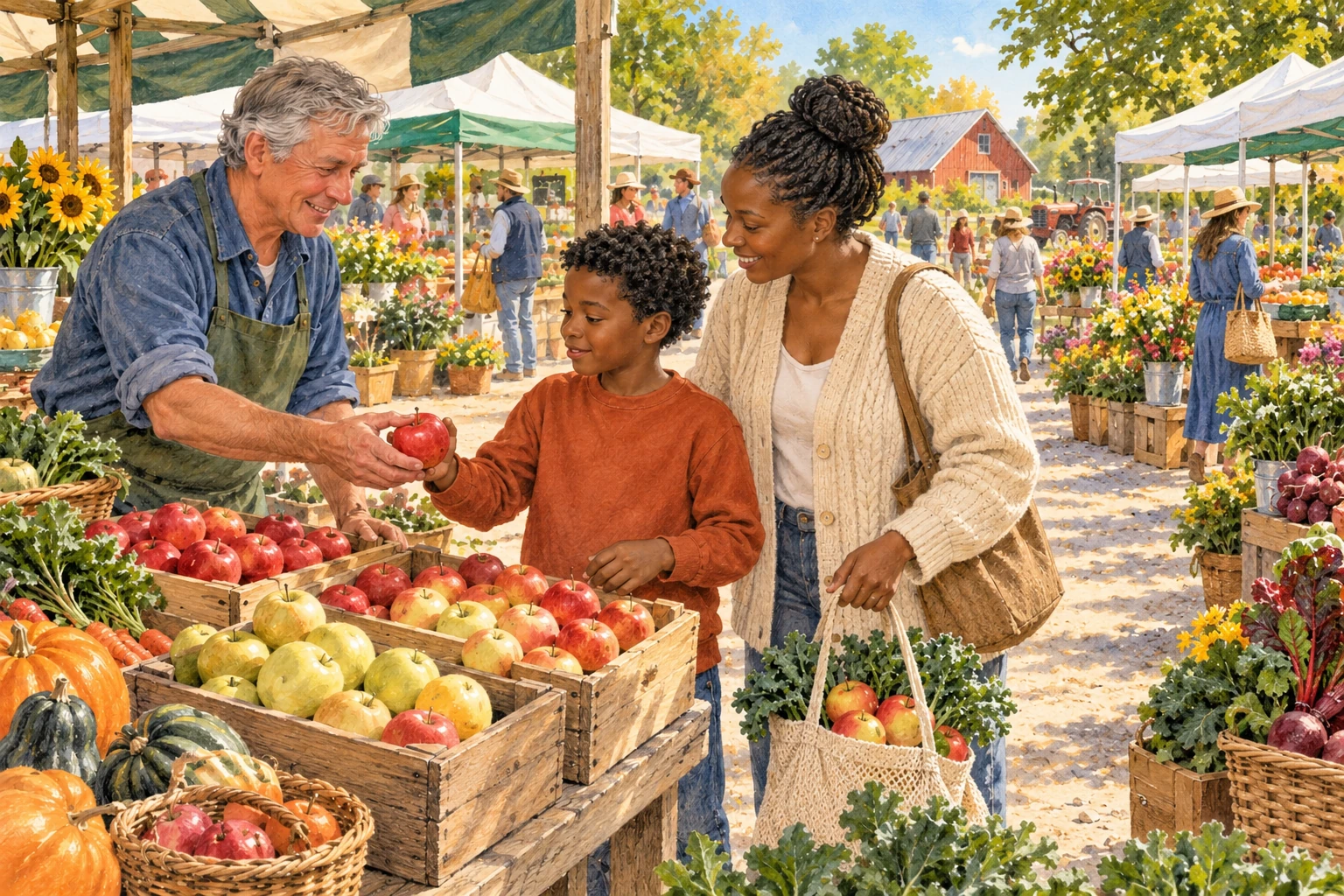
Shared Reading Books · Social Science · Year 4Hugo held up a shiny apple at the market. “Did you grow this one?” he asked Mr Field. The grower nodded. Hugo looked at the full crates and imagined apples travelling straight from a tree into his hand. Mum suggested finding out what happened between those two moments.
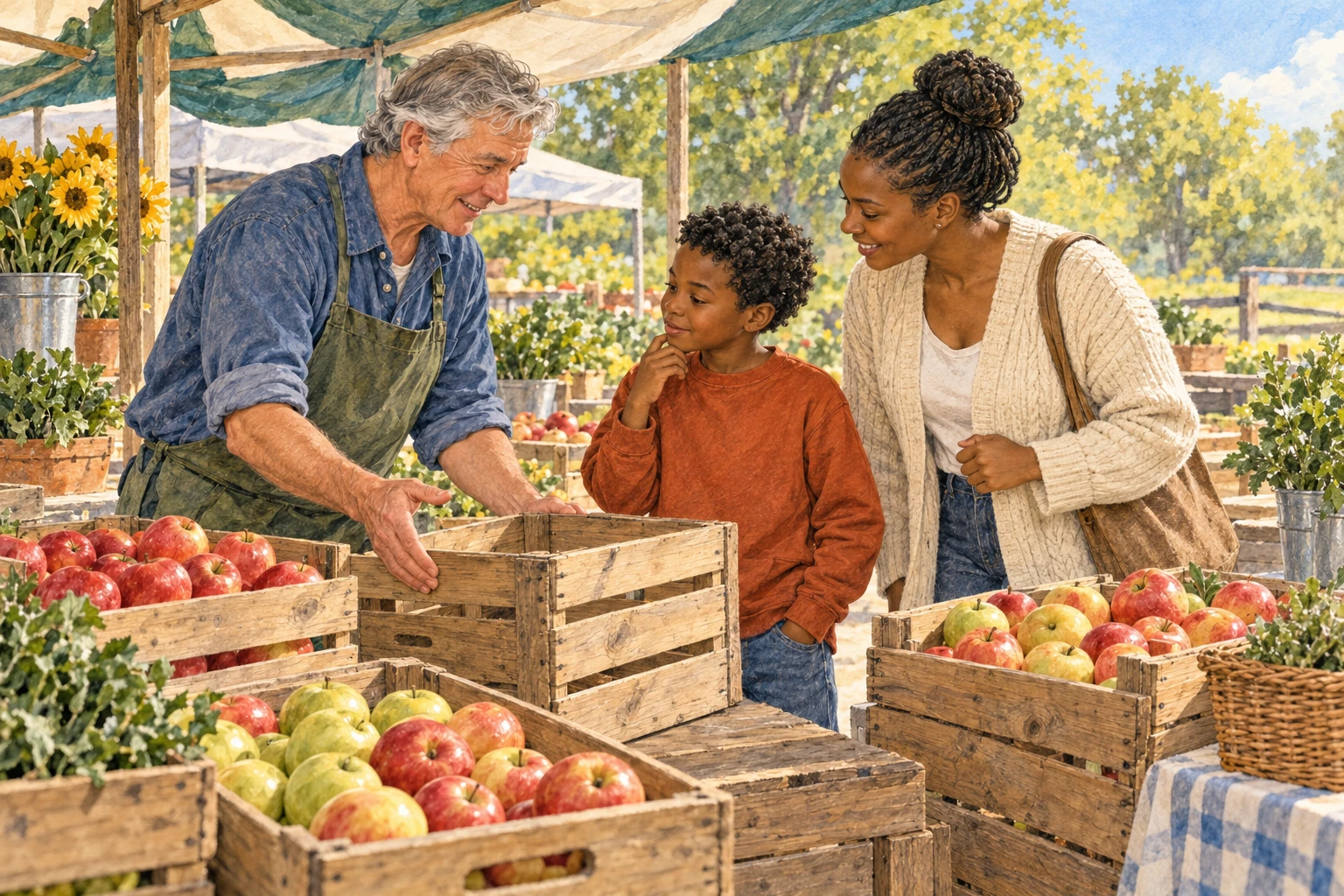
Mr Field described picking, checking, packing and moving the fruit. Different people helped, and each job took time. Some apples went to shops, while others came to his stall. A market brought growers and customers together, but the food’s journey had begun long before the tables were ready.
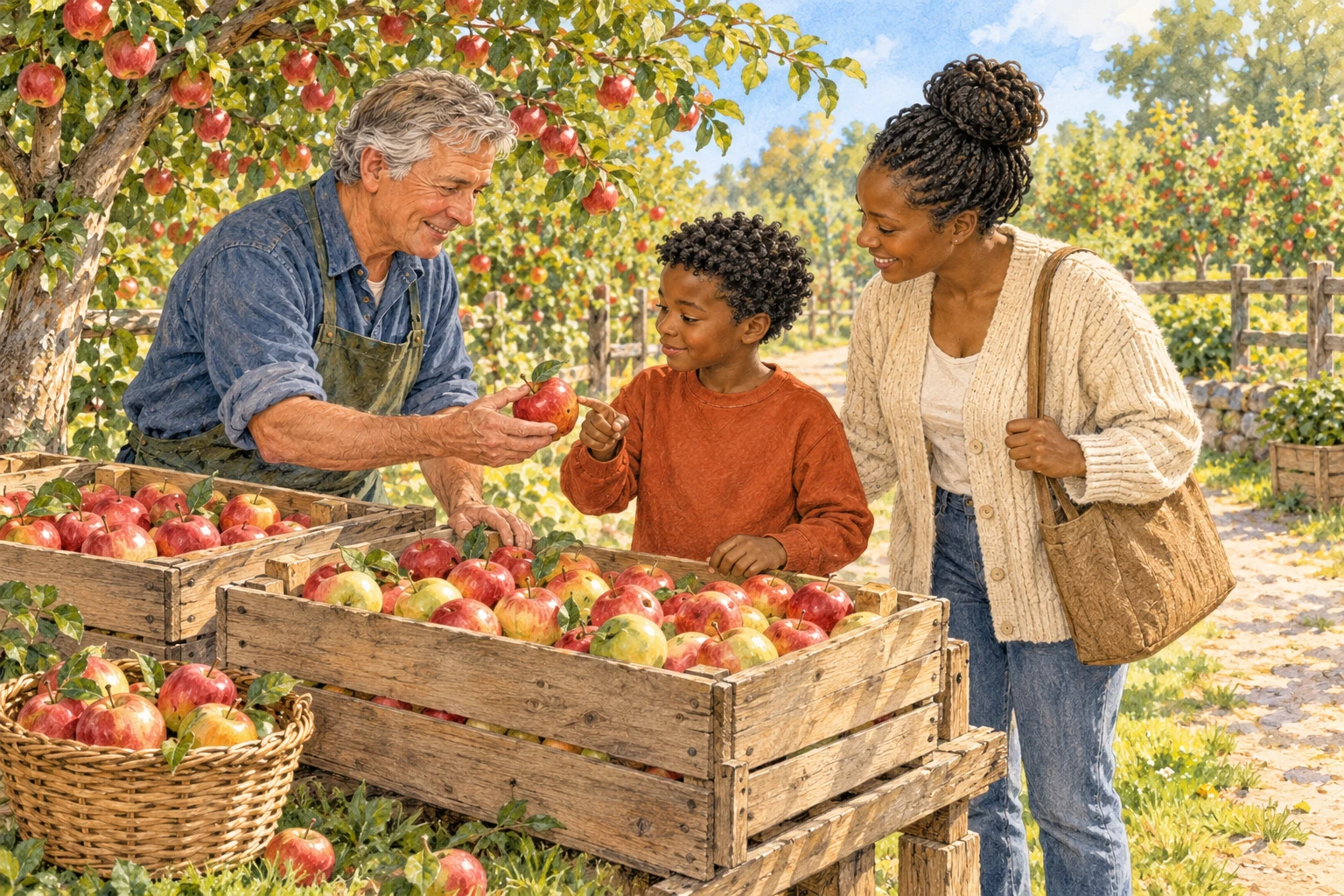
On an arranged visit, Hugo and Mum followed the orchard’s visitor path. Mr Field showed them picked crates from a safe area. Wind had marked some fruit against branches. “Do those all get thrown away?” Hugo asked. He had noticed the smoothest apples first and almost ignored the rest.
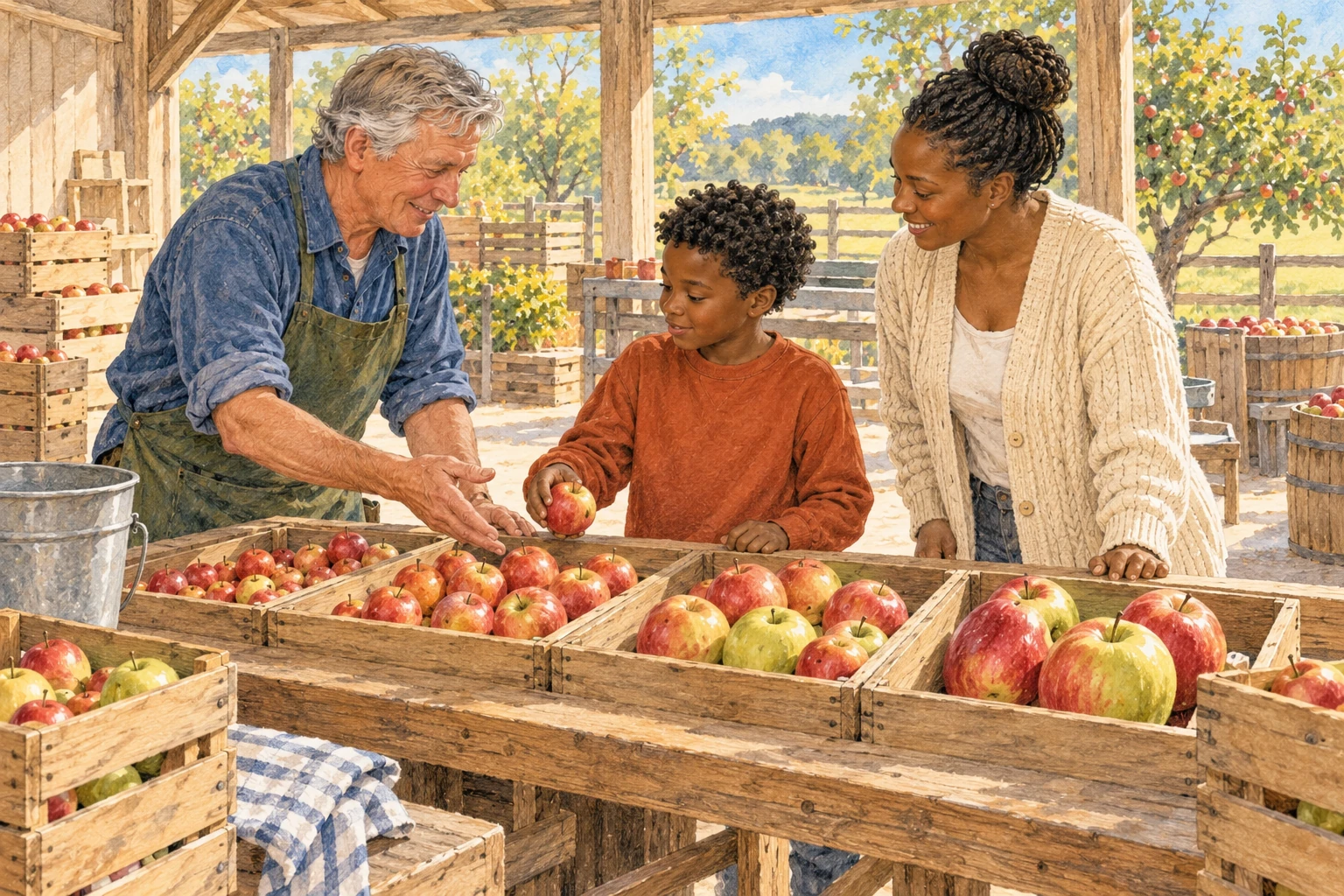
At a packing table, Mr Field explained that a mark did not always mean an apple was unsuitable to eat. Some fruit could be sold for cooking. Other fruit was damaged too badly and needed a different use. Adults checked carefully rather than assuming every marked apple was safe.
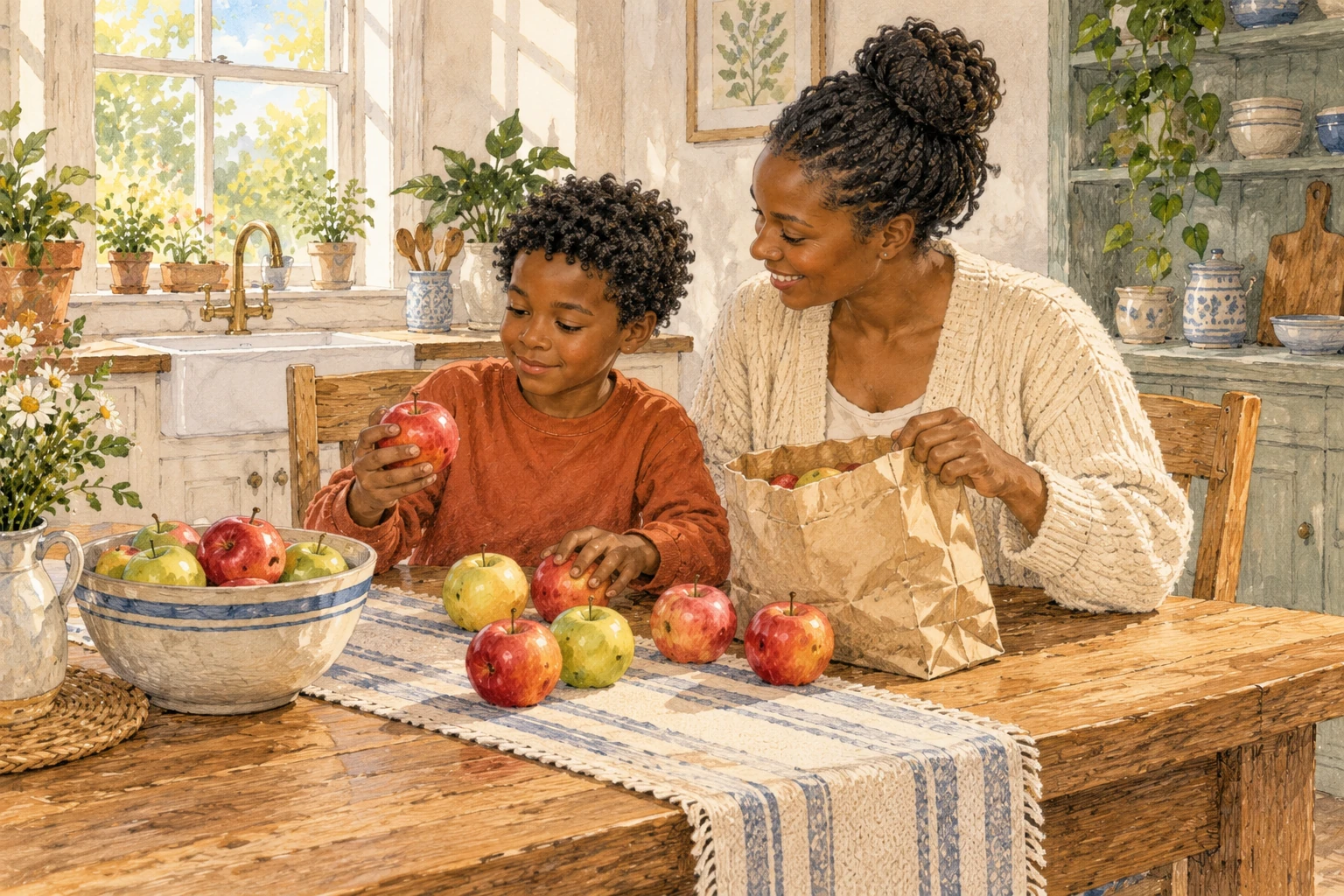
At home, Hugo compared a few loose apples with a larger bag. The bag cost less for each apple, but they might not use that many before the fruit spoiled. Mum helped him think about total cost and likely waste. The biggest amount was not automatically their best choice.
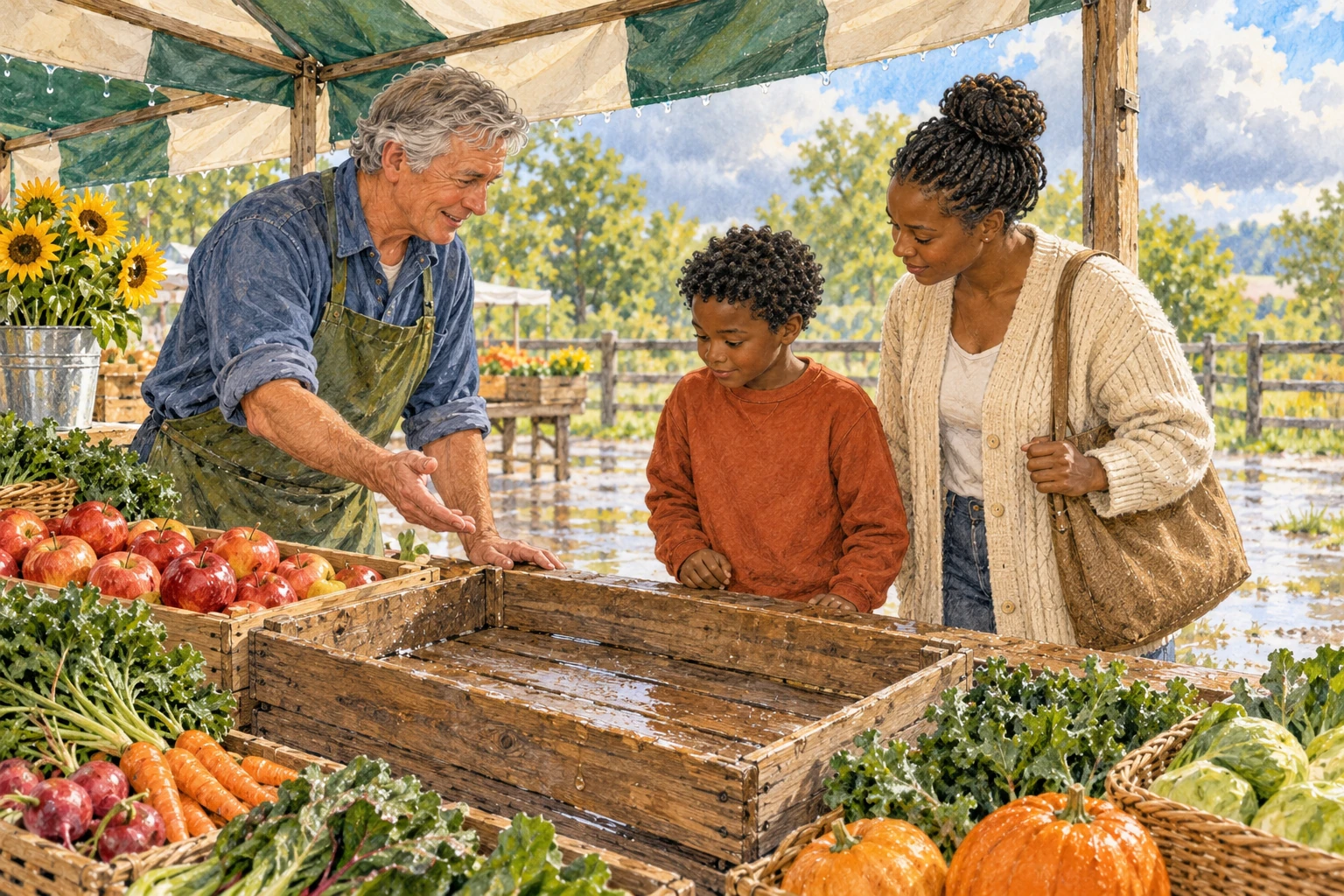
The following week, Mr Field had fewer apples after rough weather. His costs had not all disappeared just because the crates were smaller. Hugo listened as Mum asked about other suitable fruit. A change at the orchard could affect what customers found at a stall days later.
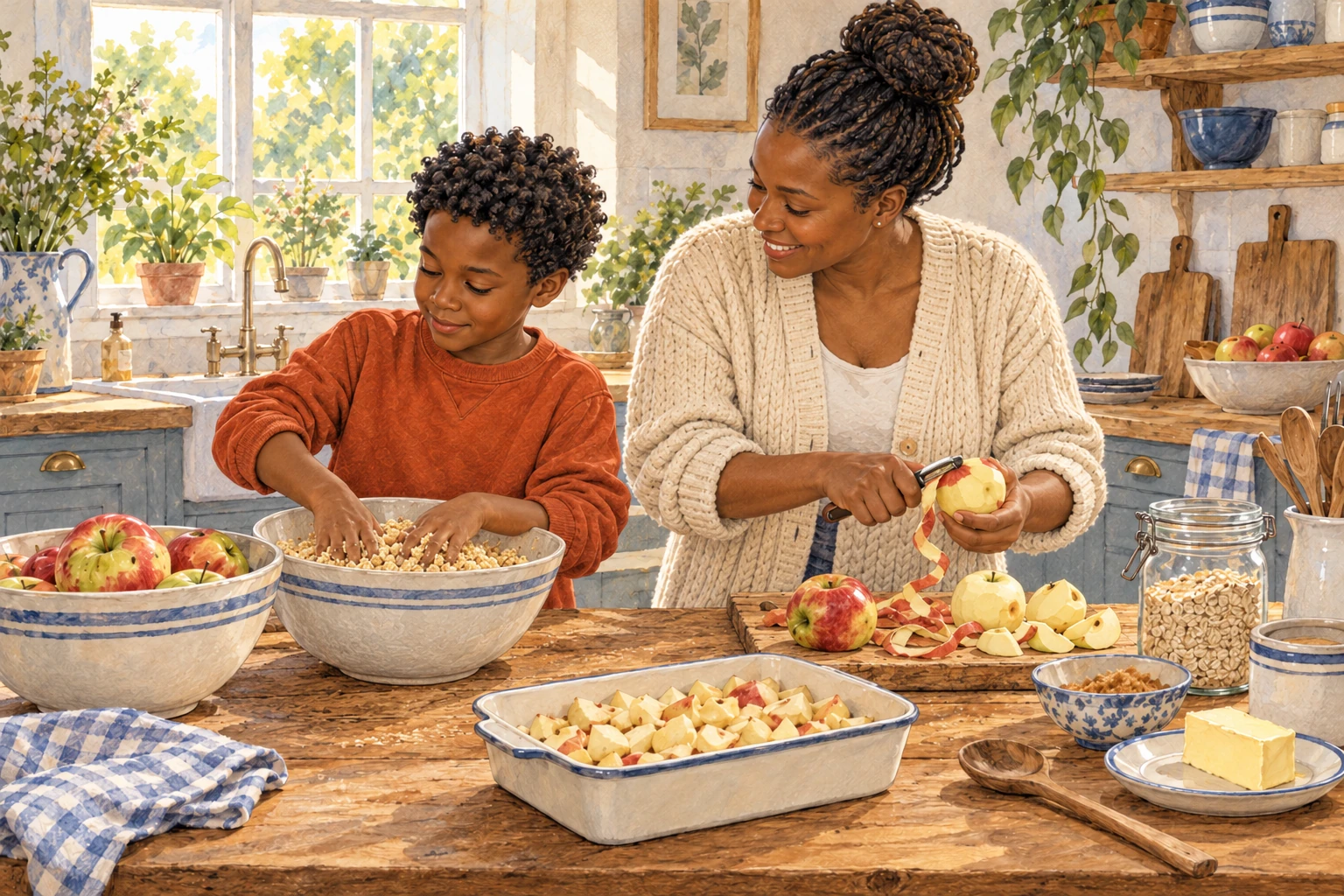
For pudding, Mum checked and washed some slightly marked cooking apples. Hugo helped prepare them for a crumble while she handled sharp tools and the oven. The fruit tasted good. Its appearance had not told the whole story, although careful checking still mattered.
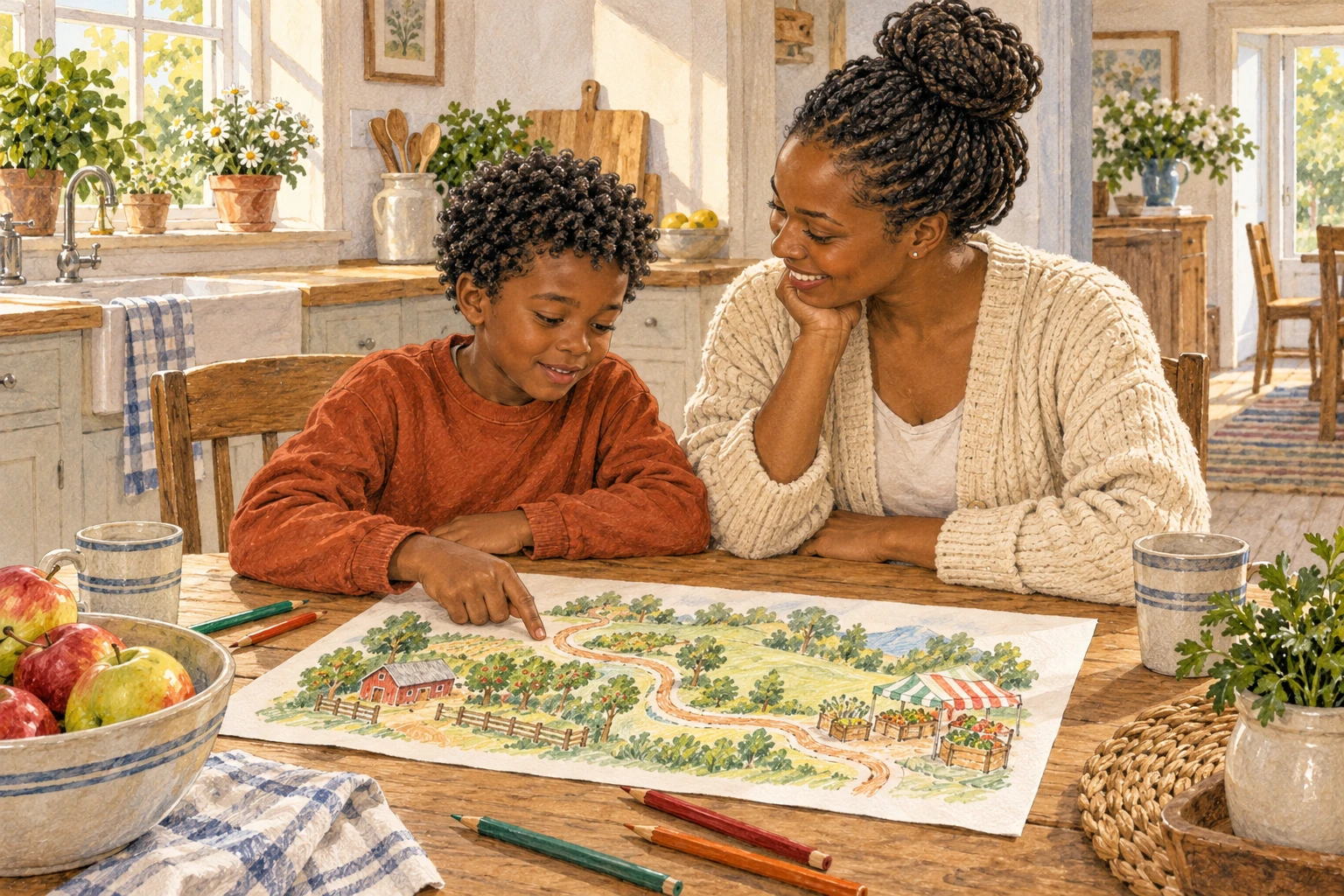
Hugo drew a route from orchard to packing table, market and home. Beside it he added the workers, transport and choices involved. His apple was still a simple snack. Understanding its journey helped him notice the people and resources behind something he had once taken for granted.