Is It My Turn Yet?
Four stories about waiting for a turnSocial Stories · Ages 19+ · Reading level: Year 4
James: Waiting in the kitchen
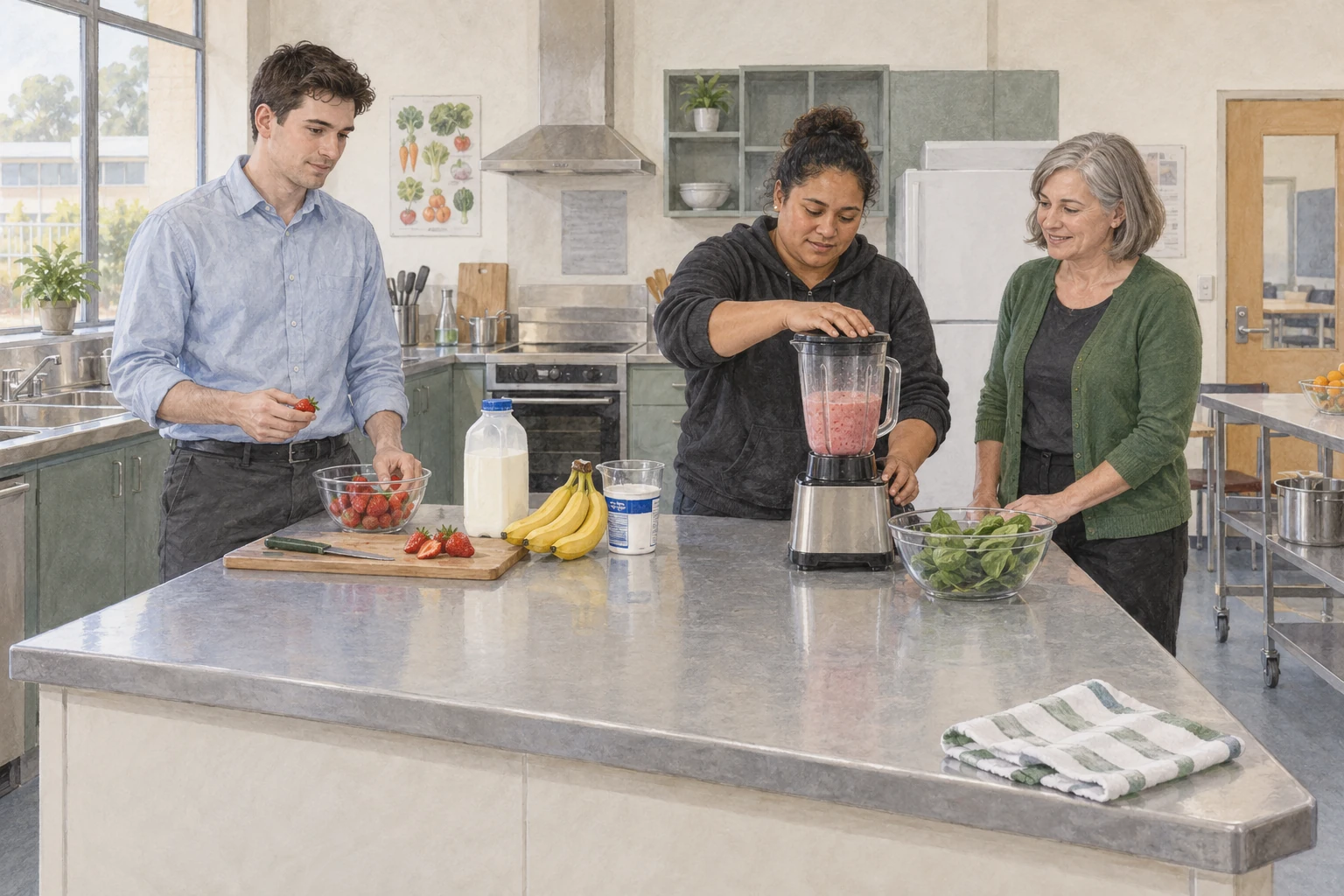
James is making a fruit smoothie at school. He has washed the strawberries and put them in a bowl. He is ready to use the blender. Another student is using it first.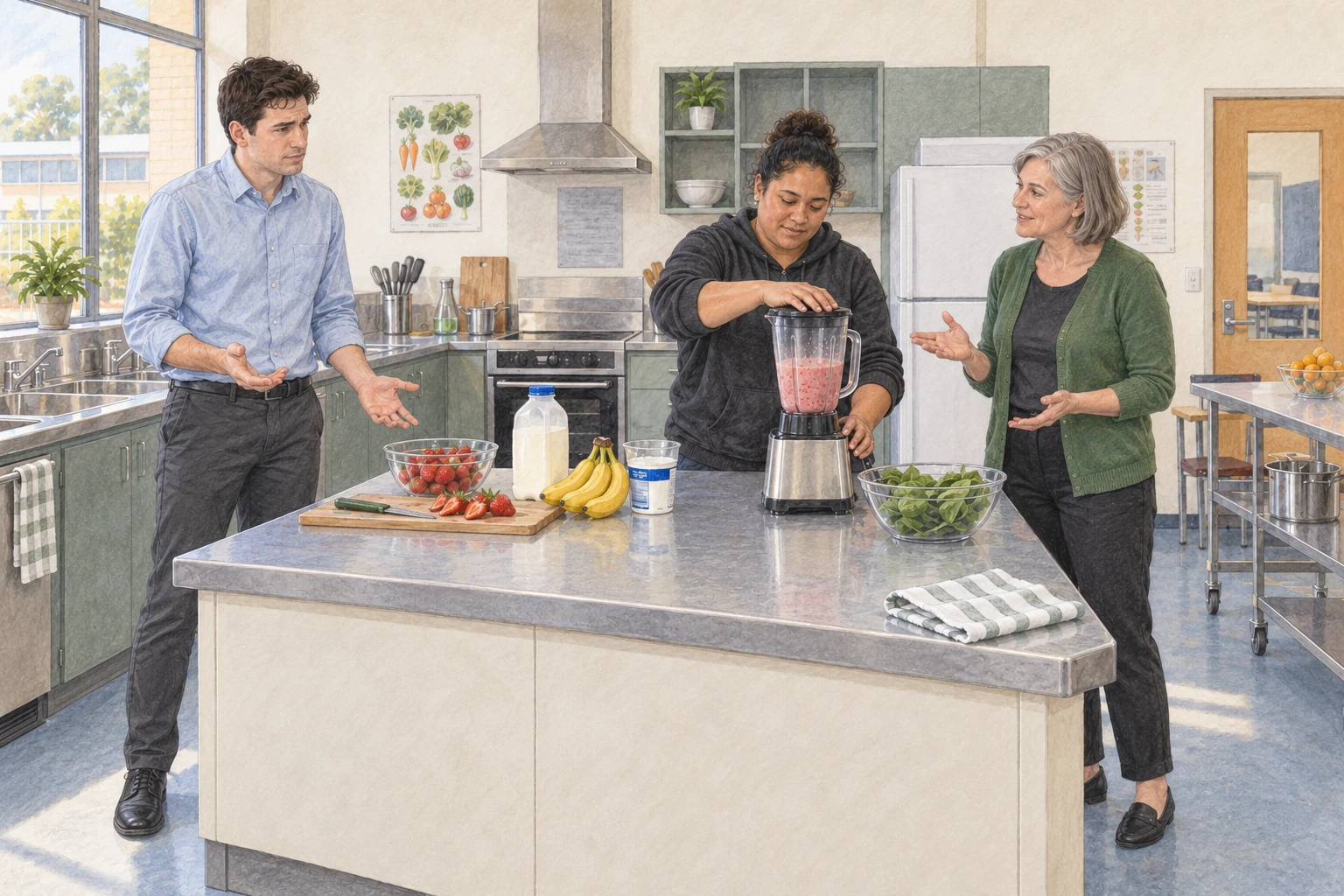
The blender is taking longer than James expected.
He looks at his bowl.
“I’m still waiting,” he tells his teacher, Helen.
“I want to get started.”
He feels frustrated.
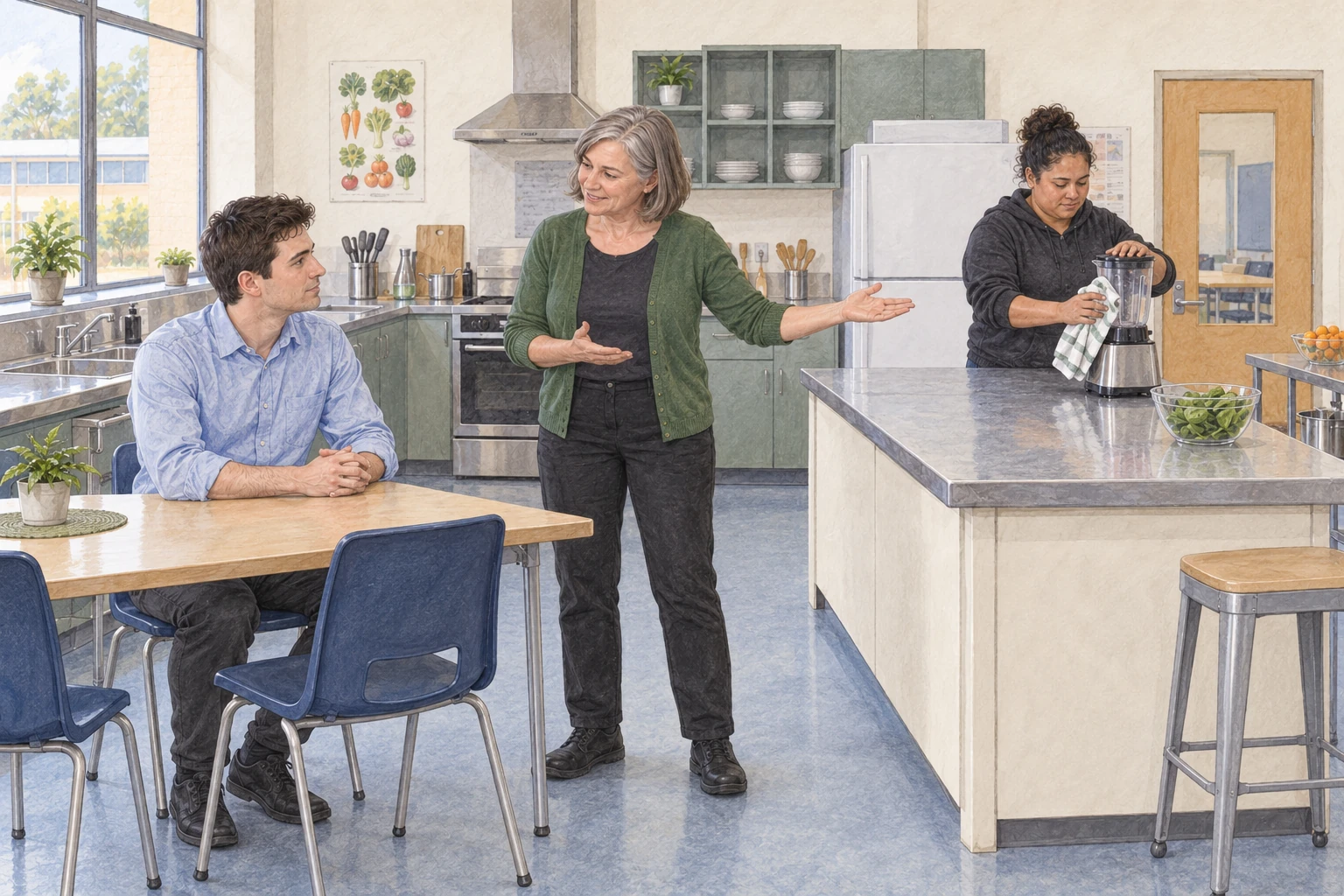
“You’re next,” Helen says.
“We need to finish this smoothie and clean the blender.”
James asks, “Can you tell me when it’s ready?”
Helen agrees. James chooses to sit at the nearby table while he waits.
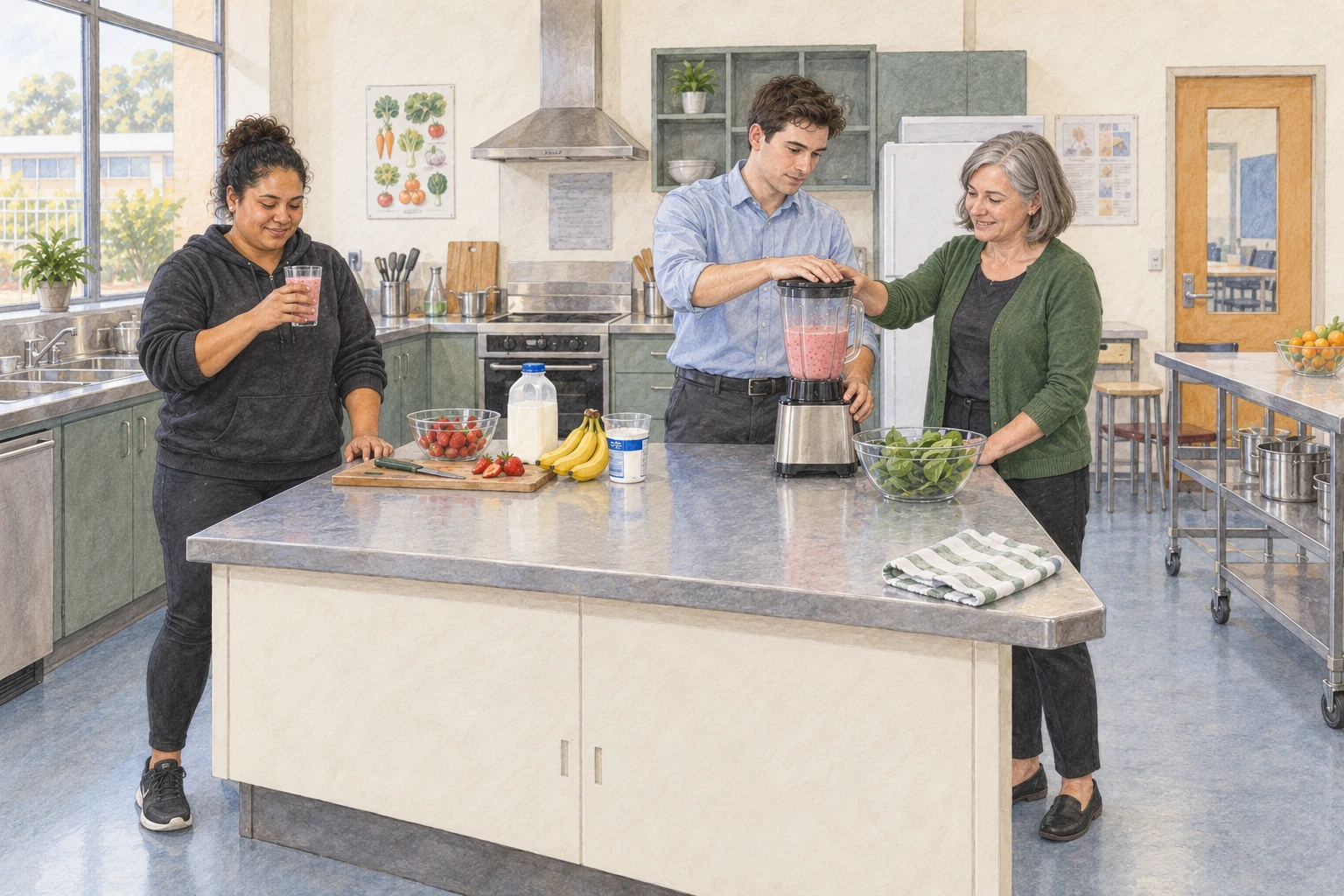
When the blender is ready, Helen calls James.
“Would you like to start now?” she asks.
“Yes,” says James.
He brings his bowl to the counter. Helen helps him use the blender.
Waiting was frustrating. Knowing he was next helped.
Emma: A longer turn in the game
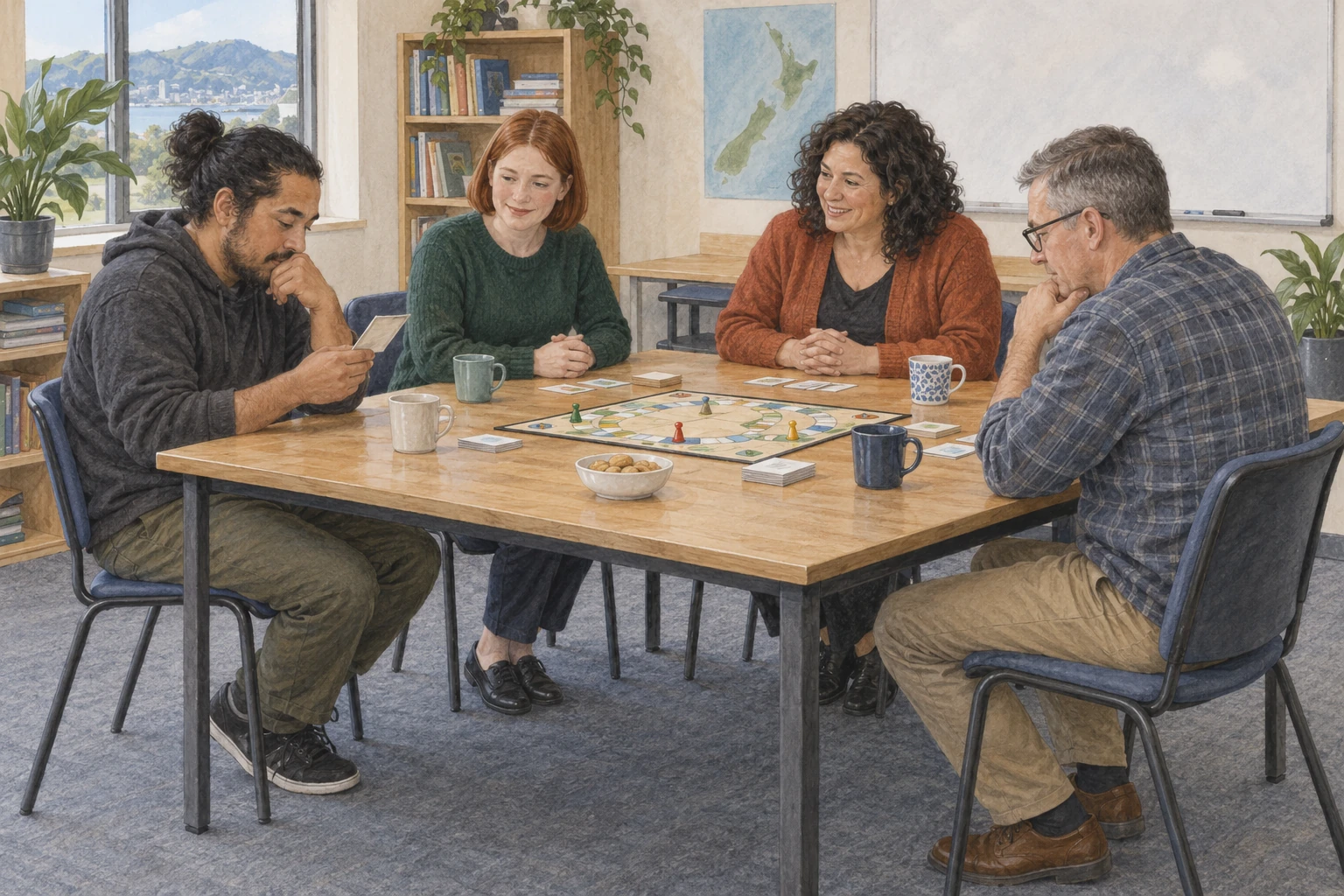
Emma is playing a board game with her class. The players take turns around the table. She has chosen her move. One more player has a turn before her.
That player asks a question about the rules.
Claire, the teacher, helps him find the answer.
Emma taps her foot under the table.
“I thought it would be my turn by now,” she says.
She feels impatient.

“It’s taking longer because we’re checking a rule,” Claire explains.
“Your turn is after his.”
Emma asks, “Will you let me know?”
“Yes,” Claire says.
Emma moves to a quieter seat beside the table. She can still see the game.
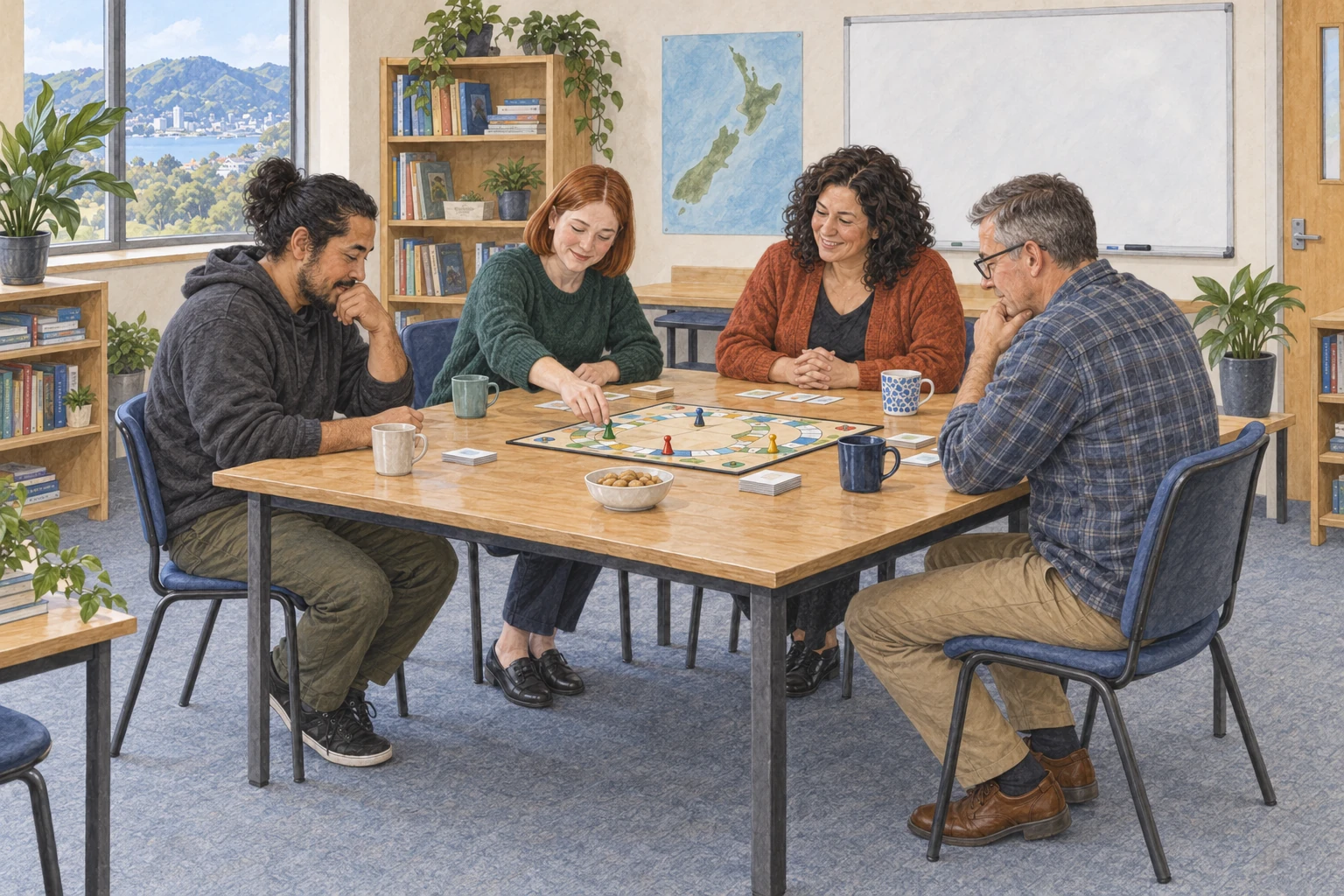
The rule is clear, and the other player finishes.
“Emma, it’s your turn,” says Claire.
Emma moves her piece.
She did not enjoy the extra wait. Asking about her turn helped her stay part of the game.
William: A question for the teacher
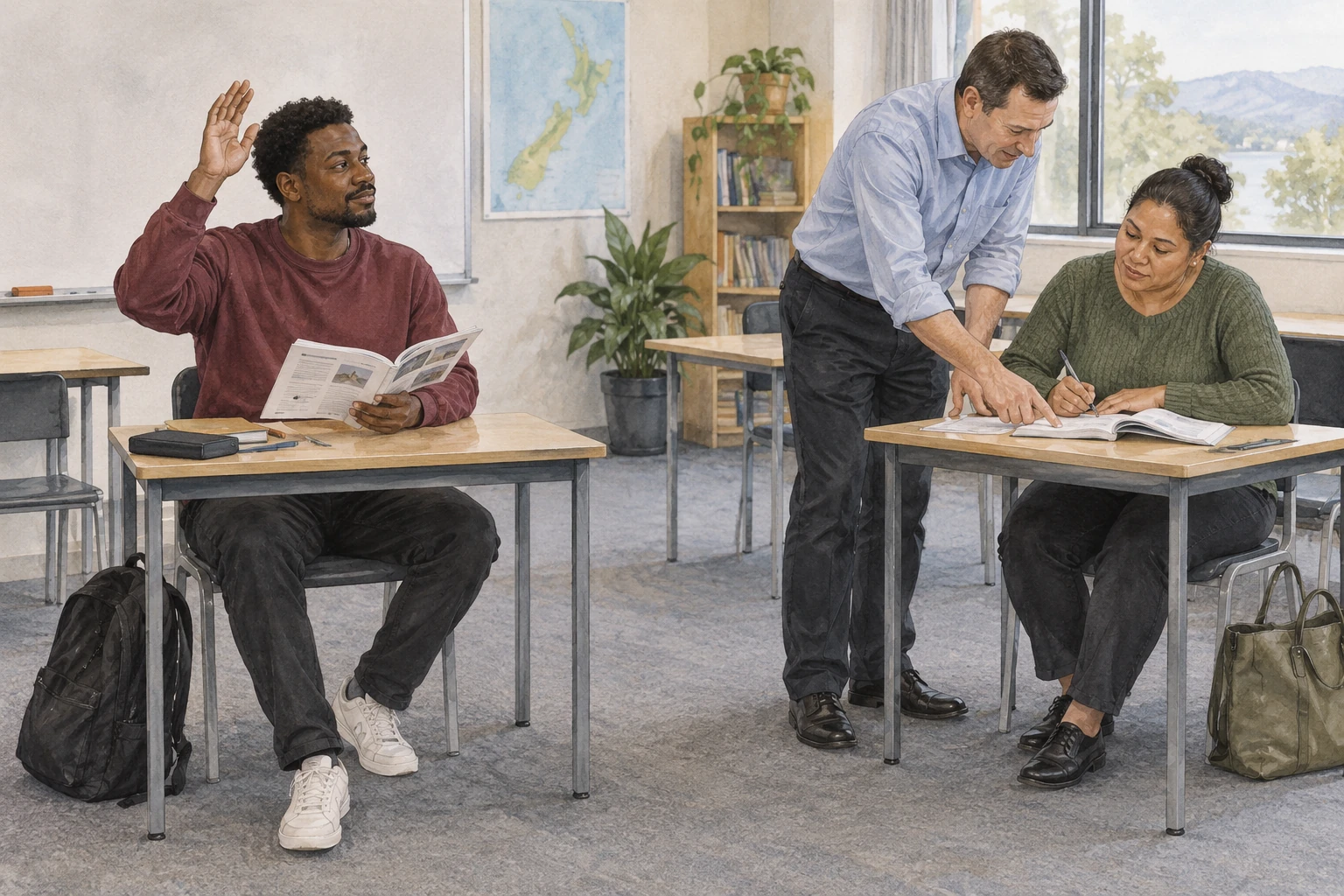
William is working on a reading task. One question is not clear to him. He raises his hand. His teacher, Mark, is helping someone at the next desk.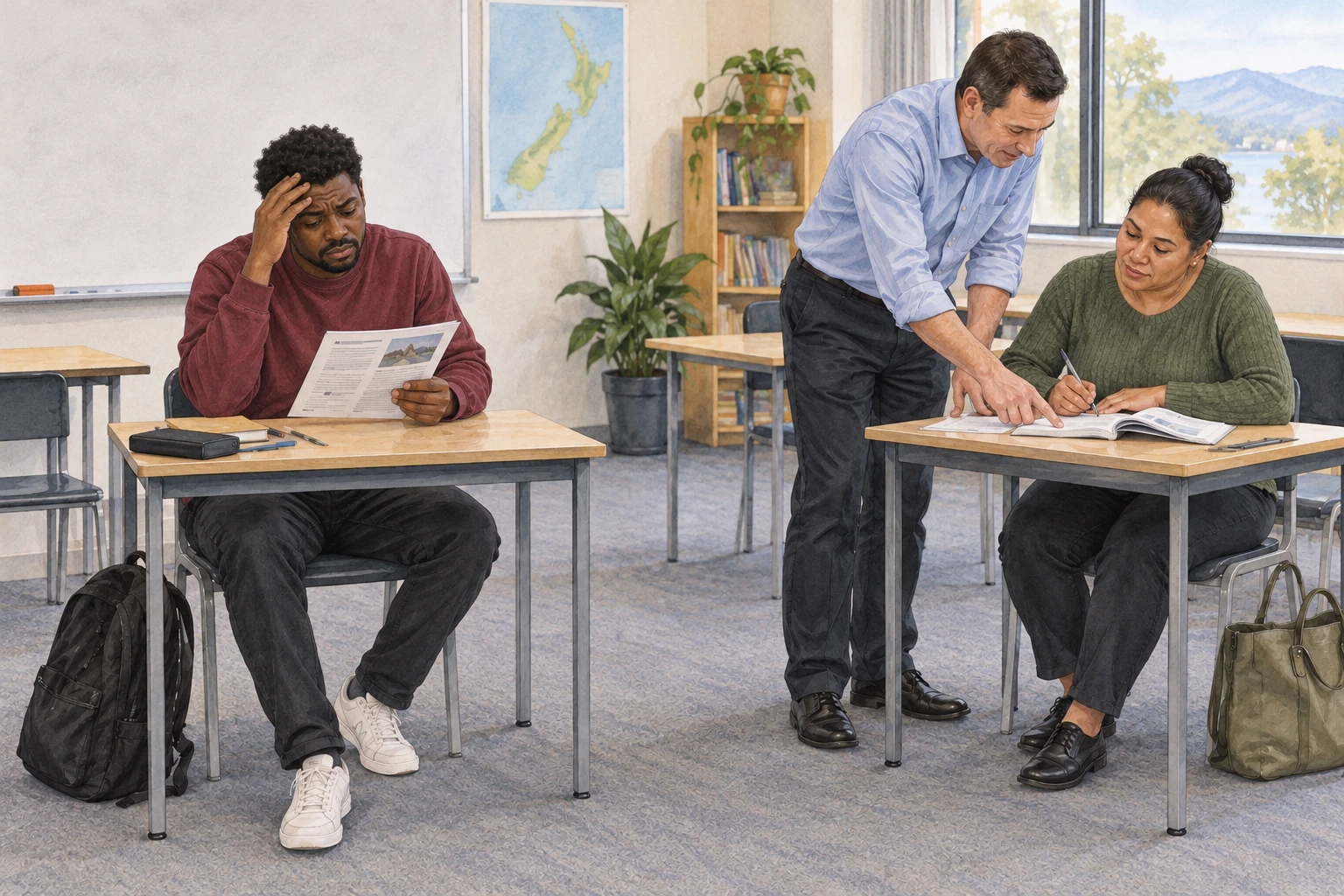
Mark says, “I can help when I finish here.”
William waits, but the conversation continues.
He looks at the question again.
“What if I don’t finish?” he asks.
He feels worried about his work.
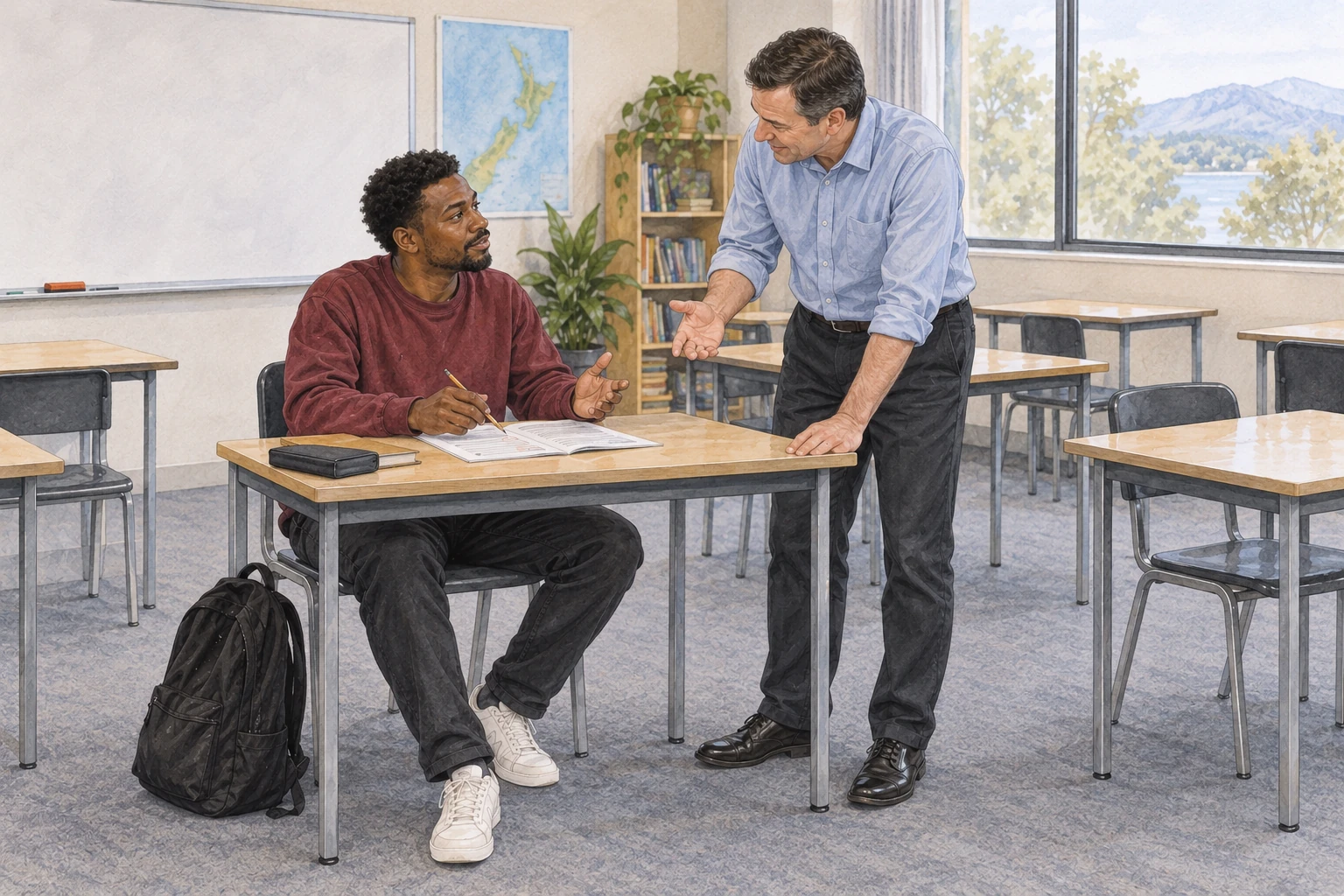
William tells Mark, “I’m worried I won’t finish.”
“Thank you for telling me,” Mark says.
“I haven’t forgotten you. I don’t know exactly how long I’ll be yet.”
They agree that William can mark the question and try one he understands.

William puts a small mark beside the question.
He starts another part of the task.
When Mark is ready, he sits beside William and explains it.
William can ask for help. He does not have to guess the answer just to keep working.

Sarah: Waiting for a computer
Sarah’s class is finding facts for a project. She wants to use a computer to look up trains. Both computers are busy when she arrives. She thought one would be free by now.
Sarah watches the computer screens.
“How long will I have to wait?” she asks Rose, her teacher.
“I’m not sure yet,” Rose says.
Sarah holds her notebook.
“I don’t like not knowing,” she says.

Rose shows Sarah the turn list.
“Your name is next. I’ll tell you when a computer is free.”
She offers Sarah a book about trains to look at meanwhile.
Sarah chooses to make a list of things she wants to find out.

When a computer is free, Rose tells Sarah.
Sarah takes her notebook to the desk.
She starts with the first question on her list.
She had to wait longer than she expected. She asked for information and chose something useful to do.