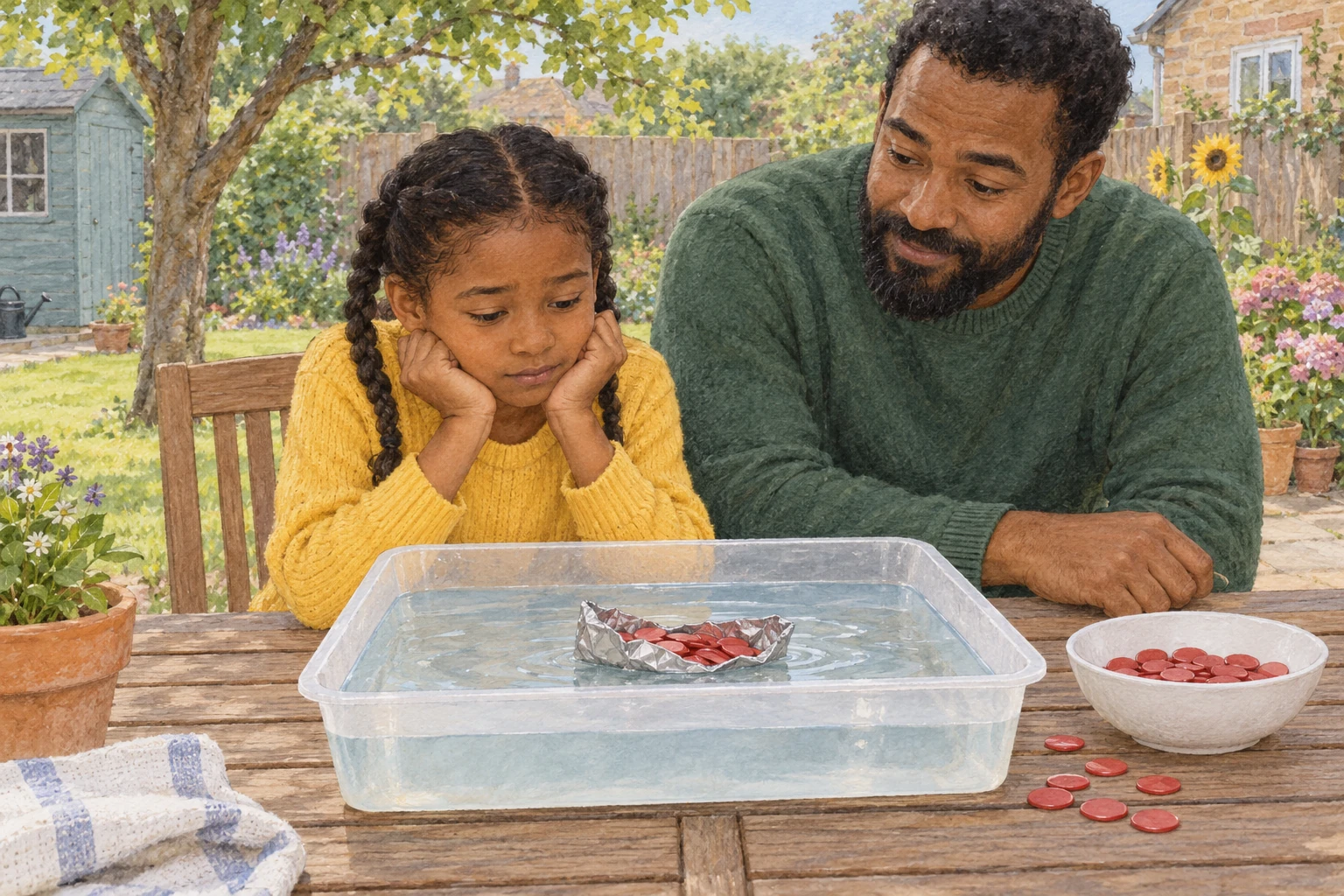
Isla’s Floating Cargo
Shared Reading Books · Science · Year 4Isla’s little foil boat is meant to carry counters across a shallow tray. She piles them in the middle, and water creeps over its edge. “Foil cannot float with cargo,” she tells Dad. He asks whether the material failed, or whether a different shape might help.
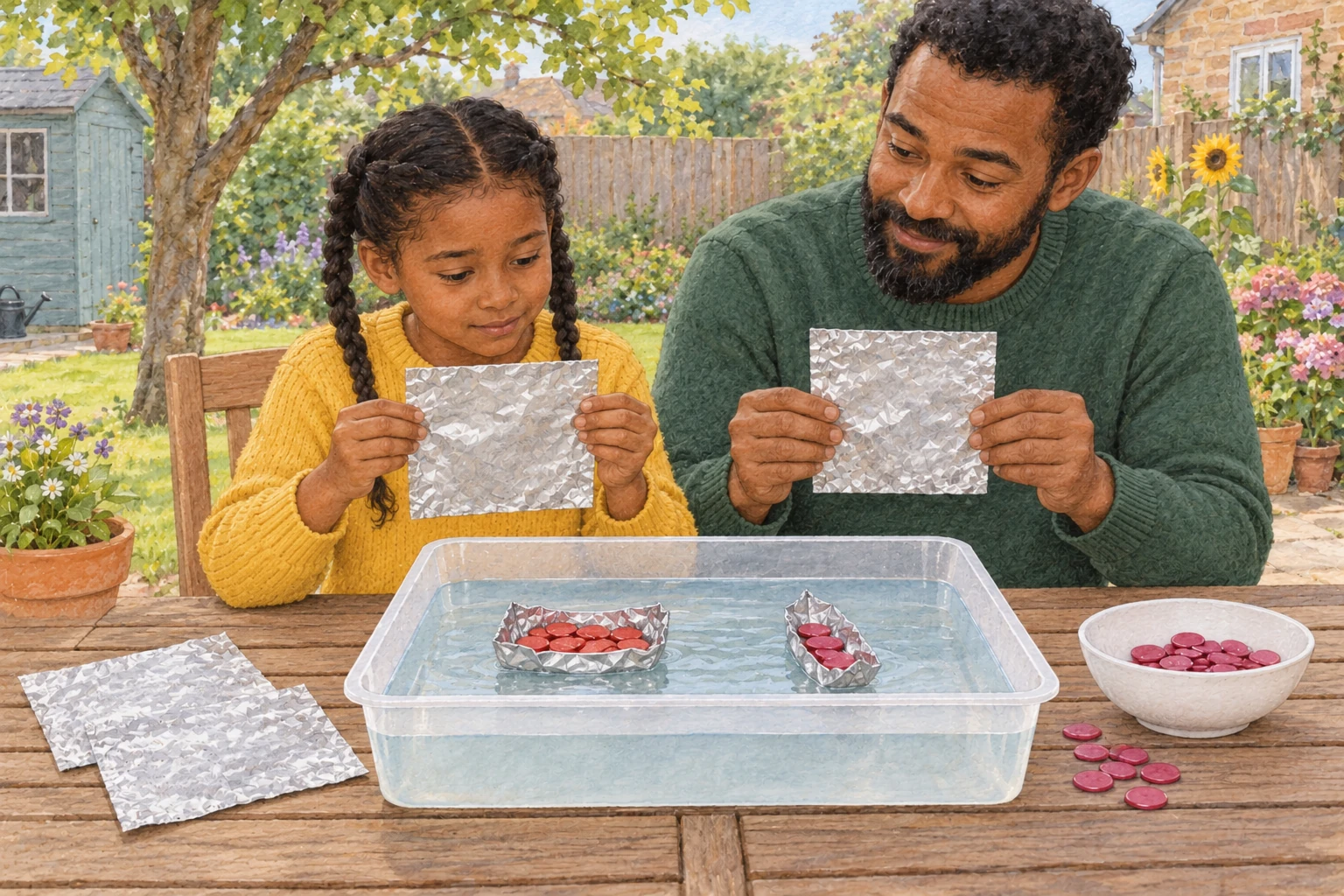
They take two equal-sized foil sheets. One becomes a narrow boat, the other a broader open shape with raised sides. They use the same foil thickness and identical counters. Isla predicts that the broad shape will carry more before water enters. Dad writes down her prediction.
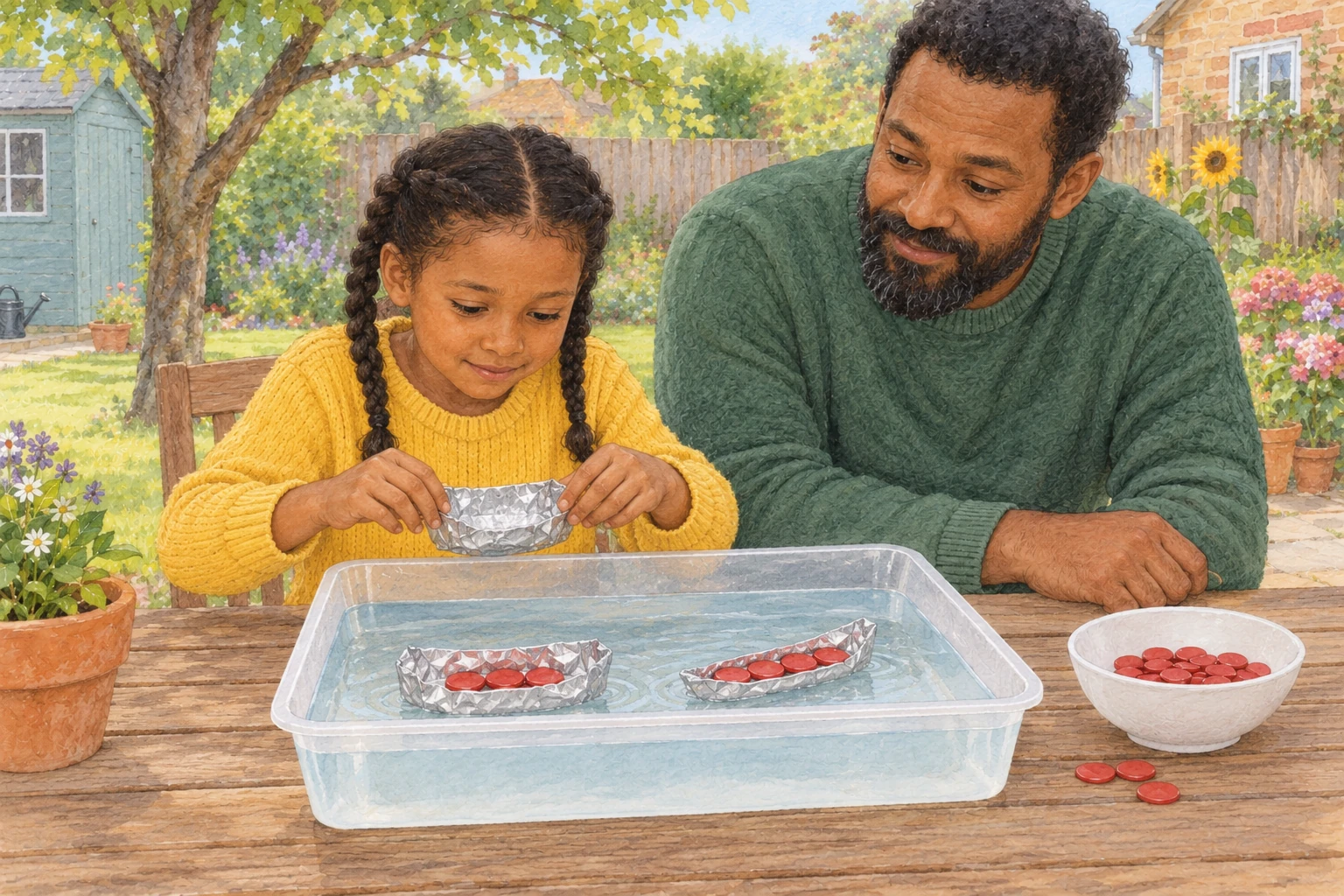
When a boat floats, it pushes water aside. The water pushes upwards on the boat. This upthrust balances its weight when it rests floating. A hollow shape can push aside enough water without water coming over its sides. Foil crumpled into a tight lump behaves differently.
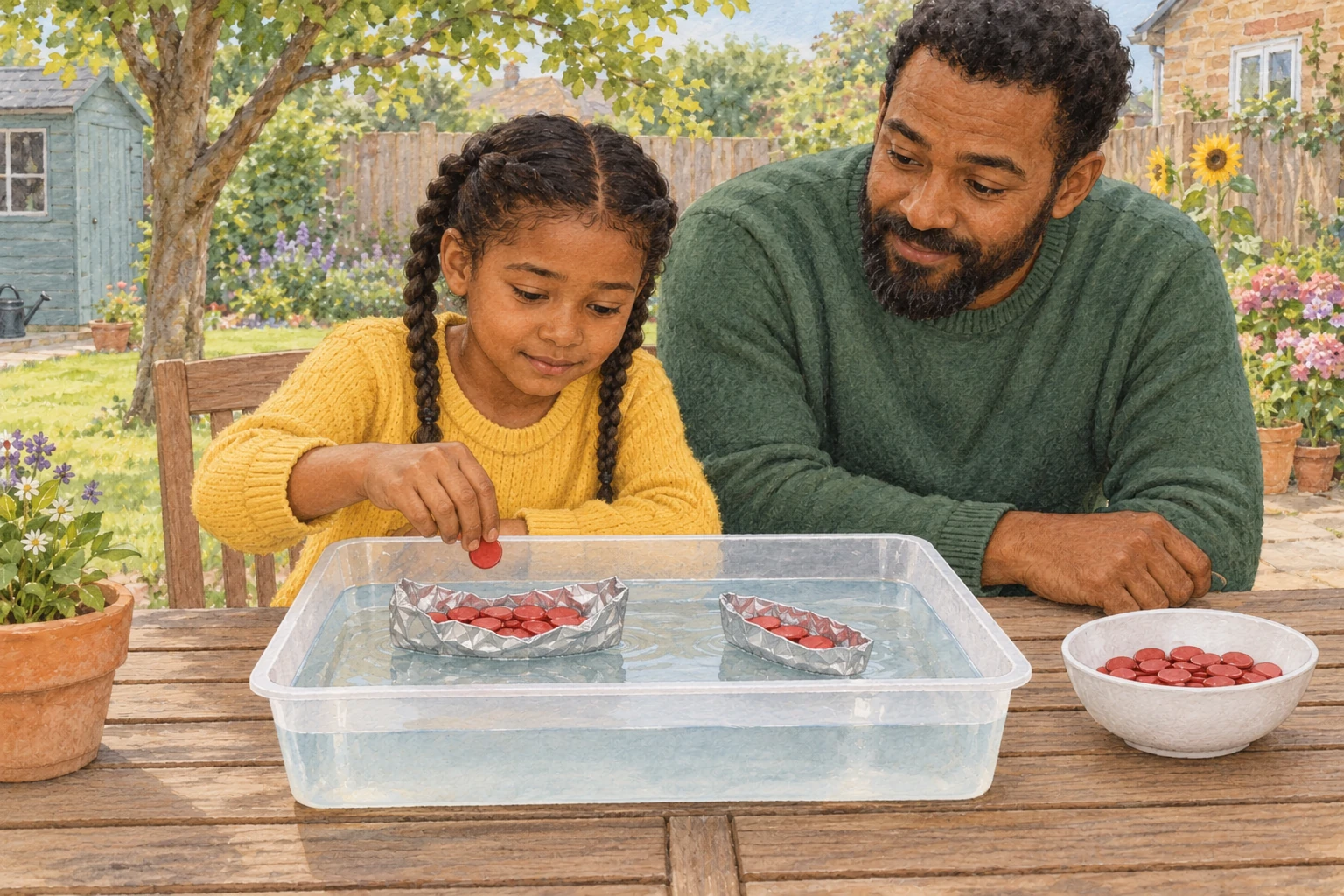
Isla adds one counter at a time, spreading the cargo rather than building a tall pile. Dad counts, and they pause after each addition. The broad boat settles lower but stays upright. They stop the test when water first comes over an edge, using the same rule for both shapes.
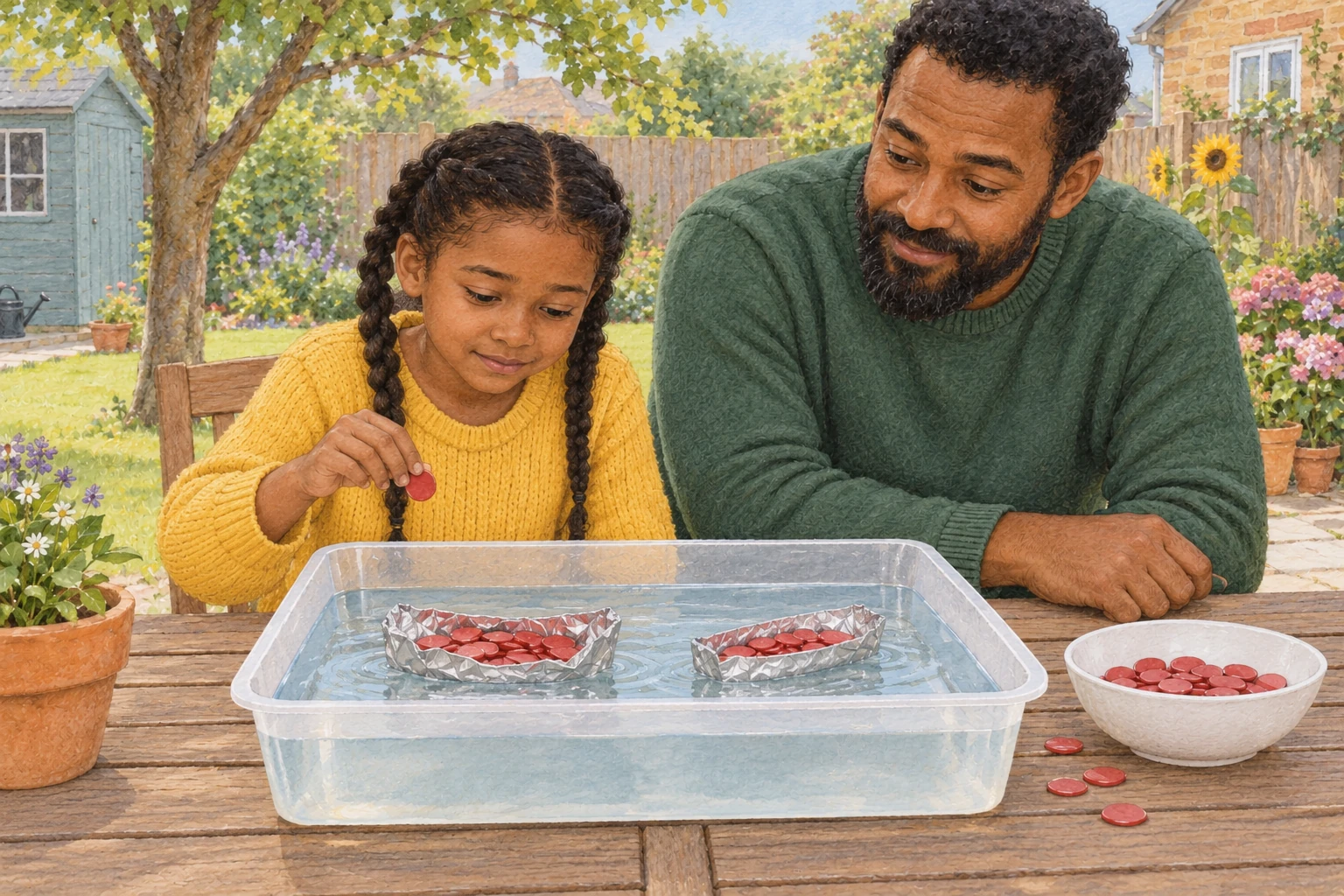
More load means the floating boat must push aside more water. Isla notices the waterline climbing up its sides. Eventually there is not enough height left to keep water outside. The boat begins filling. A larger boat is not automatically safe for every load or every arrangement.
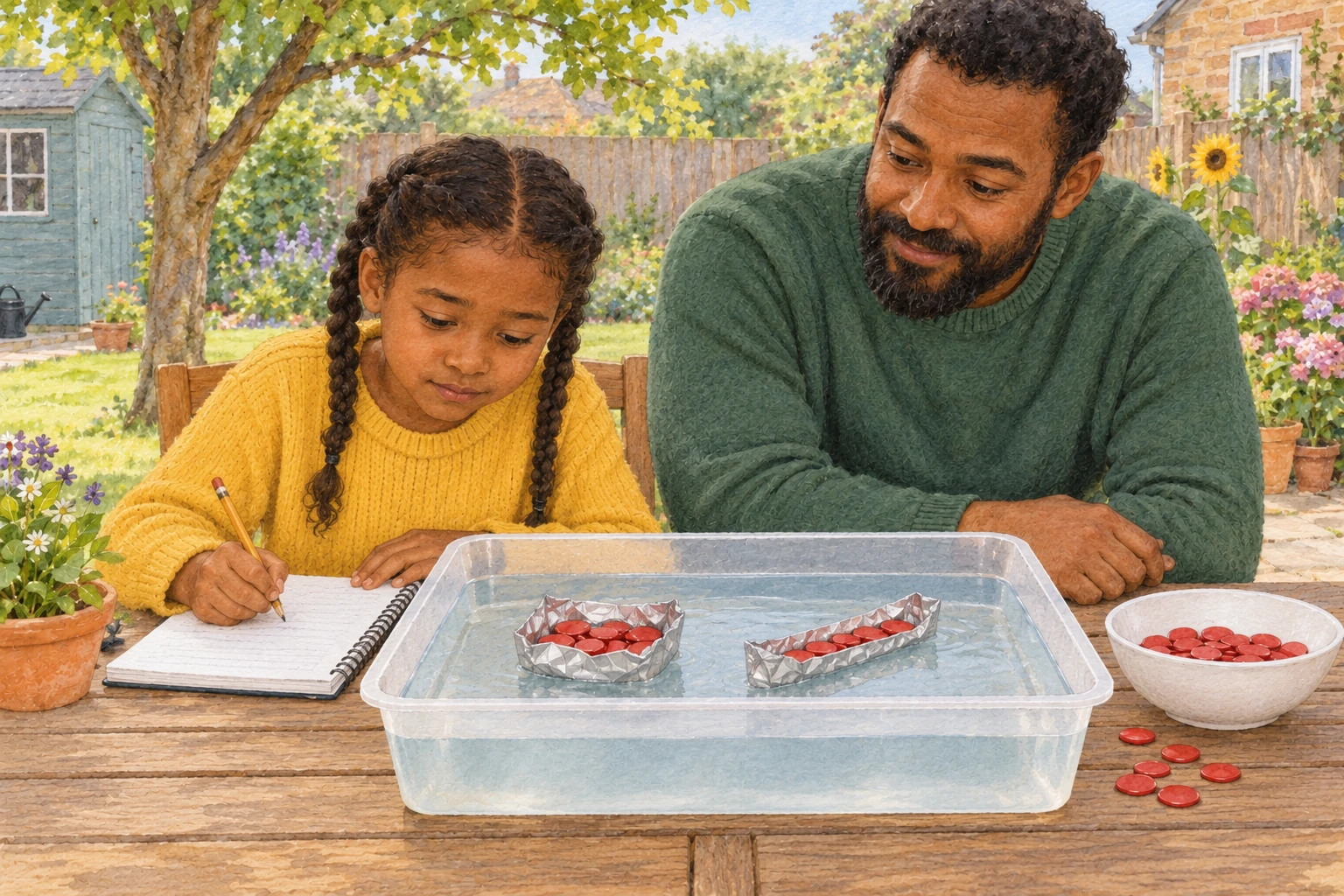
They record how many counters each design held before water entered. The broad shape carries more in this comparison. Isla does not conclude that all wide shapes always win. Depth, stability, foil damage and cargo position can also affect the result. Their notebook helps keep those conditions in view.
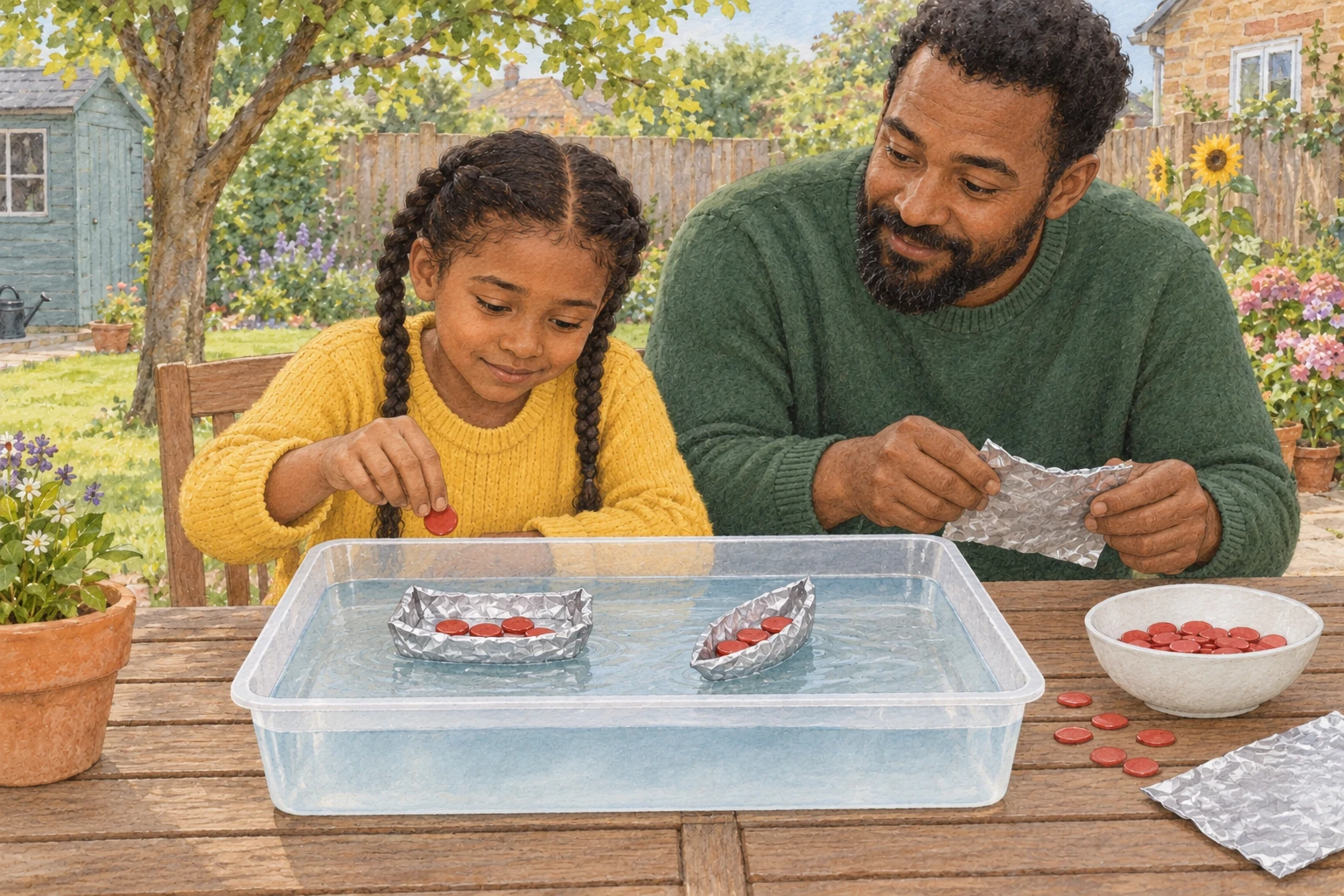
They repeat with fresh equal sheets because a tiny tear could spoil a test. Dad helps Isla check the edges without cutting herself. They use calm shallow water and small counters only. Their foil models cannot show every force, wave or safety requirement that affects real boats.
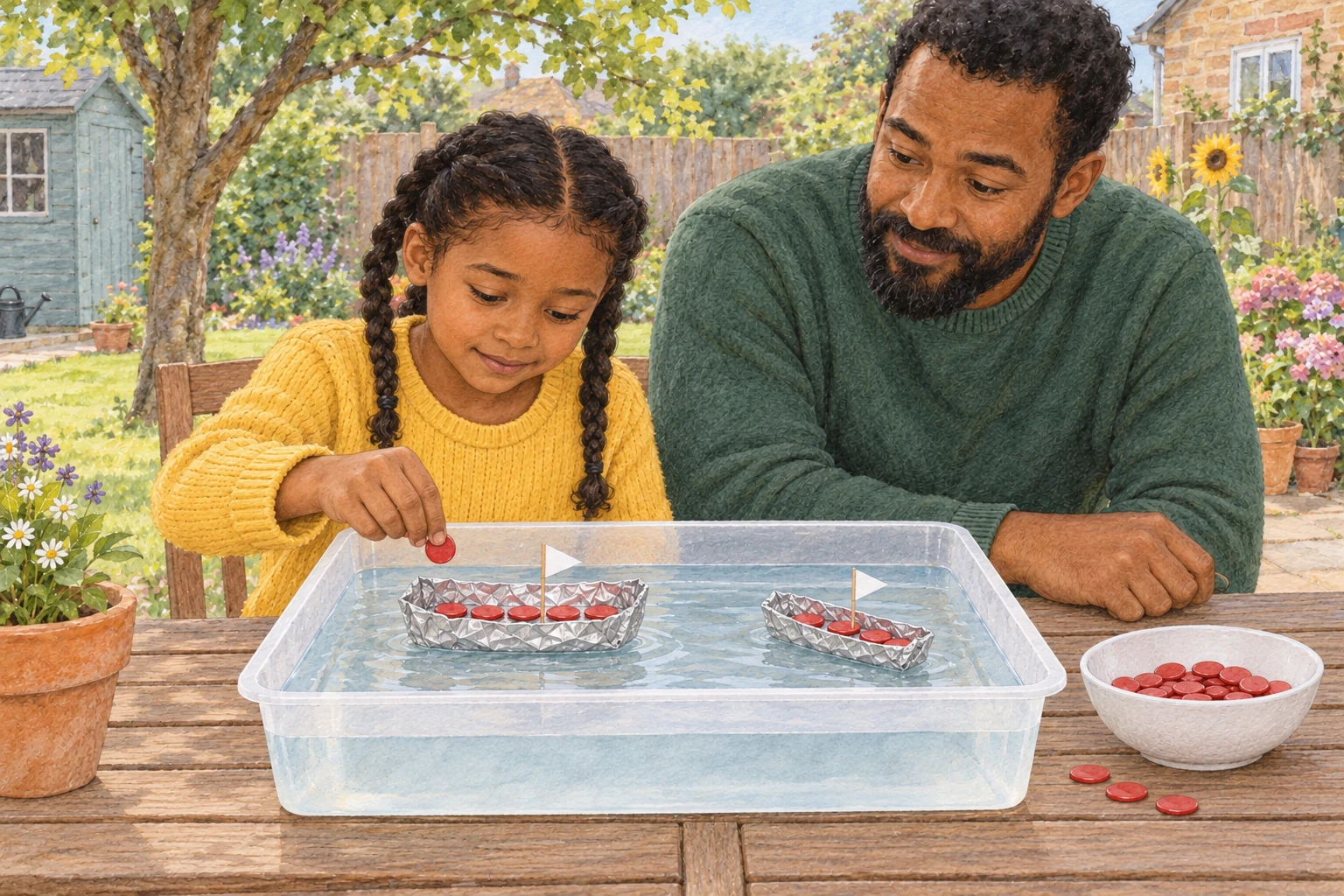
This time, Isla’s broad boat carries its evenly spaced cargo across the tray. She gives it a tiny paper flag. “The foil was not the whole story,” she says. Dad smiles. Changing the shape, recording the load and testing again have turned a sinking problem into a successful little voyage.