James’s Seed Travellers
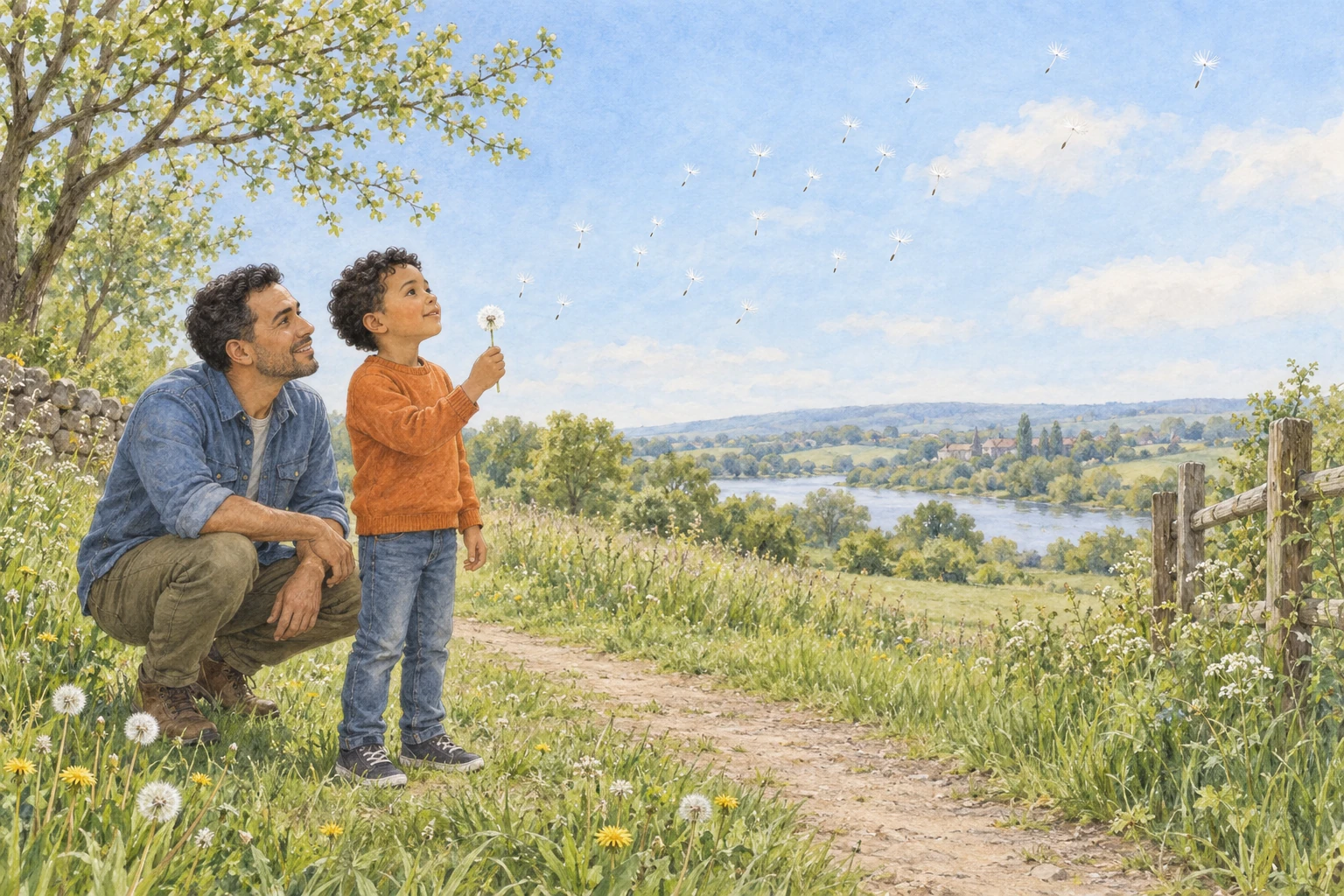
Shared Reading Books · Science · Year 2James sees tiny white parachutes drift across the path. One catches on Dad’s sleeve. It carries a small seed. “The plant cannot walk,” says James. “How did its seed get over here?” Dad suggests looking at shapes before they make a guess.
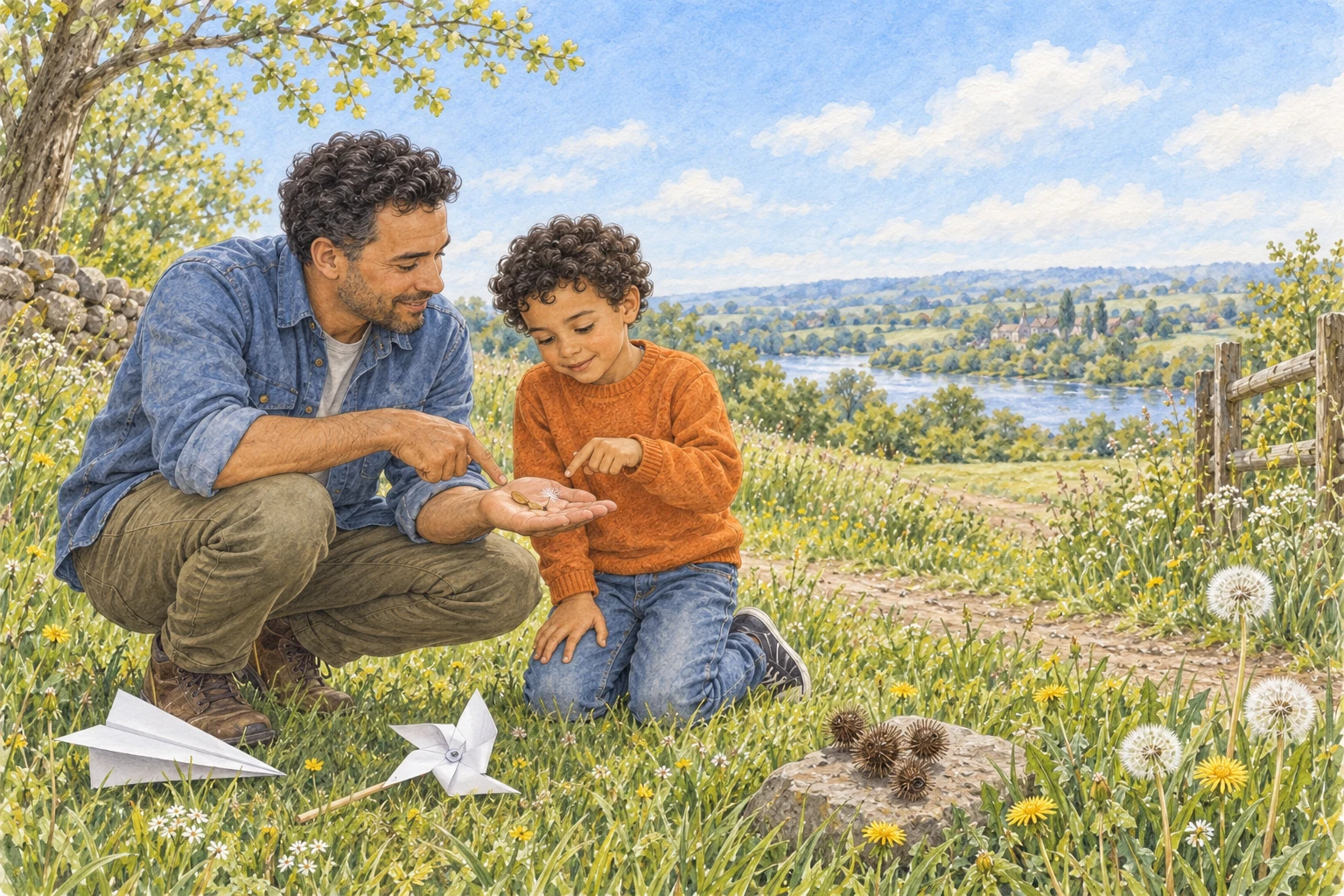
They compare a fluffy dandelion seed with a naturally fallen sycamore seed. The sycamore has a wing-like shape. Neither looks like a heavy round pebble. Dad explains that some seeds have features that help moving air carry them away from the parent plant.
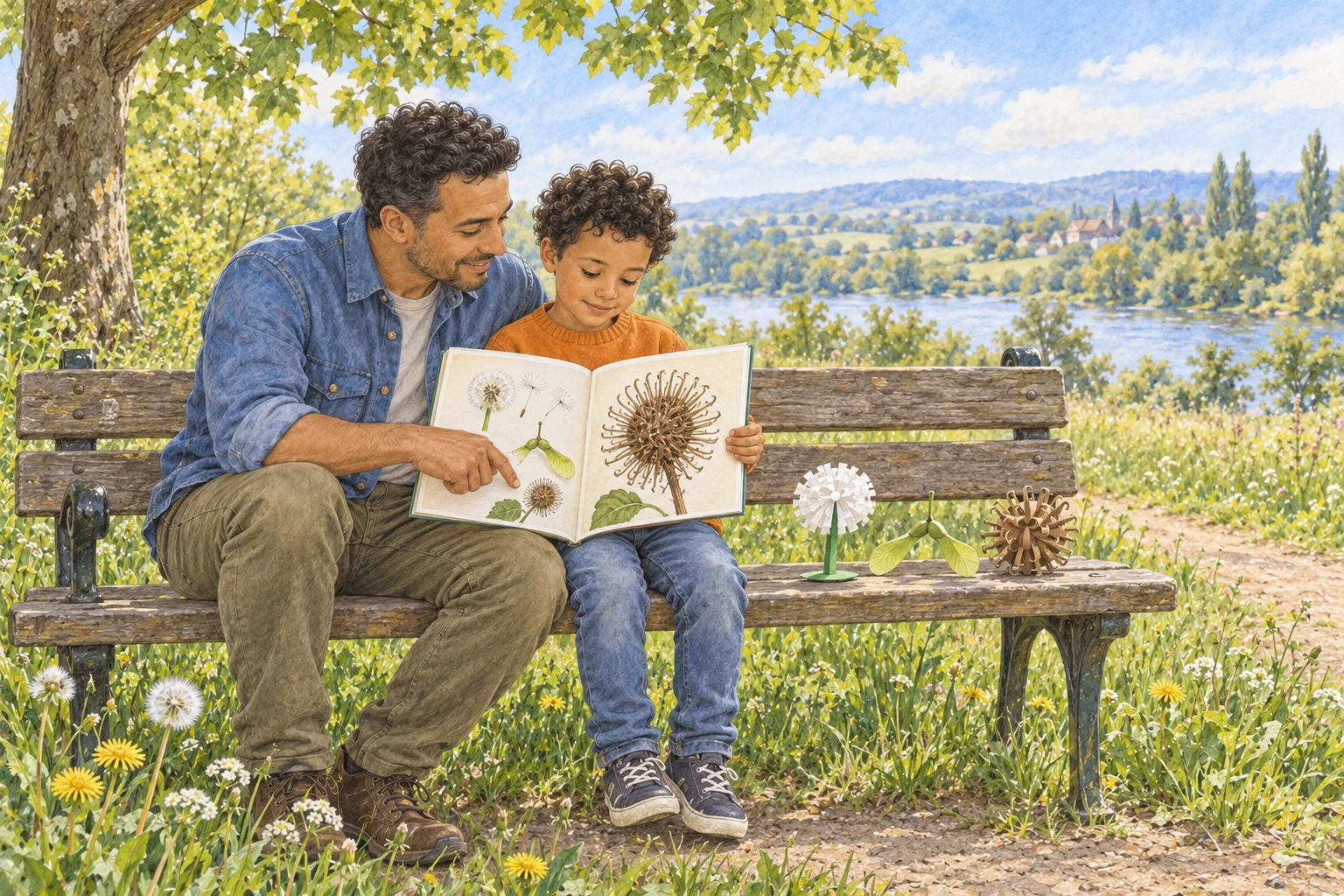
In their book, a burdock seed head has small hooks that can catch on fur or clothing. Other plants use water, animals or splitting pods. James learns the word disperse: spread away from where they began. Not every seed takes the same kind of journey.
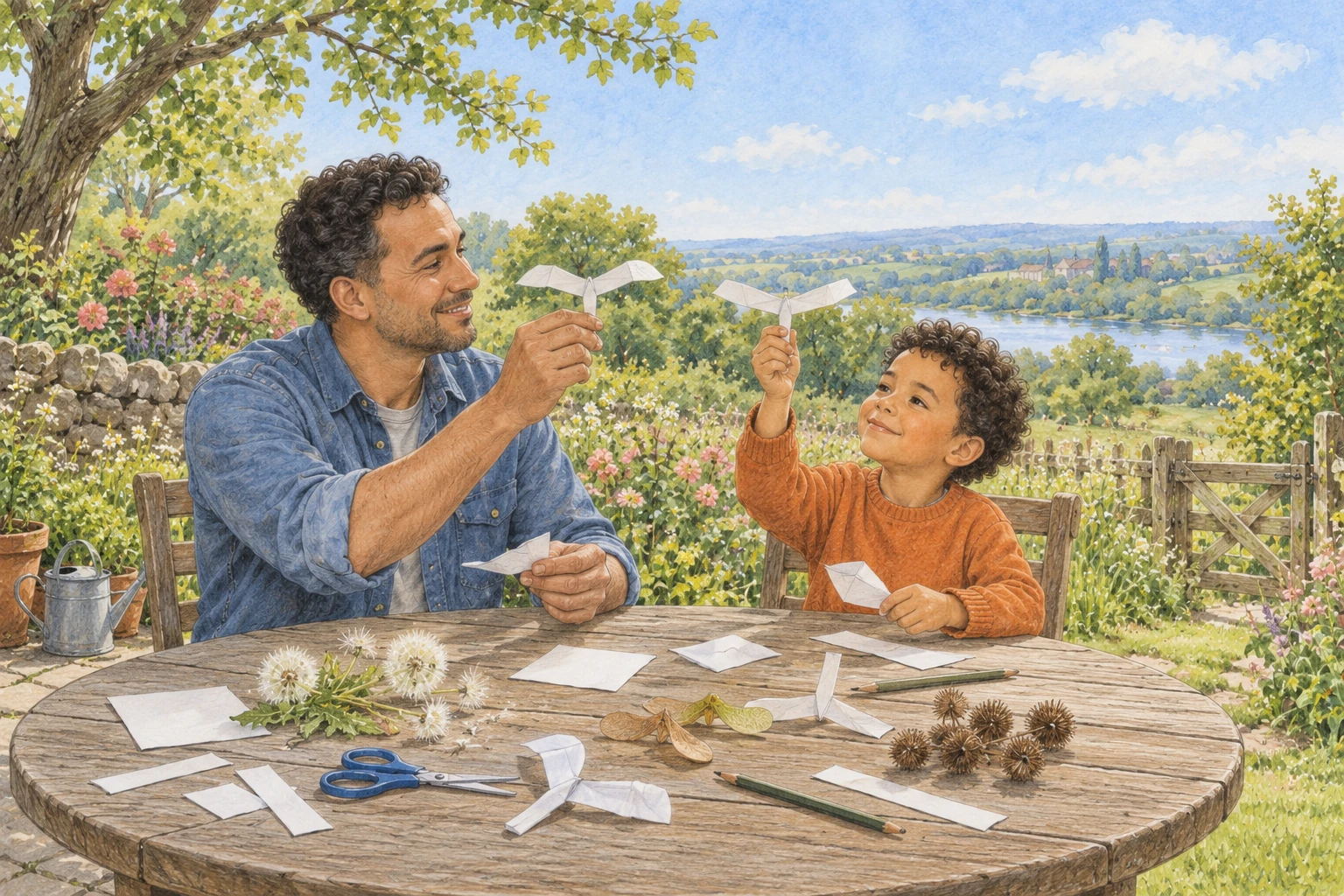
At home, they make paper seed models. James folds broad wings on one and narrow wings on another. Dad explains that models can help explore an idea, but paper is not a living seed. Their shapes will not tell them everything about real plants.
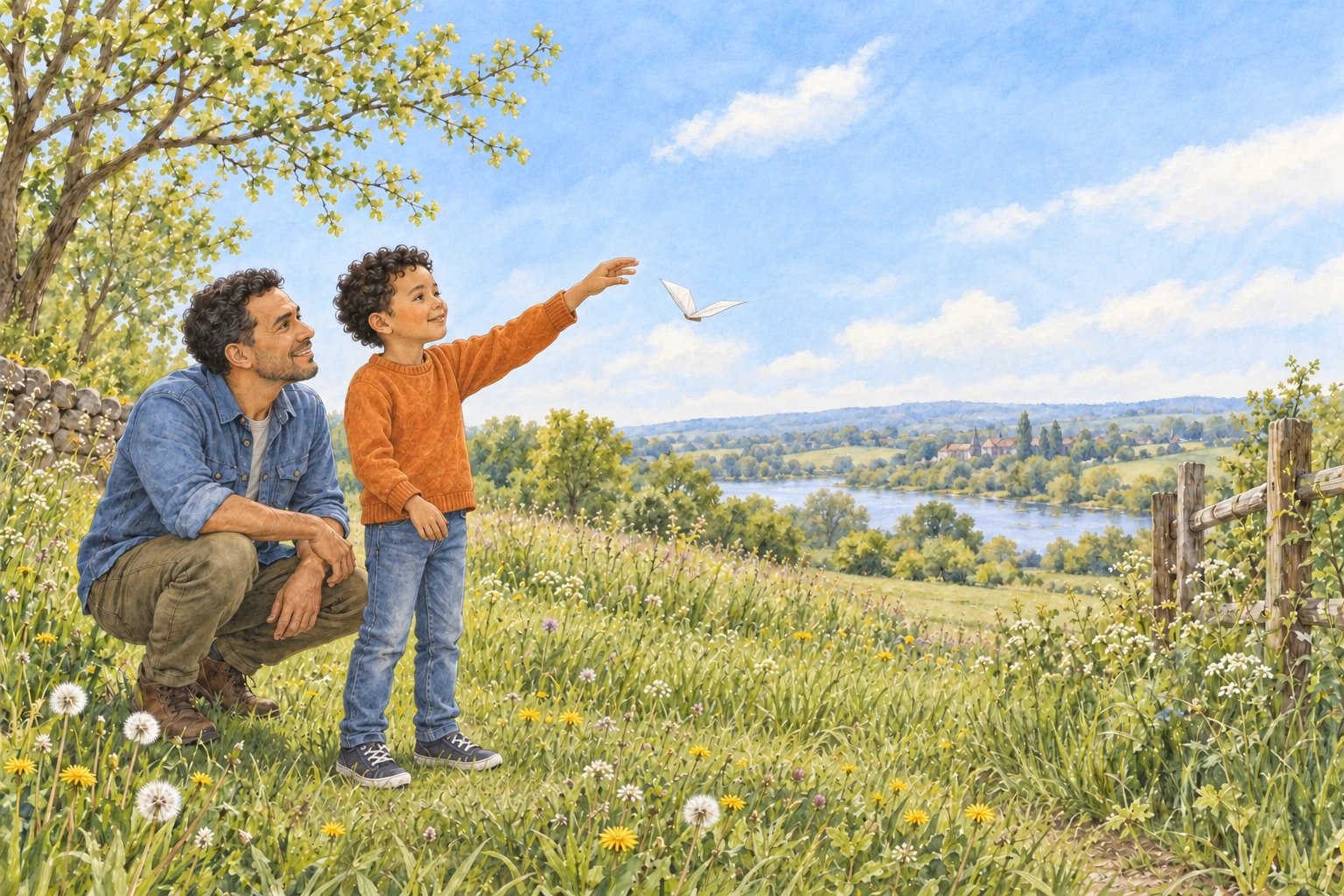
James prepares to release each model from the same height over clear grass. He lets go without throwing. Dad checks that nobody stands underneath. They repeat the drops because a gust can change the landing place. A single lucky flight would be a weak result.
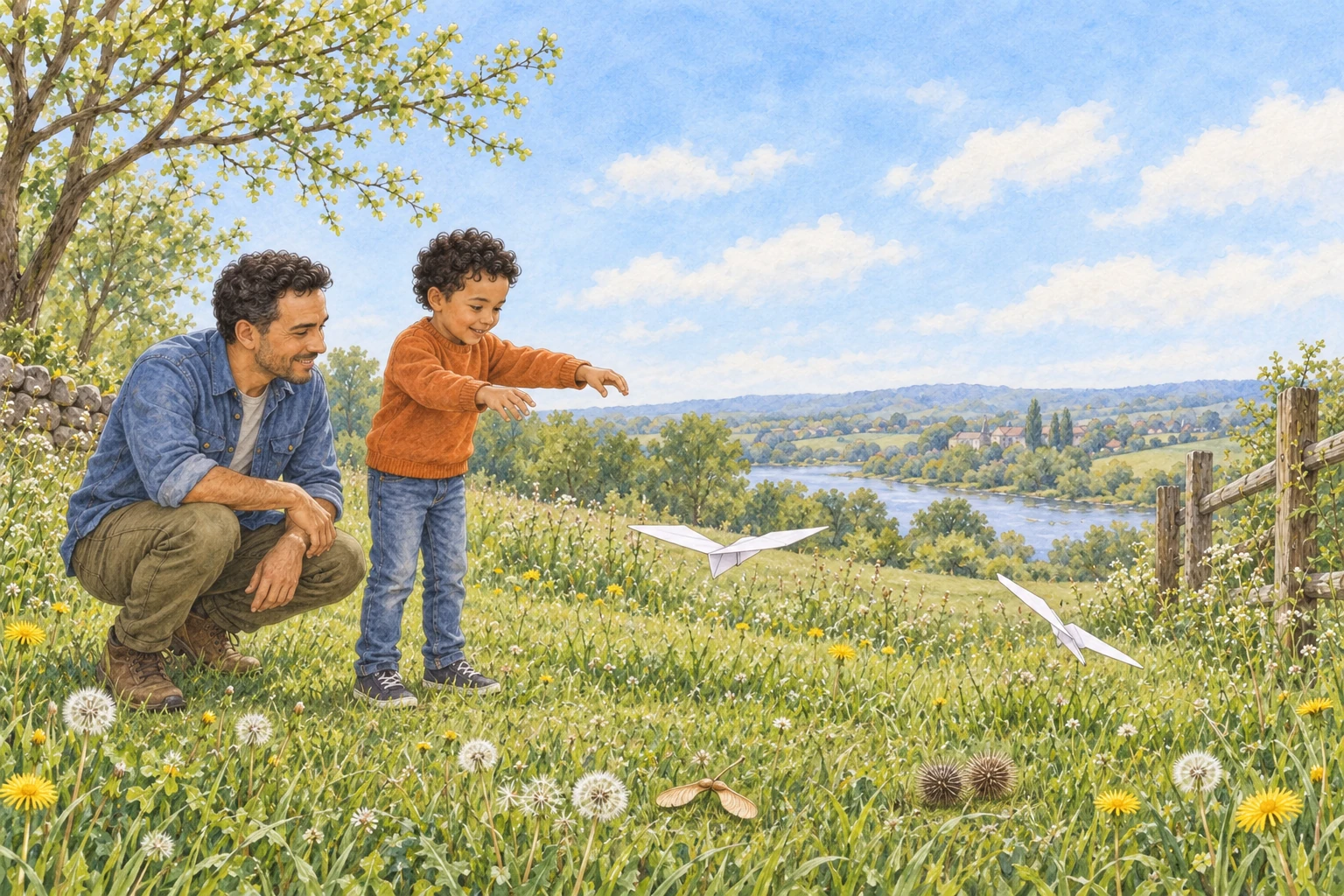
The broad-winged model stays in the air longer on several drops. Sometimes the breeze carries it farther too. James records both the pattern and the differences. He cannot promise that every broad seed travels farther in every kind of weather.
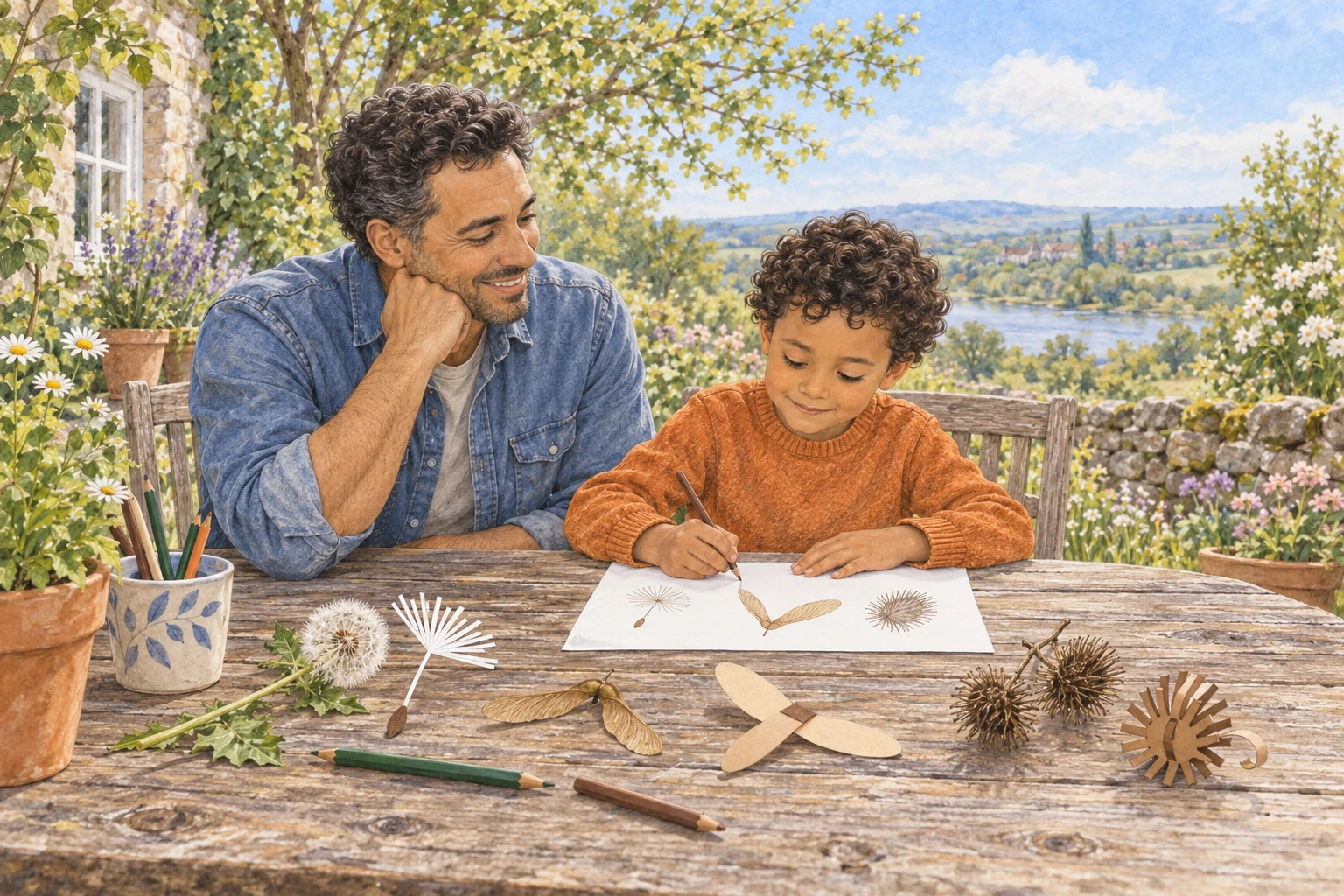
He draws the fluffy seed, the winged seed and the hooked seed head. Shape gives clues about movement. Spreading away may help a new plant find space, light and water. Many seeds never grow, so reaching a new place is only part of the story.
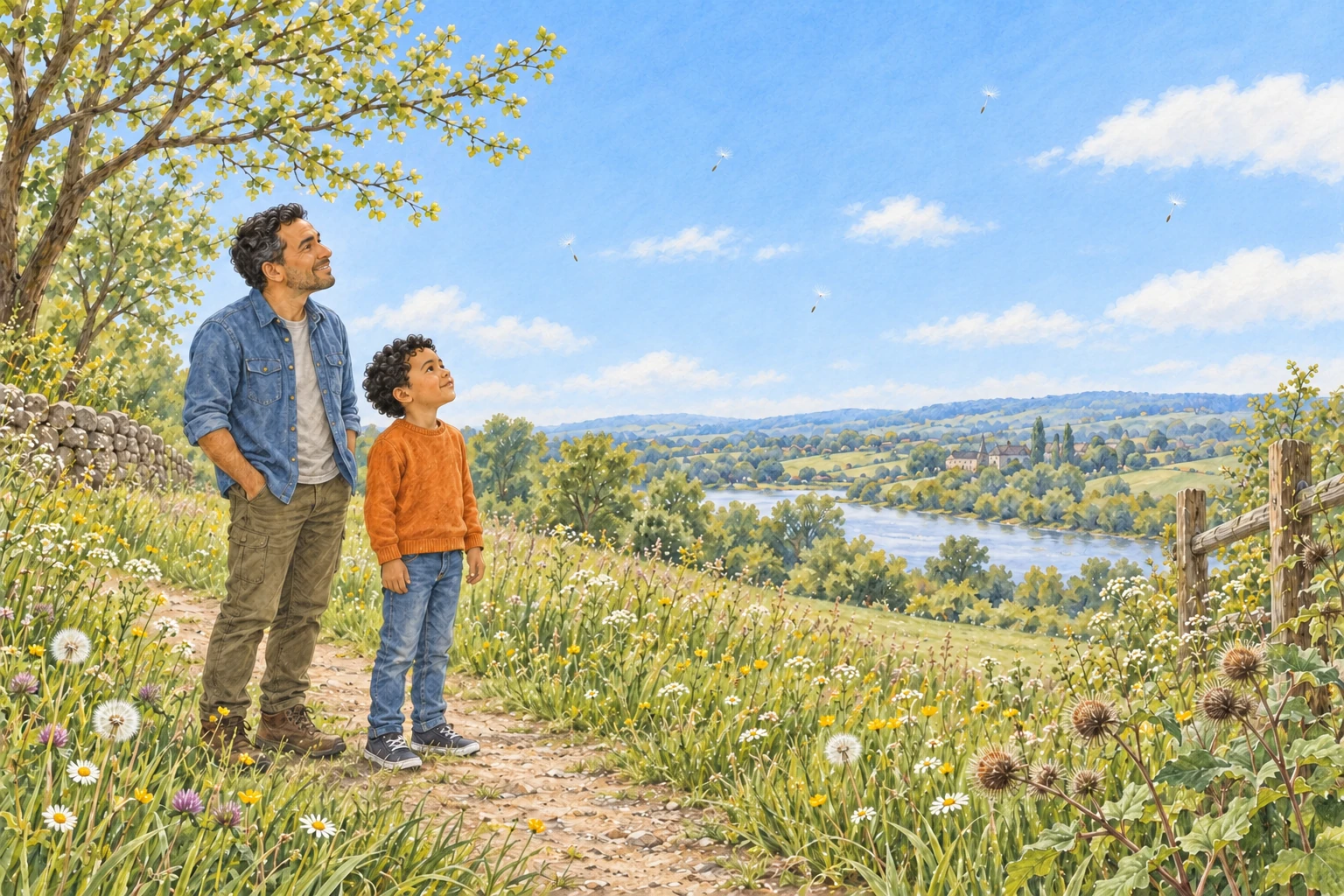
Back at the meadow, James watches the seed heads without picking them. A small gust starts another journey. “I know one way they travel,” he says. He also knows why one answer is not enough for every plant beside the path.