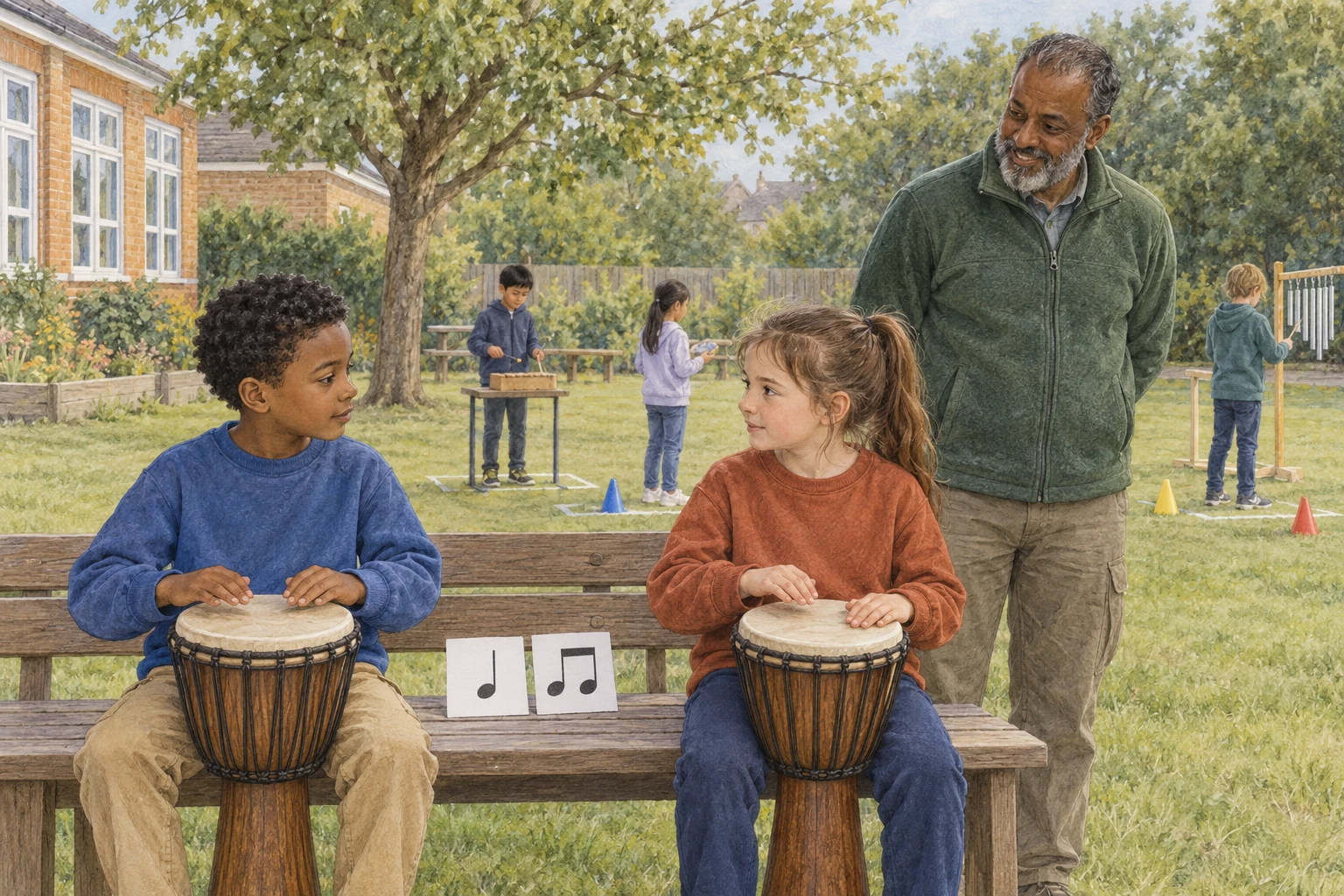
Laurence’s Drum Code
School Readers · Level 20Laurence and Cora are inventing a drum code for their outdoor club game. Three quick taps will mean “come to the bench”, and two slow taps will mean “stay at your station”. Mr Finch asks them to teach the patterns clearly before the other children begin searching the lawn for hidden picture cards.

Laurence plays three taps as loudly as he can. Half the group comes to the bench, but the rest stay where they are. He thinks they were not listening. Cora asks one child what she heard. The answer surprises him: a long rumble, with no clear spaces between the separate beats.

Mr Finch invites Laurence to stand at the far station while Cora plays. From there, the sound is different. A nearby bench rattles when someone taps a second drum against it, and the extra noise blurs the pattern. Laurence realises that hearing his own hands is not the same as hearing a message from across the lawn.

They move the spare drum off the bench and agree that only one person will send the signal. Cora leaves a clear pause between beats. This time everyone counts three taps correctly. Laurence is ready to start, but Mr Finch asks another question: how will a player know whether the message has finished?
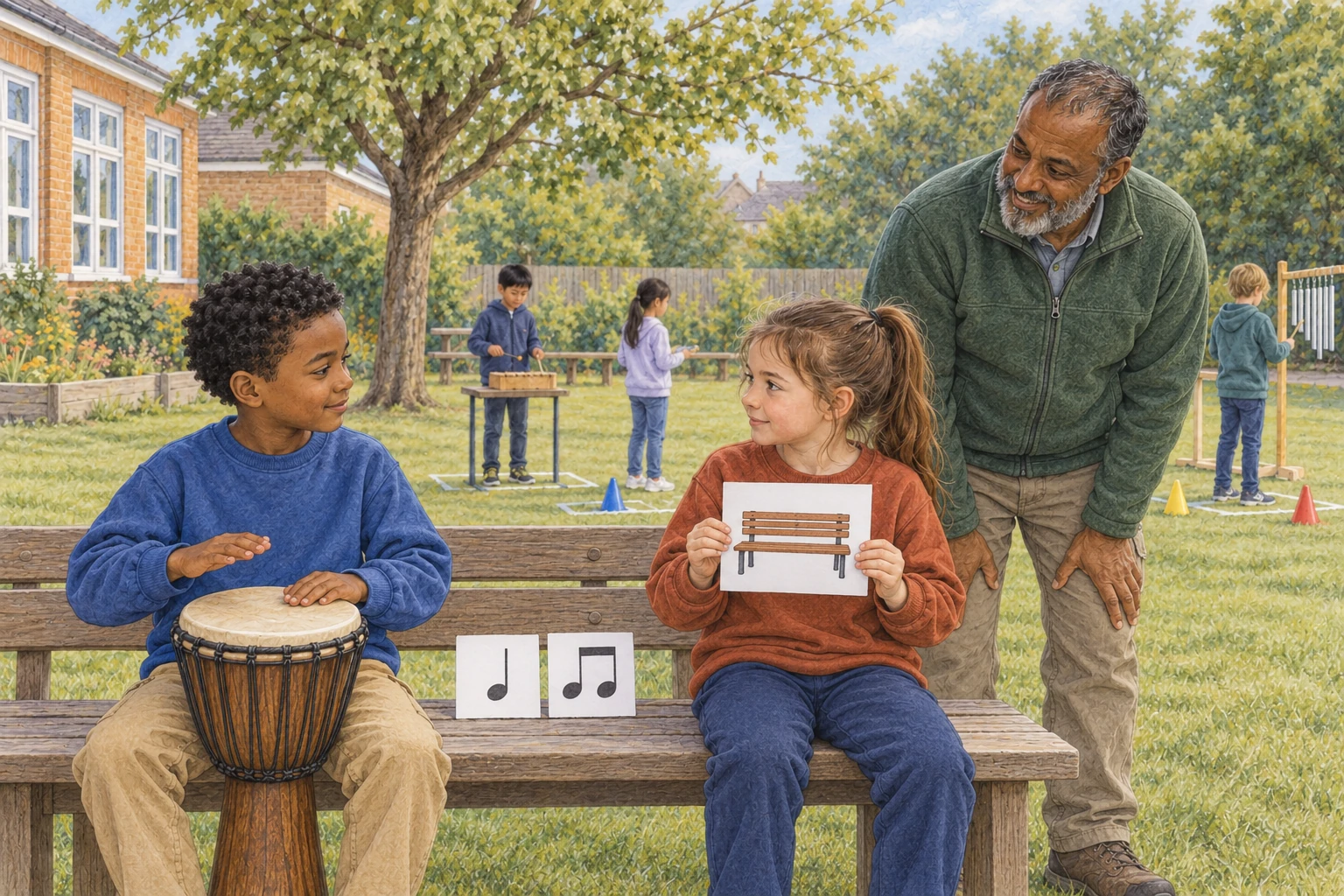
The children try a long quiet pause after each whole pattern. They also hold up a picture card showing either the bench or a station. A player who misses a beat can still check the message. Laurence likes the sound of the code, while Cora likes having a second way to understand it.
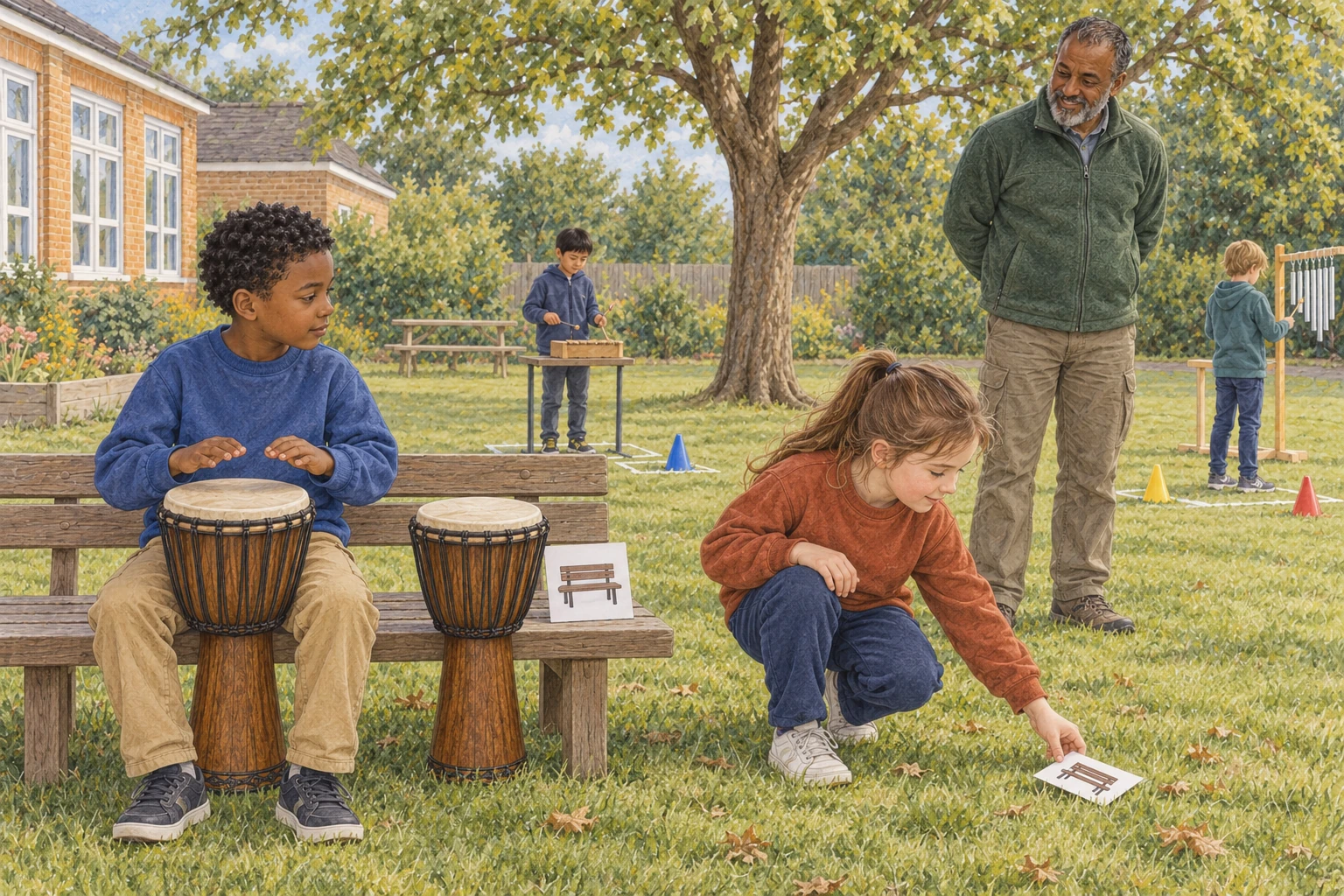
During the game, wind lifts one picture card from Cora’s hand. Laurence nearly rushes into another signal, then sees two children still watching the empty space where the card should be. He waits while she retrieves it from the grass. They send the same message again, slowly enough for everyone to join in.

At the bench, the group compares the picture cards they have found. One child says she used the held-up sign more than the drum because the wind made the beats hard to hear. Laurence had thought the sign was only a spare idea. Now he sees that different players had followed the same game in different ways.

Before packing up, Cora asks him to play the first noisy version again. They both laugh at how confusing it sounds. Laurence adds pauses and points to the bench card. His new code is less dramatic, but everybody understands it. That feels more like a successful message than simply making the loudest noise.