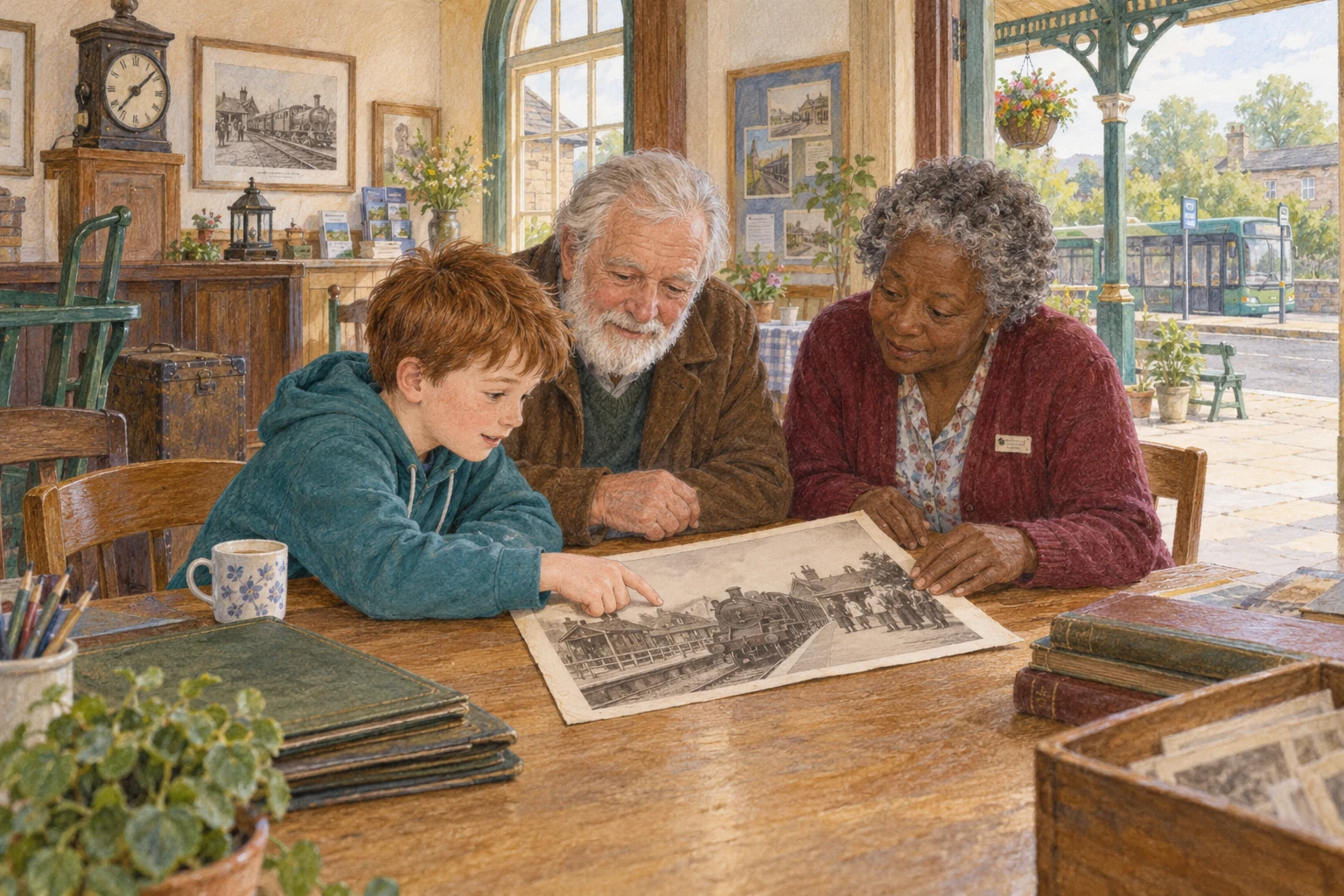
Leo’s Station Map
Shared Reading Books · Social Science · Year 4Leo thought the old station was simply a long building with a clock. Then Grandad showed him a photograph of a train standing beside its doors. “That track is not there now,” Leo said. Mrs Pike, a volunteer at the community centre, offered to show them what remained.
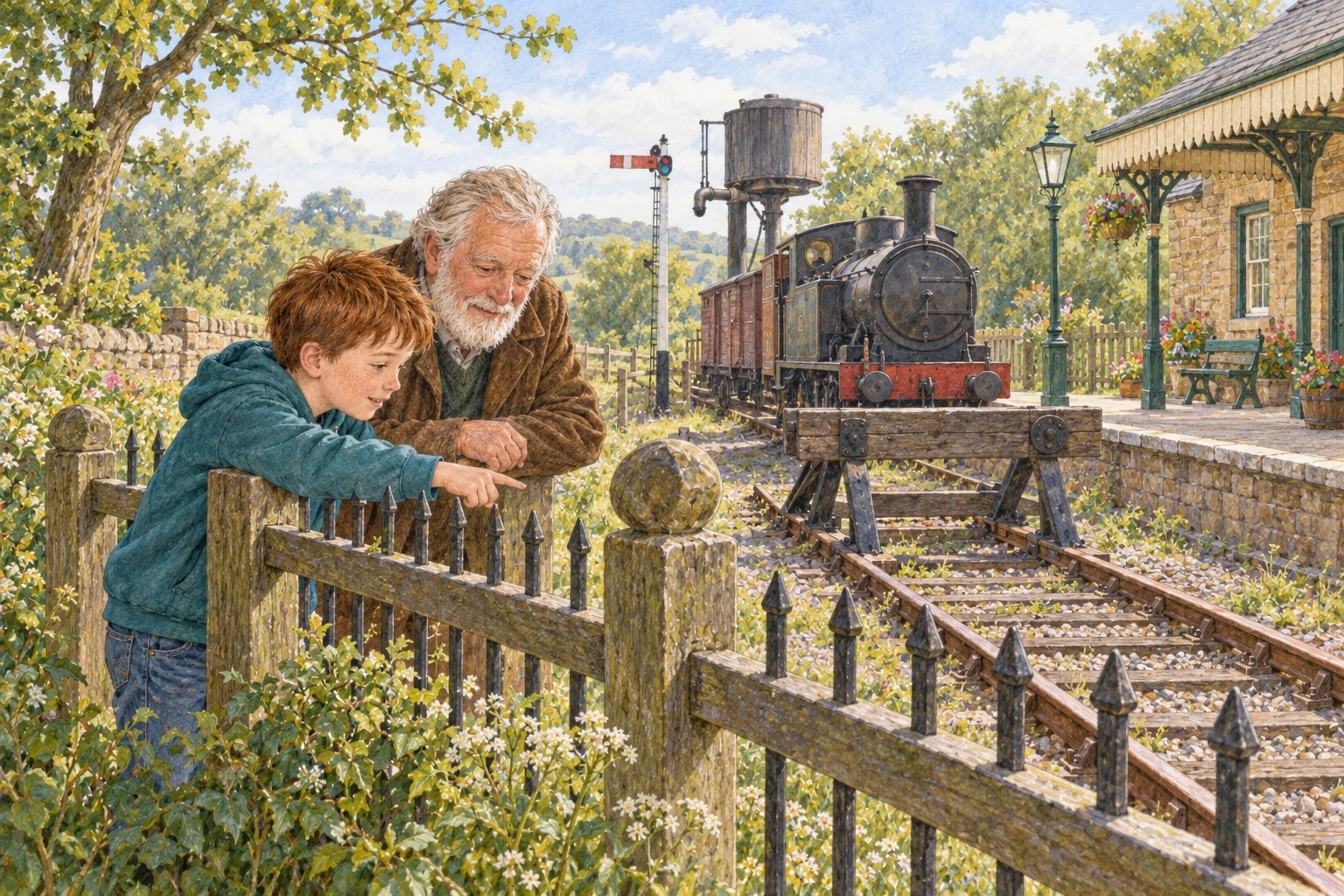
Outside, a short piece of track stood behind a safety fence. Grass covered the place where passengers had once waited. Grandad remembered travelling to a nearby town by train. His memory helped Leo imagine the journey, but it did not tell him how every passenger had used the station.
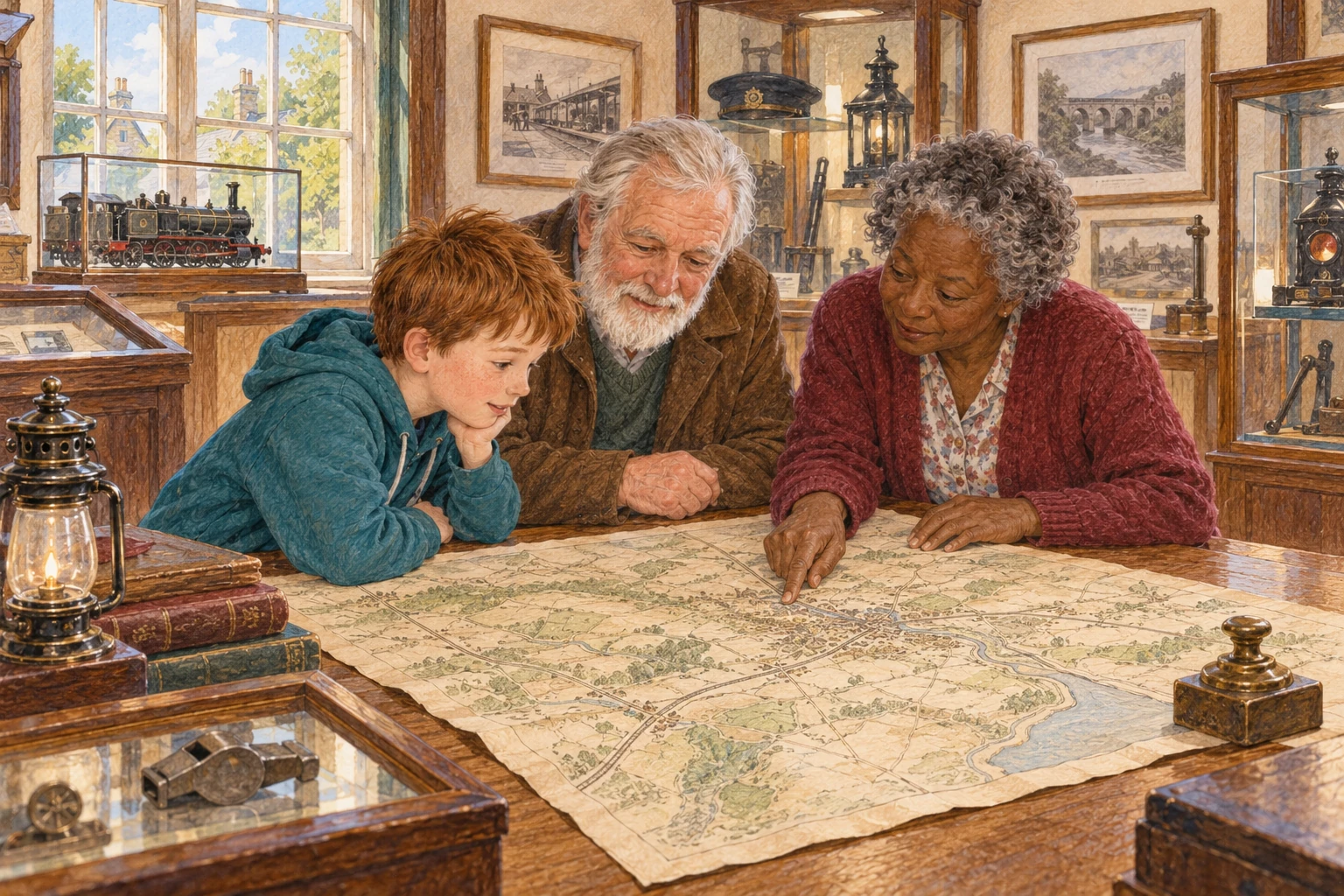
Inside, Mrs Pike unfolded an old map. The railway linked farms, villages and a larger town. Goods had travelled as well as people. Leo traced a route with his finger. The station had helped connect places, rather than existing only as a building at the end of their street.
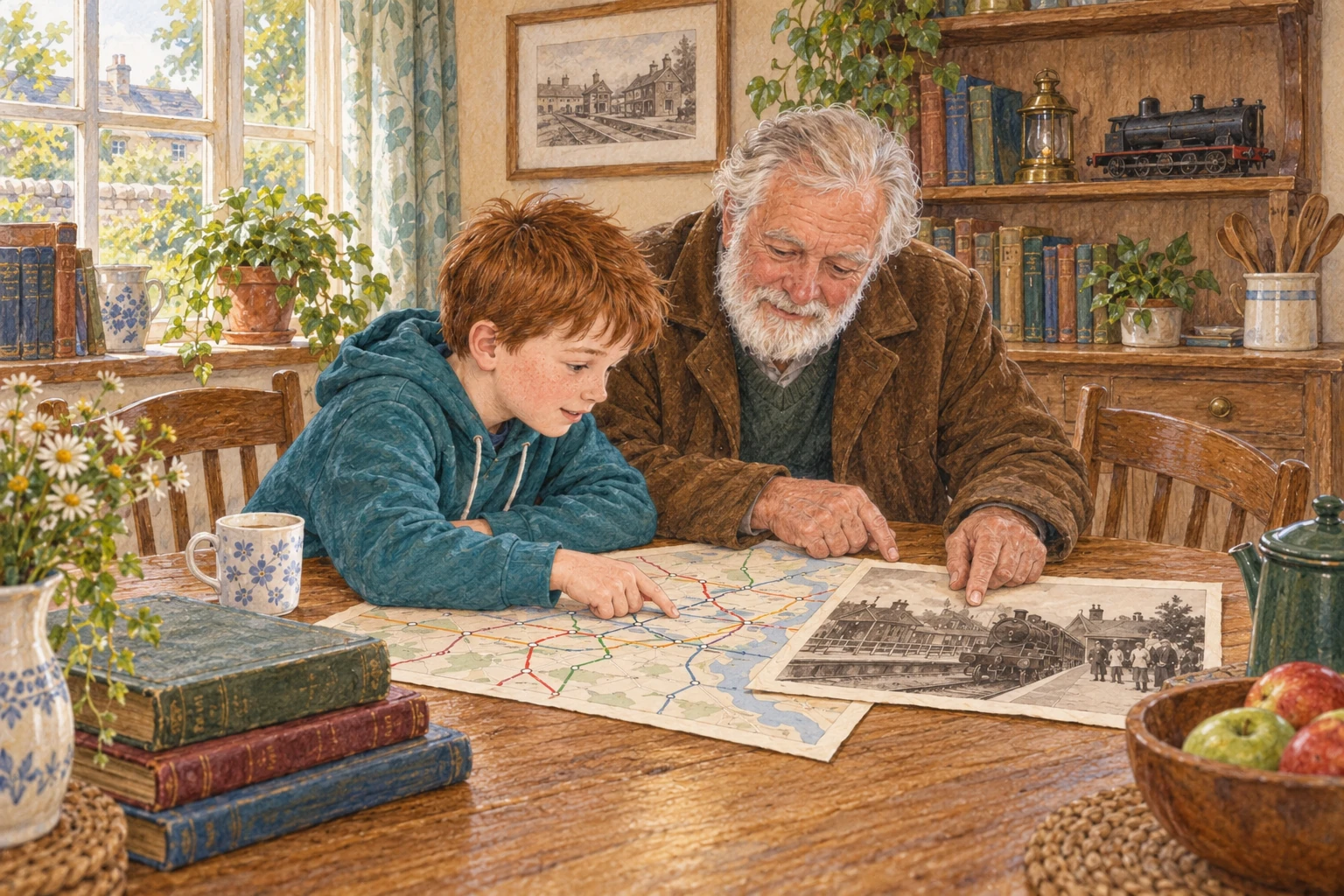
They compared it with a current transport map. Buses followed some similar routes, while roads reached places away from the old line. “So the bus is better,” Leo decided. Grandad paused. “Better for which journey?” he asked. A useful comparison needed more than choosing the newest thing.
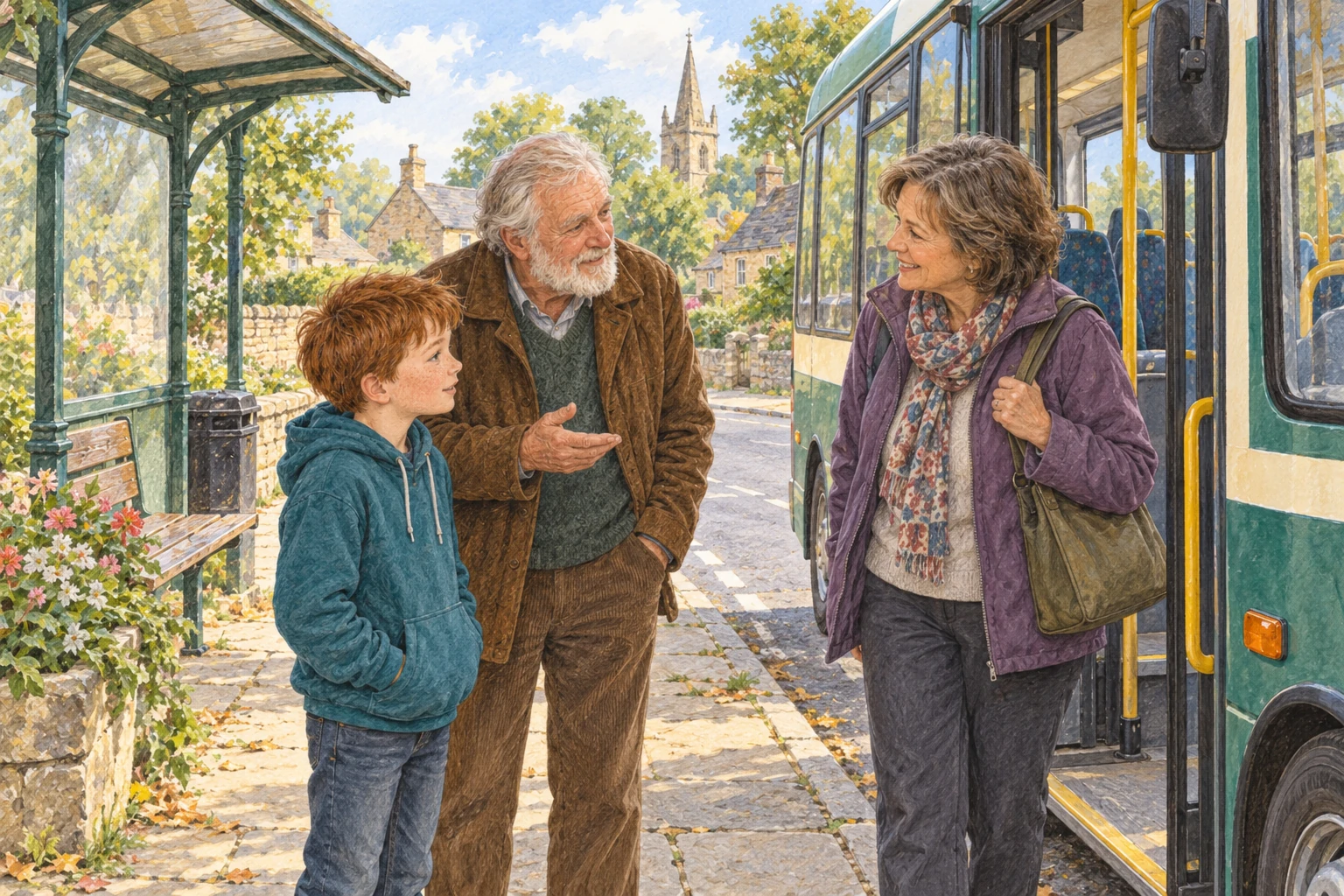
At the bus stop, a passenger explained that the shelter mattered when rain arrived. Another liked the bus because it stopped near home. Grandad remembered carrying heavy bags from the station. Their experiences showed Leo that distance, cost, shelter and journey times could matter in different ways.

Back at school, Leo made a timeline using the photograph, the two maps and Grandad’s account. He marked the account as one person’s memory. Where he did not know a date, he left a question instead of guessing. Different sources helped him build a fuller picture.
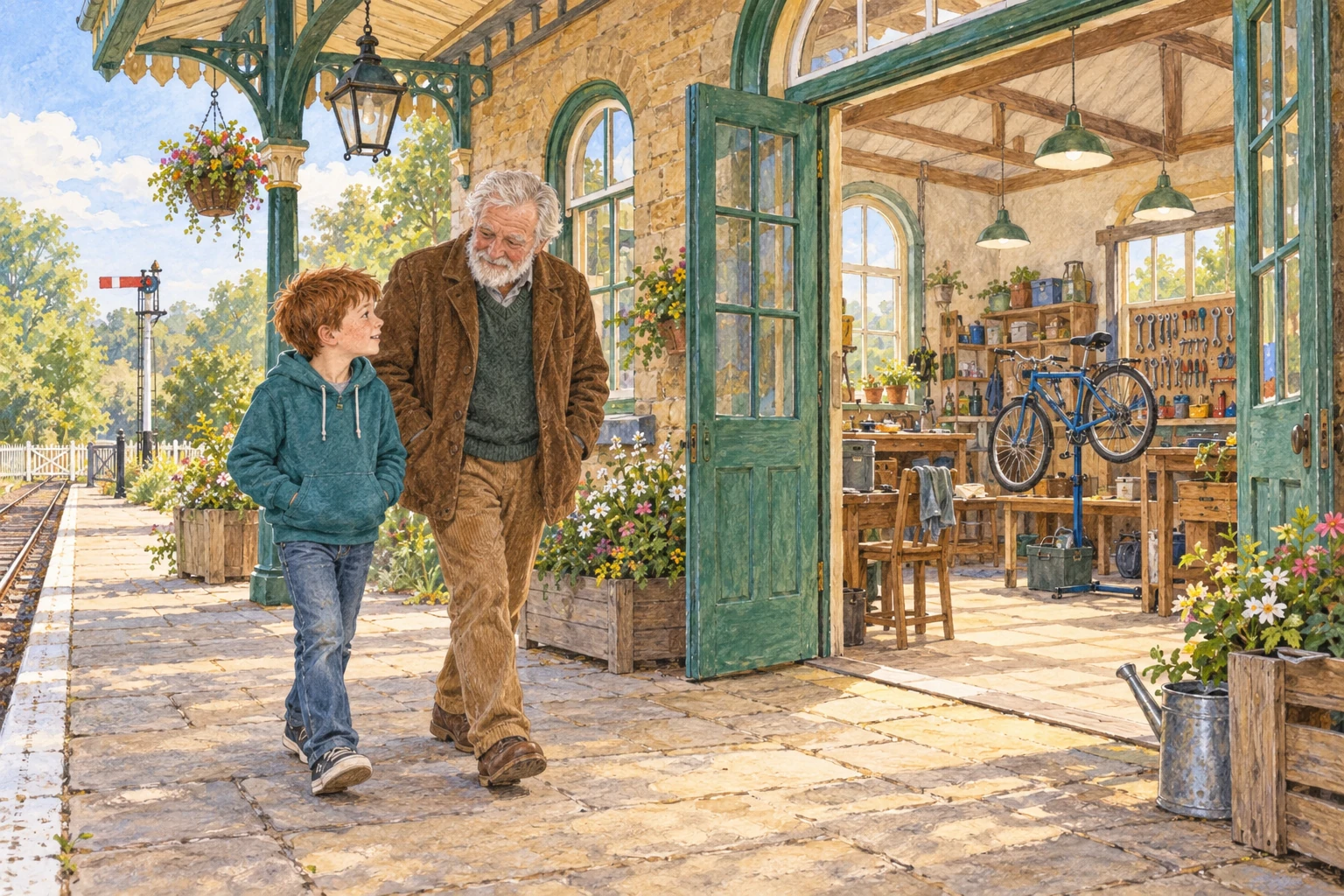
The next visit, the former station was busy with a repair group. Its rooms served a new purpose, although parts of its earlier use remained visible. Leo noticed the clock again. A place could change without losing every trace of the people who had used it before.
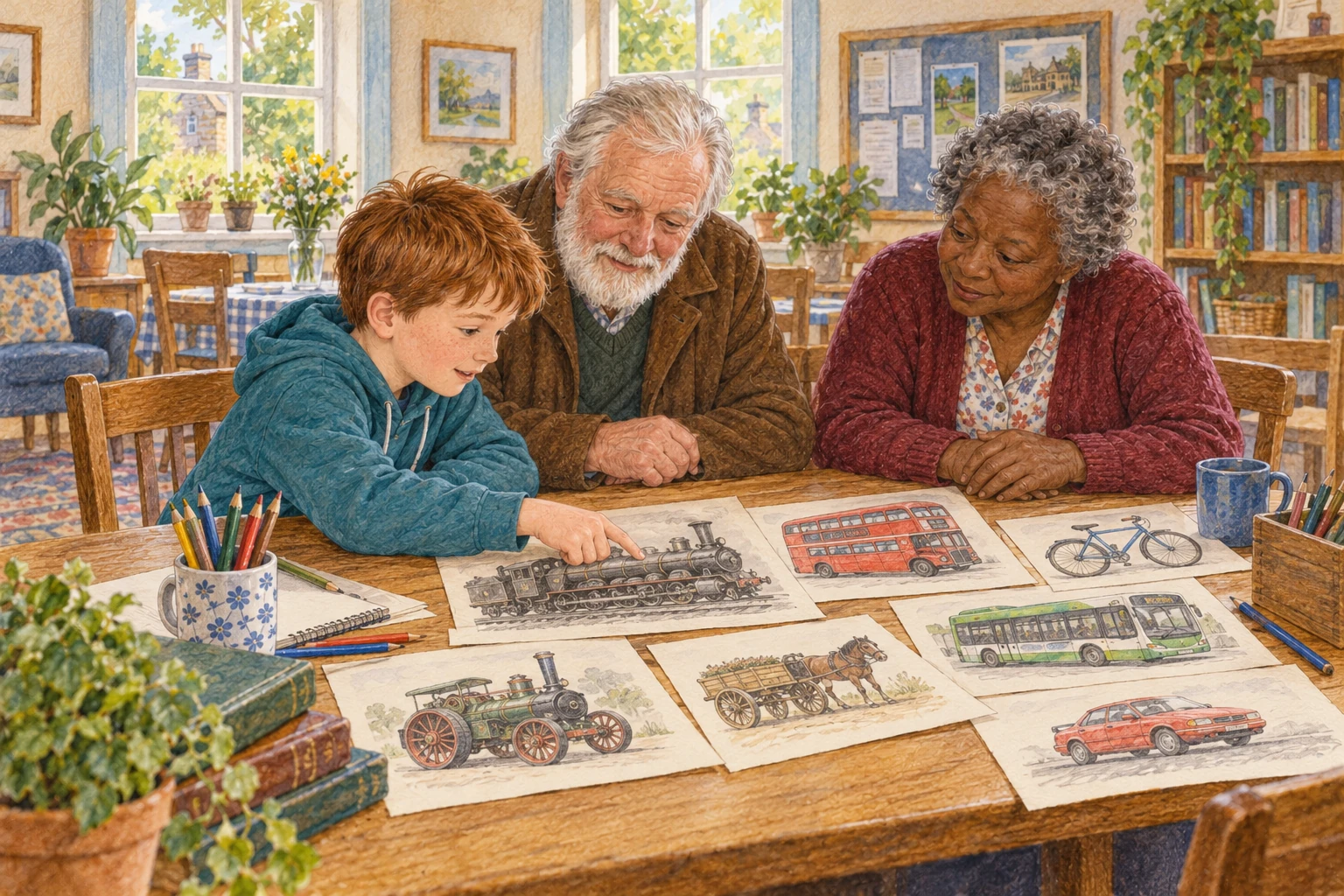
Leo showed Mrs Pike his drawings of then and now. He had begun with a missing track and ended with questions about connections. To understand a changing place, he needed evidence, different experiences and a clear idea of whose journey he was comparing.