Lily’s Raincoat Test
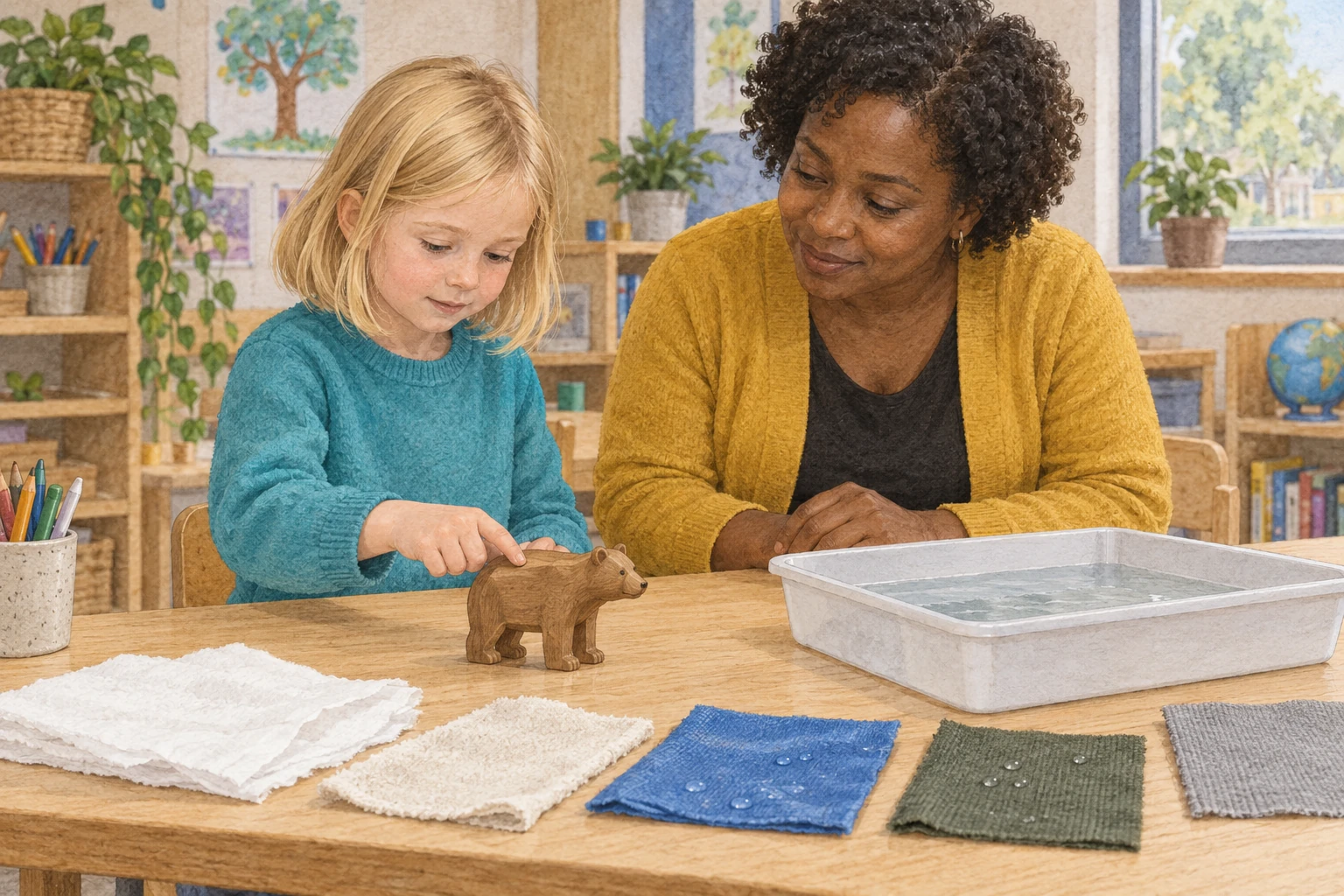
Shared Reading Books · Science · Year 1Lily’s wooden bear needs a cape for a rainy-day game. She finds paper, cotton cloth and coated fabric. “Which will keep him dry?” she asks Mrs Moss. They put the bear safely aside and prepare a small test.
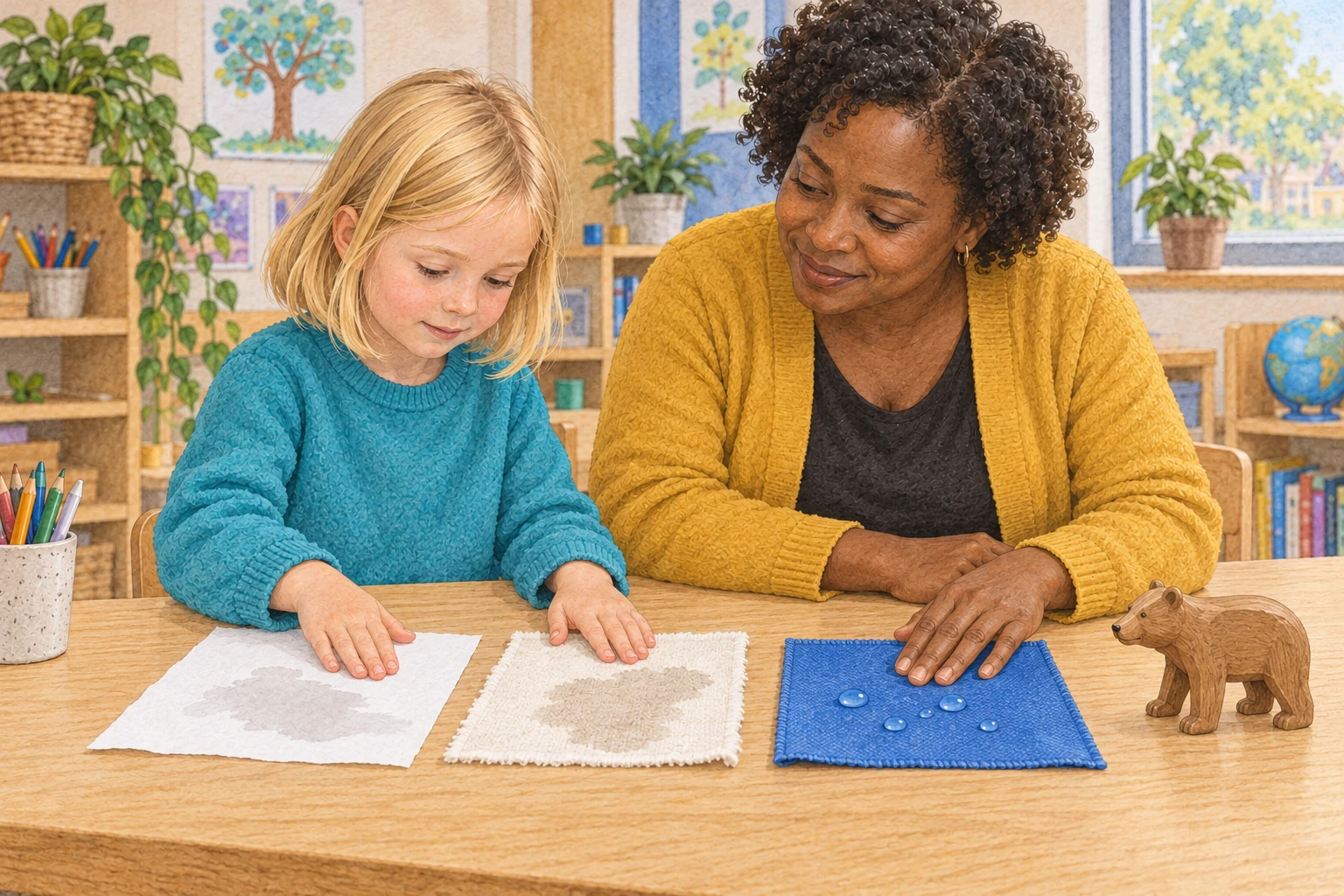
They feel the samples. One is soft, one is stiff and one feels smooth. Each material is what an object is made from. Lily can predict which might work, but a guess is not a result.
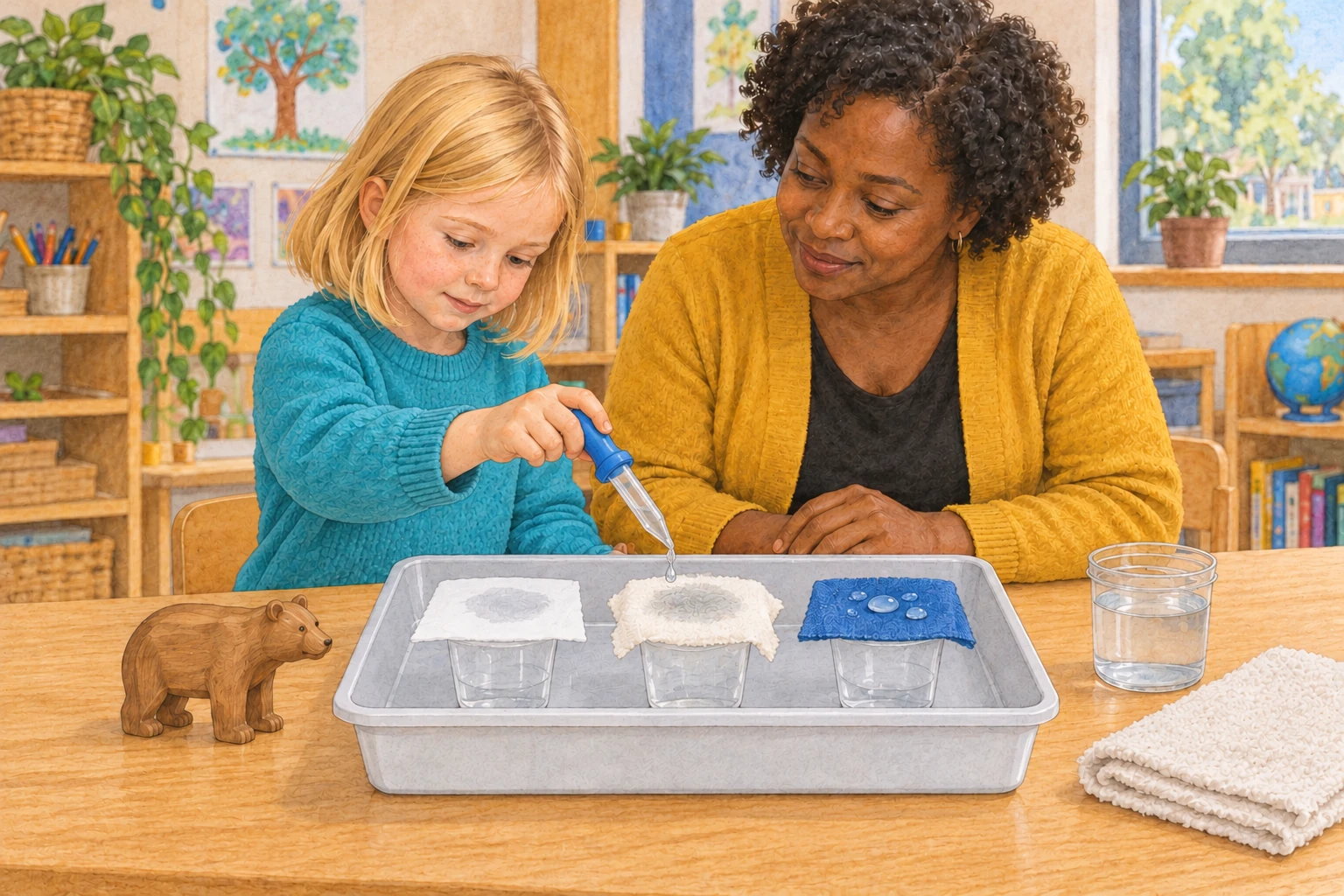
Mrs Moss stretches cotton over a cup in a tray. Lily adds a few drops of water. A wet patch spreads. Some water passes through. “The cloth can absorb water,” says Mrs Moss. “It takes water in.”
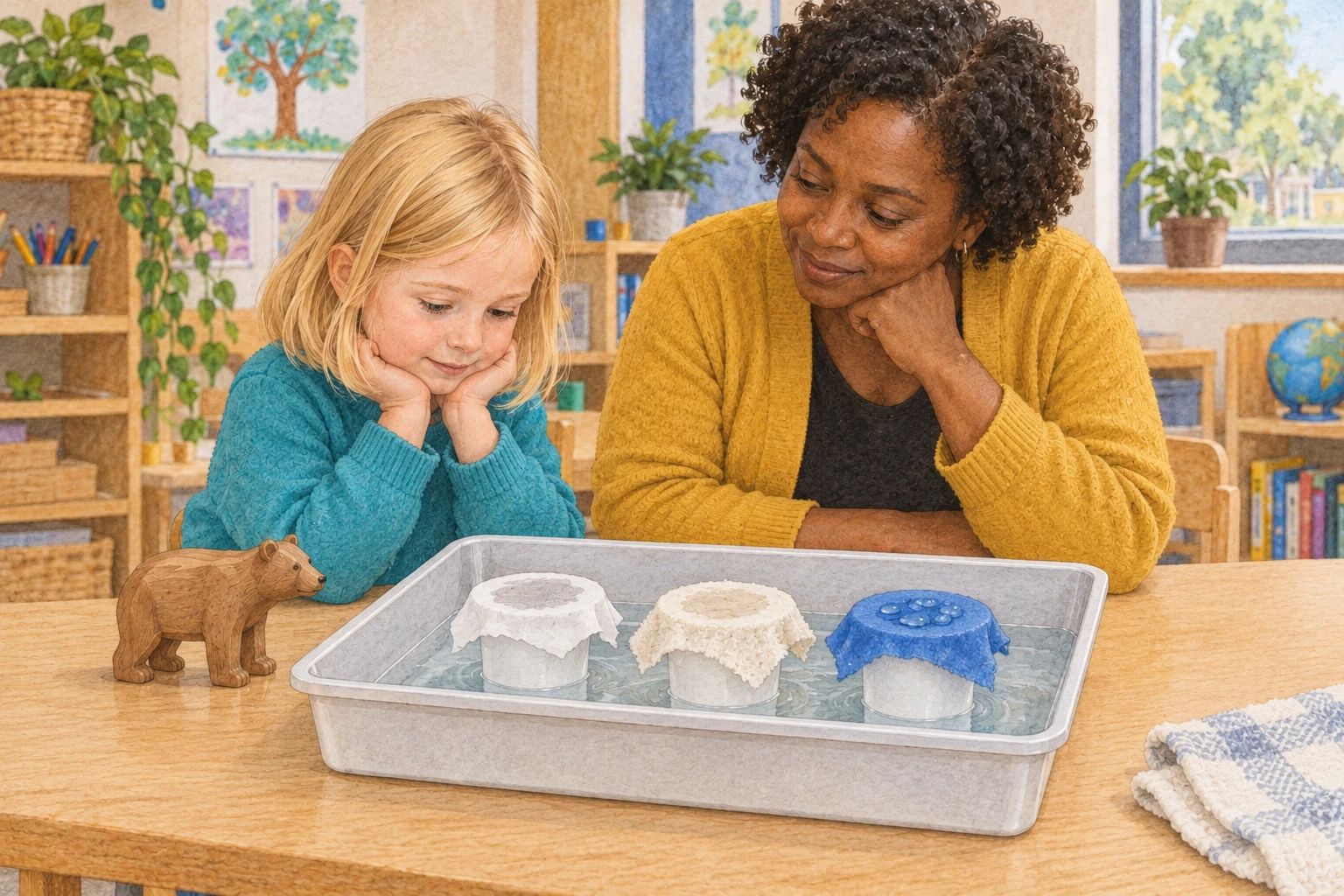
They try the paper with the same small number of drops. The paper darkens and becomes wet. Lily looks beneath it. This paper does not keep the cup underneath dry in their test.
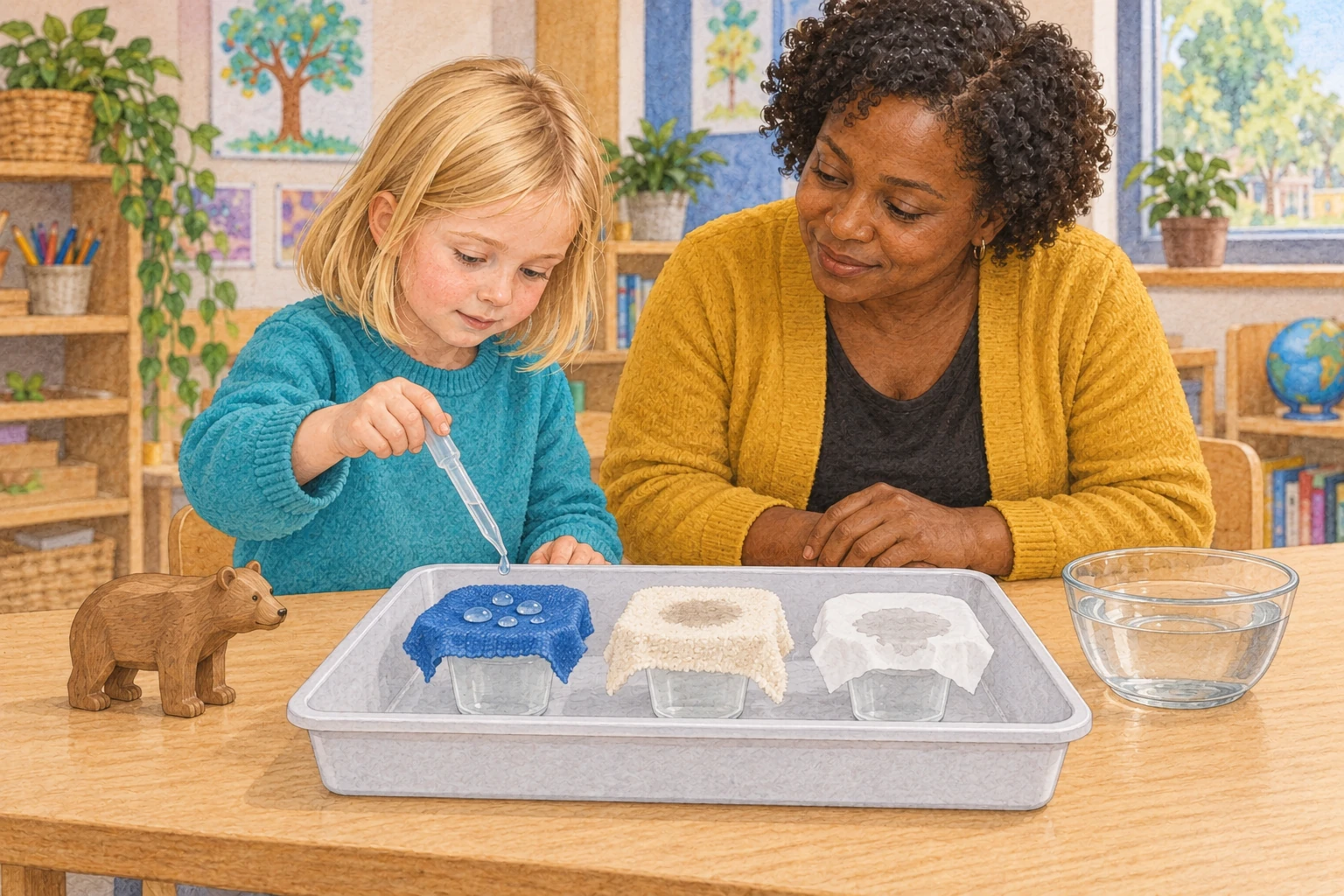
Next comes the coated fabric. The drops sit on top, and the cup stays dry. Mrs Moss explains that waterproof material helps stop water passing through. They check the sample again rather than choosing only by its colour.

Lily draws what happened. They used the same small number of drops and waited the same time. “These samples behaved differently,” she says. Their results tell them about these three samples. Other papers and fabrics may behave differently.
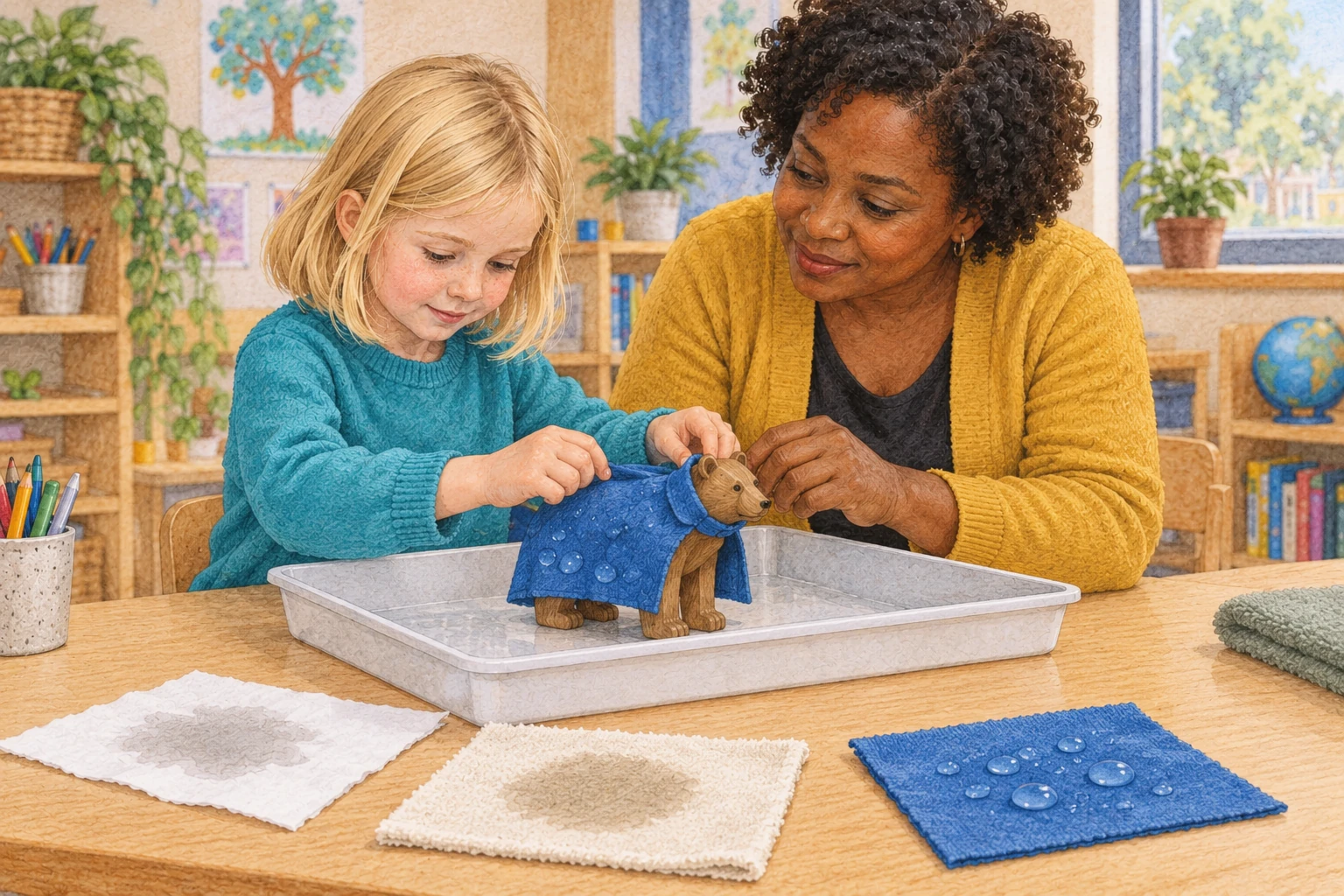
Mrs Moss helps wrap the coated fabric around the bear. Lily puts him on a tray for the pretend rain. The little cape works for their game. The cloth can help wipe up water afterwards.
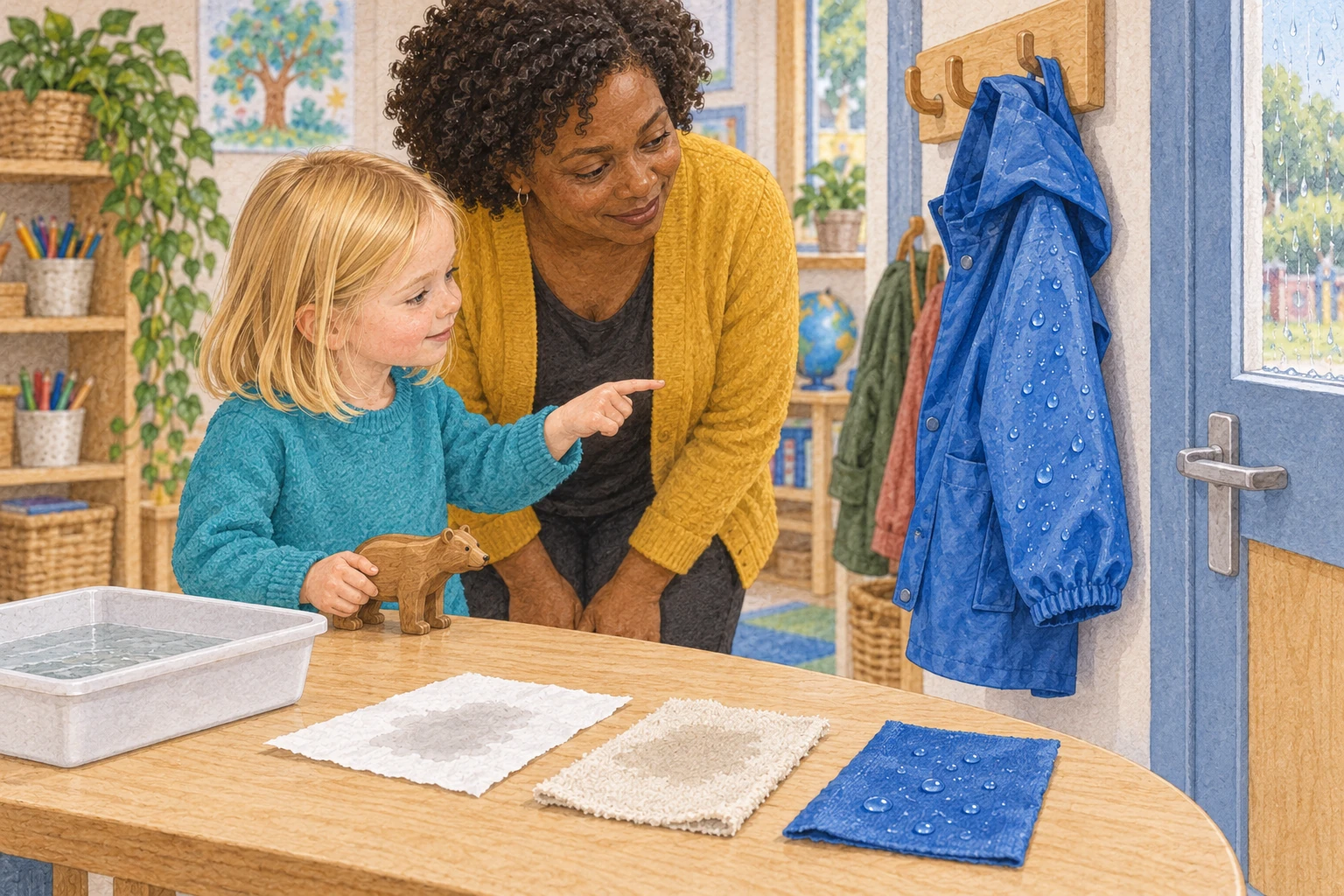
At the door, Lily notices her own raincoat. “Now I know why the material matters,” she says. A good choice began with a question, a careful test and looking at what the water actually did.