
Neville’s Tunnel Test
School Readers · Level 19Neville and Dean are building a model railway for the class exhibition. Their blue wooden train rolls through a village of cardboard houses before reaching a hill made from folded card. Neville wants the track to disappear into a tunnel, so the train seems to travel right through the hill.

They measure the engine and cut a tunnel entrance with Mrs Hall’s help. The engine fits neatly through the opening, and Neville begins drawing rocks around it. When Dean connects the carriage, however, the train stops halfway inside. Pulling harder only bends the loose cardboard roof towards the track.

Dean lifts the hill away so they can see the whole train. The carriage has a taller roof than the engine, something they had not noticed while measuring. Neville suggests removing its roof for the exhibition. Dean shakes his head. The carriage would look different, and they would still not know whether their tunnel was wide enough.

Mrs Hall asks them to decide what a useful test must include. They put the complete train beside a fresh piece of card and mark its highest and widest points. Dean leaves a small gap around the outline. A tunnel that touches the train at every edge might catch it whenever the cardboard shifts.

They build a wider opening and support the roof with two folded strips of card. This time Neville waits before decorating it. They send the whole train through slowly, then try it again from the other direction. Nothing catches, although one support leans when Dean reaches across the table for his ruler.

Neville fixes the loose support with Mrs Hall’s help while Dean clears spare paper from beside the track. After several more runs, the tunnel stays steady. Only then do they add their rocky hillside drawing. The repair has taken longer than cutting the first opening, but they no longer need to pull the train free.
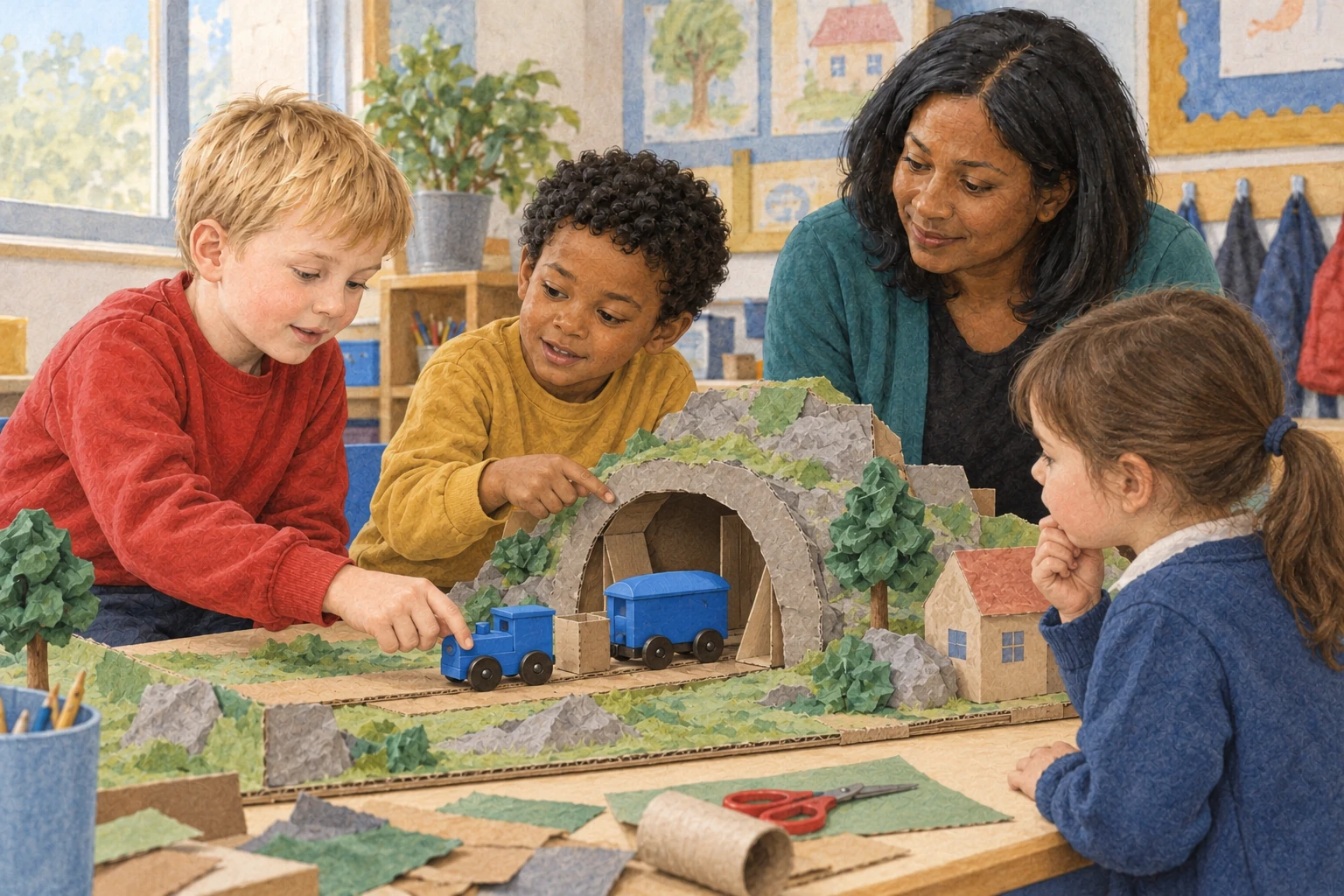
At the exhibition, a younger child asks why their tunnel looks larger than the engine. Neville shows the carriage following behind it. Dean explains the extra space around the roof and points to the hidden supports. Their model works because they tested the part that had been easiest to overlook.

When the visitors leave, Mrs Hall asks what they would measure first on another model. “Everything that has to pass through,” Neville answers. He keeps the first narrow entrance beside their finished hill. It is a useful reminder that one successful engine test had not been the same as testing a complete train.