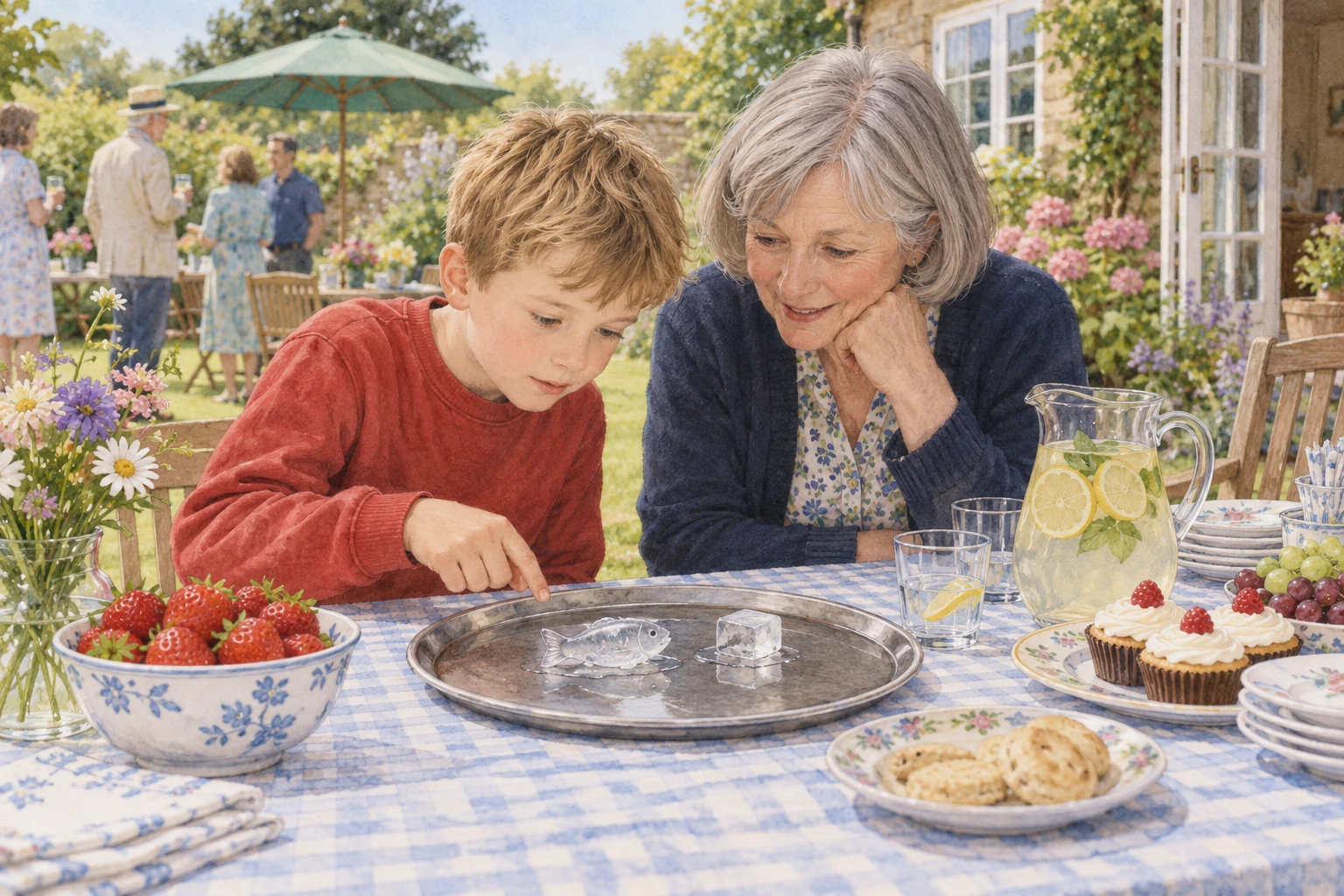
Oscar’s Ice Shapes
Shared Reading Books · Science · Year 4Oscar has made ice fish for the garden party, but their tails are disappearing. A little puddle spreads across the tray beside a plain ice cube. “My moulds have gone wrong,” he tells Aunt Rose. She suggests looking at the material, rather than the shape alone.
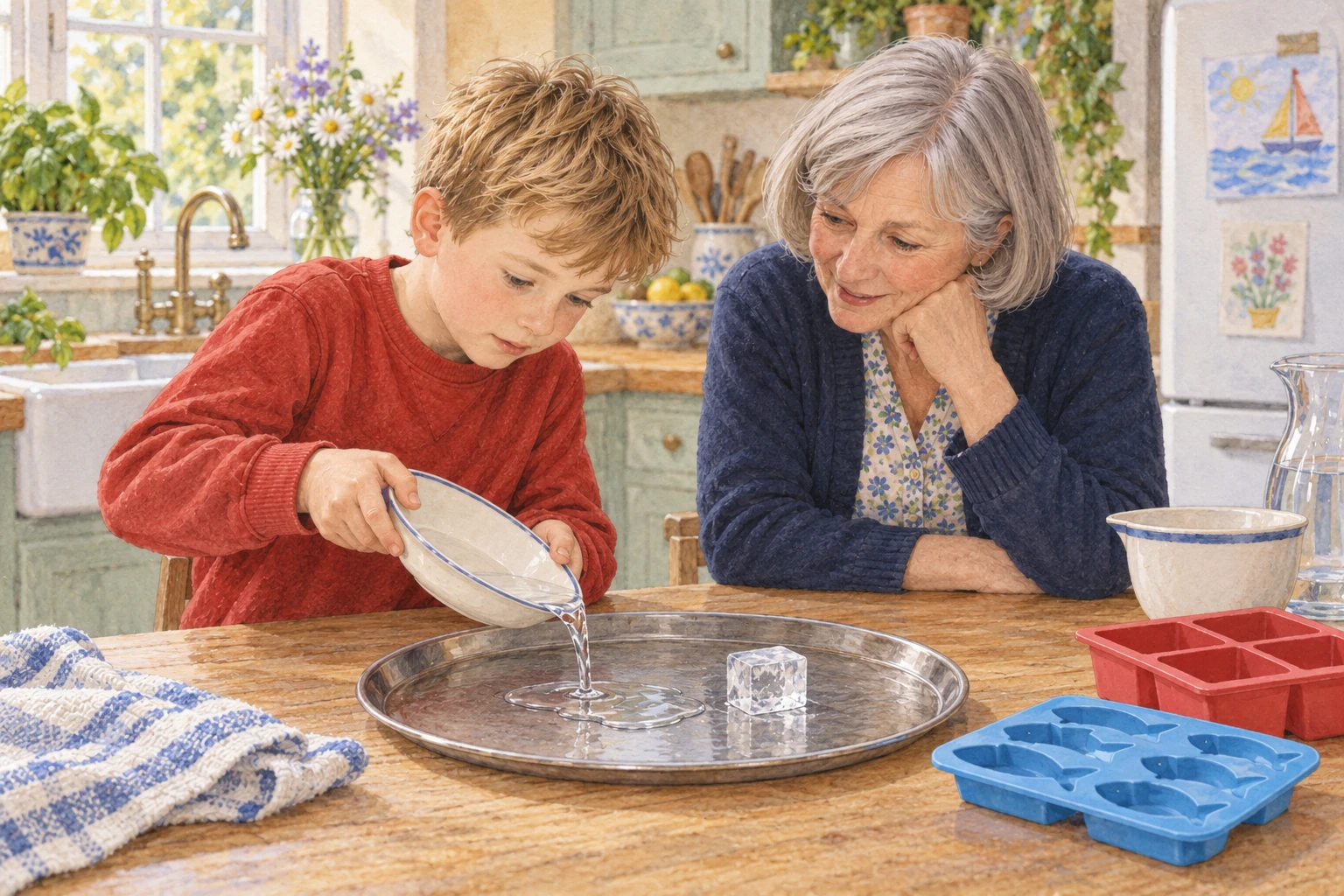
Oscar tilts a shallow dish holding the meltwater. The liquid flows and takes the shape of the dish. The remaining ice keeps its own shape until it melts. Solid ice and liquid water are the same substance in different states. A new design will not stop warming.
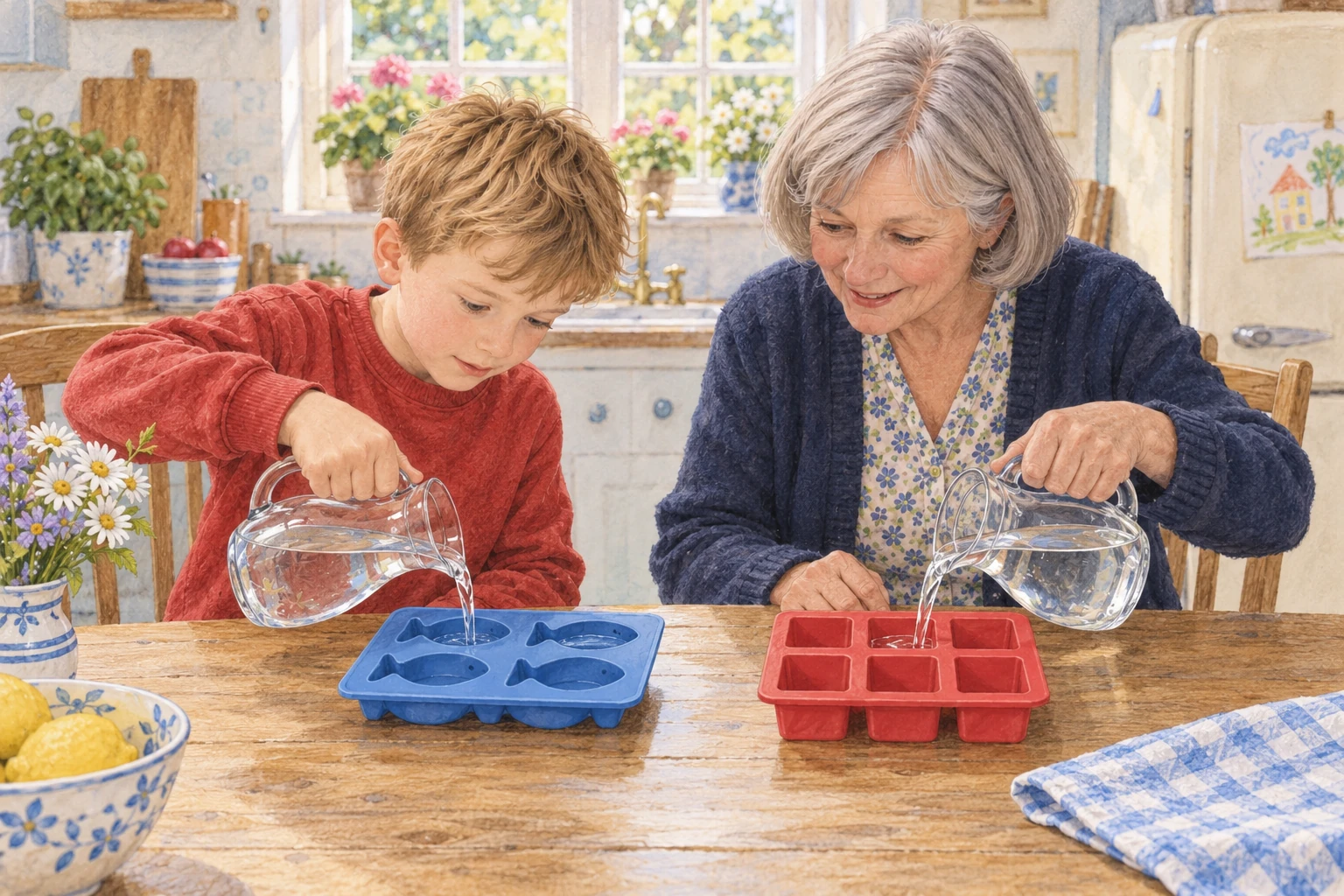
Aunt Rose helps Oscar pour equal amounts of water into two clean silicone moulds. One is a fish and the other is a cube. They leave space at the top because water expands when it freezes. They will change the shape while watching the same material.
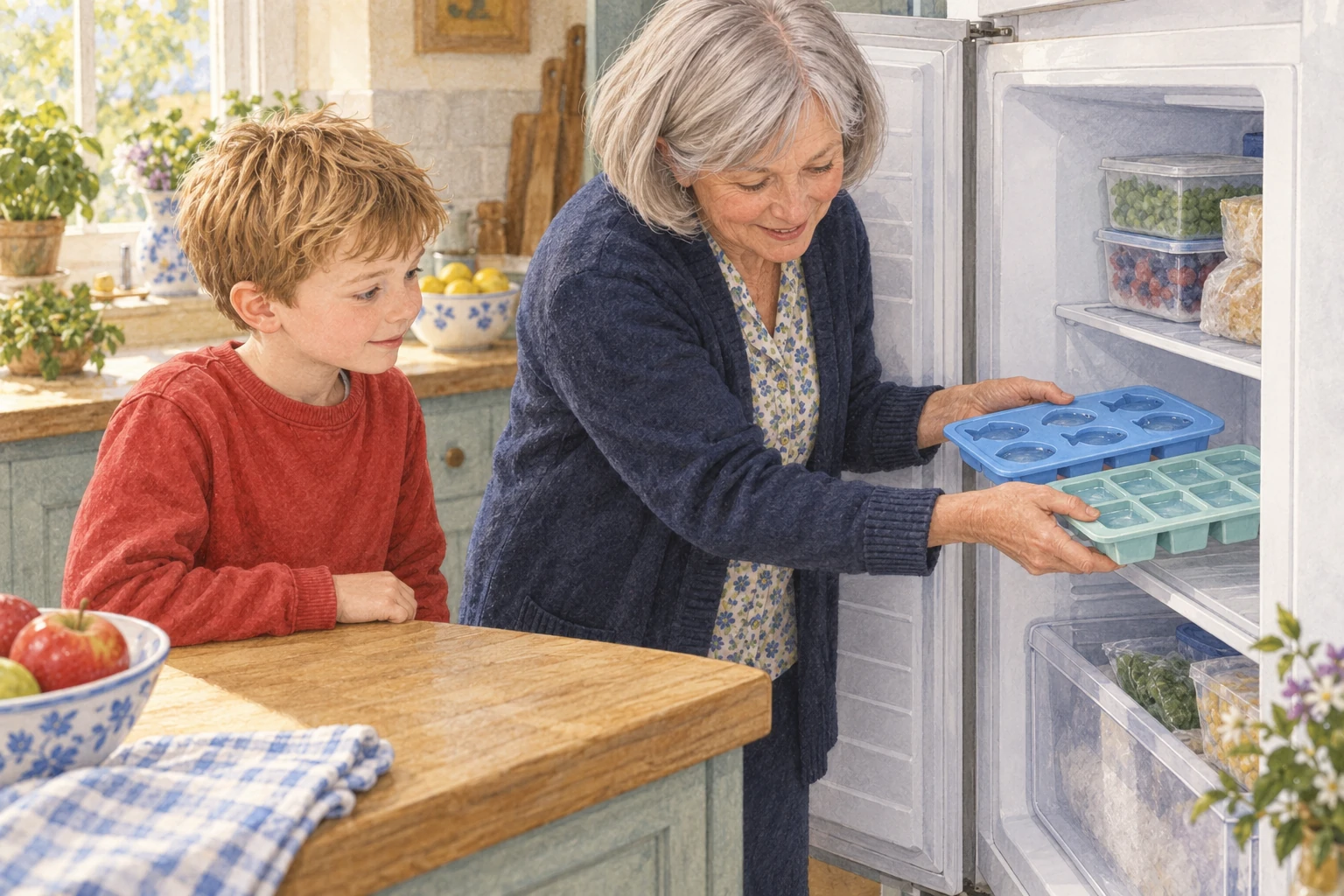
Aunt Rose puts both moulds in the freezer on a level shelf. Cooling removes energy from the water. If it becomes cold enough, liquid water changes into solid ice. Oscar cannot see the change happen instantly, so he records when they put the moulds inside.
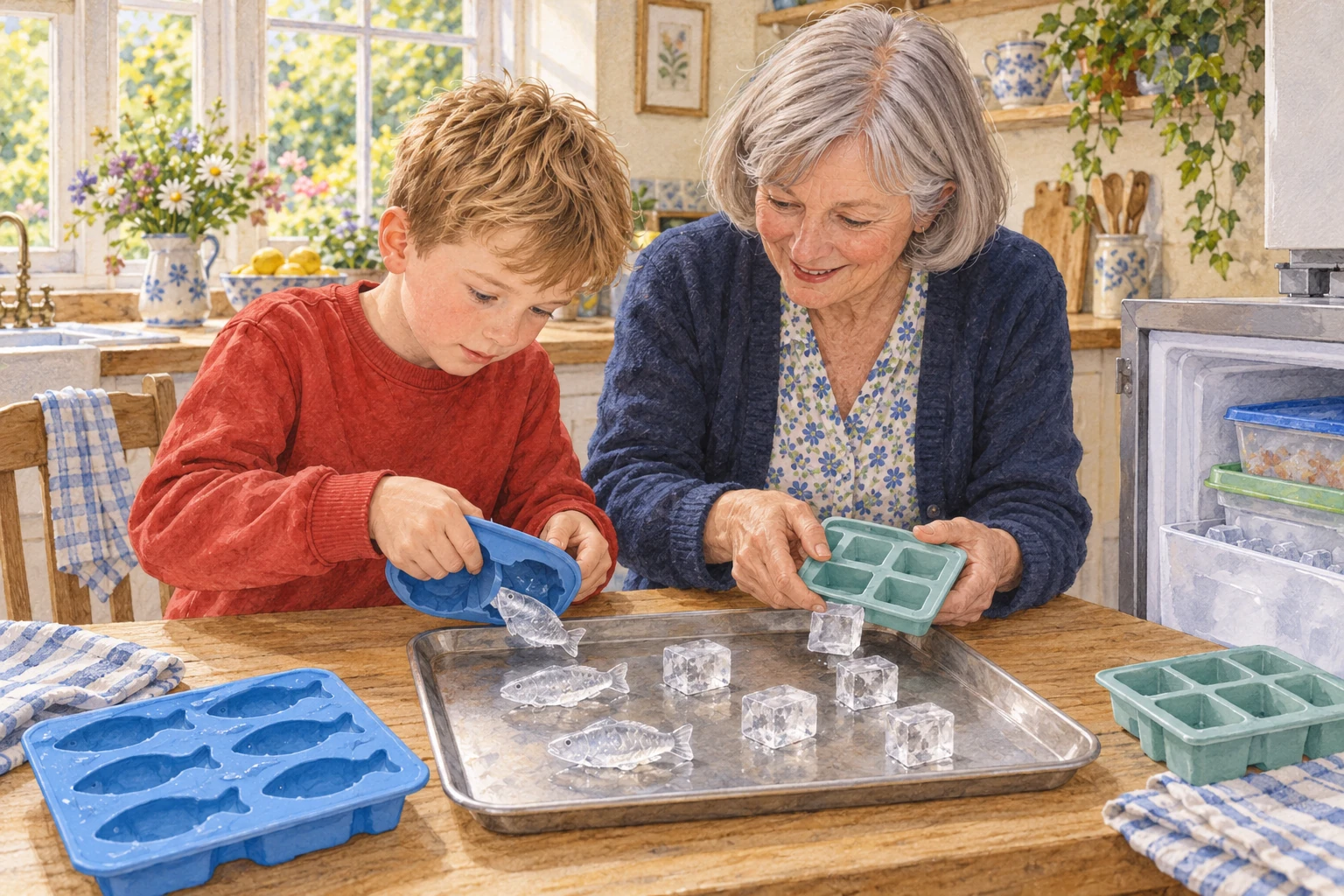
The next day, Aunt Rose takes out the solid shapes. Oscar turns one from its flexible mould onto a tray. “It is water again, only solid,” he says. Freezing did not make a new substance. The fish shape came from the container that held the liquid.
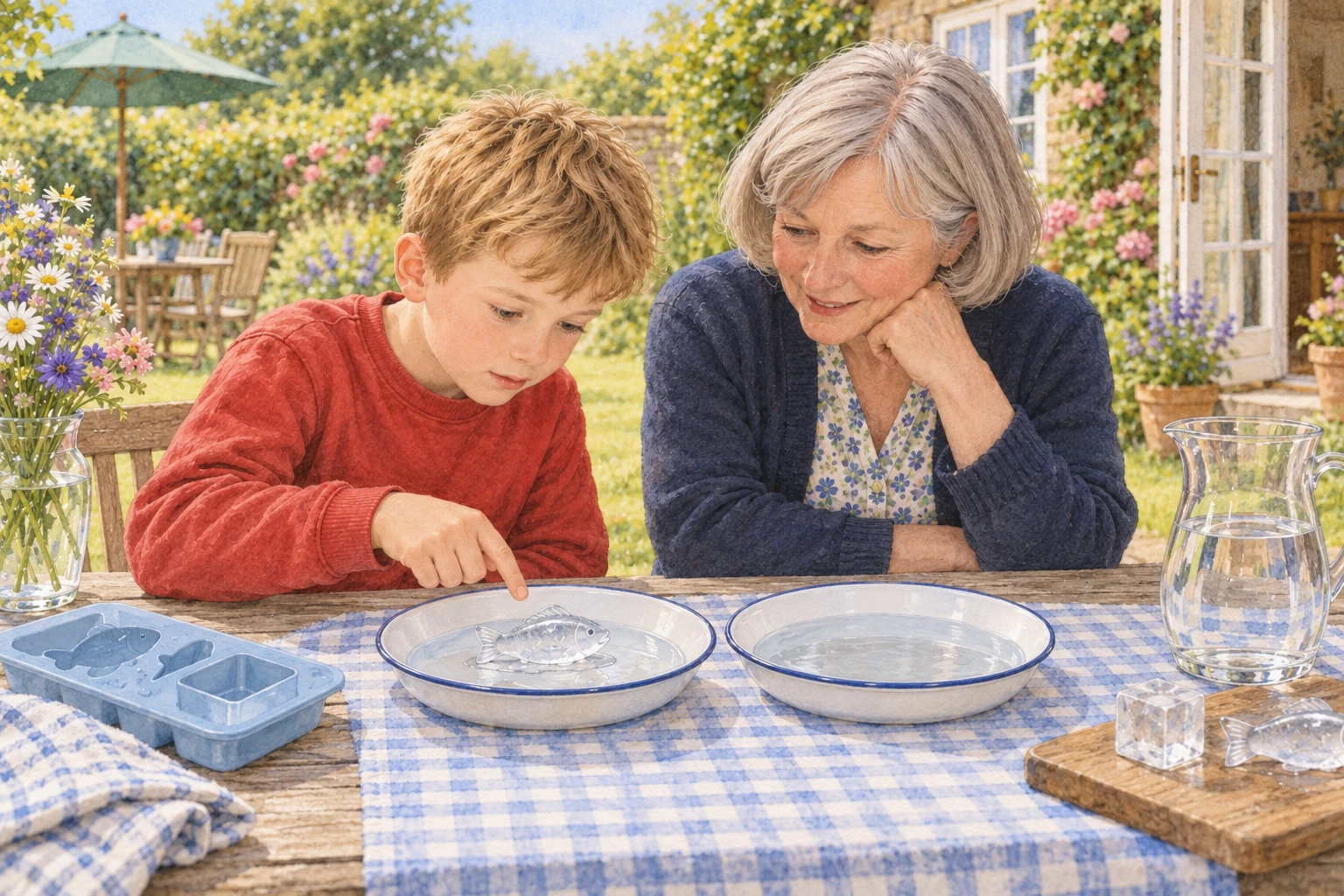
They leave one ice shape in a shallow dish at room temperature. Gradually, it becomes liquid as it gains energy from warmer surroundings. This melting change can be reversed by cooling the water until it freezes. The original shape will depend on the mould they use.
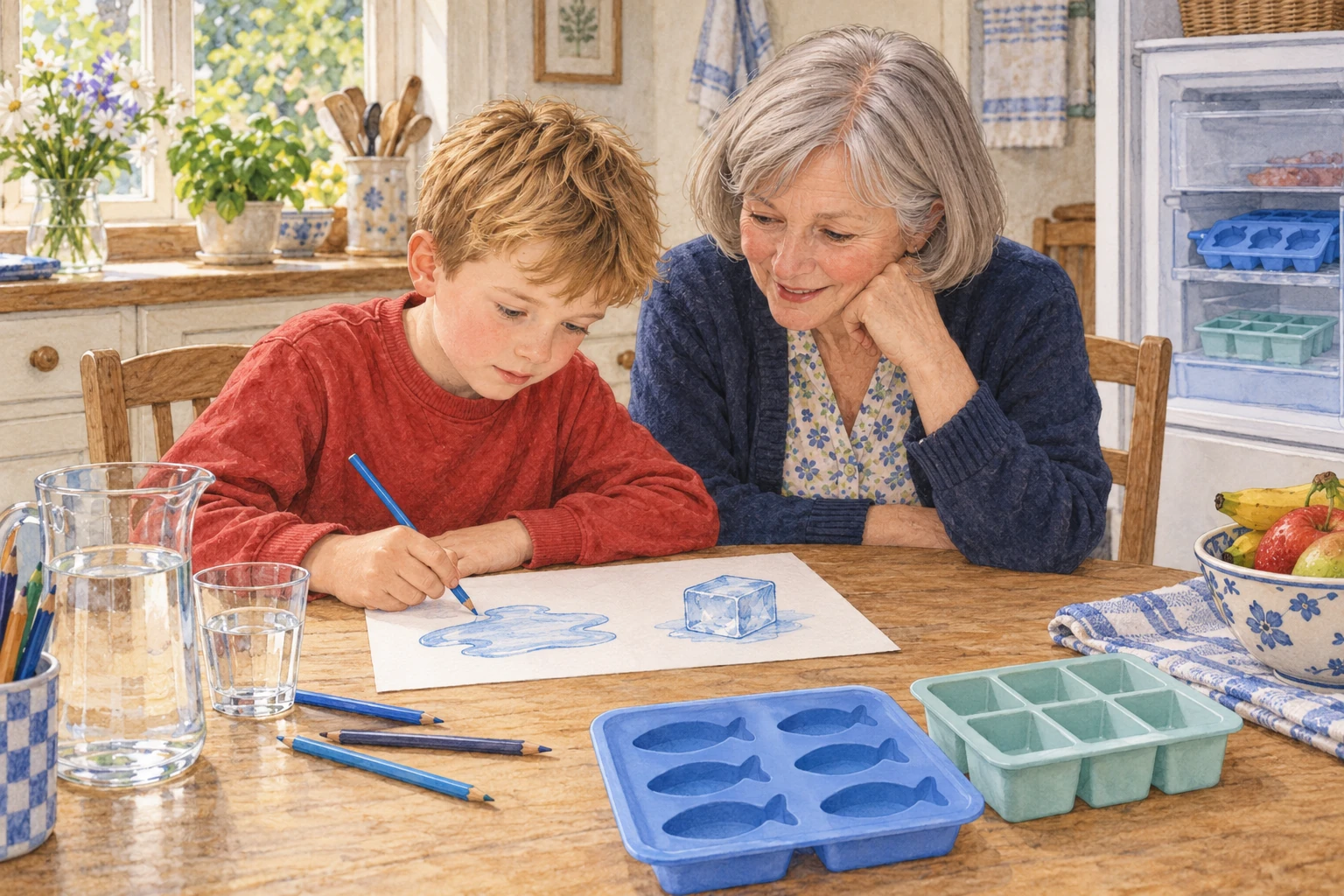
Oscar draws solid ice beside liquid meltwater. He does not write that the ice simply vanished. Some liquid remains in the dish. Given more time, evaporation could carry water into the air as invisible vapour. Melting and evaporation describe different changes, even when both happen nearby.
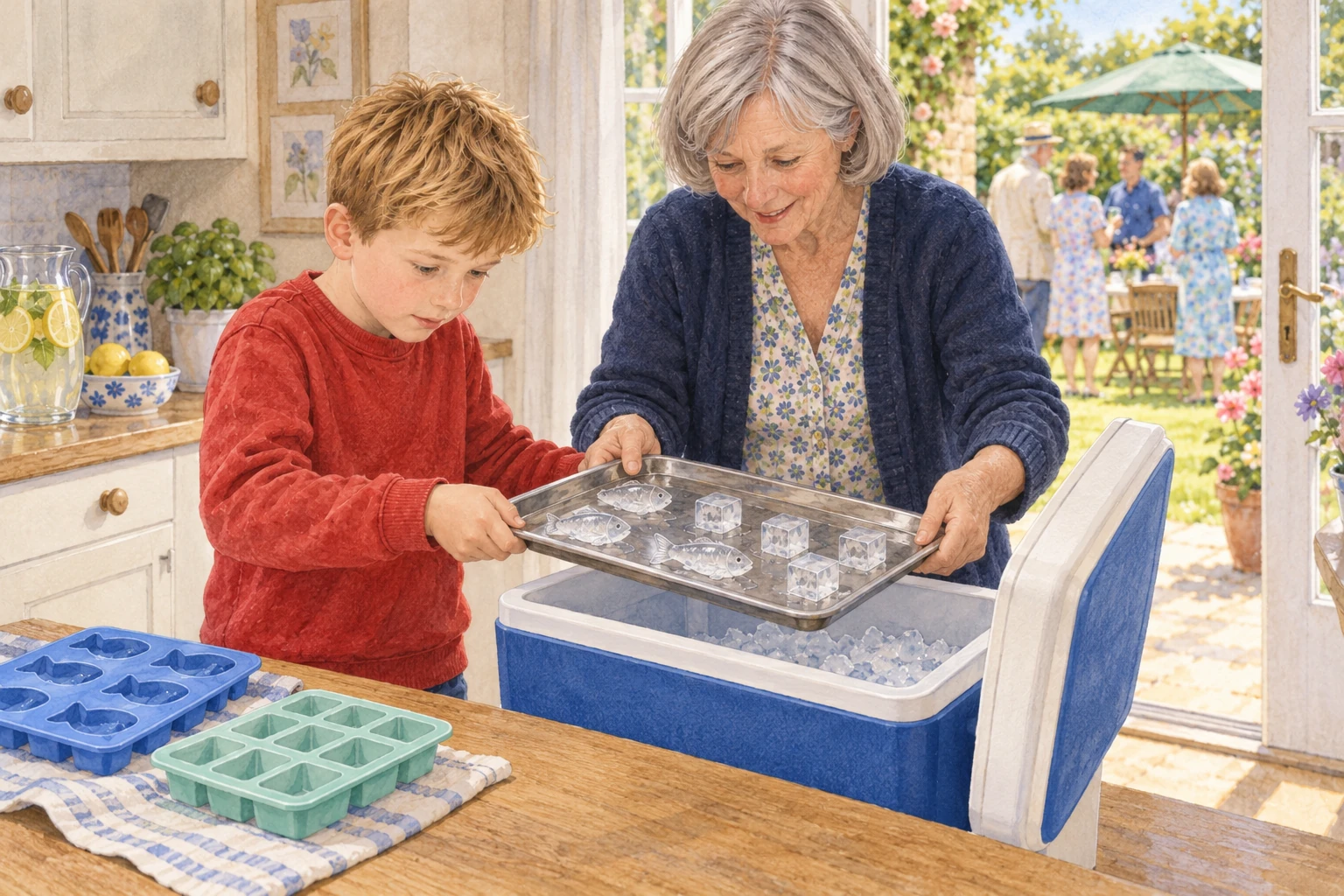
For the party, Oscar keeps the new shapes in a cool box until they are needed. He knows they will not stay solid forever. “The tails were not faulty,” he tells Aunt Rose. He has a practical plan, and a better explanation for the puddle on the tray.