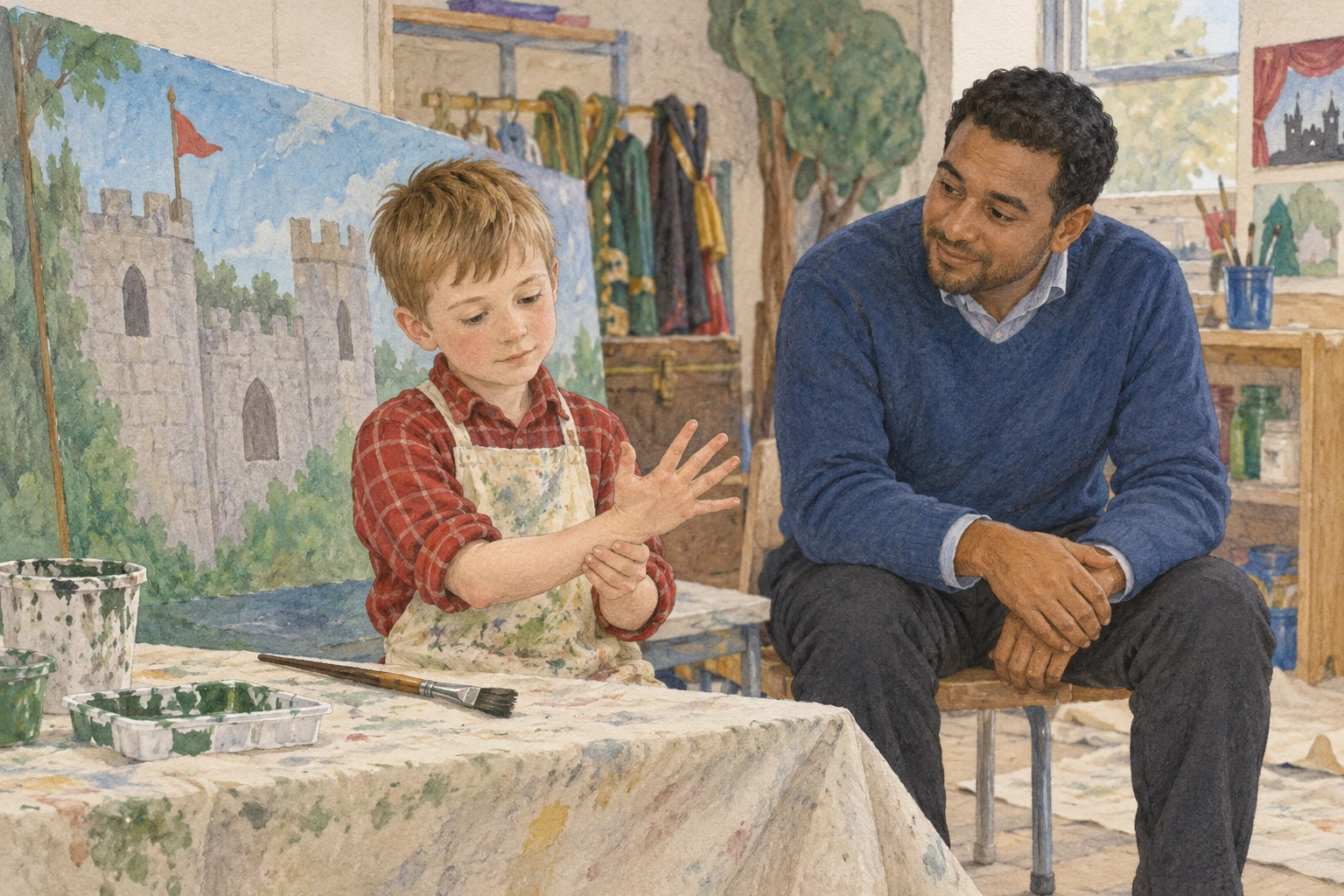
Oscar’s Paintbrush Grip
Shared Reading Books · Technology · Year 2Oscar is painting scenery for a class play. The brush has a thin handle, and his fingers feel tired after a while. Mr Lane offers him a rest. “The painting can wait,” he says. Oscar puts the brush down and stretches his hand.
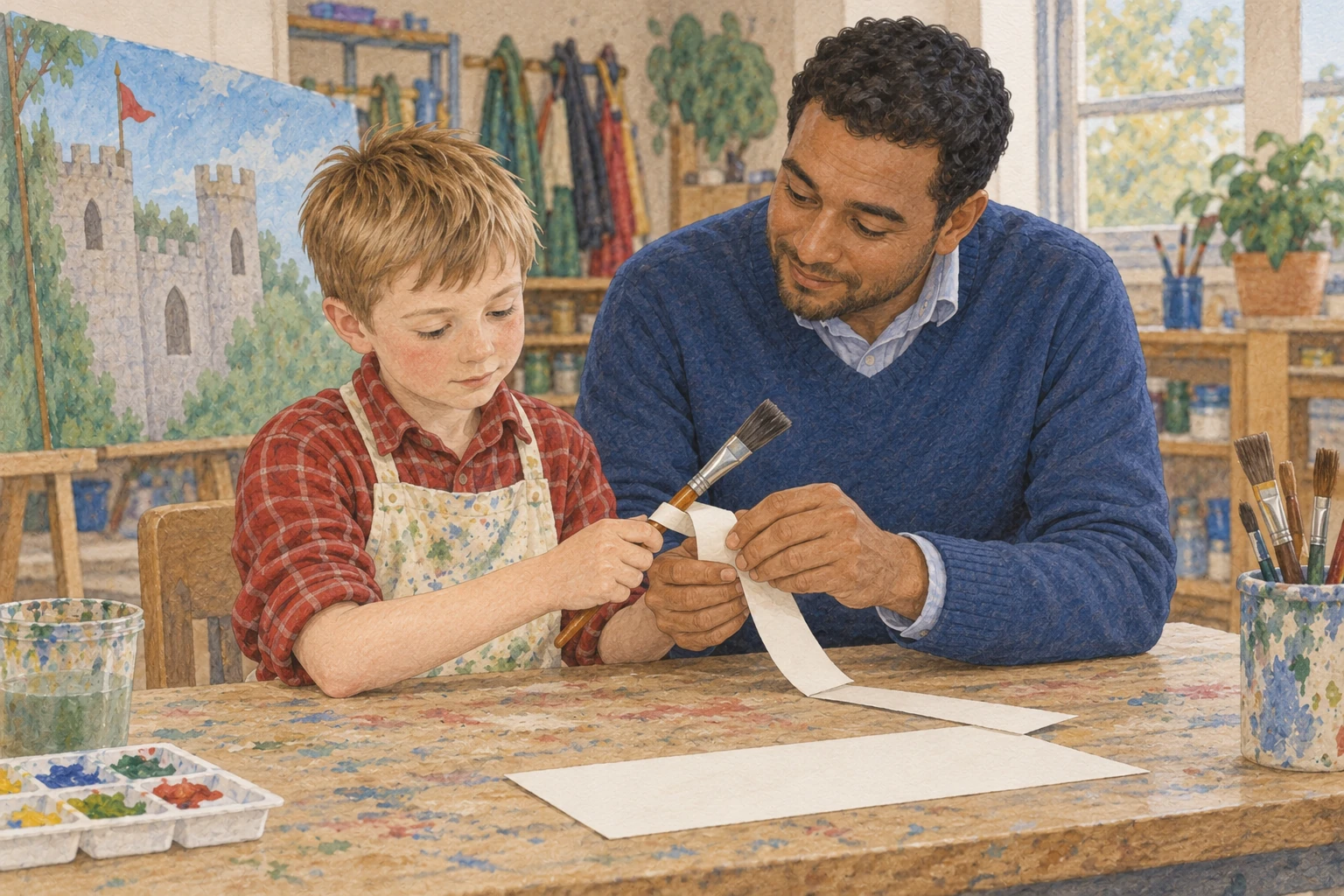
When he is ready to continue, Oscar tells Mr Lane what felt awkward. “I keep squeezing this narrow bit,” he explains. Mr Lane finds a broad strip of clean card. They try wrapping it around the handle to make it thicker.
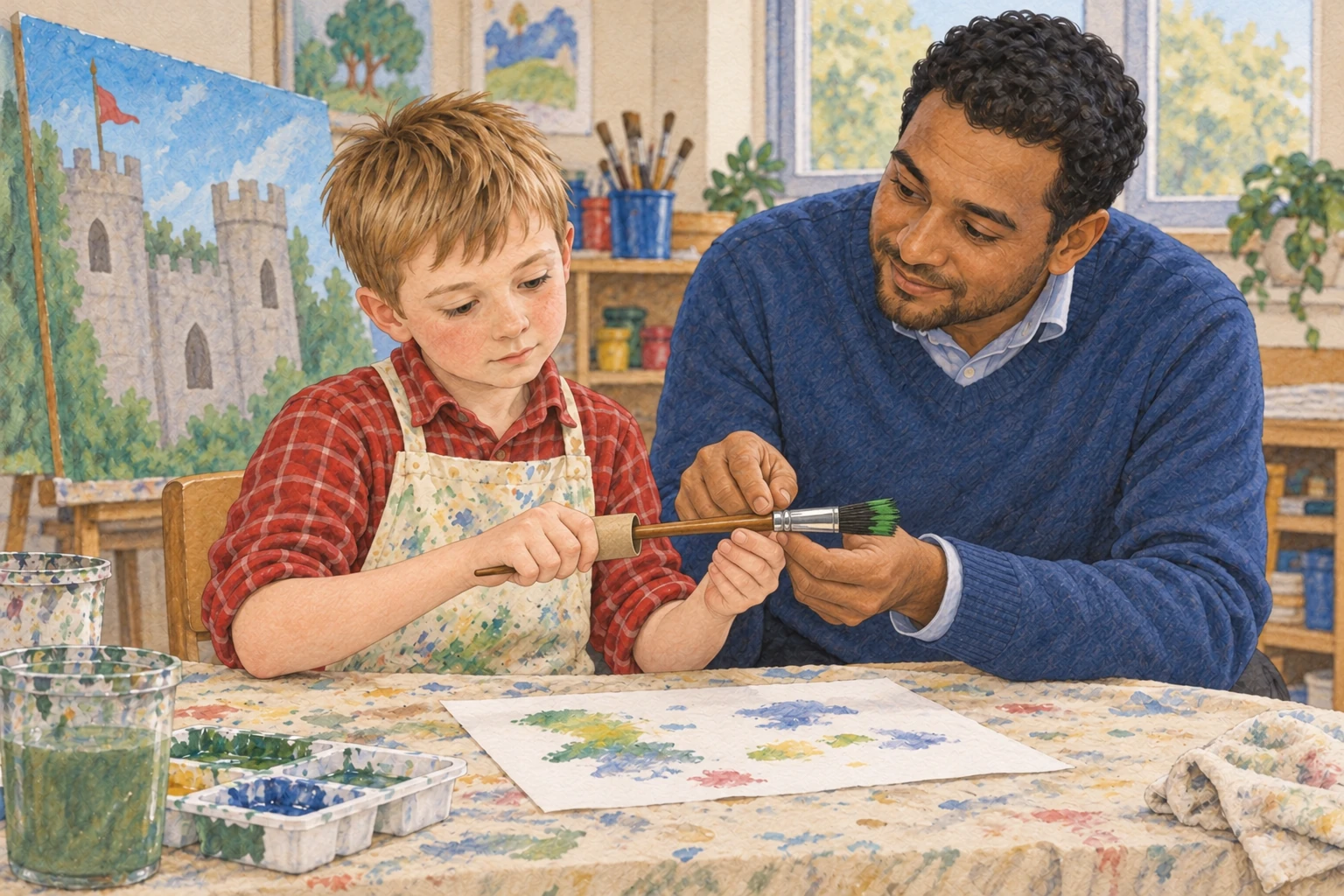
The card feels wider, but it turns when Oscar holds the brush. His hand moves while the brush stays behind. “It is slipping round,” he says. They take the card off before it gets covered in paint.
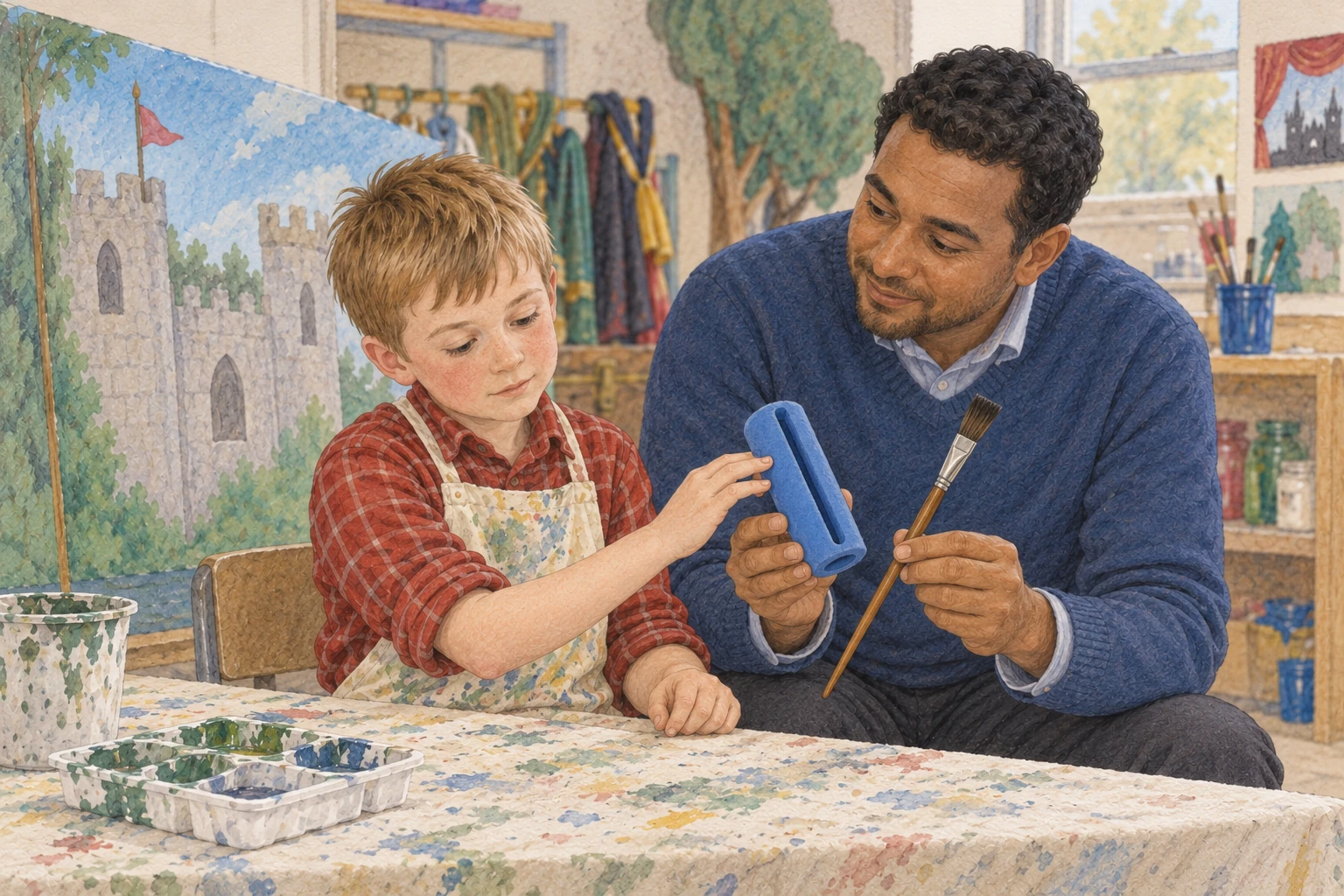
Mr Lane brings a large foam sleeve made for adapting tool handles. Oscar feels its soft surface. It has a long opening that fits around the brush handle. They choose a position that leaves plenty of space for his fingers above the bristles.
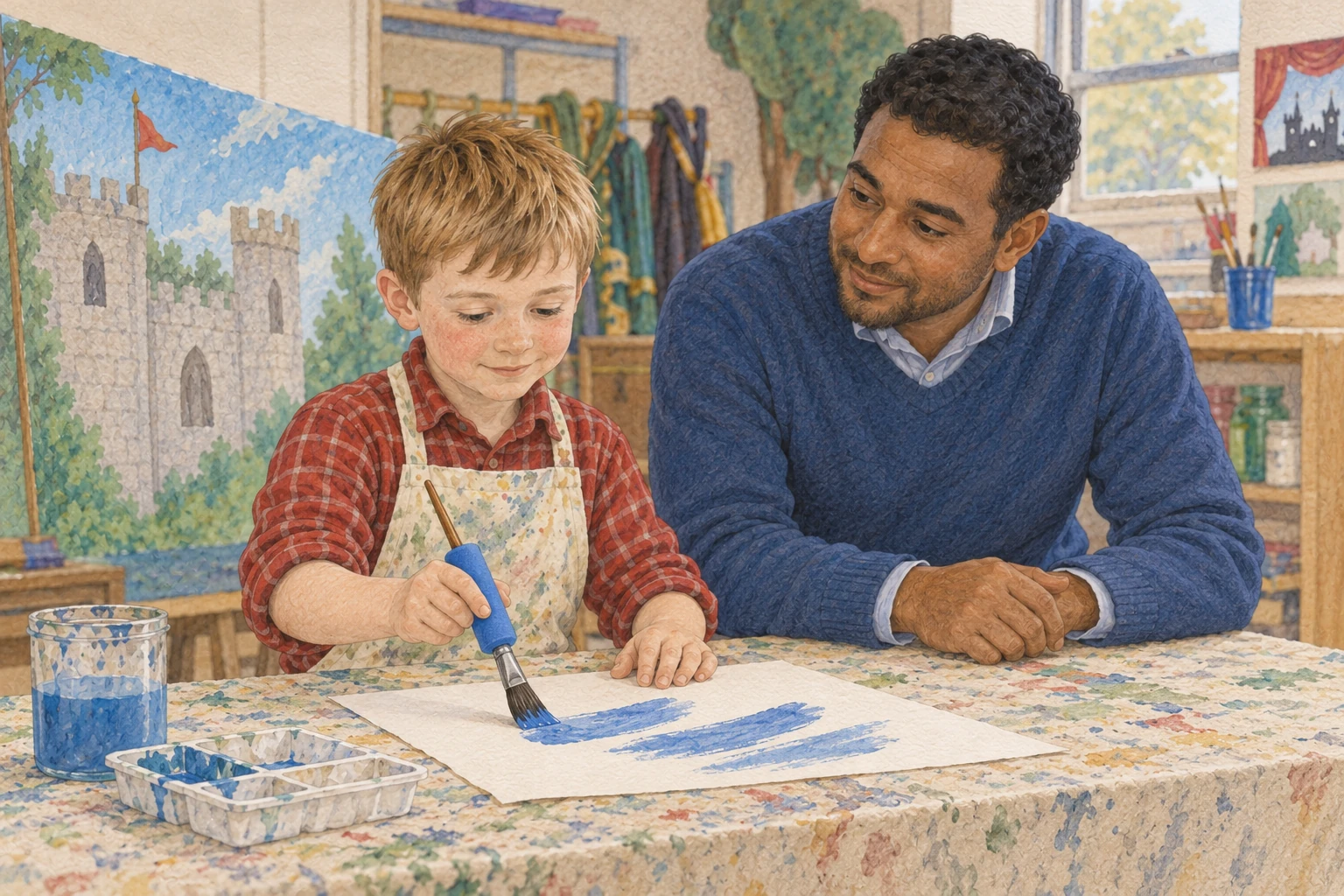
Mr Lane fits the sleeve securely and checks that it cannot slide towards the paint. Oscar holds the brush gently. “I do not need to squeeze so much,” he says. He makes a few practice strokes on scrap paper before returning to the scenery.
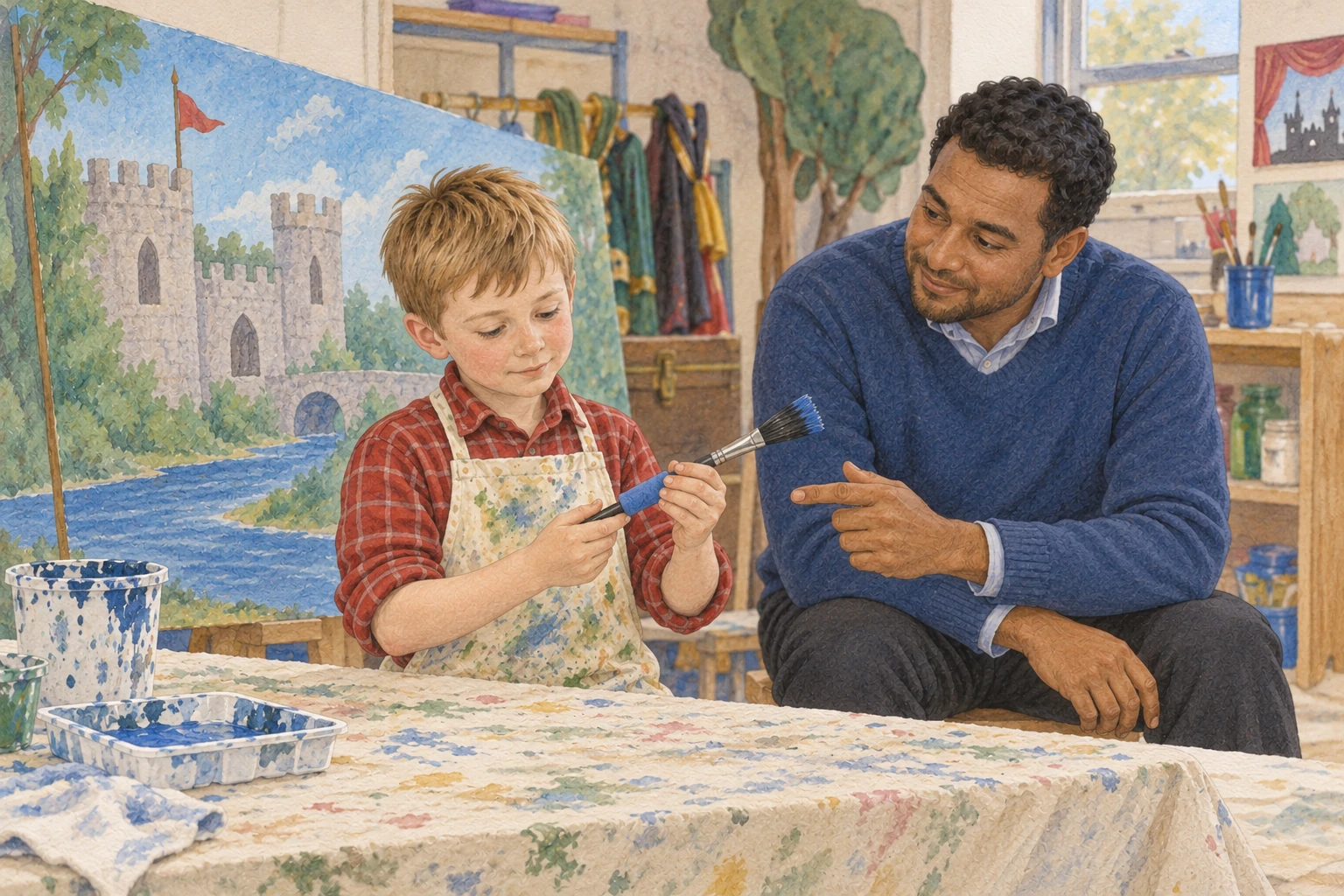
They pause to check the grip after painting a broad blue river. The foam is still in place, and Oscar says his hand feels comfortable. Mr Lane reminds him that he can stop or change tools whenever he needs a break.
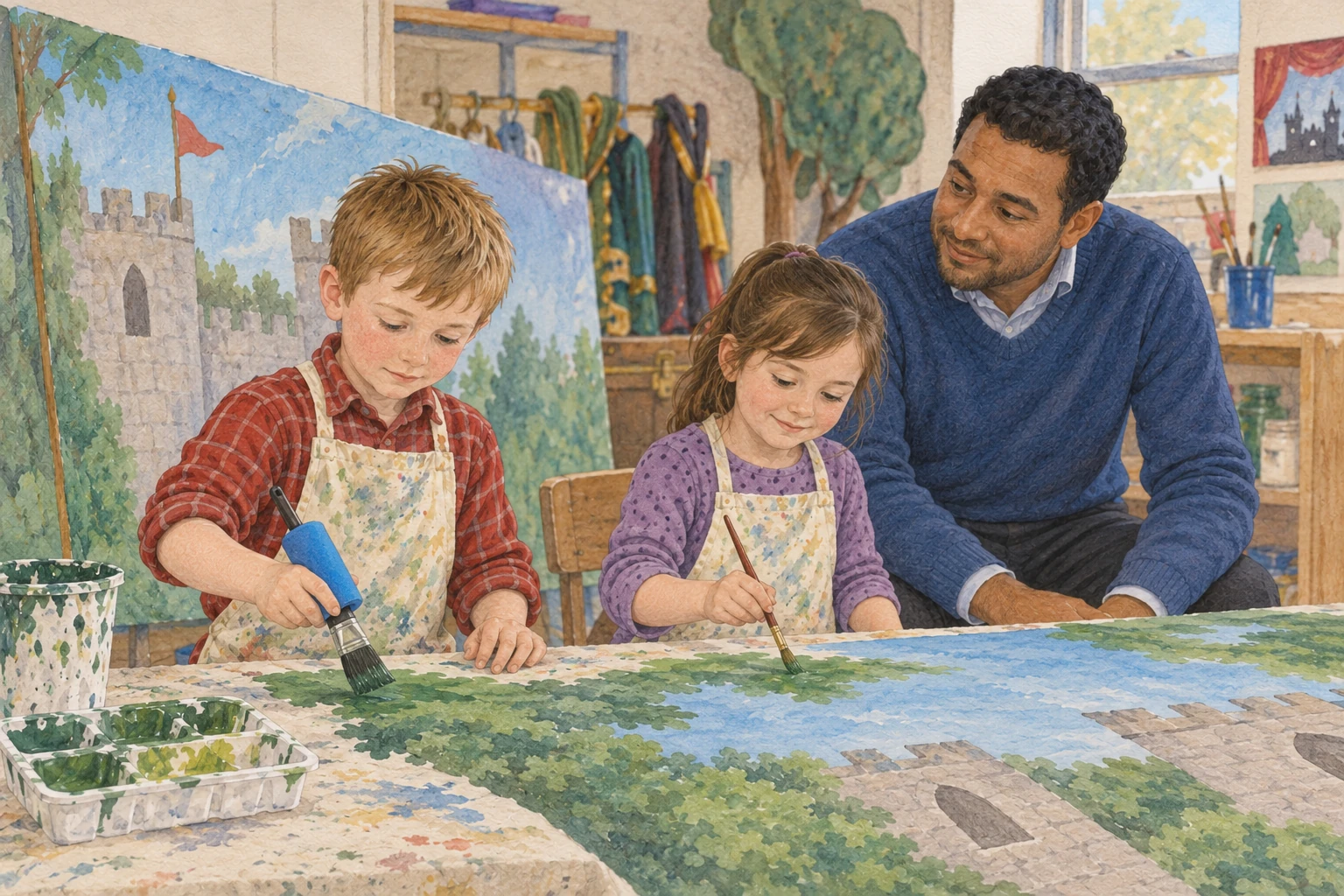
Oscar lends the adapted brush to his friend Grace, who prefers holding the original thin handle. They choose separate brushes for the next part of the scenery. “A useful grip for me is not everyone’s favourite,” Oscar notices.
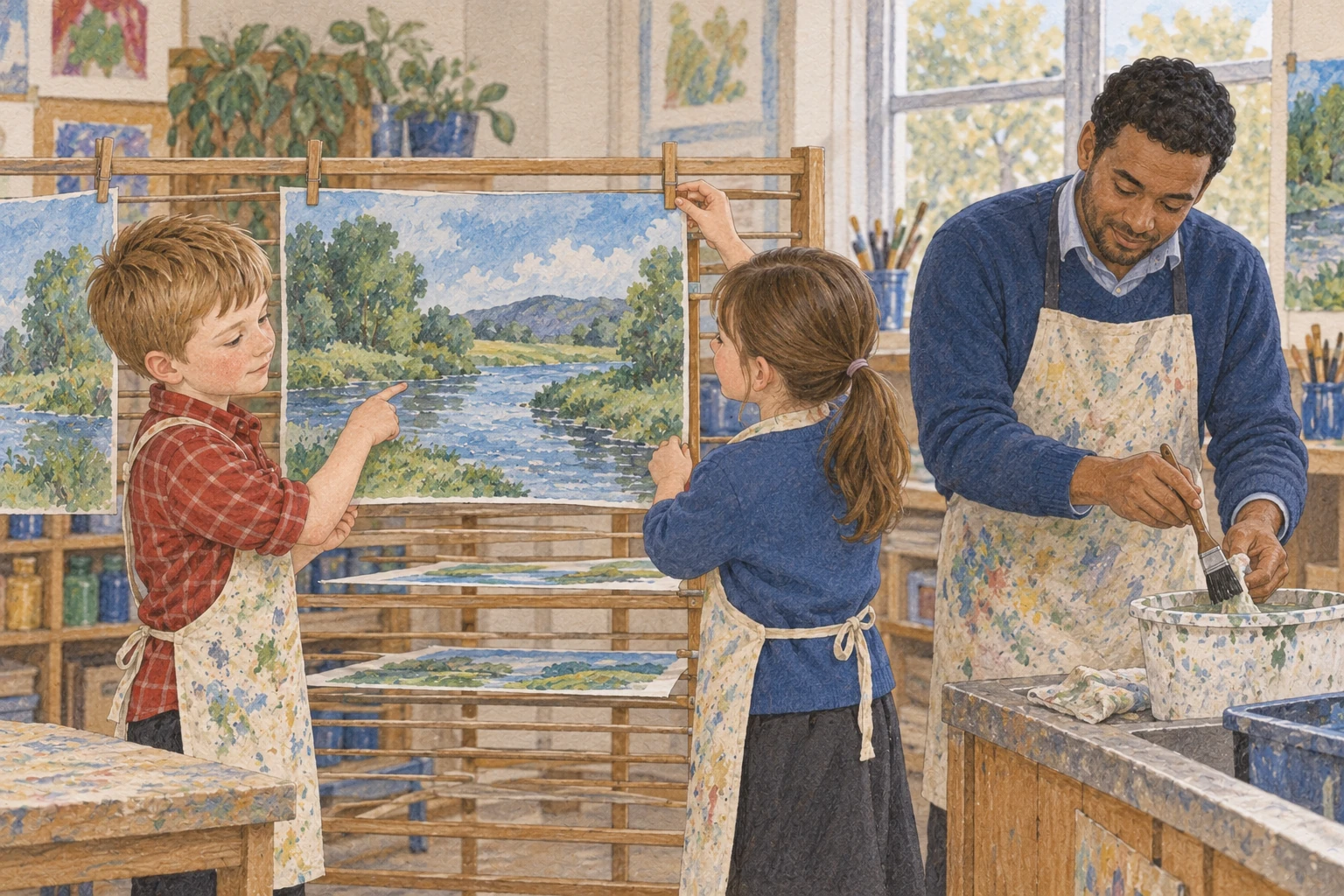
When painting is finished, Mr Lane helps clean the brush and sleeve, following the care instructions for both. Oscar points to the river on the backdrop. “The new handle felt comfortable while I painted that,” he says. Then he and Grace hang the scenery to dry.