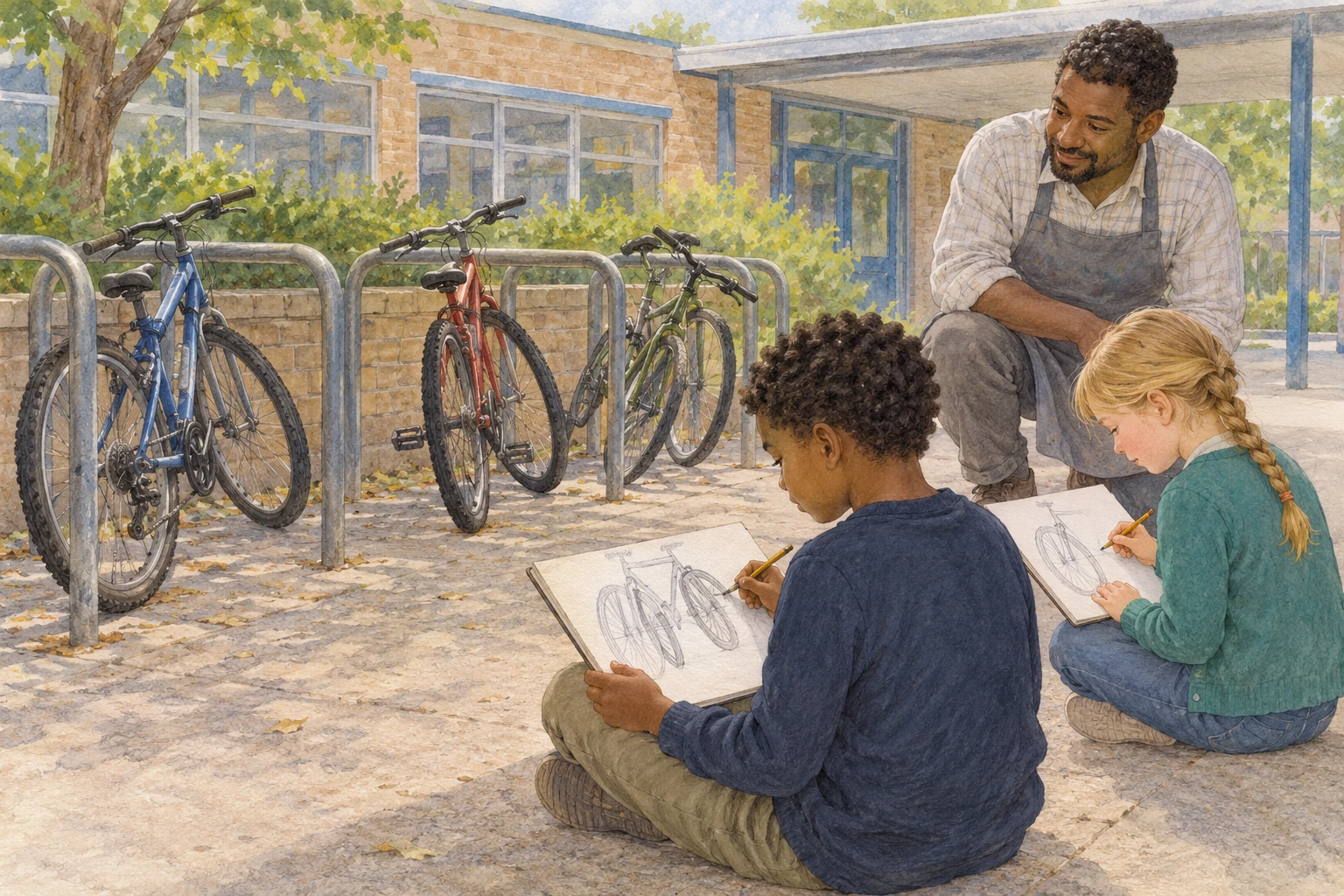
Philip’s Printing Plan
Shared Reading Books · Arts · Year 4Philip wants to print a picture of the bicycle racks after school. He likes the repeated wheels and the spaces between them. Helen helps him sketch three bicycles, each leaning at a different angle. They will use soft foam as their printing surface.
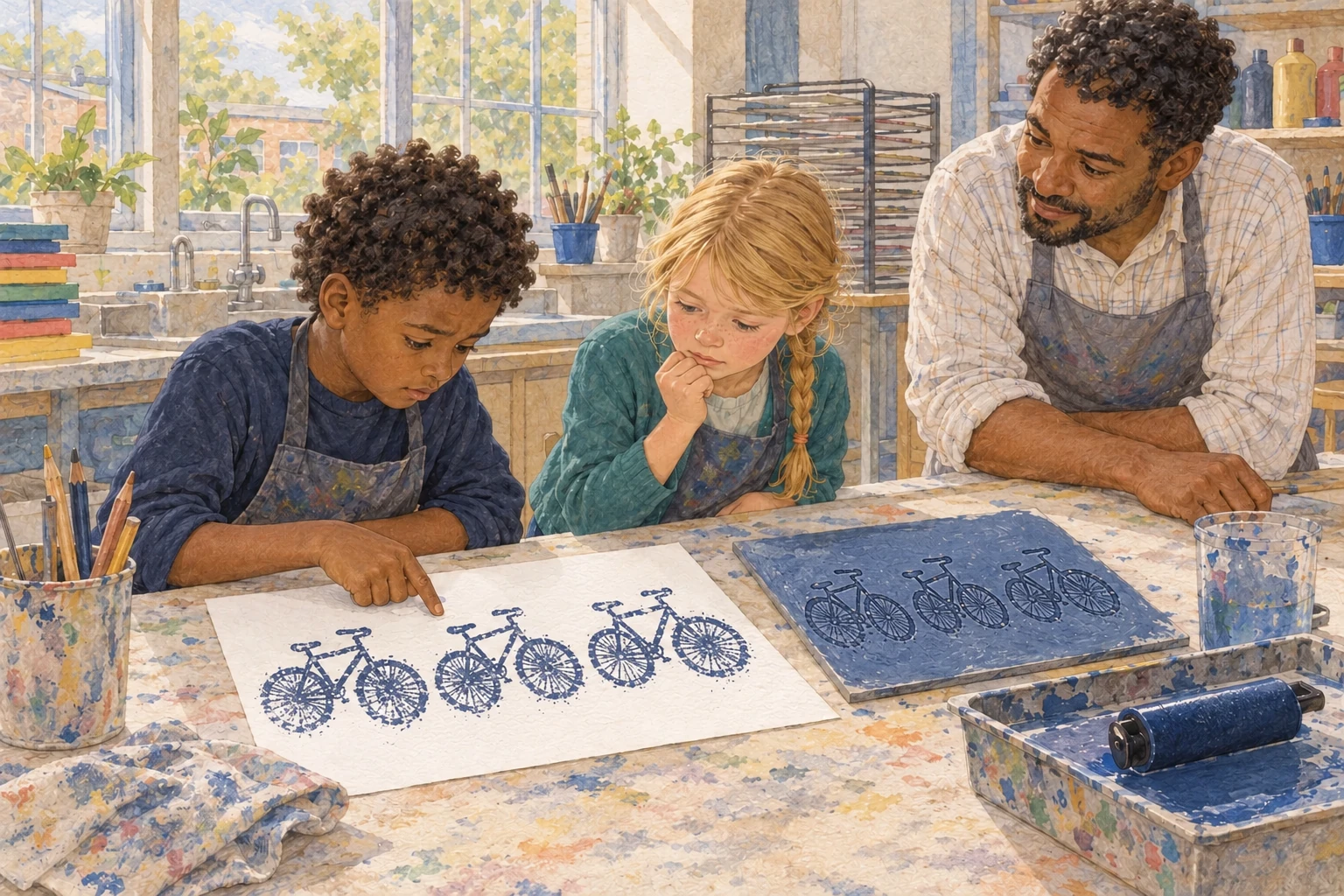
He presses every line of the sketch into the foam with a blunt pencil. When he rolls on a thin layer of washable paint and makes a print, the wheels run together. The small spaces between spokes have almost disappeared.
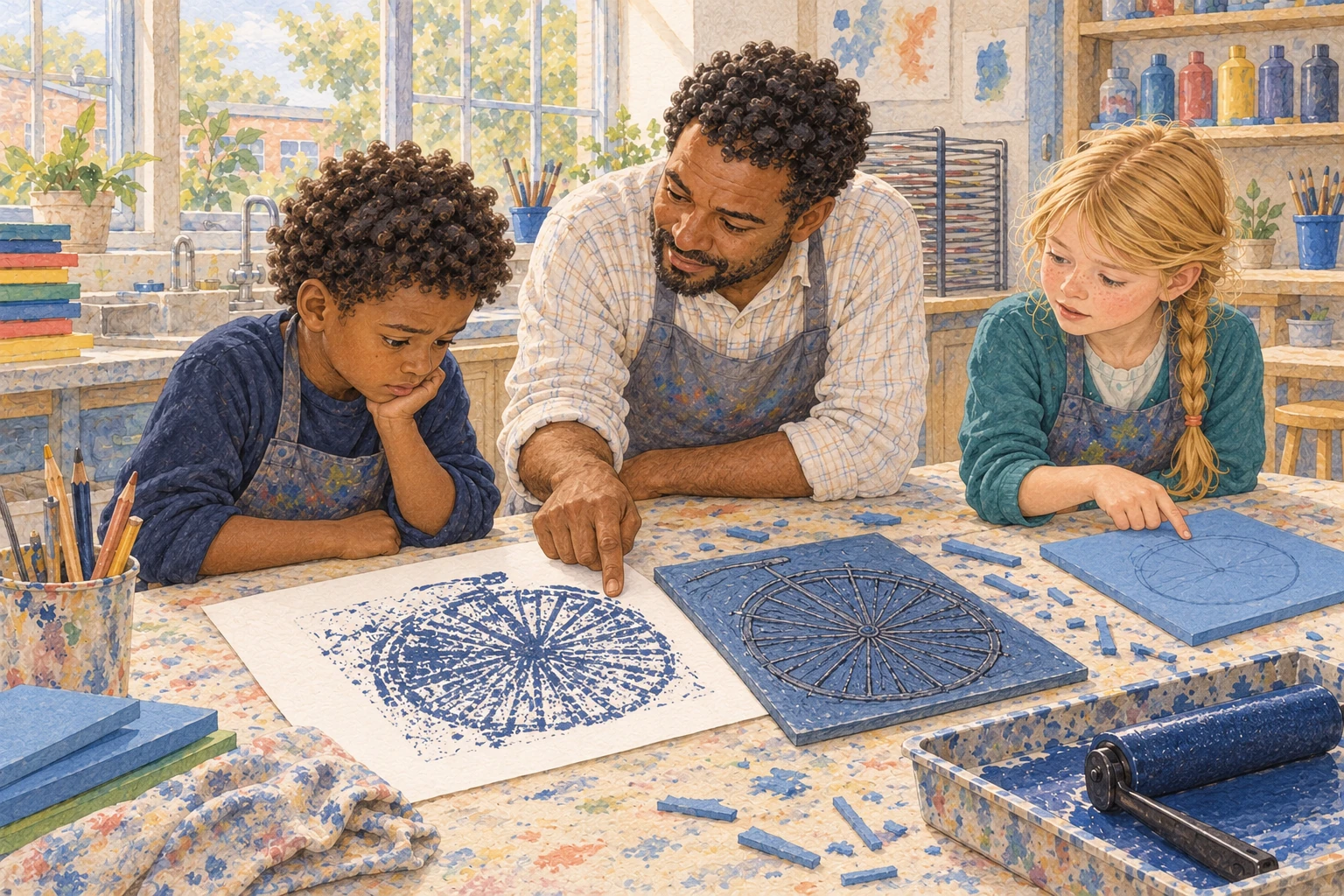
Mr Cole asks him to compare the print with the foam. Some lines are shallow; others are crowded close together. Philip sees that adding more detail has not made the bicycles clearer. Helen suggests testing one wheel on a spare piece first.
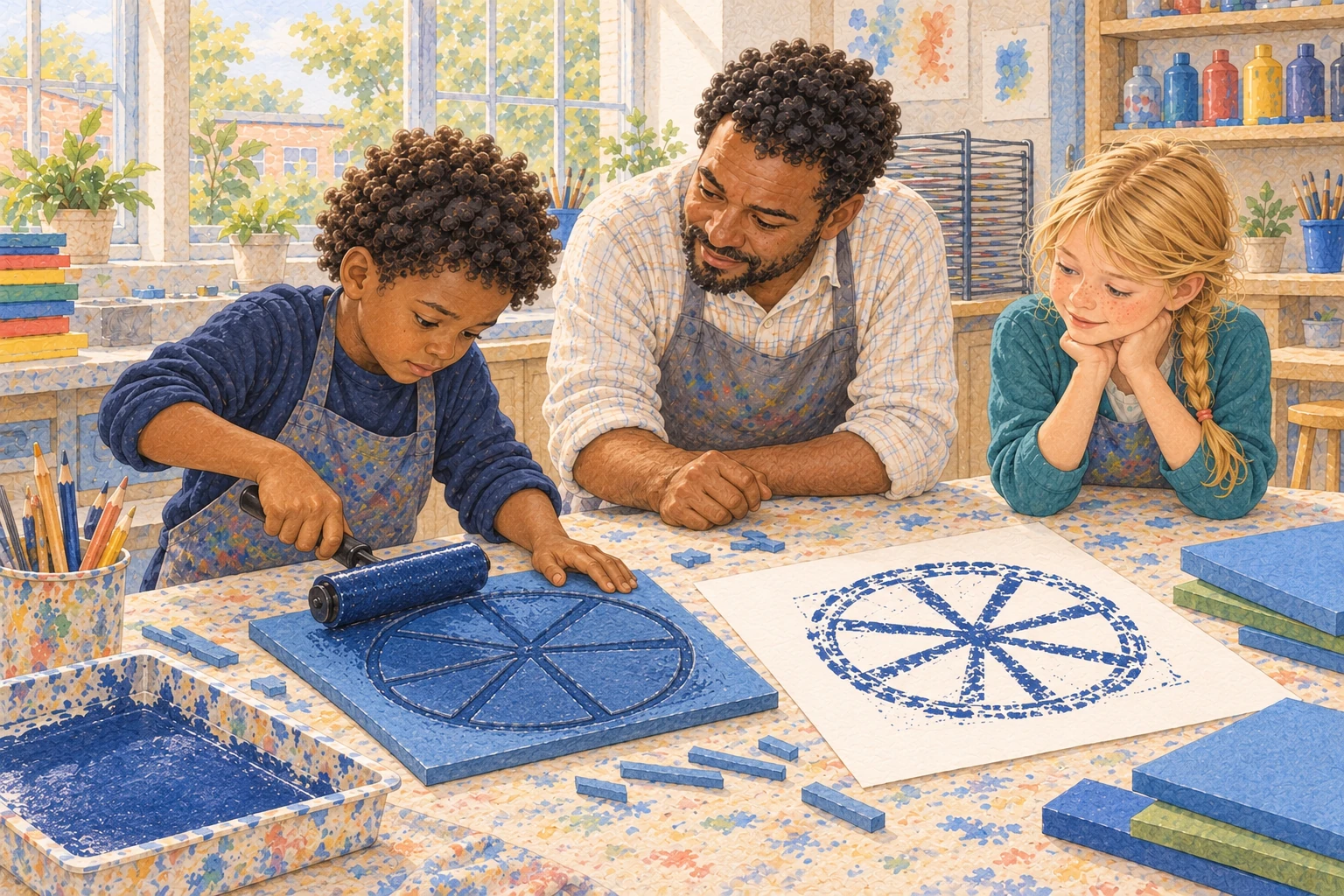
Philip draws a larger circle with fewer spokes. He presses firmly without tearing the foam. The test print has clearer gaps. It is less like his careful sketch, but Helen can see the wheel immediately from across the table.
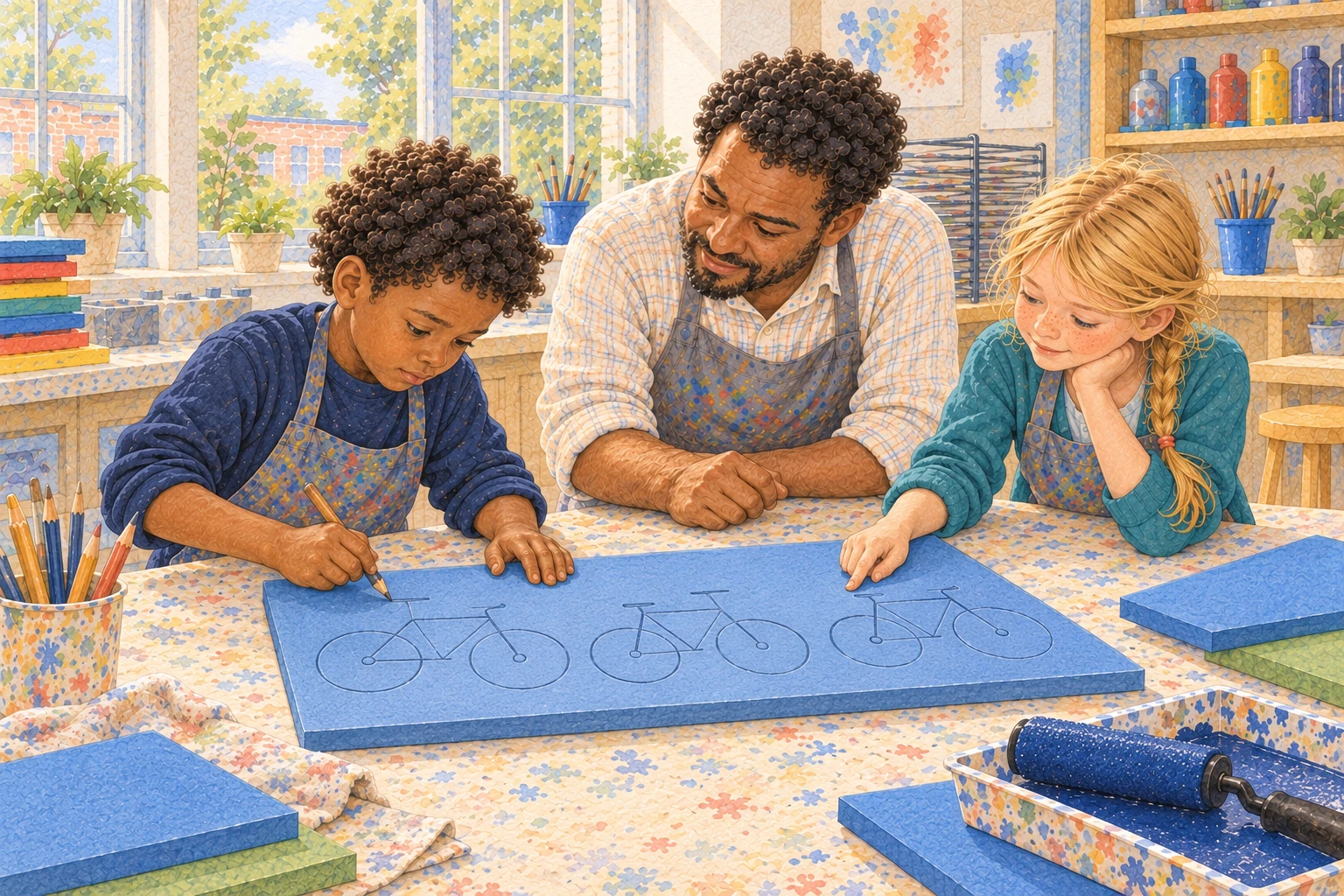
On a fresh plate, he simplifies the three bicycles and leaves room between their shapes. Helen checks the spacing before he starts painting. They keep the first plate so they can compare it with this new version later.
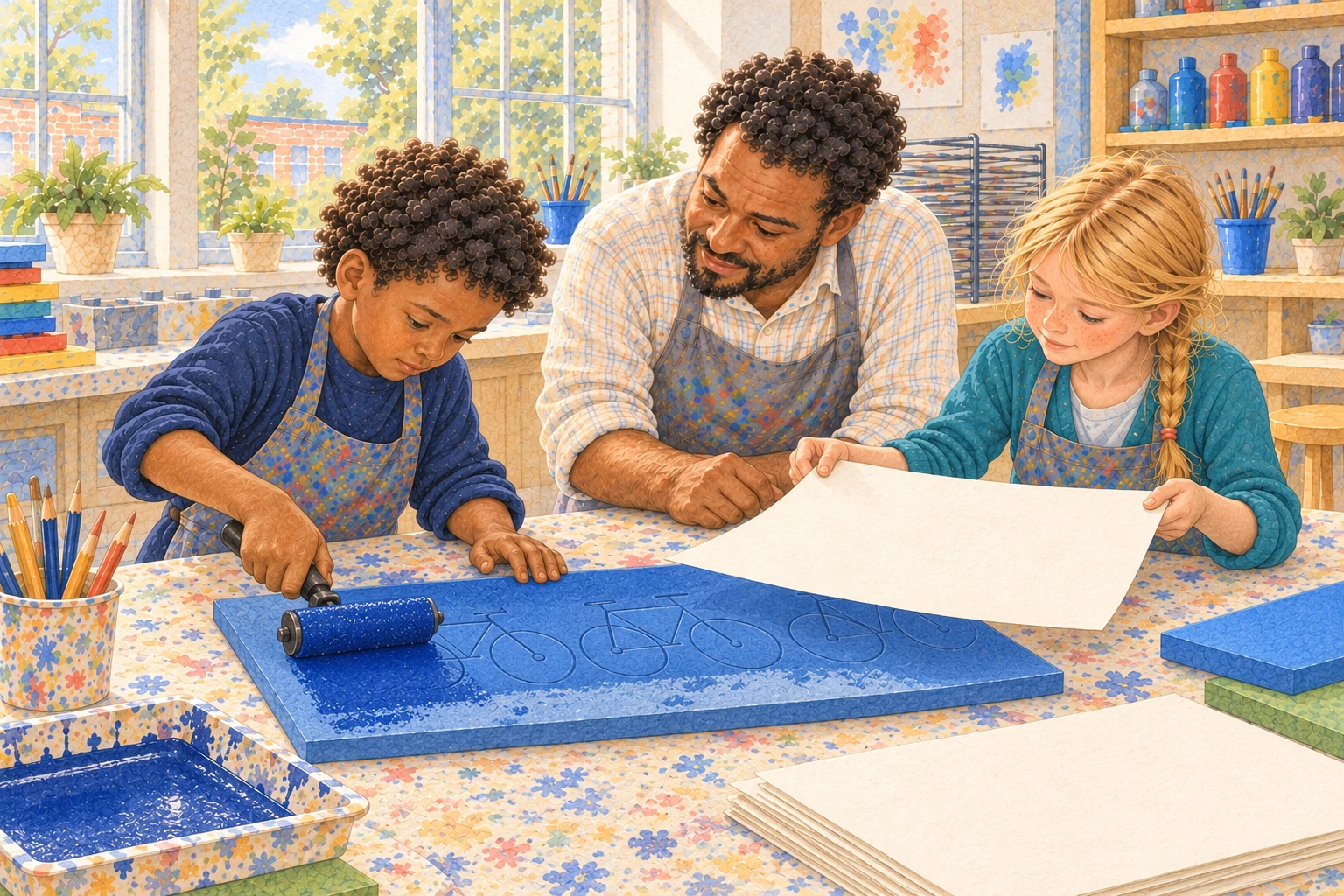
The first pull from the new plate is patchy. Philip notices that he has missed the lower edge with the roller. He adds a little paint evenly, lays down another sheet and rubs gently across the back, including the corners.
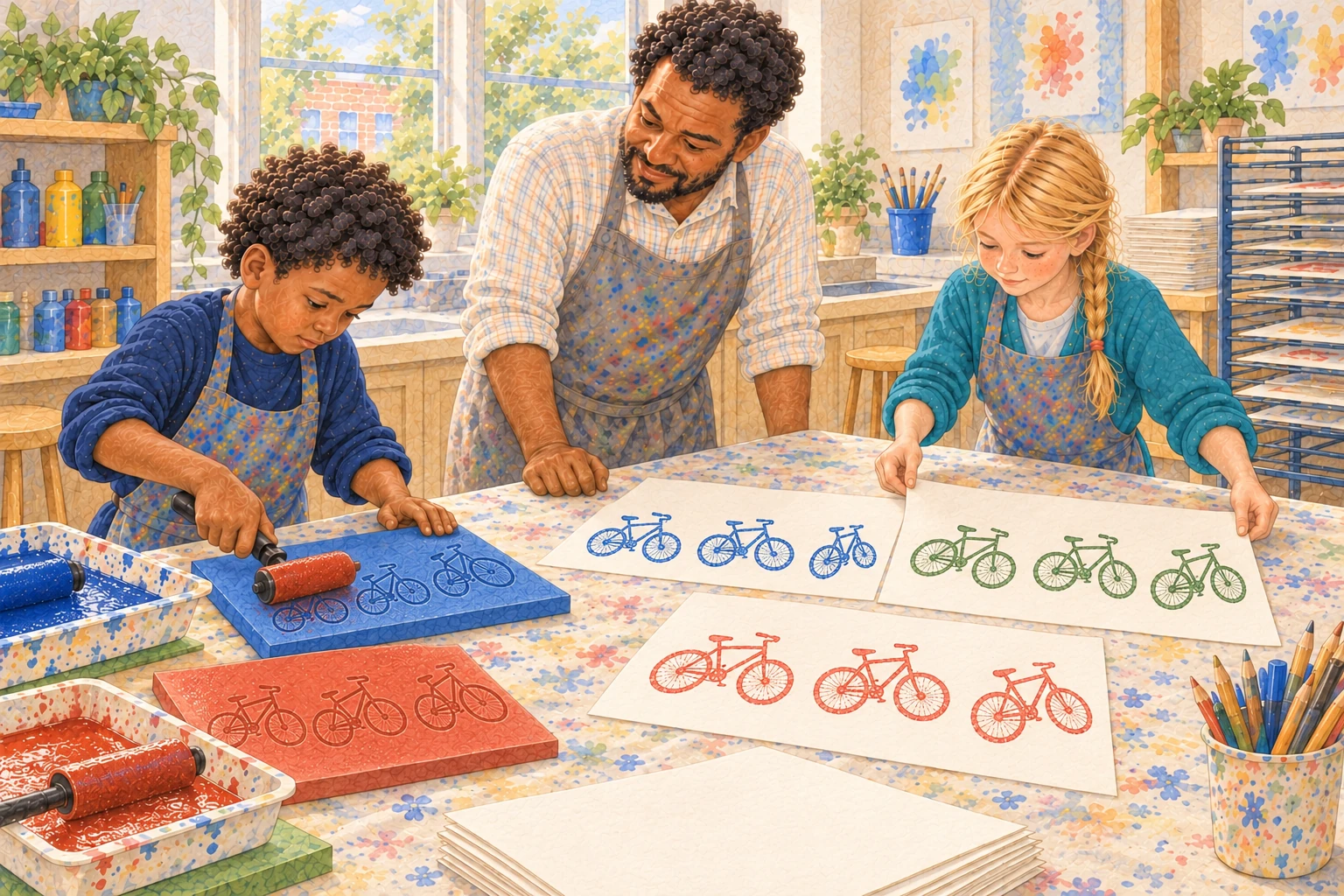
Now the wheels repeat clearly across the page. One bicycle leans more than the others, giving the pattern a small surprise. Philip makes two further prints, changing only the colour. Helen helps lay them out without touching the wet surfaces.
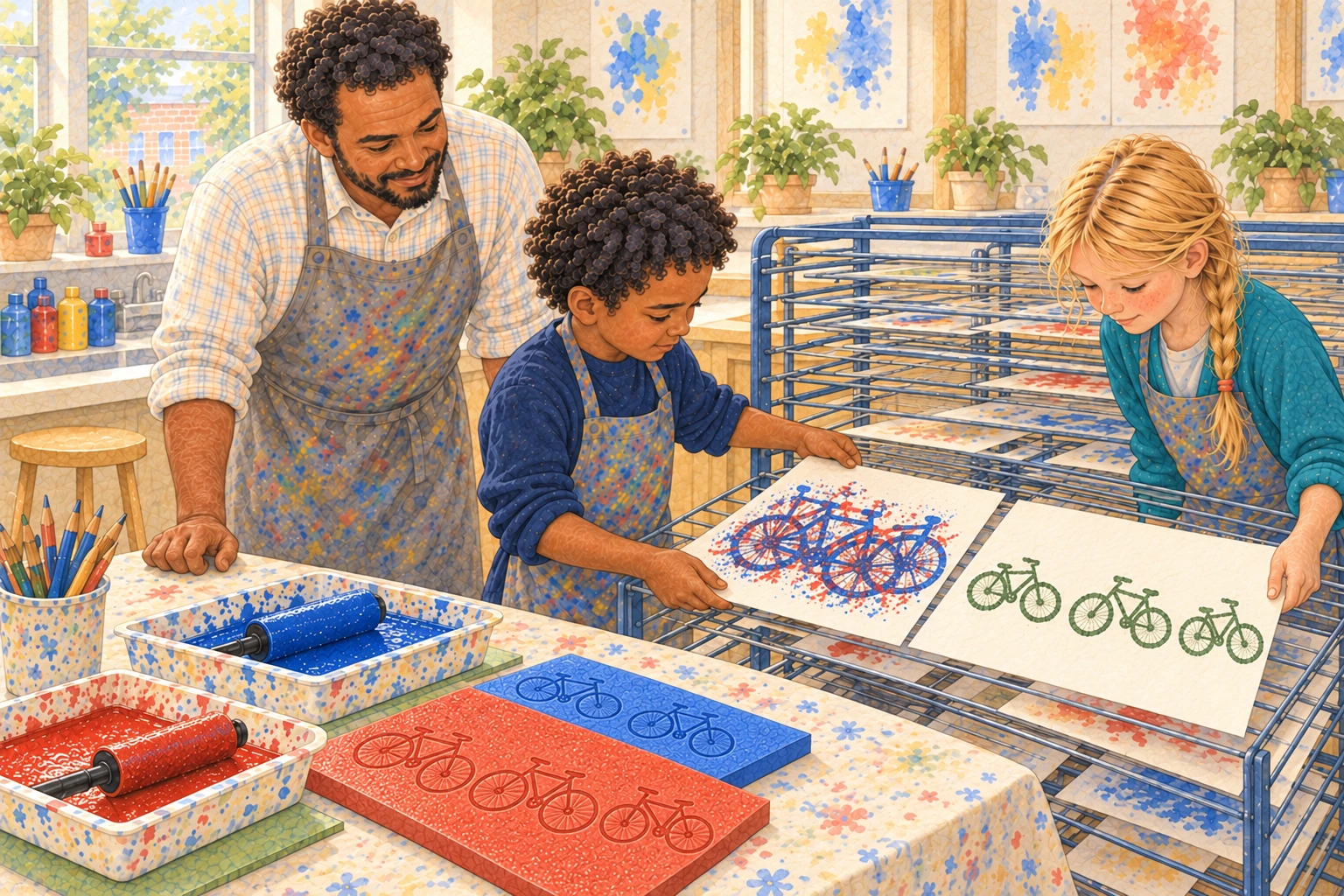
At the drying rack, Philip places his crowded first print beside the clearer one. The difference reminds him of the real bicycle racks: wheels, gaps and one leaning frame. Leaving some lines out has helped him show what made him look in the first place.