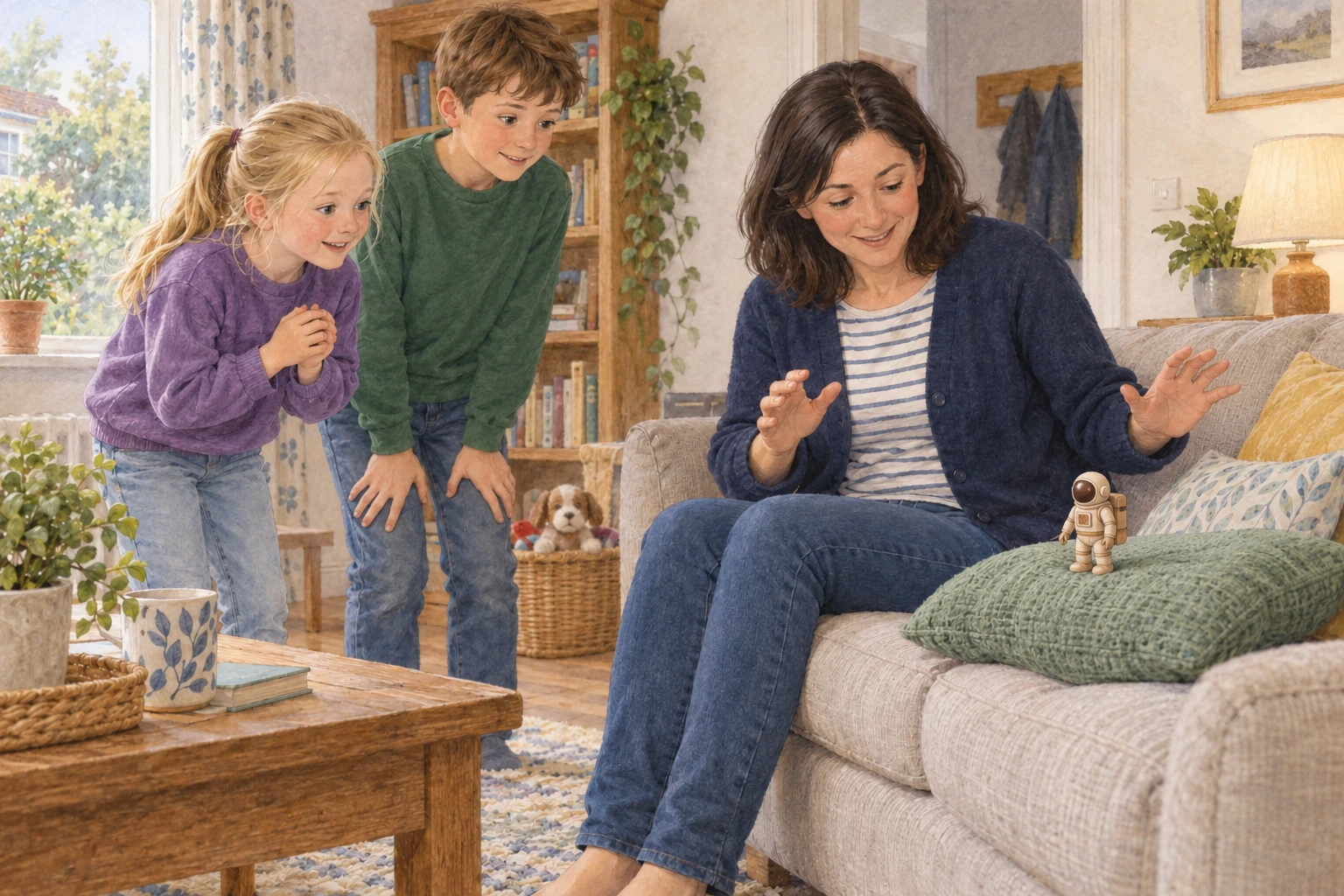
Poppy’s Slow Landing
Shared Reading Books · Science · Year 3Poppy’s wooden astronaut drops onto a cushion with a sudden bump. She wants a gentler landing for her pretend space rescue. Jack suggests making a parachute. Mum clears a space indoors, away from stairs, and brings paper, string and two matching small wooden figures.
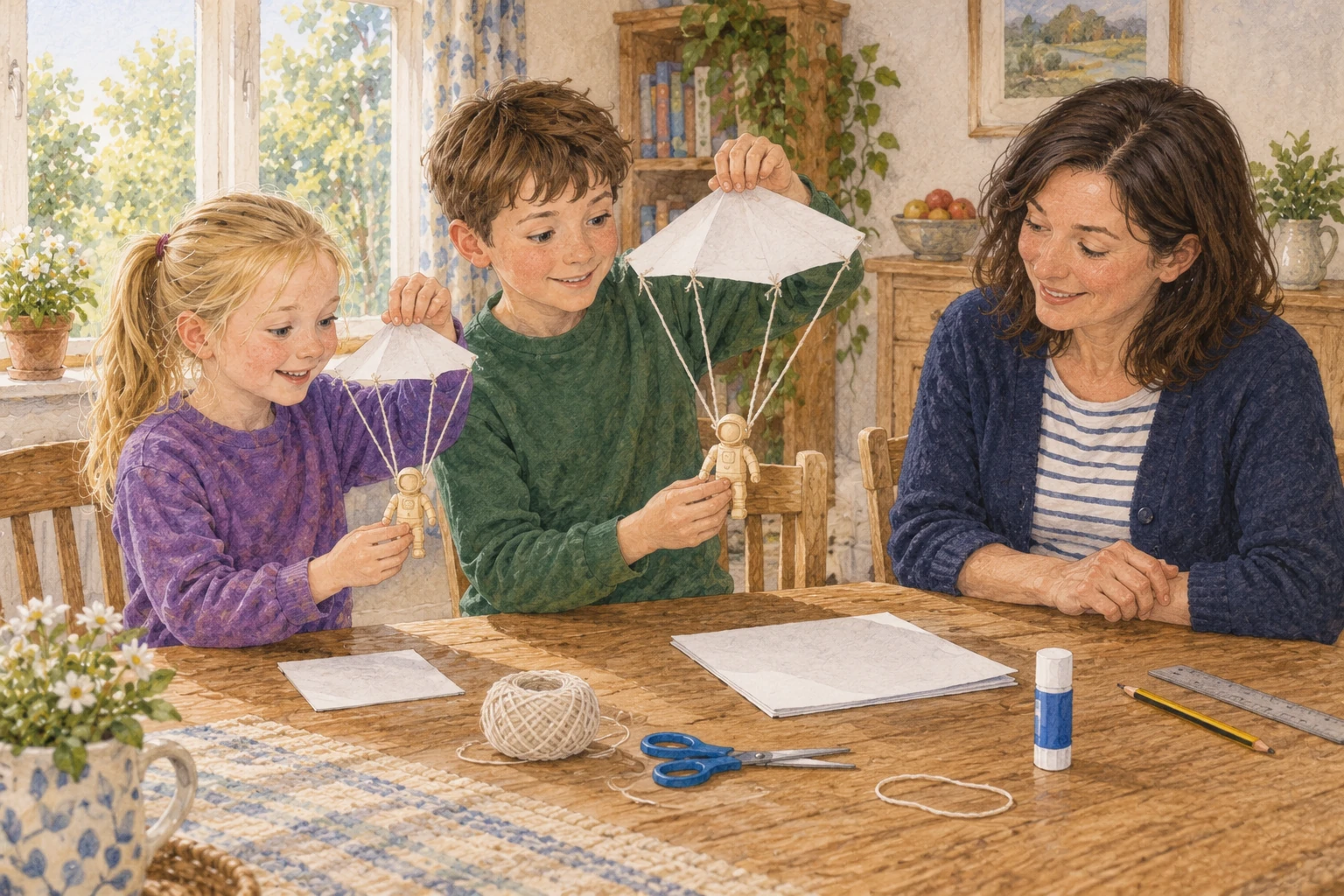
They cut two square canopies from the same light paper. One is larger than the other. Jack thinks the larger one will slow its load more. Poppy predicts that they will land together because the figures are alike. They write down both ideas before testing.
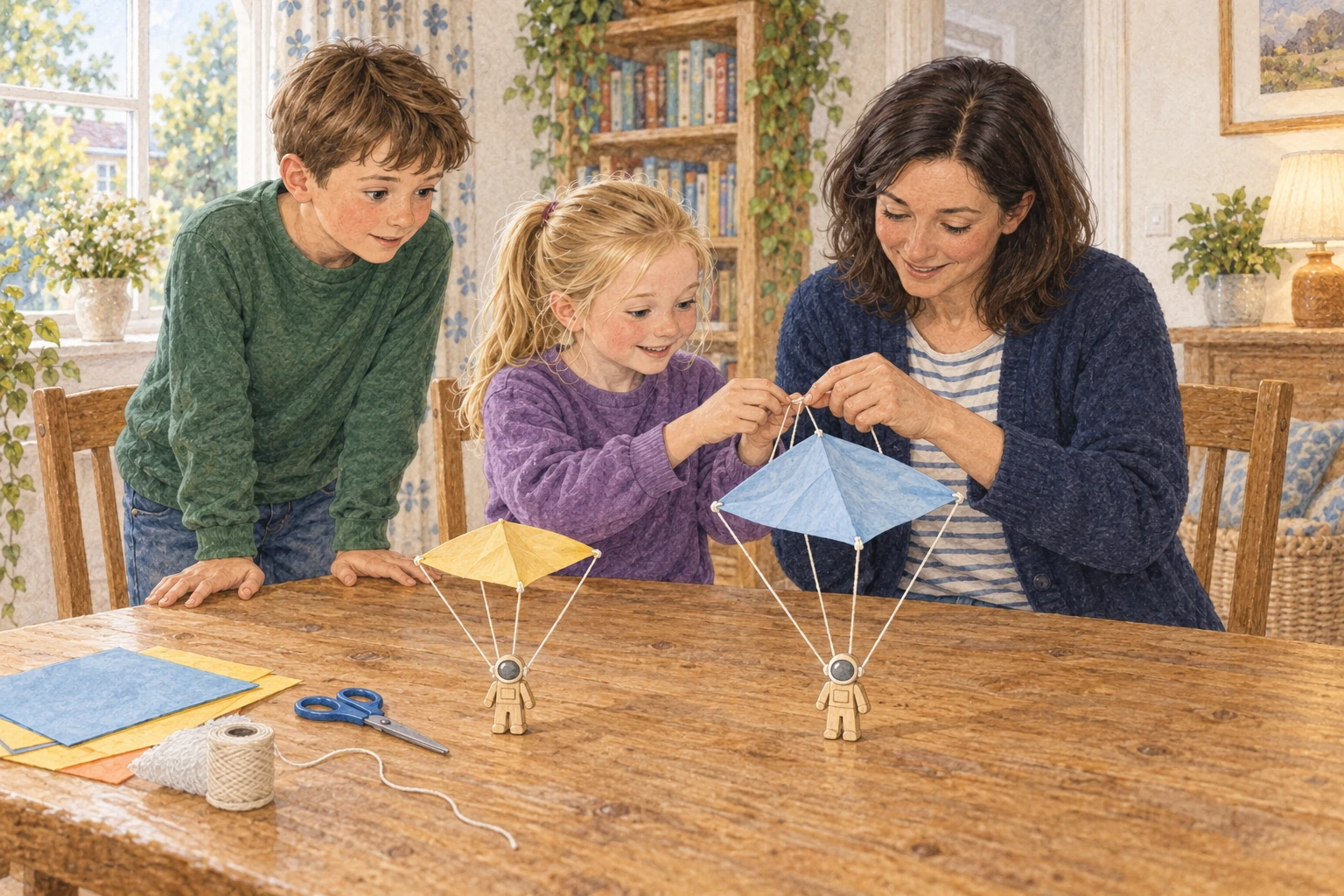
Mum helps attach four equal strings to each canopy. The two loads have the same mass. They use similar string lengths and the same shape of paper. “We want to compare canopy size,” Mum says. Changing everything at once would make their results harder to explain.
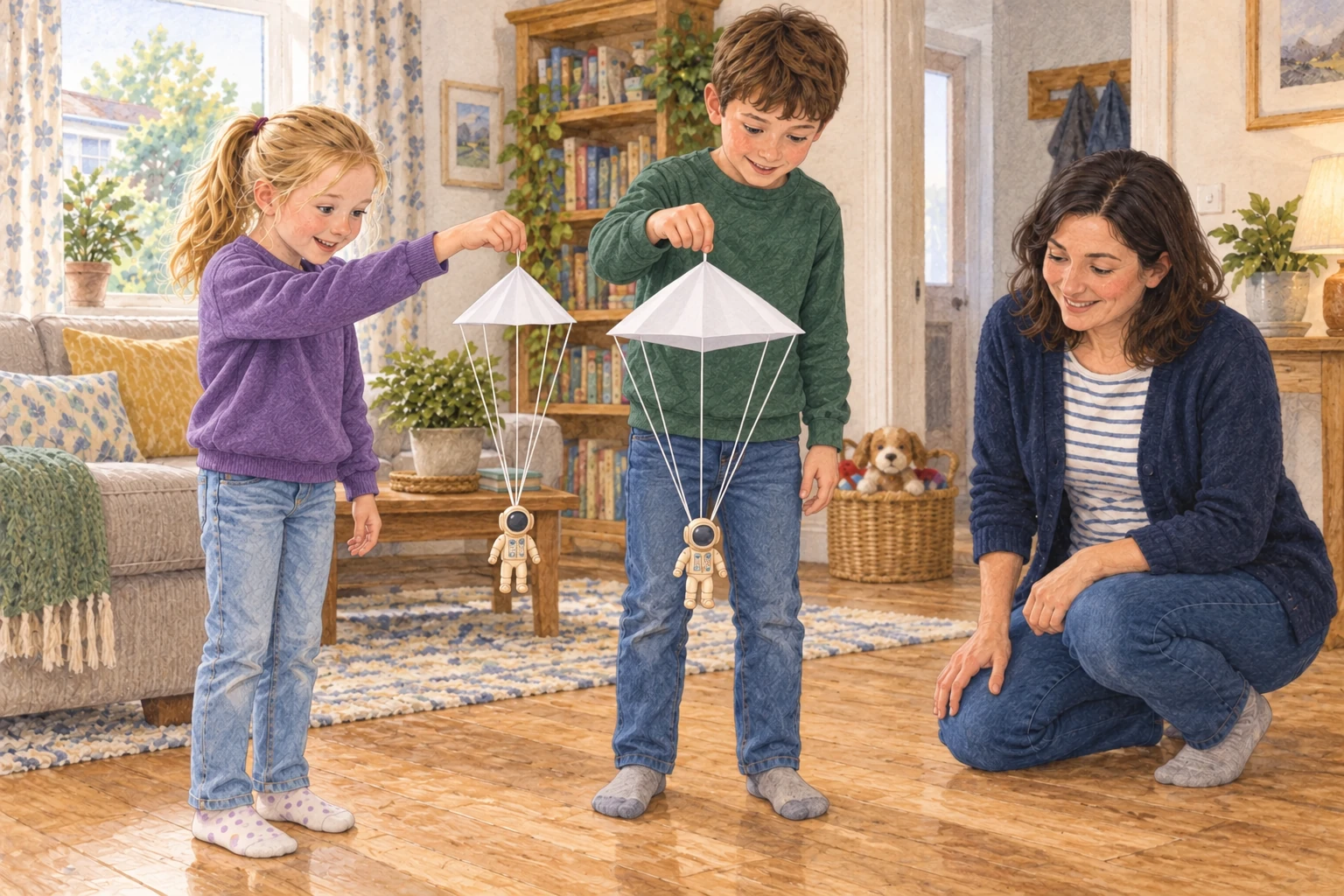
Poppy and Jack hold the open parachutes at the same shoulder height. They release them together without throwing. Air pushes against each falling canopy while gravity pulls the load downwards. This opposing effect of moving through air is called air resistance. Both parachutes still fall.
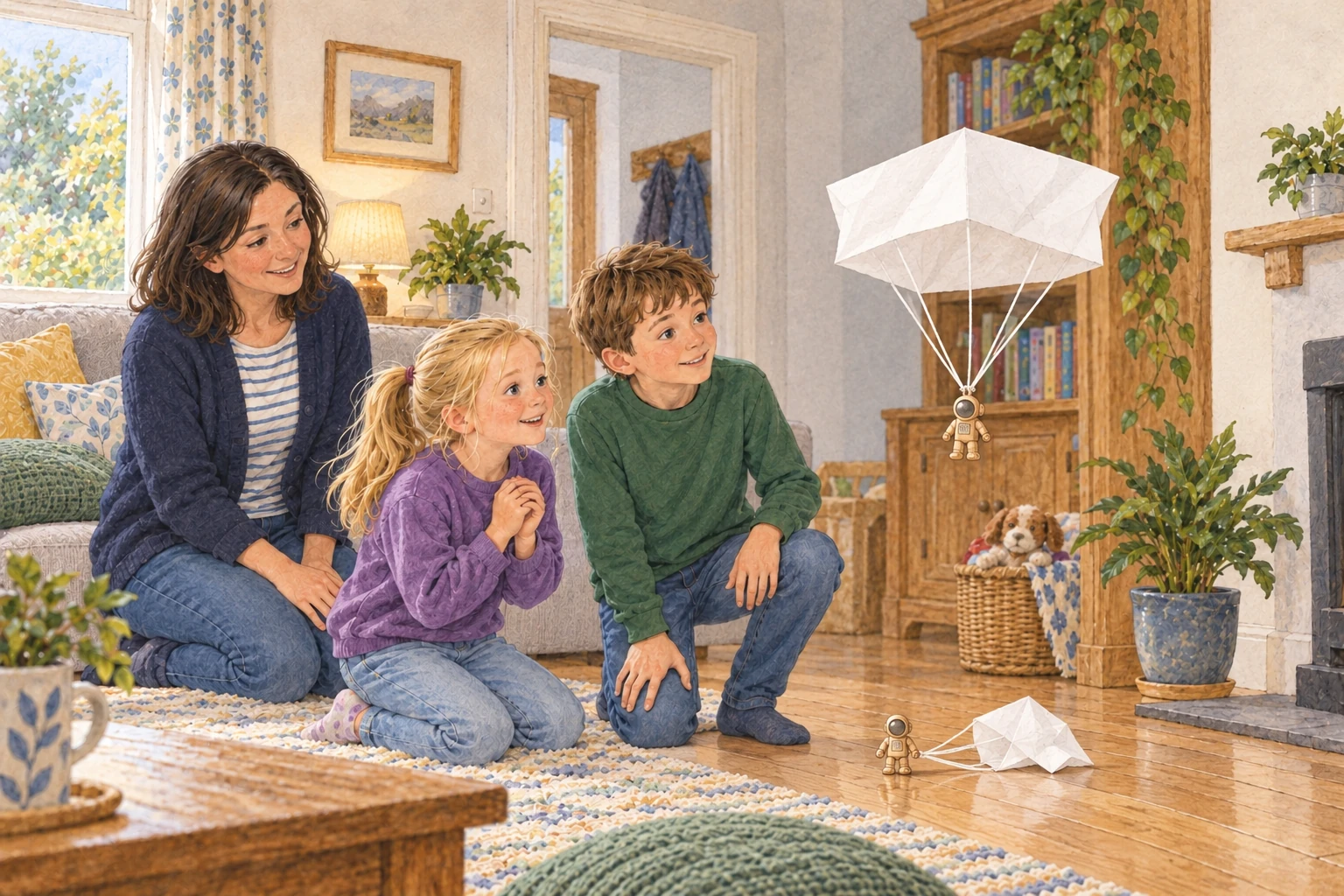
The larger open canopy takes longer to reach the floor in this test. Poppy watches its paper spread above the toy. “It did not stop falling,” she says. “It fell more slowly.” They collect the toys and repeat the drop several times from the same height.
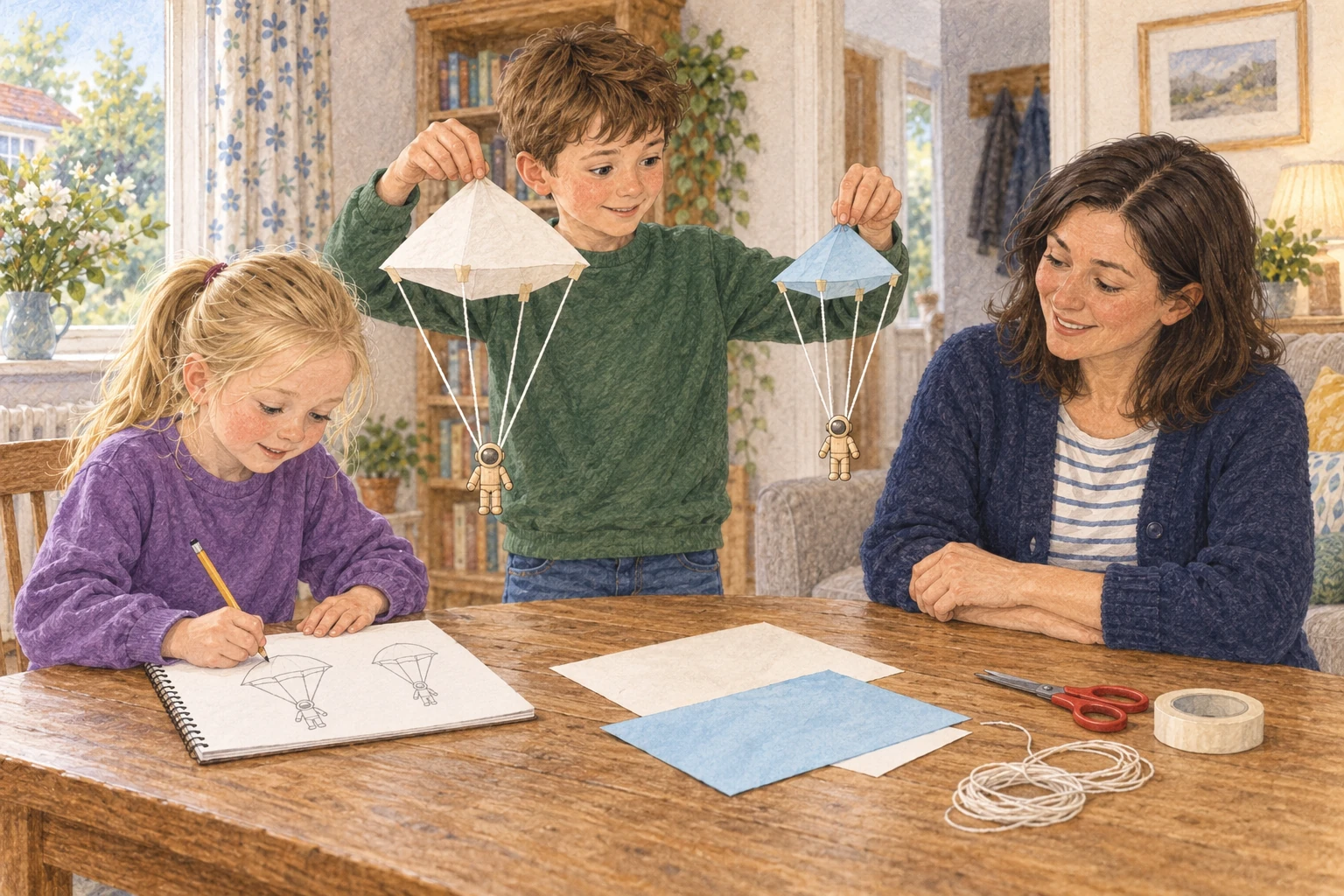
Most drops show the same pattern, but one landing is unexpectedly quick. Poppy checks that parachute before deciding the whole idea is wrong. A string has tangled, and the canopy has not opened properly. They record what happened instead of pretending that result never occurred.
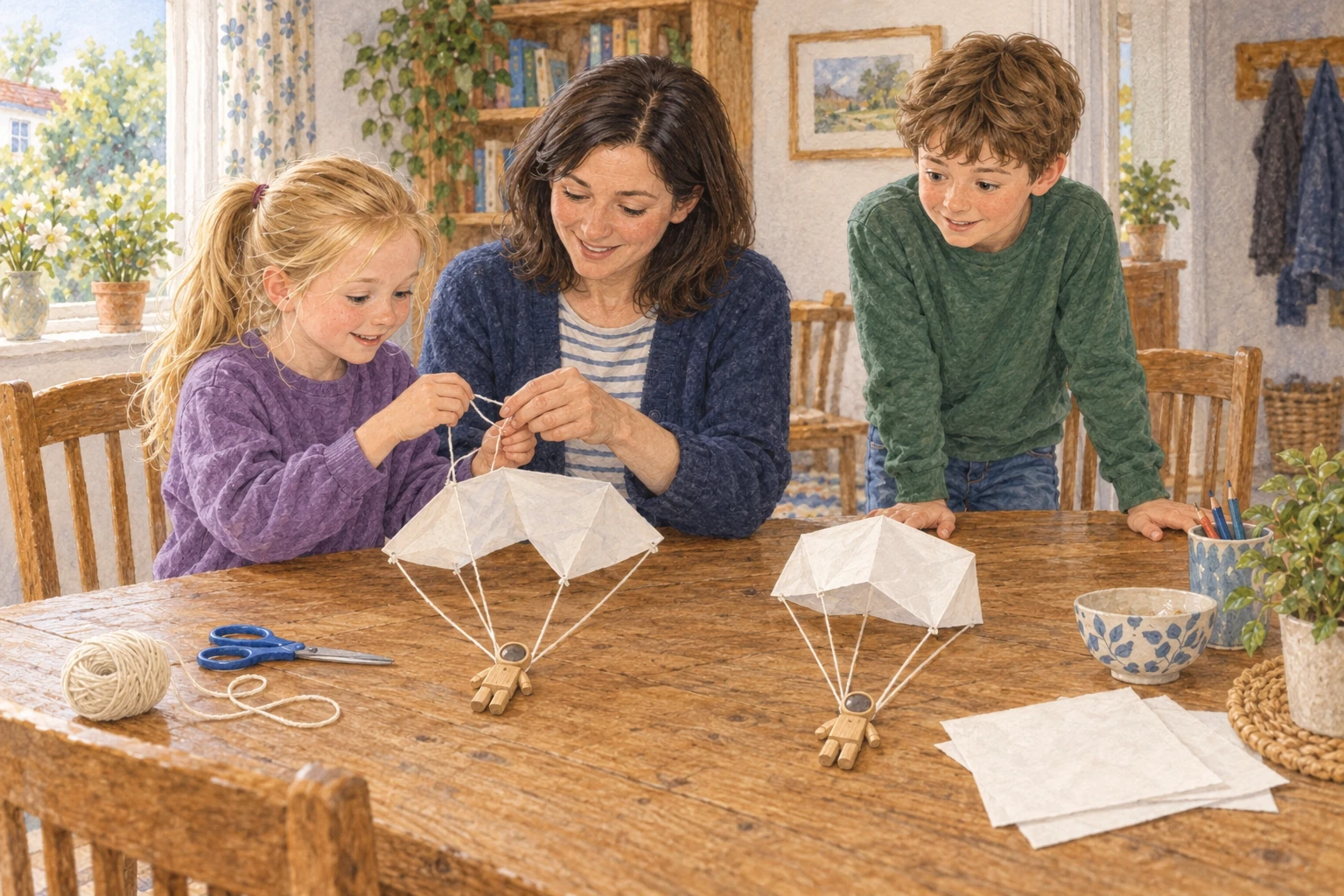
Mum helps straighten the string. Poppy repeats the drop with the canopy open. It slows the figure again. Their observations suggest that canopy size and opening properly both matter. The paper model cannot tell them how to design a real parachute for a person.
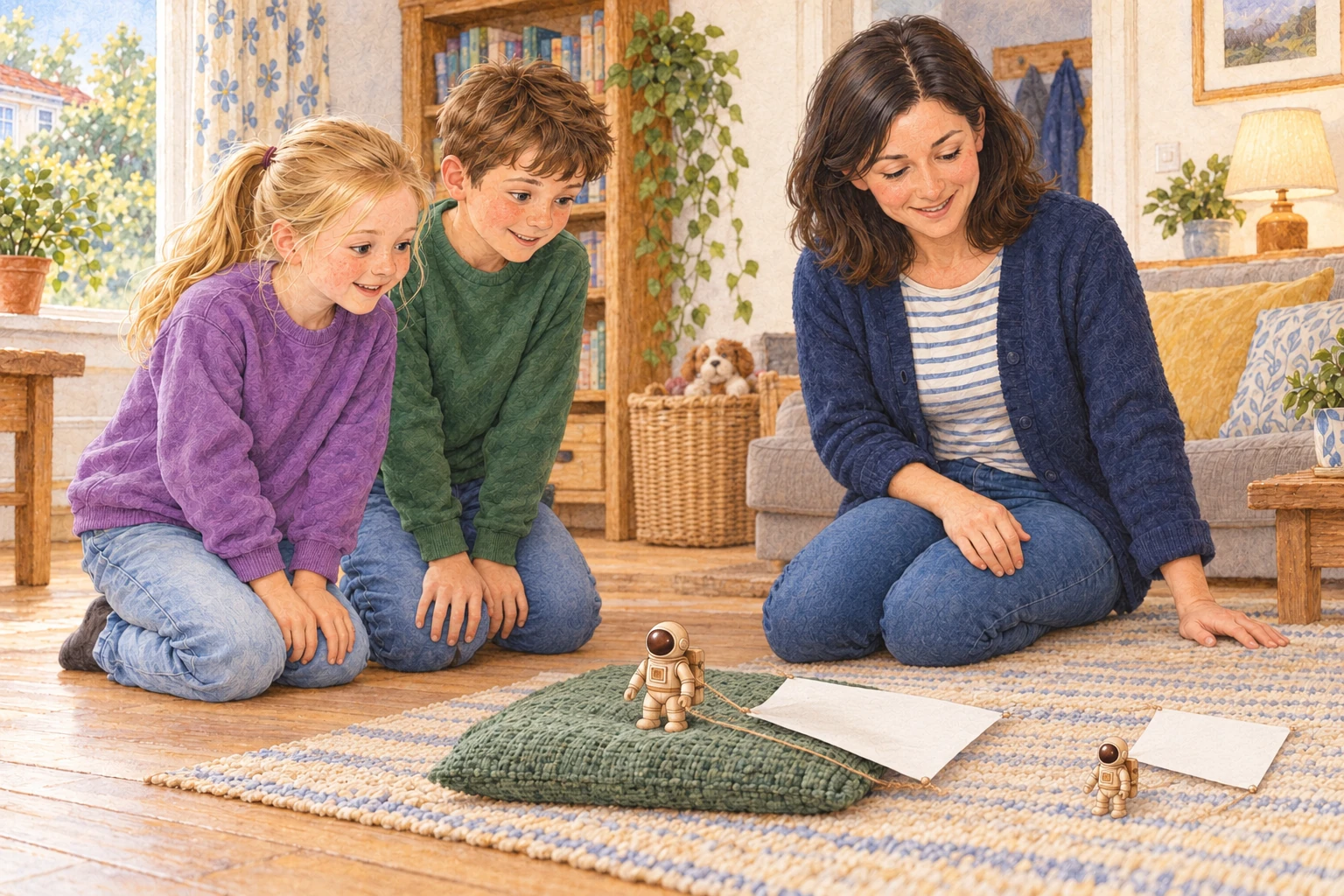
The astronaut lands softly on its cushion. Poppy gives Jack a turn at the rescue game. “My first prediction was different,” she says. “That is why we tried it.” She keeps both parachutes and her results, ready for another safe landing experiment on the clear floor.