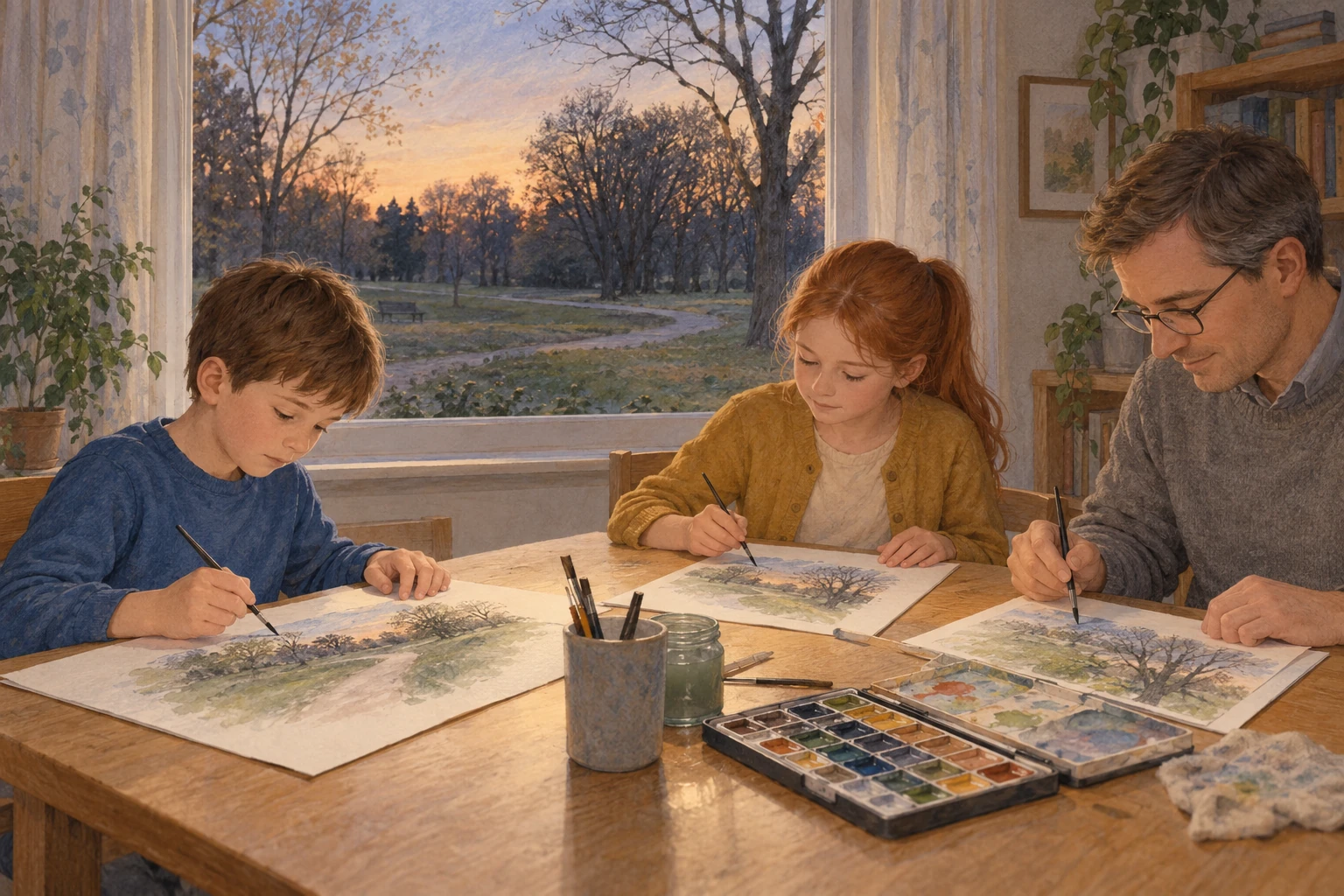
Robert’s Evening Colours
Shared Reading Books · Arts · Year 4Robert sketches the park as the evening light reaches the trees. A pale path runs towards a dark group of branches. At home, he wants to paint the feeling of that quiet hour, before the lamps come on.
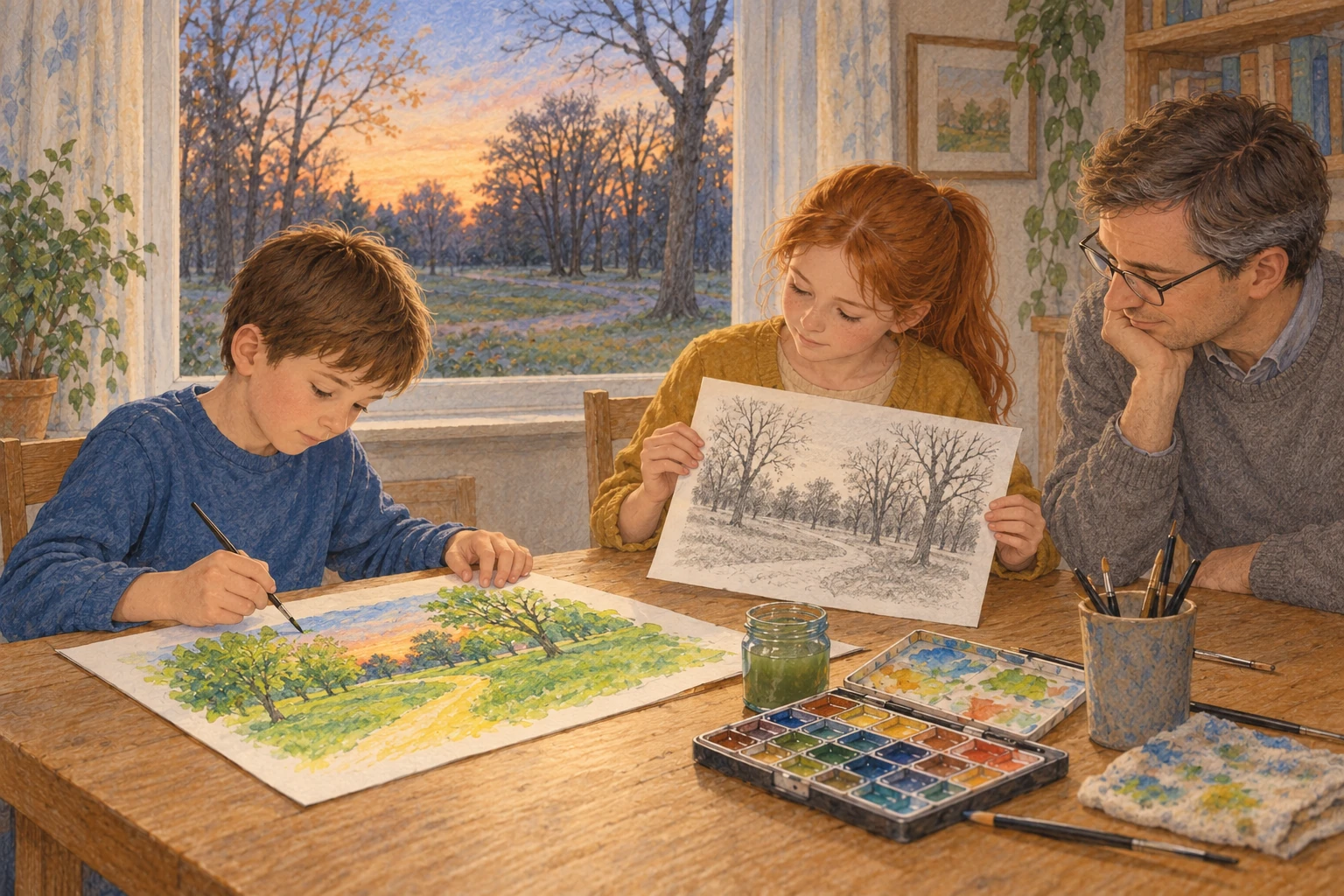
He chooses bright green for every tree and yellow for the path. The picture looks cheerful, but the evening has disappeared. Anne finds his sketch. It has no colour at all, yet the dark branches still seem to belong to that time of day.
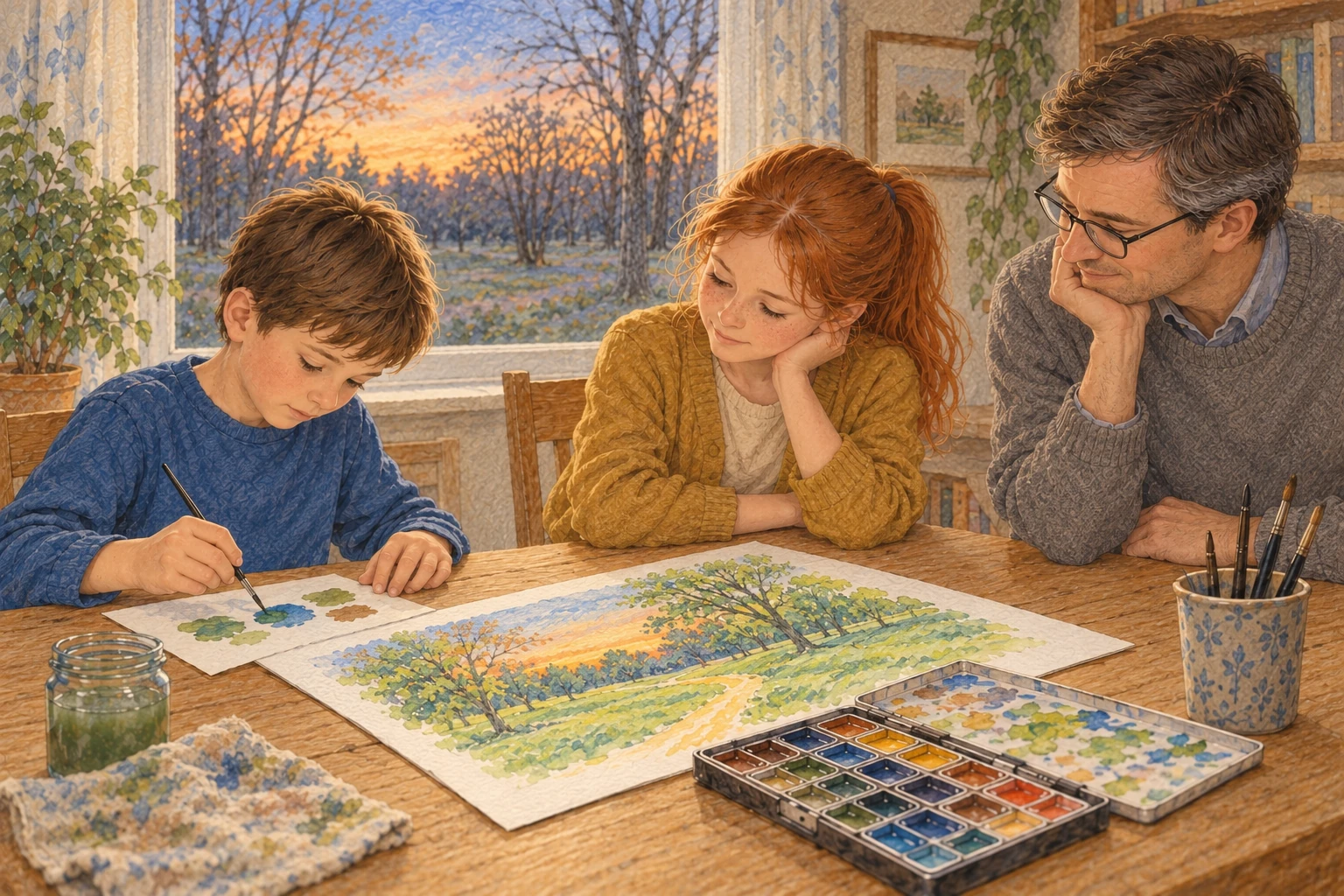
Dad suggests making a few small colour tests on spare paper. Robert mixes blue into one green and a little brown into another. He places the patches beside his sketch rather than covering the whole painting straight away.
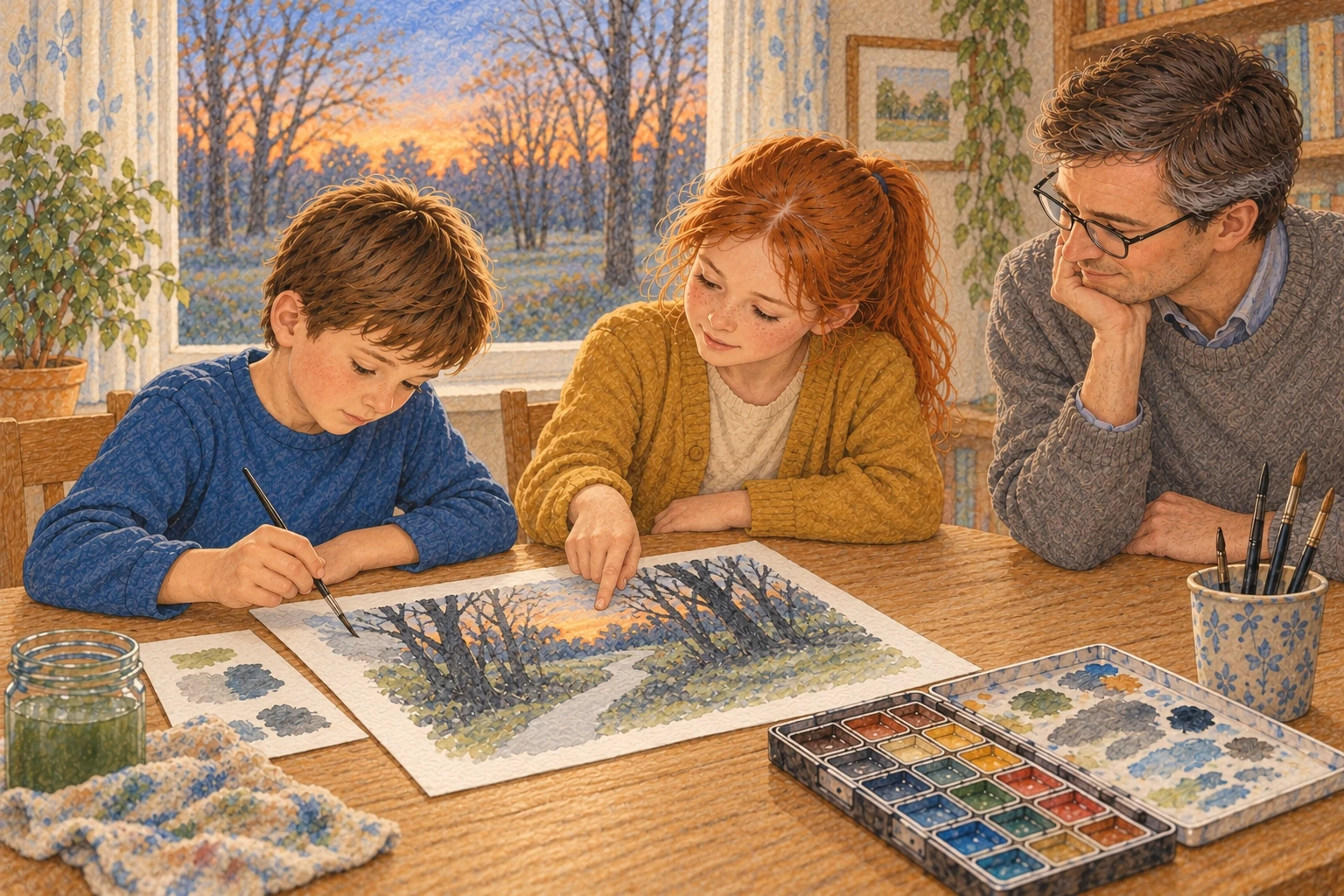
He notices that the darker mixture makes a pale patch beside it seem brighter. Anne calls it contrast. Robert tries a narrow strip of pale grey between two dark shapes. It begins to look like the path going away from him.
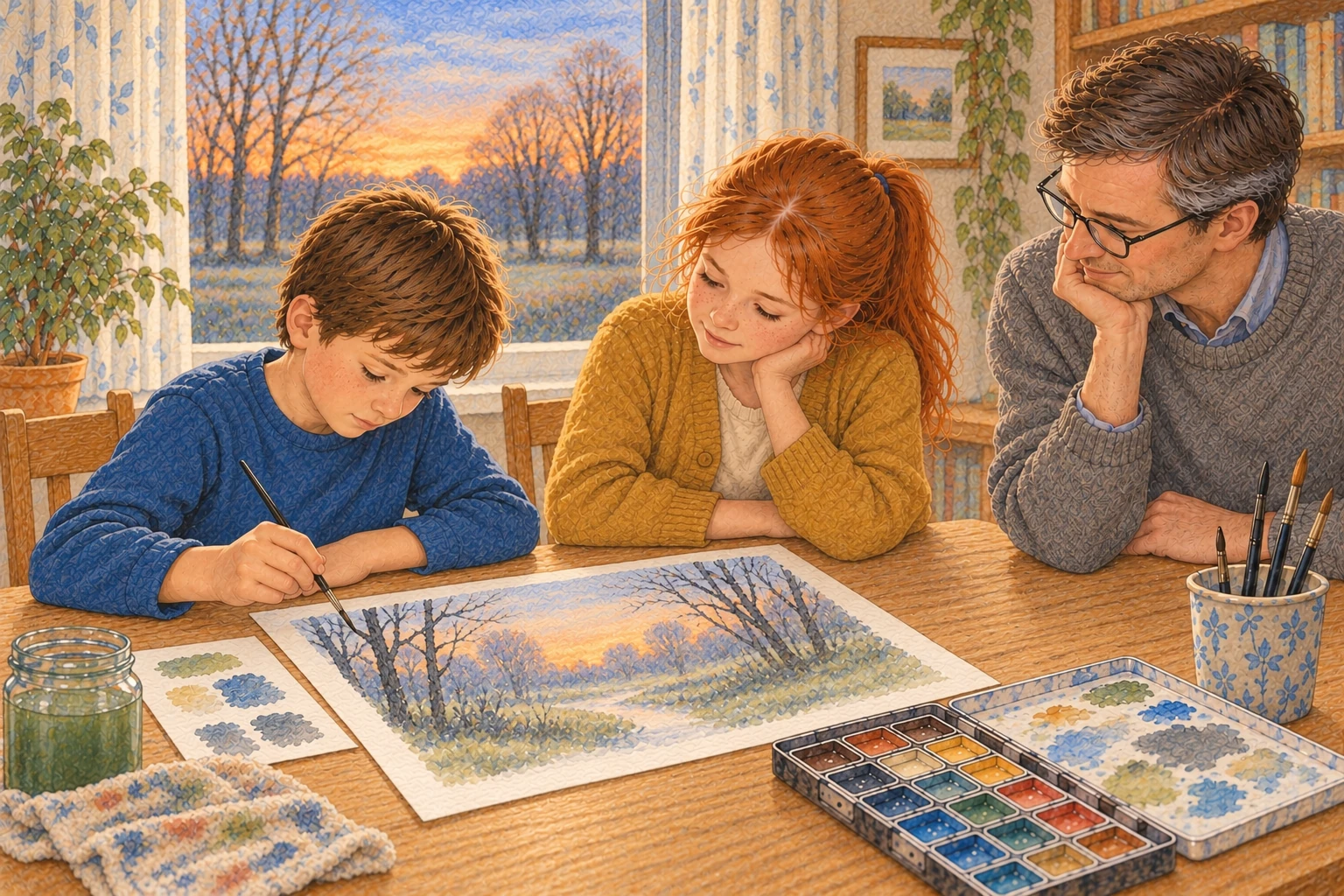
In the next version, he keeps the distant trees soft. Near the front, he adds a few sharper branches. The difference gives the eye somewhere to travel. He does not need to paint every leaf to suggest a whole park.
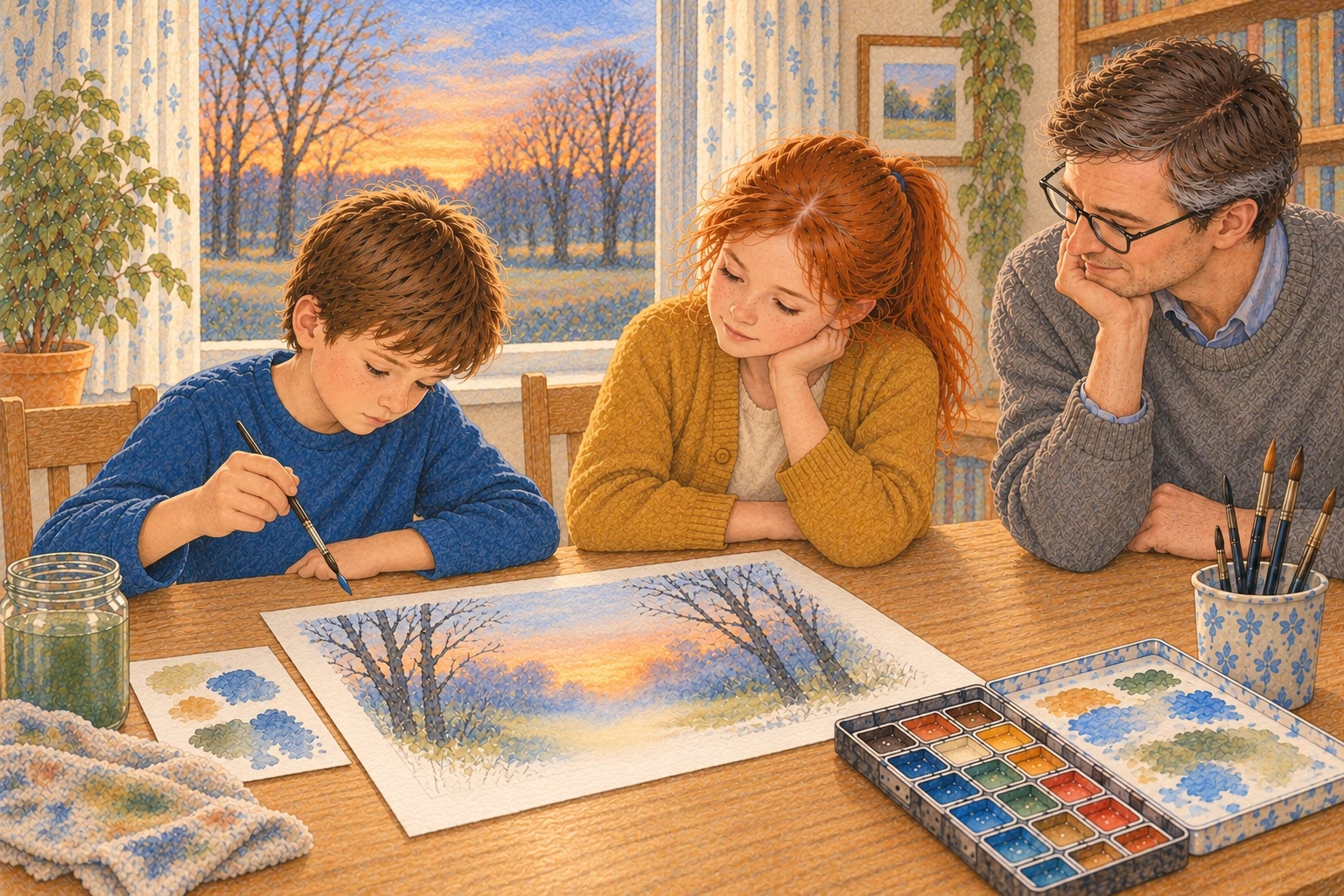
A wet edge spreads farther than Robert intended. He reaches for more paint, then waits. As it dries, the soft shape looks like the evening air between two trees. He leaves it alone and works on a different part of the page.
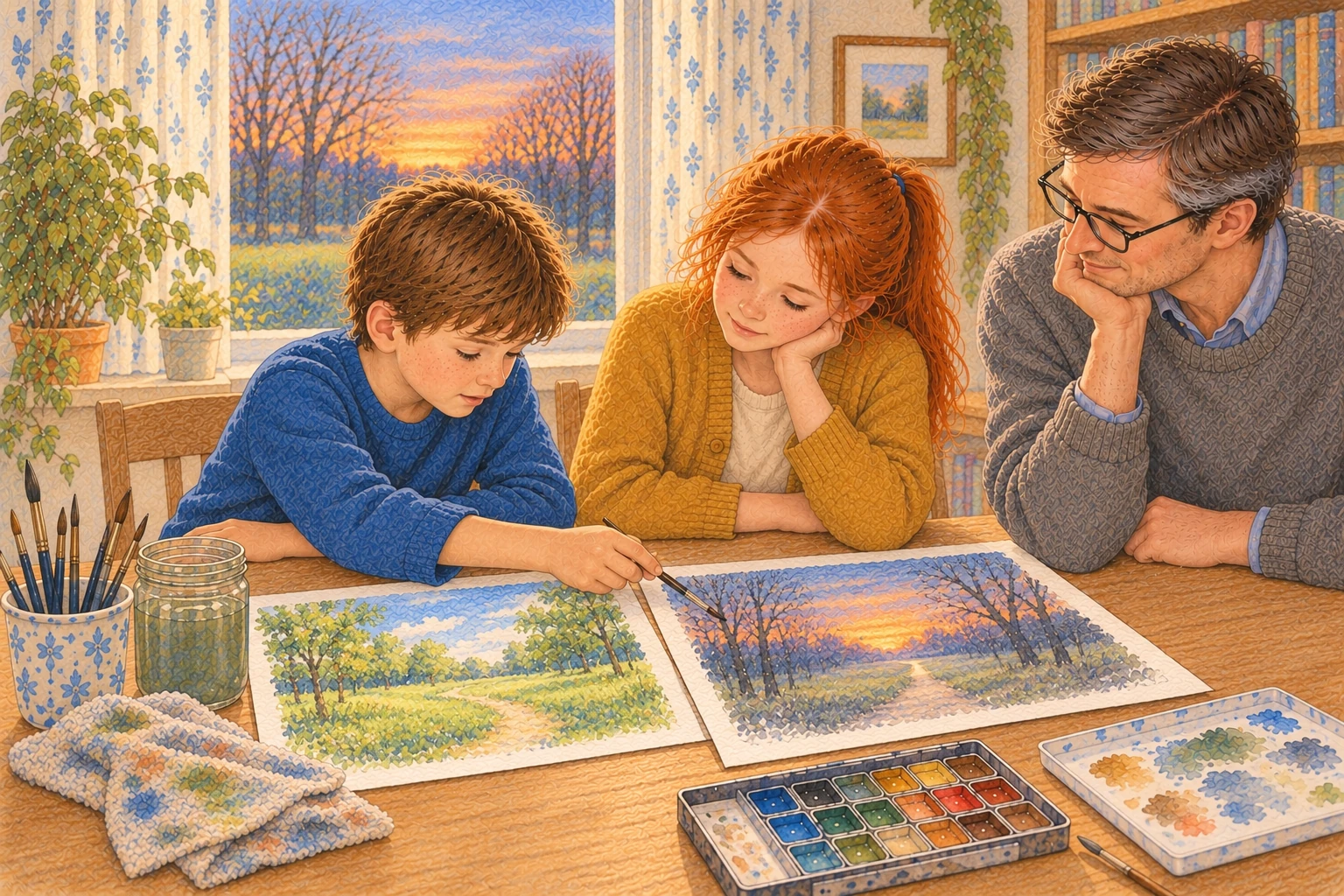
Anne compares the first bright painting with the quieter one. She still likes the cheerful colours, but understands what Robert changed. He points out the path, the soft distance and the small light space he has kept near the end.
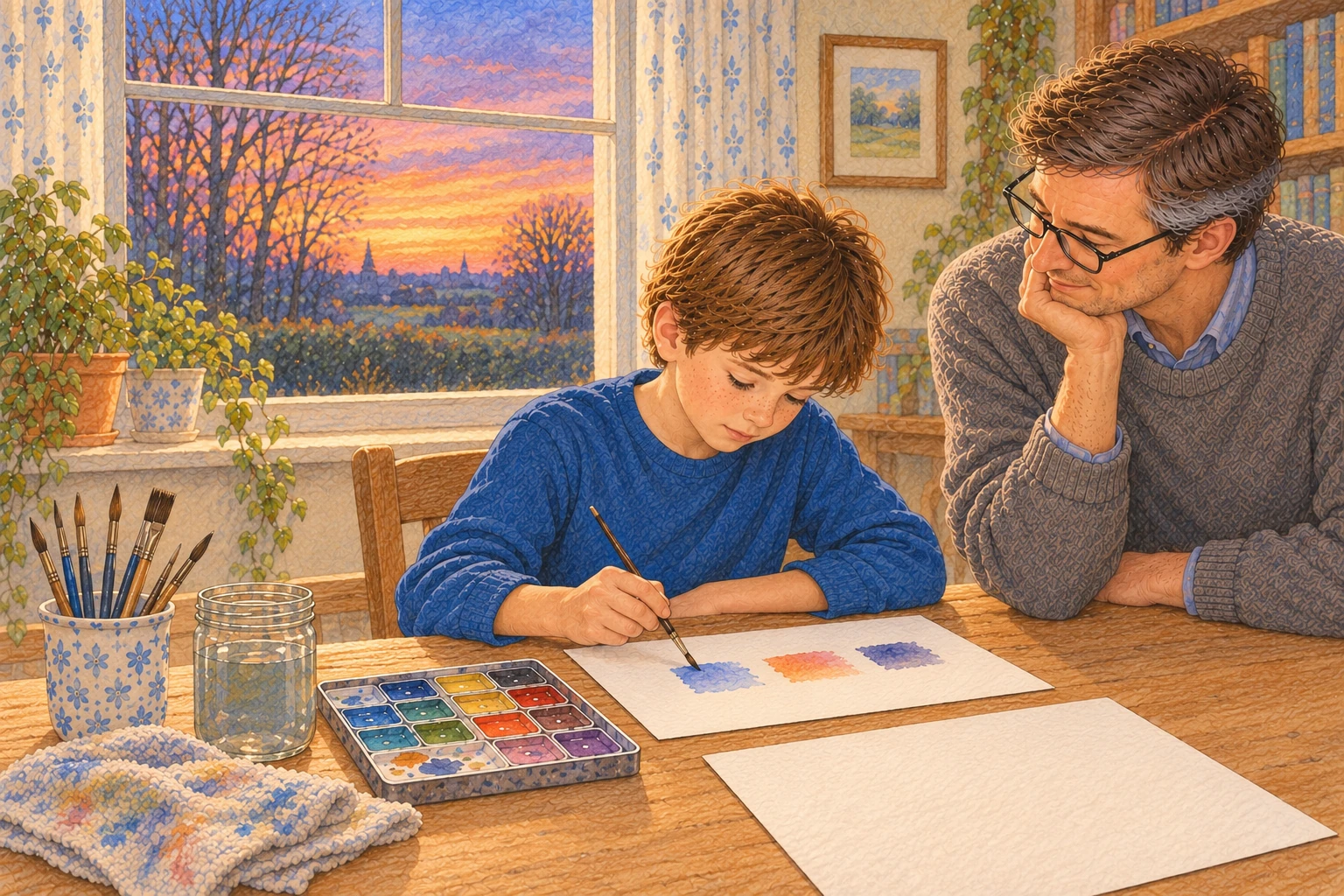
Later, Dad sets the painting beside the window. Outside, the sky is changing again. Robert can see colours he did not use. He takes another sheet of paper, this time planning only three small patches before the light is gone.