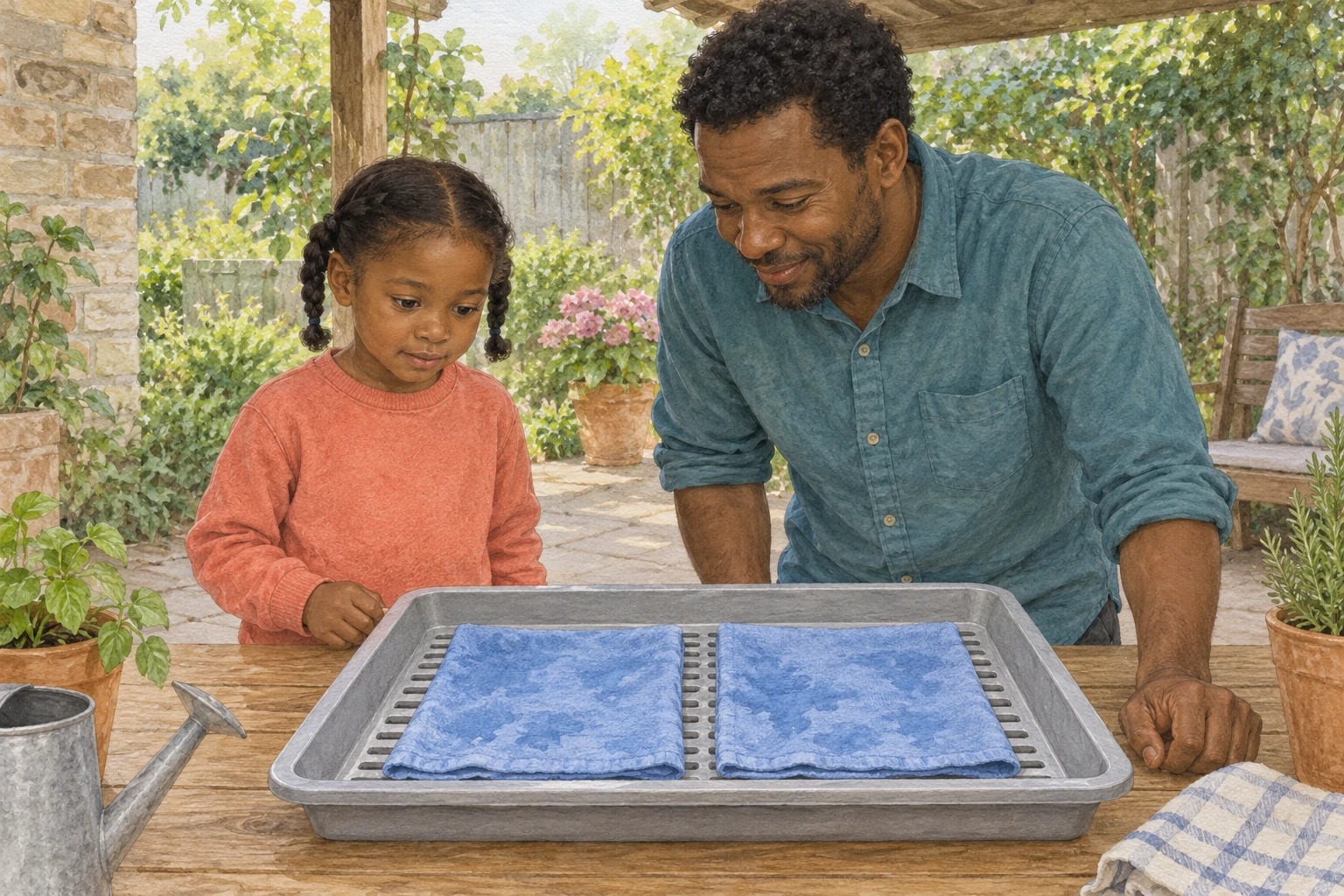
Ruby’s Drying Cloth
Shared Reading Books · Science · Year 1Ruby helps Dad wipe a garden table. Two blue cloths are left damp. Later, one feels much drier than the other. “Where did the water go?” she asks. They decide to watch the cloths more carefully.
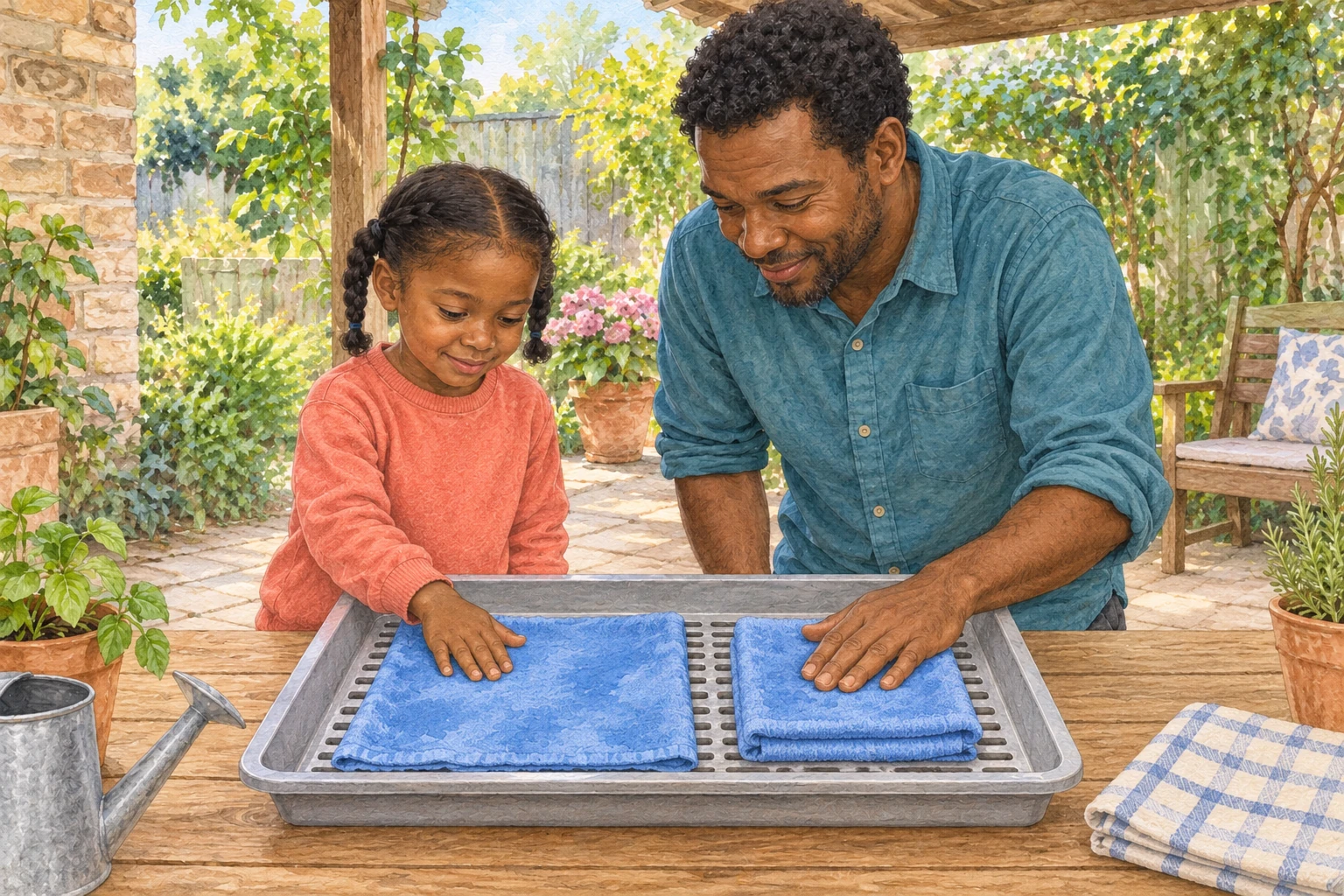
Dad brings two matching cloths. He wets them equally and squeezes out the drips. Ruby feels a dry spare cloth for comparison. Damp means there is still some water in the material, even when it is not dripping.
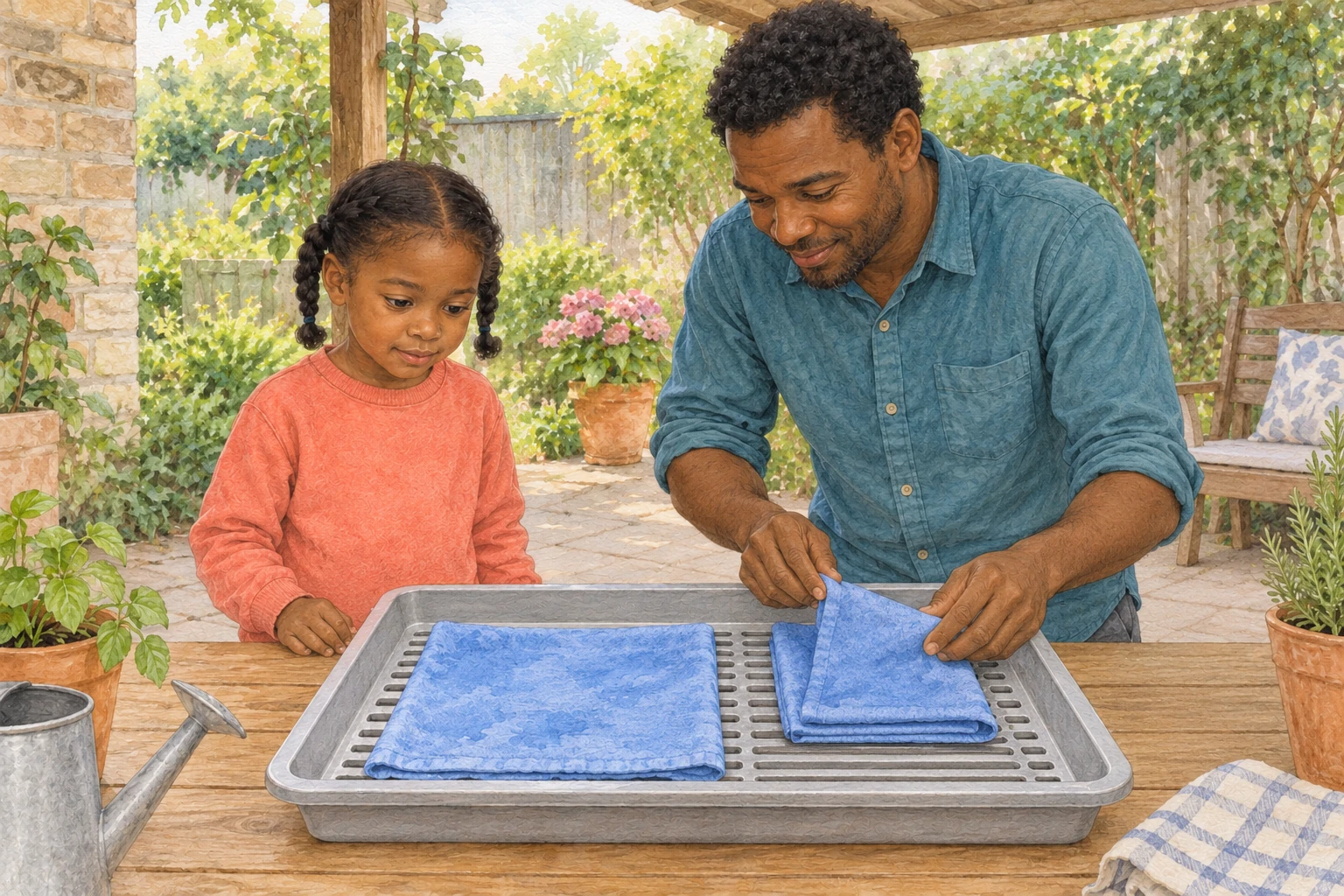
They spread one cloth out on the rack. “We will fold this one,” says Dad, placing the other on the same rack. The cloths begin alike, but different amounts of their wet surface are open to the air.
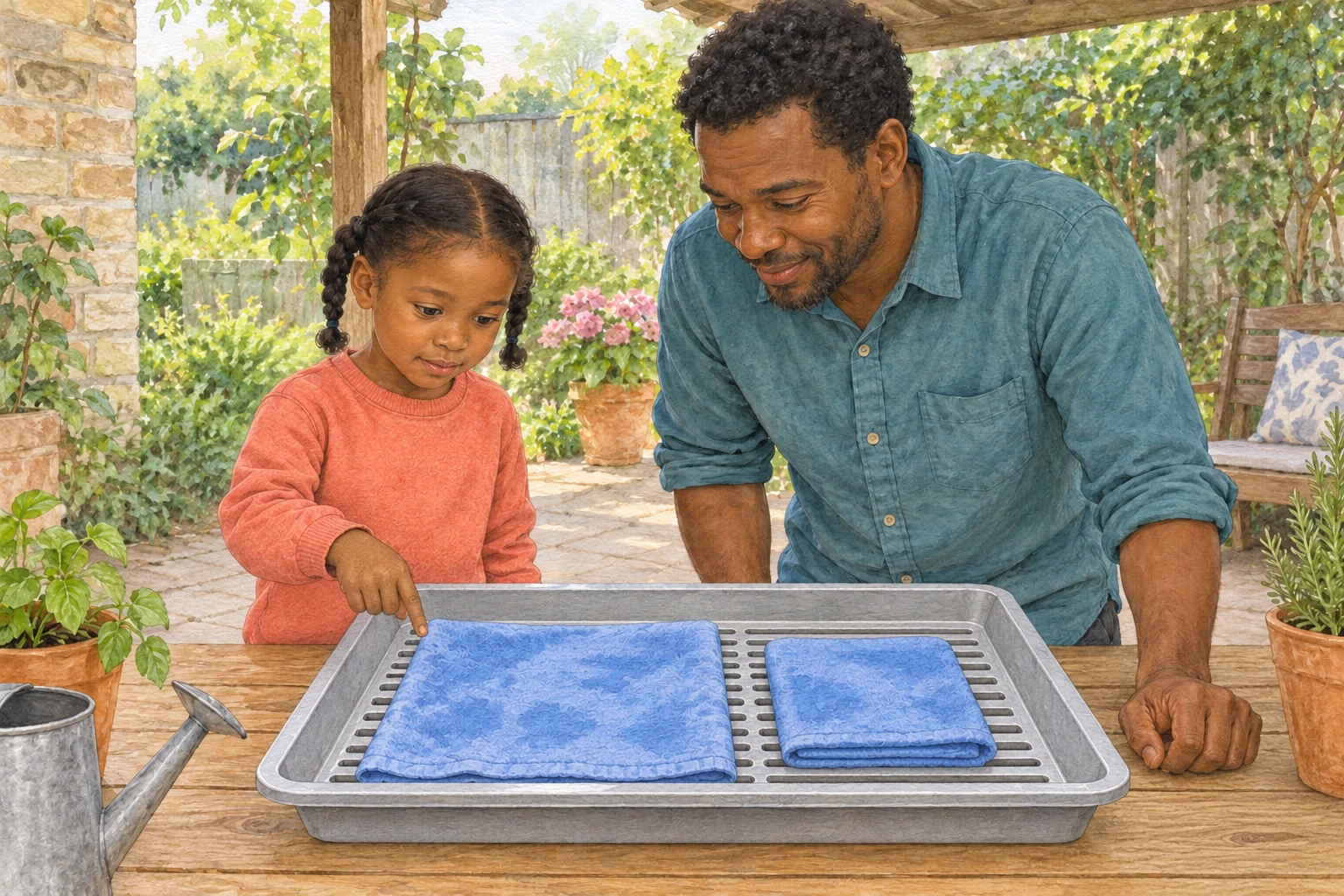
After waiting, they check together. The spread cloth feels drier in their test. The folded cloth is still damp inside. Ruby cannot see a stream of water running away, and neither cloth has been heated on a stove.
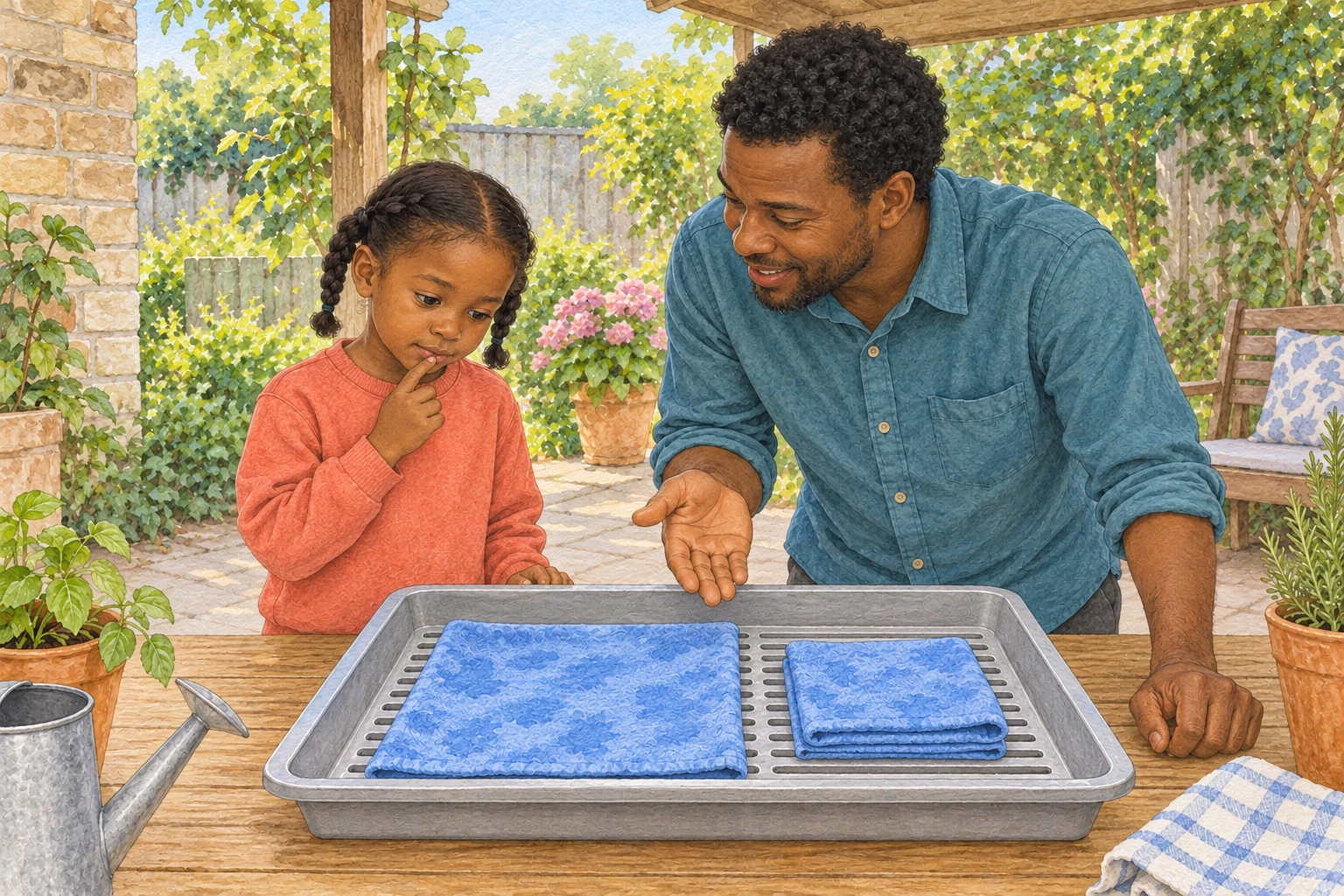
Dad explains that water can evaporate: liquid water changes into water vapour in the air. Water vapour is invisible. Drying can happen without boiling. Ruby should not expect to see a white cloud leaving the cloth.
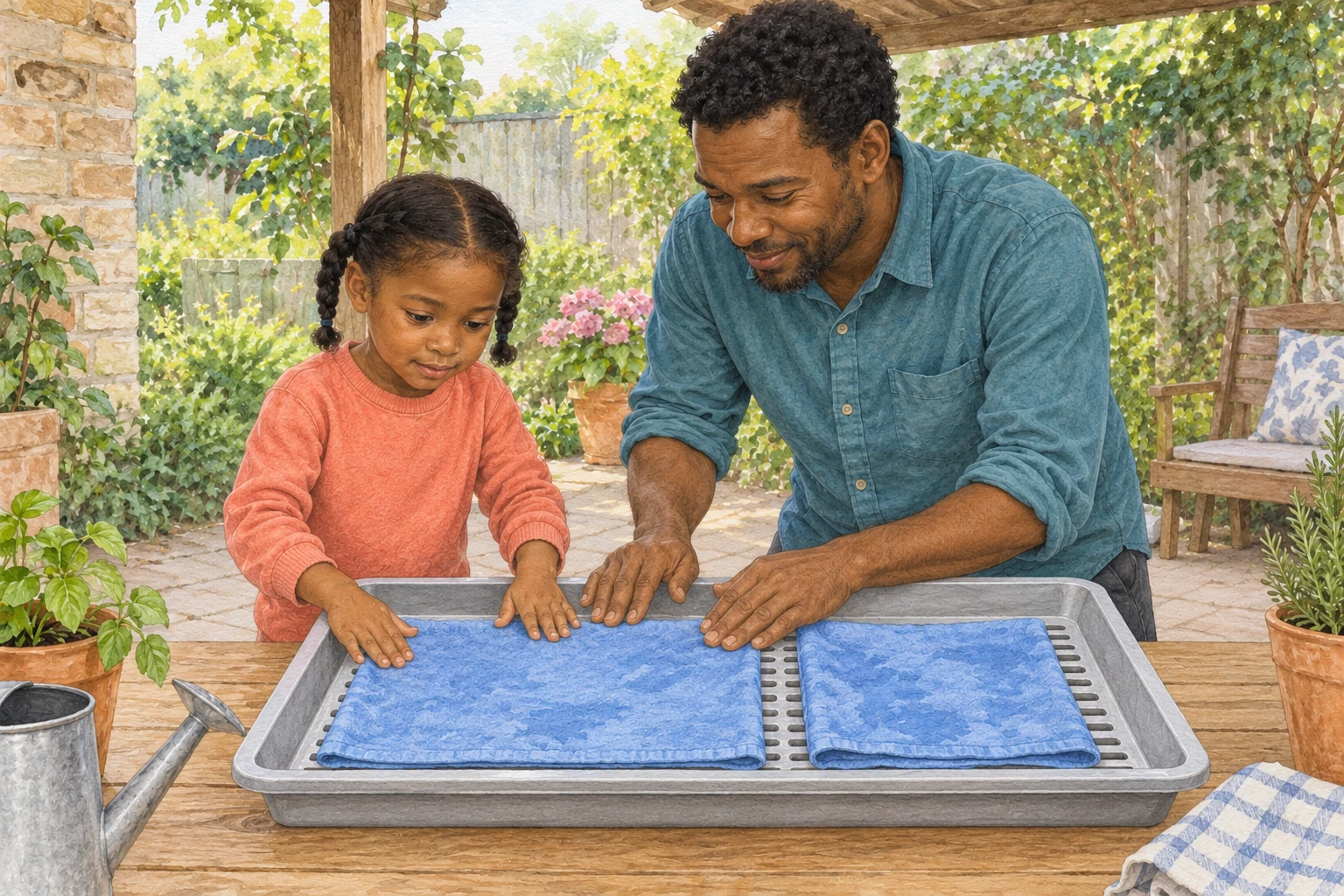
They open out the folded cloth too. More of its surface can now meet the surrounding air. Dad says warmth and moving air can affect drying as well. Their small comparison has not tested every possible drying place.
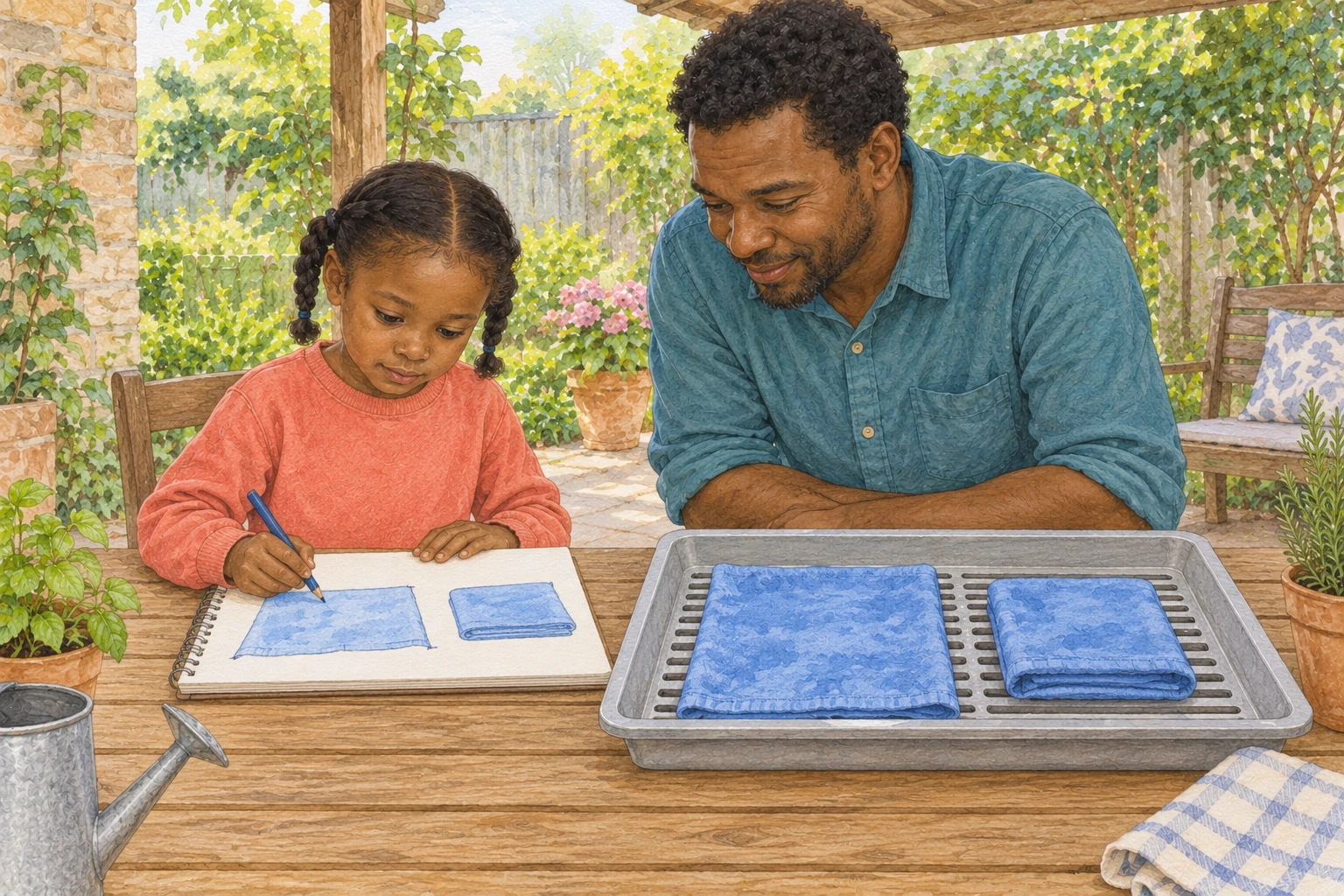
Ruby draws the two arrangements and tells Dad what they noticed. They used matching cloths, similar amounts of water and the same rack. Keeping track helps them compare the spread cloth with the folded one.
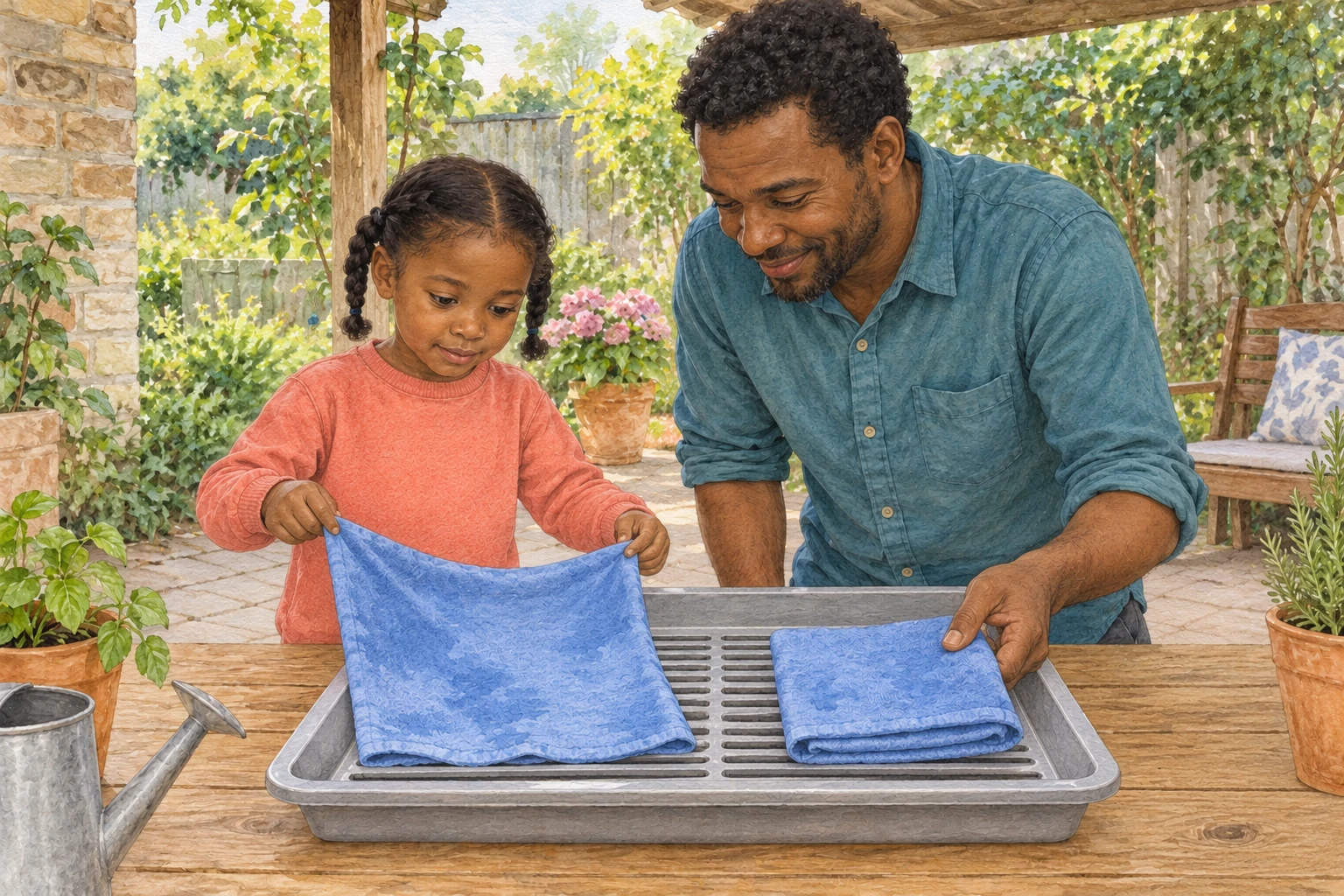
At last, both cloths feel dry. Ruby helps collect them. The water has changed into invisible vapour and entered the air. “The cloth feels dry, but its water has gone into the air,” she says.