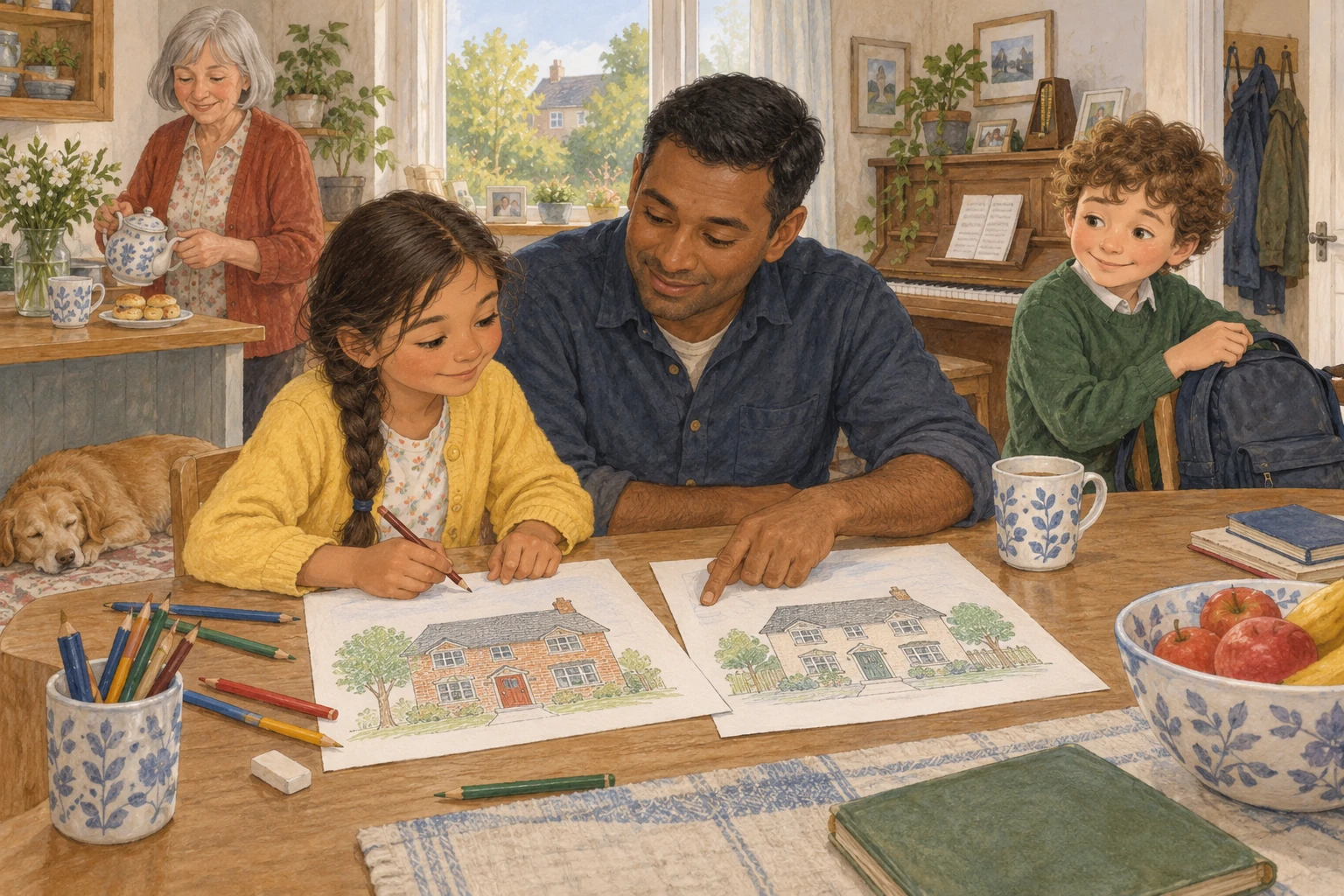
Ruby’s Two Homes
Shared Reading Books · Social Science · Year 3Ruby was making a class box about things that mattered to her family. She stayed with Dad during the week and visited Nan on Saturdays. “Which home should I put in my picture?” she asked. Dad said she could show both.
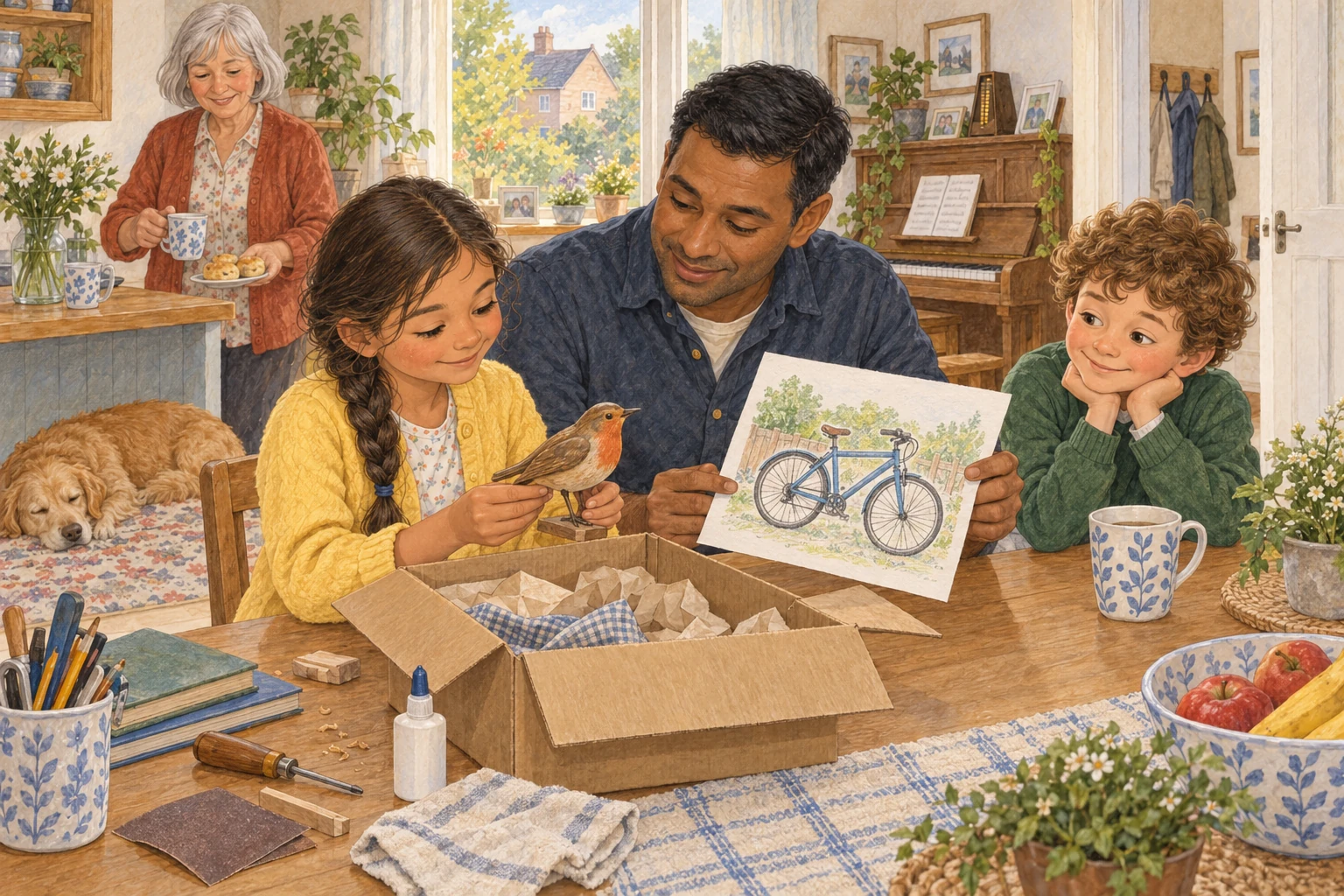
At Dad’s house, Ruby chose a small wooden bird they had repaired together. Dad liked fixing old things. Ruby added a drawing of their Saturday bike rides too. “Our box can show what we do,” she said, “as well as what we own.”
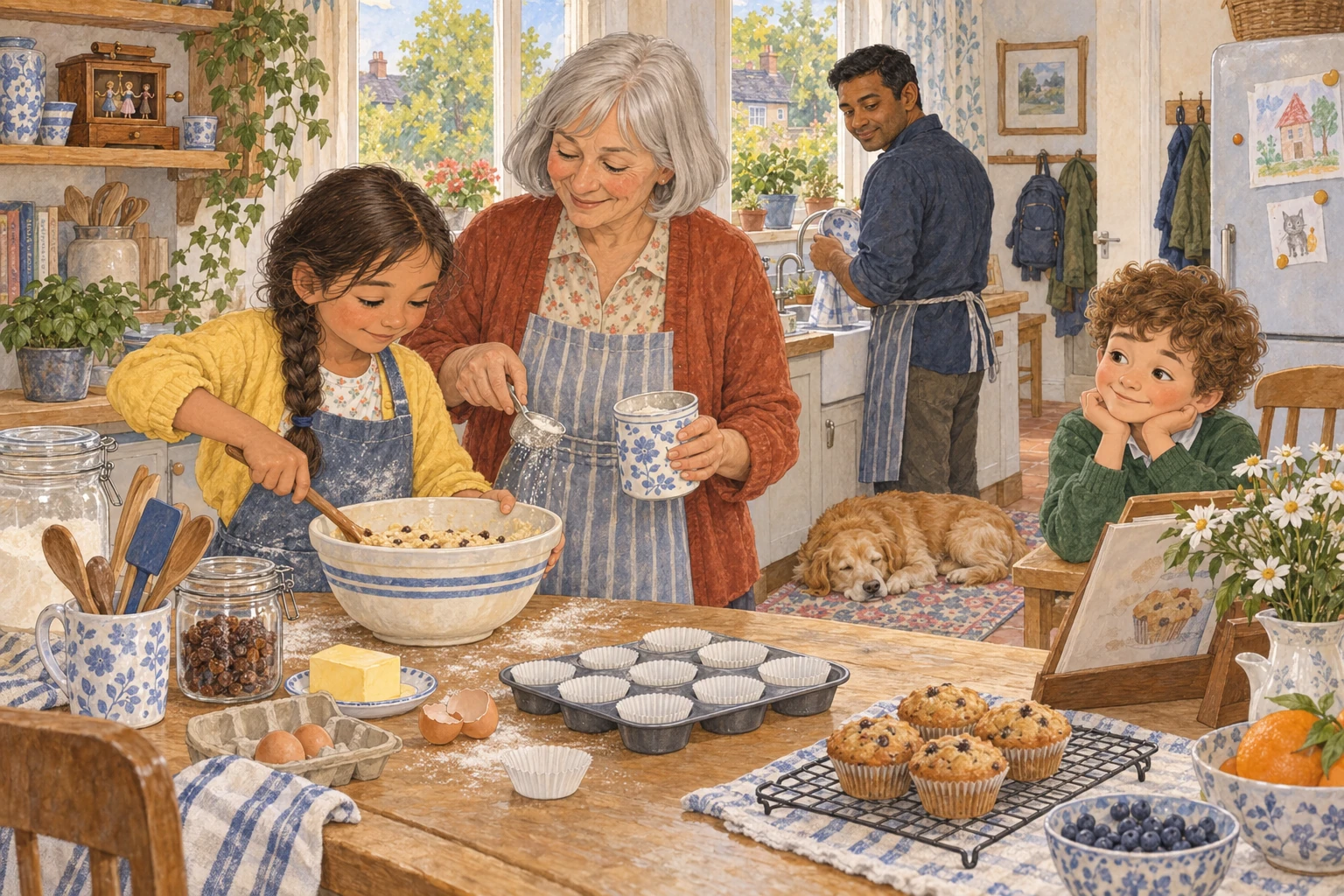
At Nan’s house, music played while they cooked. Nan taught Ruby a tune she had learned as a child. Ruby drew musical notes and a bowl. She wanted to explain the tradition without bringing Nan’s fragile old music box to school.
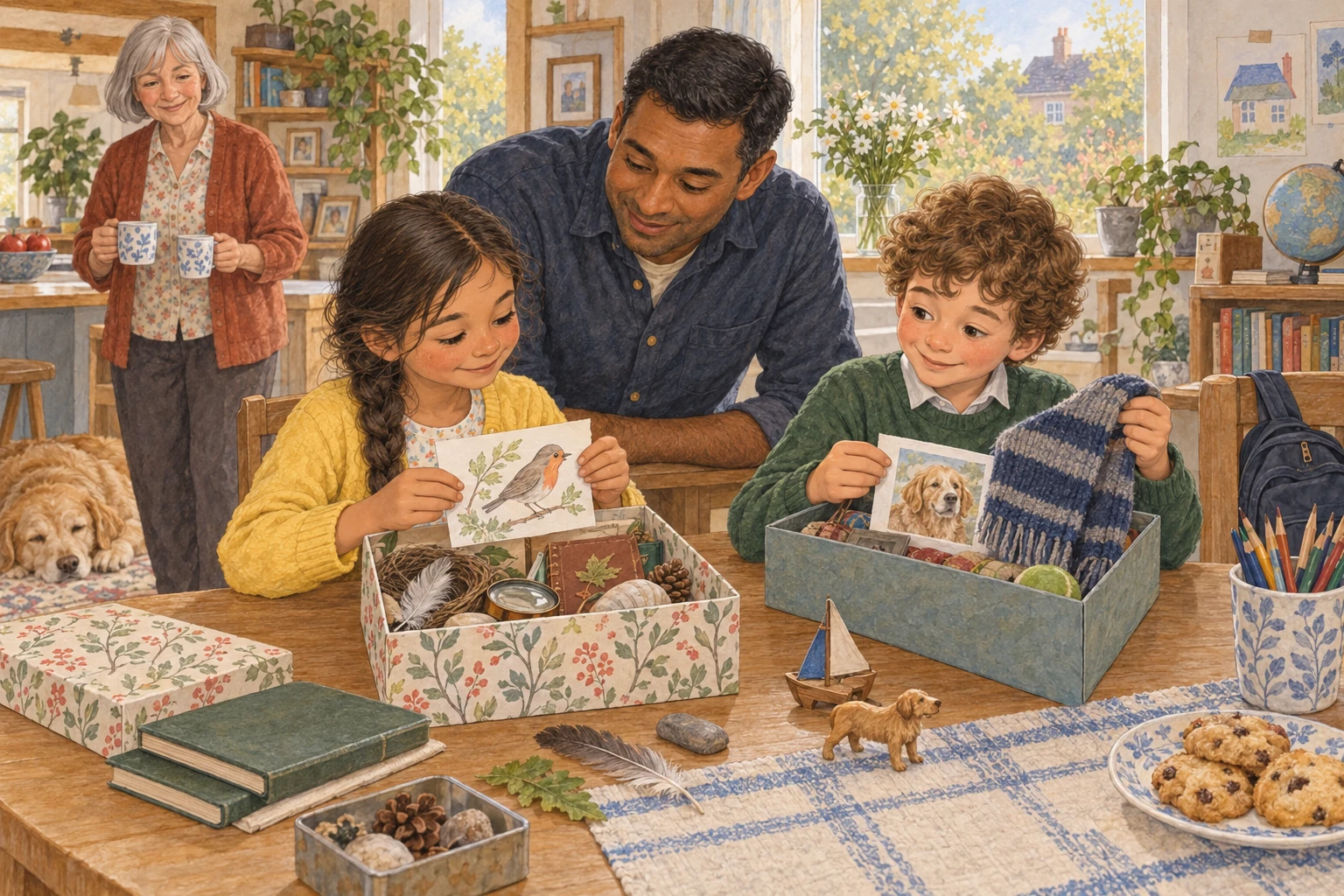
Ruby’s friend Tom showed her his box. It held a football scarf, a photo of his cousins and a picture of a dog. “Your box is different from mine,” he said. Ruby looked again. Both boxes showed people they cared about and things they enjoyed together.
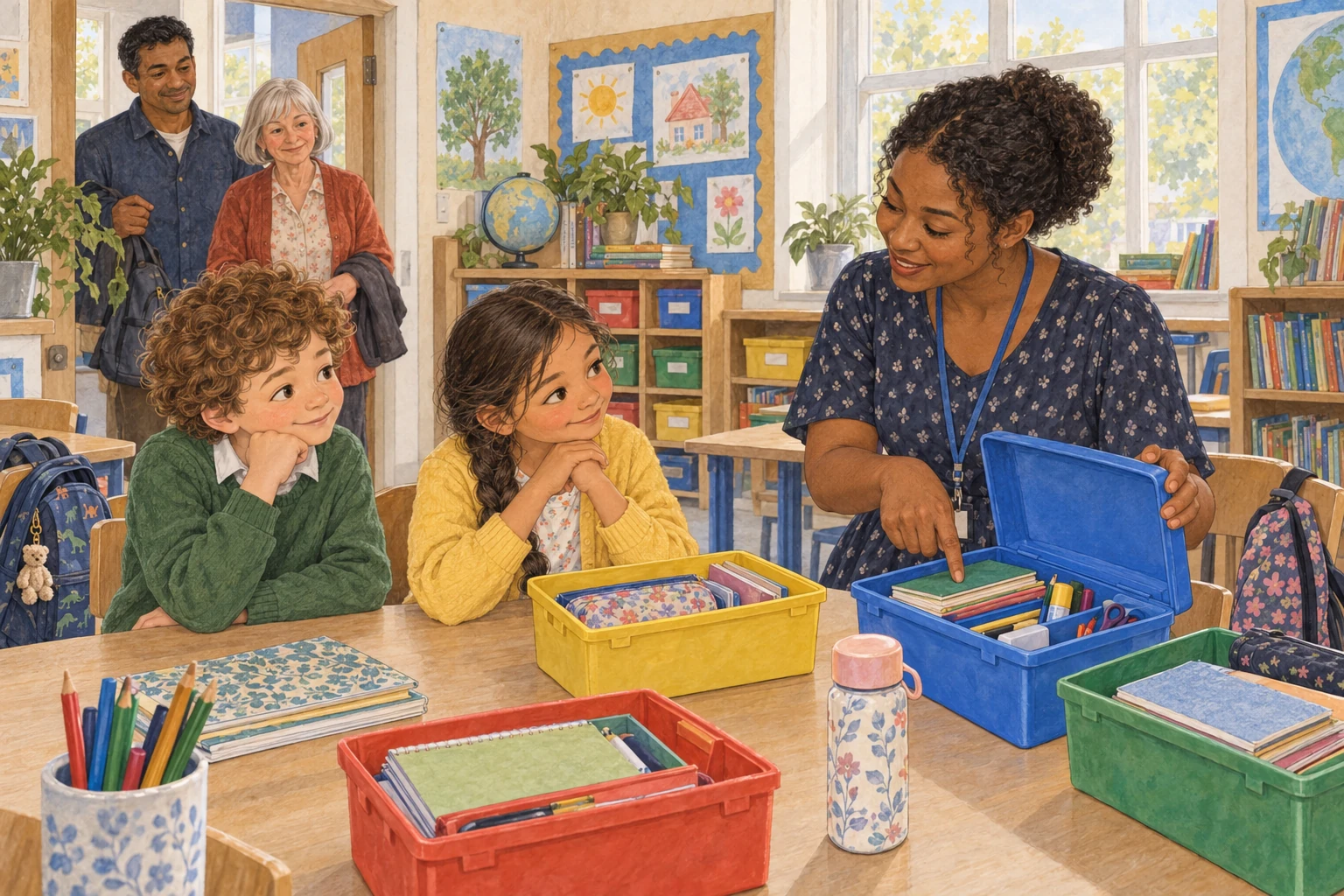
In class, Ms Lane explained that identity had many parts. Interests, relationships, places and experiences could all matter. No box could show everything about a person. Children could choose what to share, and could leave private things out.
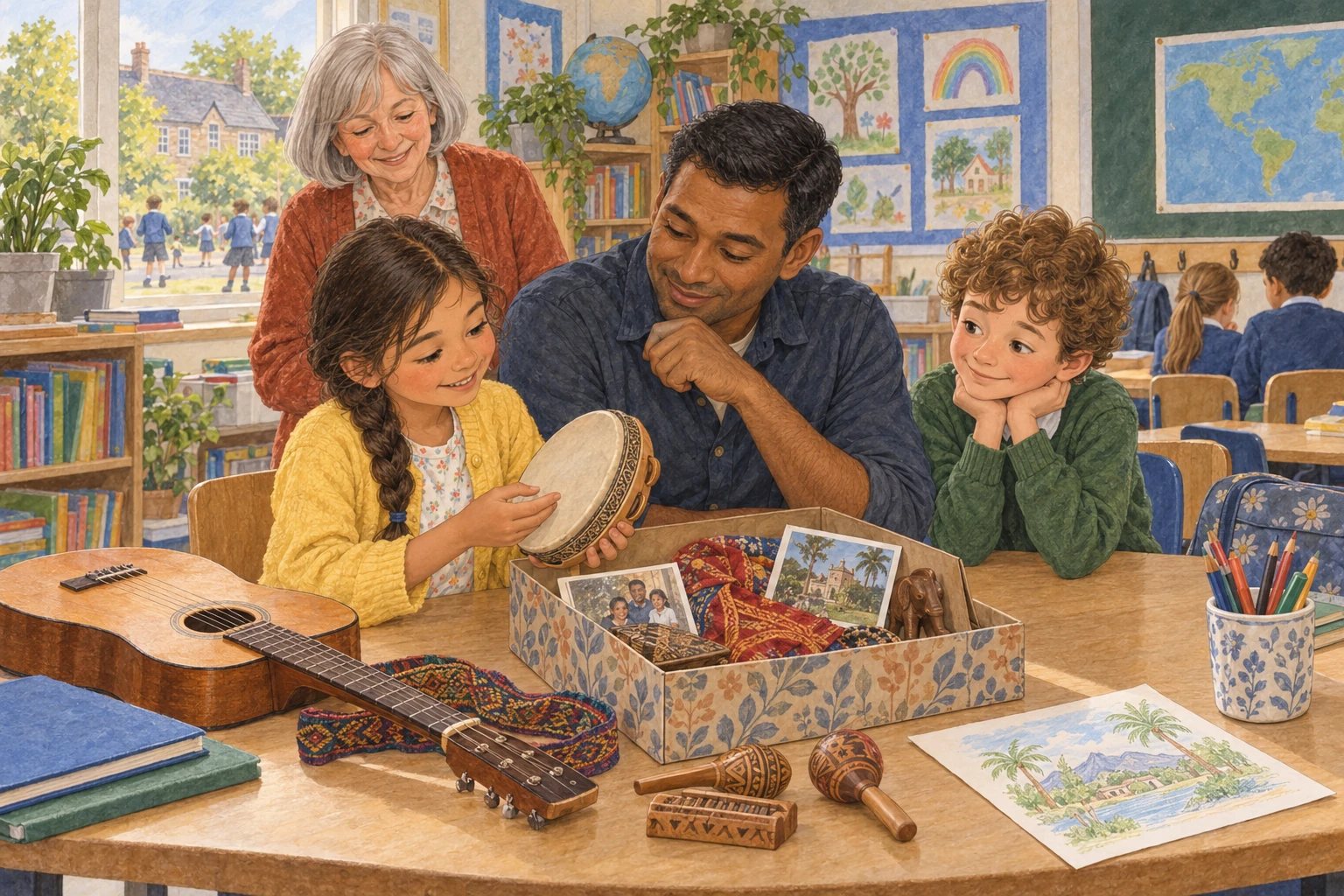
One child asked whether everyone in Ruby’s family liked the same music. “No,” Ruby laughed. “Dad likes loud drums. Nan likes her old tune. I like both sometimes.” Sharing a family did not mean having exactly the same preferences.
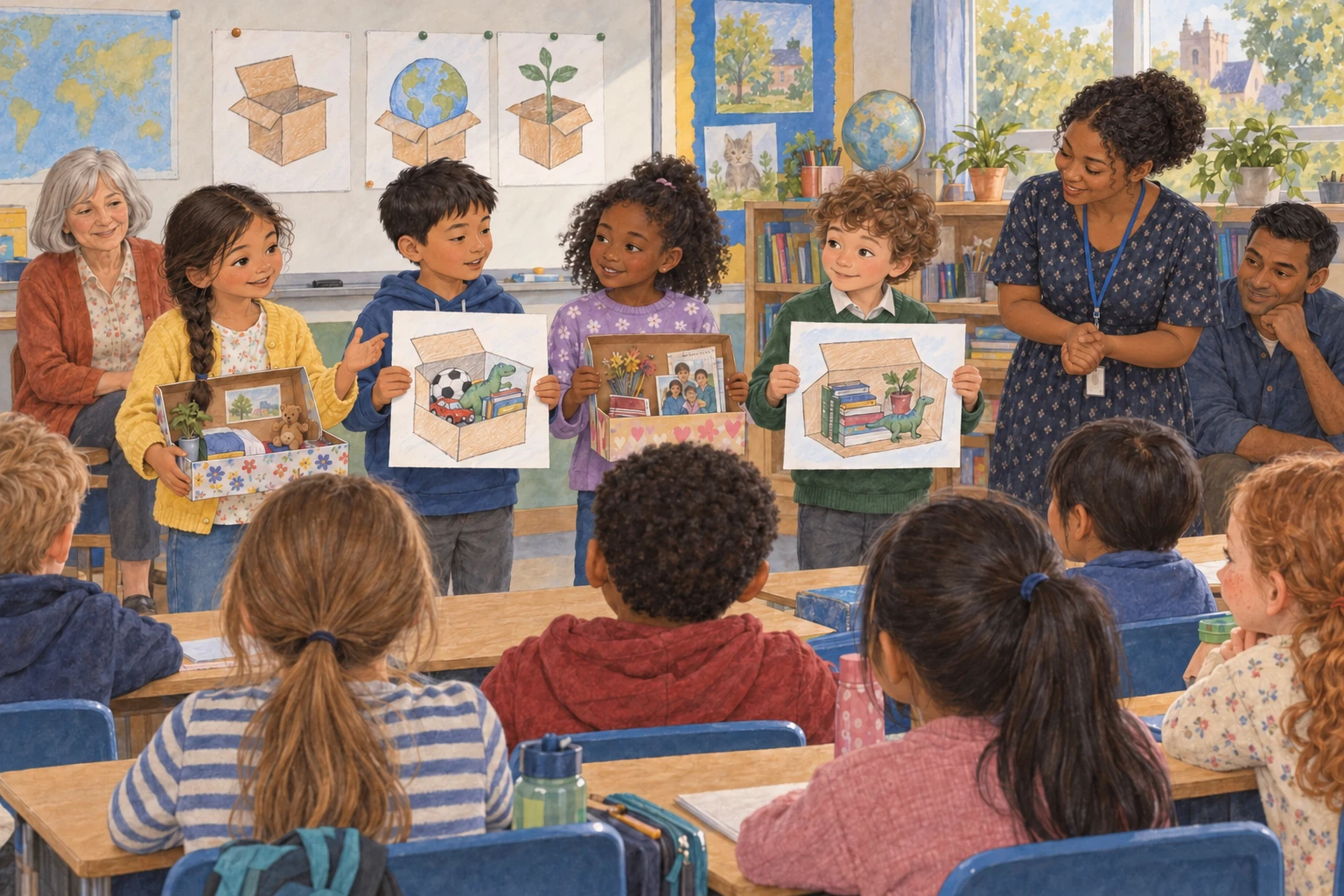
The class arranged their boxes side by side. Some children explained objects aloud. Others used drawings or asked Ms Lane to read a sentence. Ruby listened without guessing what a box meant. When she was unsure, she asked a respectful question.
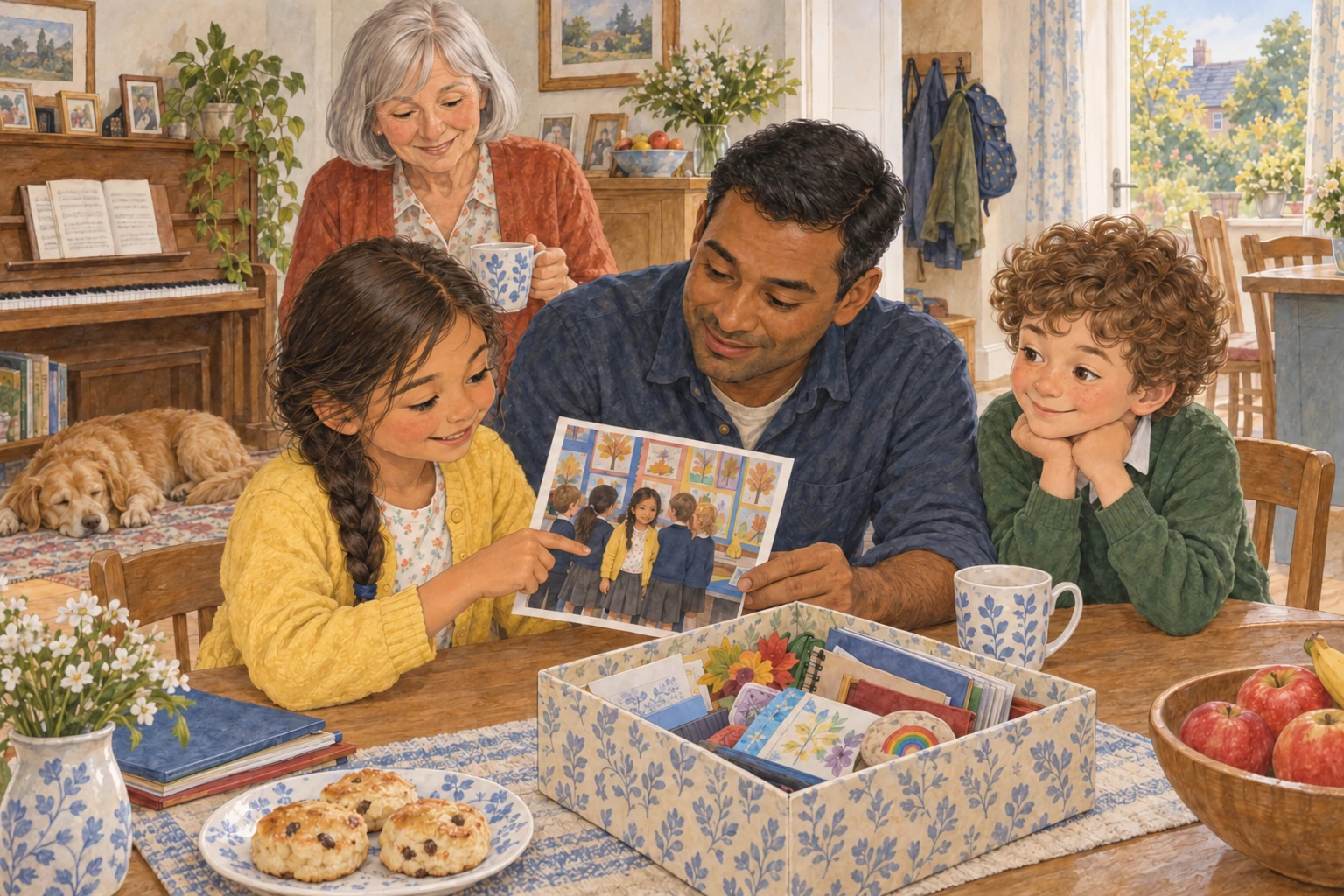
After school, Ruby showed Dad a photograph of the display. Her two homes fitted into one box, but the box was only a beginning. “Next time I might add something new,” she said. Her identity could include old connections and new experiences.