
Sophie’s Game Timer
Shared Reading Books · Technology · Year 2Sophie’s group is sharing a drawing board. They want a clear way to know when to offer the next person a turn. Mr Green brings a large, sealed sand timer. “We can try this,” Sophie says, turning it over carefully.

Orange sand begins to fall through the narrow middle. Sophie starts drawing while her friends watch. After a little while, the stream stops, even though plenty of sand is left in the top. The group looks at the timer in surprise.

“Does that mean my turn is finished?” Sophie asks. Mr Green points to the sand still above the opening. “The timer has stopped working properly,” he says. They agree to pause their game rather than use the stuck sand to decide whose turn comes next.

They set the timer on a level table and look through the clear sides. A clump of sand is blocking the narrow opening. Sophie describes what she can see. Mr Green keeps the case sealed and puts the faulty timer aside for an adult to check.
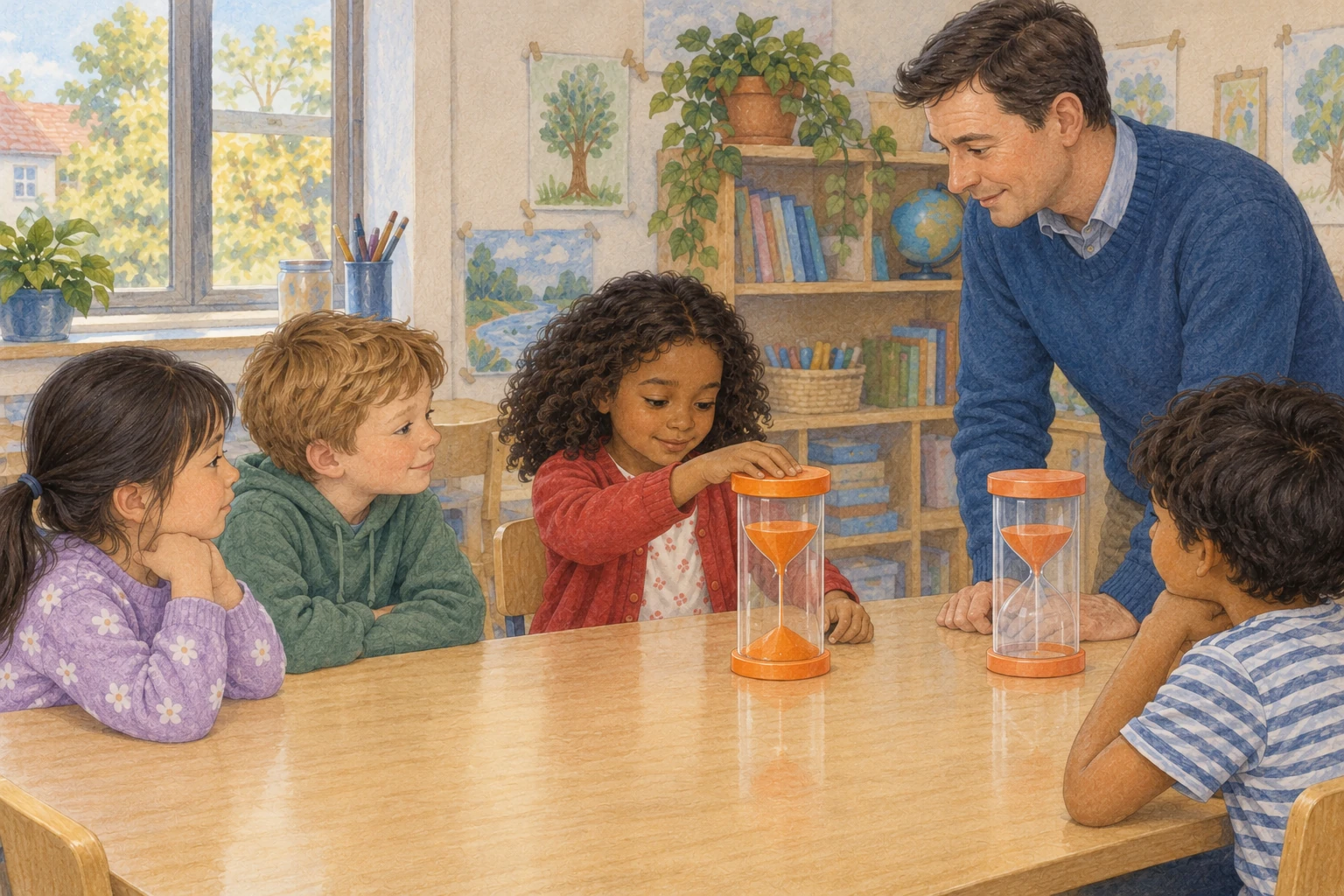
He brings another sealed timer made for the same classroom game. Sophie turns it over on the clear table before anyone starts drawing. This time the sand falls in a steady stream until the top section is empty. “Let’s check it again,” she says.
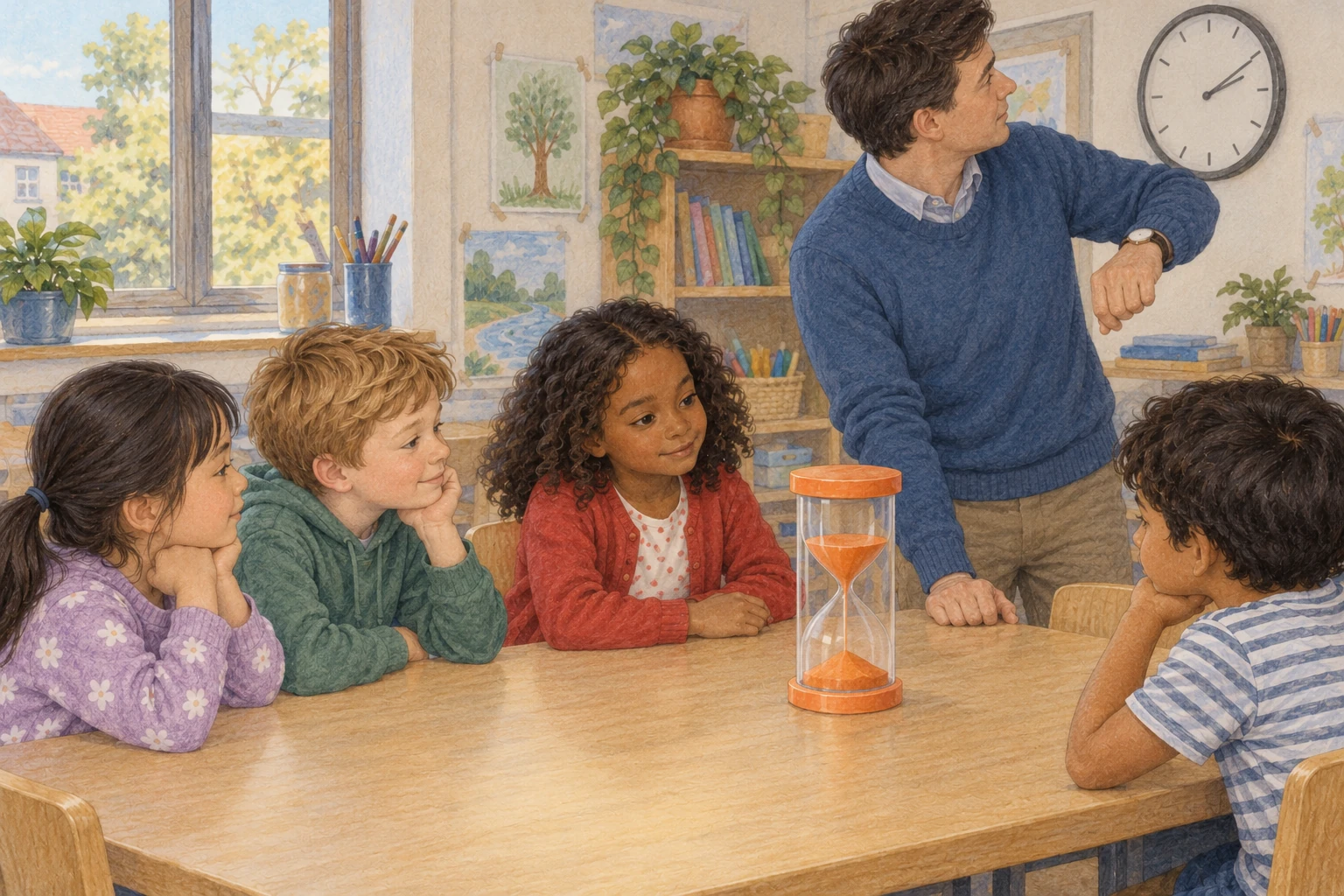
They turn it over for another run. Mr Green checks both runs against the classroom clock. Each run takes about the same amount of time, which is close enough for their game. “It works reliably,” Sophie says. She and her friends agree that anyone can ask for help or a pause during a turn.

The group starts again. When the sand has fallen, Sophie finishes her mark and offers the board to the next child. Everyone can see the timer from the table. Mr Green stays nearby, helping the group take turns without rushing their drawings.

Afterwards, Sophie carries the working timer back to its shelf. “We tested it before we trusted it,” she tells Mr Green. The faulty timer is still safely set aside. Their next game will begin with a quick check that the sand can fall freely.