
Stanley’s Ball Sorter
Shared Reading Books · Technology · Year 4Stanley opens the box for the family’s two ball games. Large blue balls and even larger yellow balls are mixed together. Sorting them by hand takes time. Grandad asks whether a simple model could separate the sizes while they tidy up.
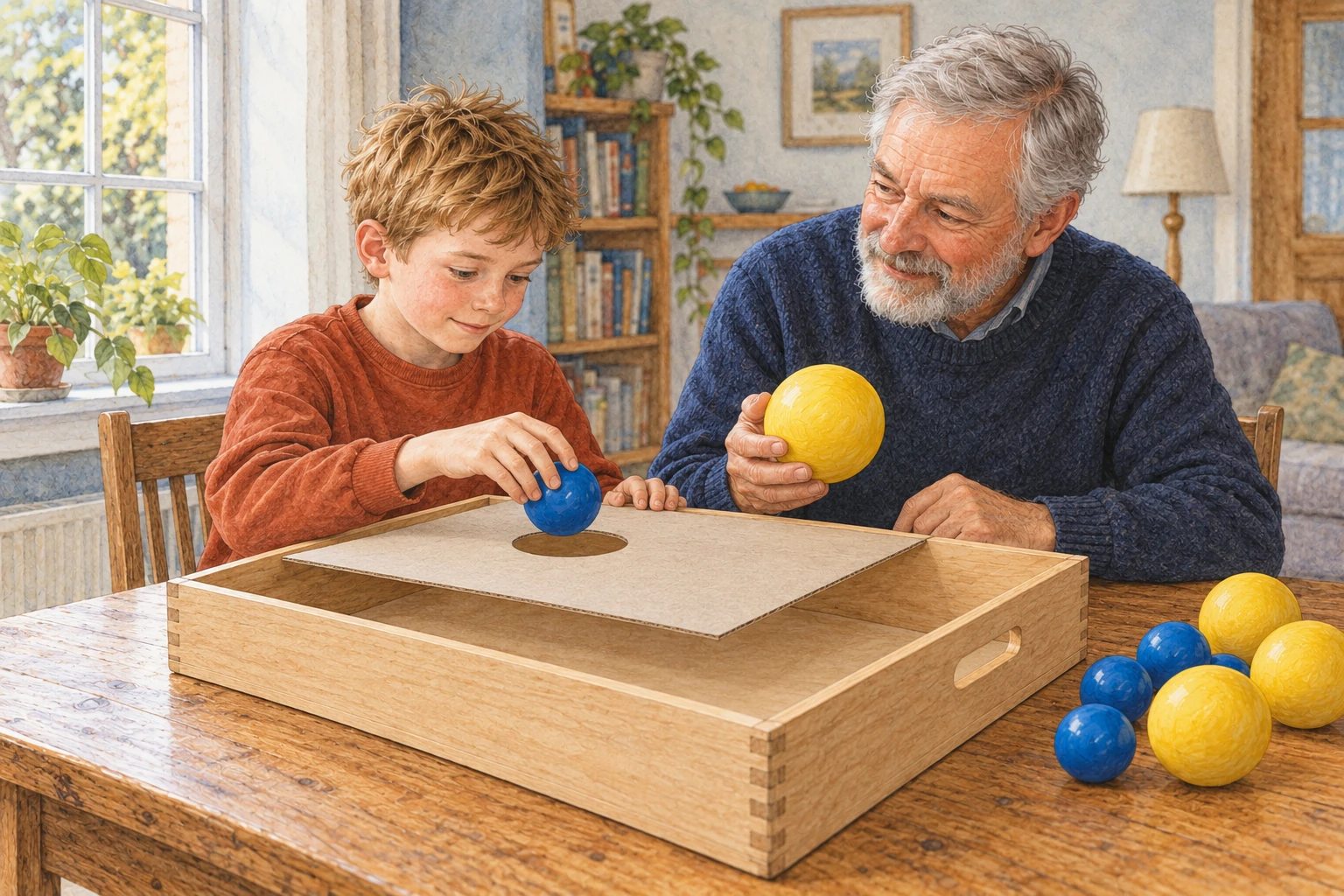
They cut a round opening in stiff card, big enough for a blue ball but too small for a yellow one. Grandad prepares the opening and smooths its edge. Stanley checks both sizes while the card lies flat above a shallow collecting tray.
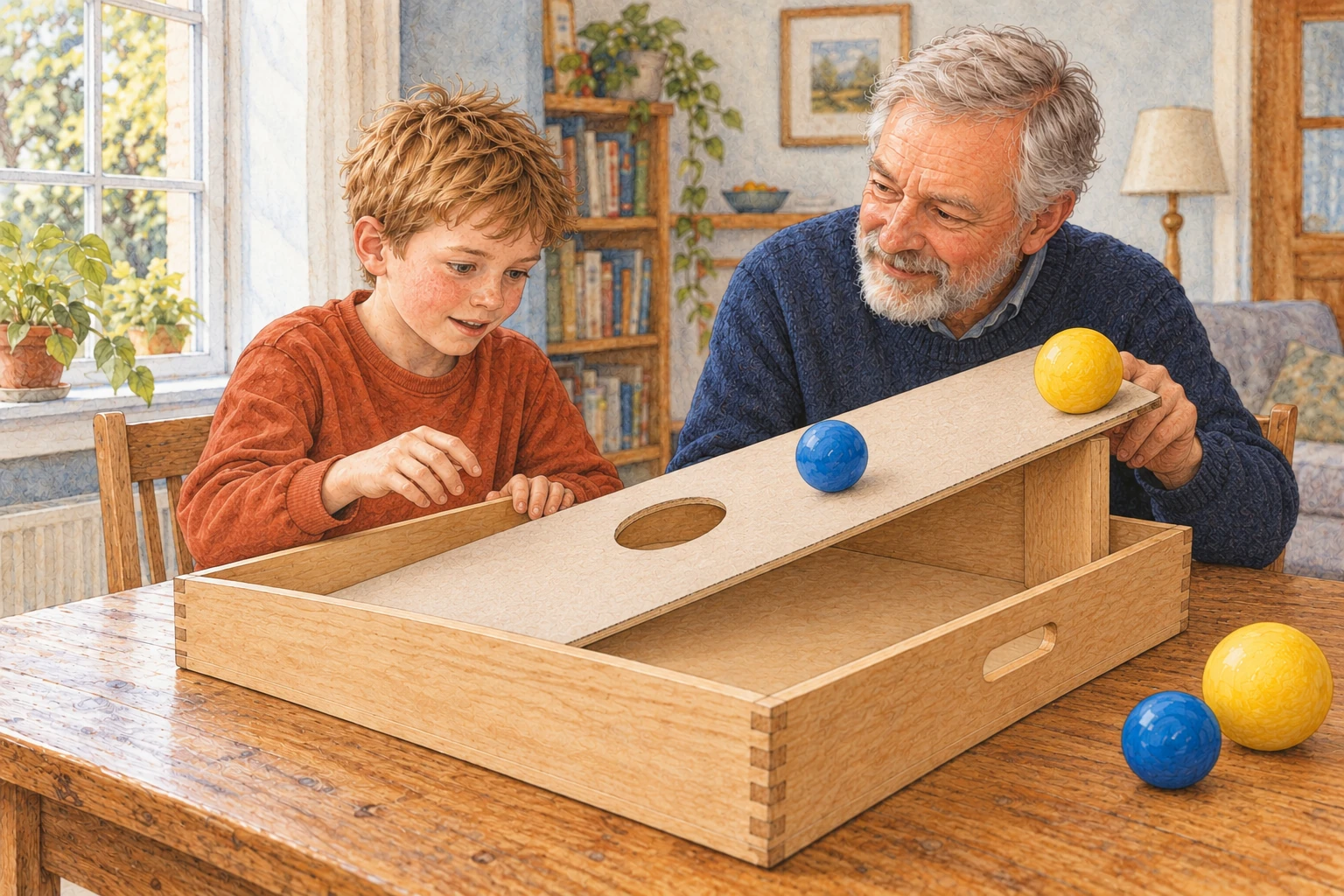
Next they raise one end to make a gentle ramp. A blue ball rolls towards the opening but shoots across it. It is moving too quickly to drop through. The yellow ball reaches the far end as planned. “The hole is right, but the speed matters too.”
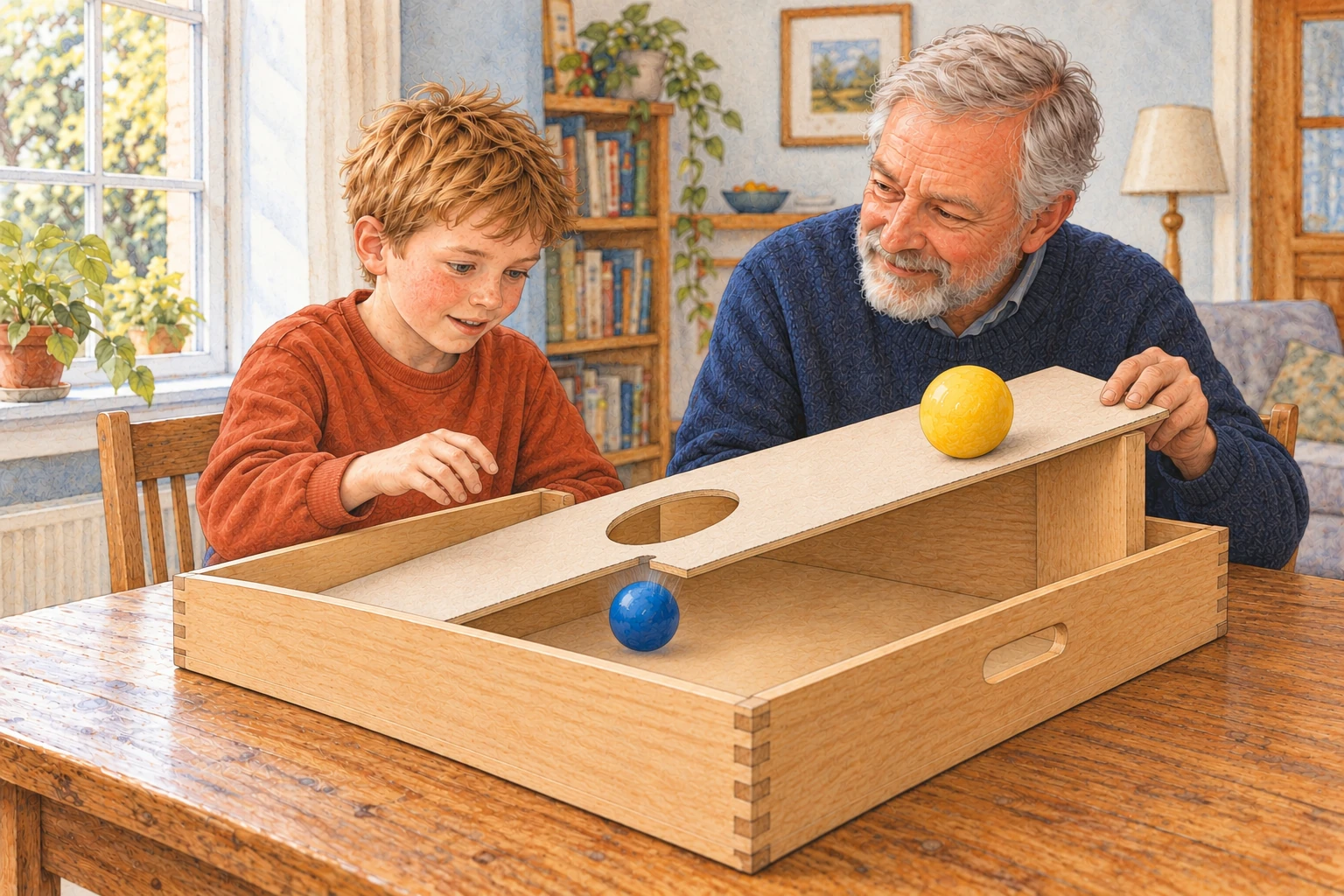
They lower the start of the ramp and test again with the same balls. The blue ball drops into the tray, while the yellow ball rolls beyond the opening. Stanley repeats the trial several times, starting each ball from the same place.

A yellow ball then rolls off the far edge of the model. Grandad catches it inside the broad outer tray. Stanley adds a low end stop and a second collecting tray beneath the far end. Both groups now have somewhere to arrive.

His sister tries returning a handful of balls at once. Two blue balls bump together and miss the opening. Stanley cannot claim the sorter works well just because it worked with single balls. They add a wide starting lane that encourages one ball at a time.
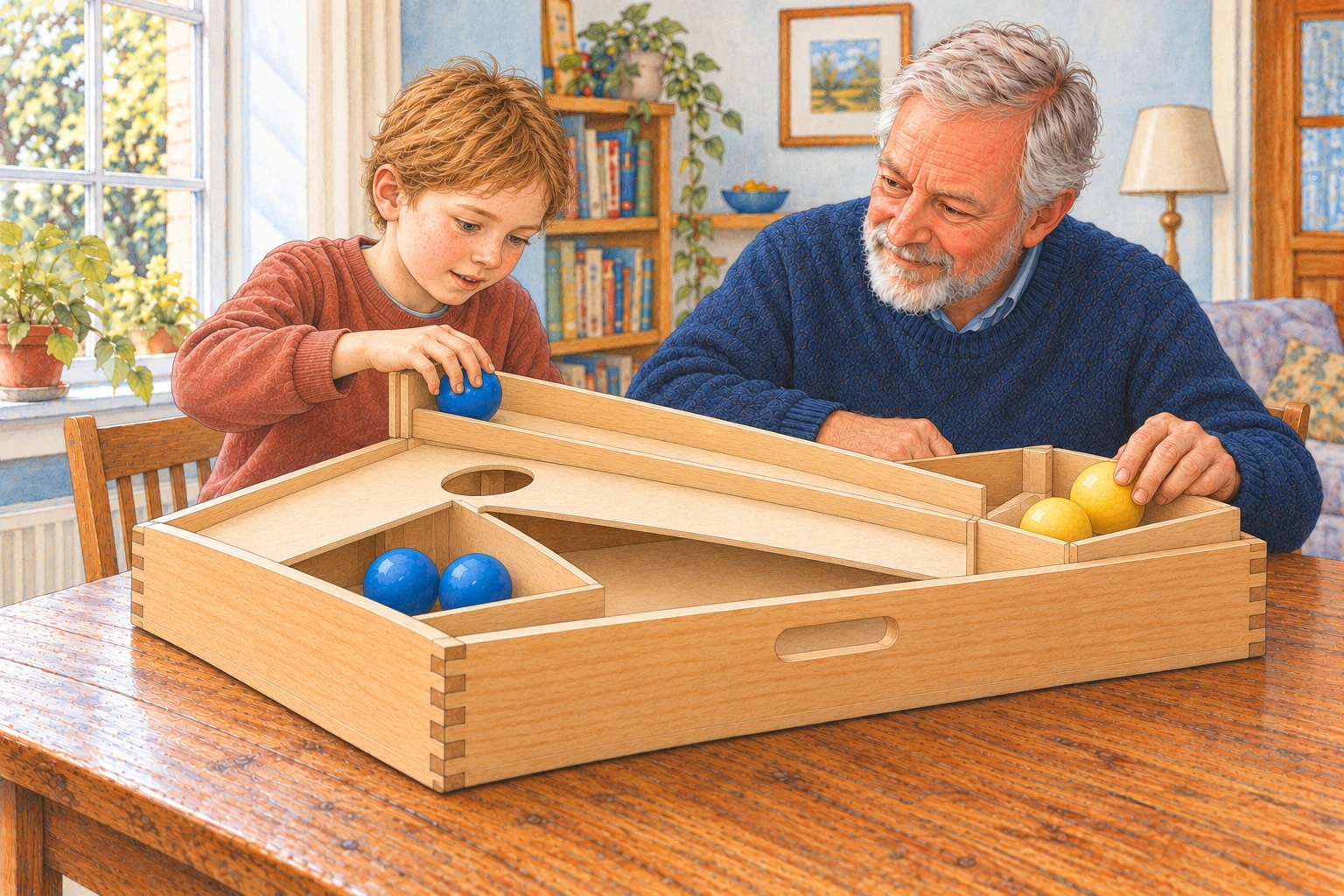
They take turns testing it. One person feeds balls steadily while the other checks the collecting trays. When a ball goes into the wrong group, they pause and look at the cause. The gentle slope and spaced feeding are more reliable than a quick handful.
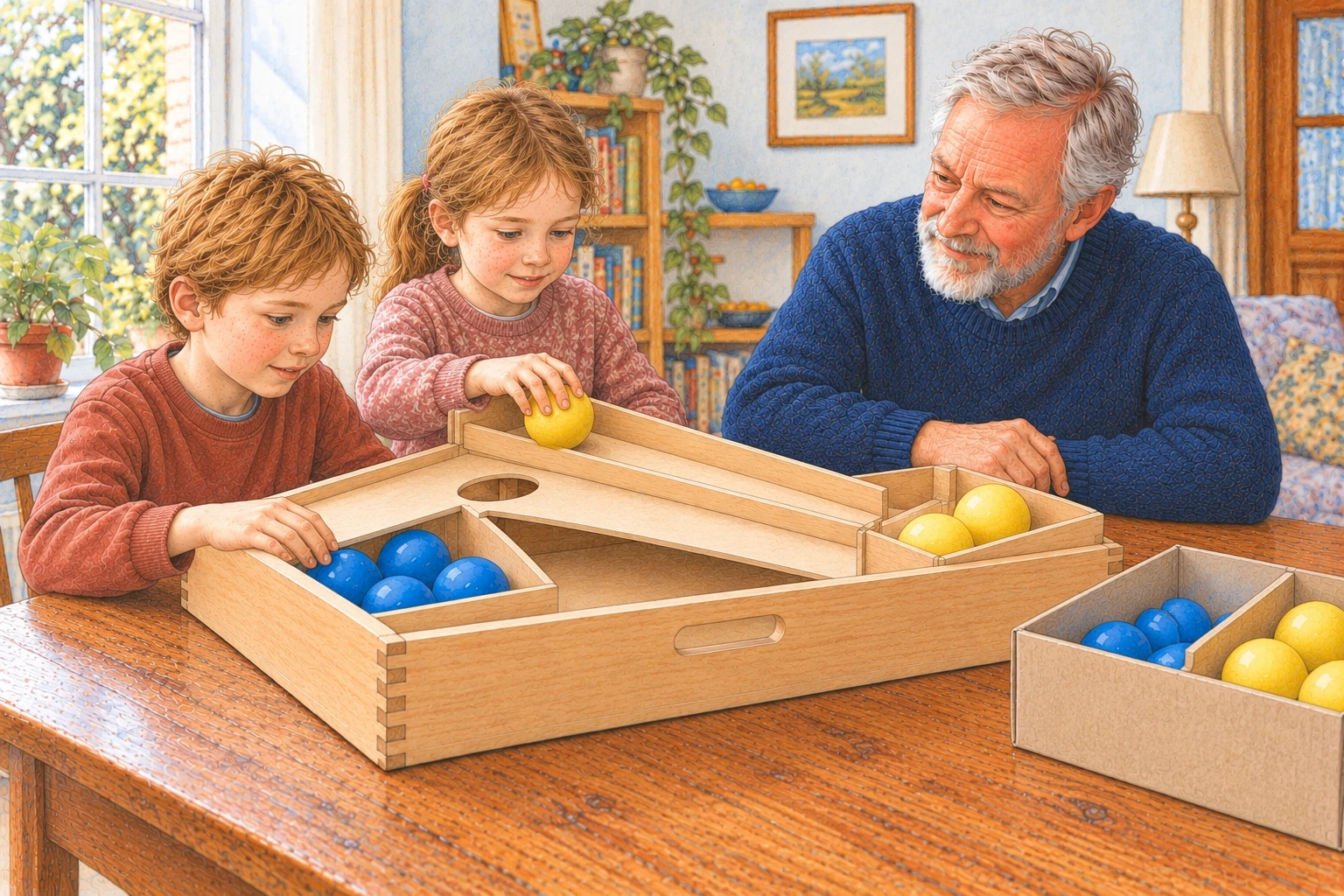
After the games, Stanley’s sister uses the sorter to tidy the box. They still check the groups before putting the trays away. “A system has more than one useful part,” Stanley tells Grandad. “The start, the opening and the collecting places all matter.”