The Broken Signpost
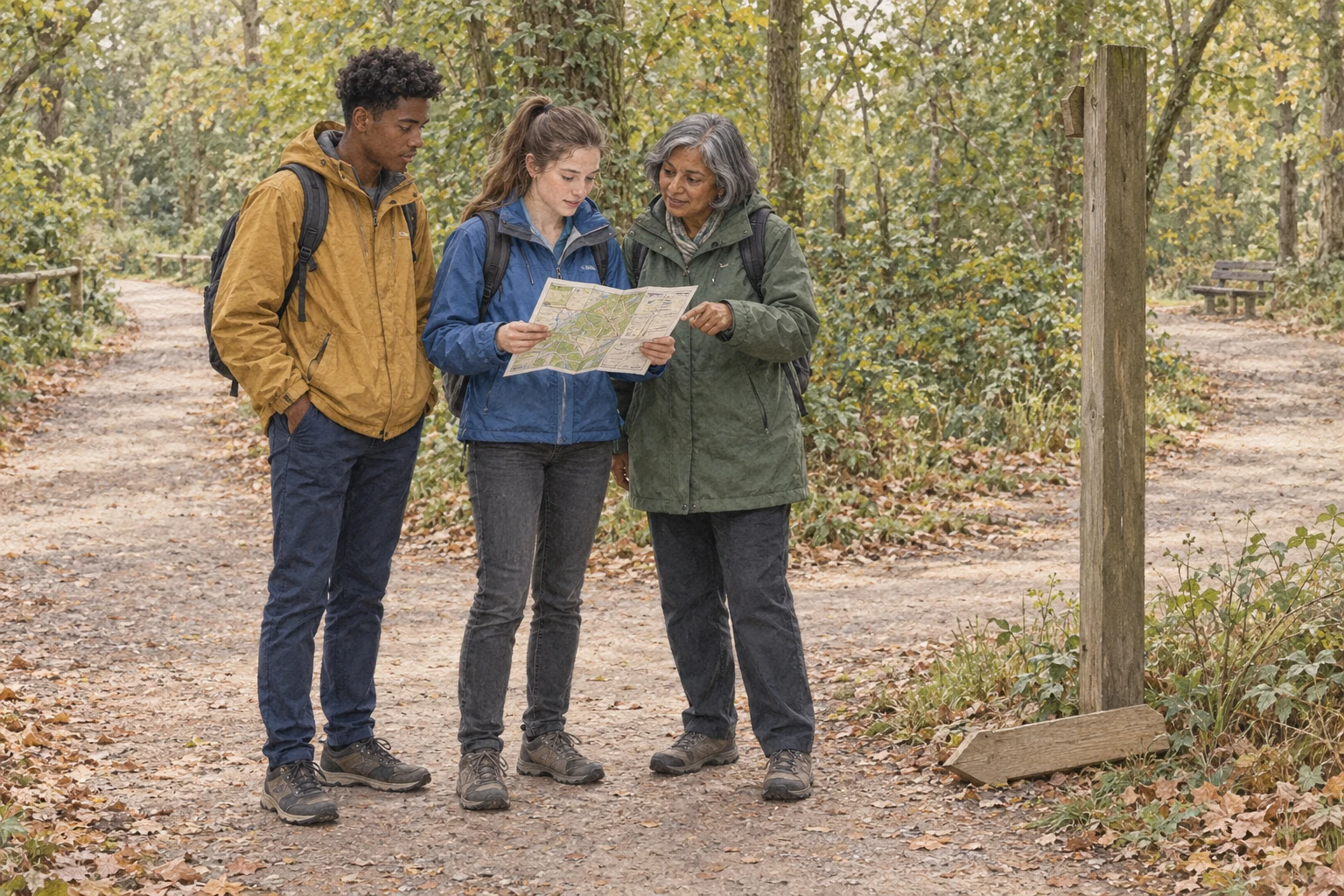
School Readers · Level 20The wooden arrow lies beside the path, pointing towards a narrow opening between the trees. Simon notices it before anyone reads the upright post. Their school group is walking through a familiar public woodland park with Mrs Wood. Laura unfolds the visitor map. The fallen arrow looks as though it offers a quick answer, but its broken fixing means it may no longer show the direction it once did.
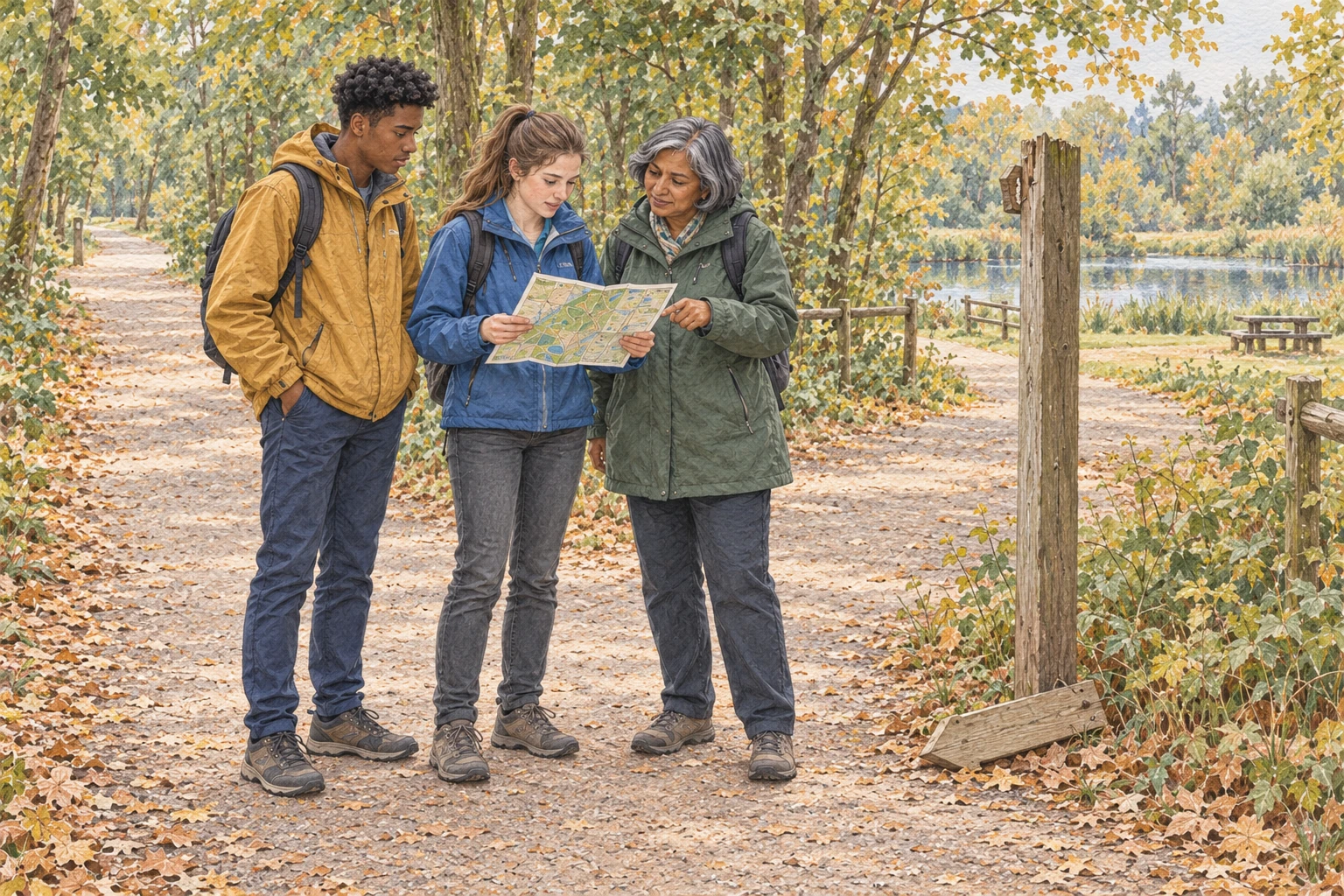
Simon thinks the narrow opening must lead to the visitor centre. It slopes gently downhill, and he remembers the centre being lower than the entrance. Mrs Wood keeps the group together on the broad marked path while they check. Laura asks what else they can recognise. The map shows a pond, a picnic clearing and two wide paths forming a loop. A slope alone cannot tell them which route they are looking at.
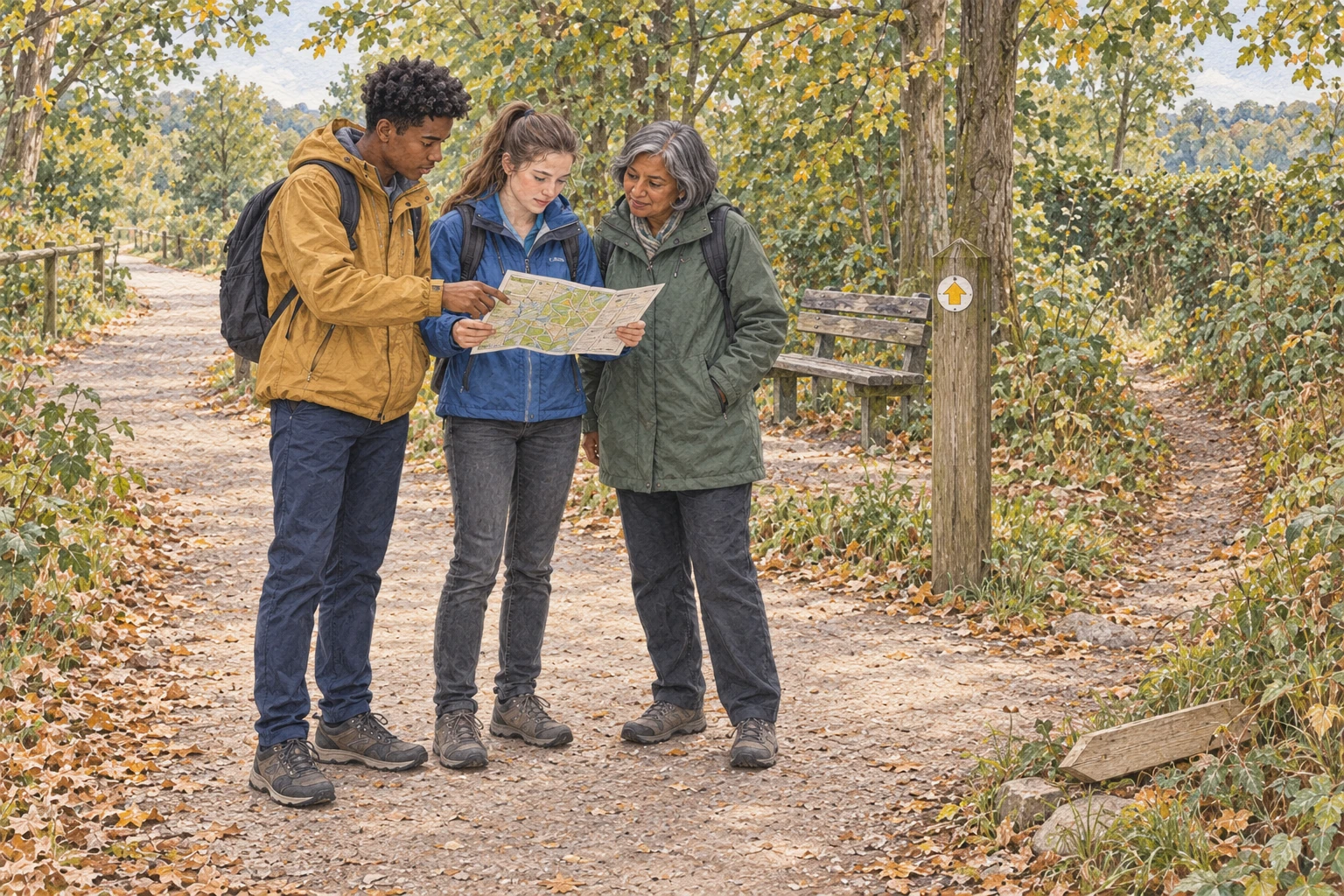
They compare the map with a bench and a small footpath marker that remains fixed beside the junction. Simon turns the paper so the paths line up with what they can see. The narrow opening is not their planned route. It is a gap used for park maintenance, rather than the public path marked on the visitor map. He is glad they stopped before following an arrow that could have fallen facing any way.
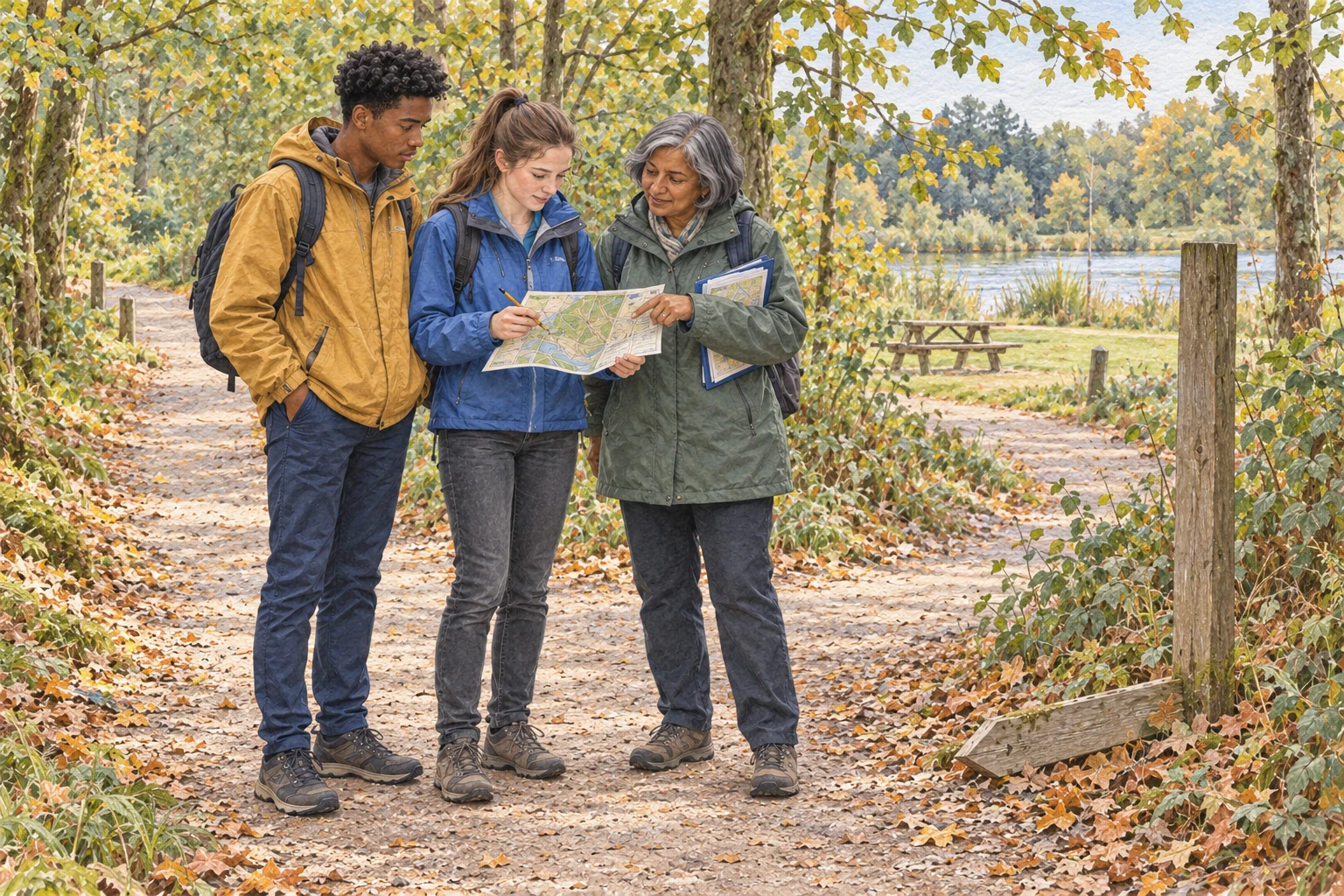
Mrs Wood has a copy of the agreed outing route in her folder. It follows the wider loop past the picnic clearing and back to the visitor centre. They can stay on that familiar route without needing the broken sign. Laura marks the junction lightly on their map so they can report the damage later. They leave the fallen wood where it is instead of trying to repair park equipment themselves.
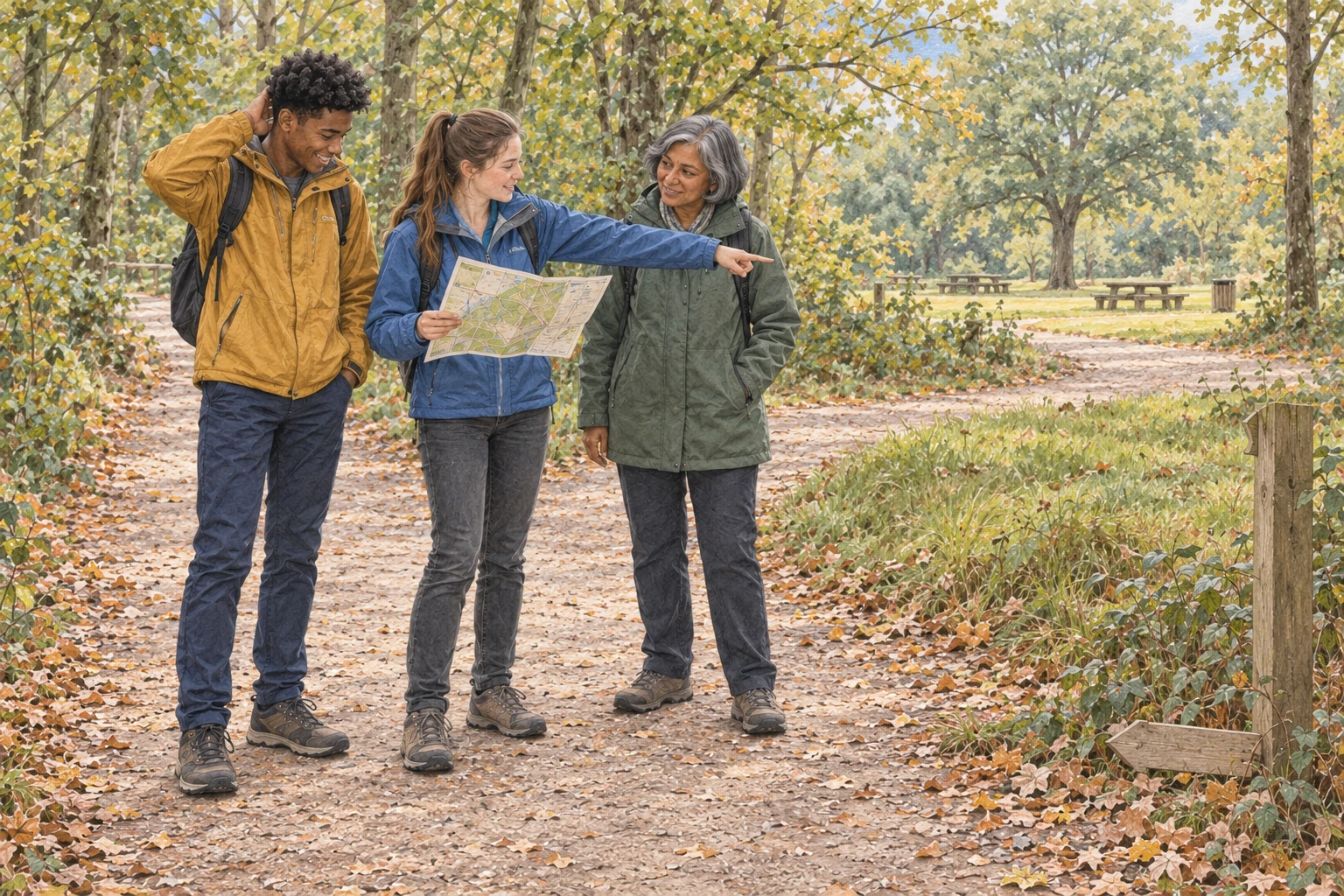
As they continue, Simon watches for the picnic clearing. He spots a patch of grass and announces that they have arrived. Laura points beyond it to the larger open space with tables shown on the map. The first patch is only a grassy bend. Simon laughs at himself. He has been looking for one thing that might fit, rather than several details that fit together.
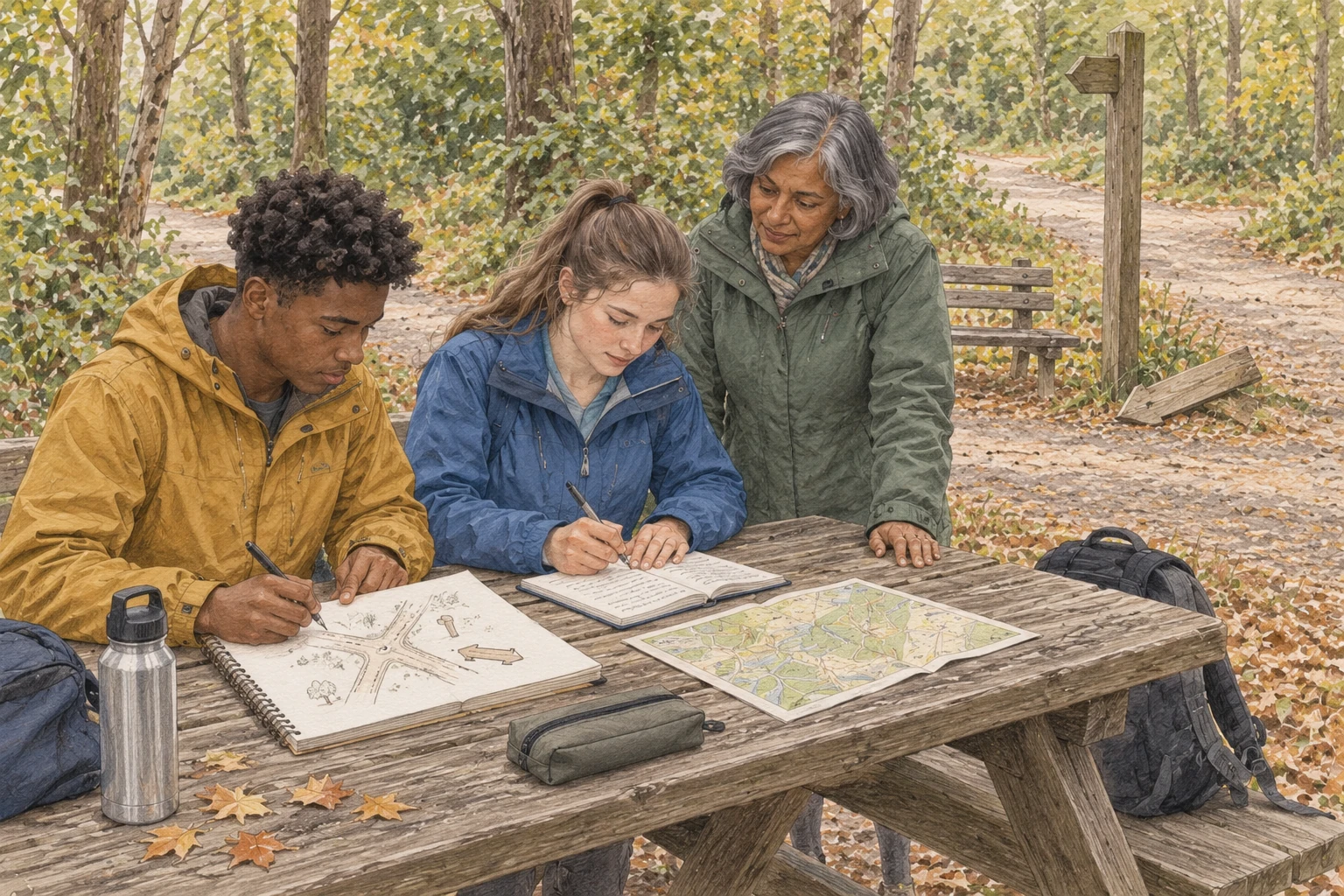
At the clearing, they sit with the group while Mrs Wood checks the return route. Simon sketches the junction and adds the fixed marker, bench and fallen arrow. He draws the arrow at an angle to show that its position was uncertain. Laura writes the path description beside it. Their record needs to help the park staff find the place, not simply say that a sign is broken somewhere among the trees.
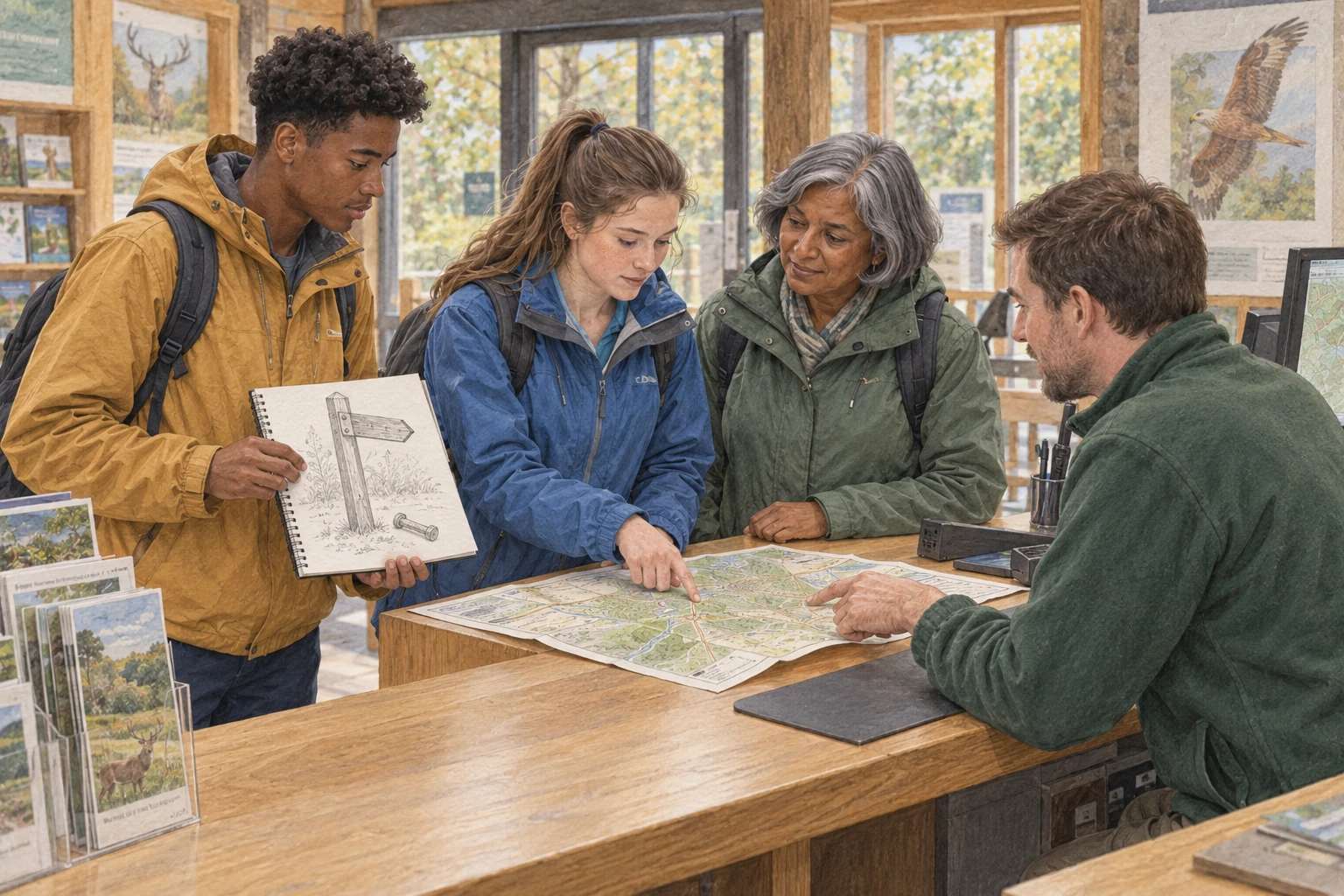
Back at the visitor centre, Mrs Wood helps them report what they saw to a member of staff. Simon shows the sketch while Laura points to the junction on the map. The staff member recognises it and explains that a repair team will check the post. The students do not know what caused the damage, so they describe only the fallen arrow and its loose fixing.
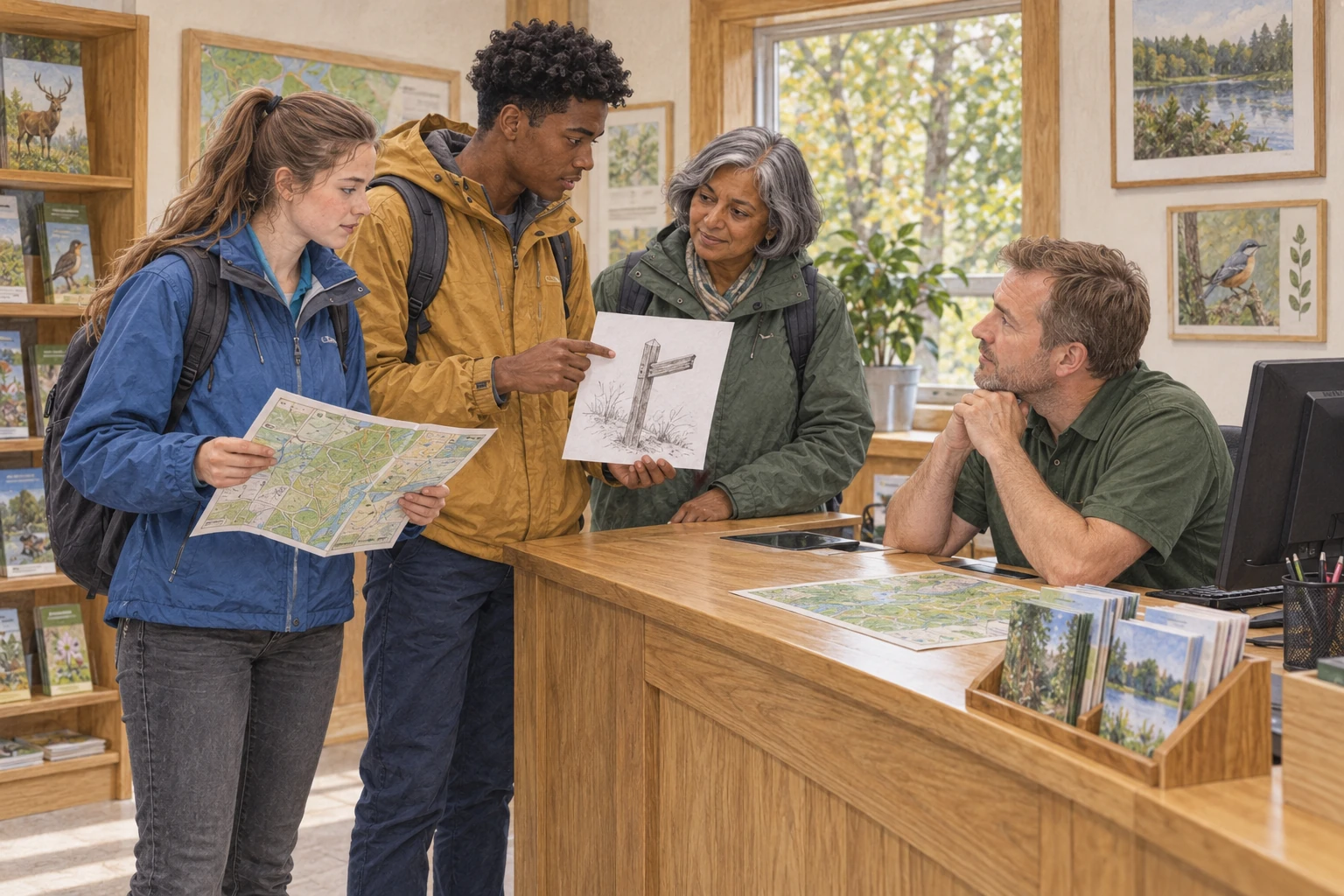
The staff member thanks them for the clear location and asks whether they found their planned route. Simon explains how the fixed marker and map helped. He almost says that the broken sign sent them the wrong way, then remembers that they checked before choosing a path. The fallen arrow had looked convincing, but it was no longer a reliable guide.
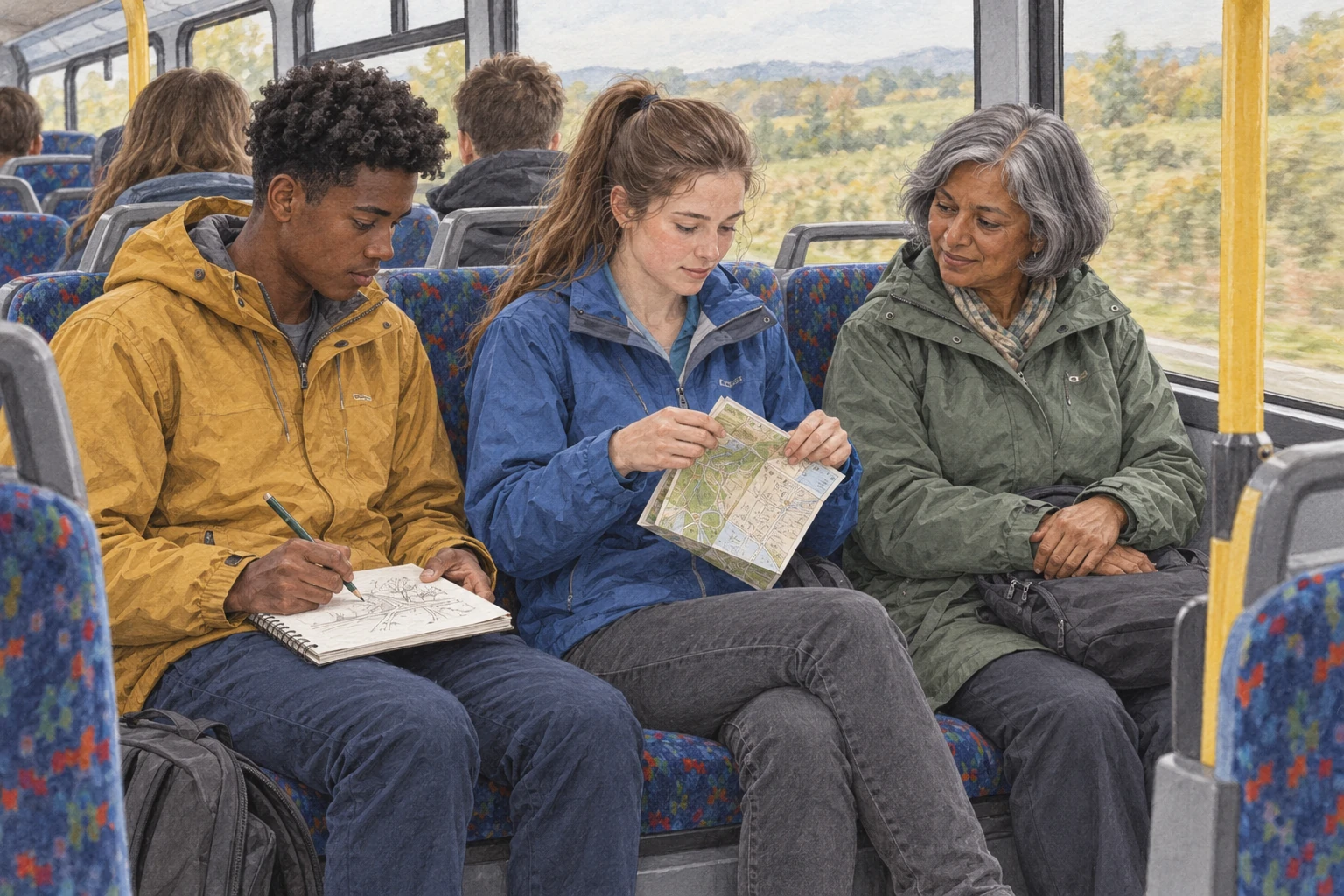
On the bus back, Laura folds the map along its creases while Simon finishes his sketch. The morning has included no grand adventure off the path, yet he has plenty to write about. A familiar place can still ask for careful looking. Next time he sees a helpful-looking arrow, he will check what supports it, especially when the arrow itself is lying loose on the ground.