The Canoe Team
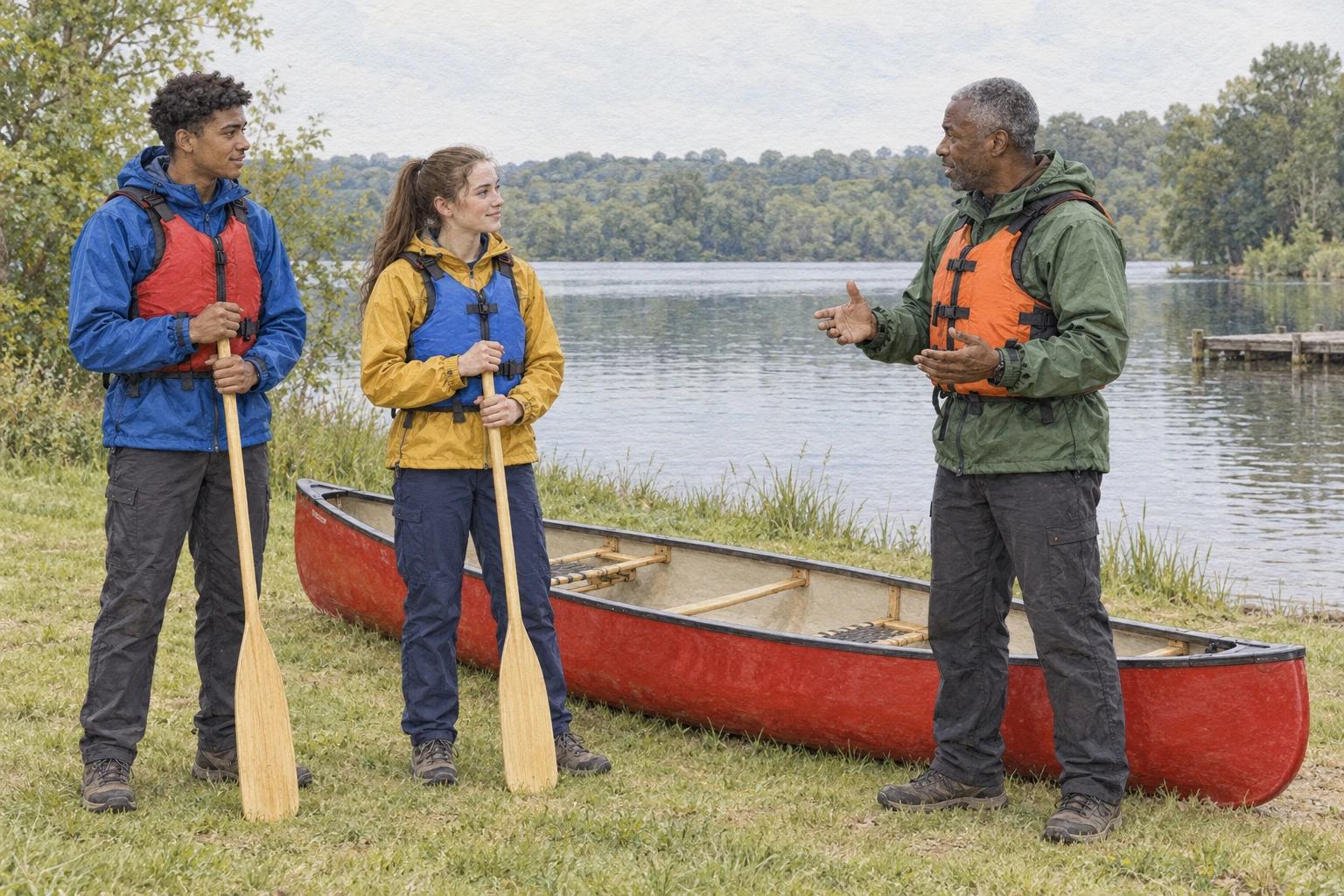
School Readers · Level 19Harvey has been looking forward to the canoe session all week. At the lake, he helps Anna carry their paddles to the grassy launch while Mr Dale checks the equipment. The broad red canoe has space for both students and their instructor. Everyone wears a fastened buoyancy aid. Before they go near the water, Mr Dale explains that today’s aim is to work together, not to travel farther than the other group.
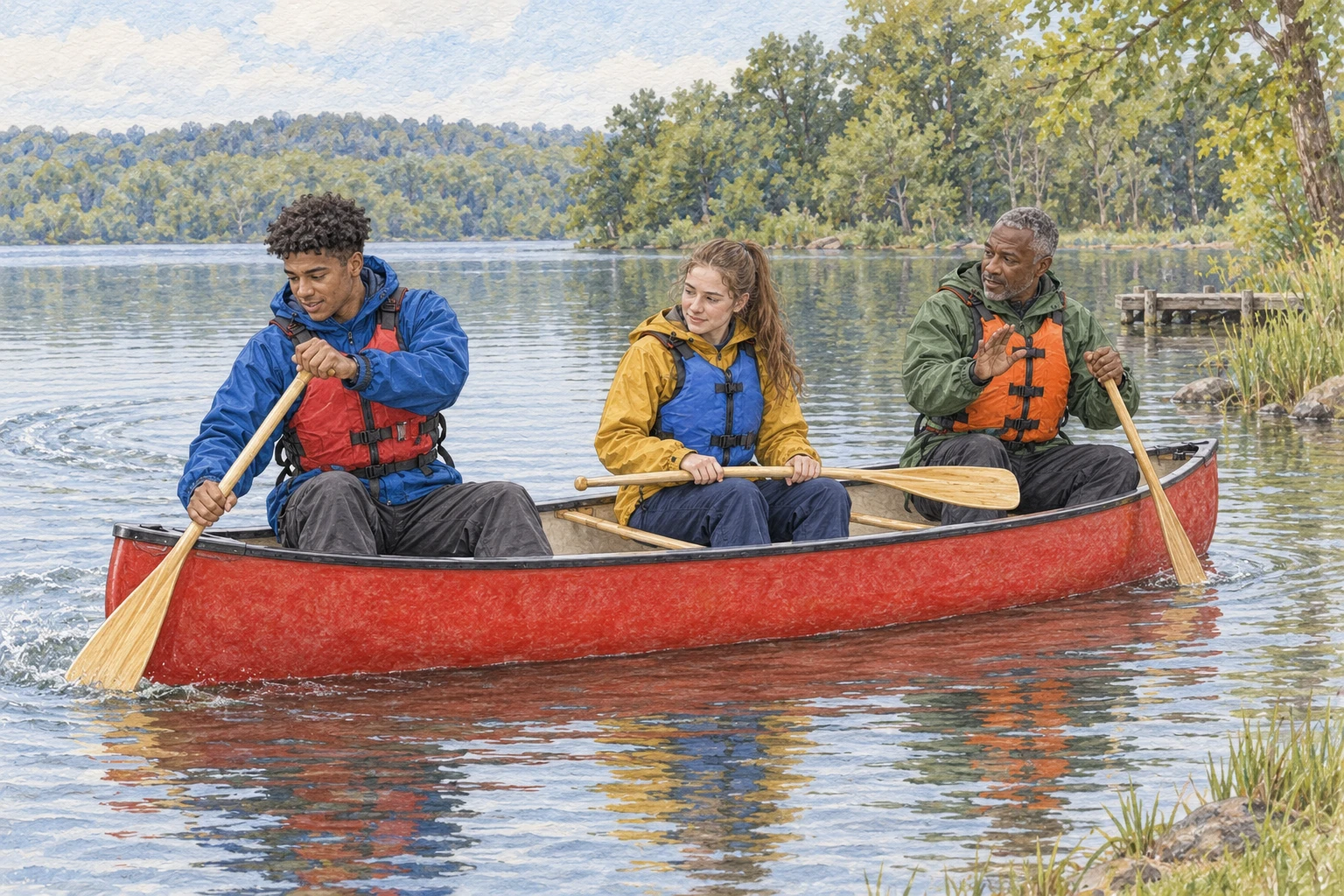
On the sheltered water near the shore, Harvey starts paddling quickly. Anna takes a slower stroke as she follows the instructor’s demonstration. Their canoe turns more than Harvey expects. He tries a stronger pull, thinking the boat only needs more effort. Mr Dale brings them to a calm stop in the practice area. Anna rests her paddle across her knees and looks at the curve they have made.
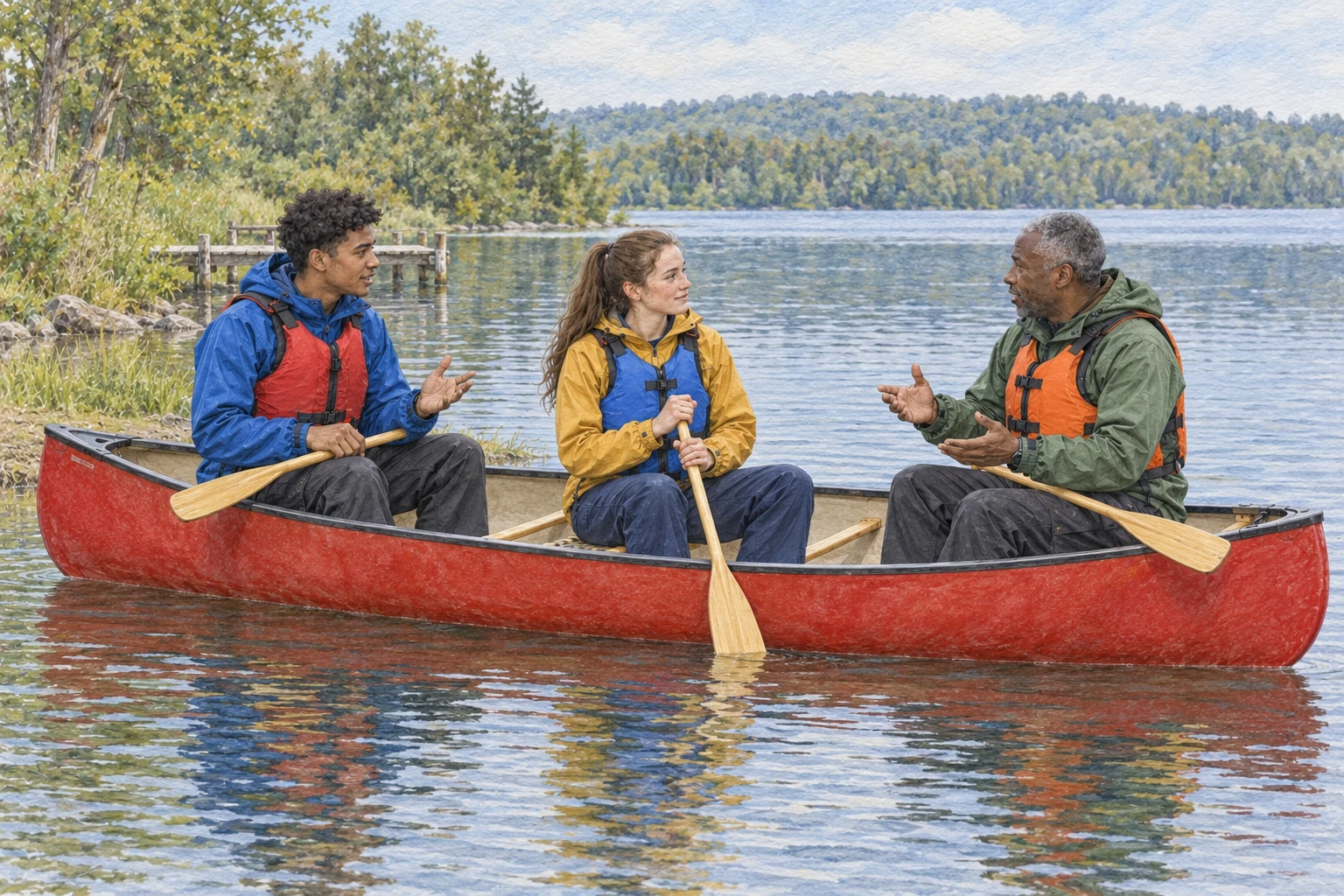
“I thought we were going straight,” Harvey says. Anna thought so too, but they had been paying attention to different things. He was watching the front of the canoe. She was watching Mr Dale and the space around them. The instructor asks them to describe what each person noticed. Nobody is in trouble. Their different observations give the team more to work with than simply deciding who paddled incorrectly.
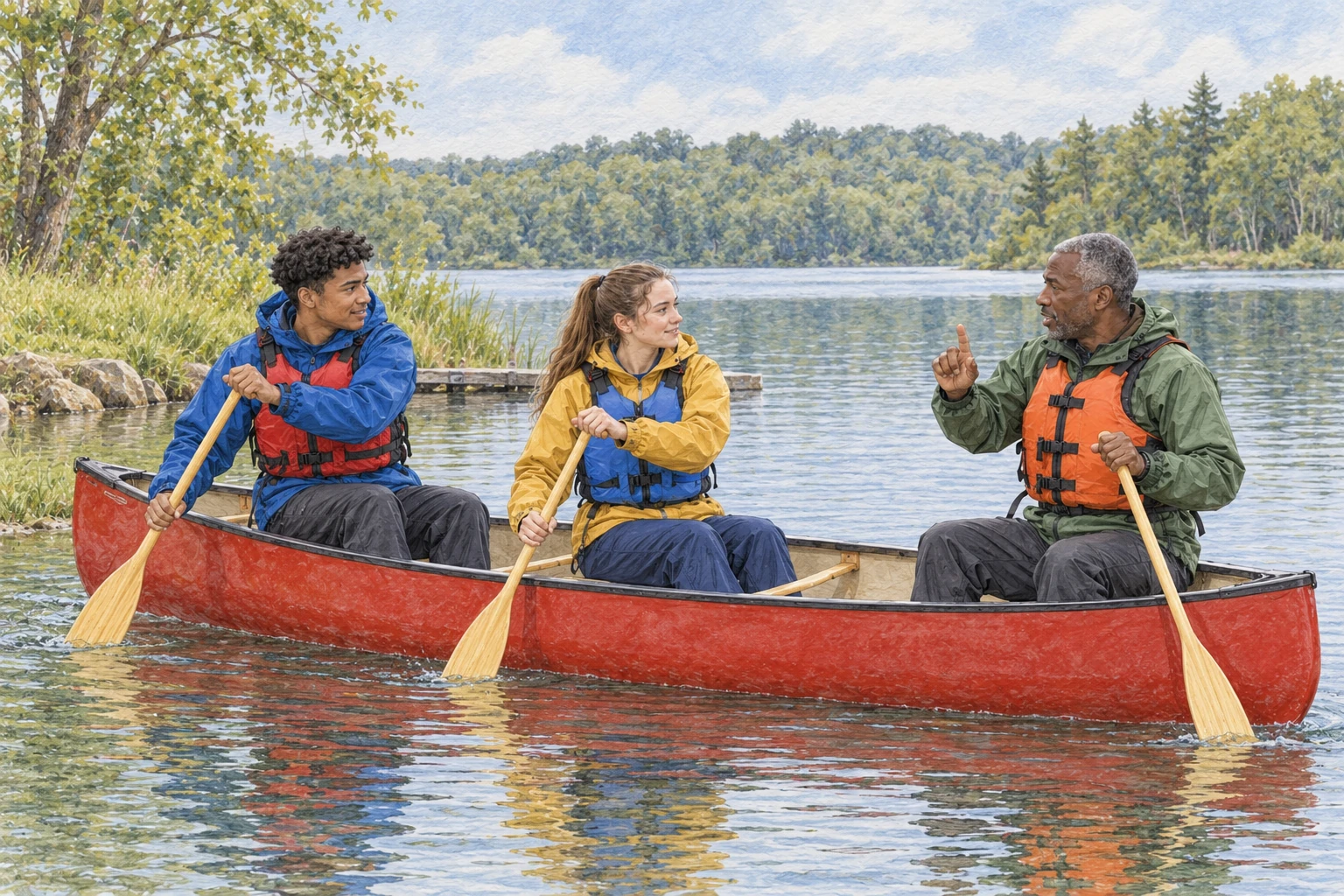
Mr Dale guides another short practice in the same sheltered area. This time, Harvey and Anna agree to coordinate their paddles and listen for his steady count rather than rushing ahead. Harvey discovers that waiting can take as much attention as moving. Anna looks up more often, checking where the canoe is heading while following the rhythm. Their next line across the practice area is easier for both students to understand.
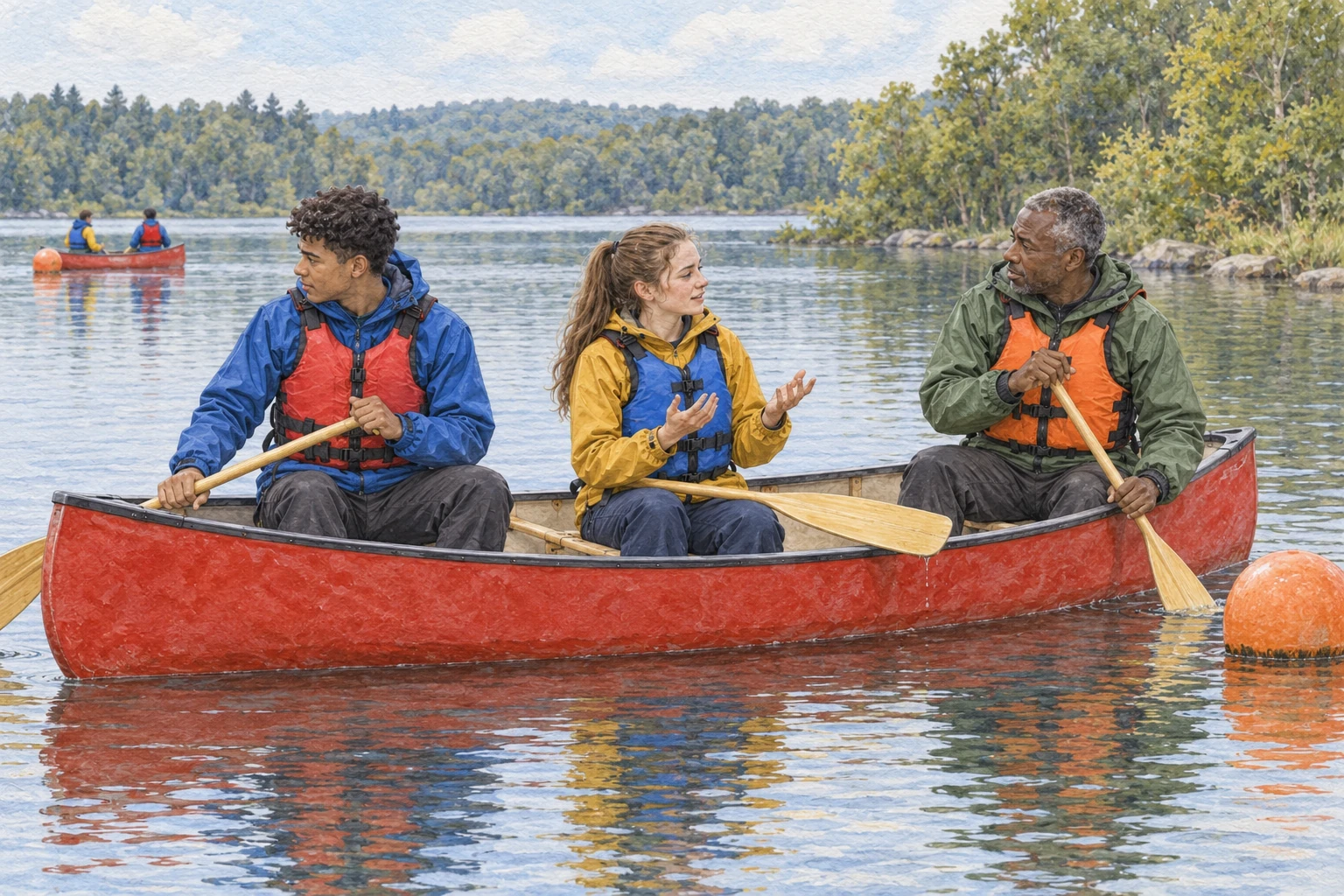
At a planned rest beside the instructor’s chosen marker, Anna says that her hands need a break. Harvey glances towards the other canoe, which has already reached its marker. For a moment, he wants to keep going. Then he remembers the aim Mr Dale explained on shore. A team cannot finish its own task well by ignoring what one of its members has just said.
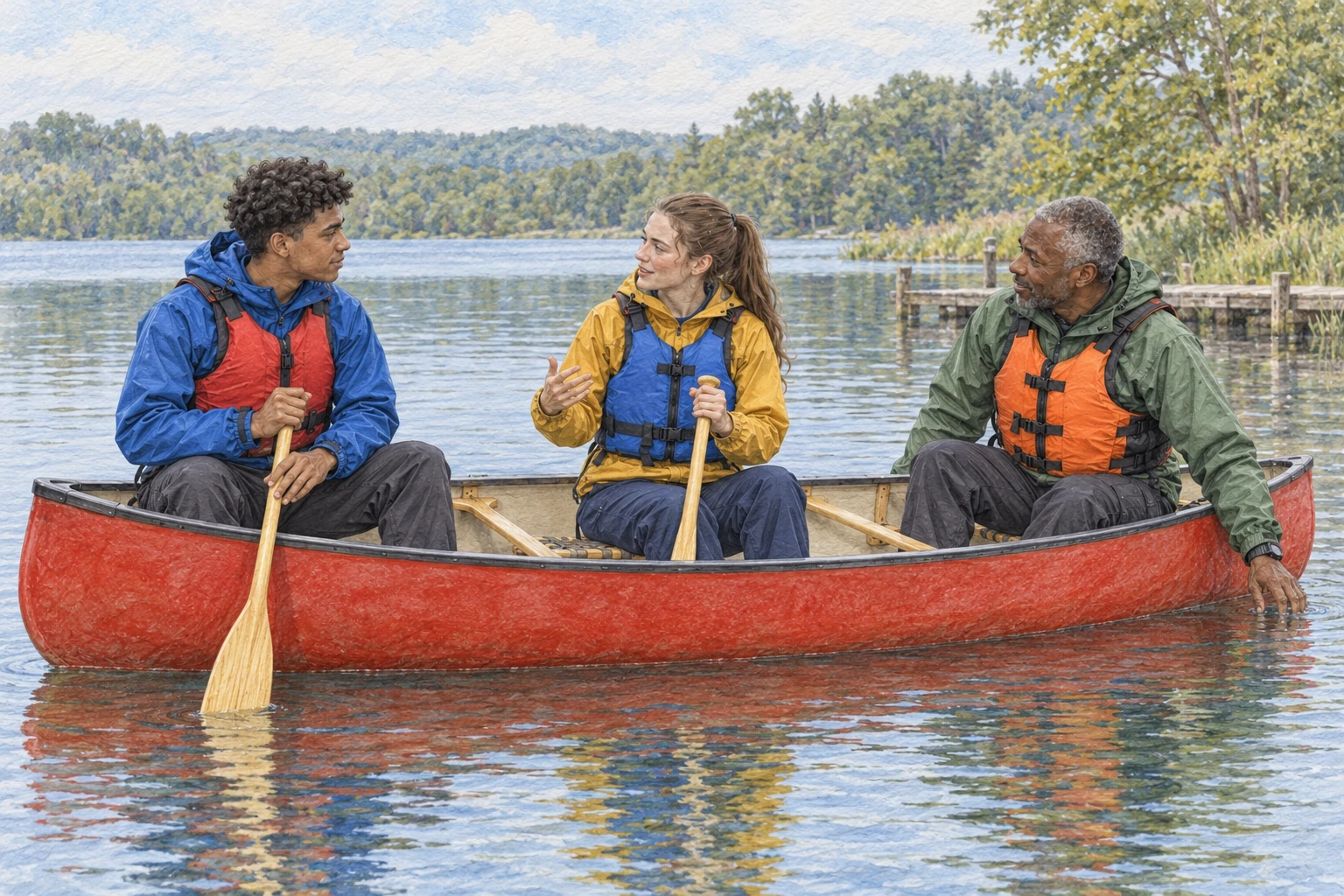
They rest together while Mr Dale keeps the canoe steady. Harvey asks Anna which part feels most difficult. She explains that she has been gripping harder whenever she is unsure what comes next. The instructor listens and guides their next short practice. Harvey waits for the agreed start instead of beginning suddenly, and Anna says she finds the plan easier to follow when they all know the next step.
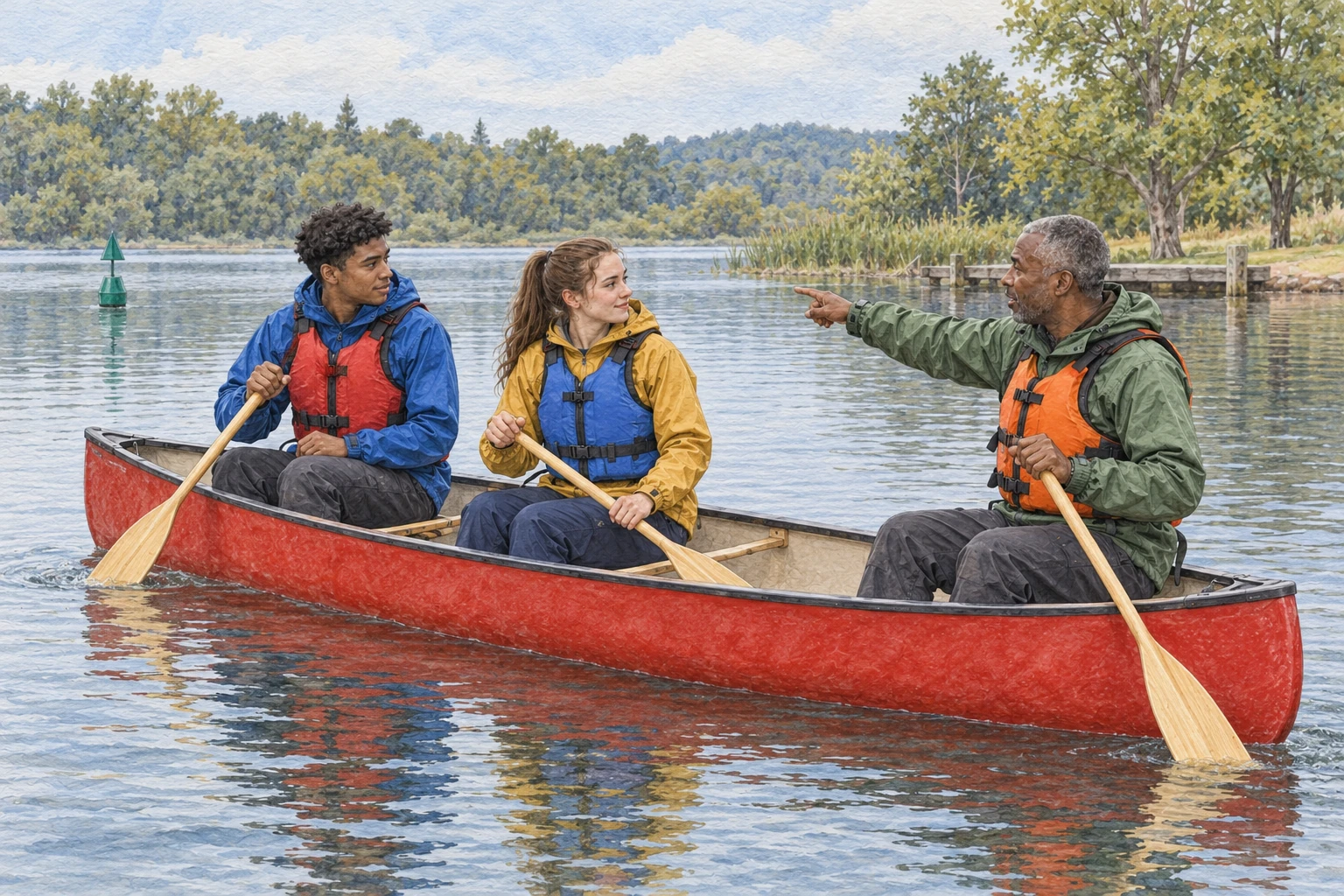
On their return towards the launch, a small breeze moves across the water. Mr Dale adjusts their route within the sheltered area and explains the change before they continue. Harvey notices Anna checking the marker, then looking towards him. He is ready to listen. They follow the instructor together, keeping the pace they agreed rather than chasing the other canoe back to the grass.
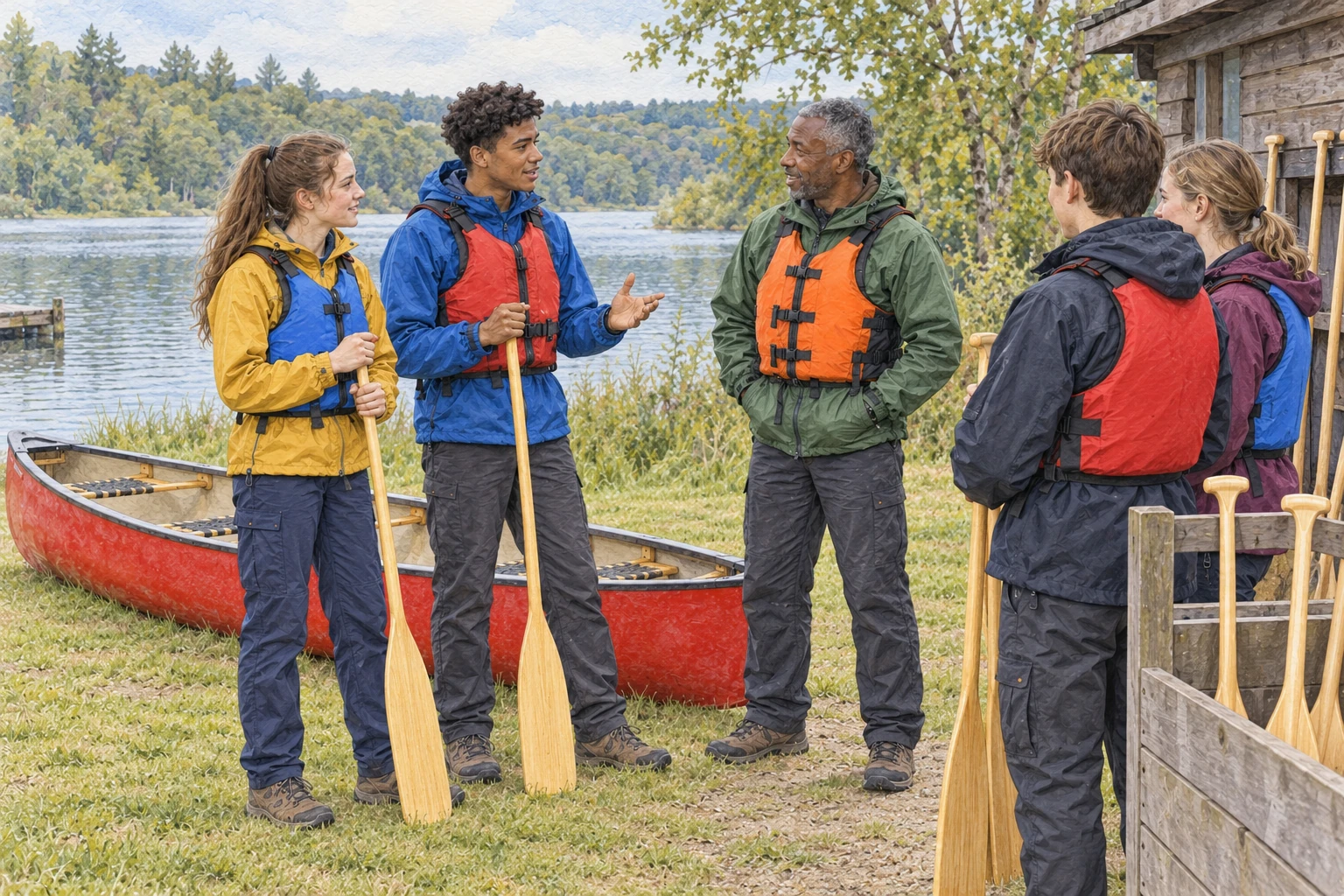
Once ashore, they help return the paddles and equipment. The other group asks whether they reached the same marker. “Yes, but that was not the best bit,” Harvey says. He describes the difference between their first curved attempt and the return. Anna adds that asking for a break helped her enjoy the rest of the session. Mr Dale listens while they find their own words for what worked.
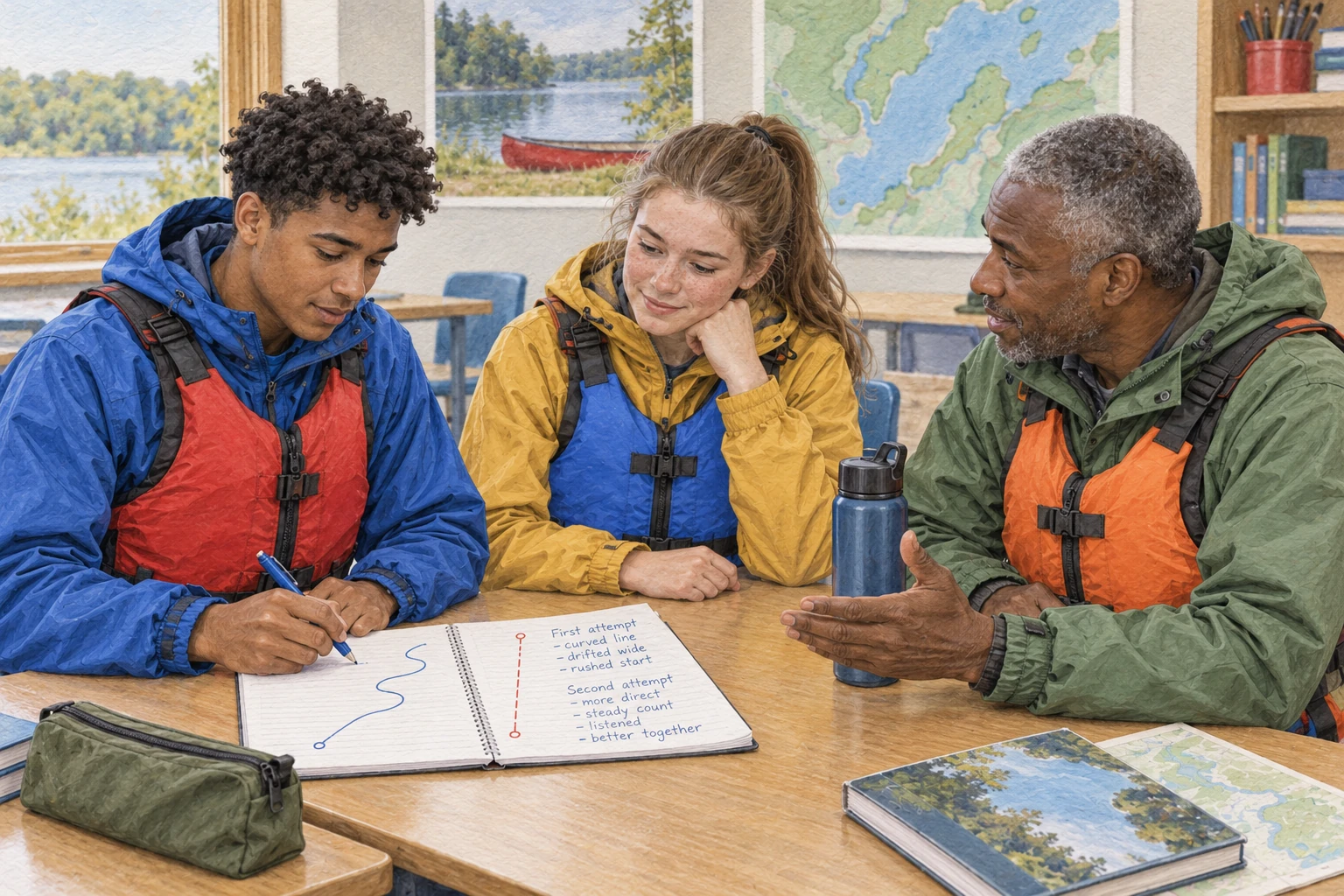
Later, Harvey draws two lines in his school notebook: one curved, one more direct. Beside them, he writes what changed between the attempts. The notes remind him how he and Anna learned to paddle together. He had expected the strongest stroke to matter most. Instead, he remembers the steady count, the shared pause and the moment he chose to listen before starting again.