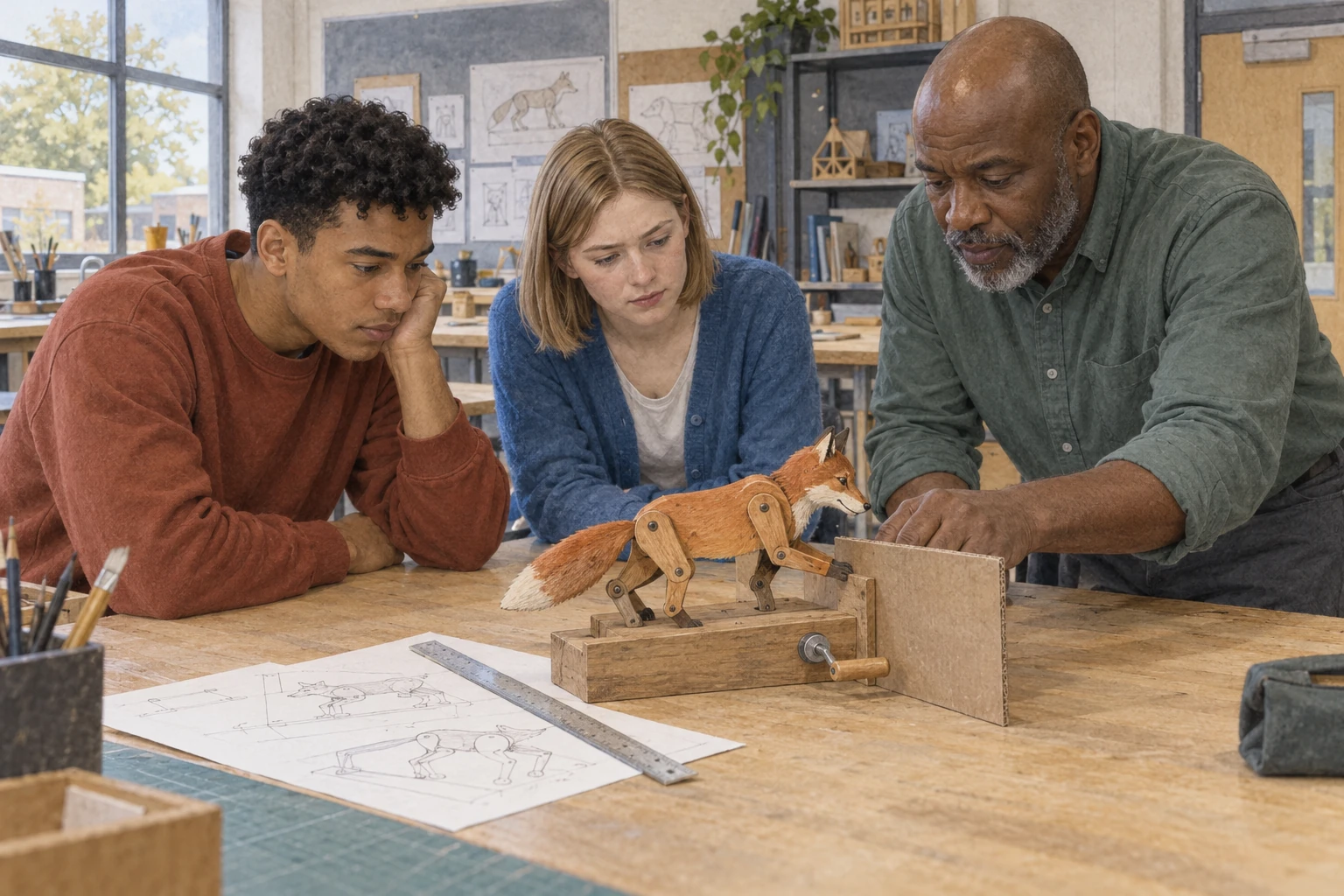
The Wooden Fox
School Readers · Level 20The wooden fox lifts one paw, nods its head and stops. Martin turns the small handle again, but the front leg catches against a cardboard edge. Alice looks at their design drawing. The fox was supposed to walk across its base when visitors turned the crank. Their teacher, Mr Hill, has asked them to test it before the school display, leaving enough time for a change if something fails.
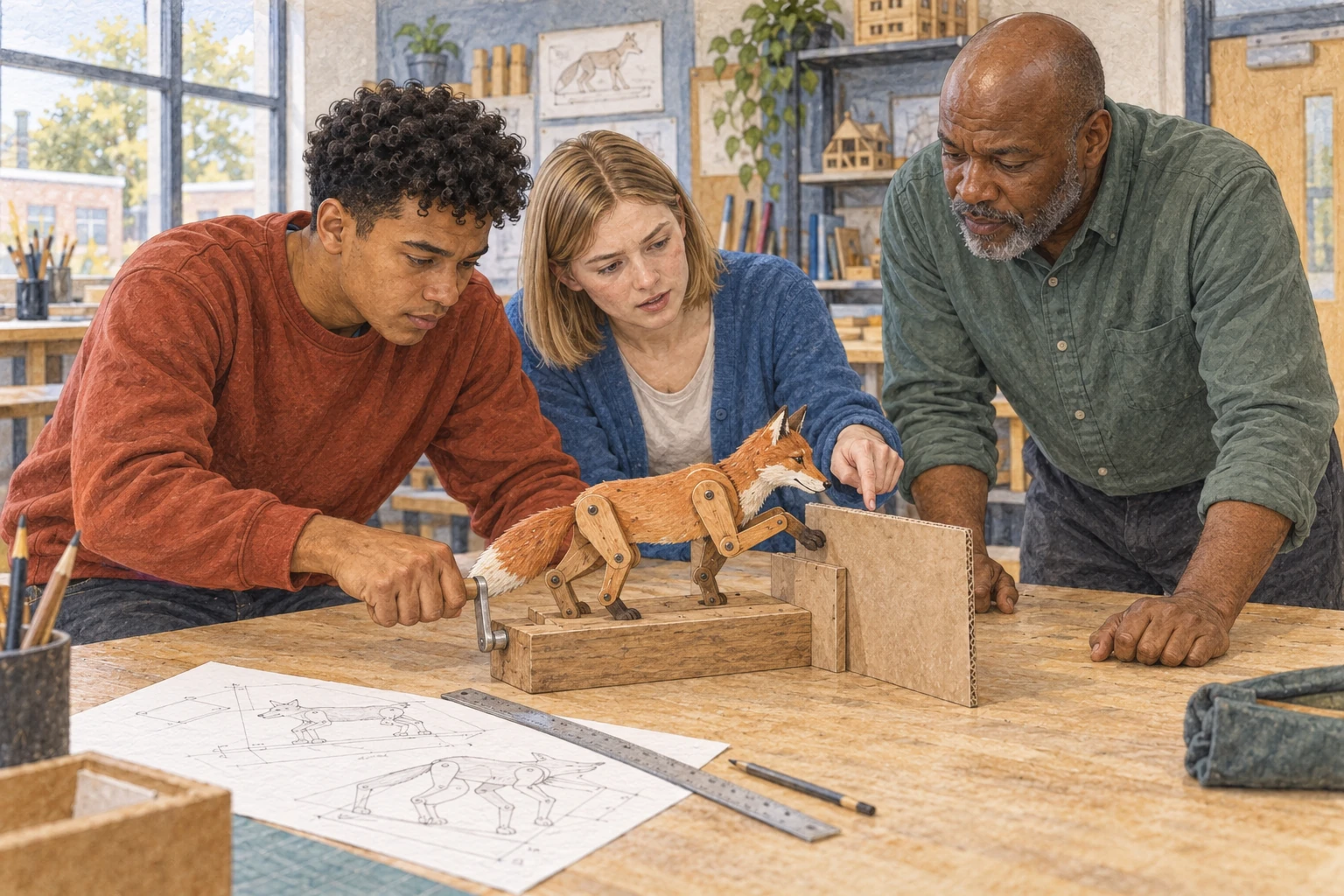
Martin thinks the handle needs a stronger turn. He begins to push harder, then stops when Alice asks him to watch the leg. The model is light, and forcing it might damage the joint. Mr Hill suggests moving the crank slowly while Alice follows the paw’s path. At one point the paw rises clearly above the cardboard. A moment later, it comes down too soon.
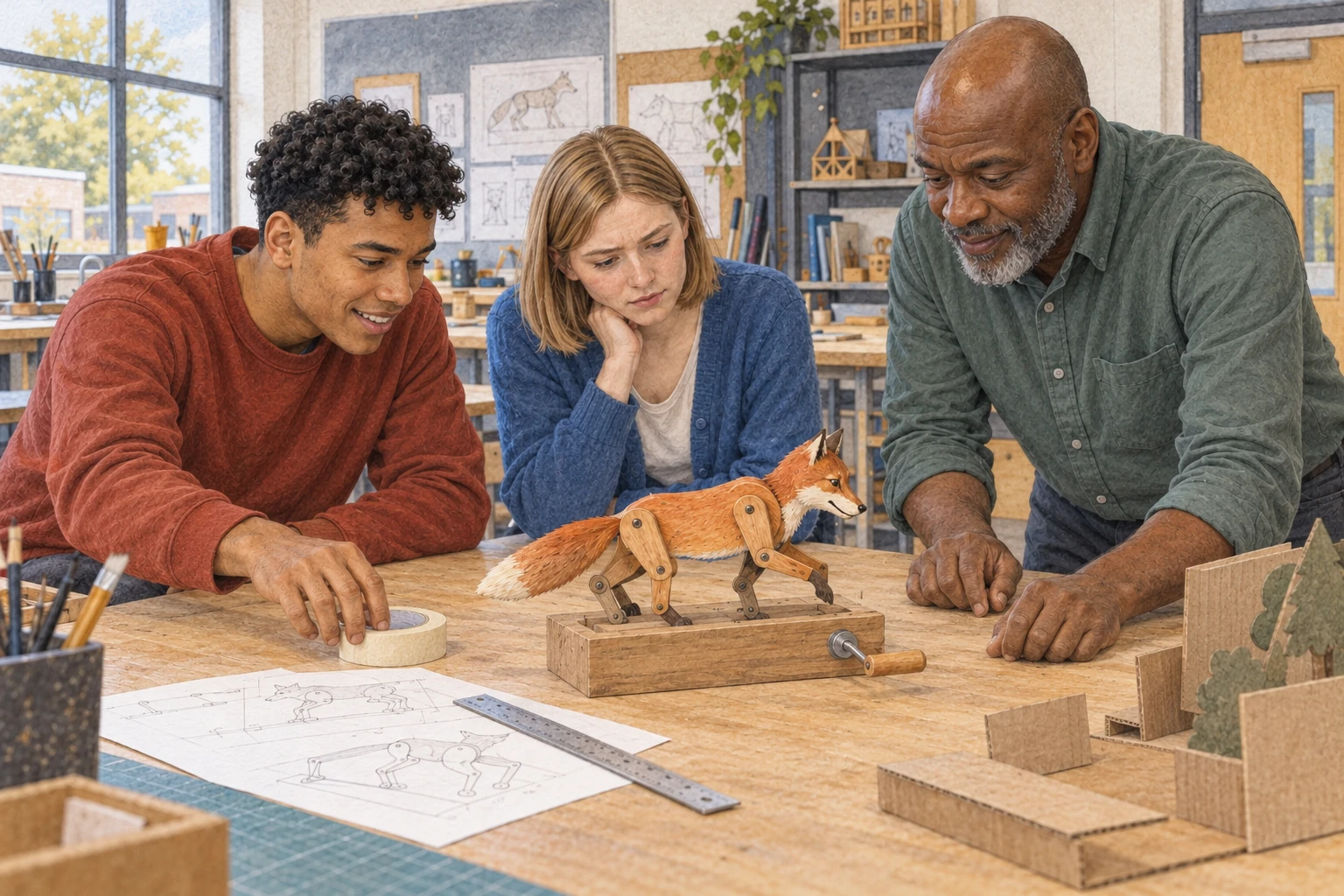
They take the loose cardboard scenery off the base and try again. The fox completes a full turn without catching. Martin grins and reaches for the tape. Alice is less certain. Removing every obstacle has shown where the problem is, but visitors are meant to see a fox stepping through a little woodland scene. They need a solution that keeps the movement and the setting working together.
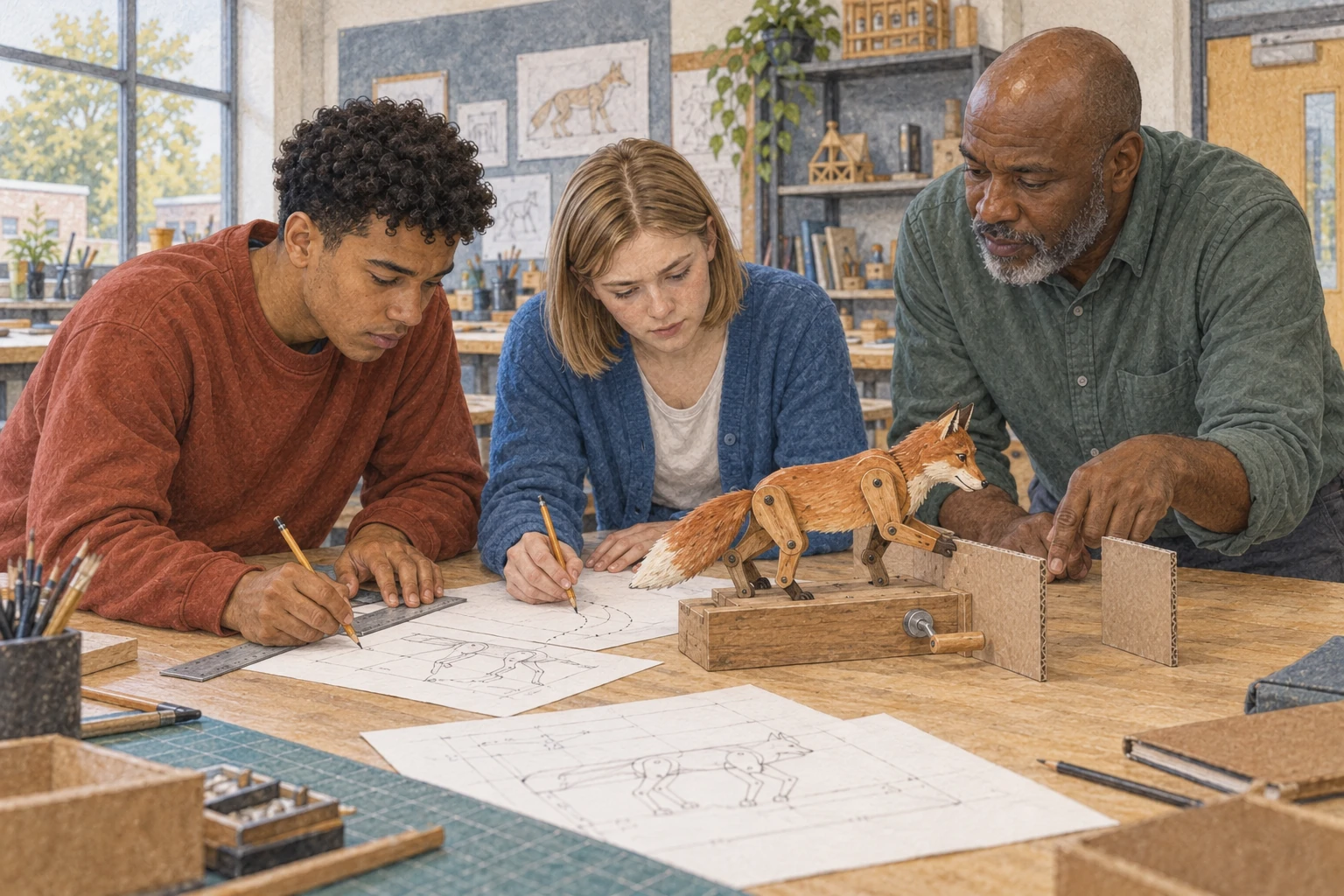
Alice traces the paw’s path on a sheet held beside the model. Martin marks the position of the cardboard edge on their drawing. The two lines cross. He had measured the space while the leg was still, just as it looked in the plan. The model needs room for the whole moving shape. Mr Hill asks them to compare two small changes before choosing either one.
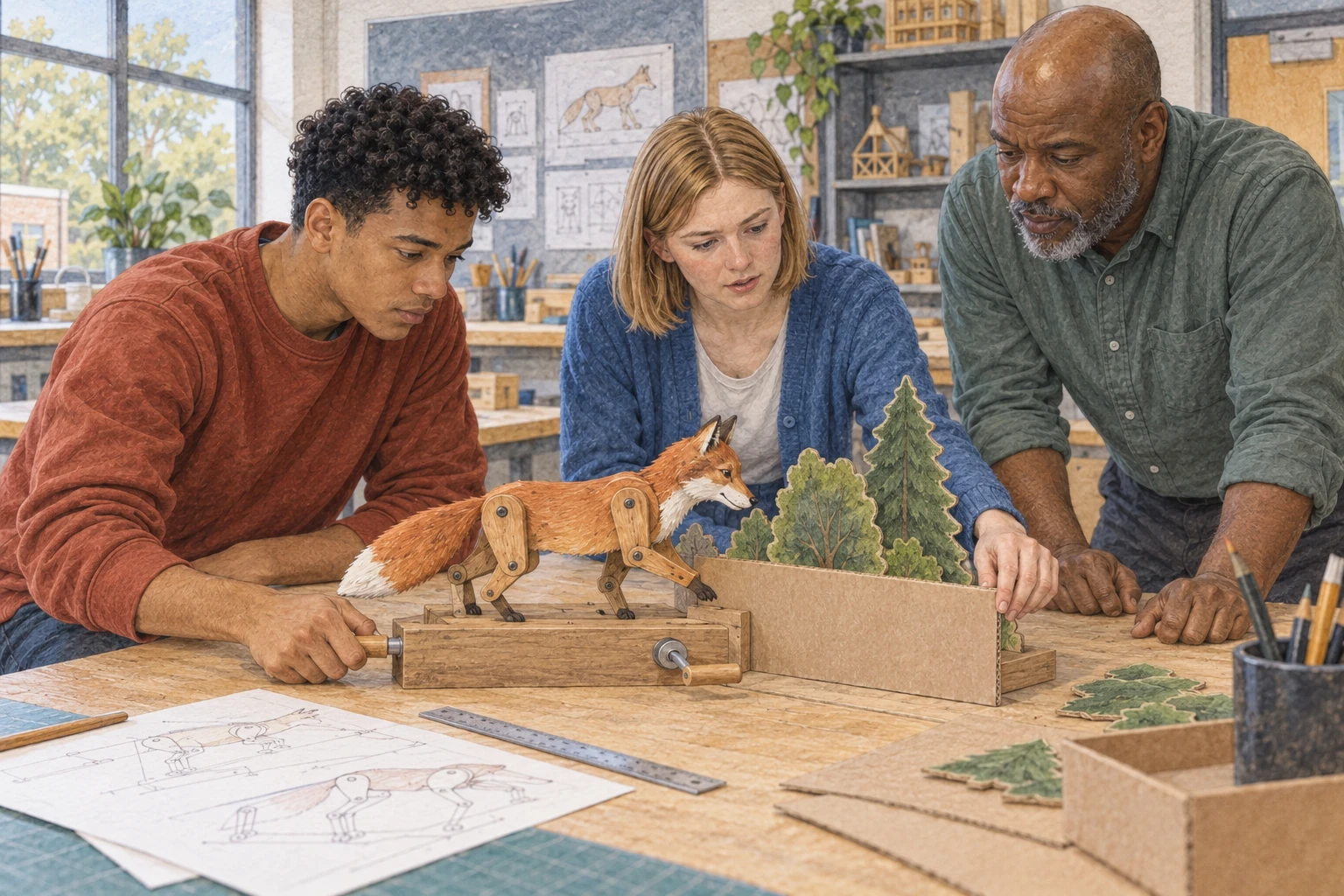
They first move the scenery farther from the fox. That leaves room, but the scene looks strangely empty. Next, they lower the cardboard edge and keep the trees near the back of the base. The paw clears it on every turn. Alice asks Martin to test slowly and quickly within the model’s normal movement, rather than stopping after the first successful turn of the handle.
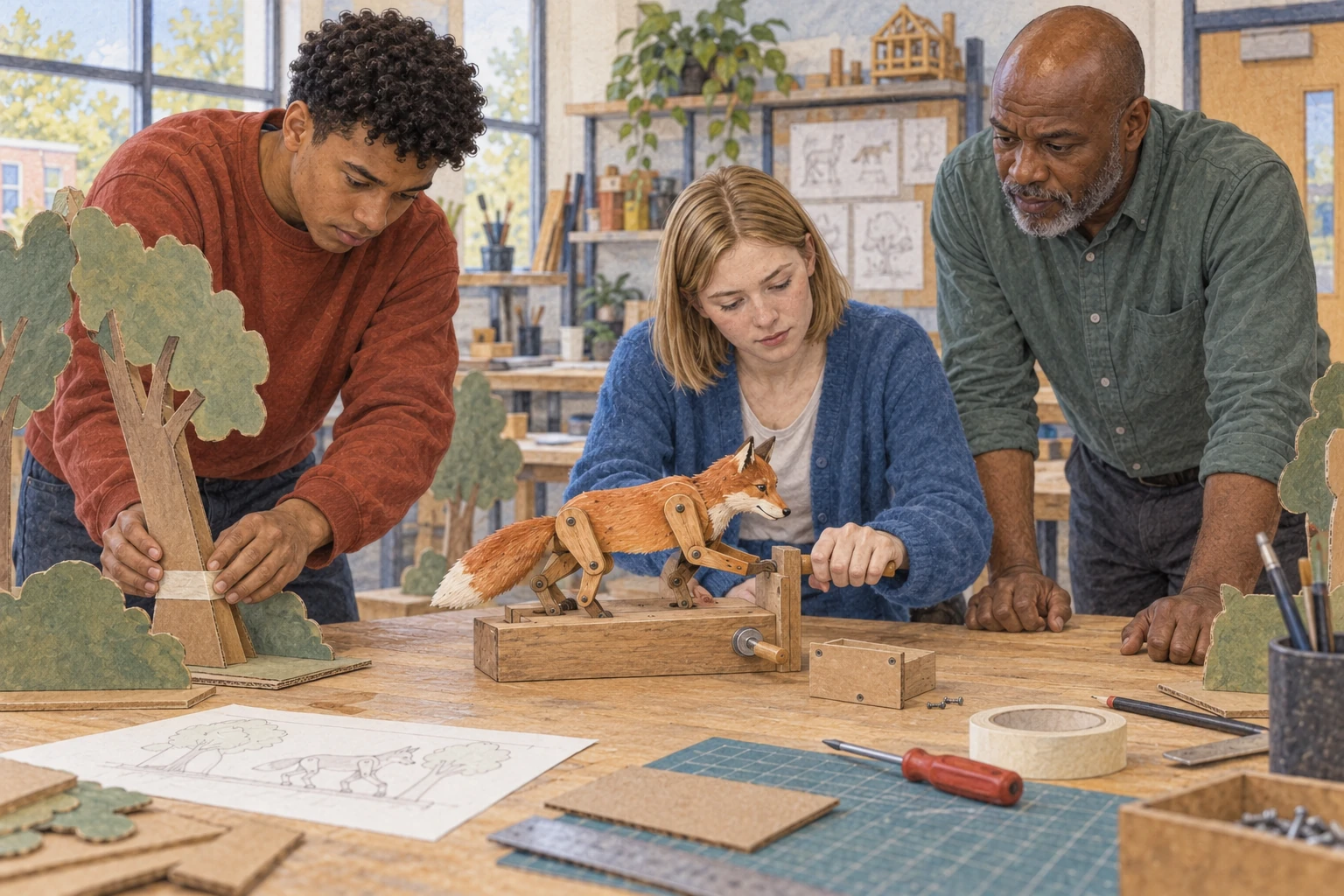
After several tests, one tree begins to lean. Its tape is loose where they moved it. Martin notices before it falls into the fox’s path. He fixes it firmly, then asks Alice to try the crank without his help. She spots a place where the handle is awkward to grip. They change its small wooden cover, making the model easier for a new person to use.
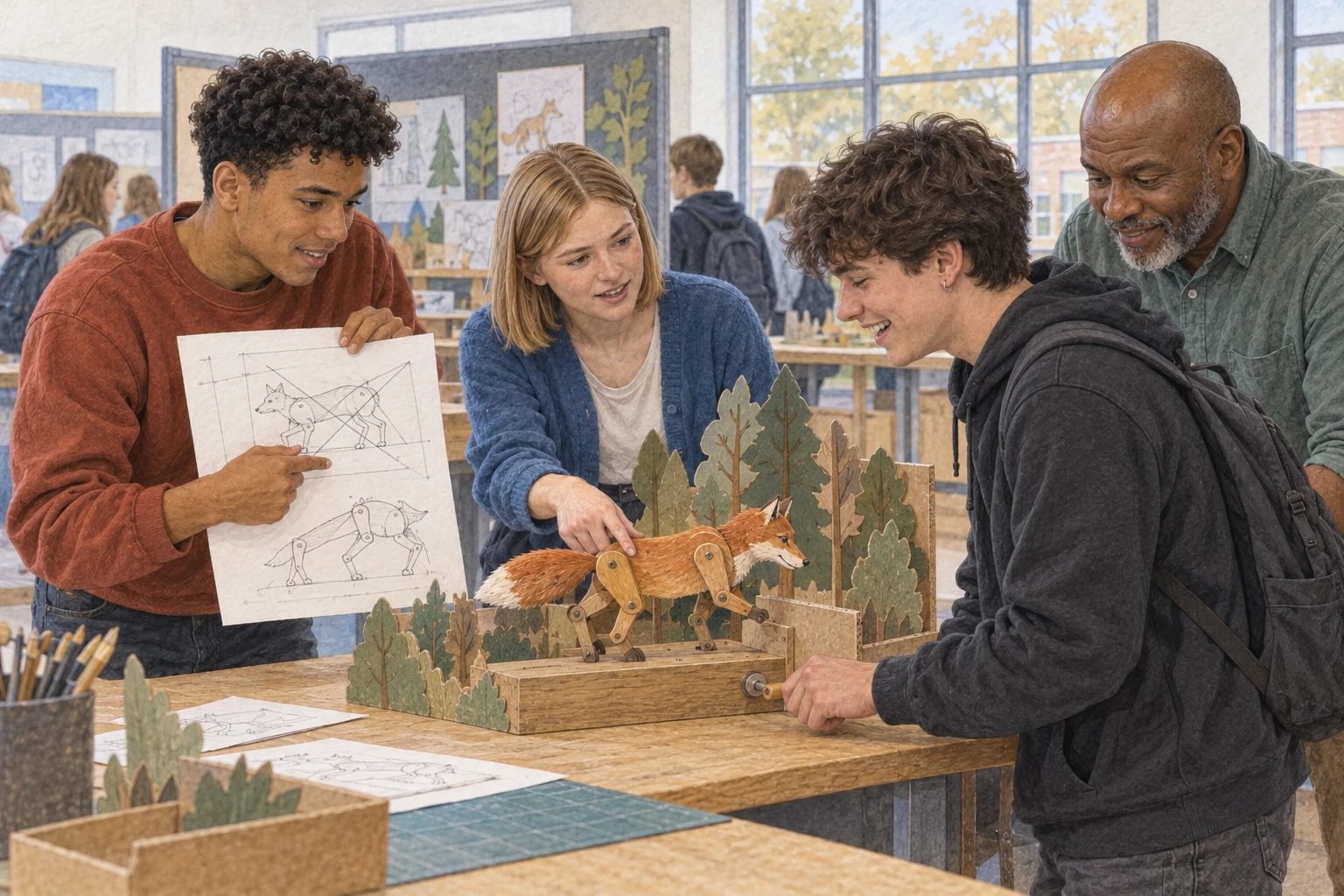
At the display, a visitor turns the crank and laughs as the fox steps through its paper woodland. Another asks whether it uses batteries. Alice shows the simple connection from the handle to the legs. Martin brings out their first drawing, including the crossed lines. He enjoys explaining the fault as much as the finished movement because it gives the visitor something real to work out.
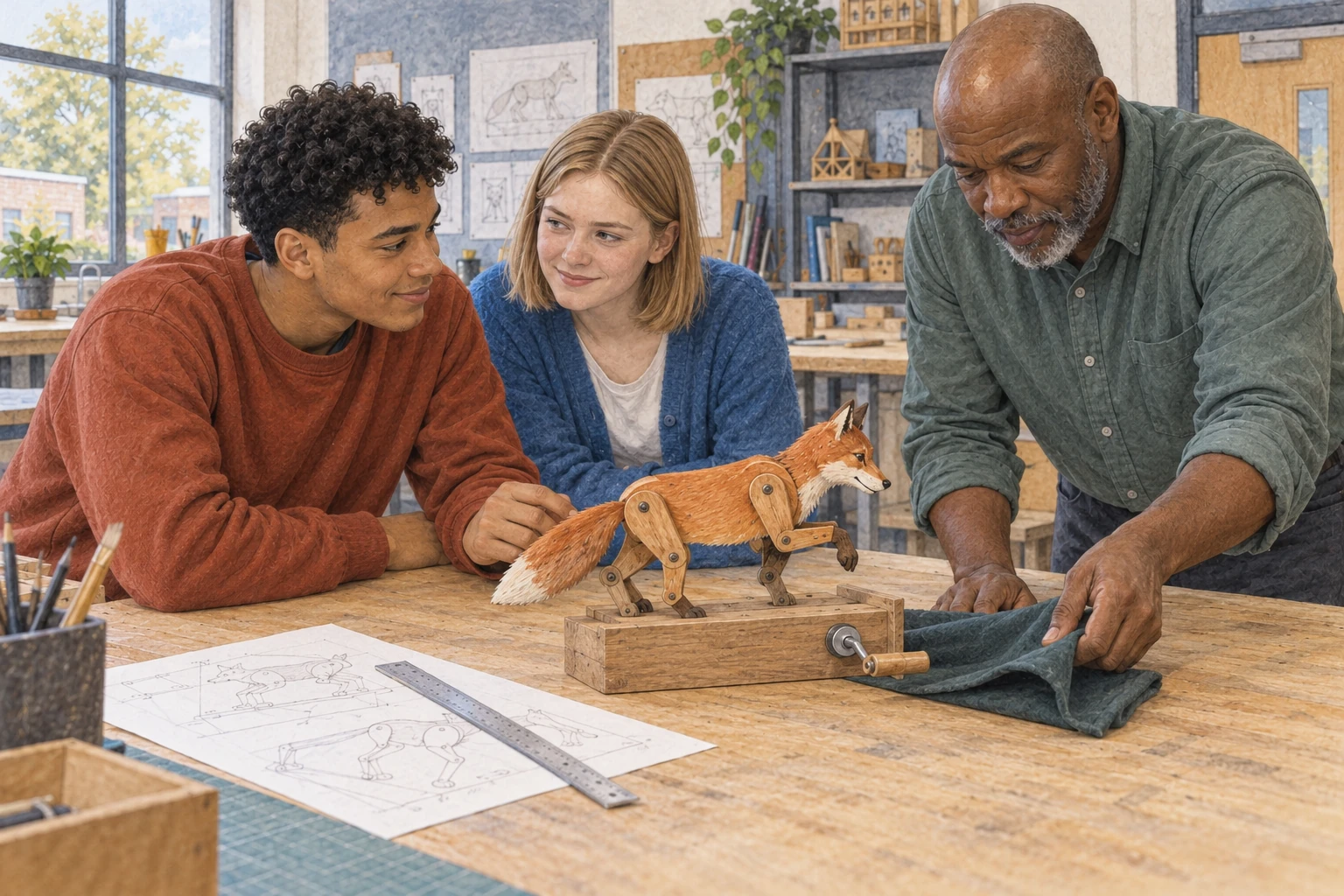
Near the end, the fox stops with one paw raised. Martin checks it without pulling the model apart. A folded corner of the display cloth has slipped under the base. Once the teacher moves the cloth clear, the crank turns normally. Martin looks at Alice and smiles. This time, neither of them decided that the wooden fox itself must be broken before looking around it.
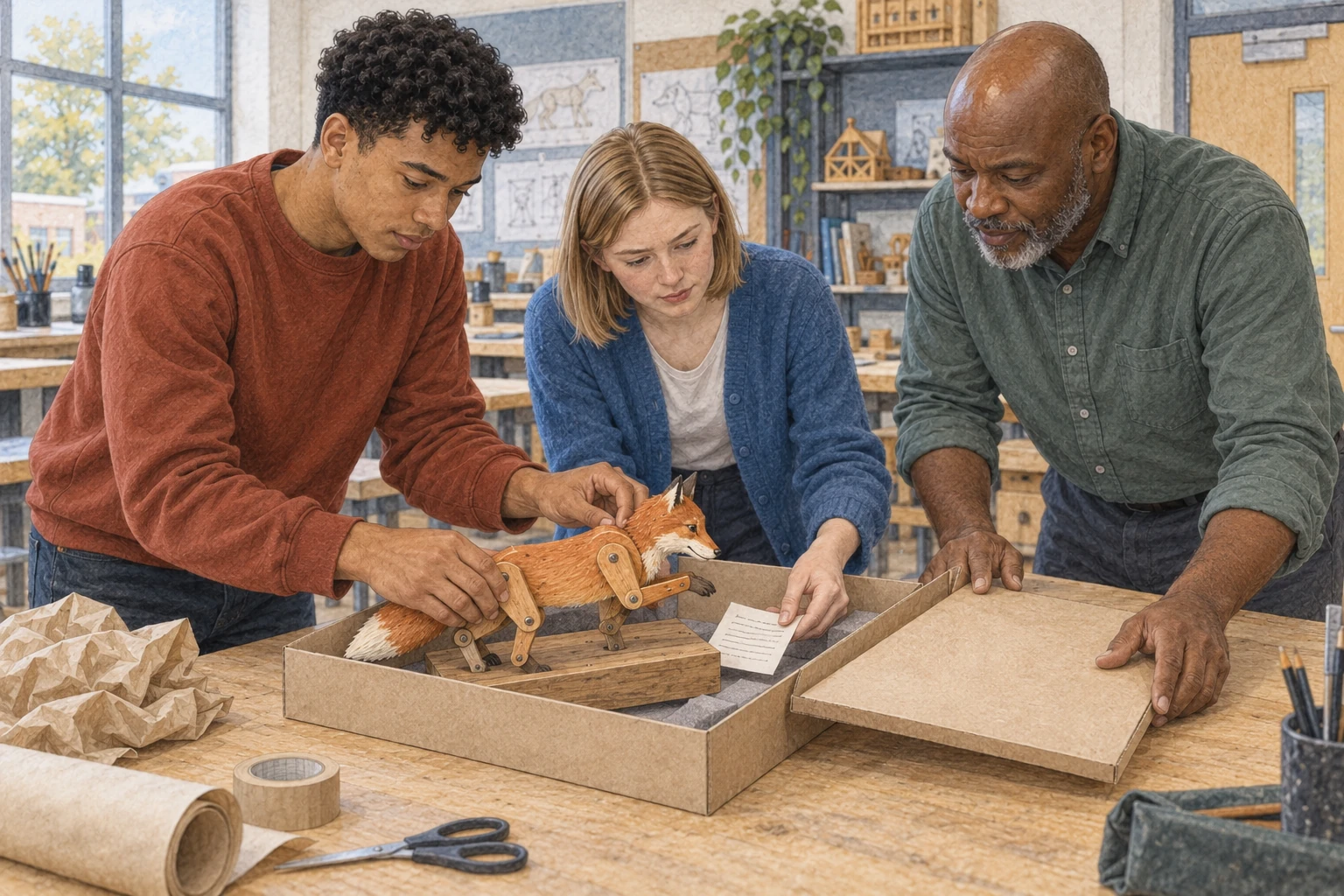
They pack the fox with a short testing note beneath its base. It describes what to check if the paw catches again. The model still follows their original idea, but it has become more than a copy of a drawing. Its useful details grew from watching it fail, trying alternatives and letting someone else test it. Martin leaves the fox’s front paw raised, ready for its next small step.