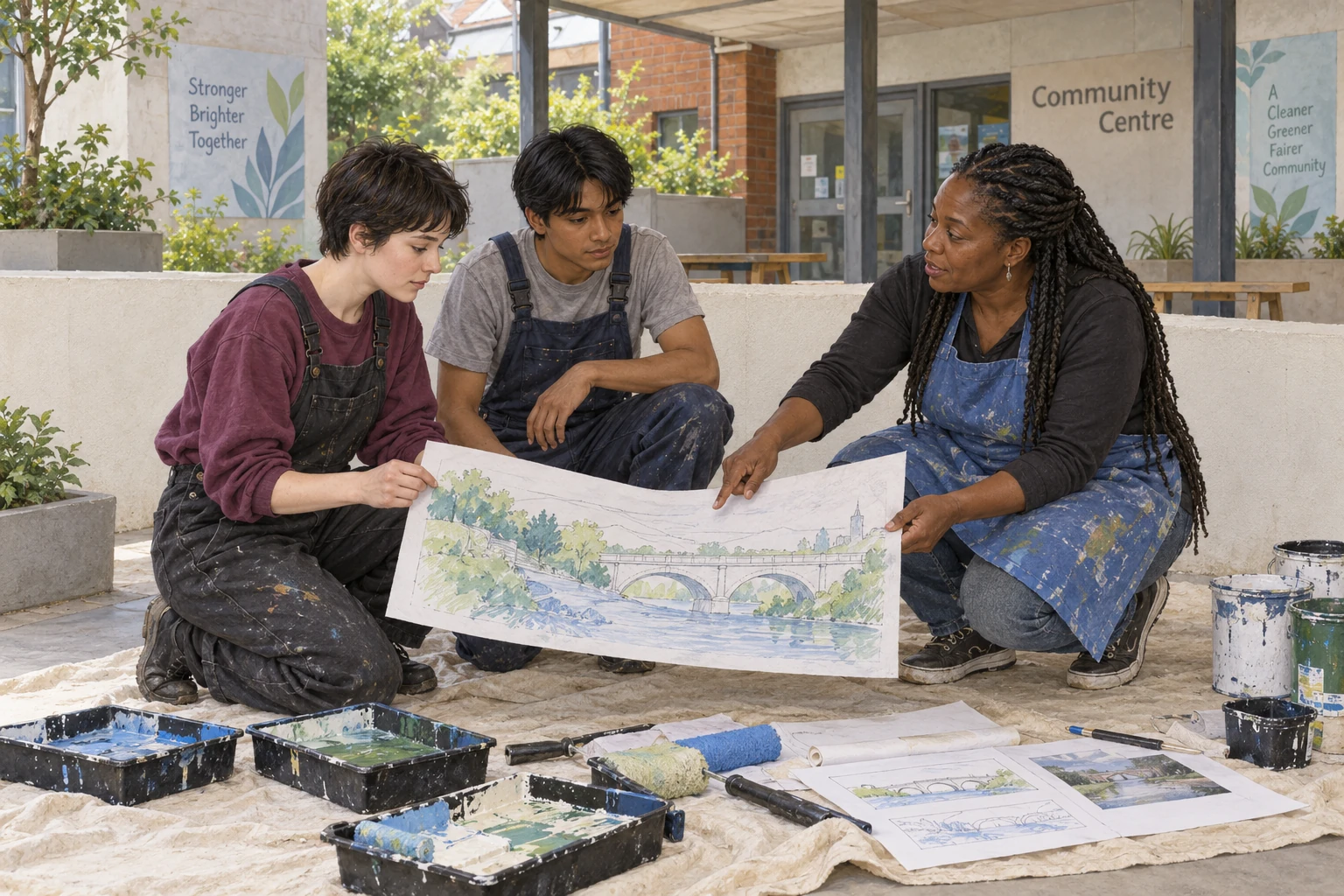
The Community Mural
School Readers · Level 17Helen has helped design a mural for the community centre courtyard. Her sketch shows the river, a curved bridge and trees from the town park. Jacob will paint with her, and Ms Lane is leading the project. They spread a ground cloth below the low wall, then set out their brushes and paint where everyone can reach them safely.
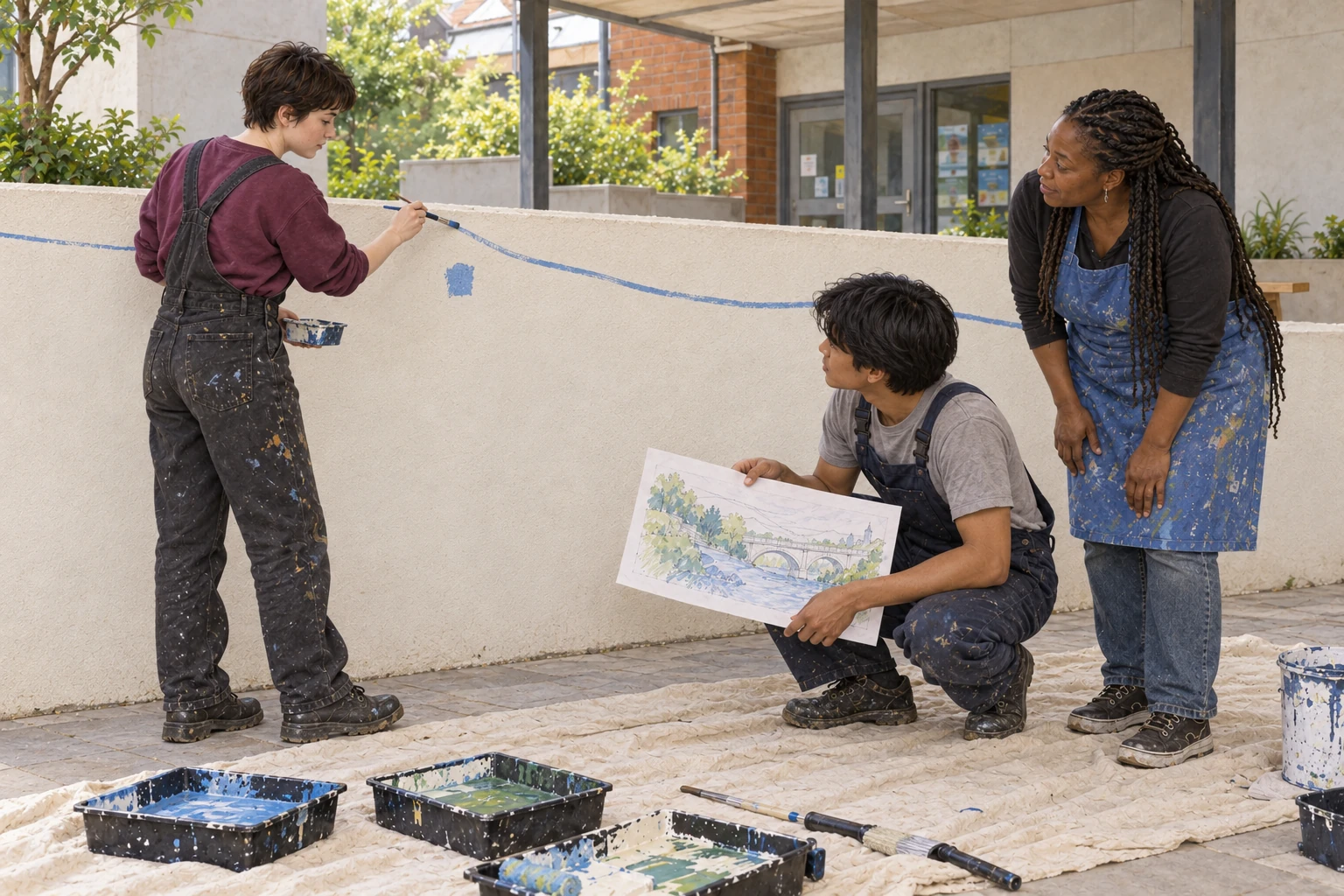
On paper, the river fills the lower half of the picture. On the wall, Helen’s first blue line rises much higher than she intended. The bridge now has very little space above it. She steps back and frowns. Jacob has already filled one small section with paint, so they cannot simply rub the line out like a pencil mark.
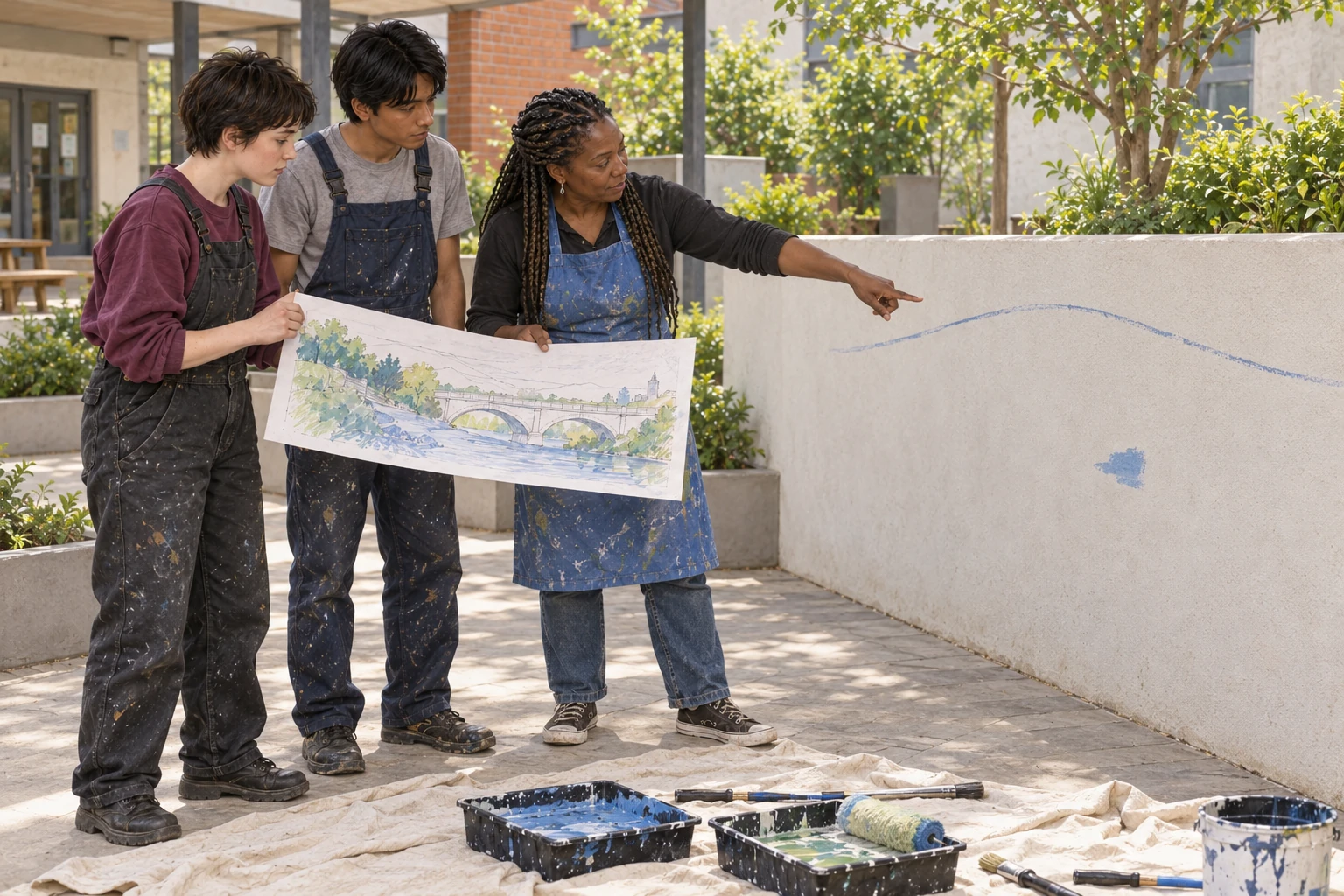
Ms Lane asks them to stand across the courtyard and compare the wall with the sketch. Helen notices that she has been painting while looking closely at only one part. From farther away, the shape is easier to judge. Jacob holds up the paper. The bridge needs a clearer curve, and the river needs room below the bridge rather than above it.
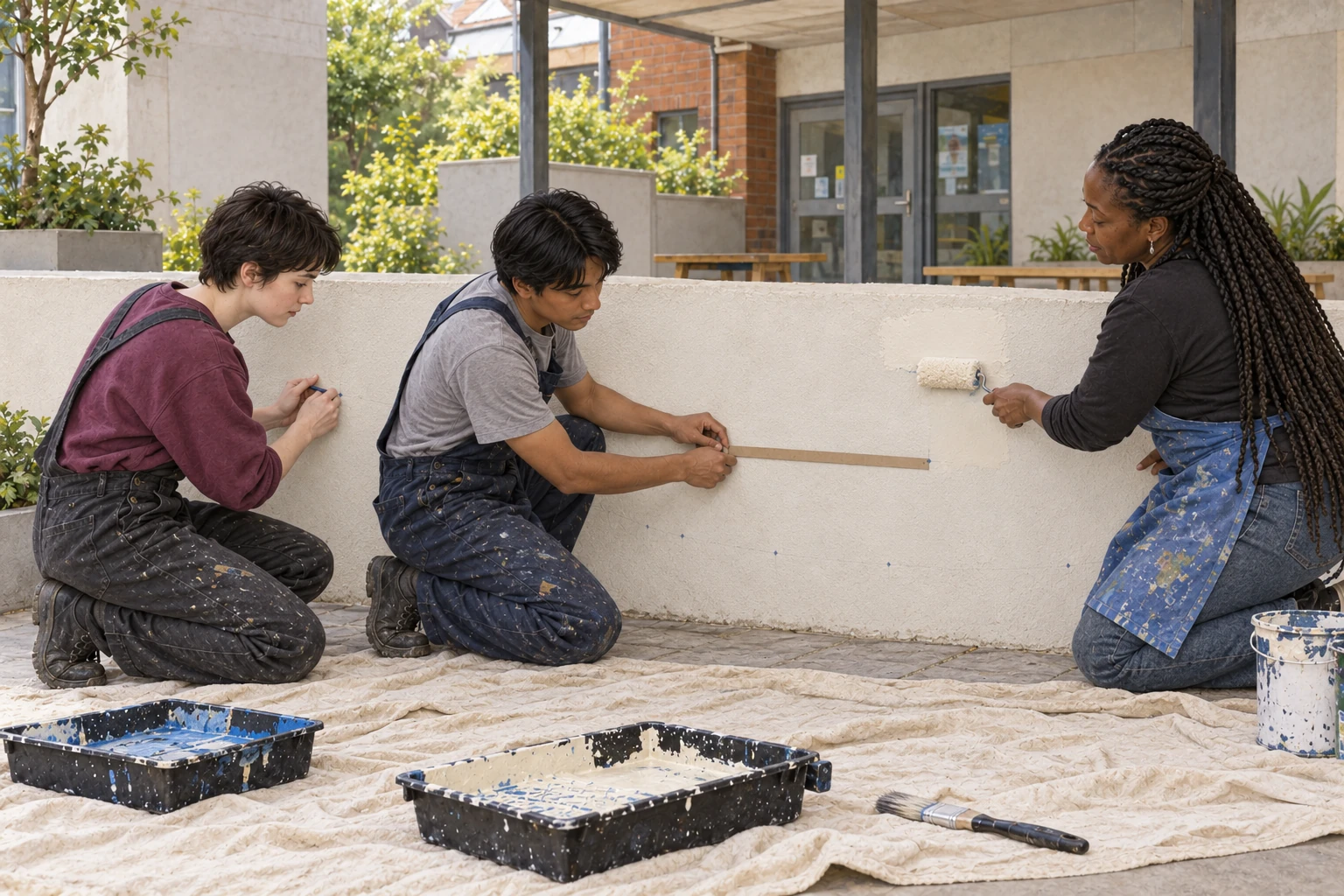
They wait for the small blue section to dry, then Ms Lane helps them cover the misplaced part with the background colour. Helen marks a few points for the new outline. Jacob measures the spaces between them with a strip of card. They check the whole shape from the other side of the courtyard before opening the blue paint again.
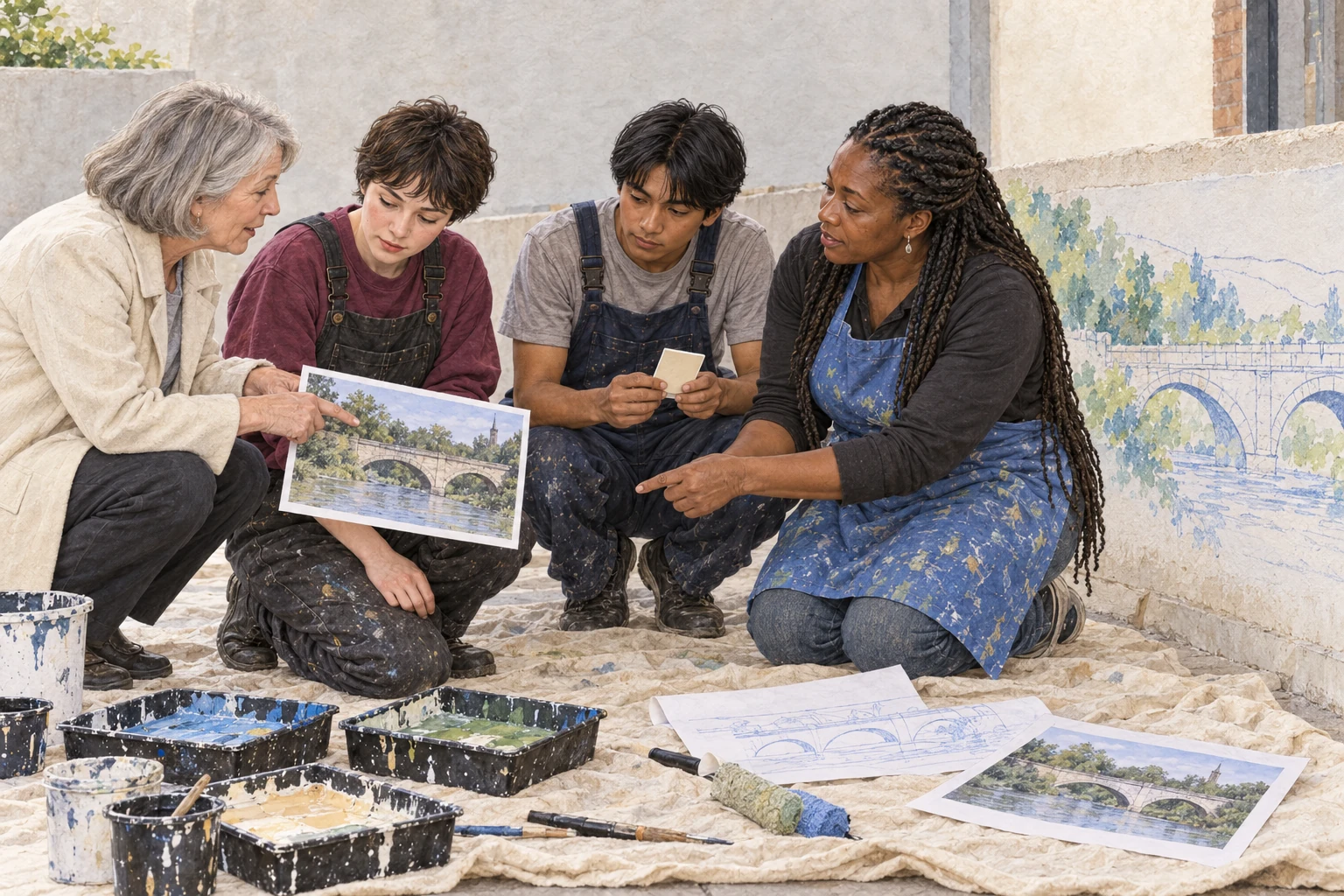
As they work, a visitor recognises the old bridge. She remembers walking over it on her way to school and tells them about the pale stone along its edge. Helen has drawn that part grey. She thanks the visitor and looks at a reference photograph with Ms Lane. They mix a warmer colour for the stones instead of changing the design from memory alone.
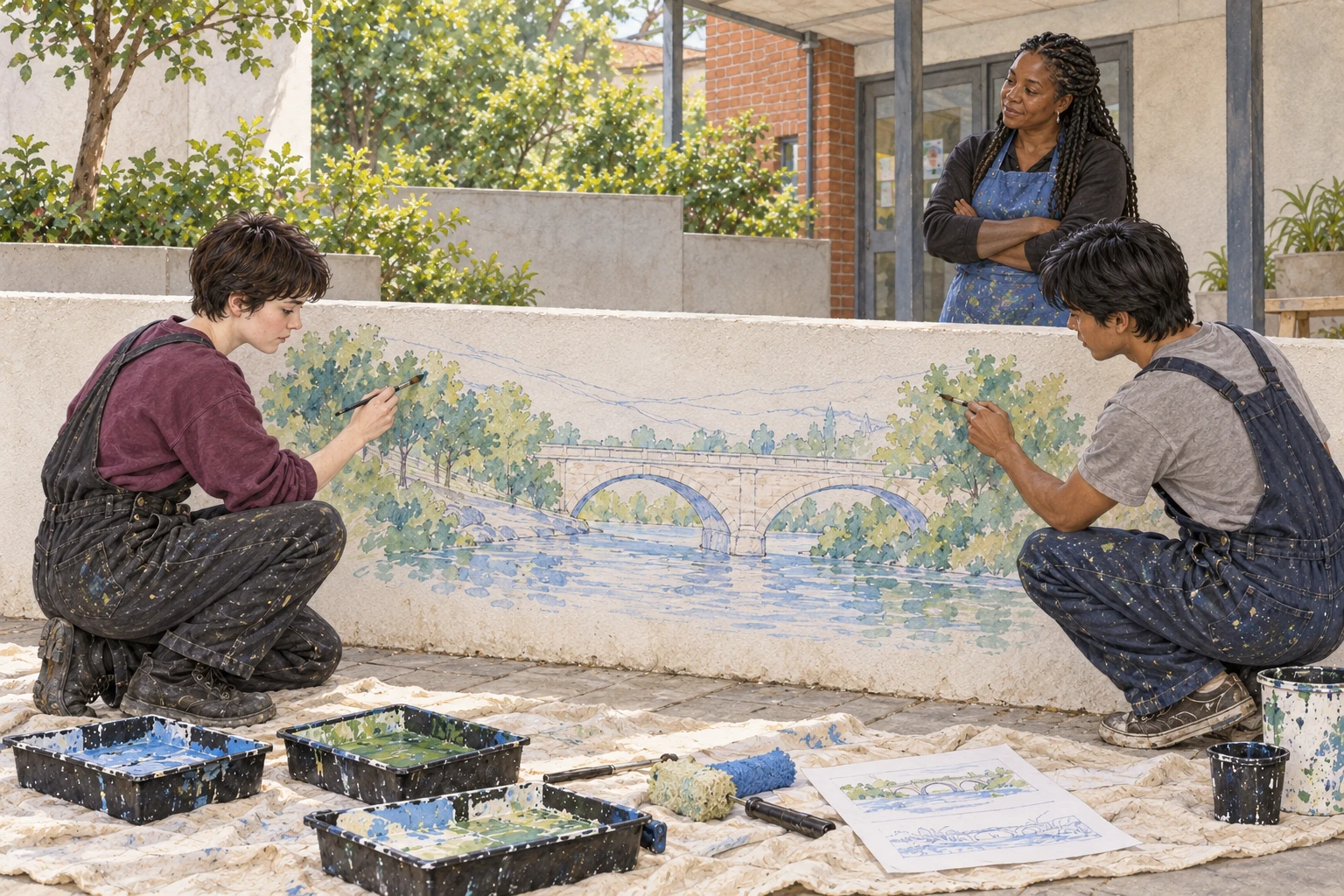
By the afternoon, the river and bridge fit together. Helen and Jacob add trees at each side, leaving the view through the bridge open. They take turns stepping back to check the balance. When Helen gets too close to judge a branch, Jacob shows her the whole picture from a few paces away. The work begins to feel shared.
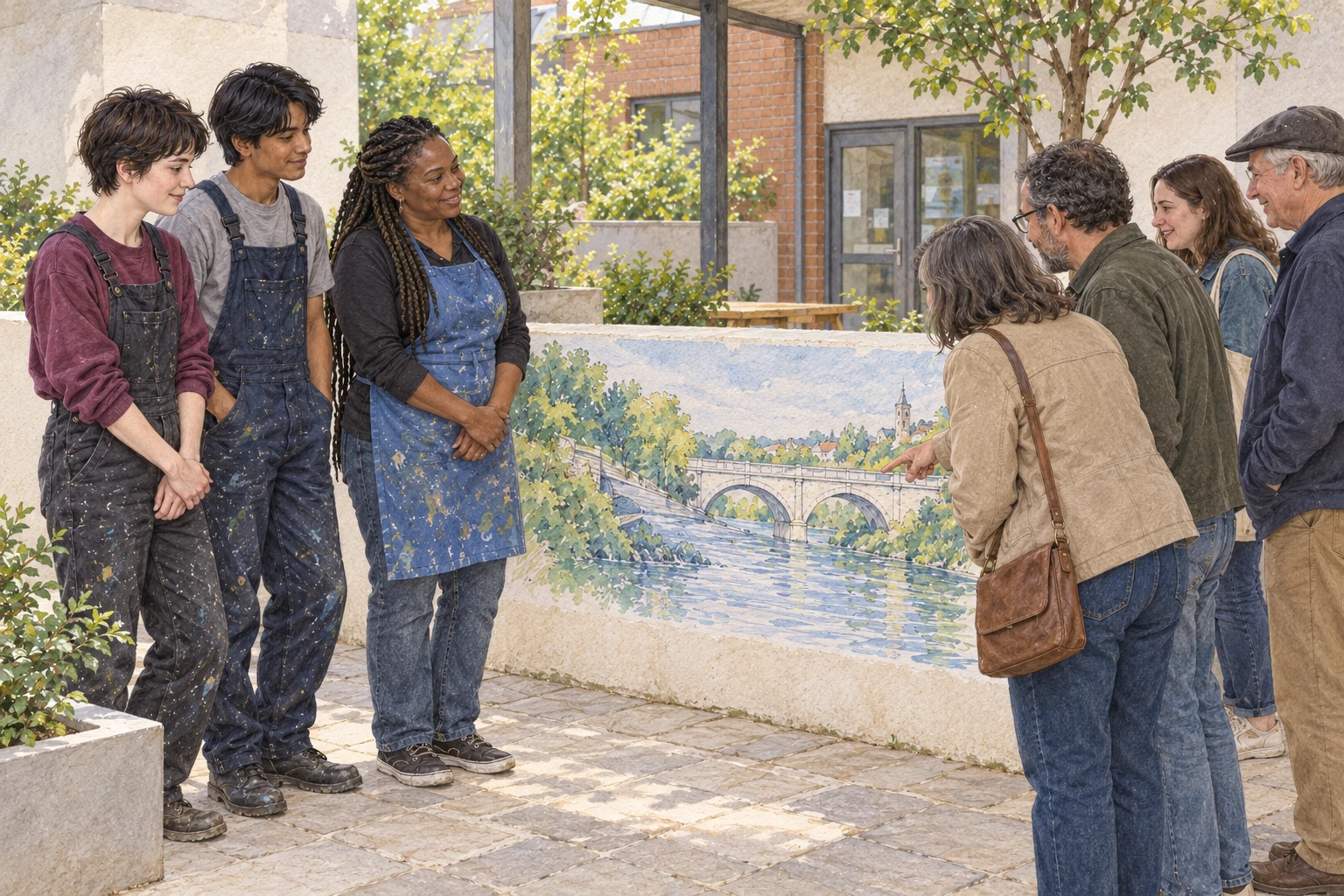
At the courtyard opening, the visitor returns with a friend. They stand beside the finished wall and talk about the town. Helen sees people pointing out different details: the curve of the river, a tree, the pale bridge. Nobody knows where the first blue line used to be, unless she chooses to tell them about the change.
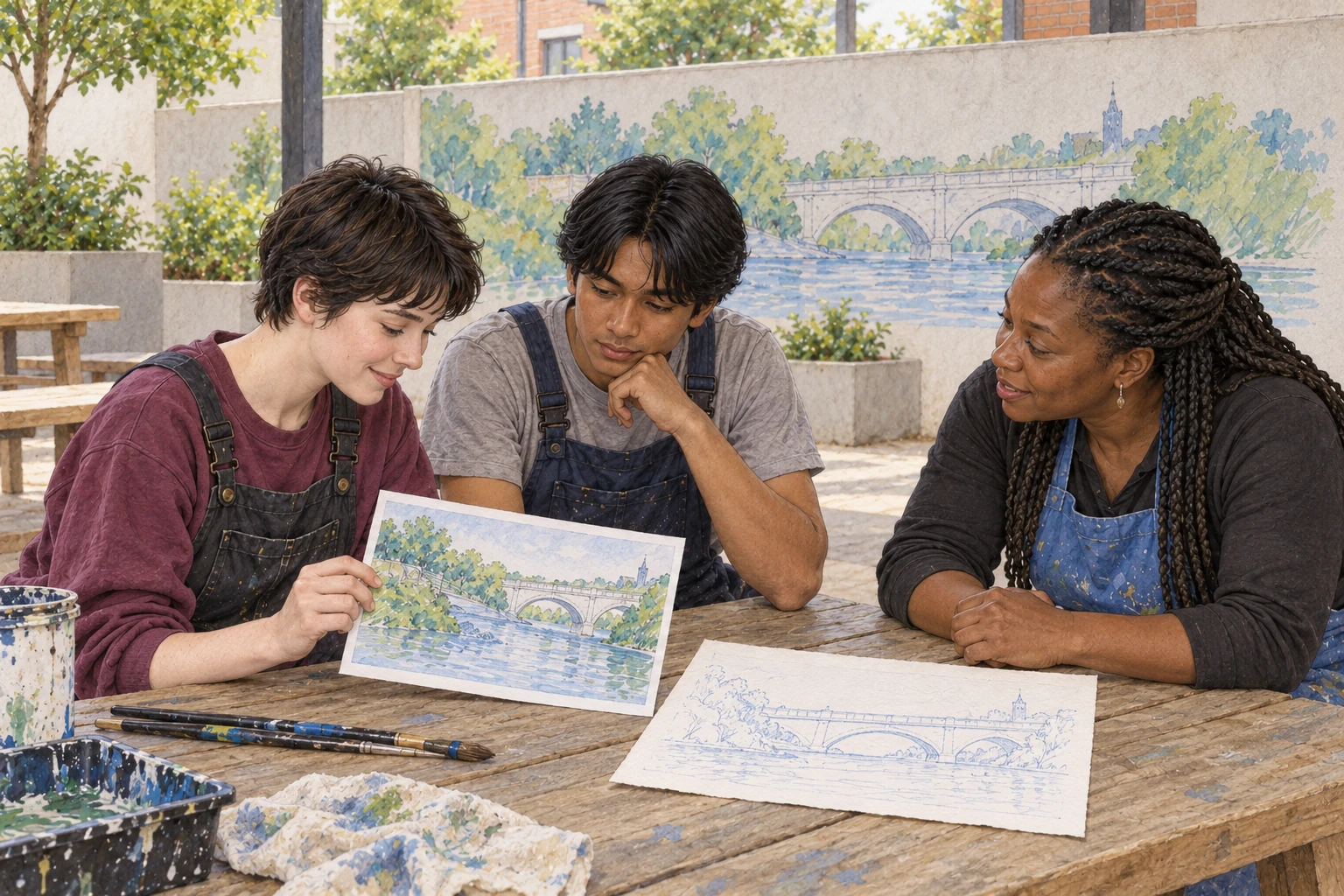
Helen keeps a photograph of the finished mural beside her small original sketch. They are different, but she is pleased with both. The sketch gave them a beginning; looking, listening and checking helped them finish. When Jacob asks what they should paint next, she suggests taking a few steps back before choosing the first line.