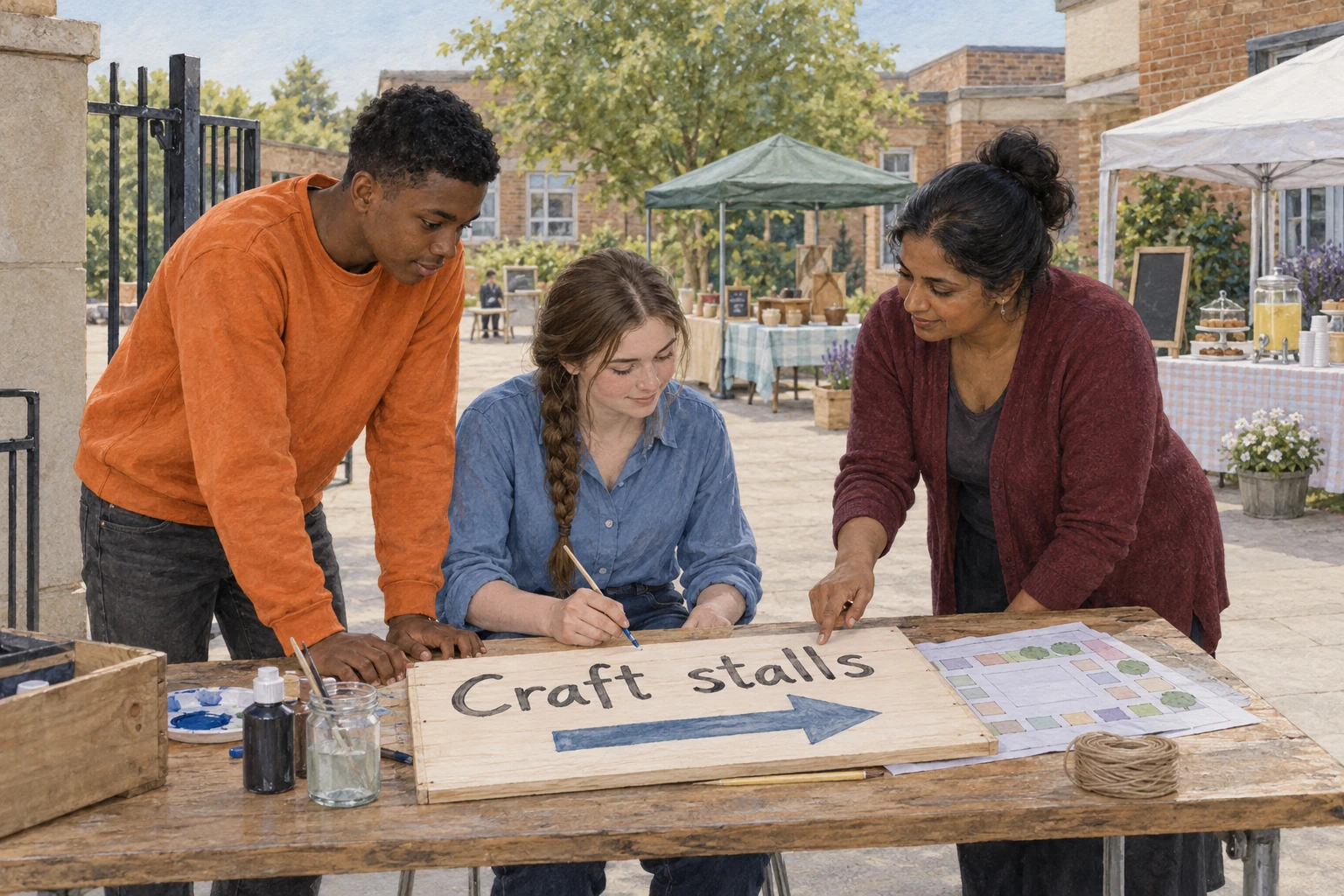
The Fair Sign
School Readers · Level 18Frederick has made a direction sign for the school summer fair. Its bold arrow points towards the craft stalls, and he has checked every letter before painting the board. Charlotte helps him carry it to the pedestrian entrance while Ms James arranges the visitor table. From inside the courtyard, the sign looks clear. Frederick steps back, pleased with his first job of the morning.
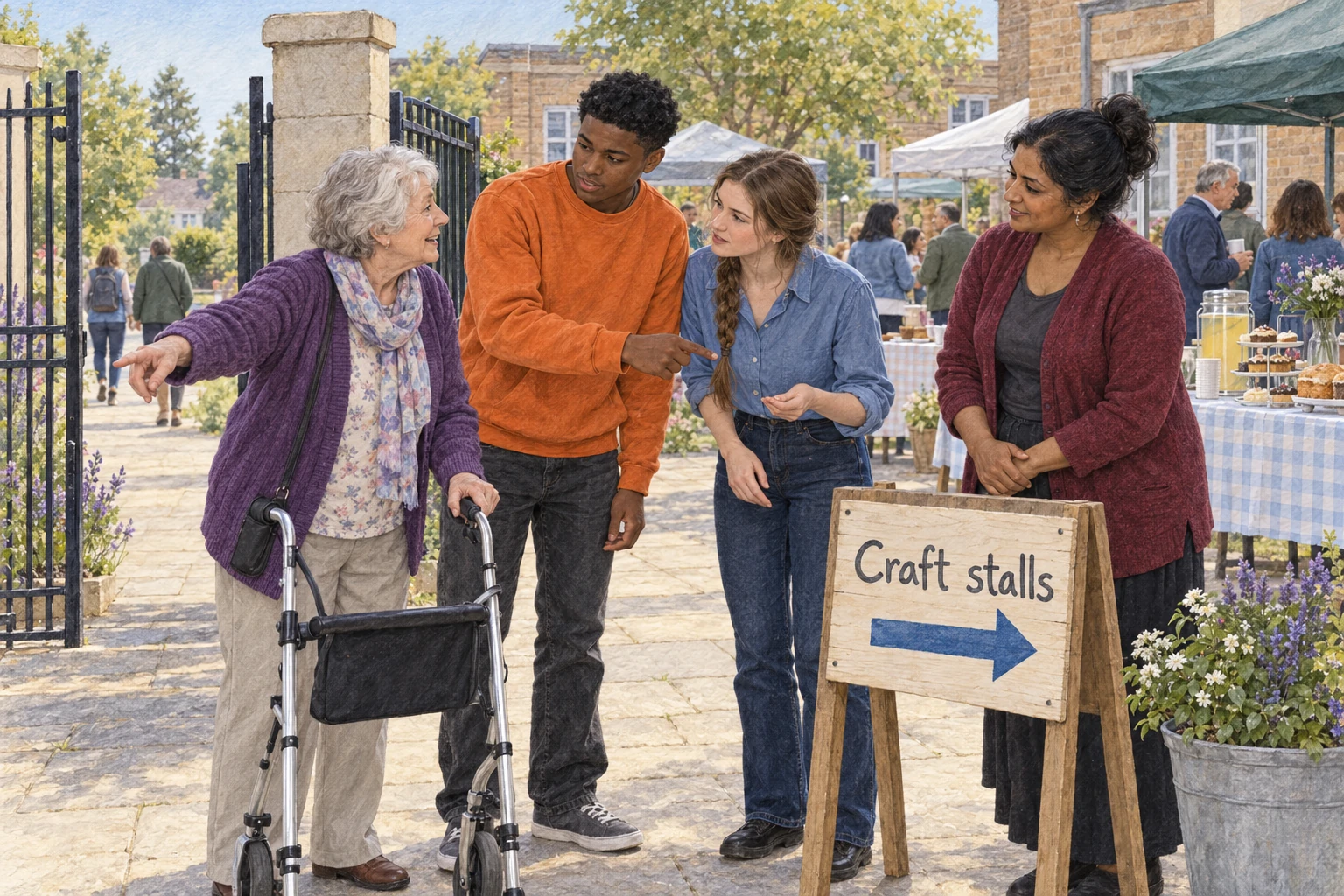
When the visitors arrive, several turn towards the refreshment stall instead of the crafts. Frederick wonders whether they have ignored his arrow. He points at the sign, but one visitor smiles and says that she followed it. Charlotte asks where she was standing when she first saw the board. The visitor points back through the entrance, towards the path outside the school gate.
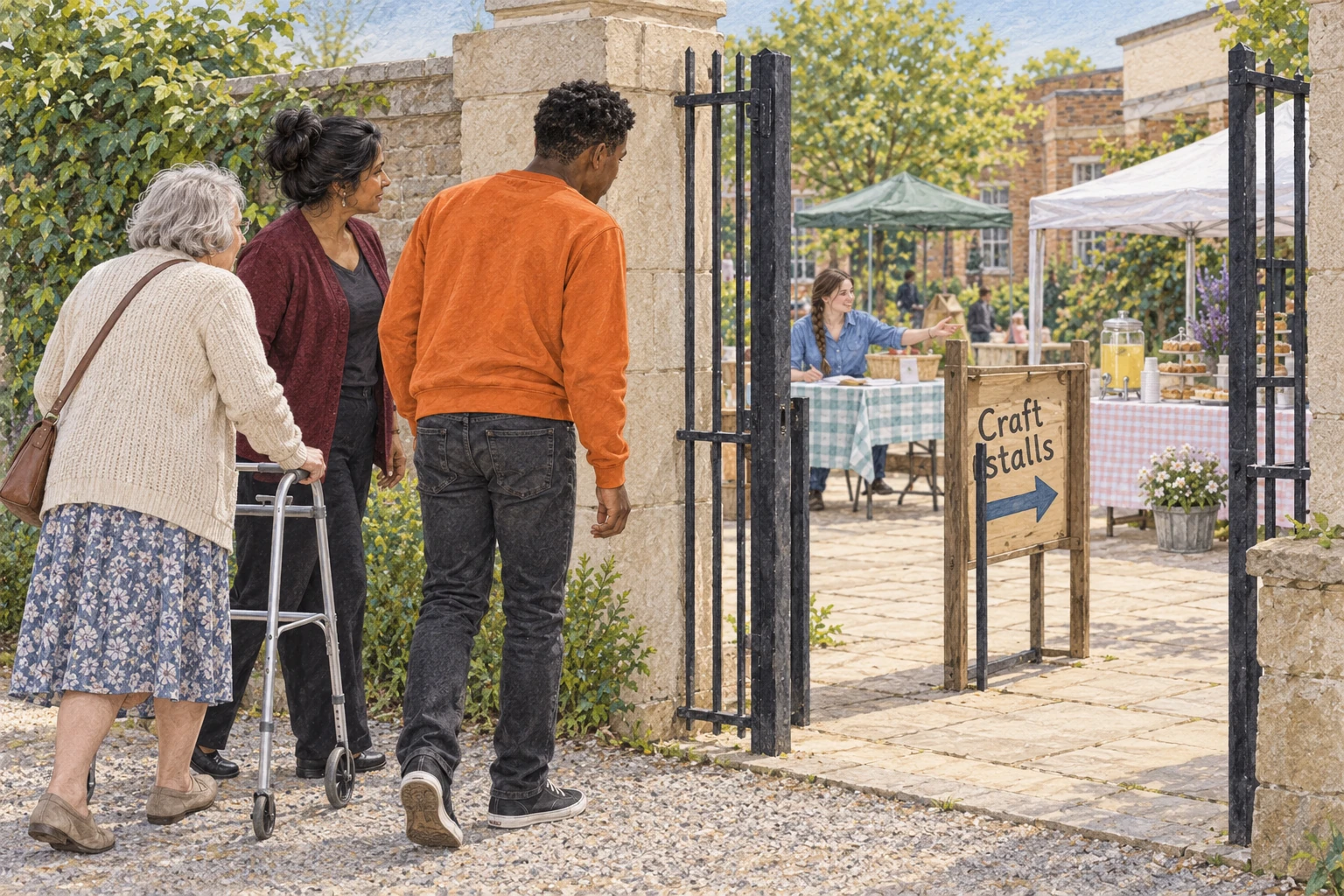
Frederick walks outside with Ms James and approaches as a visitor would. From there, the sign is partly hidden by the open gate. The arrow appears to point towards the refreshments because the board faces people already inside. He had checked the view from the place where he made the sign, rather than from the place where most people would need to read it.
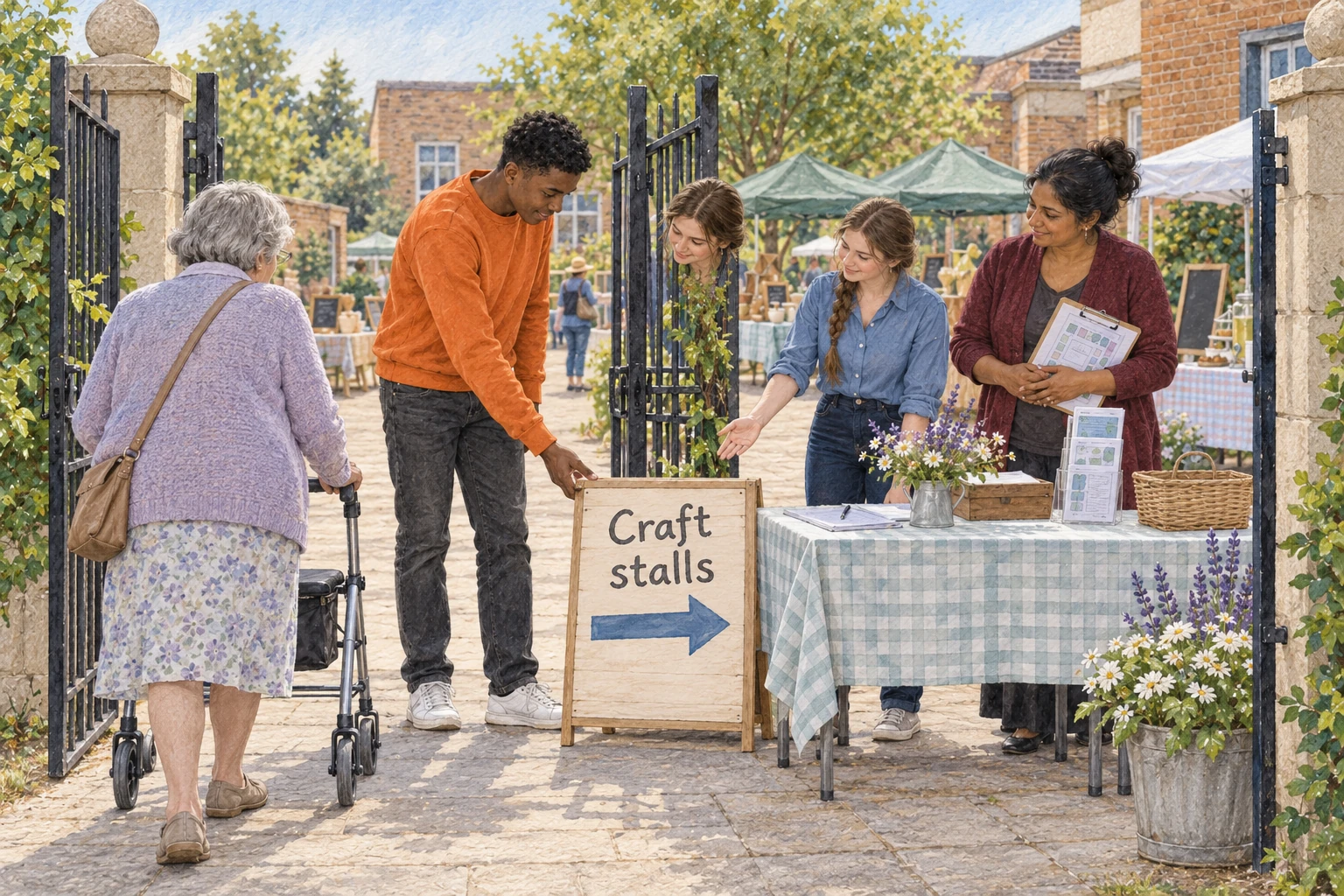
Charlotte suggests moving the board beside the visitor table and turning it towards the entrance path. Ms James helps them choose a position that leaves the pedestrian route clear. Frederick follows the arrow from the gate, then Charlotte tries from the other side of the table. This time, both arrive at the craft stalls without needing someone to explain the first turn.
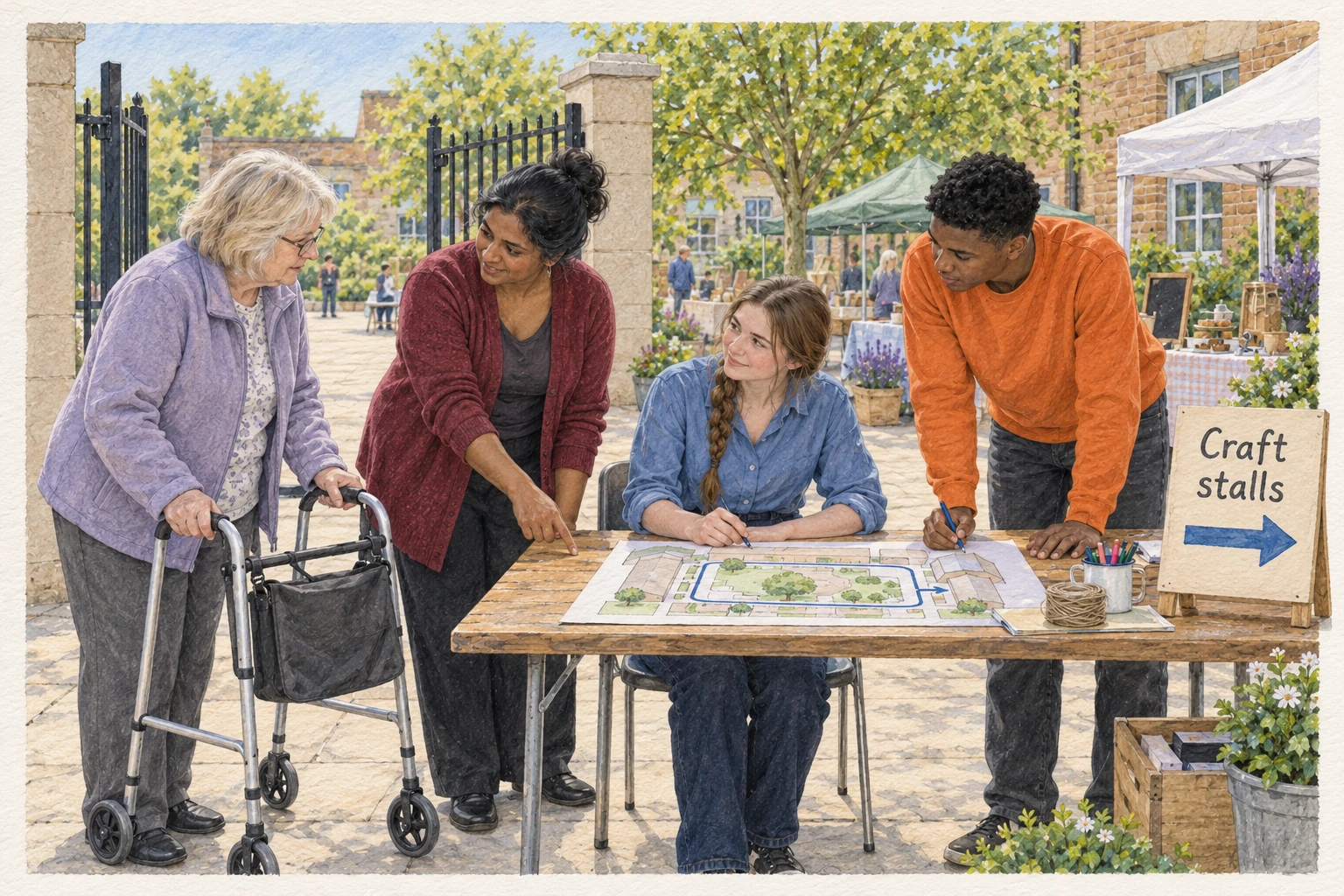
A visitor using a walking frame pauses at the table. She can read the words, but asks whether the crafts are up any steps. The sign does not answer that question. Ms James shows her the level route around the courtyard. Frederick adds a small simple map at the table, where a helper can explain it without crowding the entrance or blocking anyone’s way.
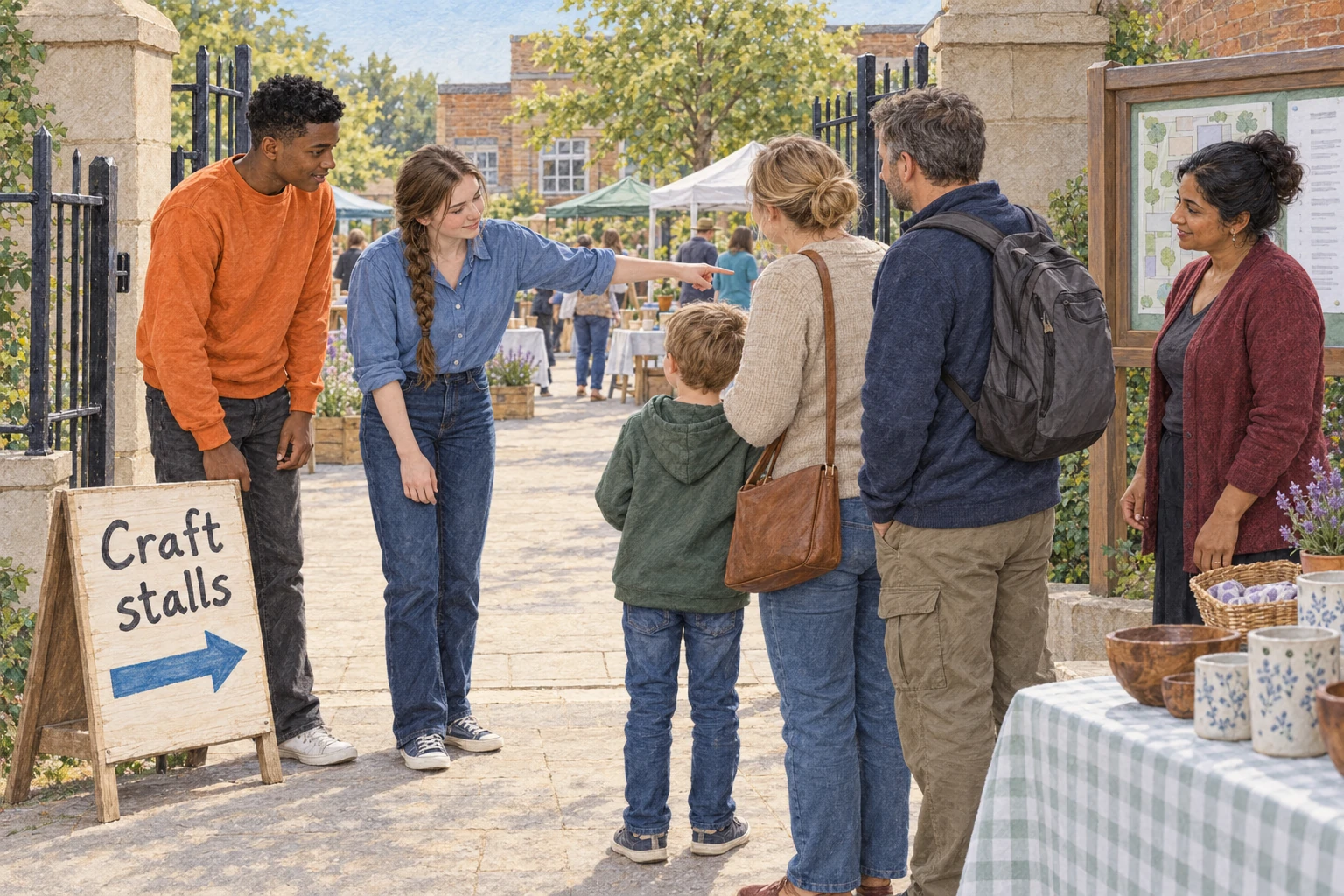
For the next half hour, Charlotte watches how people use the sign. Most look at it and continue towards the stalls. One family stops to ask where the toilets are, so she points out the school’s existing information board. Their craft sign does not need to carry every answer. It needs to work with the other information already available at the fair that morning.
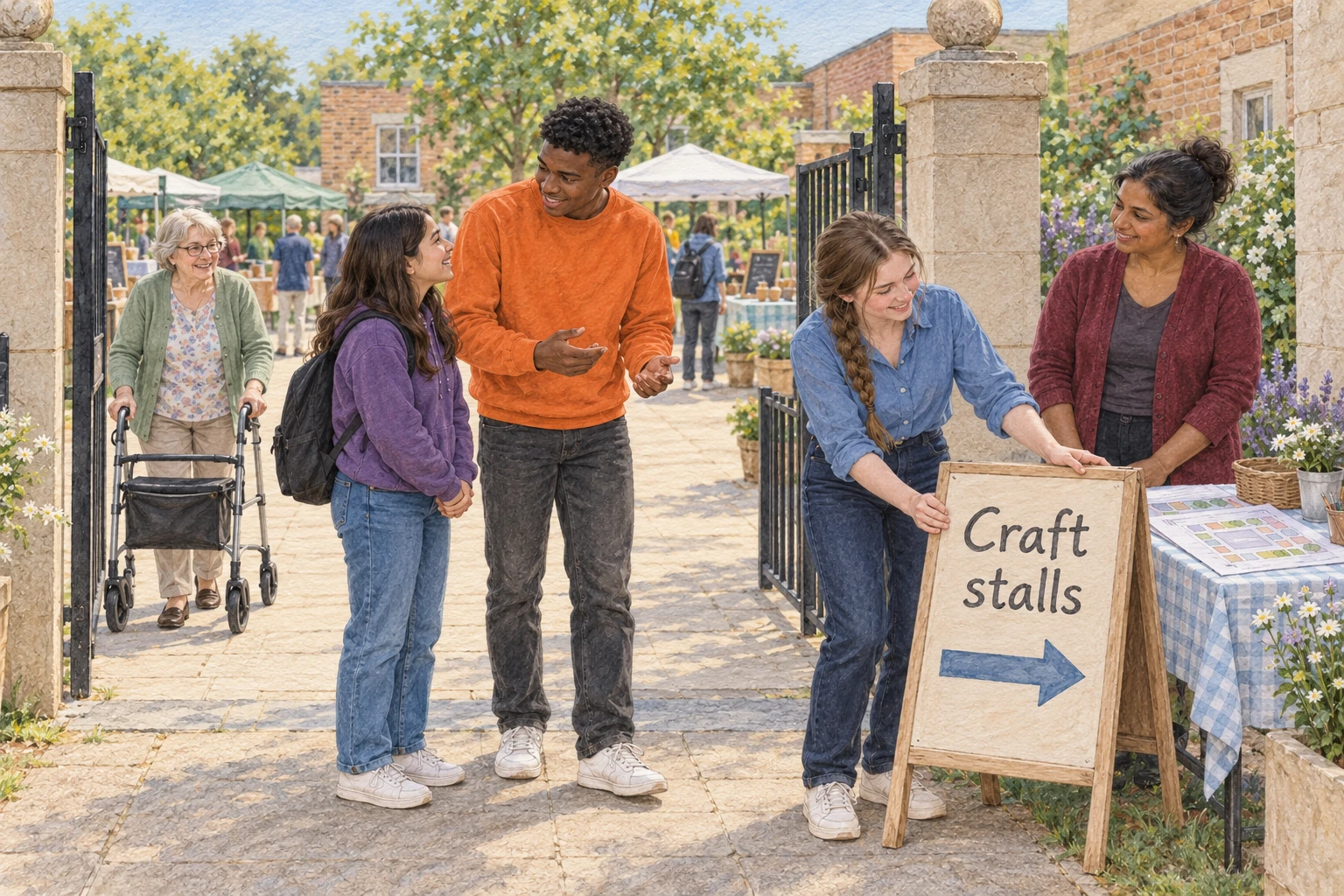
Near lunchtime, Frederick visits the craft area himself. A younger student thanks him for the directions because her family found her table easily. He tells Charlotte what she said, then admits that the sign had caused confusion at first. Charlotte grins. “That is why we tried walking it,” she says, checking that the board is still facing the entrance after a gust of wind.
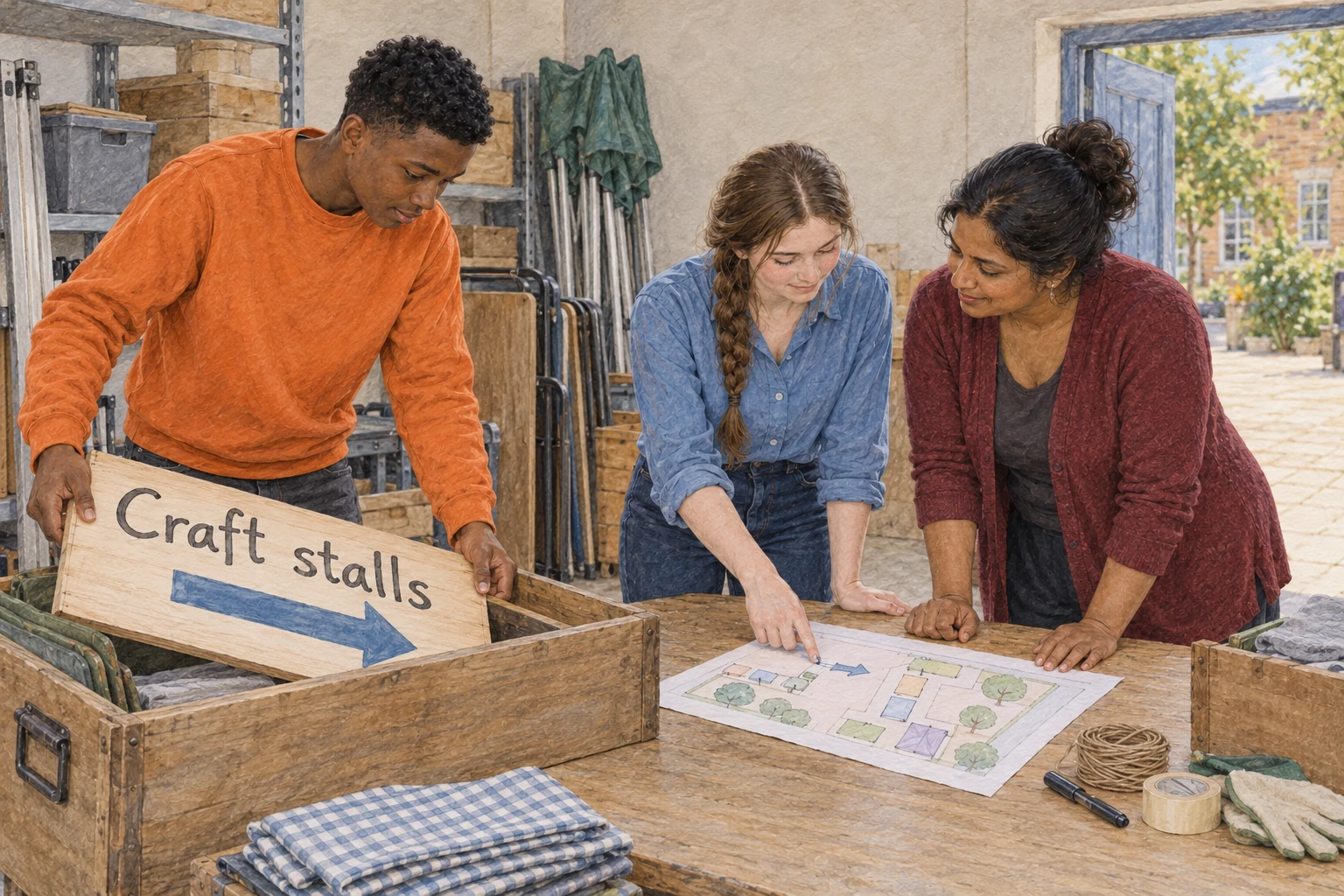
At the end of the fair, Frederick stores the sign with a sketch of its position. Next year’s helpers will know where to begin, although they will still need to test the route. He has learned to ask a new question before calling a sign finished. Can a visitor coming through the gate use it to find the craft stalls?