The Ferry Ticket
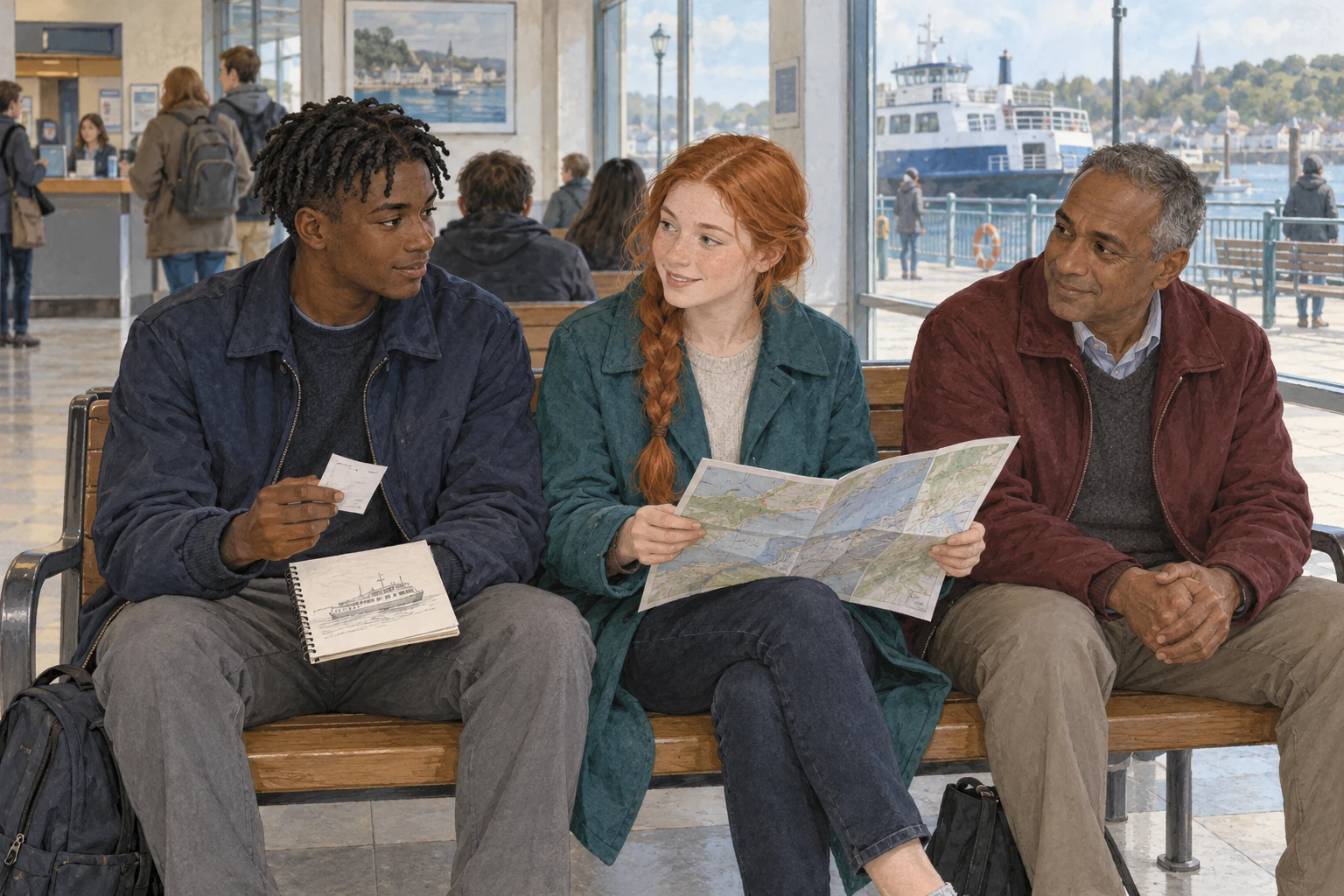
School Readers · Level 20Peter puts his ferry ticket inside the front cover of his sketchbook. He wants to draw from the promenade when the school group reaches the other side of the harbour. Victoria unfolds their outing map on the waiting-hall bench. Mr Cole checks the group before they leave for the ticket gate. Peter closes his bag, pleased that he has kept the small paper somewhere he will remember.
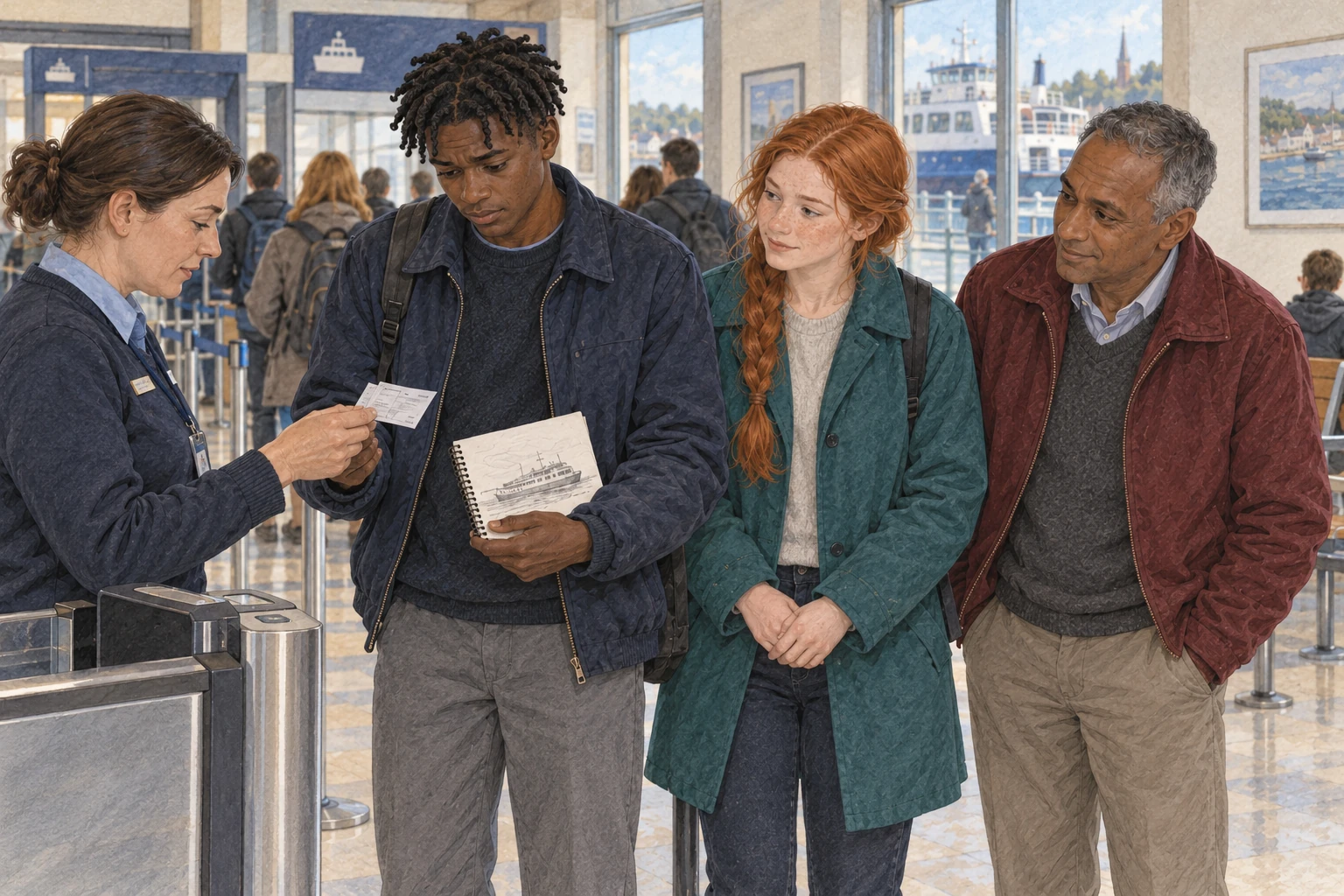
At the gate, he opens the sketchbook and finds a ticket tucked against the cover. The staff member checks it and asks where the outward ticket is. Peter stares at the paper. He has brought out the return part of the pair. Mr Cole moves with him to the side of the hall, away from the line, while Victoria stays beside them. Nobody needs to rush through the gate.
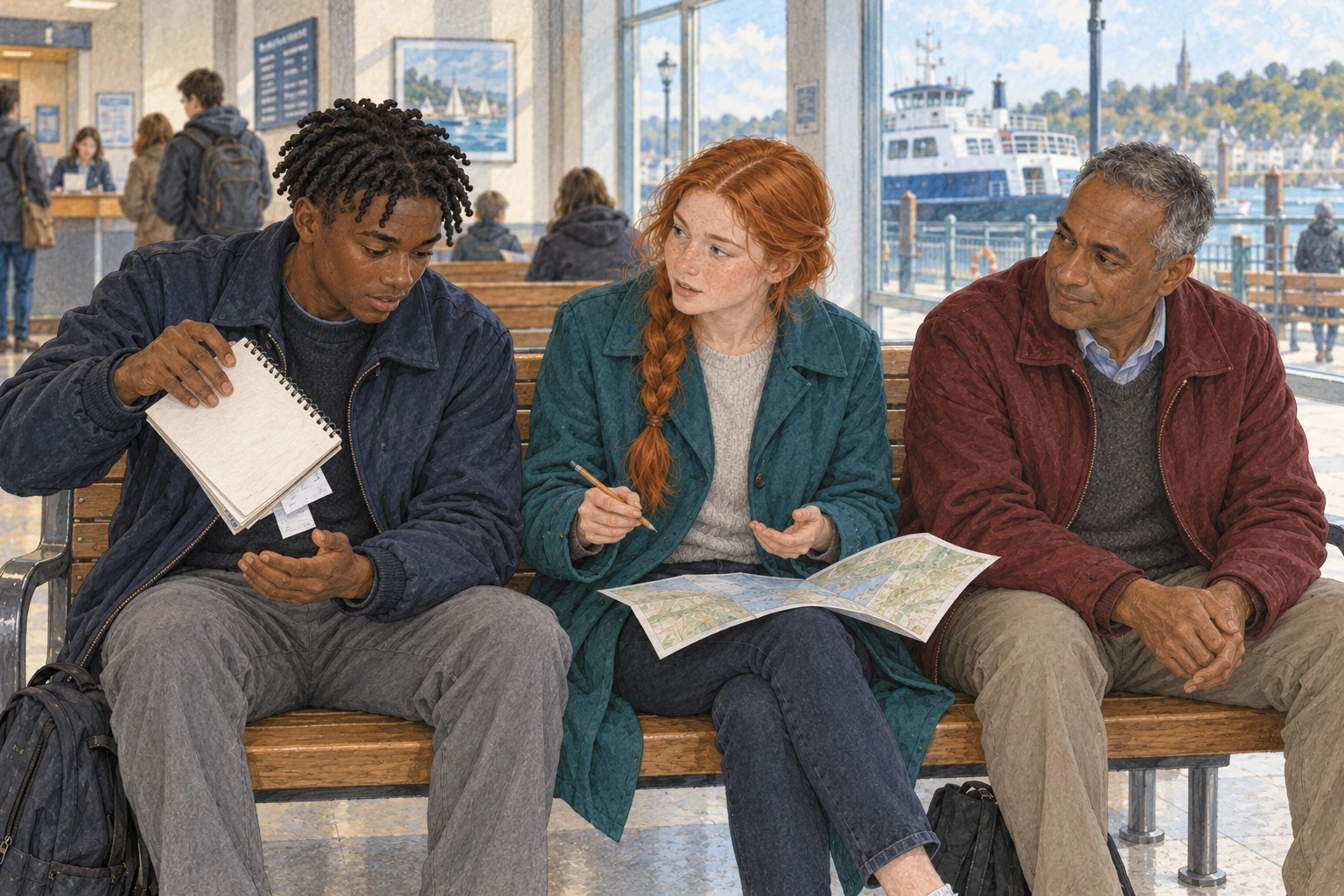
Peter is certain the other ticket was with it. He shakes the sketchbook over the bench, then catches himself before the loose pages fall. Victoria asks what happened after he placed it inside. He remembers lending her a pencil, looking at the map and drawing the ferry through the window. The steps seem ordinary, but one of them may explain why the ticket is no longer where he expected.
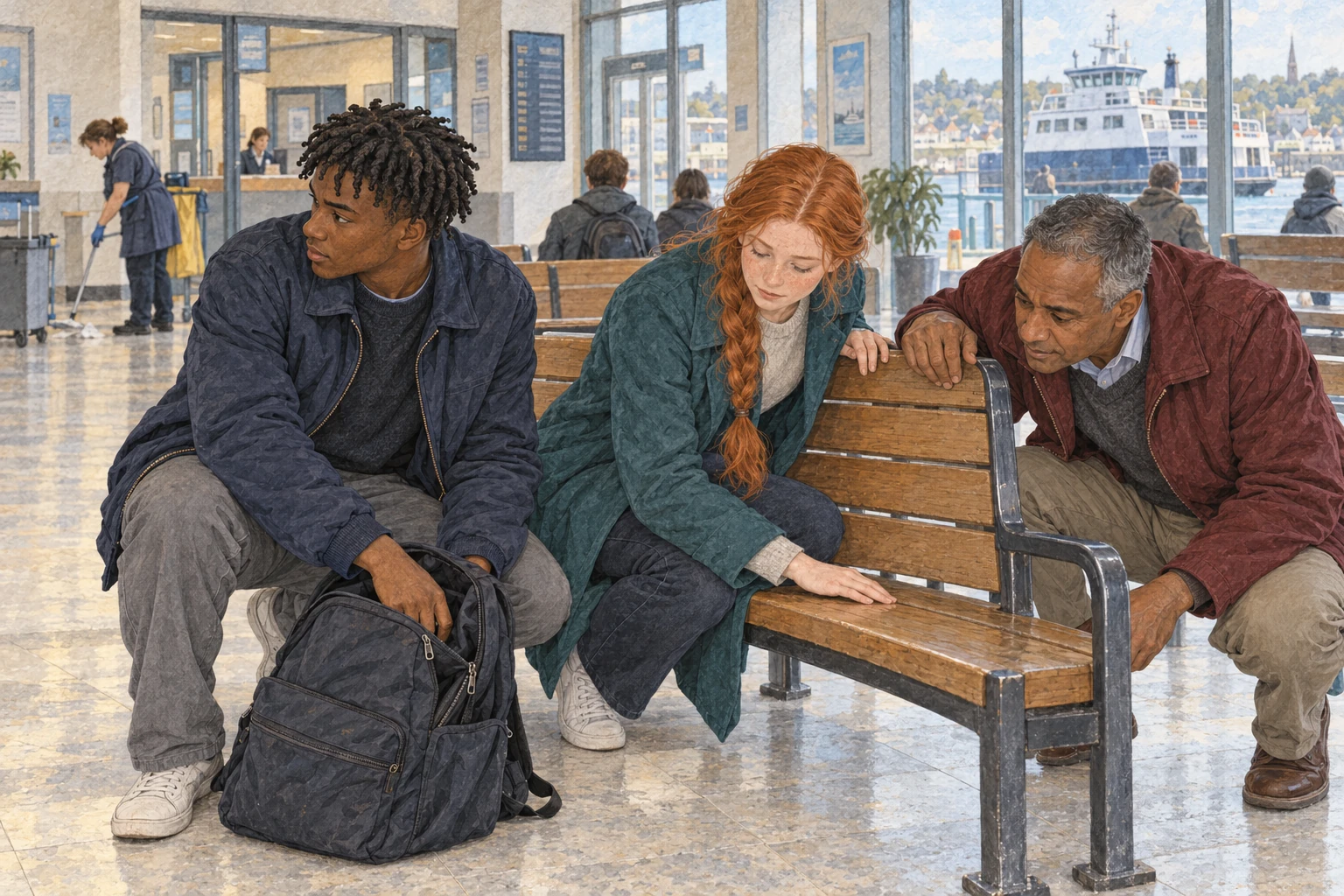
They check his bag and the bench without finding it. Peter looks towards a cleaner collecting paper near the far wall. For a moment, he thinks his ticket may already be gone. Mr Cole asks him to describe the missing part before making that assumption. It is a narrow strip with the same booking mark as the return ticket. The teacher keeps the group informed while they continue looking calmly.
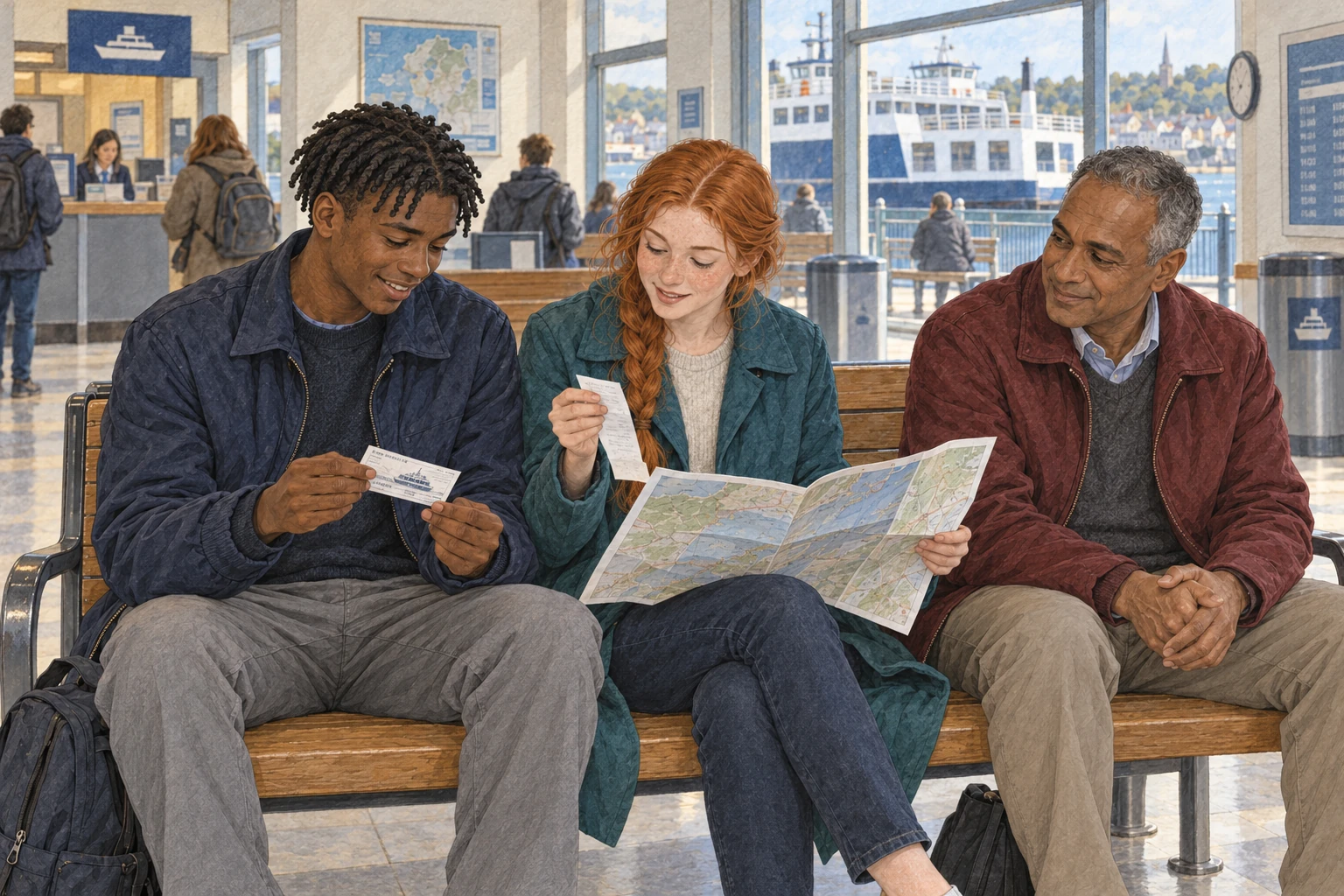
Victoria opens the outing map to check the last place they used the pencil. A small strip of paper slips from its fold. It is a shop receipt, not the ticket. Peter laughs once, then sighs. Finding something the right size is not enough. He compares the receipt with the return ticket and puts it aside, glad they checked rather than carrying another wrong piece to the gate.

Then he notices a pale corner beneath his harbour drawing. The ticket has slid between two loose sheets when he opened the sketchbook to draw. He lifts the top page and matches both parts. Mr Cole checks them with the ferry staff. They still have time for their planned crossing, and Peter returns to the group with the papers held together in the teacher’s outing wallet.
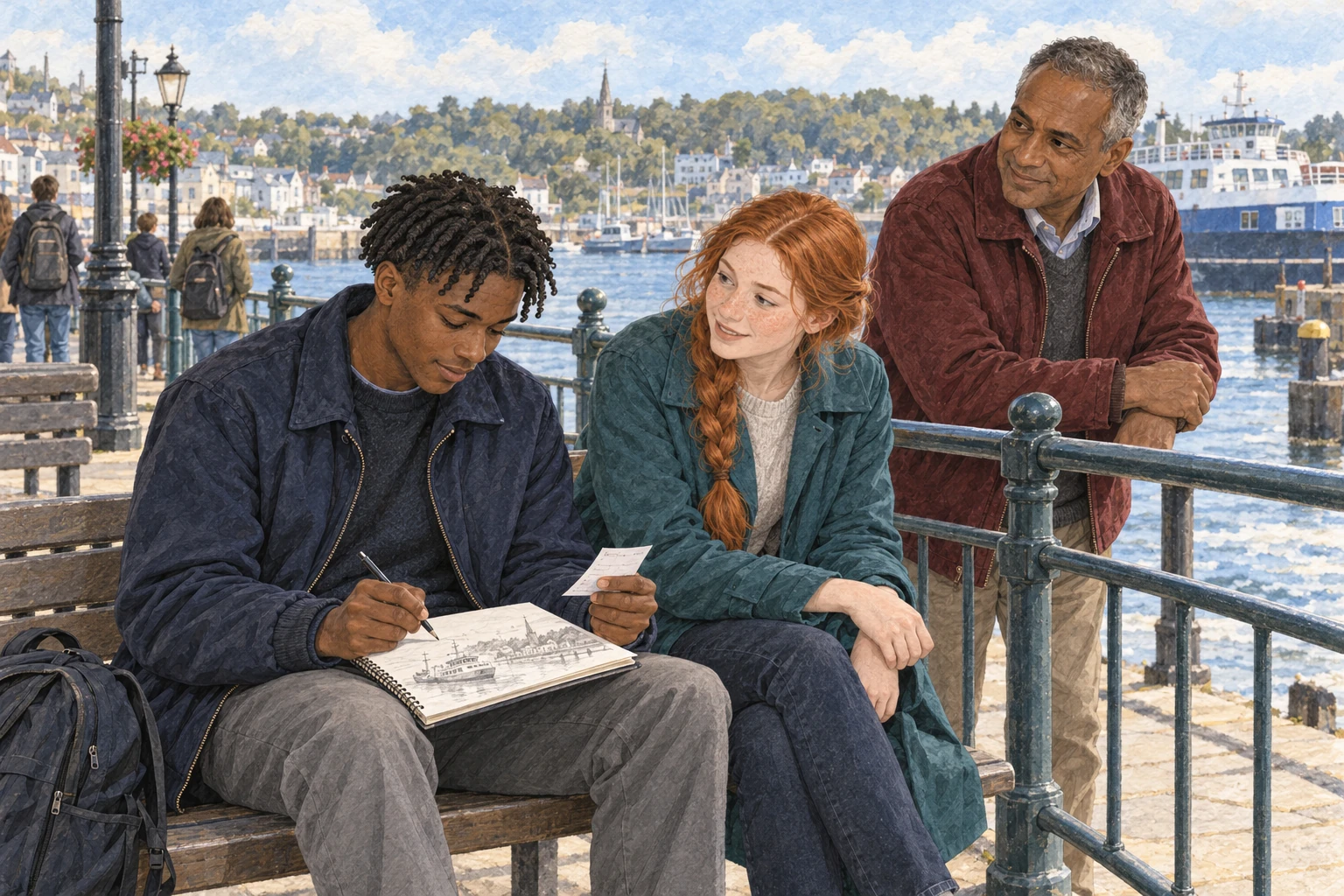
Across the harbour, the group follows Mr Cole onto the public promenade behind its railing. Peter begins his sketch, but keeps the ticket away from the loose drawing pages. Victoria asks whether he wants to stop carrying a sketchbook on trips. “No,” he says. “I want a better place for the things that aren’t drawings.” The book was useful; his storage plan had not kept different papers apart.
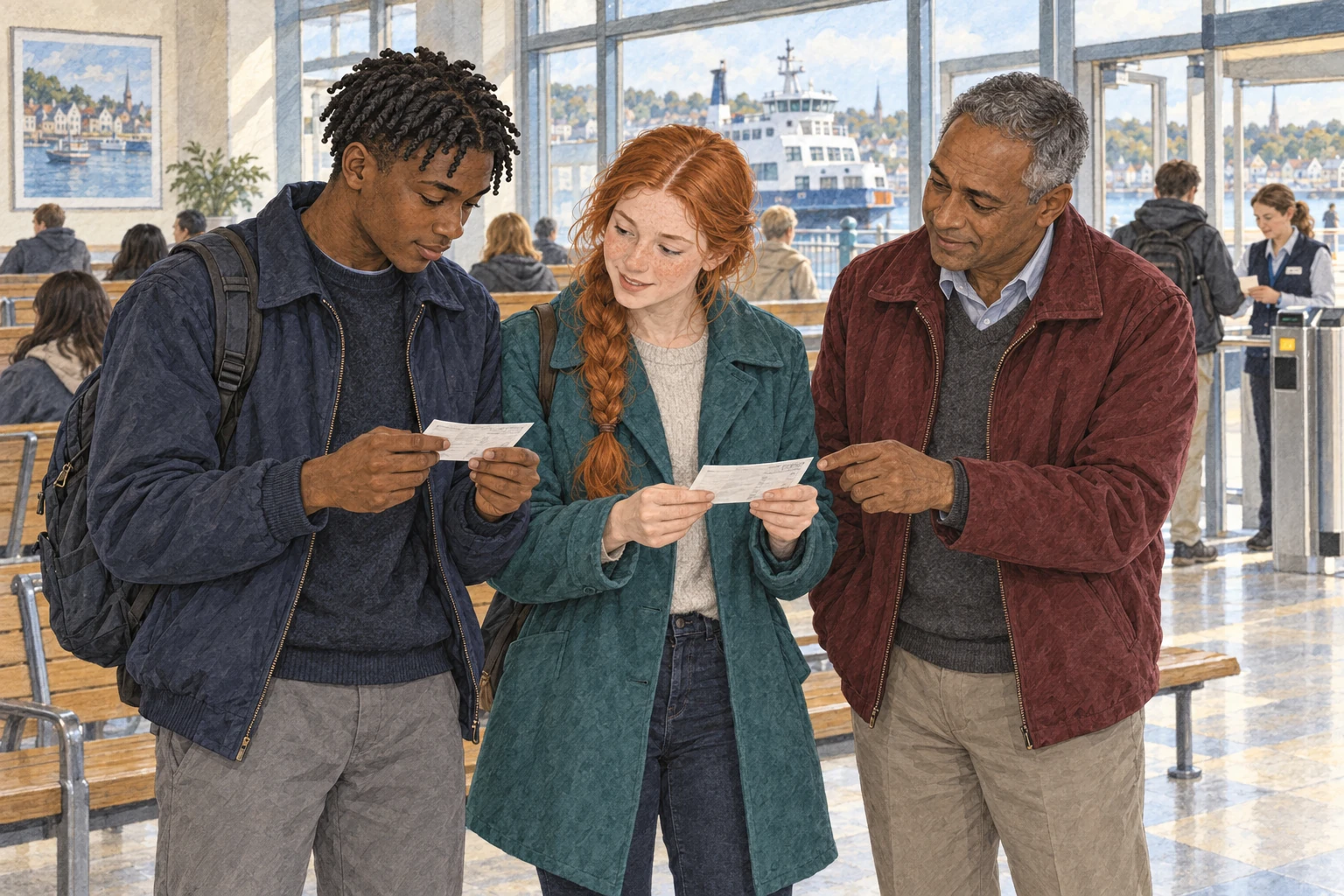
Before they return, Mr Cole gives each student time to check the correct ticket. Peter reads the journey direction instead of looking only for a familiar shape. He helps Victoria compare hers without taking charge of it. At the gate, the staff member checks the right part immediately. Their careful pause in the waiting hall has made the second journey feel much simpler.
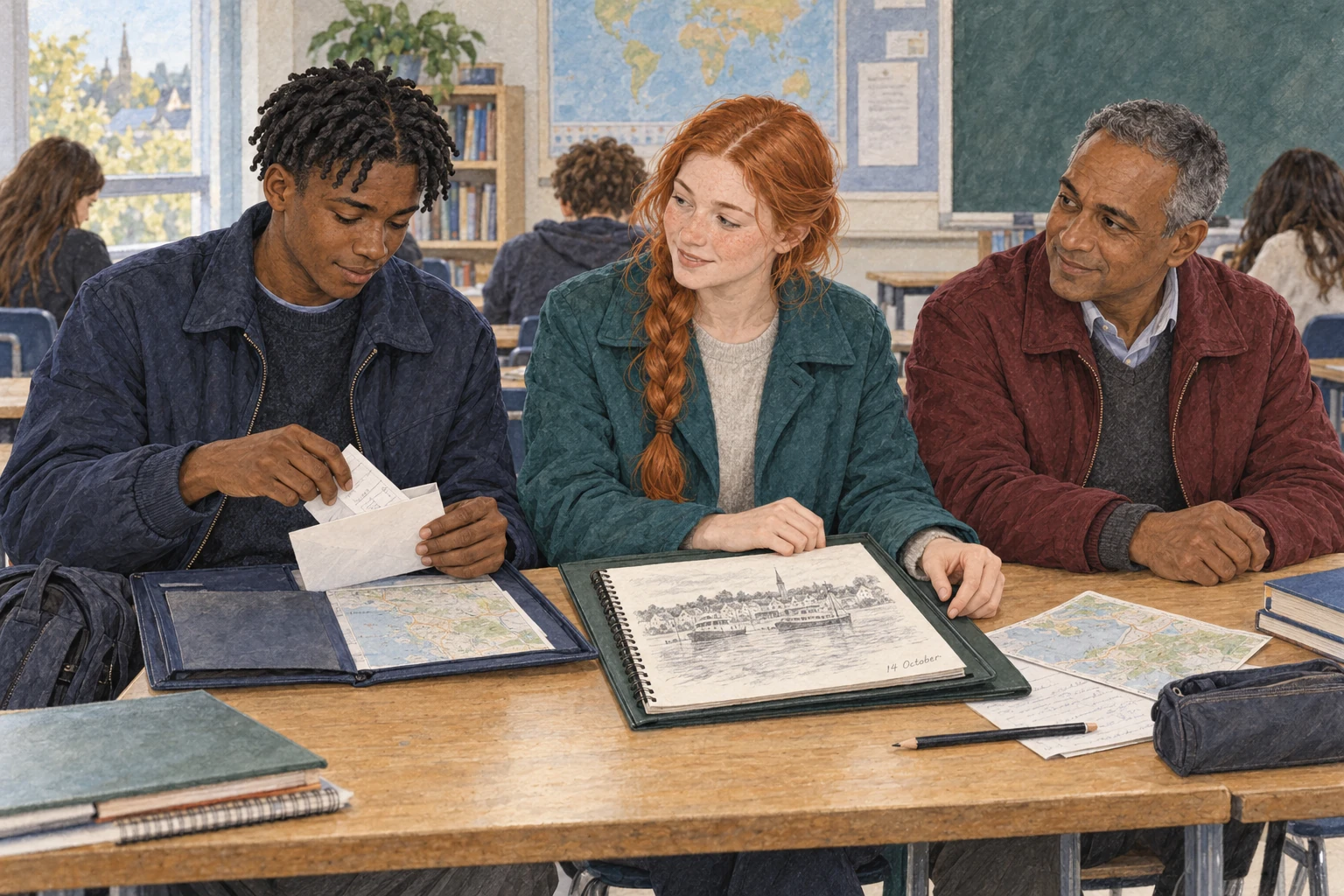
Back at school, Peter adds a small envelope inside his trip folder for travel papers. His harbour drawing goes into the art file. He had remembered exactly where he first put the ticket, but memory of one moment was not the whole journey. The pencil, map and loose pages all mattered. Beside the finished drawing, he writes its date, glad that the lost time did not become a lost day.