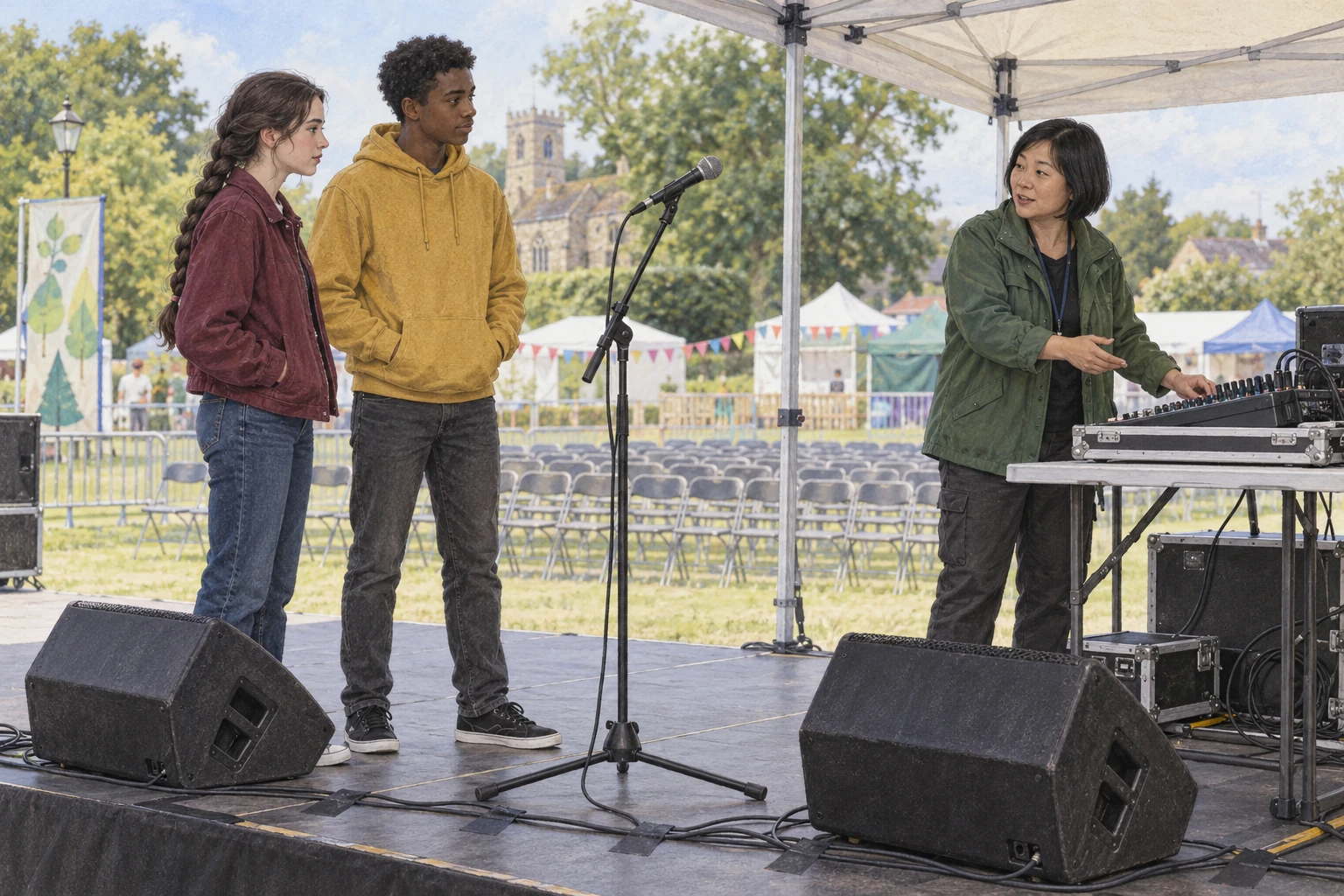
The Sound Check
School Readers · Level 17Bridget has agreed to introduce the first band at the town festival. She practises her welcome beside Hugo while Ms Fox sets up the sound equipment. The seats are still empty, and the musicians are having lunch. There is time for one sound check before the audience arrives to enjoy the afternoon.
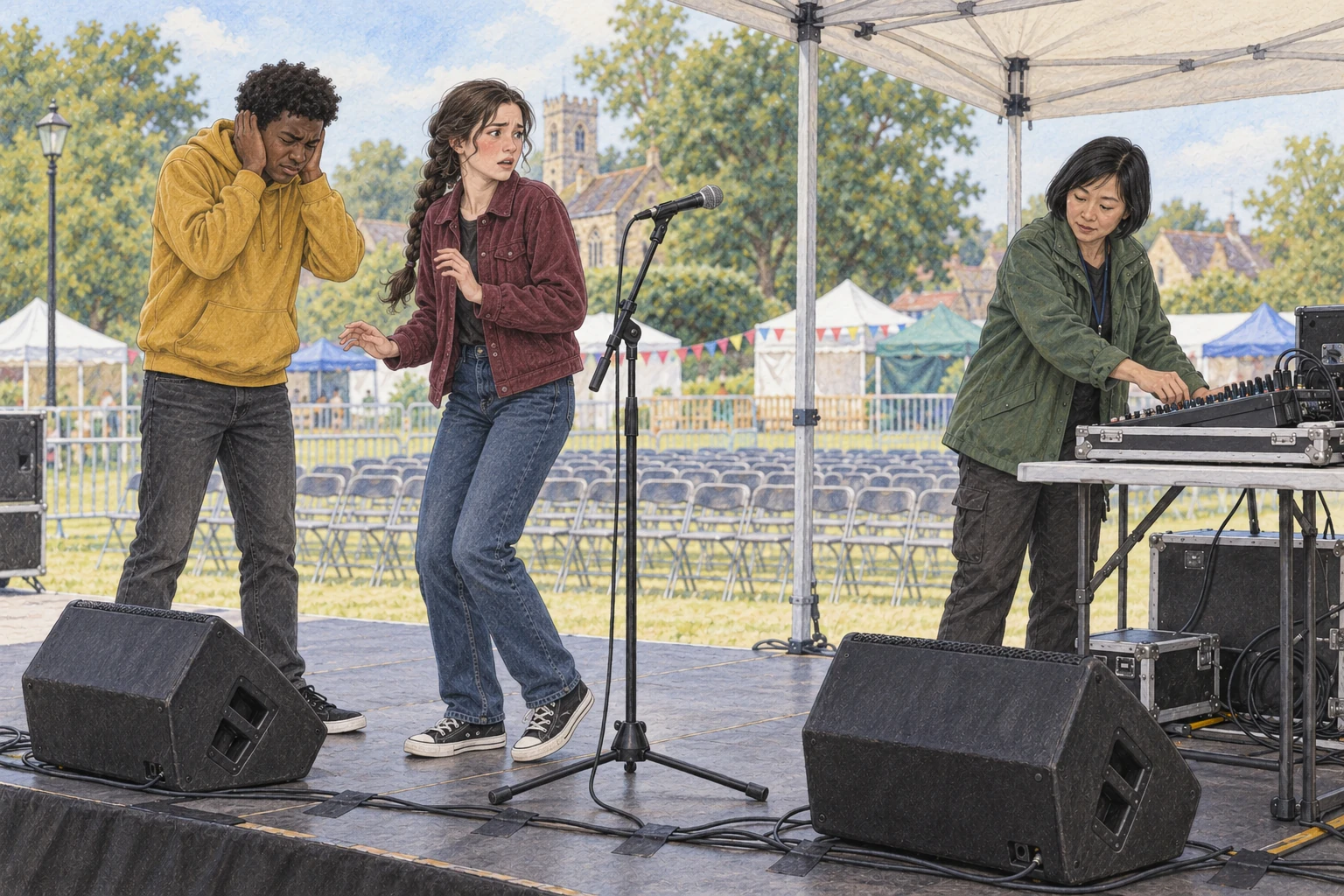
Bridget steps up to the microphone and begins. A sharp squeal cuts across the quiet square. She stops speaking and moves away, her face growing warm. Hugo covers his ears for a moment. Ms Fox lowers the sound straight away. “We will sort it before anyone starts,” she tells them calmly.
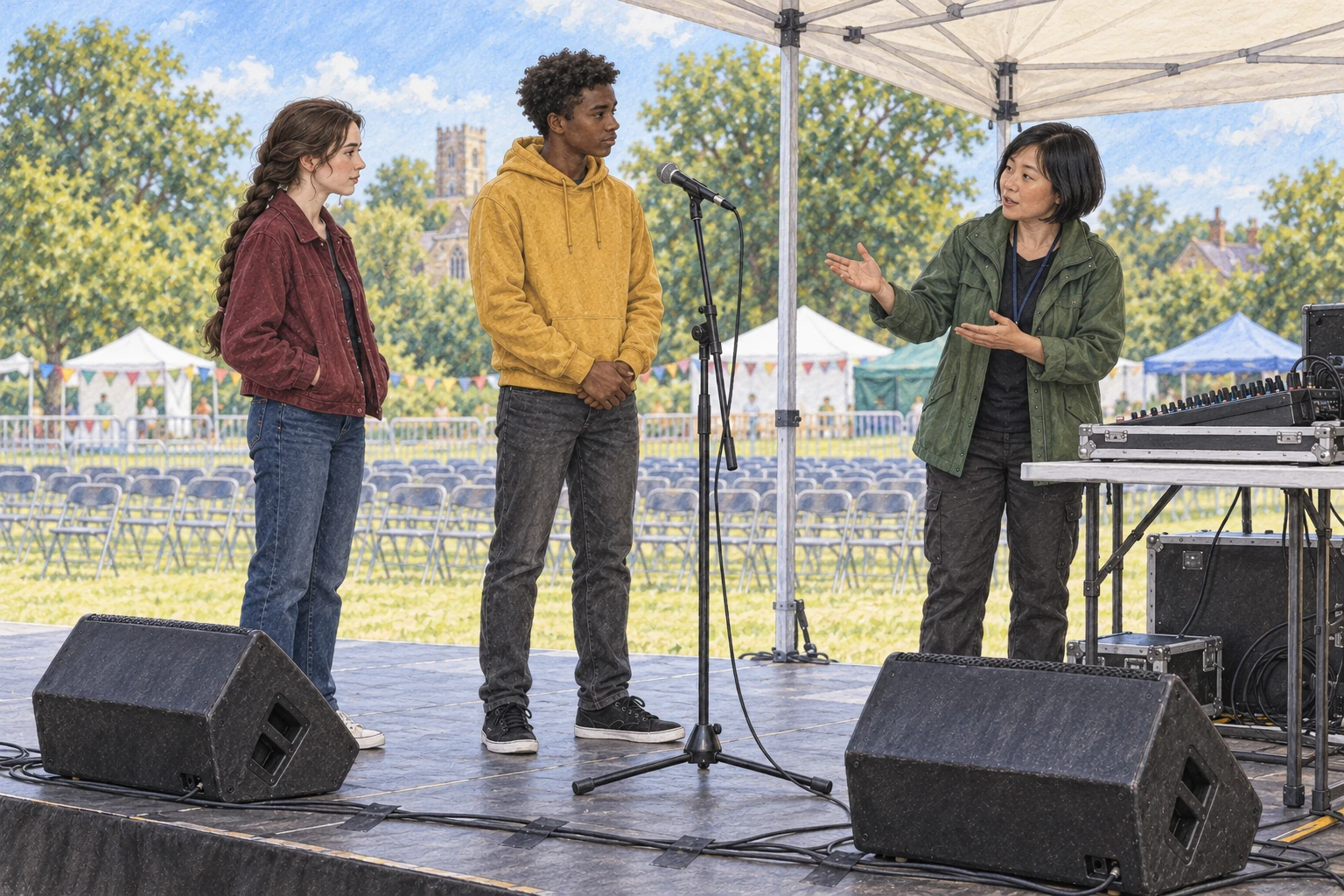
Bridget thinks she must have spoken too loudly. Ms Fox explains that a microphone can pick up sound from a speaker and send it round again. This is called feedback. Bridget looks at the speaker standing just behind the microphone. Perhaps the position of the equipment matters more than her first nervous sentence.
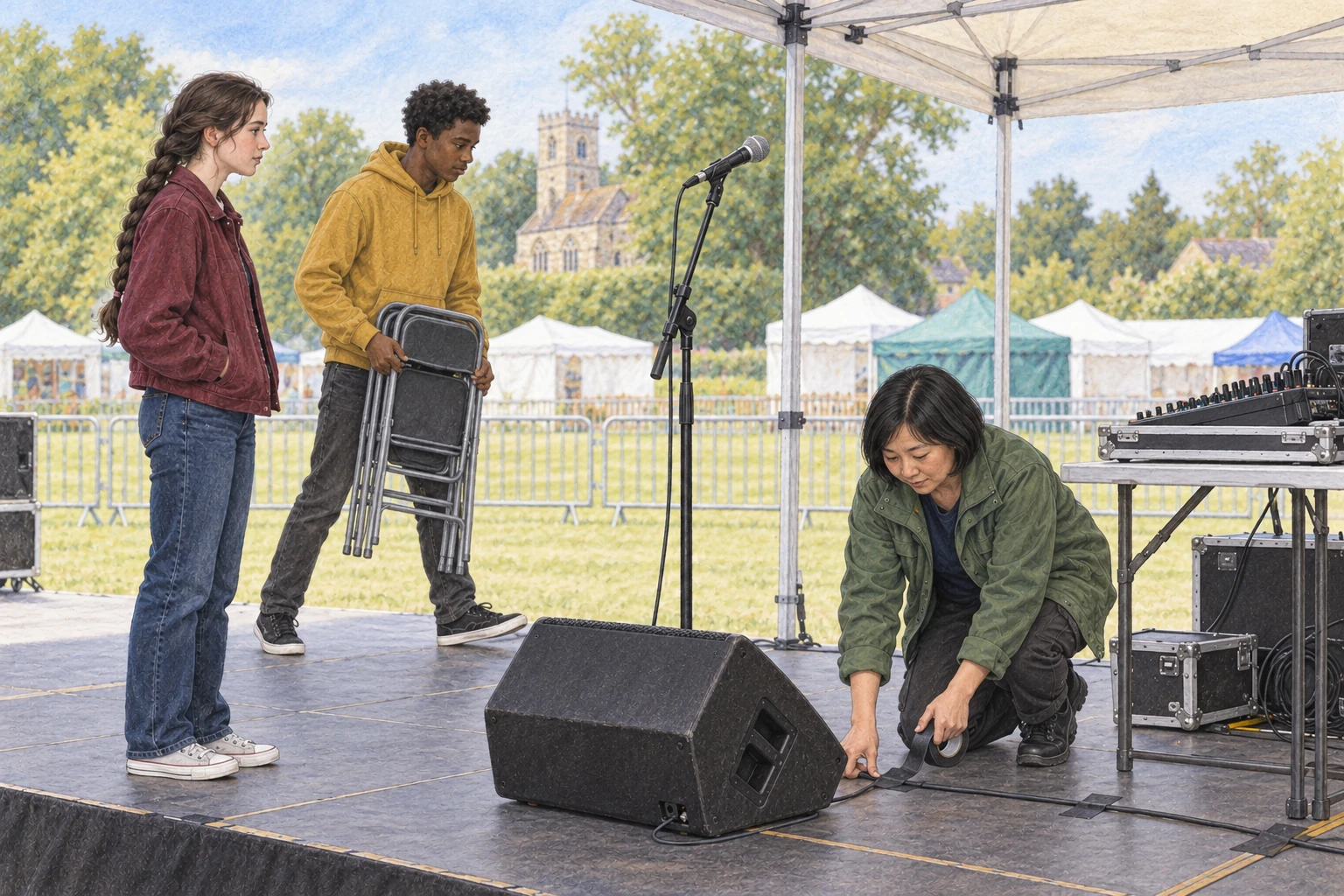
Ms Fox moves the speaker to a suitable place in front of the microphone and checks the cable. Hugo helps keep the marked walkway clear while she works. Bridget waits until the technician asks her to try again. This time, her welcome reaches the back row without the sudden squeal that made her stop.
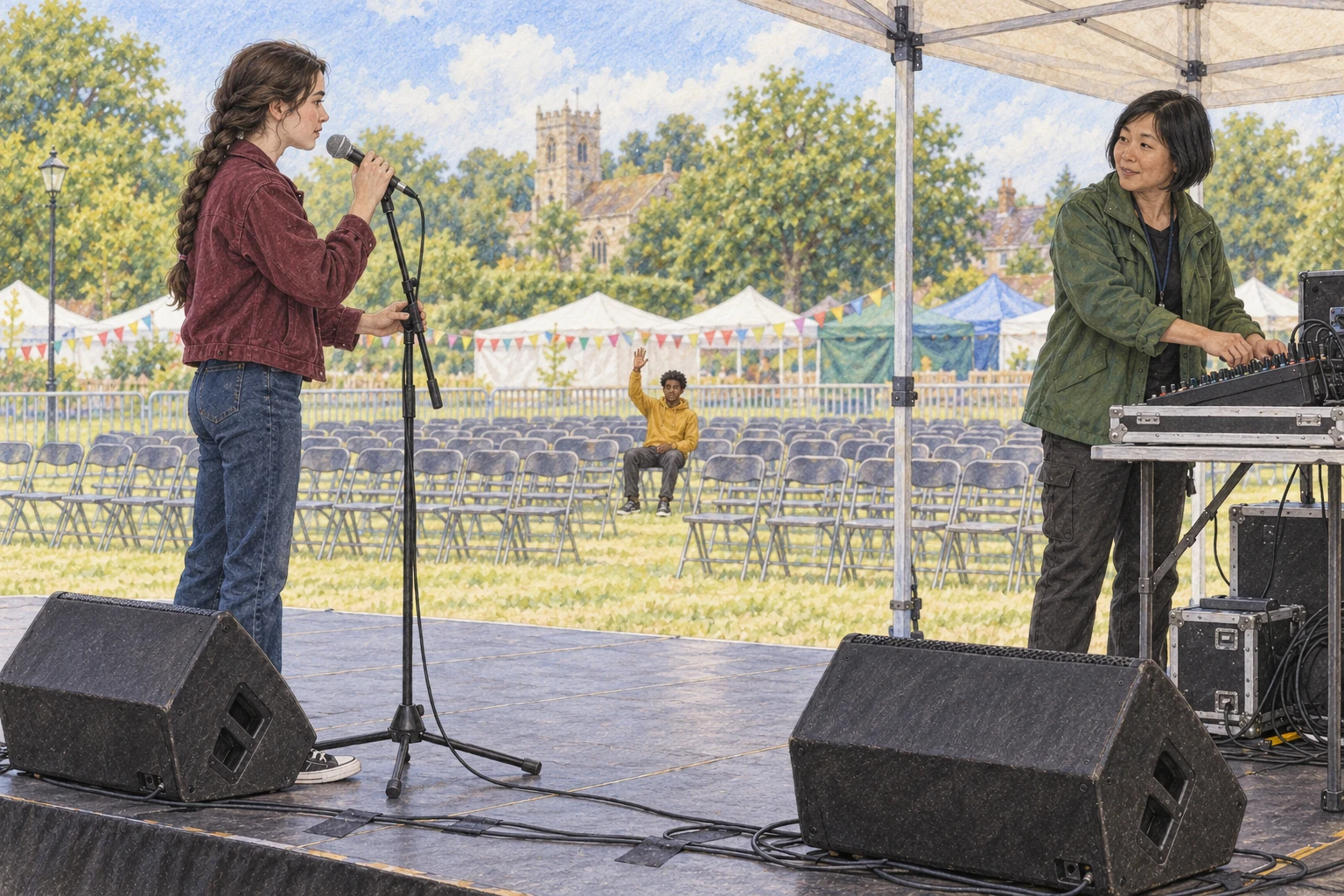
Then Hugo walks to the far side of the seating area. He can hear Bridget, but her words sound rushed. He raises his hand to show where he is standing. “Could you leave a little space between the sentences?” he asks. Bridget tries again, pausing after the name of the band.
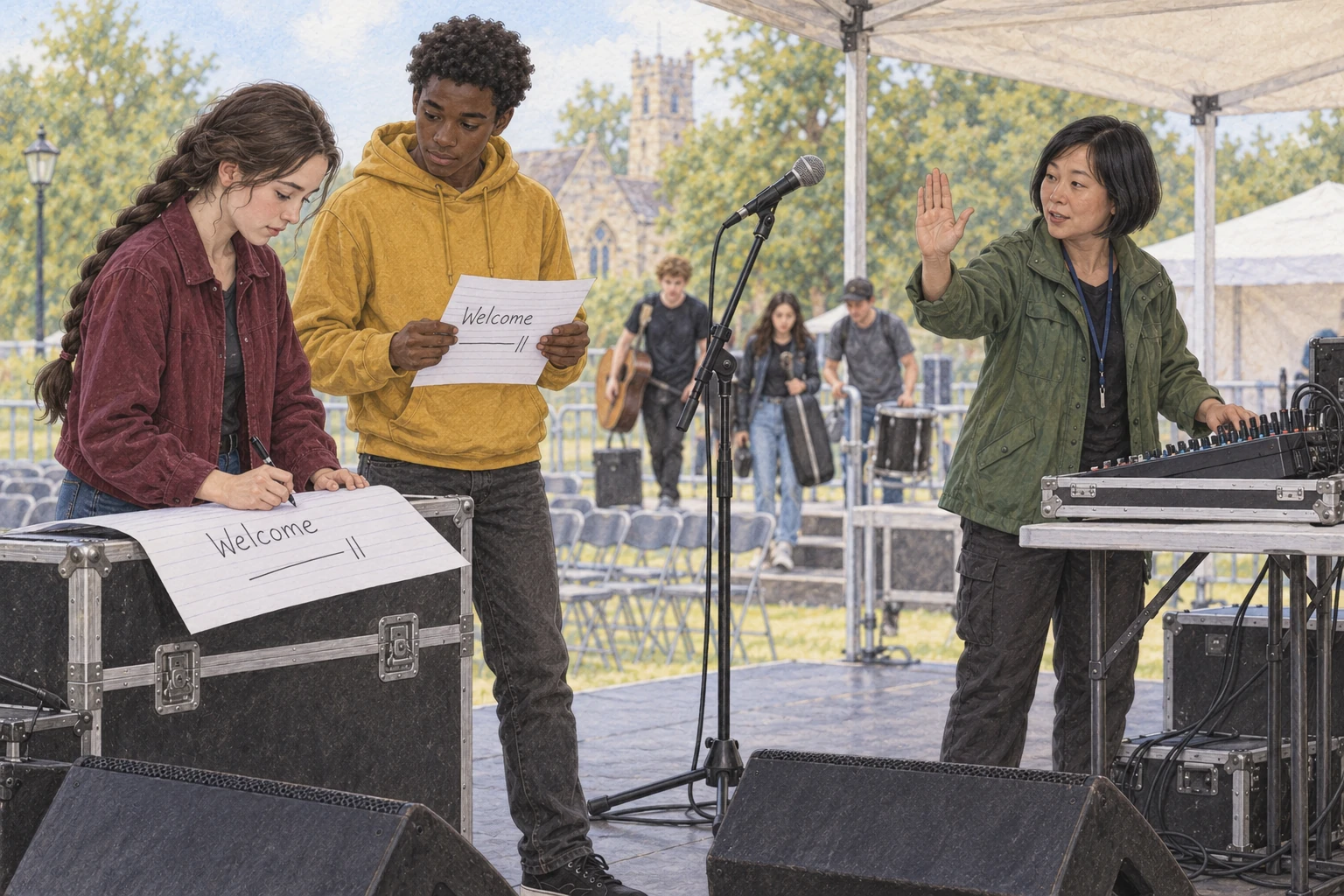
Ms Fox and the students agree on signals to show whether the sound is clear or needs attention. Bridget writes her welcome in larger lines, with a mark where she will pause. Hugo checks the spare paper copy. They are ready when the musicians return, although Bridget still feels a flutter in her stomach as people take their seats.
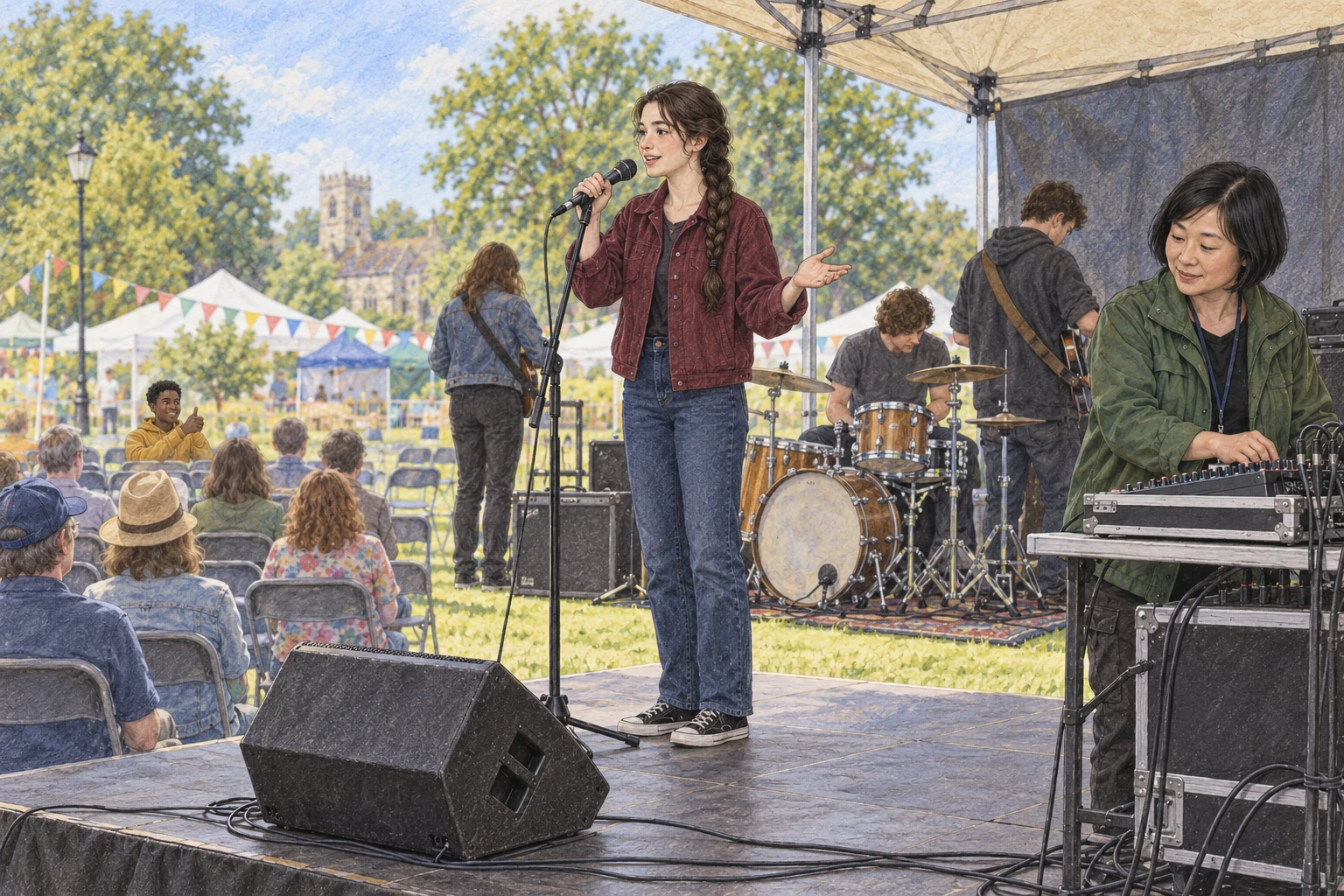
At the start of the festival, Bridget looks towards Hugo at the back. He gives their agreed signal to show that her voice is clear. She welcomes the audience and introduces the band, leaving the pauses they practised. People clap, the musicians begin, and Bridget steps away from the microphone with a relieved smile.
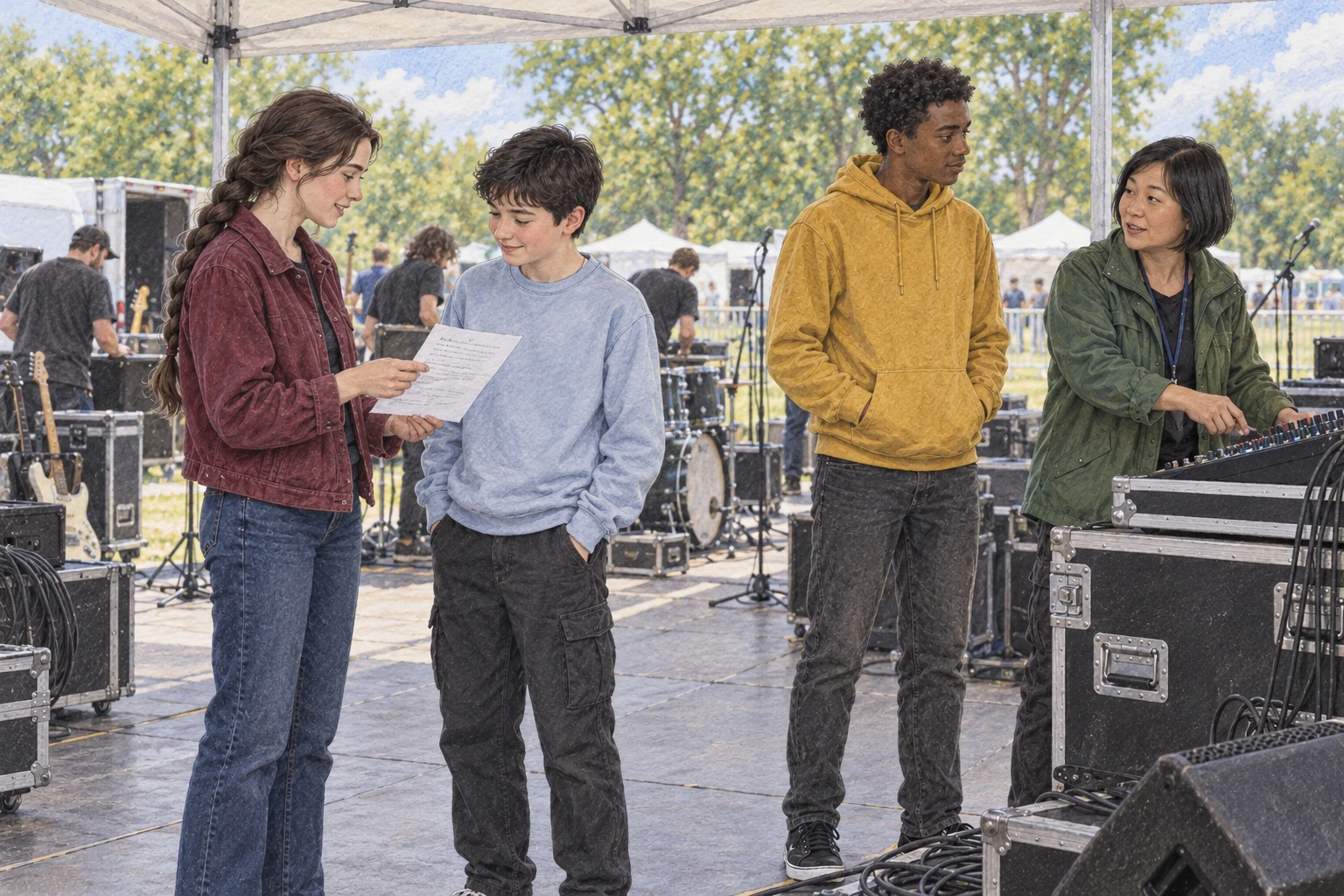
Later, a younger student asks how she managed to sound so calm. Bridget shows him the marked paper and points out Hugo beside the sound desk. “It did not go perfectly at first,” she says. “We had a chance to find out what needed changing.” She keeps the welcome sheet as a reminder of her first festival introduction.