The Film Take
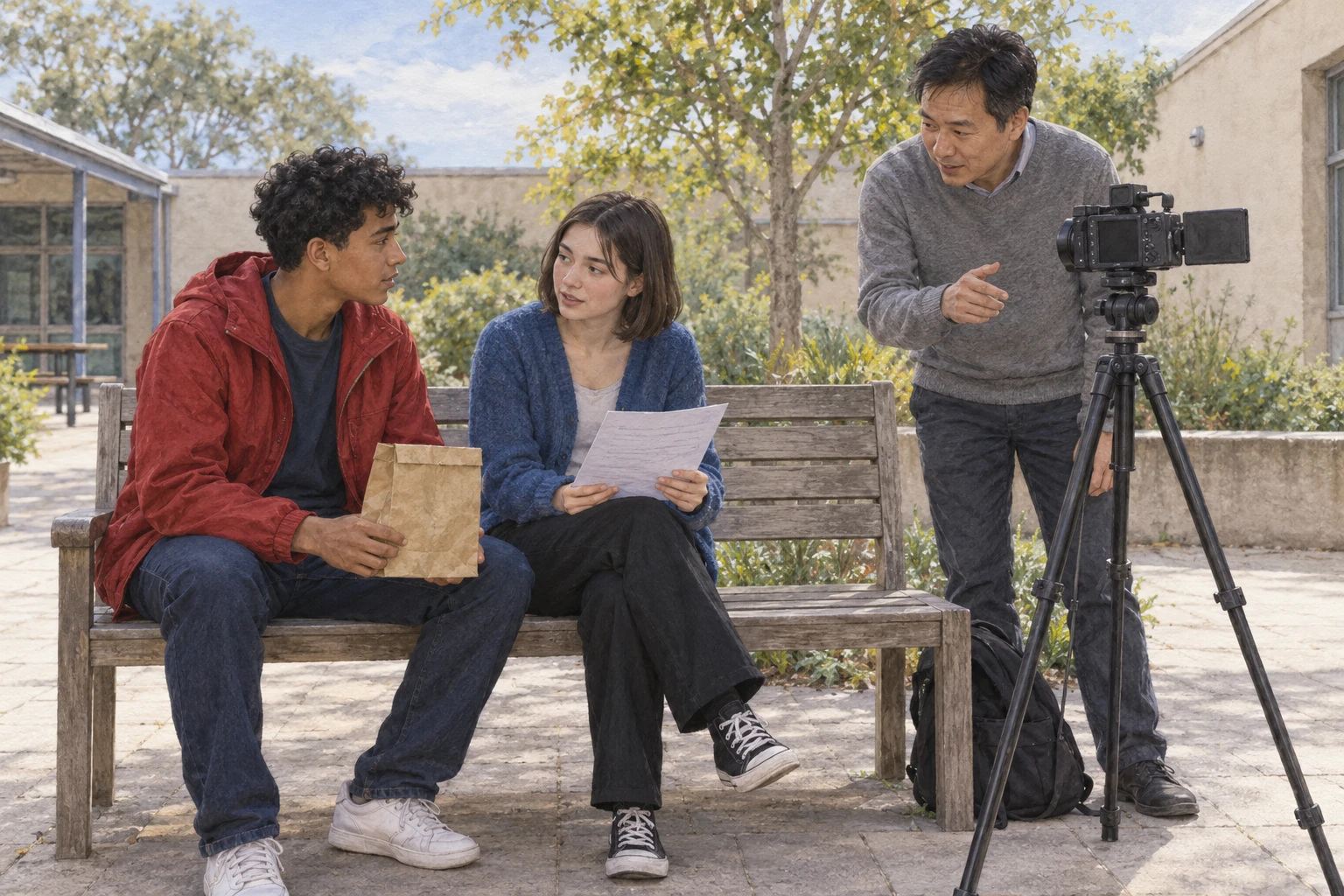
School Readers · Level 18Peter and Susan are making a short film for the school open day. Their scene seems simple: Peter will sit on the courtyard bench, open a paper bag and discover that his lunch is missing. Susan will record it while Mr Shaw supervises. They have one quiet afternoon to finish, and Peter hopes to get everything right in a single take.
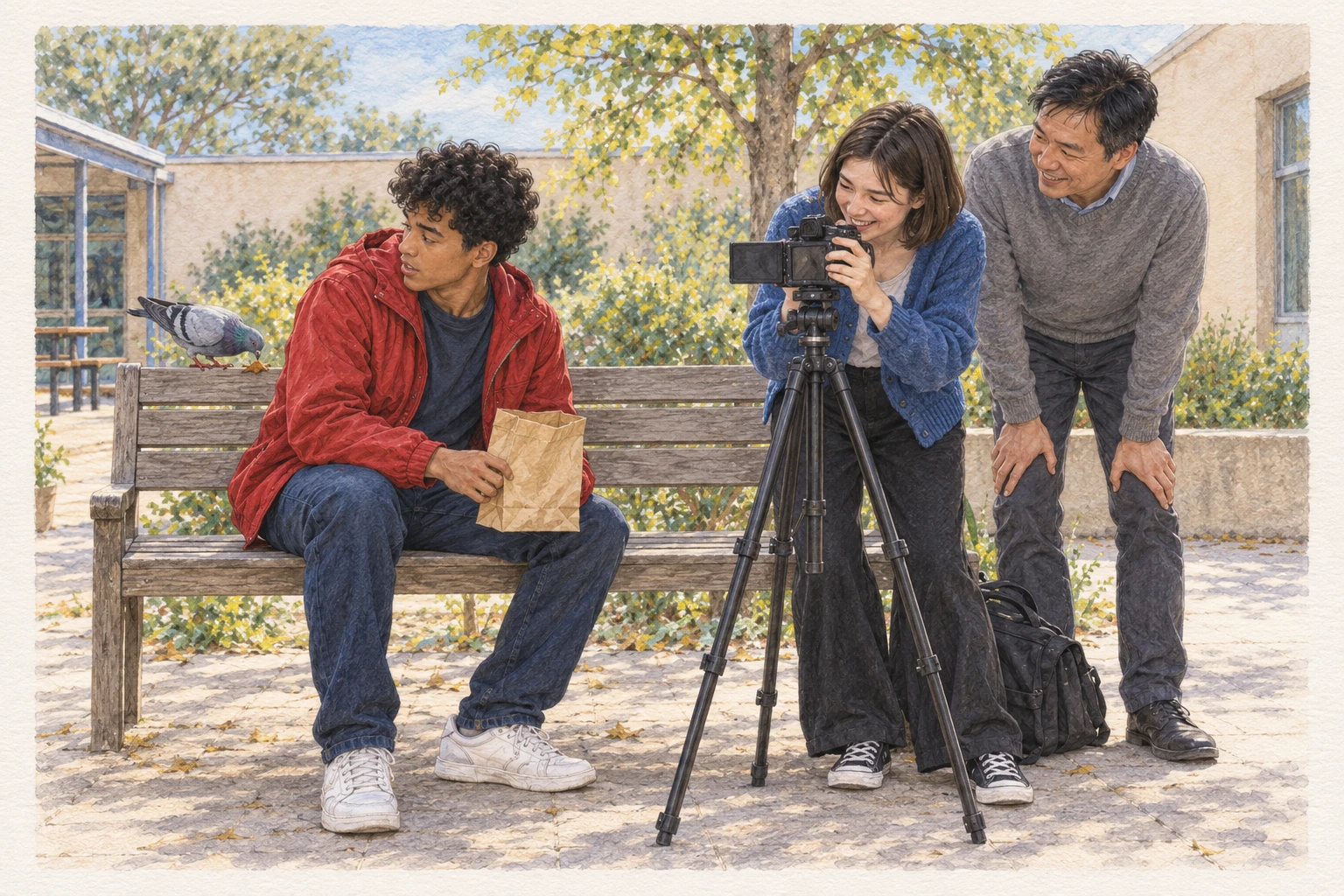
The first recording begins well. Peter sits down, looks into the bag and says his line. Then a pigeon lands behind him and pecks at a leaf. Susan tries to keep filming, but Peter hears her laugh and turns round. He forgets the next sentence. When they watch the recording, the bird has become the busiest actor in the whole scene.
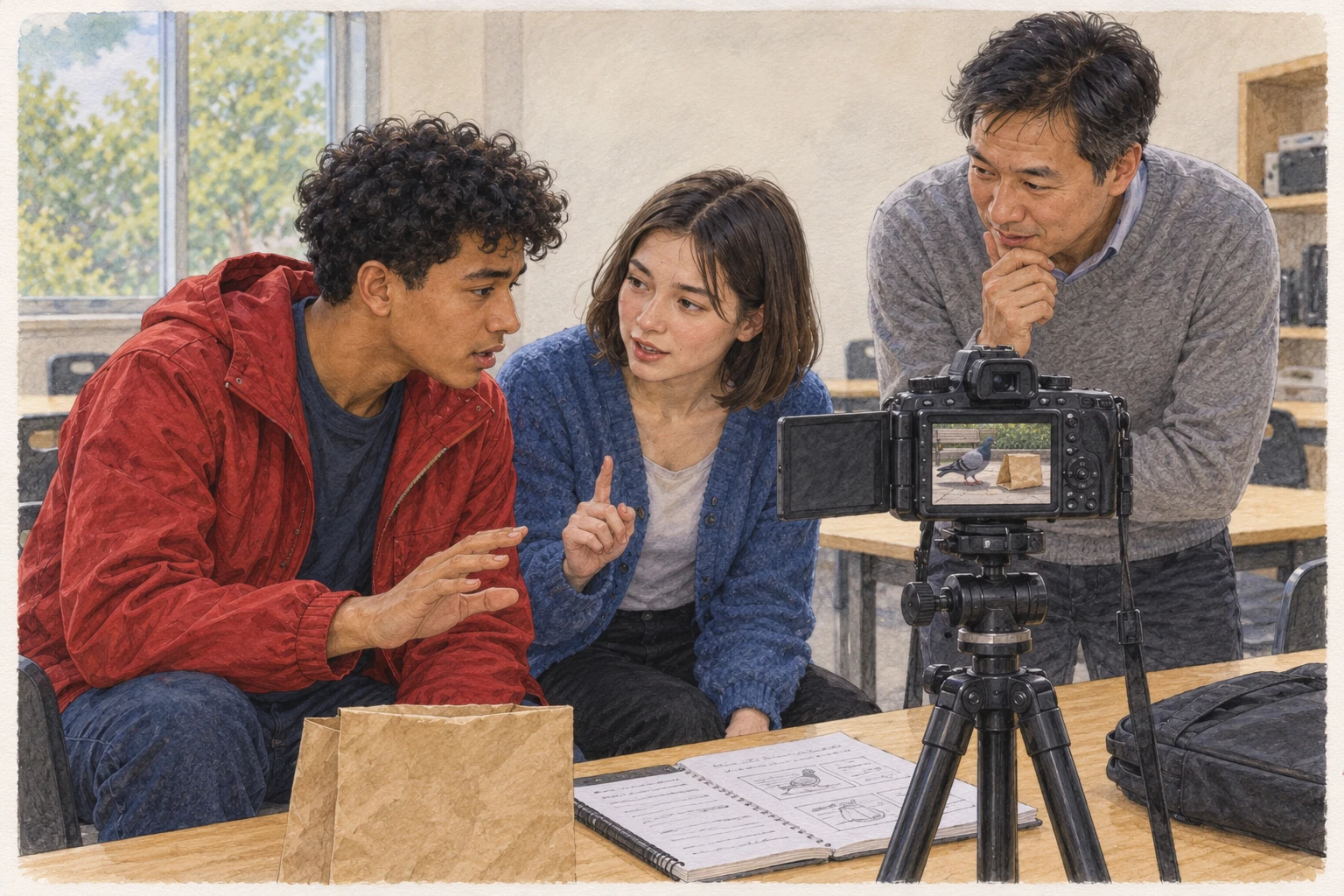
Peter wants to delete it immediately. Susan asks him to wait until they have seen the ending. The pigeon wanders away just as he looks into the empty bag again. His puzzled face makes the scene funny in a way they had not planned. Mr Shaw asks whether the problem is the picture itself or the difference between the picture and their script.
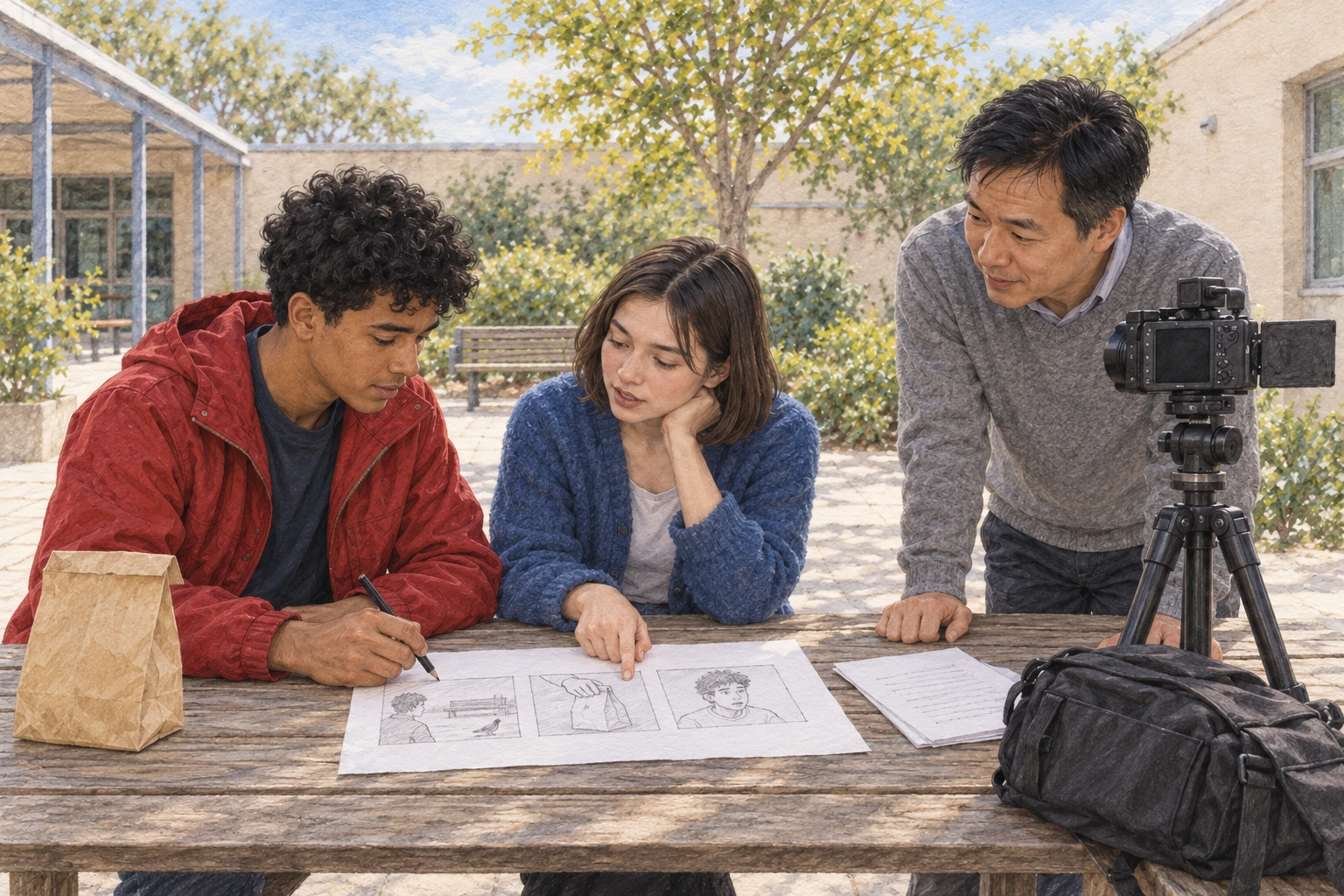
They discuss changing the story so Peter suspects the pigeon of taking his lunch. Susan points out that the bird has already left, and they cannot make it return to repeat the same action. They need a plan that uses what they recorded without depending on an animal doing something on request. Peter starts drawing three little pictures to show a possible sequence.
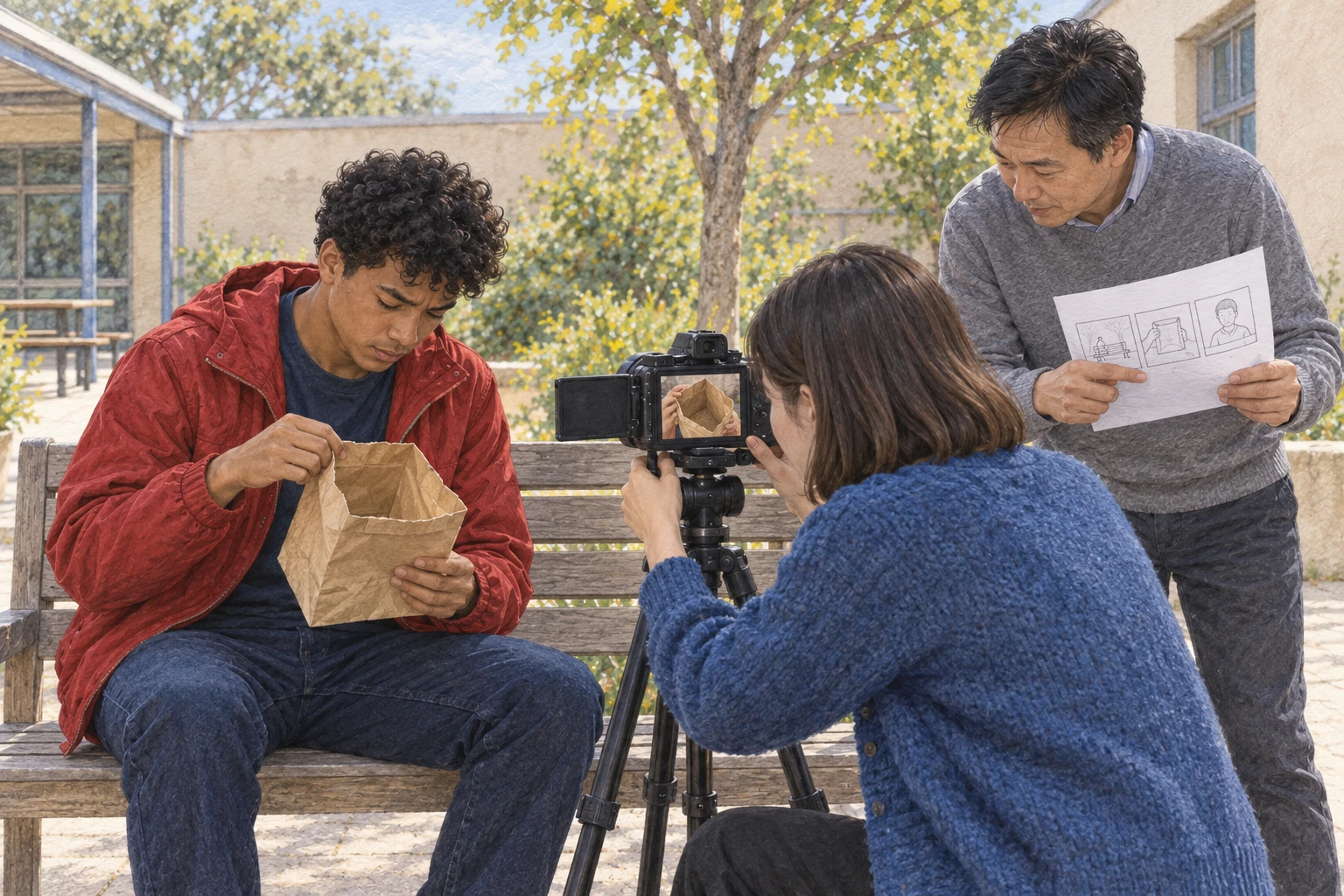
First, they will use the wide shot with the pigeon. Next, Susan will record a close view of the empty bag. Finally, Peter will look towards the place where the bird was and lift one eyebrow. The audience can make the connection without anyone saying that a pigeon really took the lunch. Mr Shaw helps them check that the joke is clear.
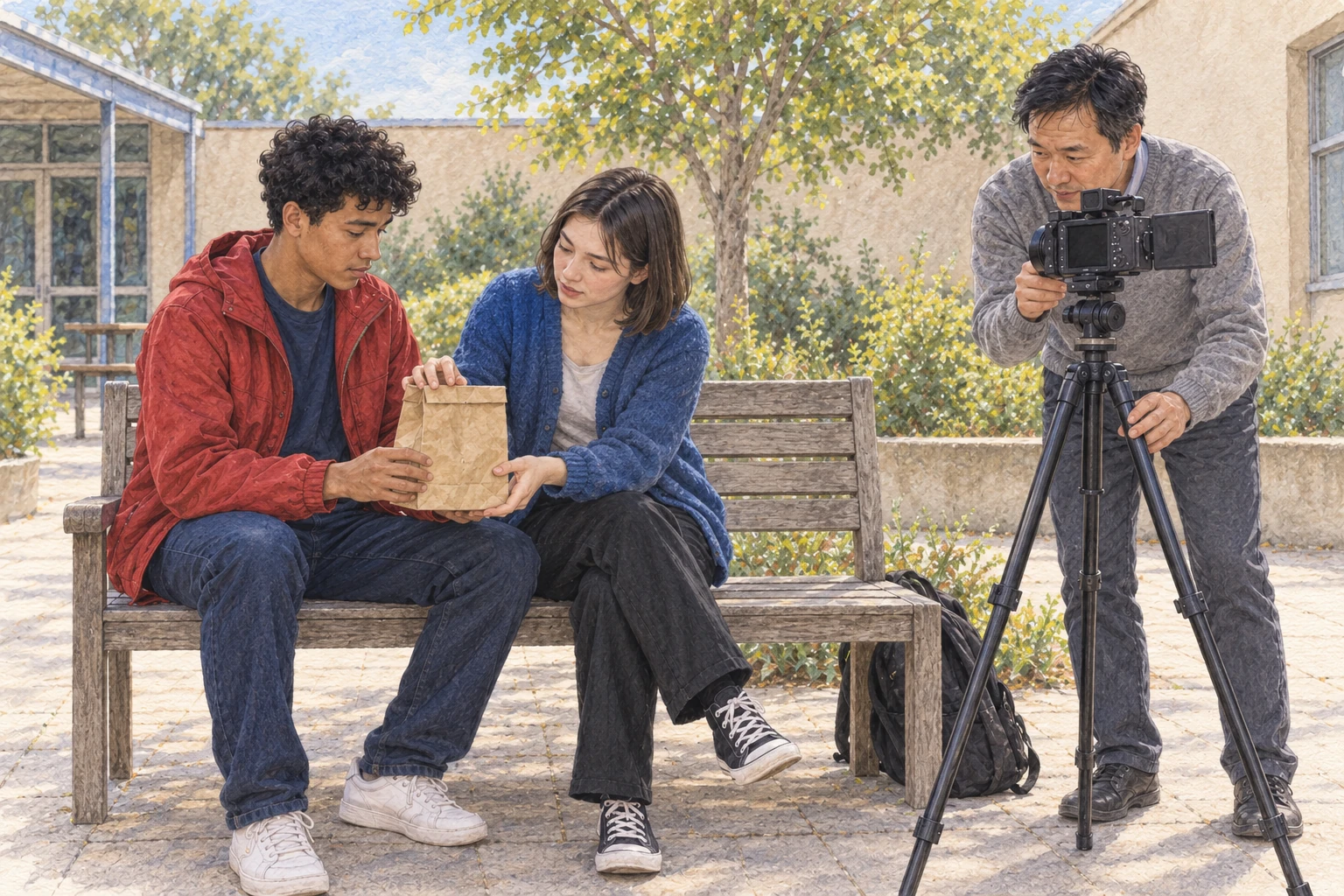
During the close shot, Susan notices that Peter is holding the bag in his other hand. If they join those pictures, it will seem to jump from one side to the other. She stops and checks the earlier recording. They repeat the close shot with the bag in the matching hand, keeping the same folded edge facing the camera.
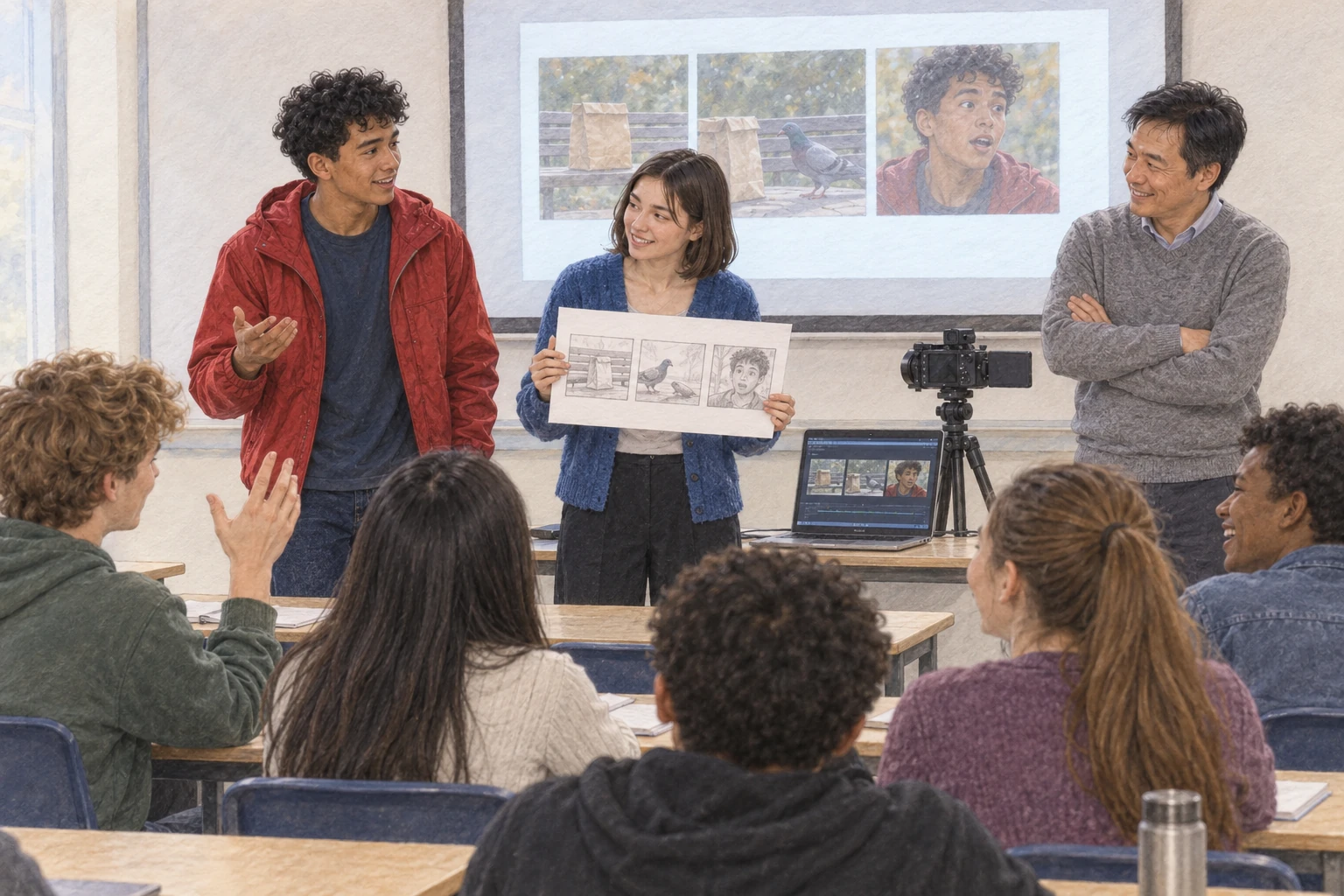
Back in the classroom, they put the three shots in order. Their first test audience laughs at Peter’s final look. One student asks whether they trained the pigeon. “Definitely not,” Peter says. Susan shows the small sequence drawings and explains how they worked with an unexpected moment instead of trying to control everything that happened in the courtyard that afternoon.
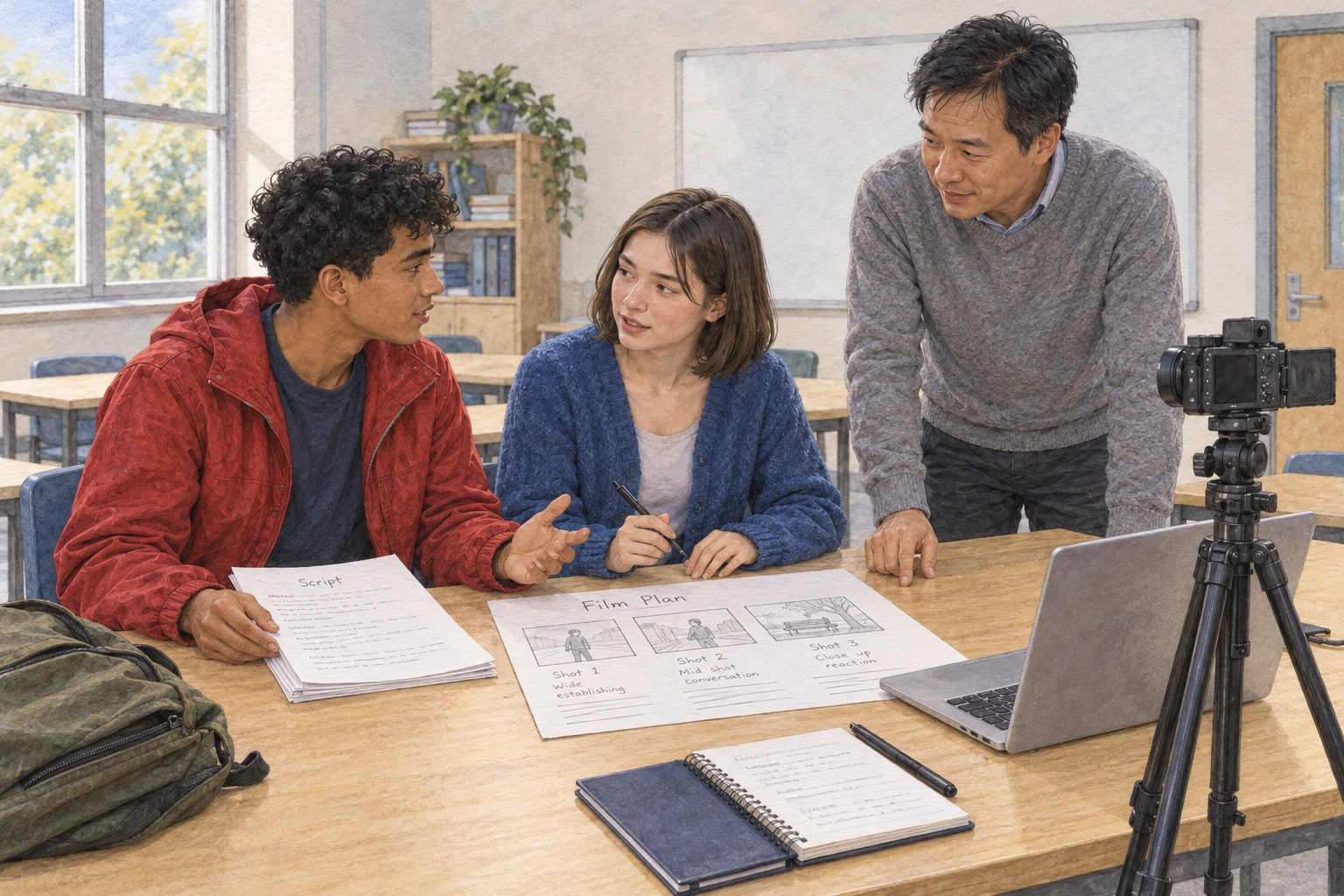
Peter keeps the original script beside their finished film plan. It reminds him that one good take is not always one perfect attempt. The final scene grew from watching carefully, changing an idea and checking small details. For their next film, he still wants to prepare well. He also wants to leave enough time to notice something better than the first plan.