The Line Above the Door
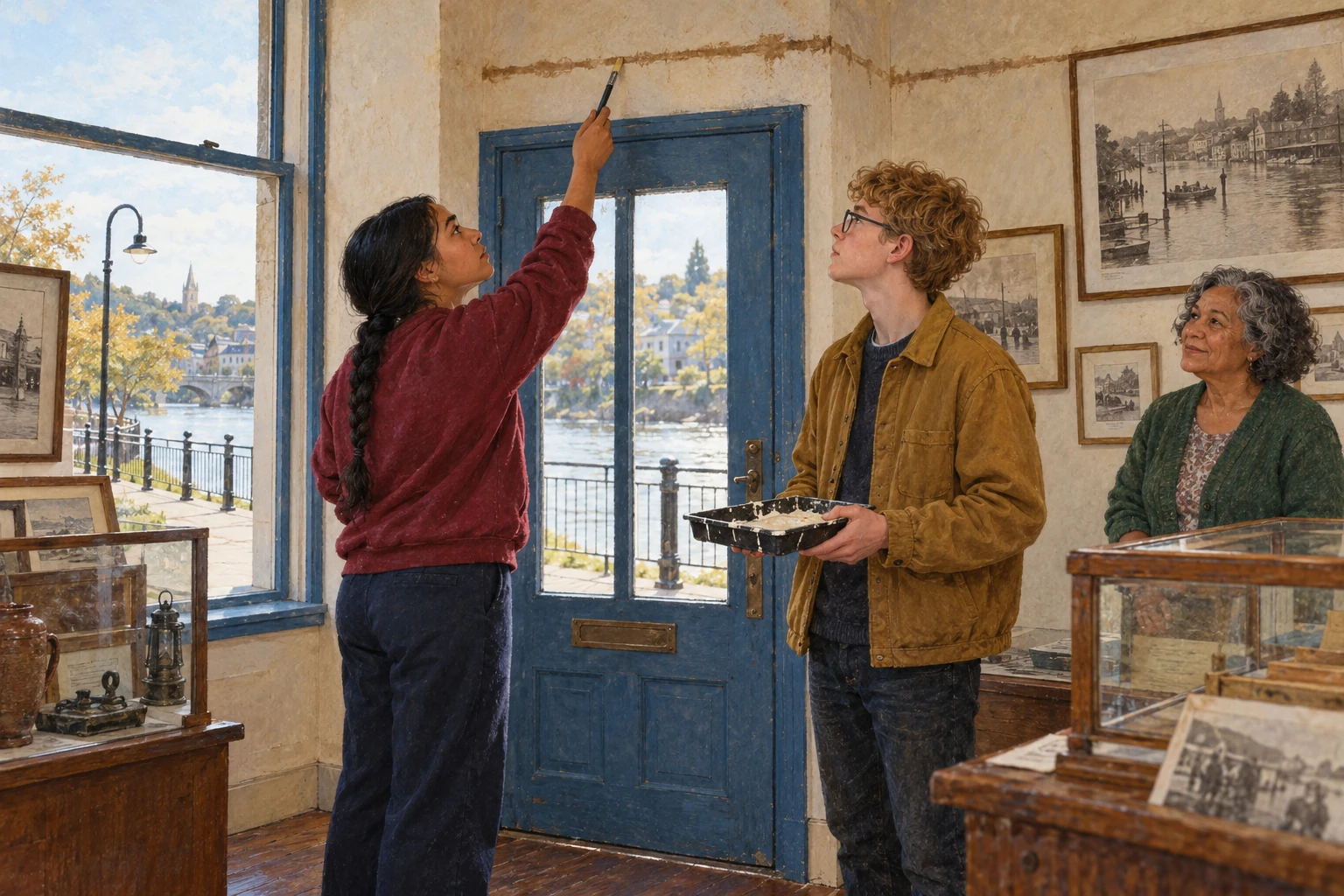
School Readers · Level 21Aroha almost paints over the line. It is a thin brown mark above the museum’s blue door, just where her brush will reach. “Leave that bit,” Mrs Moss calls. Aroha lowers the brush. She and Felix have volunteered to freshen the entrance before the town history weekend. Everything else is getting a clean coat of cream paint. Why should one dirty line be special?
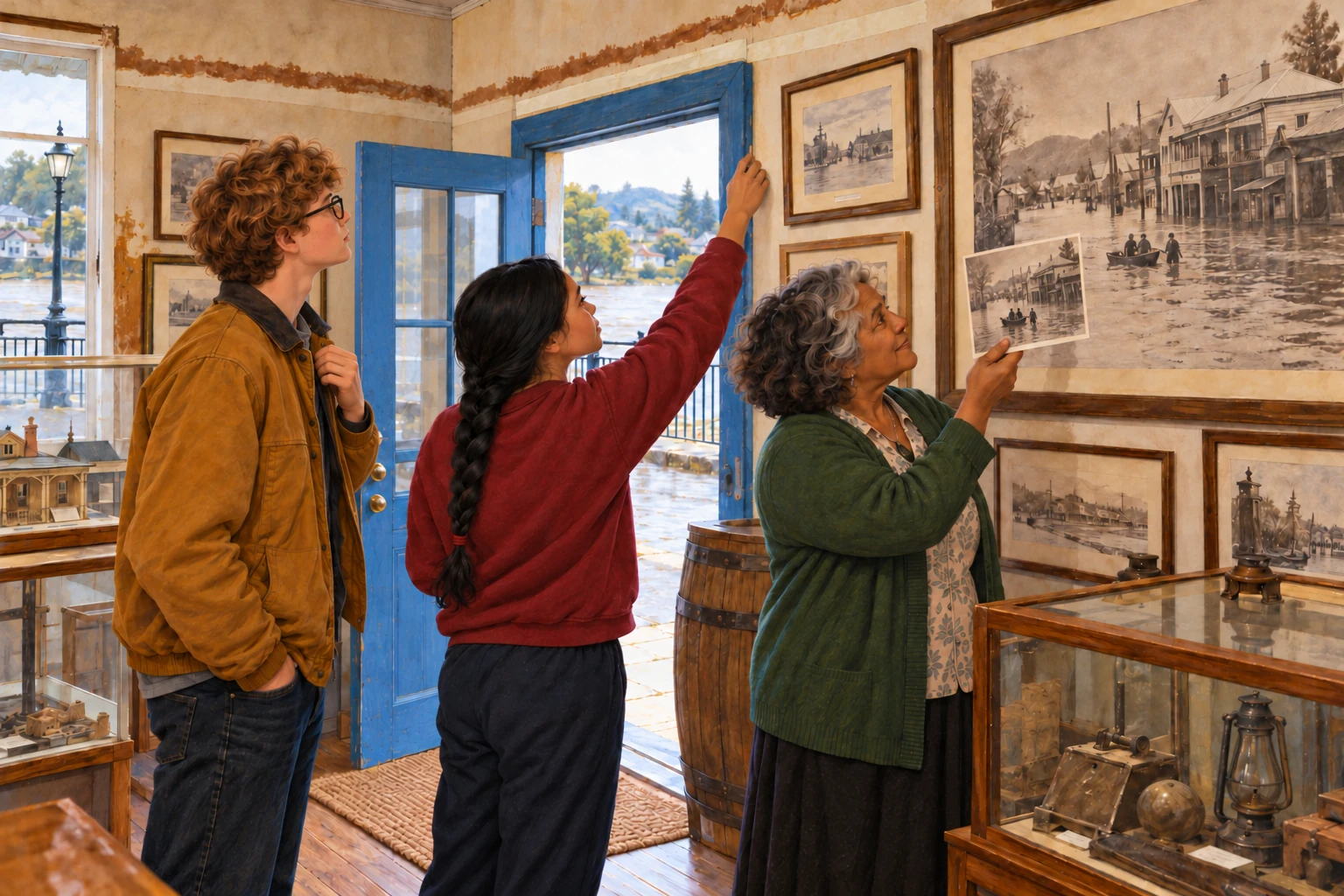
Mrs Moss brings a photograph from the front room. Water fills the street, and a rowing boat sits where the pavement should be. “The river reached that mark,” she says. Felix looks from the picture to the door. “Up there?” He lifts his hand, but cannot reach it. Aroha puts a strip of protective tape below the line. Suddenly the doorway seems much taller than it did before.
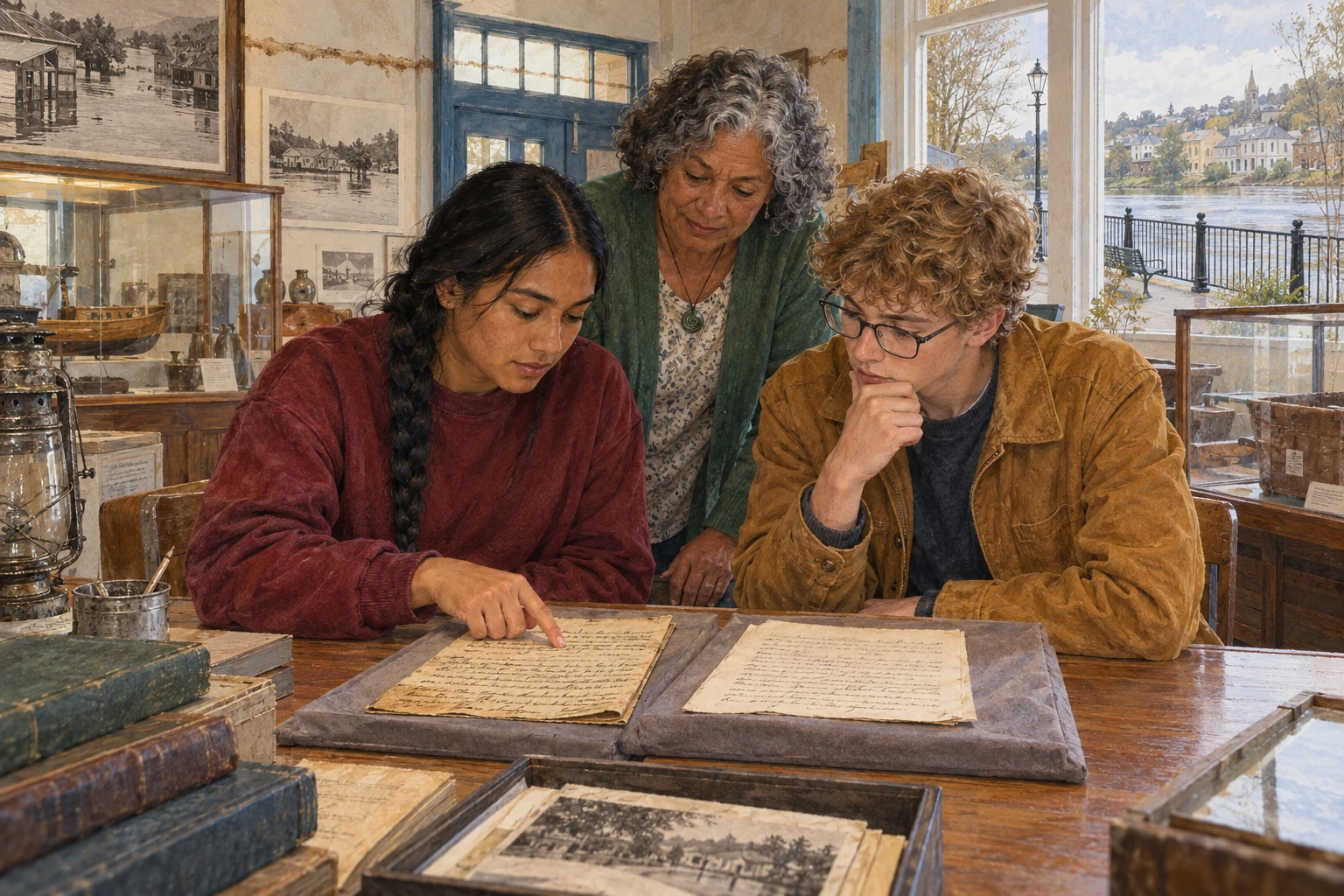
They are making a display about the flood. In one account, a shopkeeper says the water rose before dawn. Another person remembers carrying boxes upstairs after breakfast. Felix frowns. “One of them must be wrong.” Aroha reads the addresses aloud. The shops were at opposite ends of the street, with a slope between them. Perhaps they did not get wet at exactly the same time.
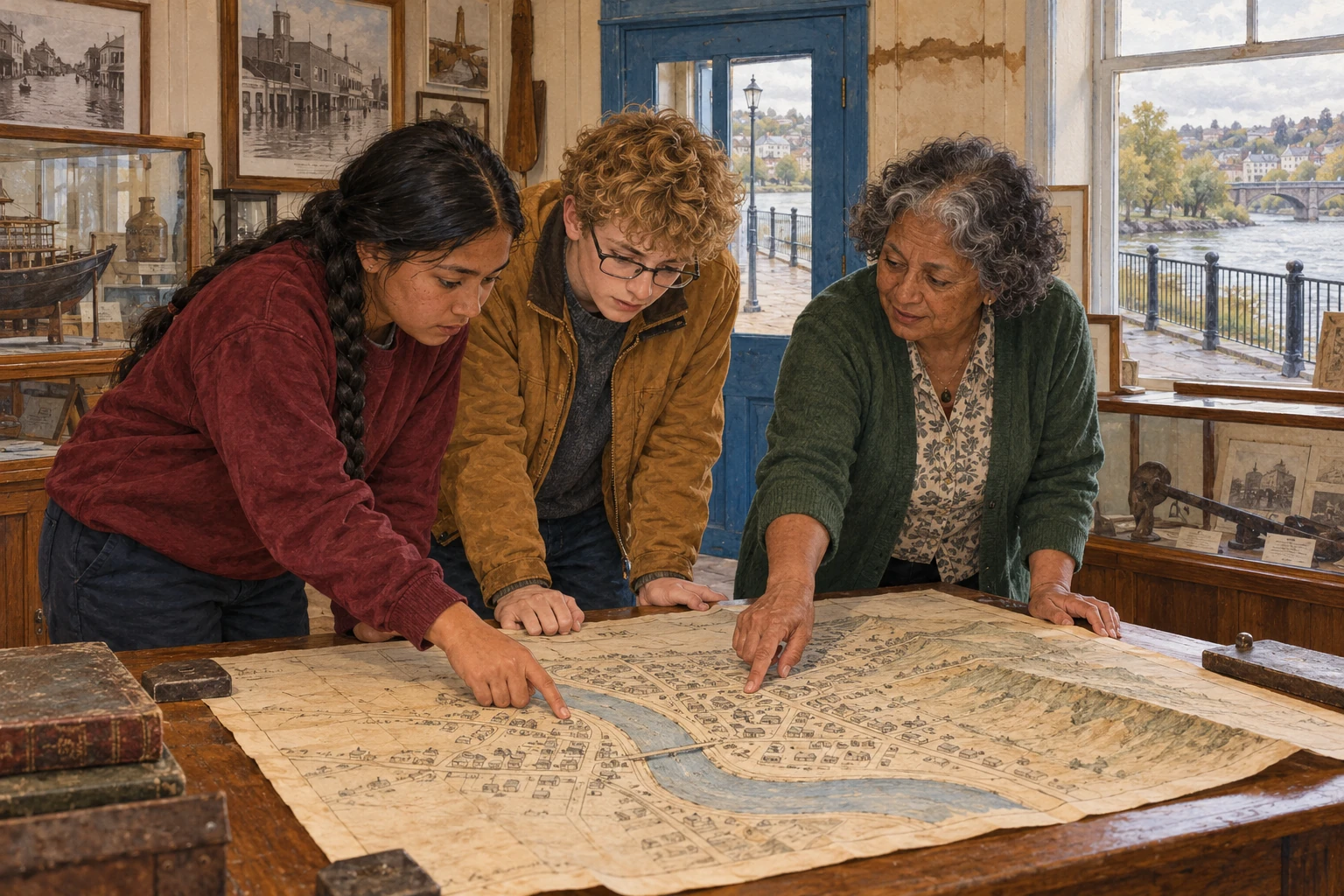
Mrs Moss finds an old street plan. Together they trace the river, the low lane and the shop at the corner. Water would have reached the lane first. Aroha puts the two accounts beside the plan, leaving both times visible. Felix starts a heading: Two views of one flood. “Better than choosing a winner,” he says. Mrs Moss hands him a fresh sheet of card.
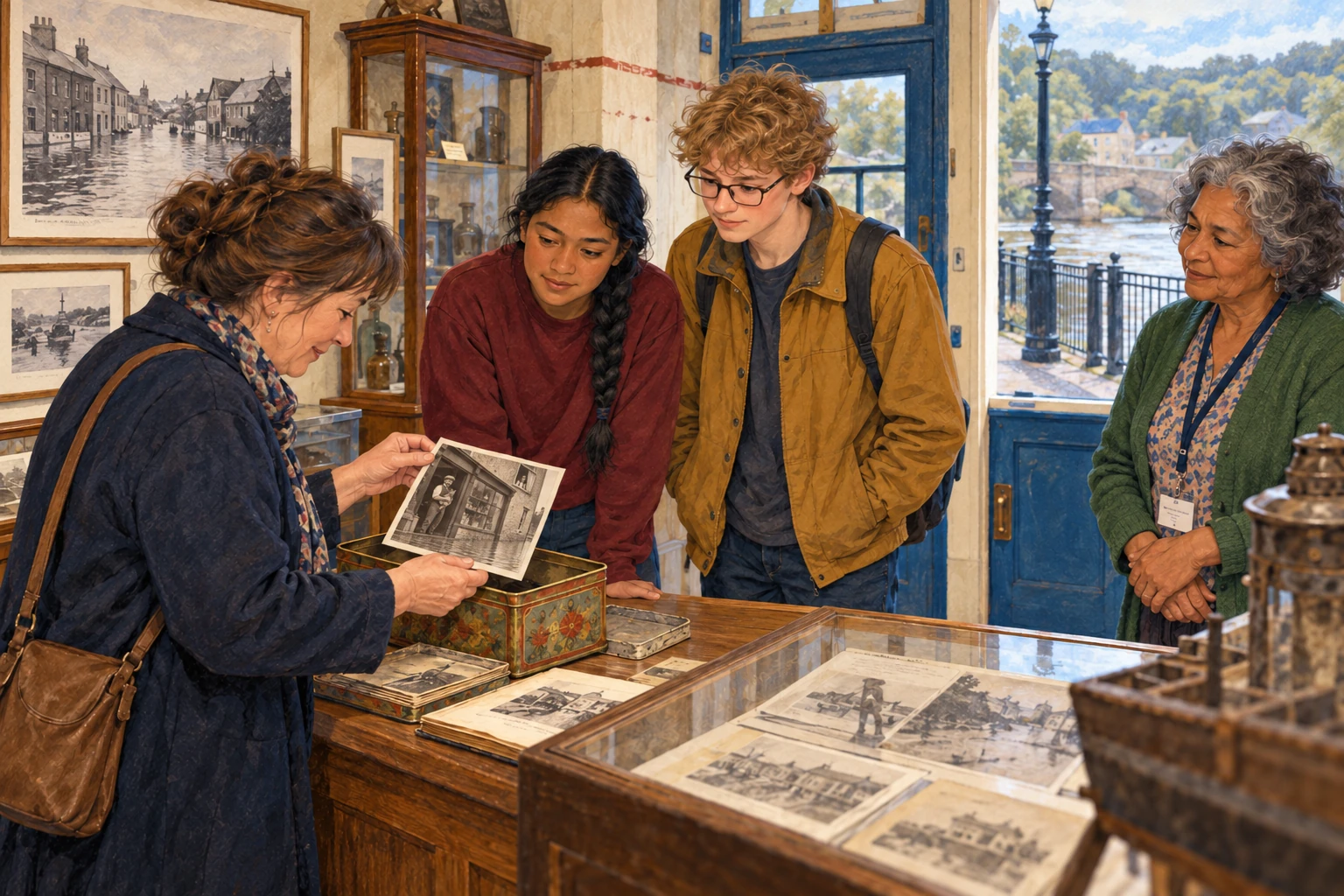
A visitor arrives carrying a small biscuit tin. Inside is a photograph of her grandfather outside the shop, holding a rescued cat. The visitor remembers hearing that he saved six cats that day. Felix wants to write the number on the label. Aroha looks at the picture. “We can see one. Should we say the rest is a family story?” The visitor nods. “Grandad did like a good story.”
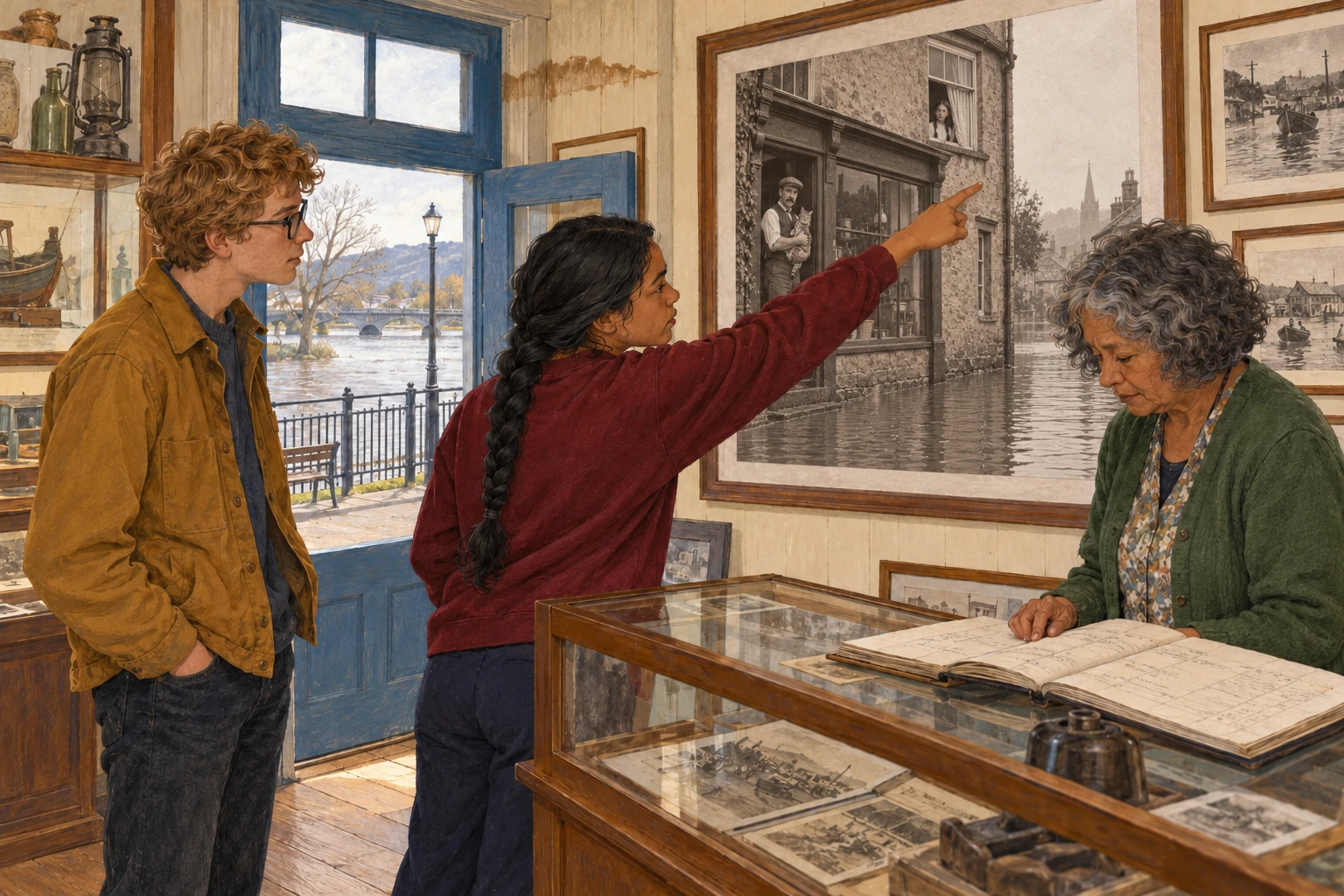
They write a caption that separates the photograph from the visitor’s memory. Then Aroha notices a girl in the upstairs window, almost hidden by a curtain. There is no name on the back. Mrs Moss checks the museum record, but it names only the man. They leave a space on the display where visitors can suggest who the girl might be and explain how they know.
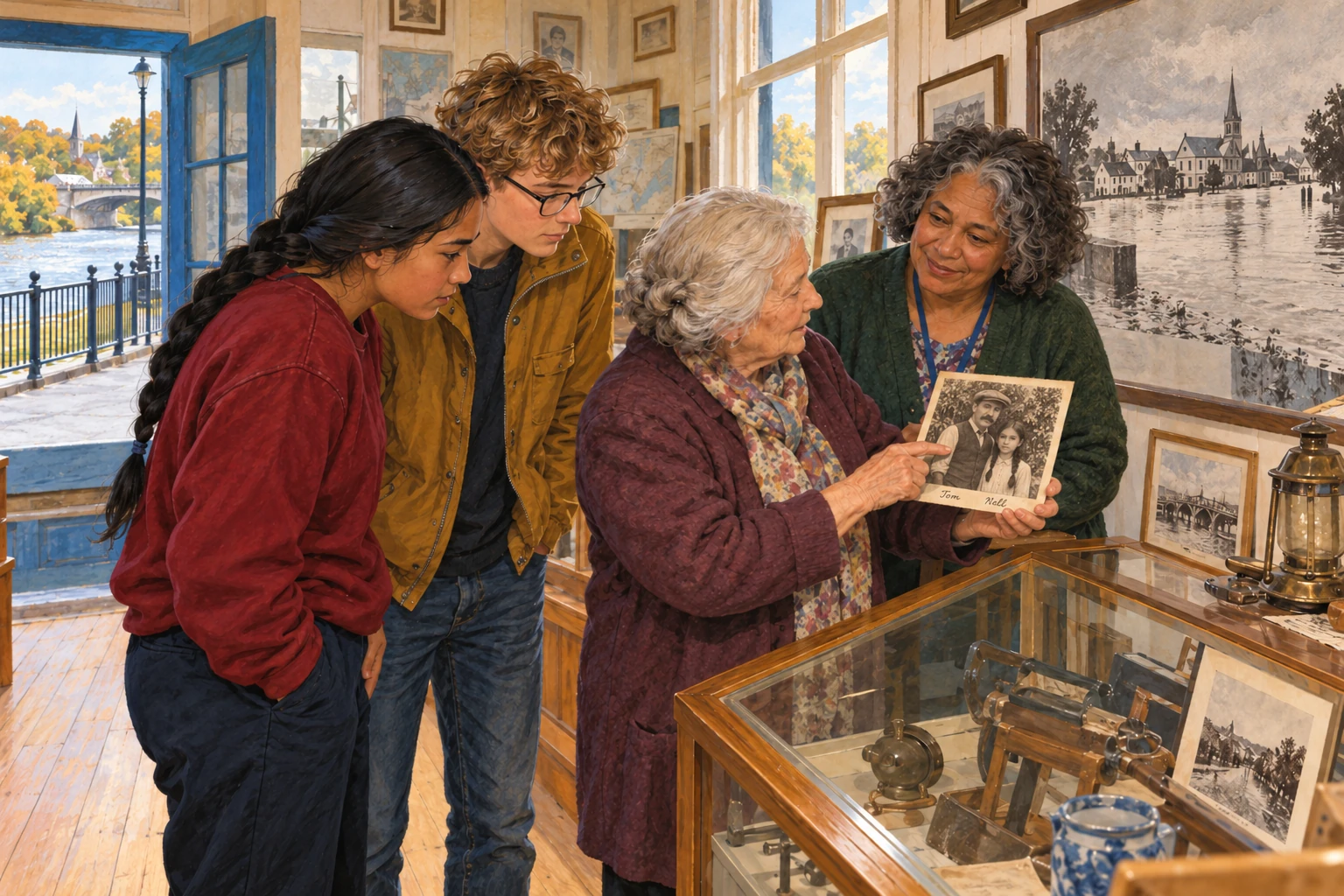
On Saturday, an older woman stops in front of the photograph. “That’s my aunt Nell,” she says, pointing to the window. She brings a family photograph the following morning. The same girl stands beside the same man, and the names are written underneath. Mrs Moss records the new information. Felix changes the label, taking care not to cover the little girl’s face with the corner of the card.
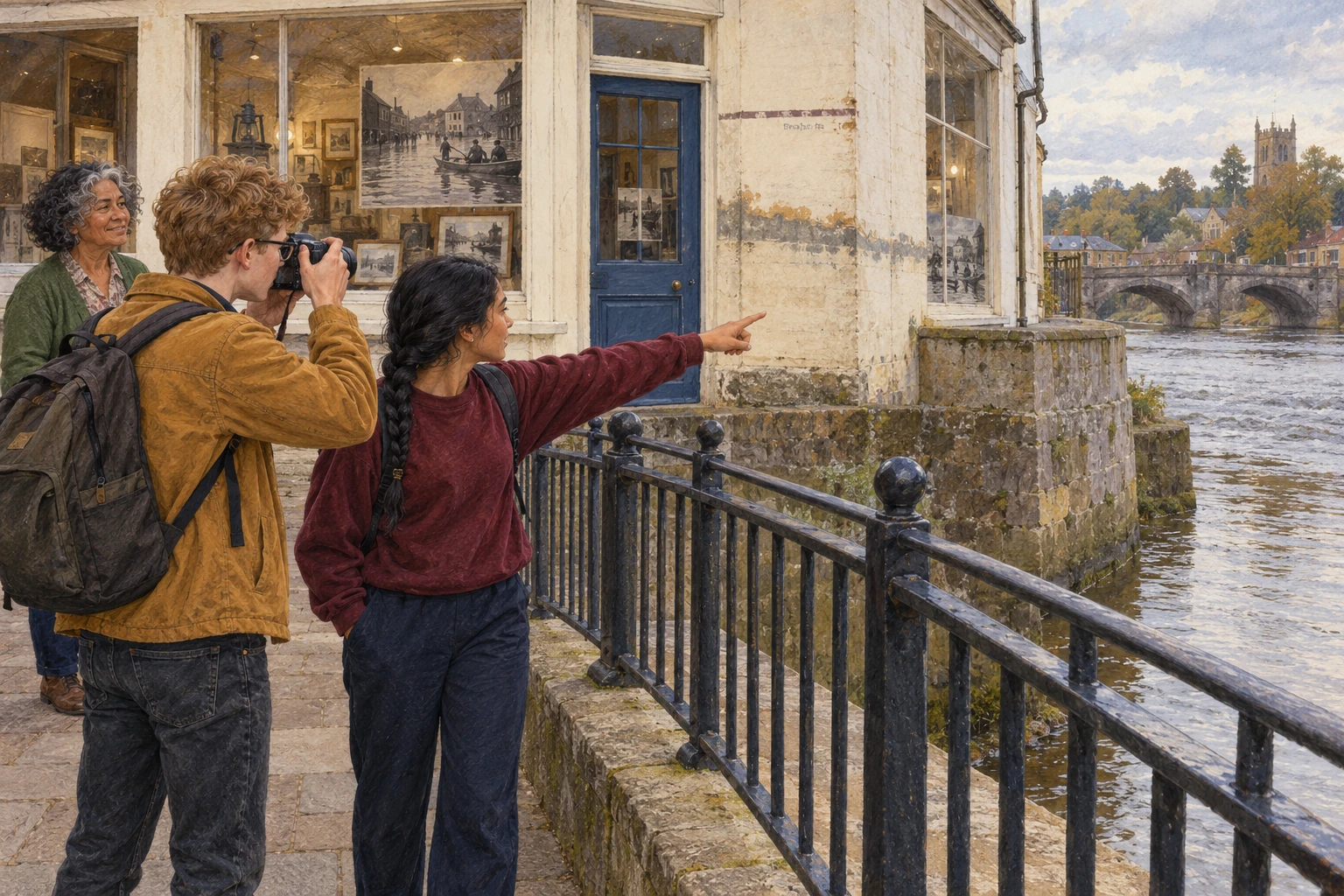
When the visitors leave, Aroha and Felix walk along the present-day river path. Behind its high railing, the water looks quiet. Felix takes a photograph from the same direction as the old flood picture. There are different shops now, and a flood wall beside the bend. Aroha asks him to include the museum door. Without it, she says, nobody will know where to compare the water levels.
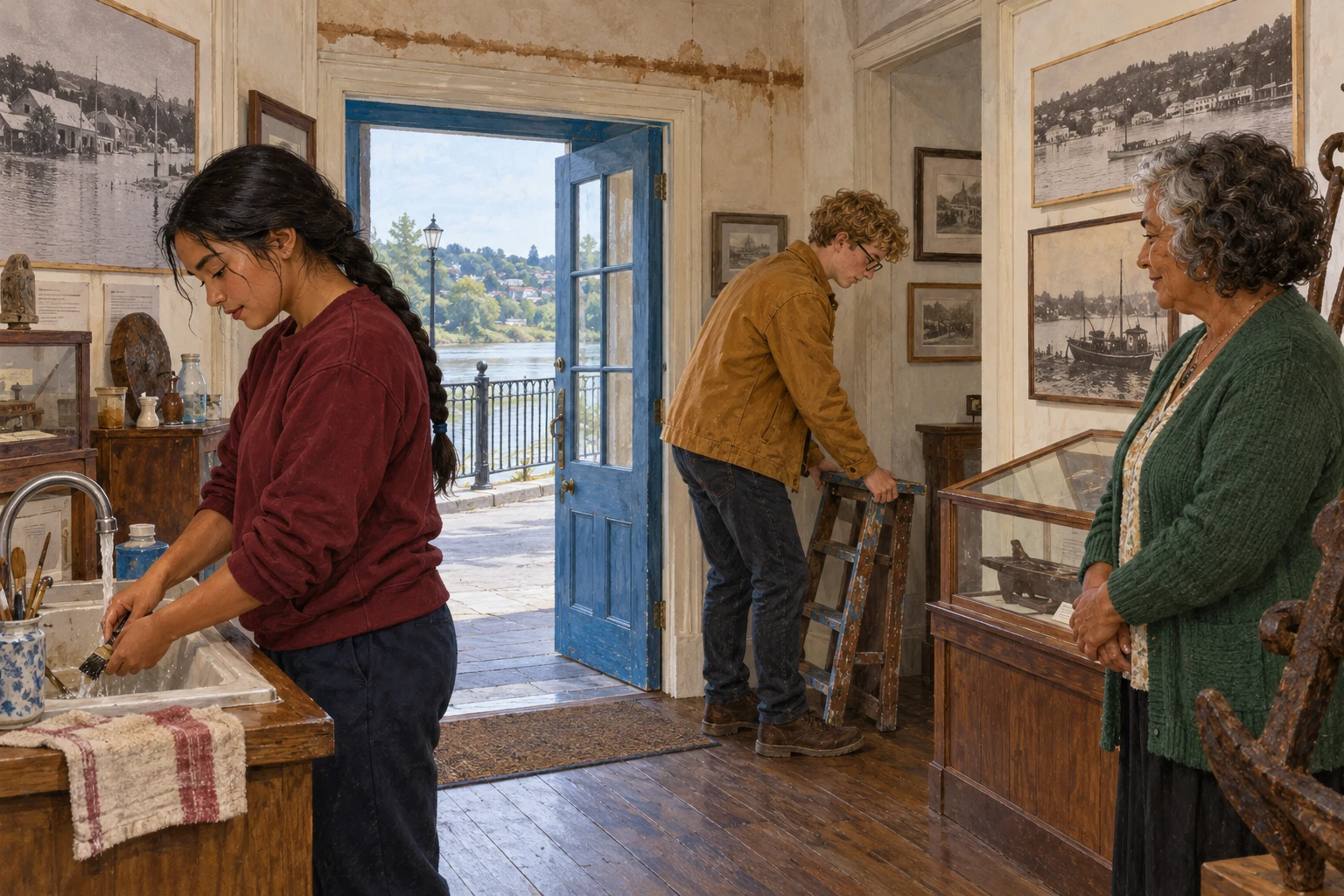
They add the new photograph to the display. Above the entrance, the brown line remains clear against the fresh paint. Aroha washes her brush at the sink while Felix puts away the step stool. “You nearly made our history disappear,” he says. “You nearly gave one man six cats,” she replies. Mrs Moss turns out the front-room light. From the doorway comes a quiet burst of laughter.