The Market Promise
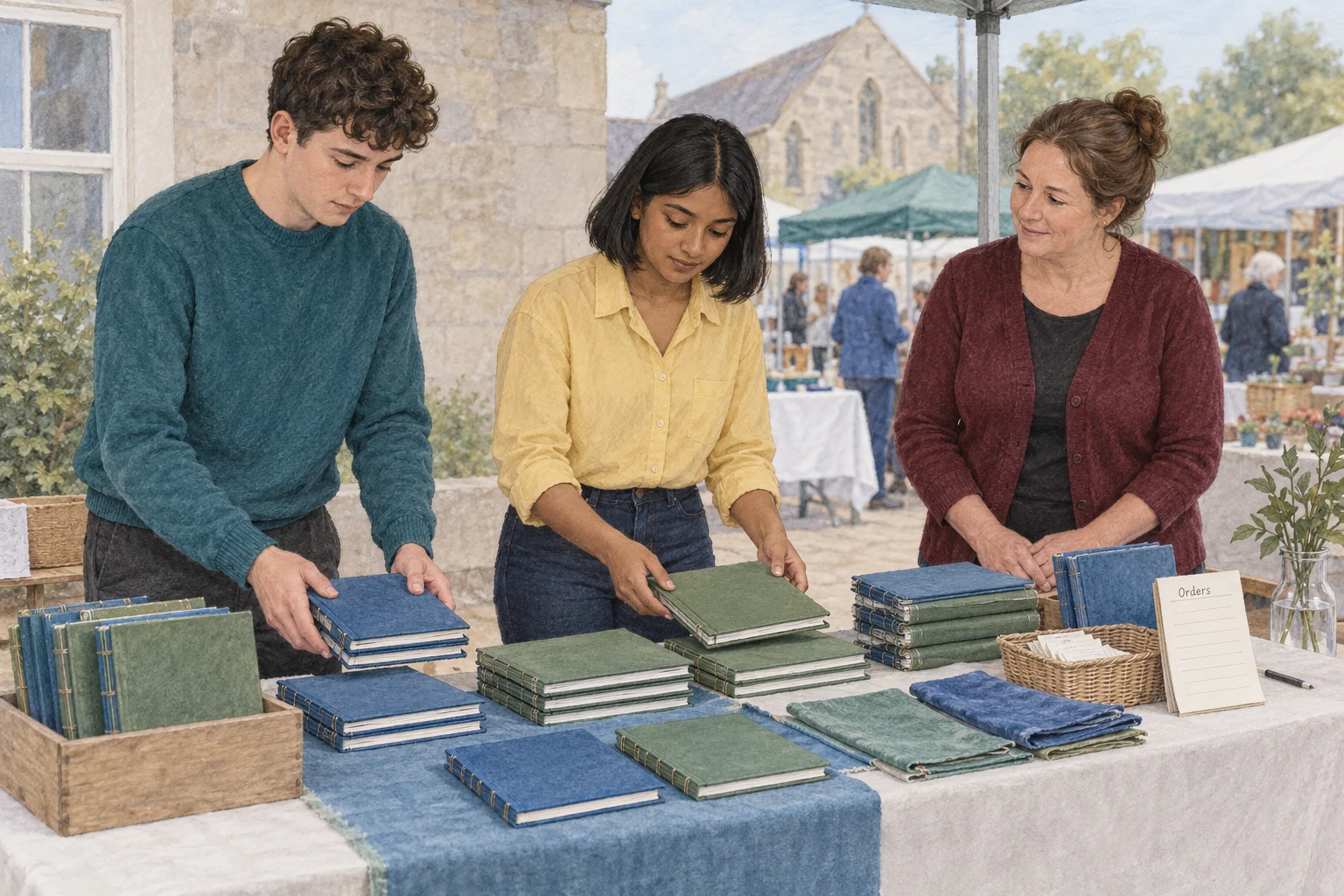
School Readers · Level 19Jeremy stacks the last green notebooks on the school craft stall. Margaret has stitched their folded pages into cloth covers, and visitors keep stopping to feel the soft fabric. Ms Price supervises the money and order book. A customer asks whether they can make four more green notebooks for a small gift set. Jeremy agrees at once, pleased that their work has been noticed.
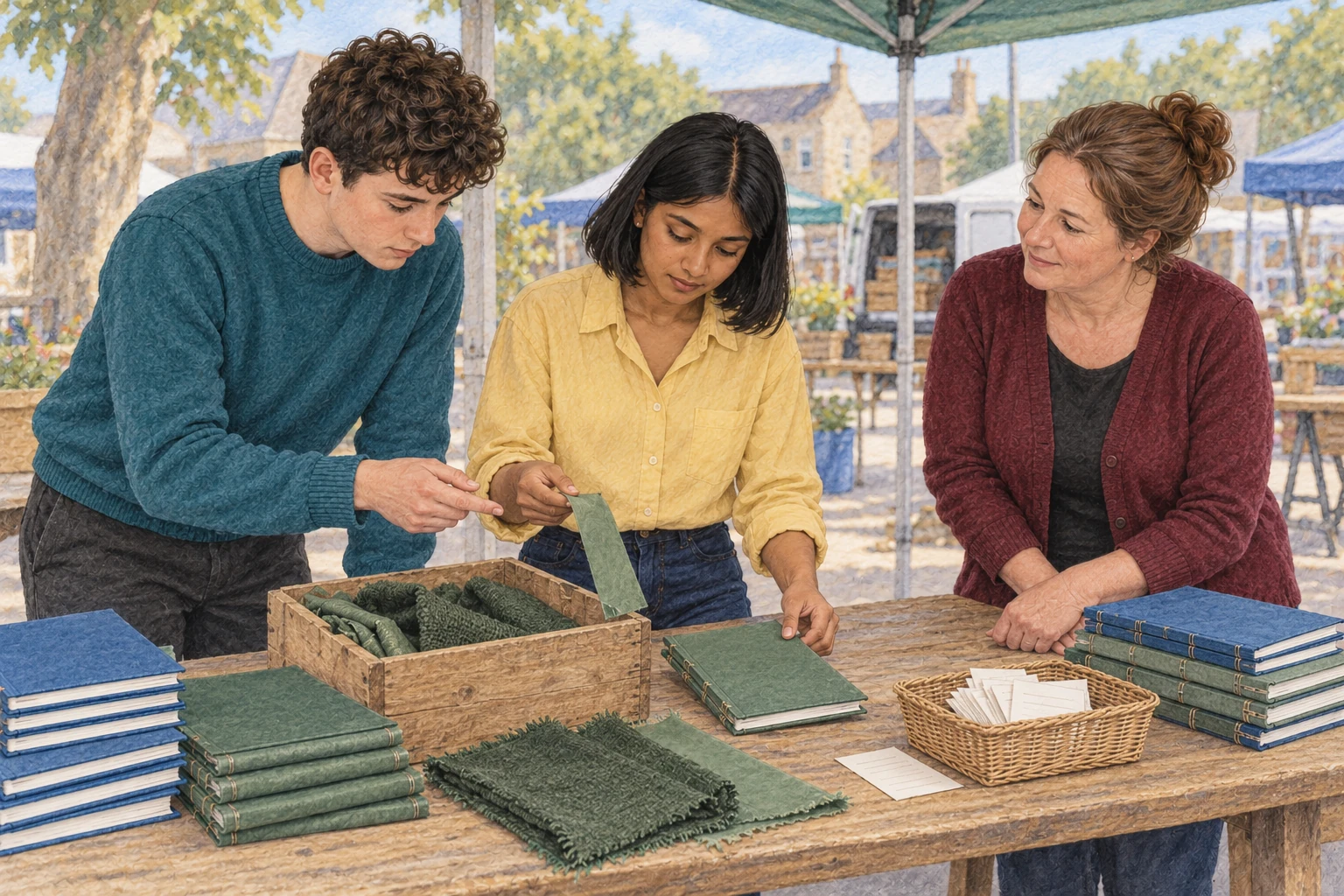
After the market, Margaret opens the fabric box. Only a narrow strip of the original green cloth remains. There is plenty of another green fabric, but its colour is darker and its surface feels rougher. Jeremy says the difference is small. Margaret places the sample beside a finished notebook. “It might be small to us,” she says. “We don’t know what mattered to the customer.”
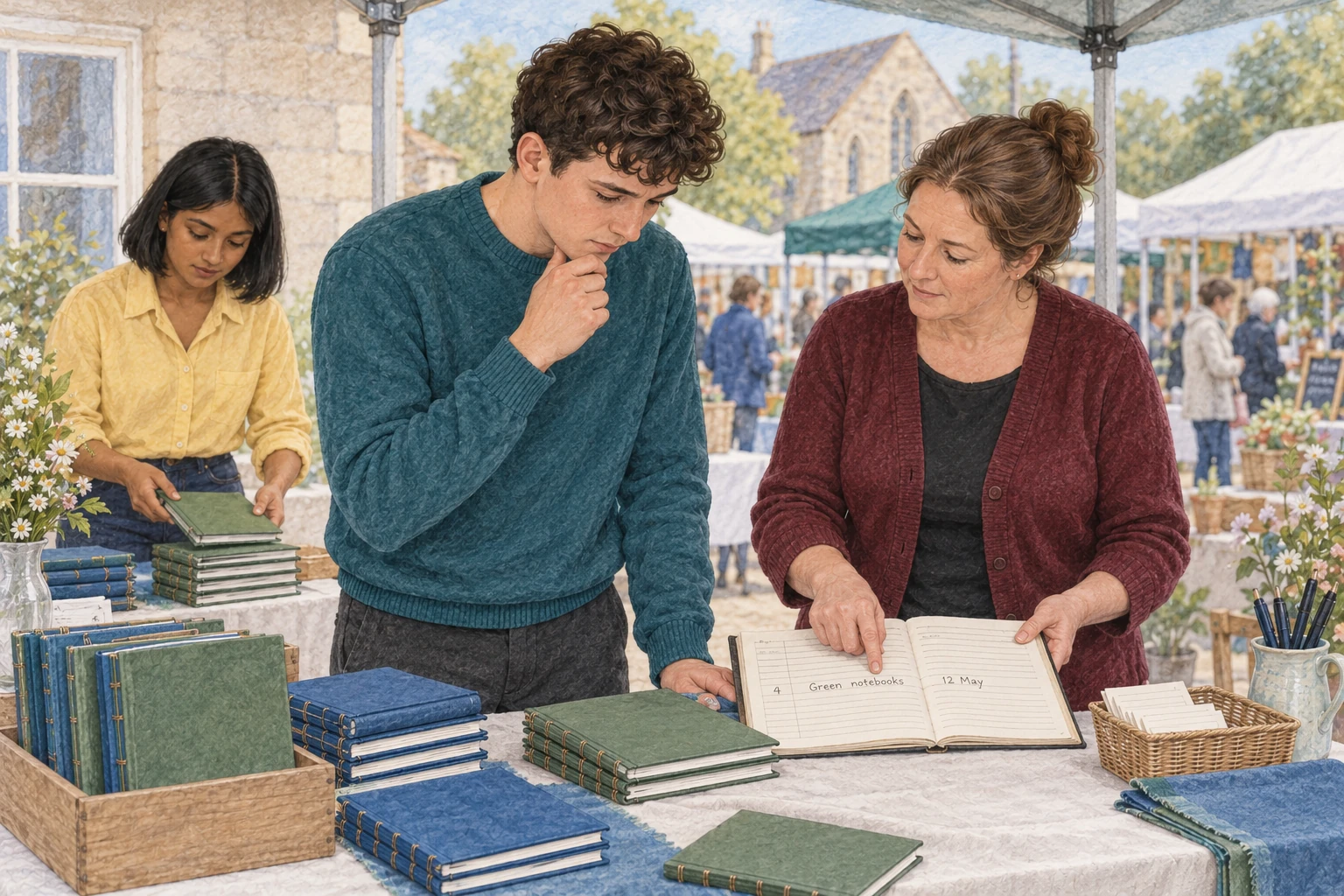
Jeremy checks the order book with Ms Price. It says four green notebooks, with a collection date, but no description of the cloth. He remembers the customer stroking the smooth cover before placing the order. He had promised more of those notebooks without checking their supplies. Now he wants to finish quickly rather than admit that his answer came too soon.
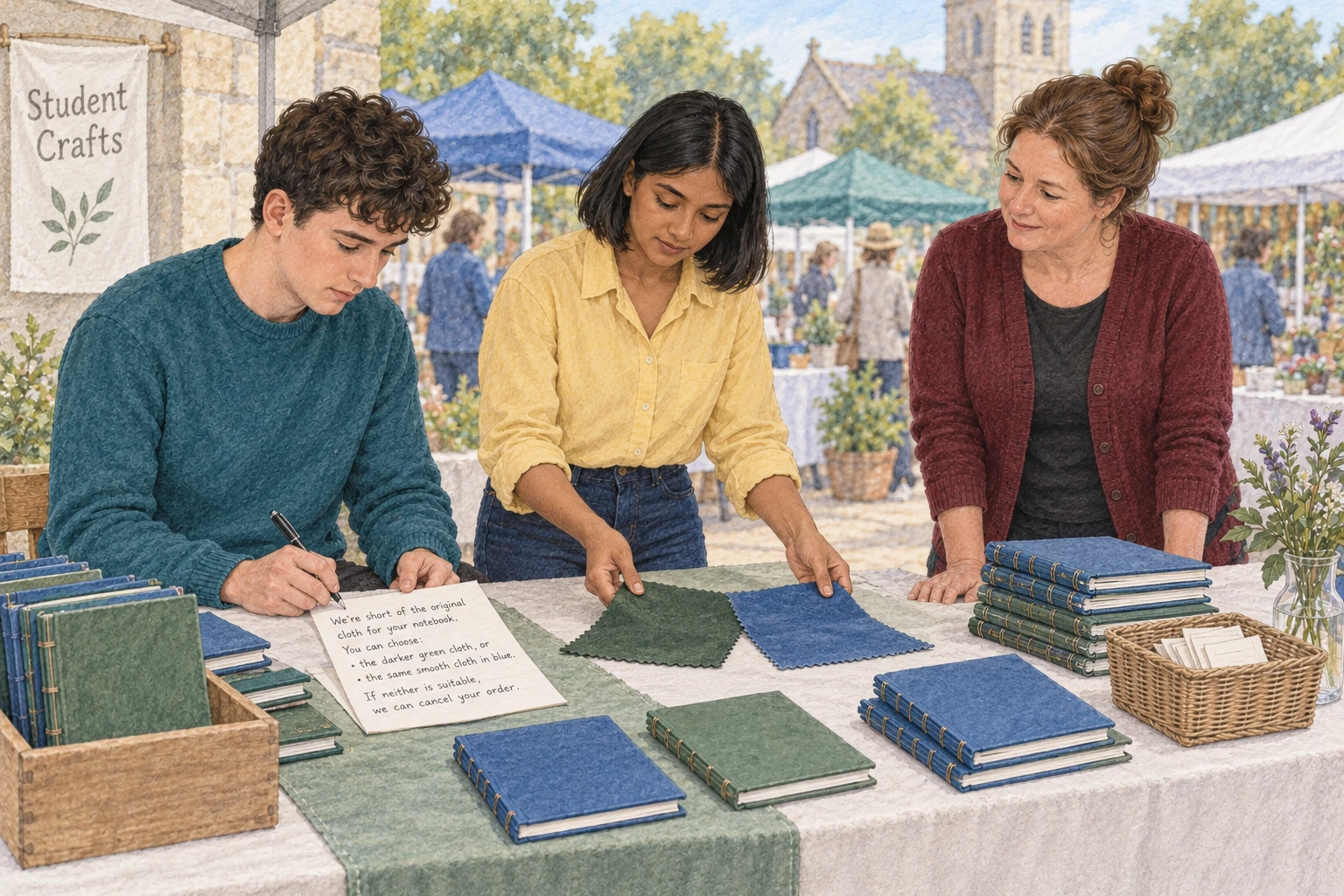
Margaret suggests showing the customer a sample before they cut anything. Ms Price arranges the contact through the school stall. Jeremy writes a short explanation of the shortage and sets out two choices: the darker green cloth, or the same smooth cloth in blue. They can also cancel the order if neither choice is suitable. He reads the note again, making sure it does not pretend the fabrics are identical.
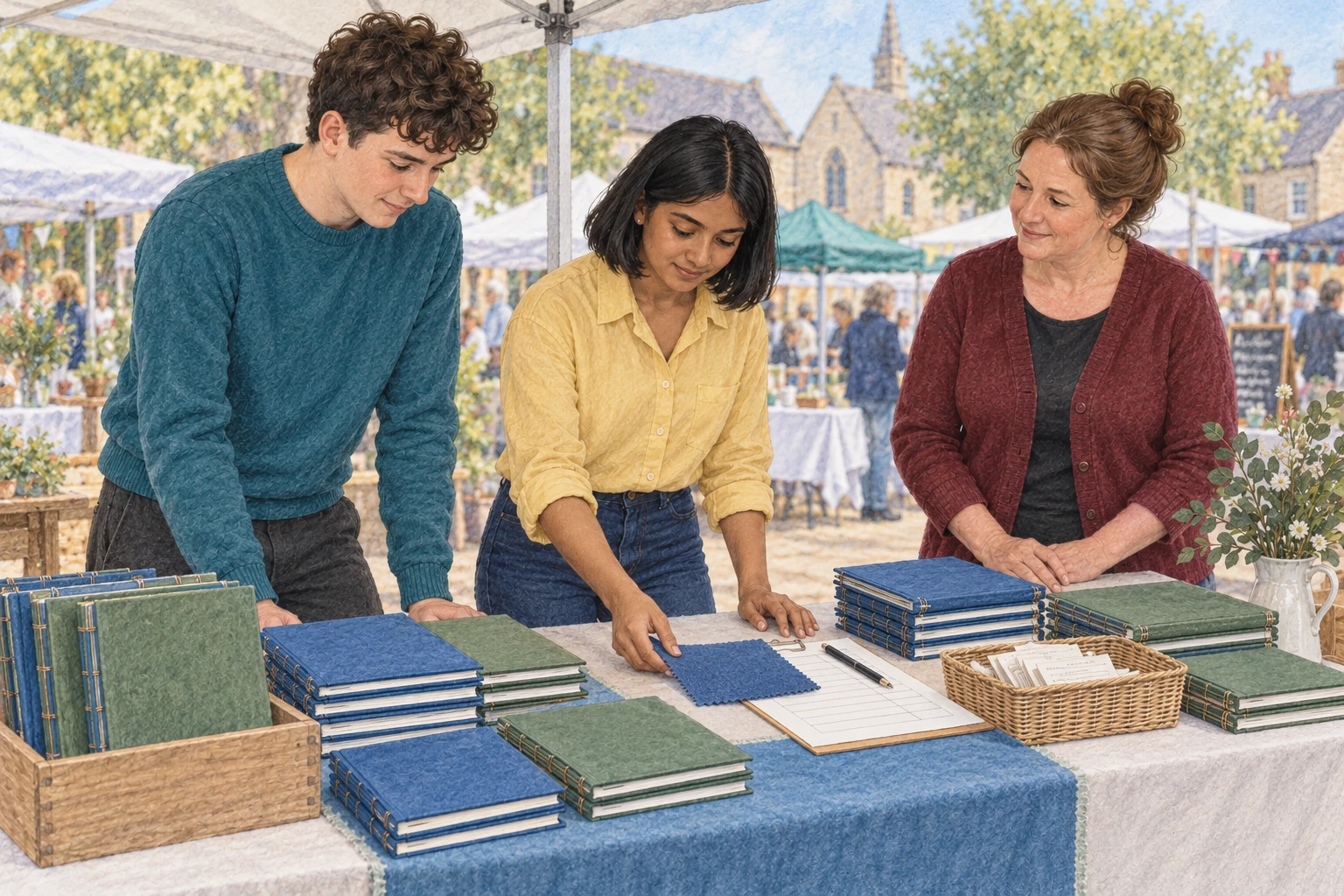
The customer chooses blue. The smooth feel matters more than matching the first colour, and the notebooks will still make a useful gift set. Jeremy is relieved, though he knows the answer could have been different. Margaret places the approved blue sample beside the order sheet. They now have a clear guide instead of a guess about what the customer might accept.

They begin the four notebooks the next afternoon. Jeremy folds the pages while Margaret checks each cover against the sample. Ms Price helps them review the collection date and the time needed for stitching. They have enough materials and enough time. For the first time since the market, Jeremy can see the whole job rather than only the promise he made across the stall.
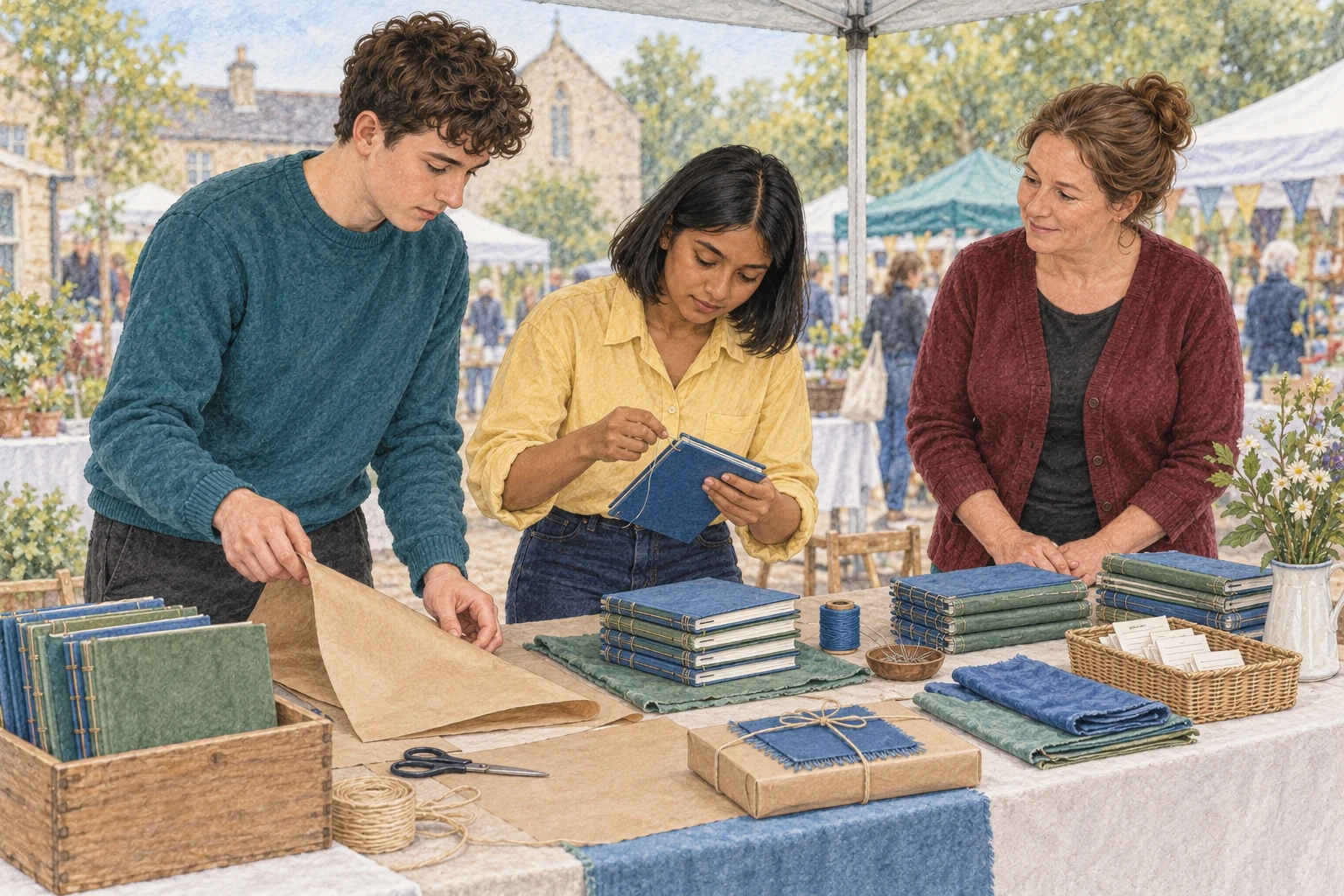
One cover has a loose corner when they inspect the finished set. Jeremy reaches for the wrapping paper, then stops. Hiding the corner inside the package would only move the problem to collection day. Margaret shows him how to restitch it. They check all four notebooks before wrapping them together with a small blue fabric square on top.
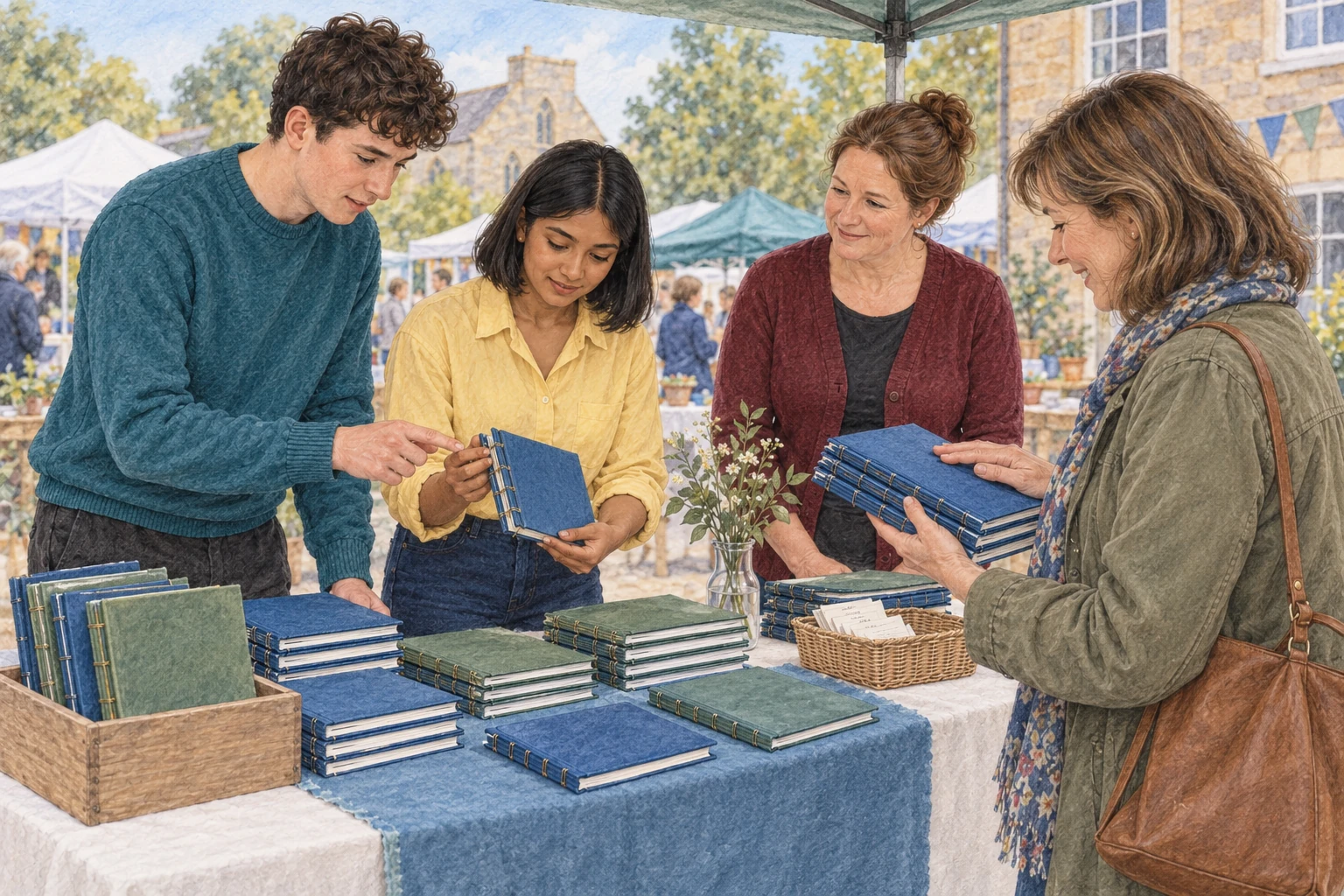
At collection, Ms Price invites the customer to open the package and check the set. The customer runs a hand over the blue cloth and smiles. Jeremy explains the repair to the loose corner without making it sound like a disaster. Margaret shows the firm new stitches. The books are ready, and the customer knows what has been made and checked.
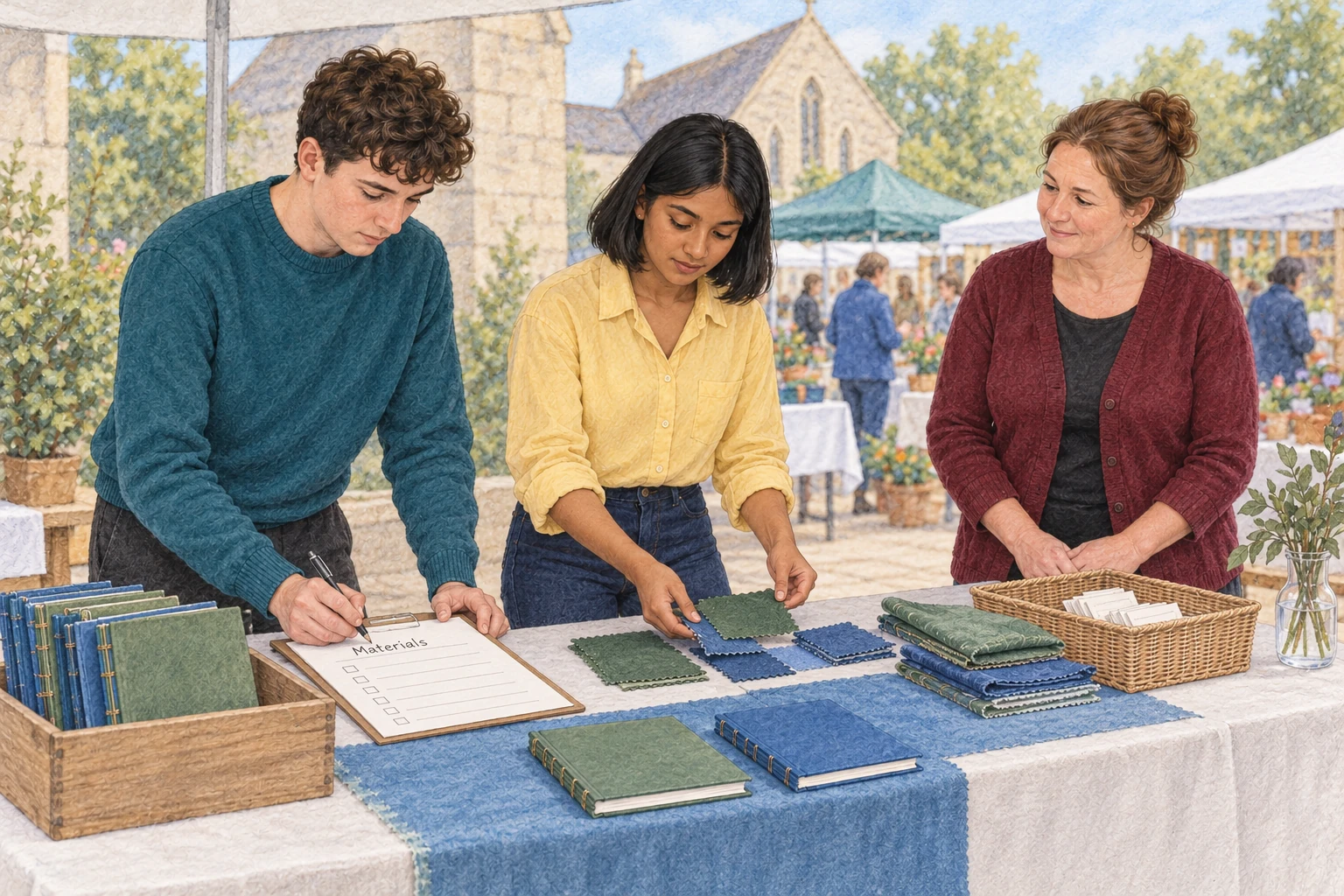
Before the next market, Jeremy adds a materials box to their order sheet. Margaret puts small fabric samples beside it. He still enjoys saying yes when someone likes their work, but now he checks what they can supply first. A promise feels better when the details can support it. On the stall, the remaining green notebook sits beside a blue one, each exactly as it appears.