The Missing Paddle
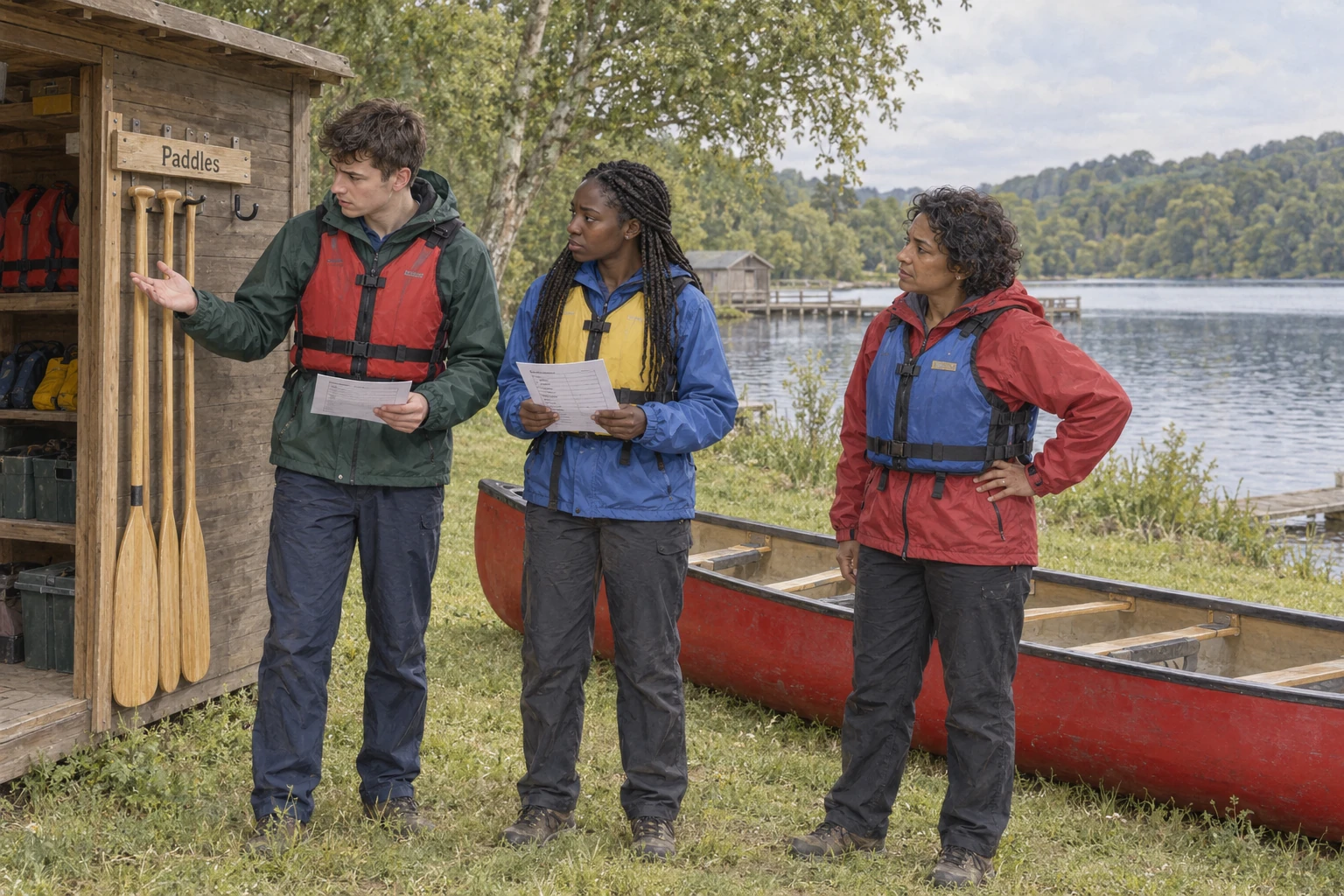
School Readers · Level 20Patrick checks the canoe centre’s equipment list while Susan counts the paddles on the rack. Their instructor, Mrs Lake, has already checked their fastened buoyancy aids. The red canoe waits on the grass beside the sheltered lake. Everything seems ready until Susan reaches the final hook. A pale wooden paddle should be hanging there. Instead, she finds an empty space and a loose loop of string.
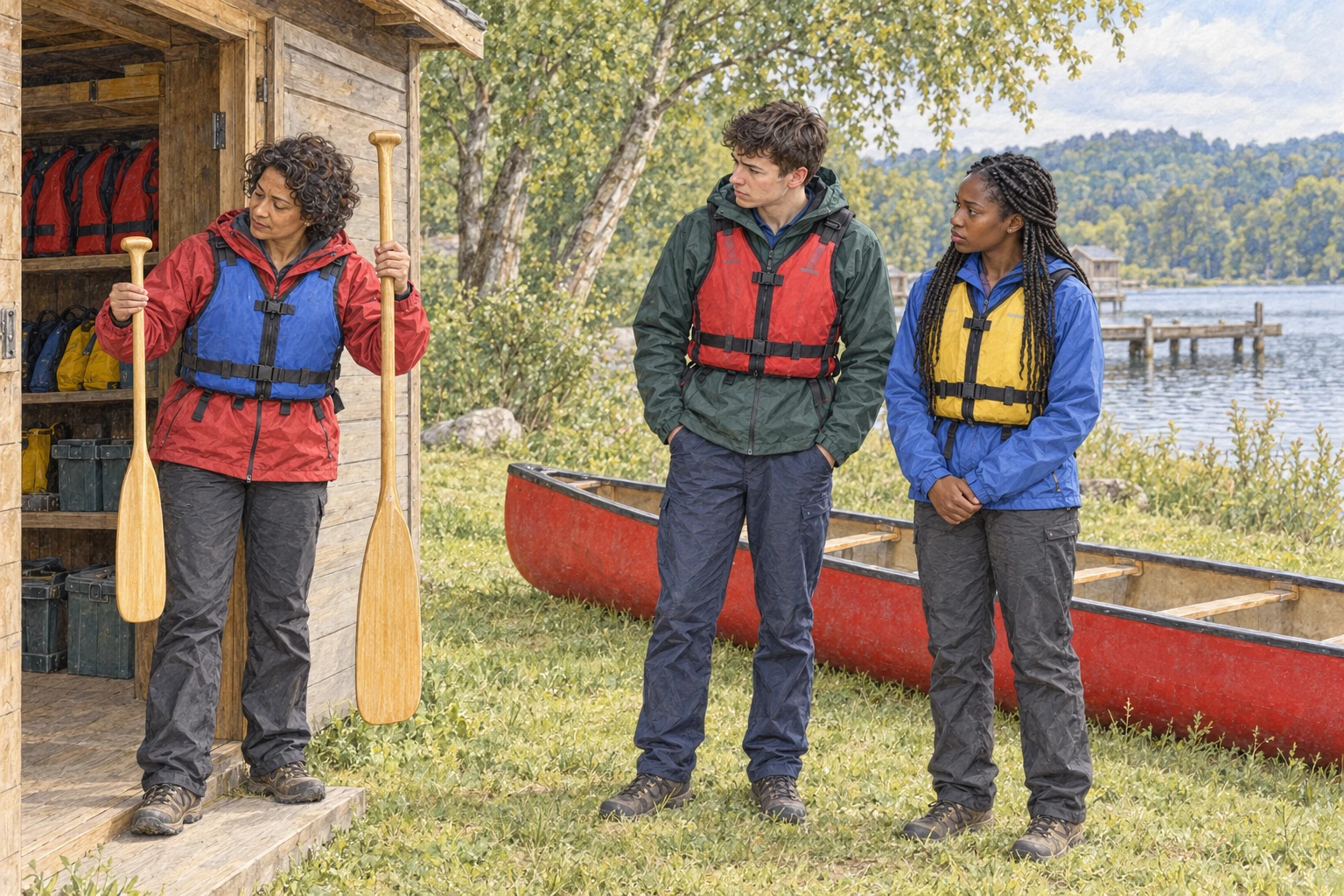
Patrick remembers seeing a paddle beside the door when they arrived. He is sure it must be the missing one. Mrs Lake asks the students to stay together on the dry launch while she checks the doorway. The paddle there belongs to a different group and is shorter than the one on their list. Something being nearby does not make it the thing they need.
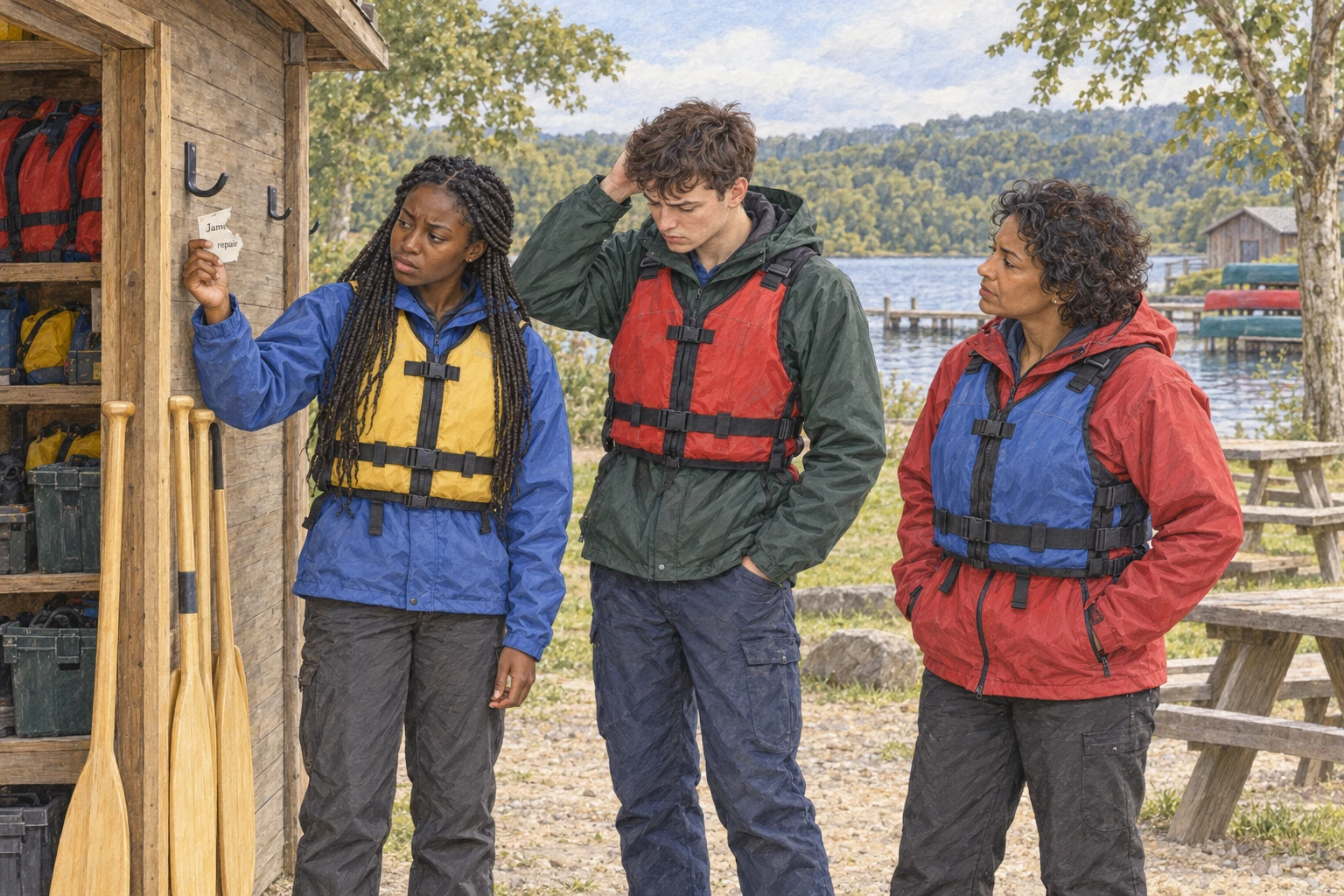
Susan finds a small card caught behind the empty hook. One corner has torn away, leaving only part of a name and the word repair. Patrick feels disappointed. He had imagined spending the whole session on the water, and now it seems to be slipping away while they stand beside a rack. He asks whether they could take turns using fewer paddles. Mrs Lake says they will wait for the correct equipment.
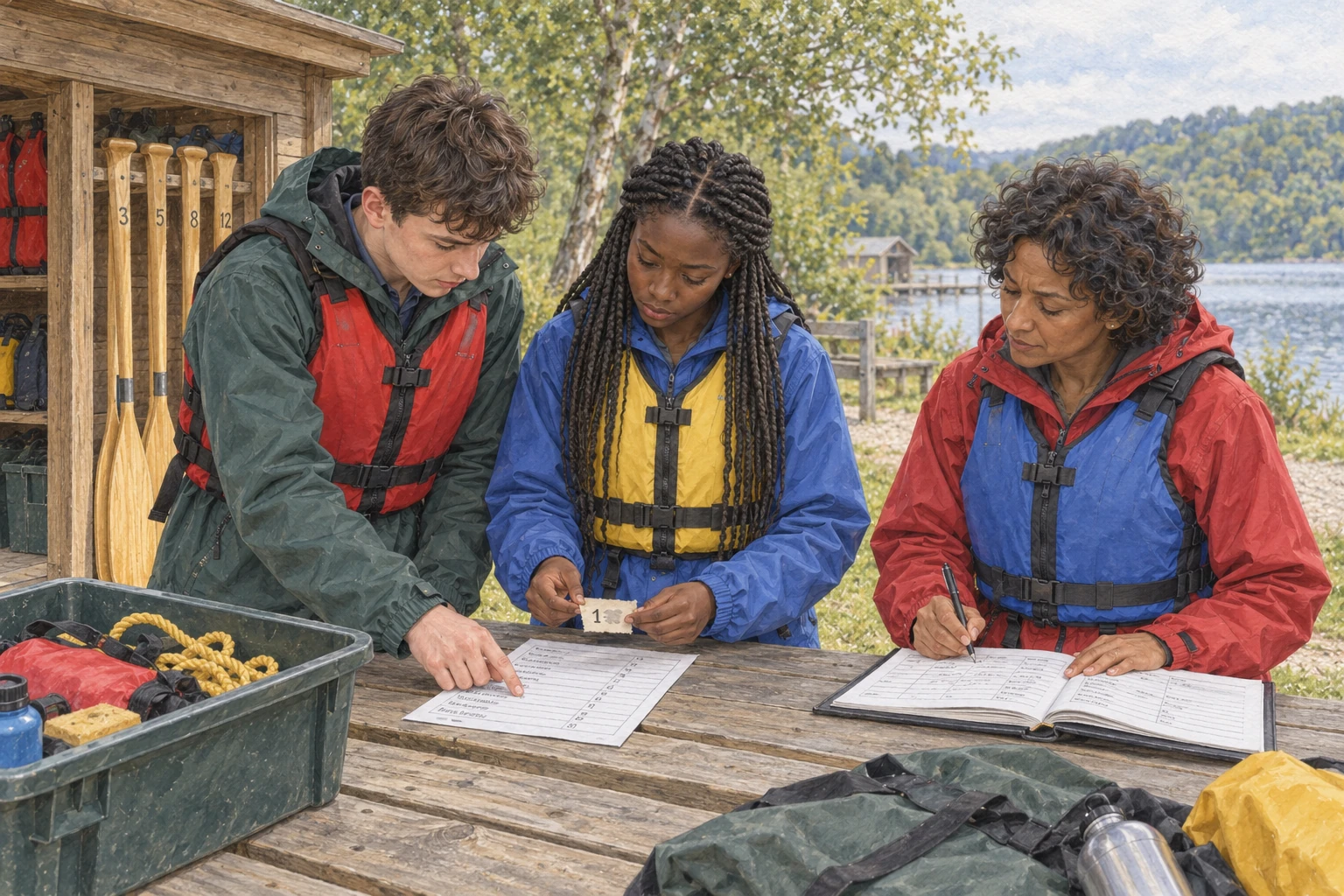
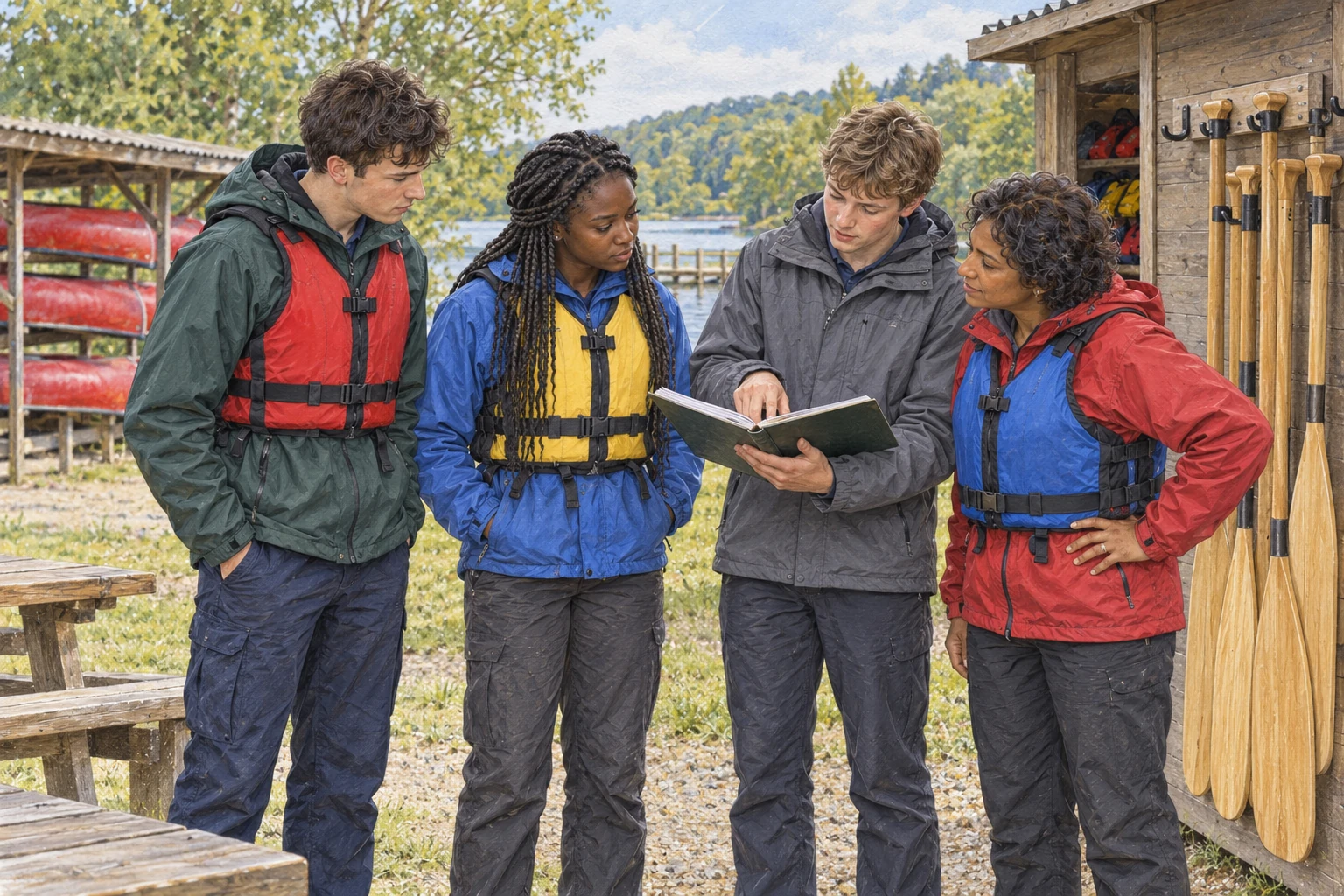
The instructor checks the centre’s lending book while Patrick and Susan compare the card with the equipment list. Each paddle has a number marked near its handle. Susan notices that the torn card also has a number, although the last figure is difficult to read. She holds it flat against the list. There are two possible matches, so they cannot settle the question from that clue alone.
Mrs Lake returns with the centre assistant, who remembers taking a paddle to the workshop. They check the number in the lending book. It matches the hook, and the date is today. The assistant explains that the handle needed attention before it could be used again. The missing paddle has not been lost at all. Its label fell when someone moved the rack that morning.
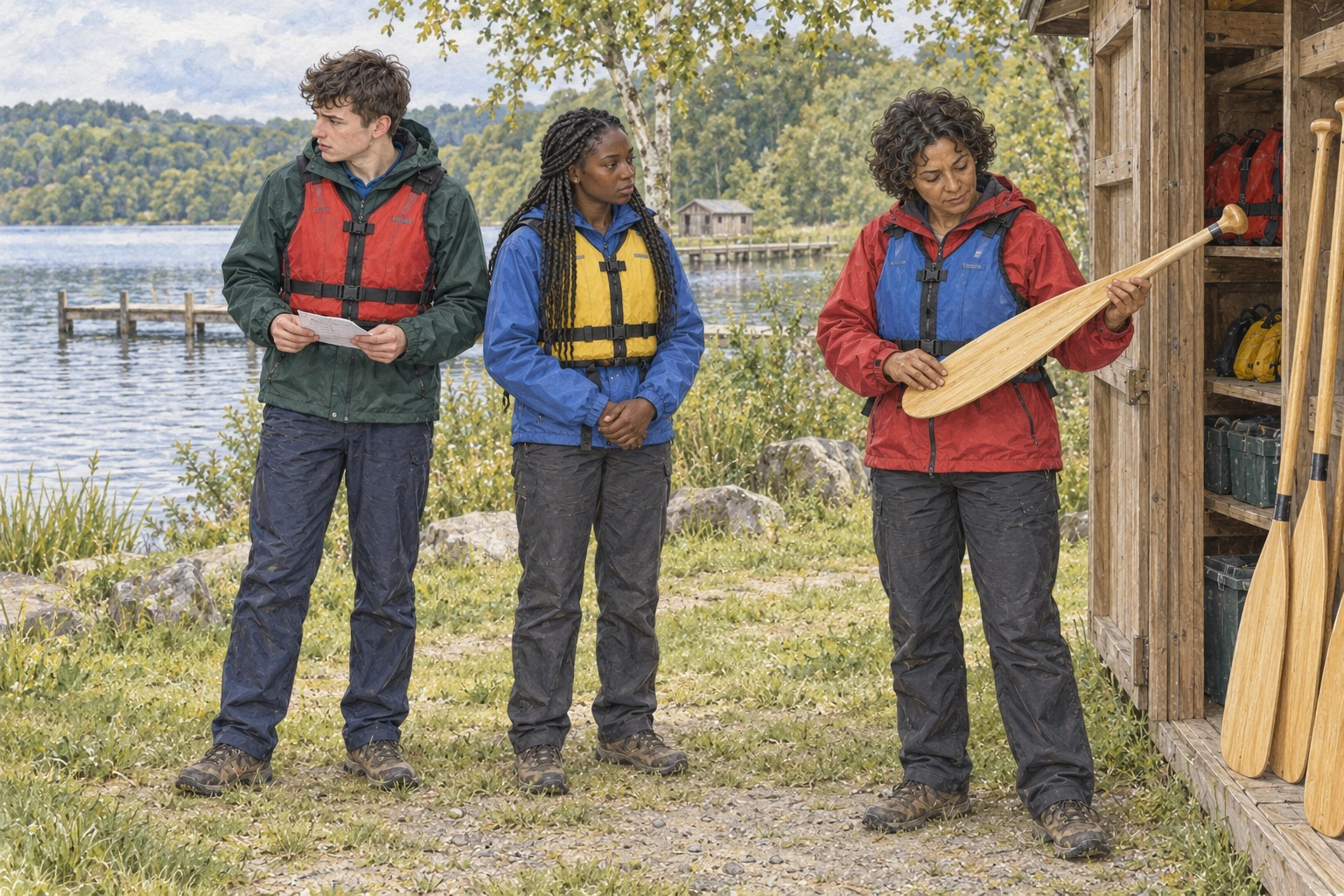
A checked spare is available from the equipment store. Mrs Lake inspects it and confirms the plan before they carry it to the launch. Patrick looks at the lake, then at the torn card. He had wanted to solve the problem with the first object he saw. Susan’s little discovery and the written record have taken longer, but they explain what actually happened.
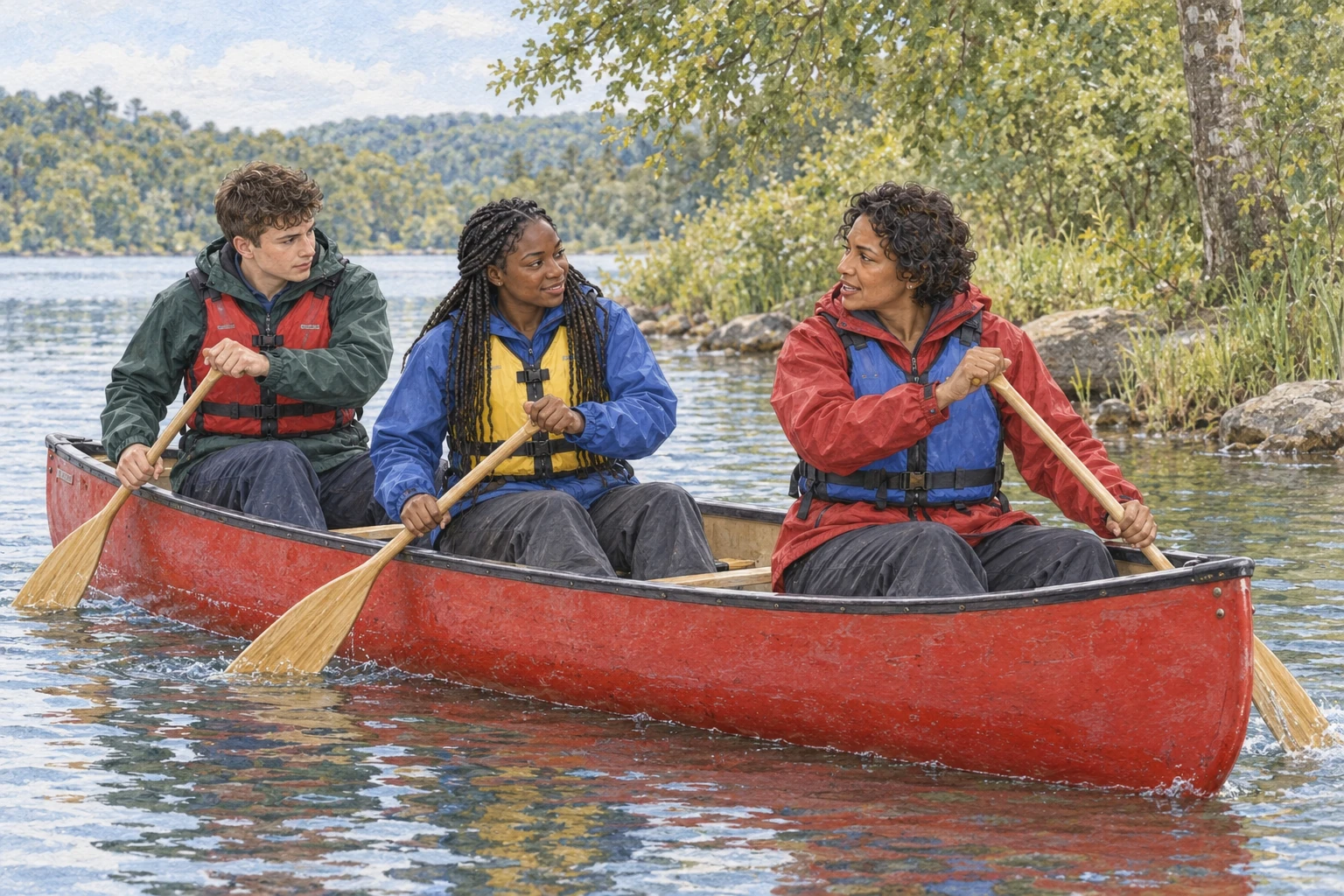
Their supervised practice stays close to the sheltered shore, with Mrs Lake aboard the broad canoe. Patrick and Susan follow her instructions and settle into a shared rhythm. There is less time than they expected, but enough to enjoy working together. When they pause, Patrick notices that he is no longer measuring the session against the picture he had formed before arriving.
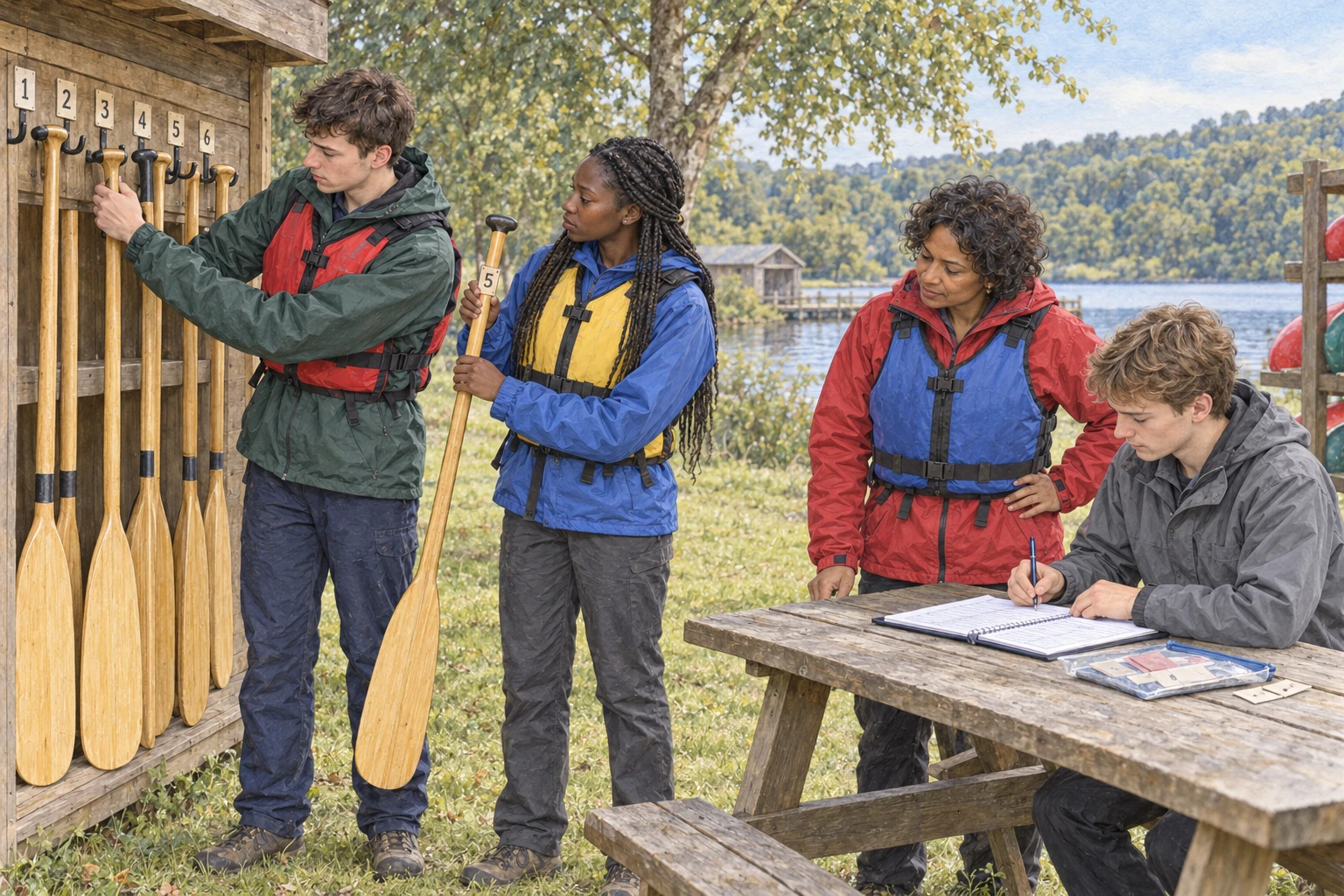
Back on dry land, they return the paddles to their numbered hooks. Susan suggests keeping repair labels in a pocket beside the lending book, where they will not fall behind the rack. The assistant likes the idea and adds it to the centre’s notes. Patrick helps count once more. This time, the spare and the paddle being repaired are both clearly recorded.
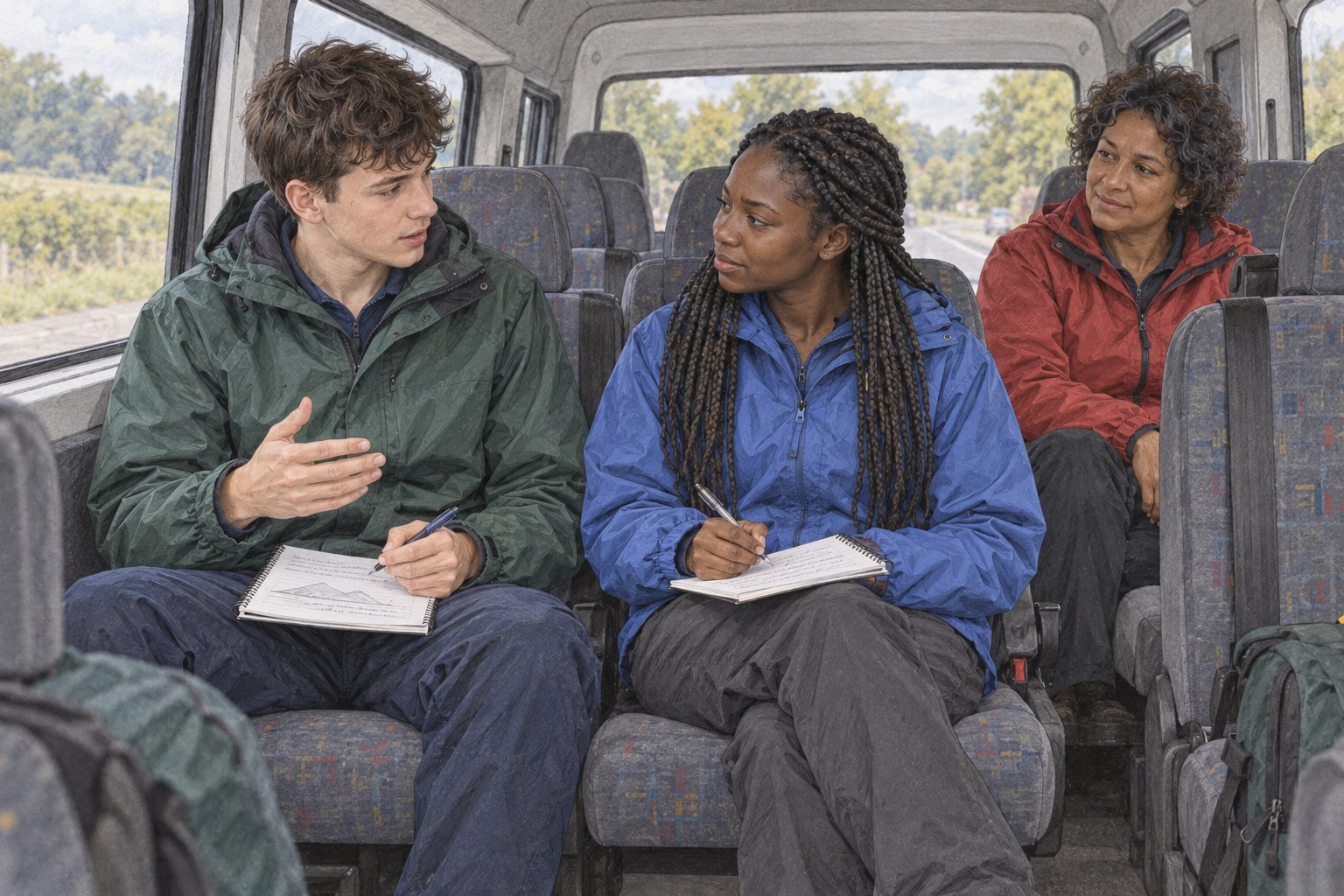
On the journey back to school, Susan asks which part Patrick will put in his learning log. He describes the quiet stretch on the lake, then adds the empty hook. Waiting had felt like doing nothing, but it gave them time to check rather than guess. Their canoe trip began before the boat touched the water, with a question they were willing to leave unanswered until the right detail arrived.