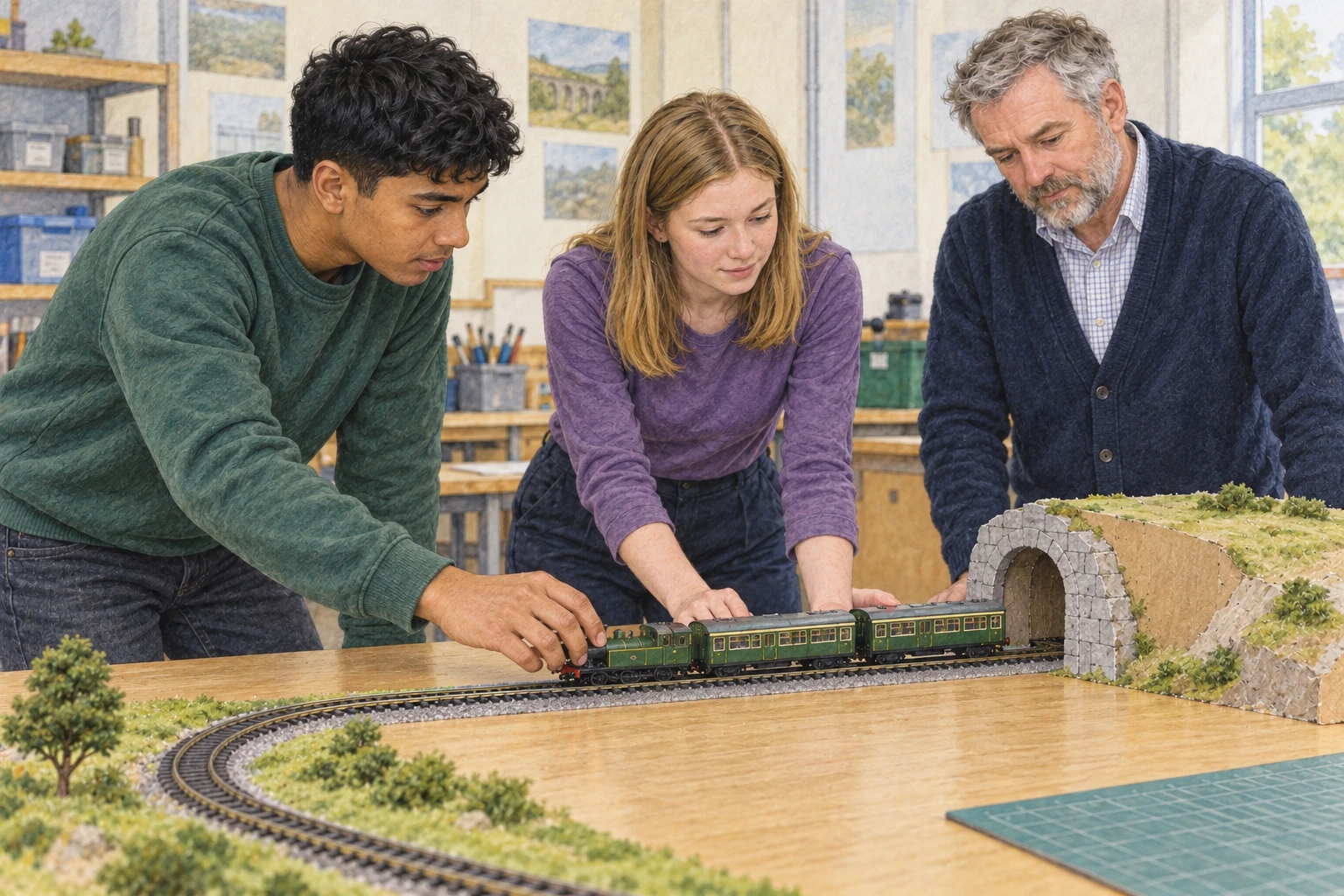
The Model Tunnel
School Readers · Level 19Ian places the cardboard tunnel beside the model railway. Lucy has painted its arch to look like grey stone, and the small green train fits through it when they push it along a straight piece of track. Their teacher, Mr Ward, asks them to test the whole route before the school display opens. Ian joins the tunnel section to the curve and reaches for the locomotive.
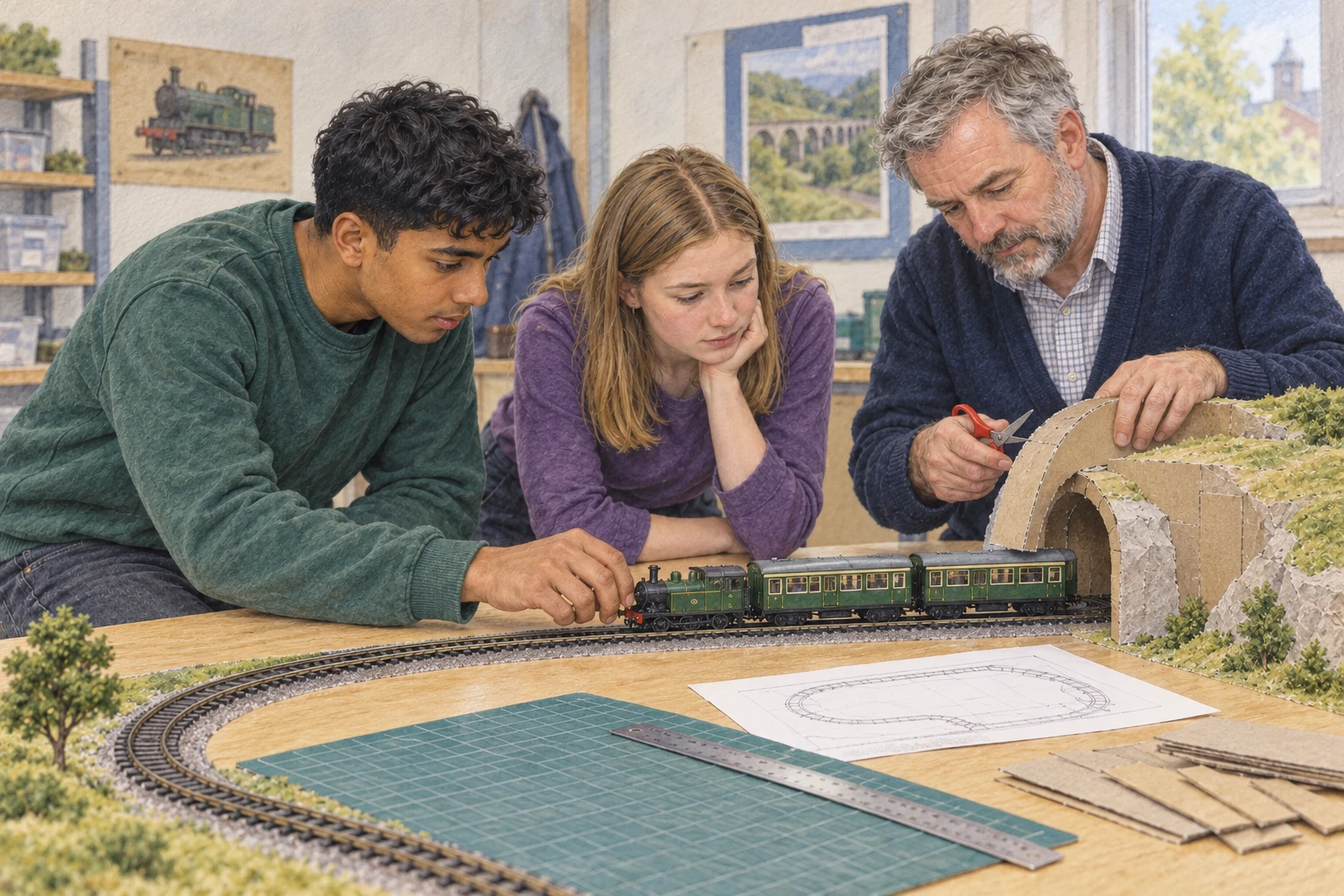
The engine enters neatly, but the first carriage catches against the inside wall. Ian pulls it back and tries again more slowly. It catches in exactly the same place. Lucy watches the wheels, thinking one might have slipped off the rail. All of them are still on the track. The trouble seems to happen only when the train reaches the tunnel from the curve.
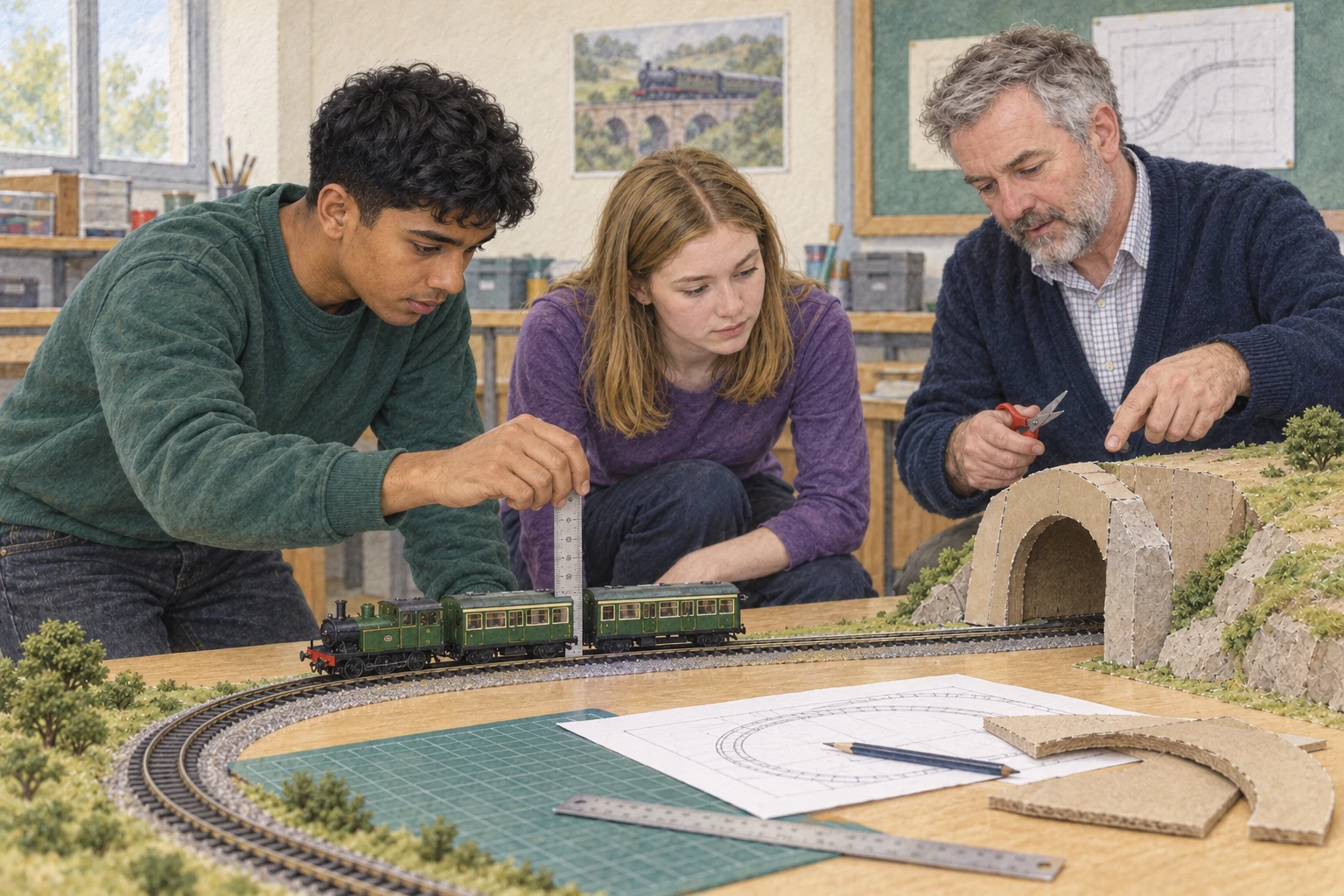
Ian measures the carriage and the opening with a ruler. There is room on each side when the carriage stands straight. He cannot understand why the measurements seemed right on the table but fail on the railway. Mr Ward asks them to watch what changes during the turn. Lucy crouches beside the model, keeping her hands away while Ian gently moves the train forward.
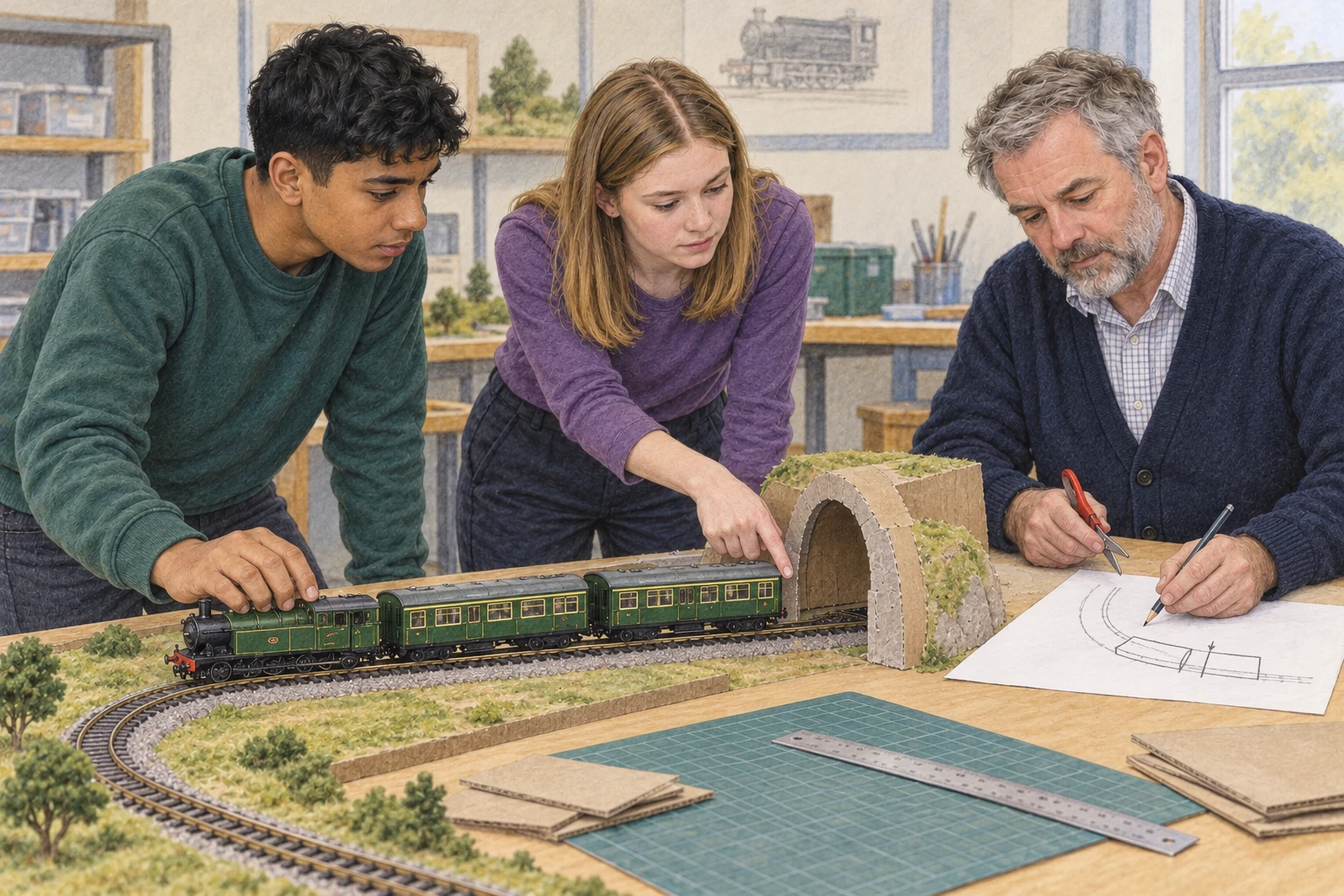
As the carriage follows the curve, its corner swings out beyond the line of the wheels. Lucy points to the corner just before it touches the cardboard. Ian stops the train there. The opening must allow space for the moving carriage, not just its width when it stands still. He draws a quick diagram, showing the track and the place where the side needs more clearance.
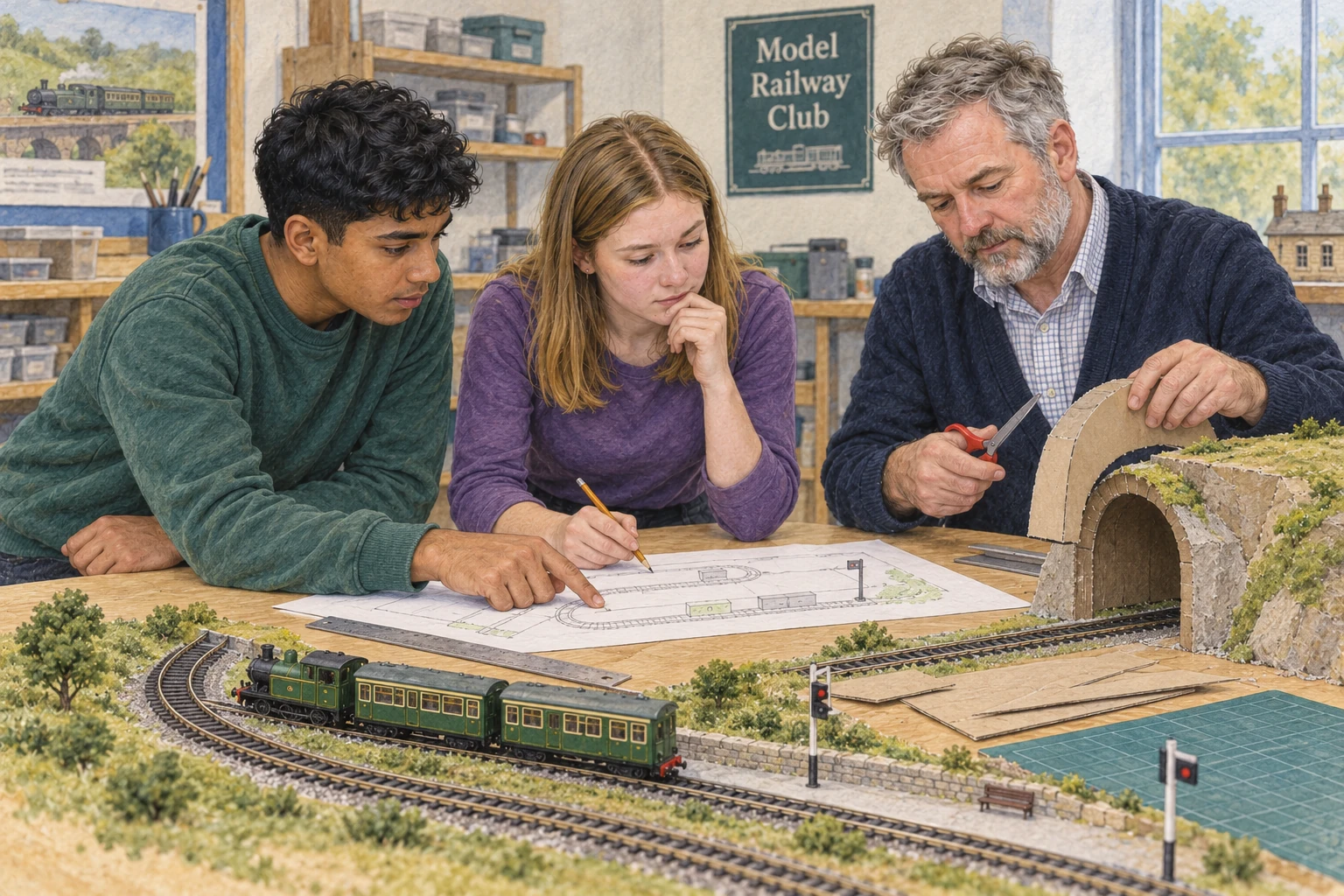
They could make the arch much wider, but Lucy worries about spoiling the painted front. Ian suggests moving the tunnel along the route instead. Beyond the curve is a straight section with enough space before the station. They mark its position on their paper plan and check that the tunnel will not hide the small platform or block the view of the signals.
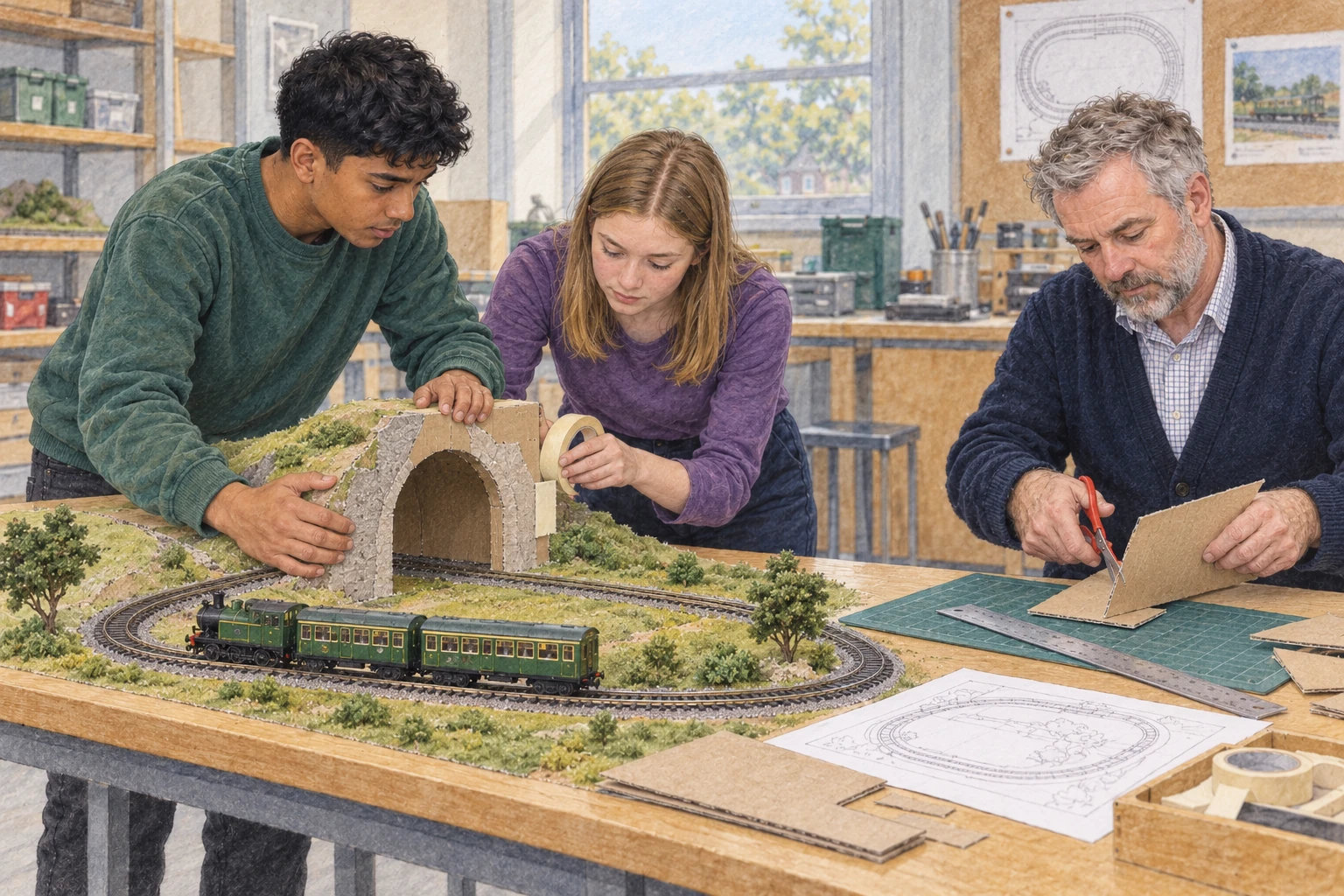
Mr Ward trims the cardboard base so it can sit securely in the new position. Ian holds the tunnel steady while Lucy fixes it with tape. They run the locomotive and both carriages through slowly, then send them round the complete route. Nothing touches the walls. Ian tries again from the opposite direction, wanting to check more than the first successful pass.
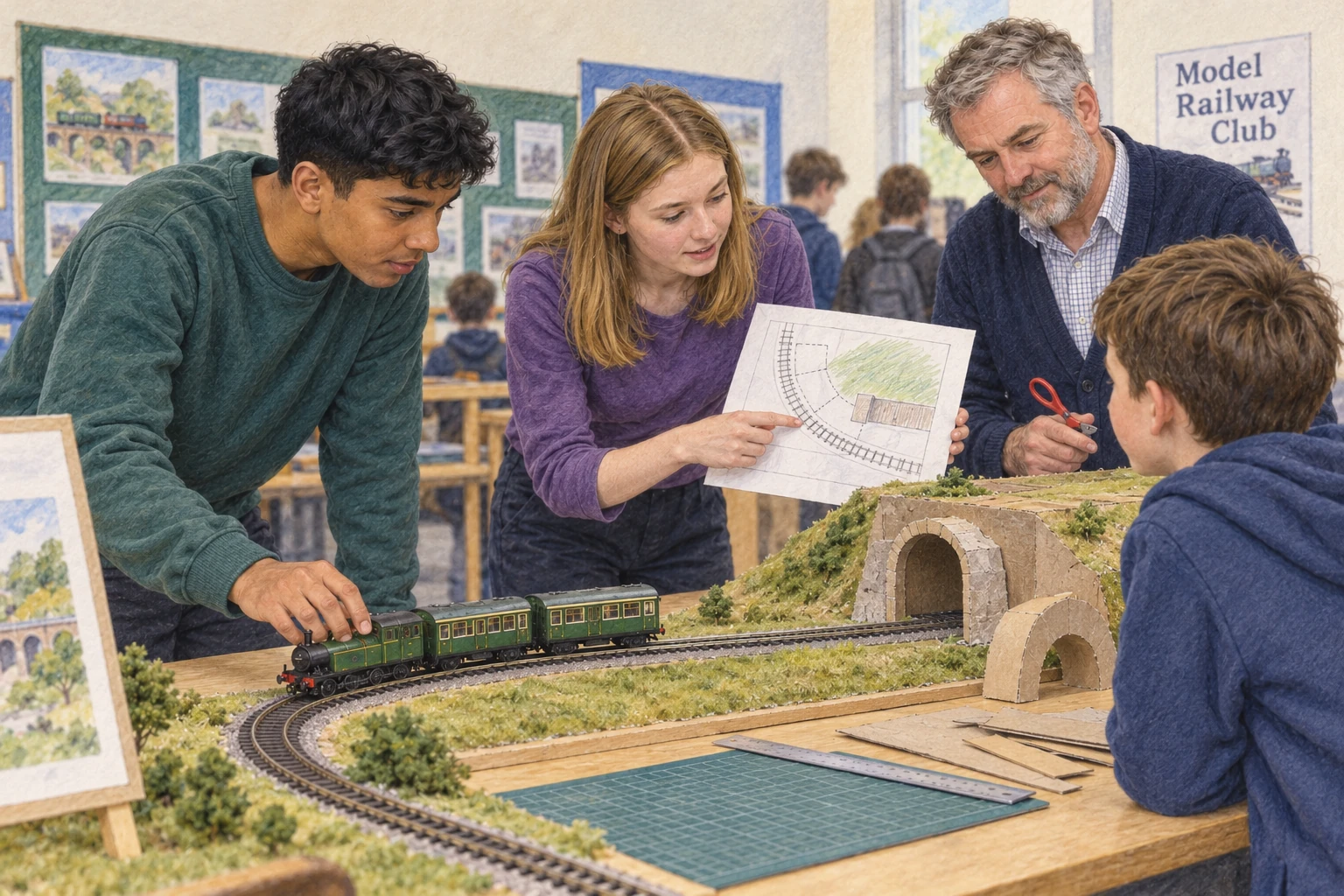
At the display, a younger visitor asks why the tunnel is not beside the hill shown on their first plan. Lucy brings out the diagram of the carriage on the bend. Ian moves the spare carriage along a loose curved rail so the visitor can see its corner swing out. The changed plan becomes one of the most interesting parts of their explanation.
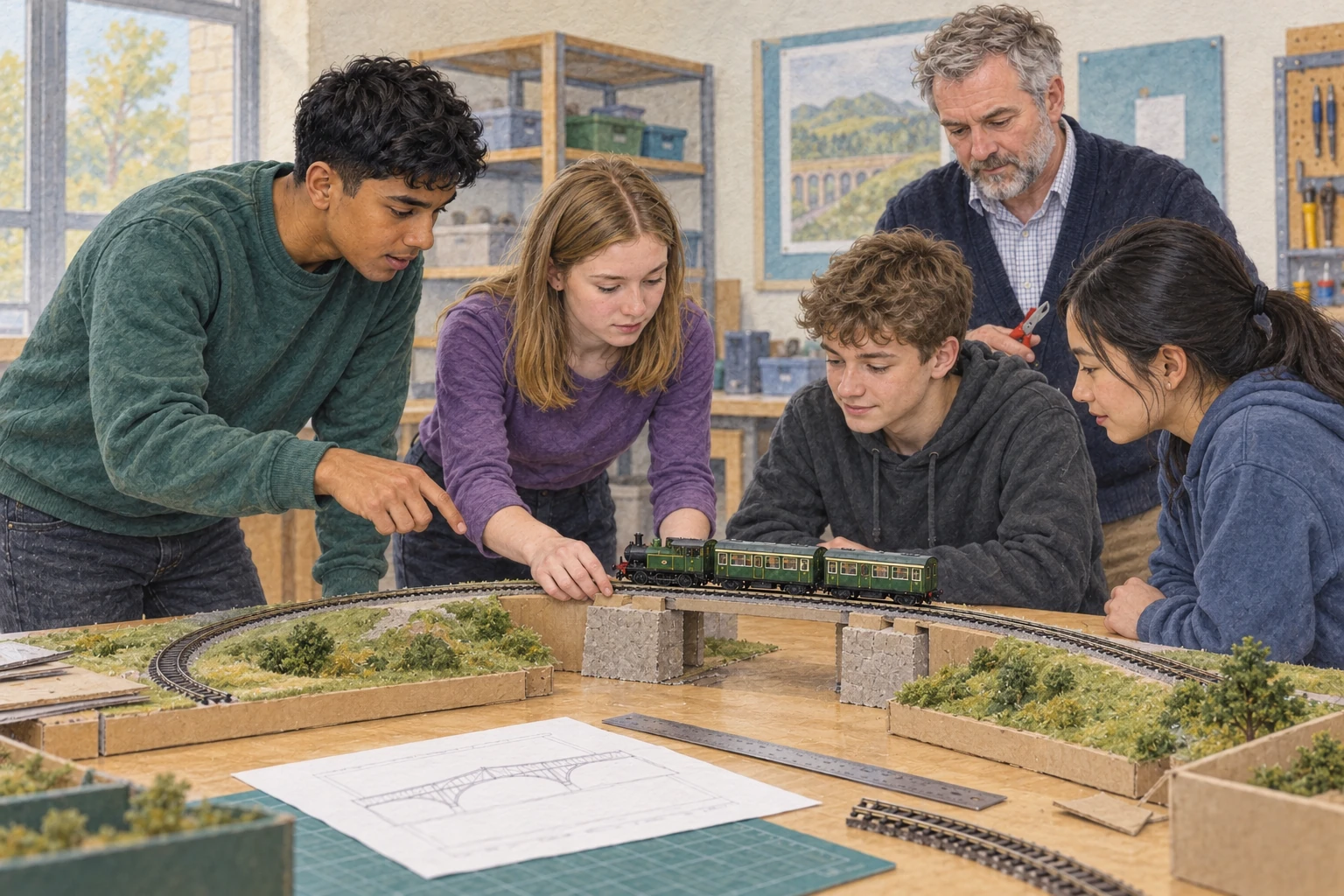
Later, another group borrows their ruler to check a model bridge. Ian tells them to test a moving train as well as measuring the opening. He does not promise that their bridge will work simply because his tunnel now does. Different models may have different problems. Lucy helps the group make a short test route before they fix their bridge in place.
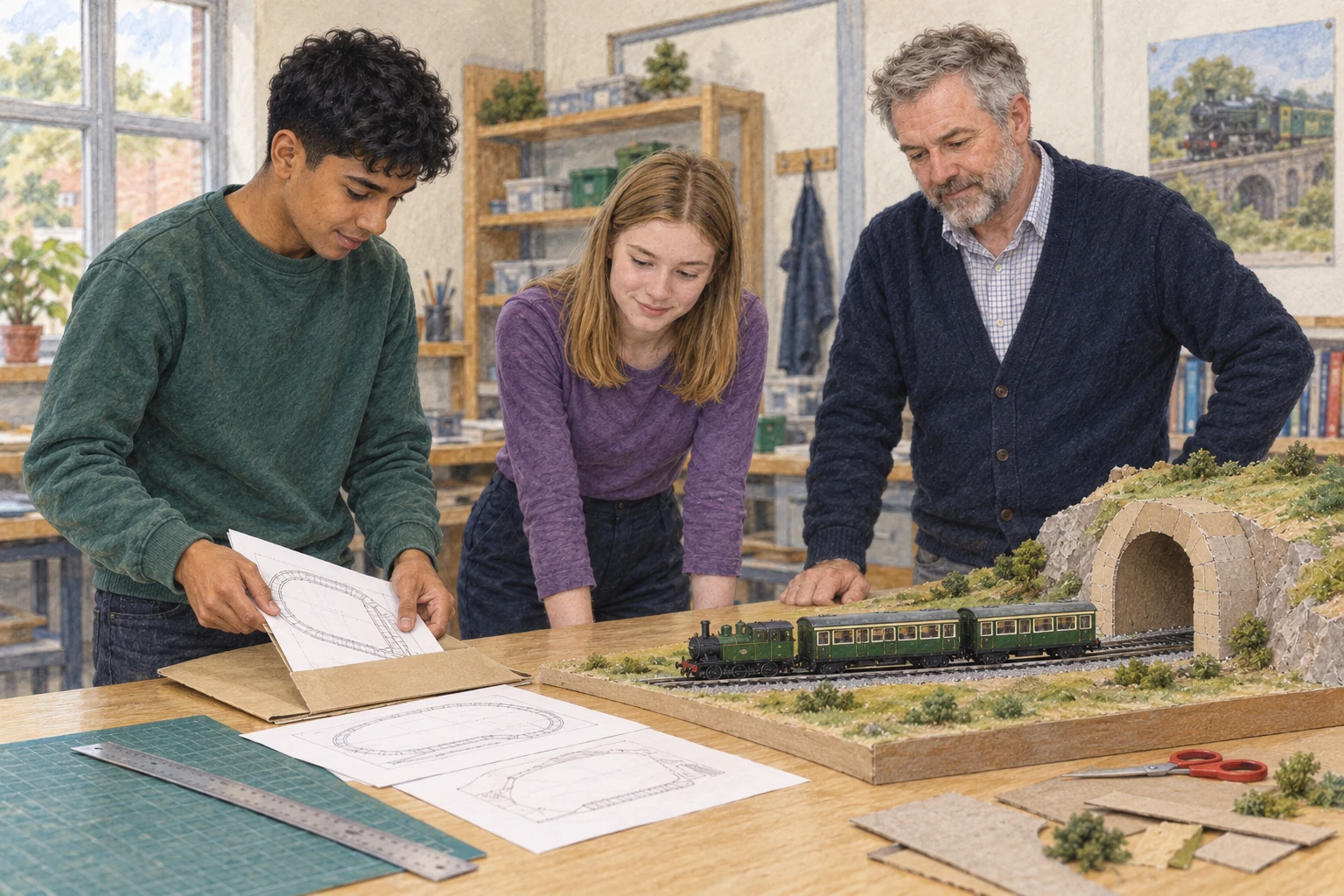
When the display closes, Ian stores the first plan beside the revised one. The stone-coloured arch still looks just as Lucy intended, though it stands in a different place. He had wanted the model to match their drawing exactly. Now he is pleased that they tested it early enough to change it. A useful plan, he decides, must leave space for what the real test reveals.