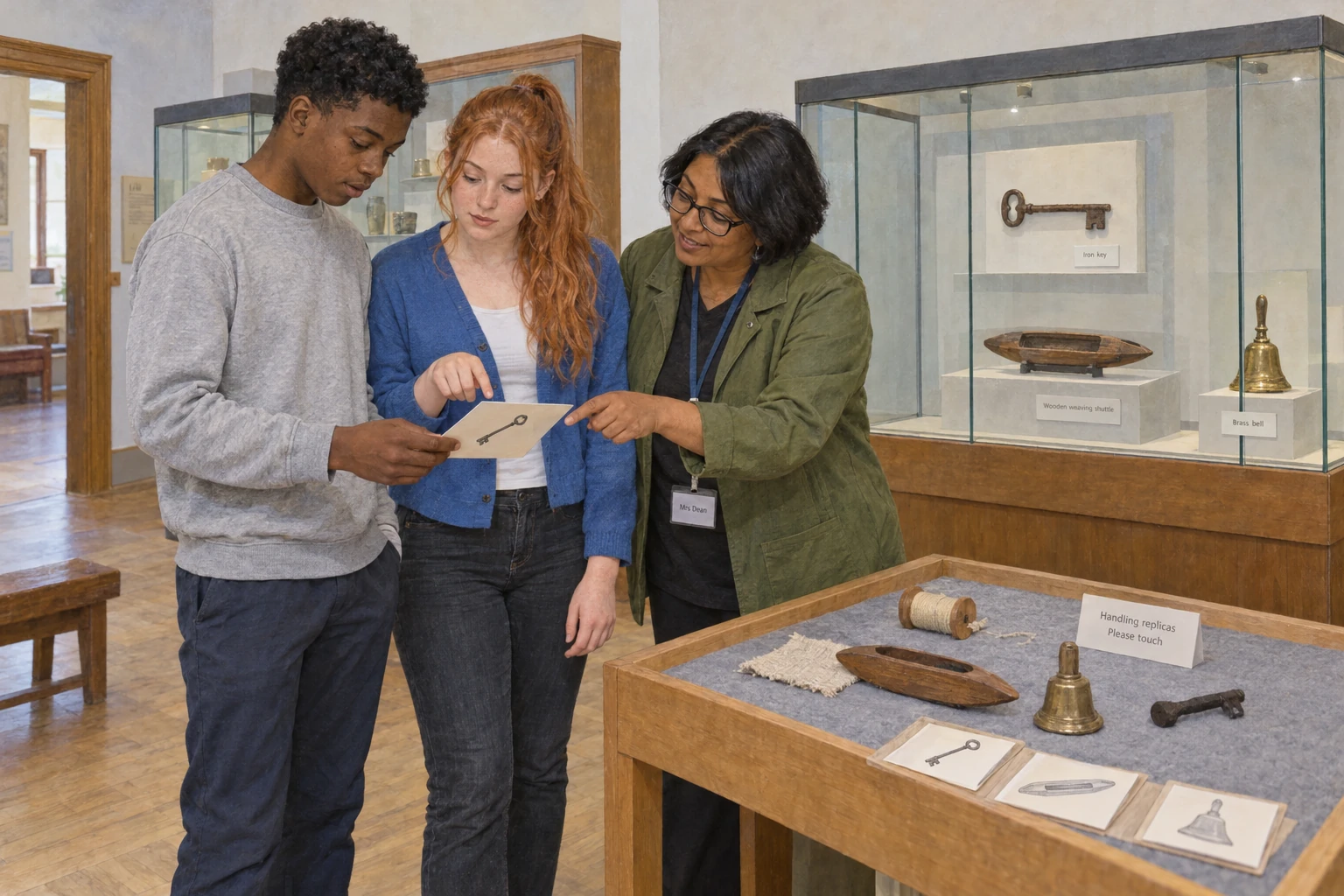
The Museum Clue
School Readers · Level 19Kenneth reads the first clue on the museum trail: “I travel back and forth, but I never leave my frame.” Rebecca looks towards a case containing an old iron key. Perhaps the frame means a door, she suggests. Their teacher, Mrs Dean, asks them to keep the idea while looking at the other objects nearby. The trail is about finding evidence, not racing to fill every box.
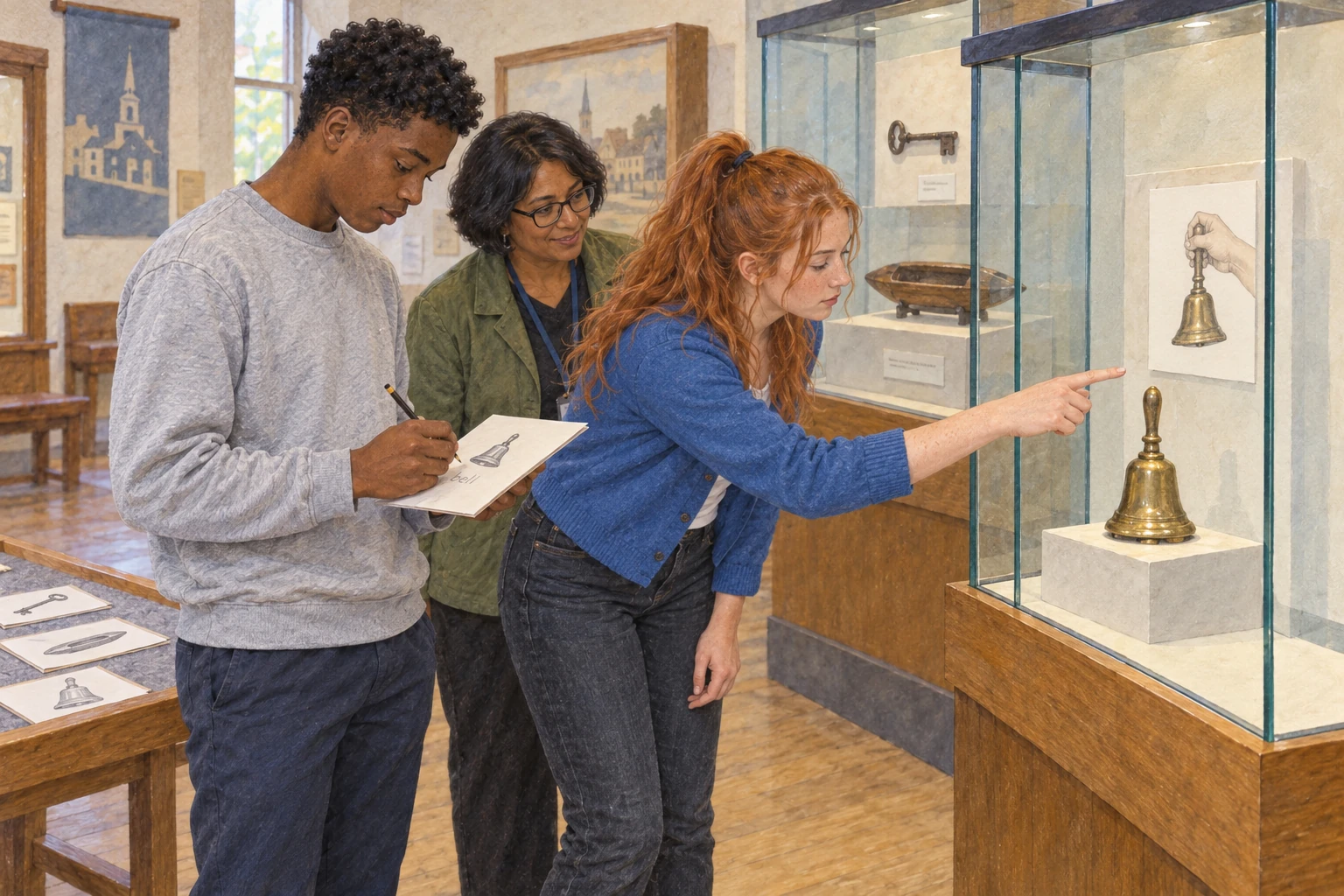
In the next case is a small brass bell. Kenneth imagines it swinging backwards and forwards in a wooden frame. He writes bell lightly on his sheet, leaving room to change it. Rebecca studies the picture beside the object. A person is holding the bell by its handle, with no frame at all. Their second idea fits some of the clue, but not every part.
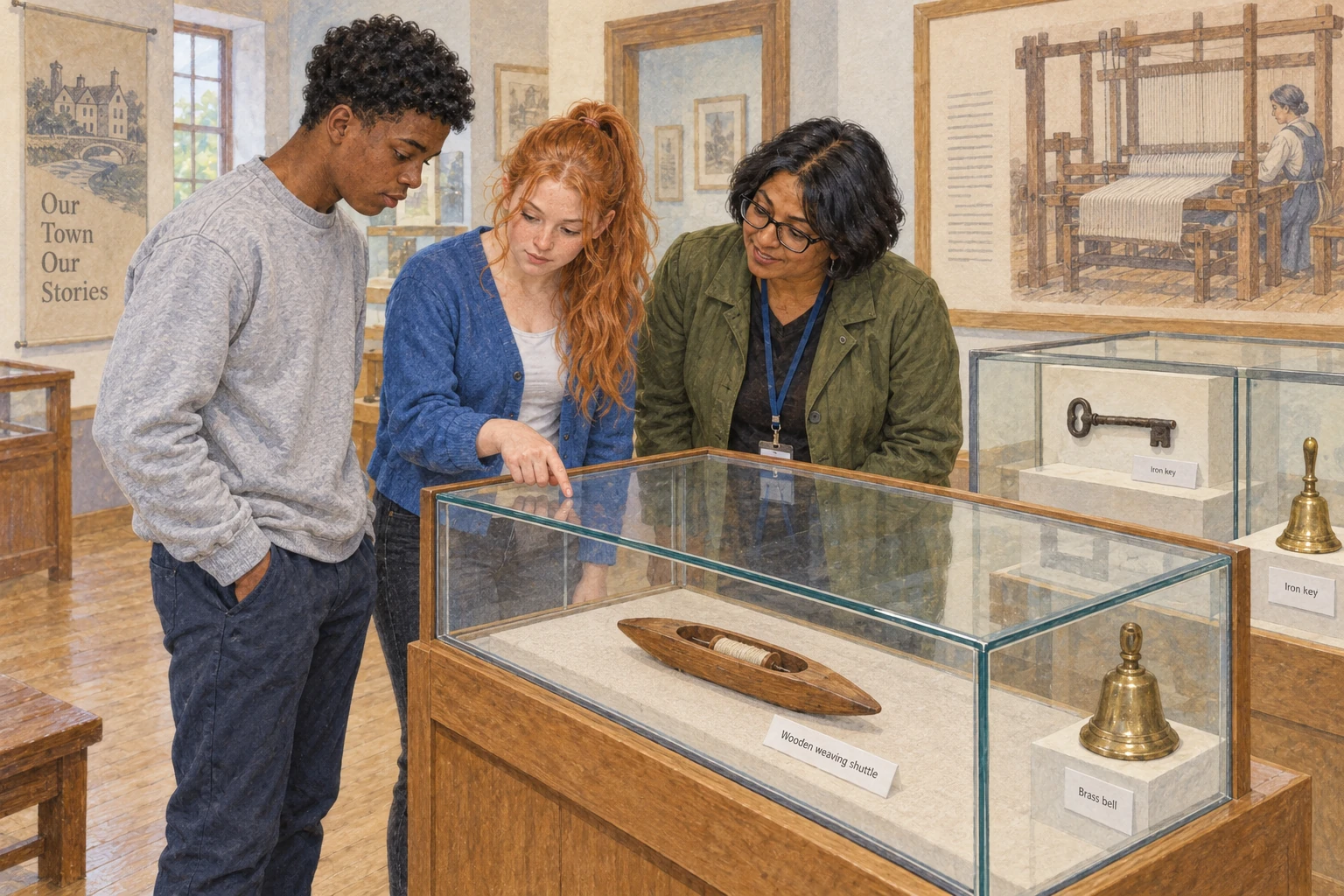
A narrow wooden object rests in the third closed case. Its smooth ends are pointed, and a small hollow runs along the middle. Kenneth cannot see how it could travel anywhere. Rebecca notices thread in the hollow. The label calls it a weaving shuttle. Neither student has used one before, so they move along to a large picture showing a loom with cloth stretched across it.
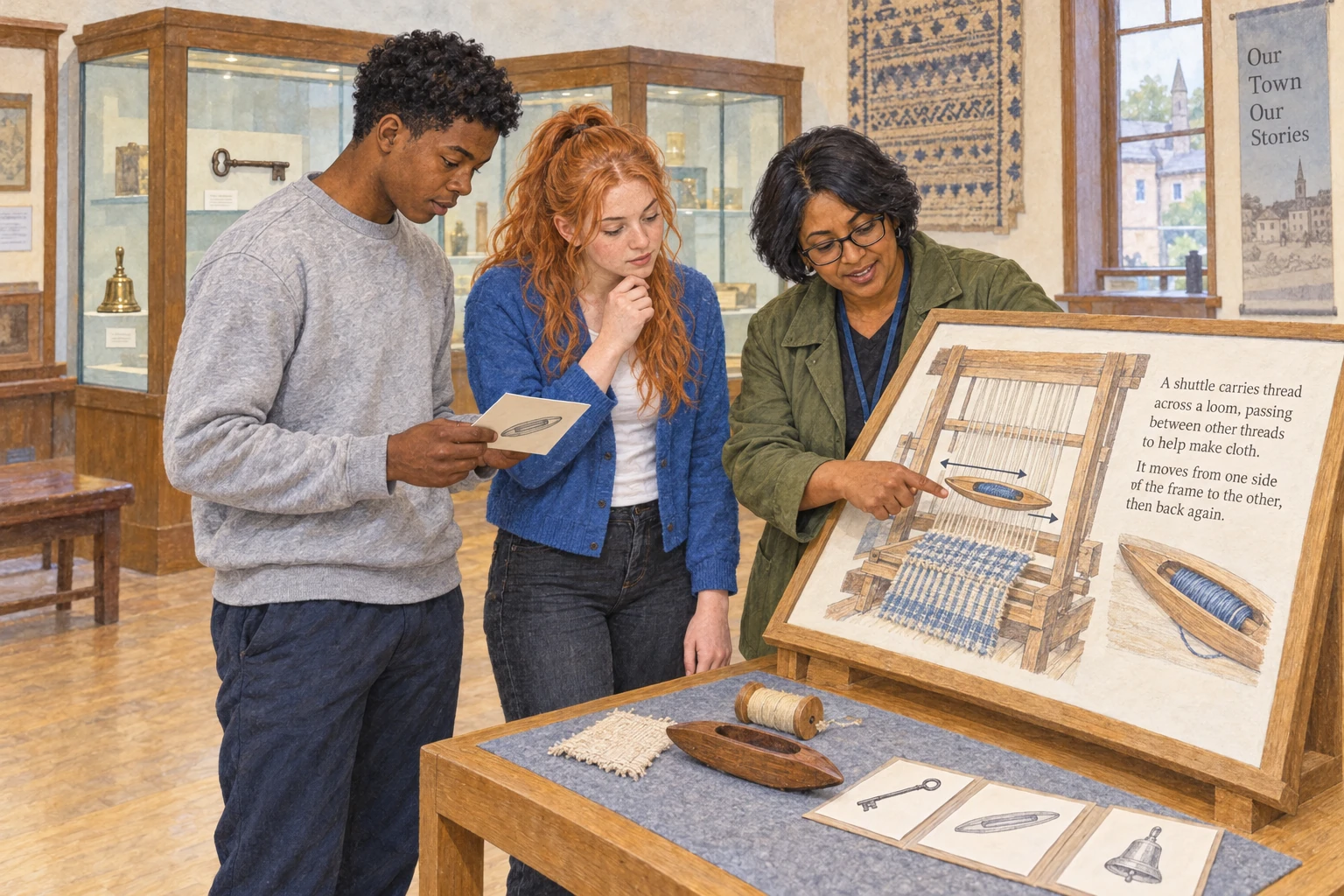
Mrs Dean reads the picture’s short explanation with them. A shuttle carries thread across a loom, passing between other threads to help make cloth. It moves from one side of the frame to the other, then back again. Kenneth returns to the clue. This object does not simply look as though it could fit. Its purpose explains the whole sentence.
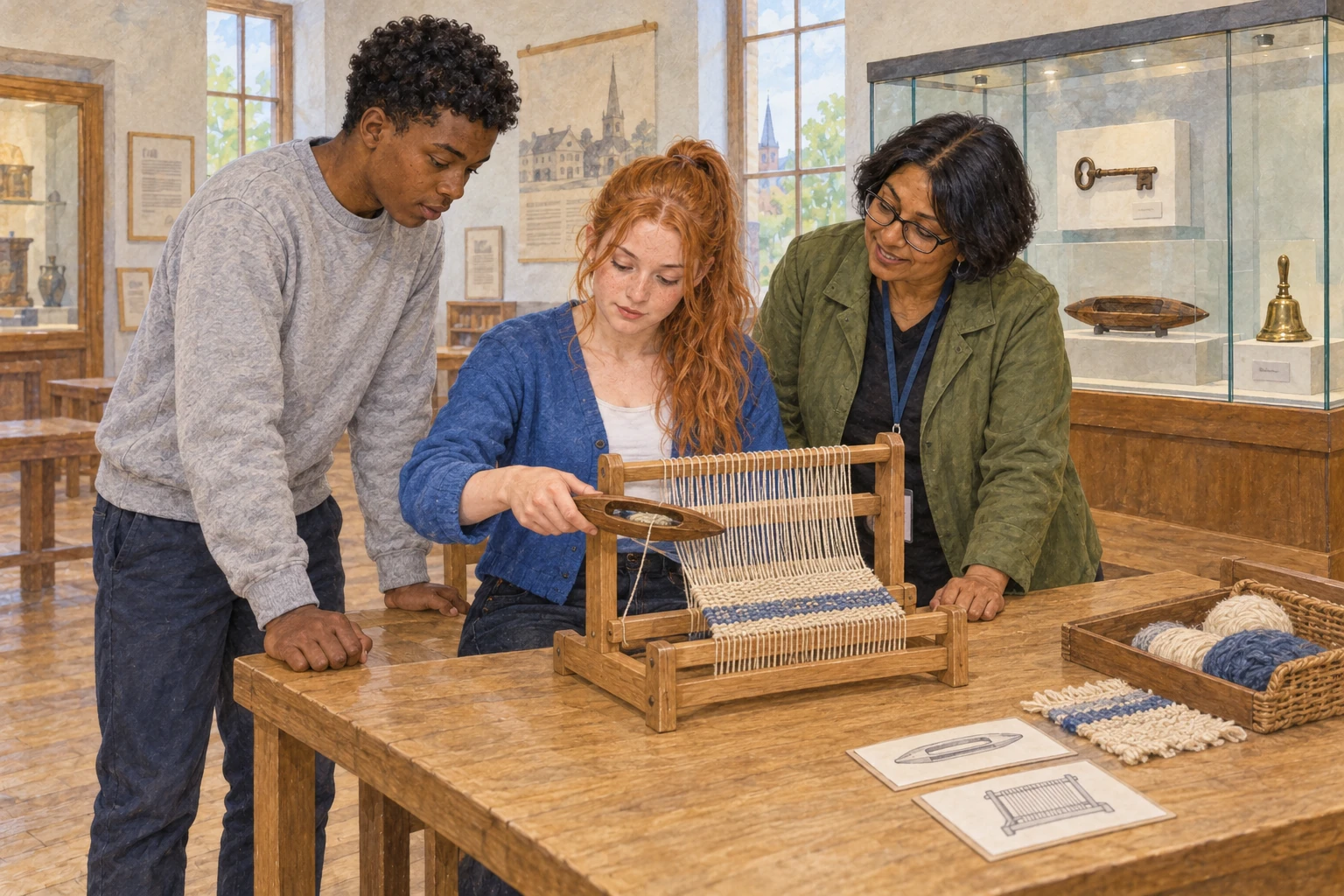
At a separate activity table, a museum helper offers them a replica shuttle and a small teaching loom. The old objects stay inside their cases. Rebecca passes the replica gently across the threads while Kenneth watches the path it takes. Then they exchange places. The movement gives the words back and forth a clear shape that neither had pictured at the start.
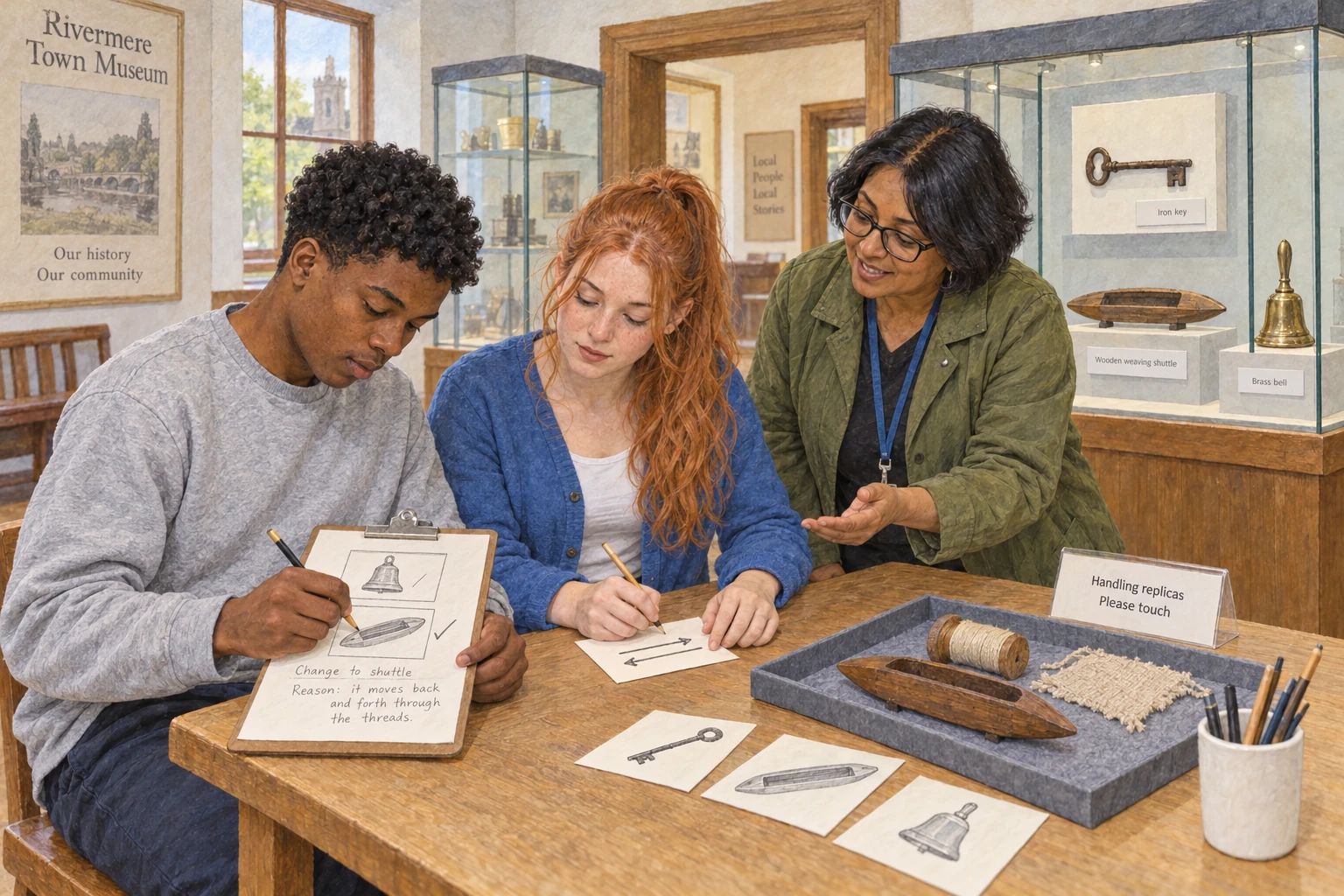
Kenneth changes his answer from bell to shuttle and adds a reason beneath it. Rebecca draws two arrows across a small rectangle to remind herself of the movement. They do not rub out their first guesses completely. Mrs Dean suggests using them in the class discussion later. An idea that fails can still show which detail helped them move towards a stronger answer.
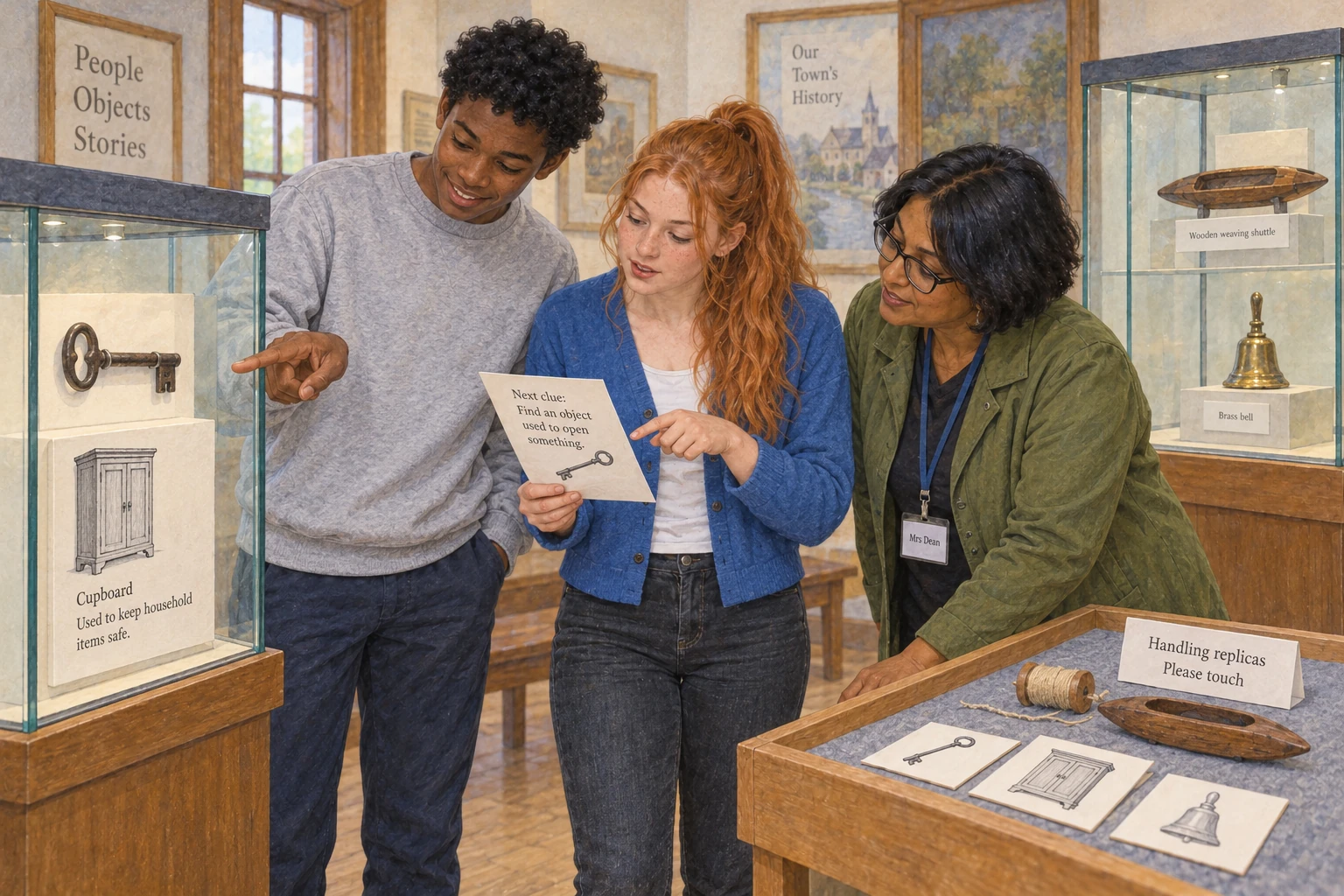
The next clue mentions an object used to open something. This time, they look at the iron key’s shape and the picture of an old cupboard beside it. Kenneth smiles at how quickly it fits. Rebecca reminds him to check the rest of the sentence. They read it together and compare the details before writing. A familiar object still deserves more than a hurried guess.
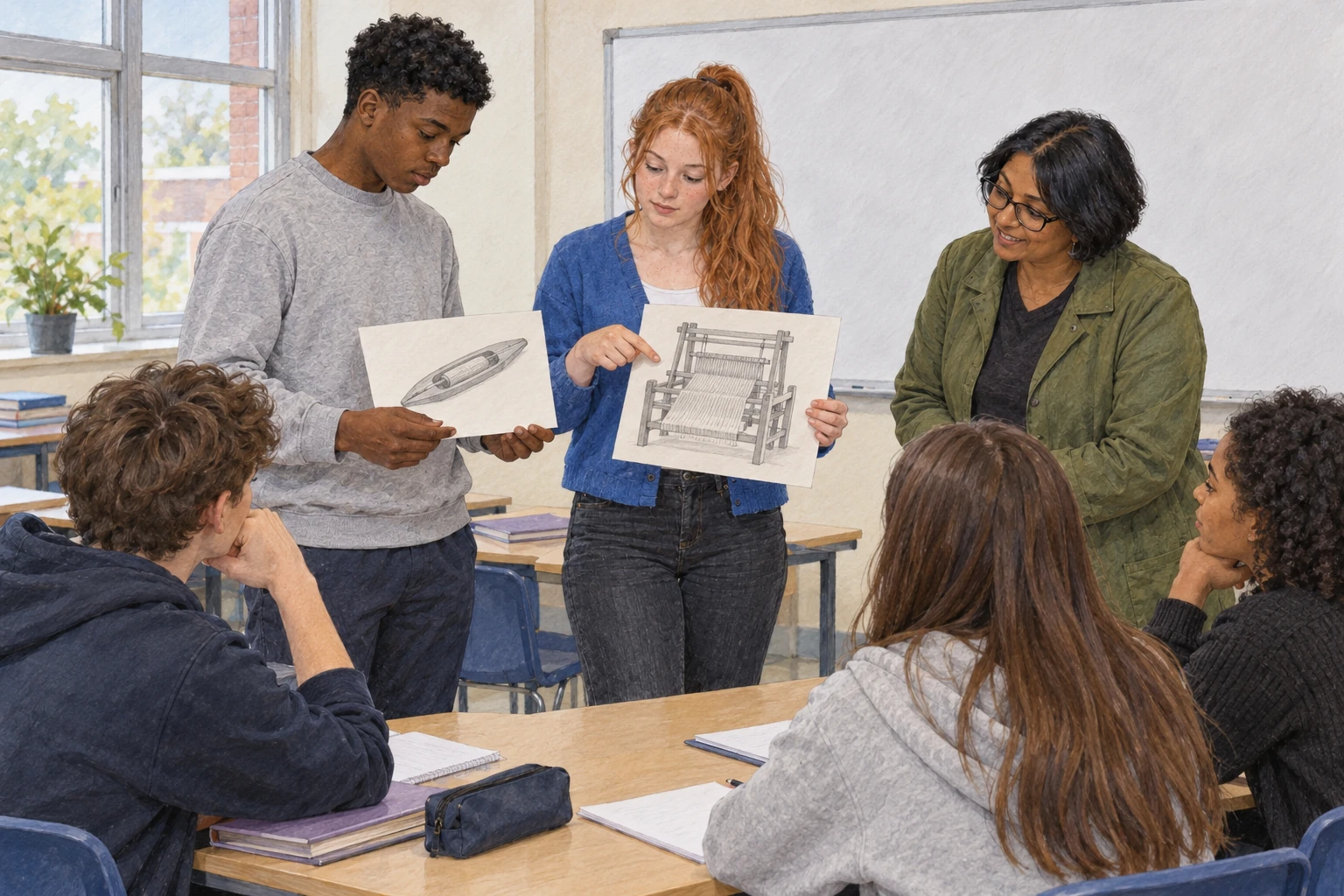
Back at school, each pair explains one museum discovery. Kenneth shows a drawing of the shuttle while Rebecca describes the replica table. Another student admits that she thought the pointed object was part of a toy boat. Kenneth can understand why. Without the thread and loom picture, he would not have known what mattered about its shape either.
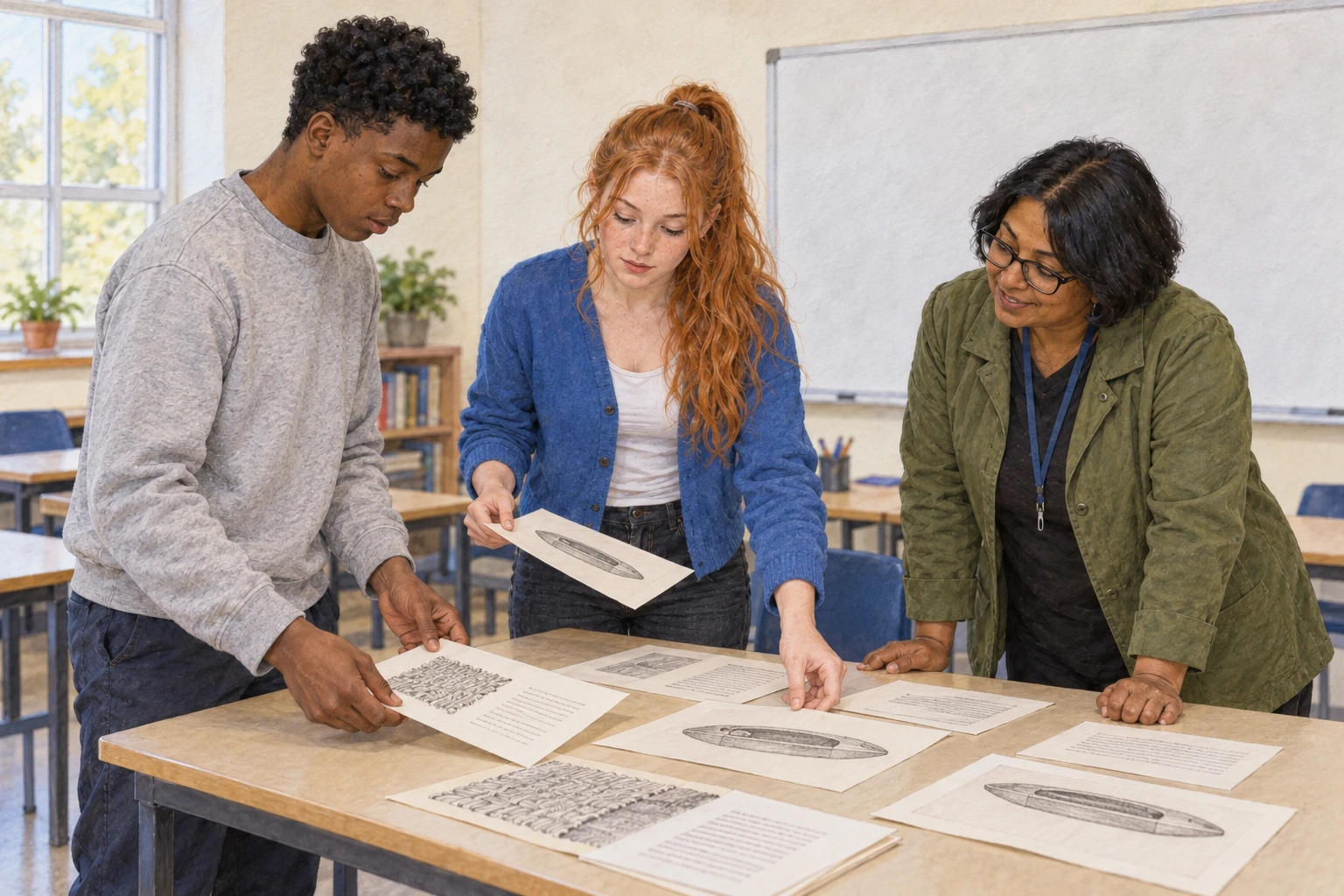
They place the trail sheets beside their drawings for a classroom display. Kenneth’s faint first answer is still visible beneath the correction. He likes that the page shows more than the final word. It records how a clue, a picture and a careful test changed his thinking. The museum’s smallest wooden object has given him the largest question to take home: what else has a purpose he has not yet noticed?