The Night Camera
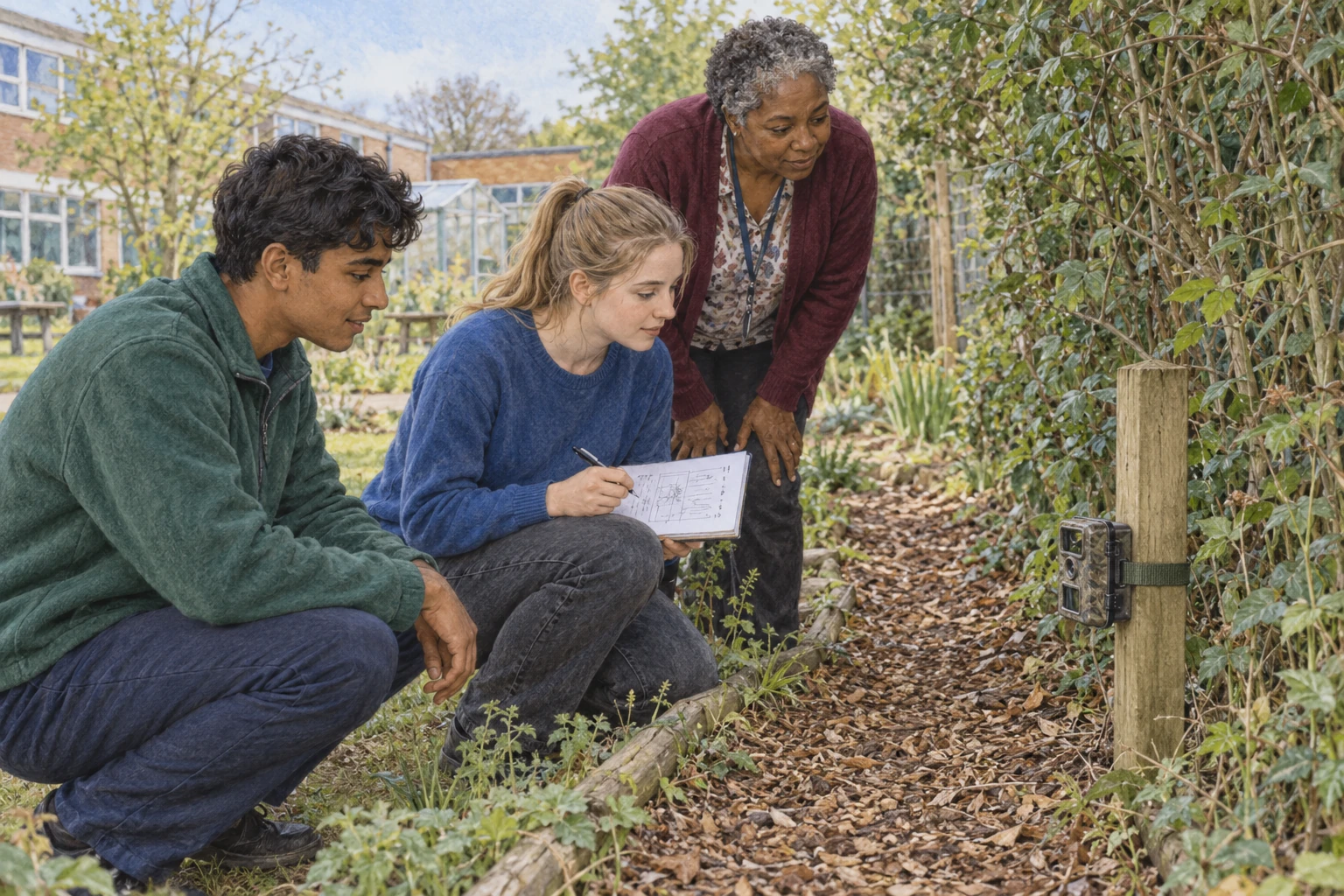
School Readers · Level 20Philip tucks his notebook under his arm while Helen checks the garden camera with Mrs Nash. Their class wants to find out which animals use the school grounds after people leave. The small camera faces a quiet mulch path beside the hedge. They have permission to place it there for the wildlife project, away from public paths. No one will stay out at night to watch it.

The next morning, they view the pictures on a classroom laptop. Most show an empty path. Then a blurred shape appears at the edge of one frame. Philip thinks it is a fox. He points to what looks like a long tail, already imagining the discovery on their display. Helen asks him to move to the next picture before writing the animal’s name.

The next frame shows nothing but the hedge. A later image contains a pale cat stepping through the same corner. Philip is disappointed. Perhaps his fox was only the cat moving quickly. Mrs Nash asks what they can safely say from the first picture. They can describe a low shape and a blur near the ground. They cannot see enough detail to name the animal with confidence.
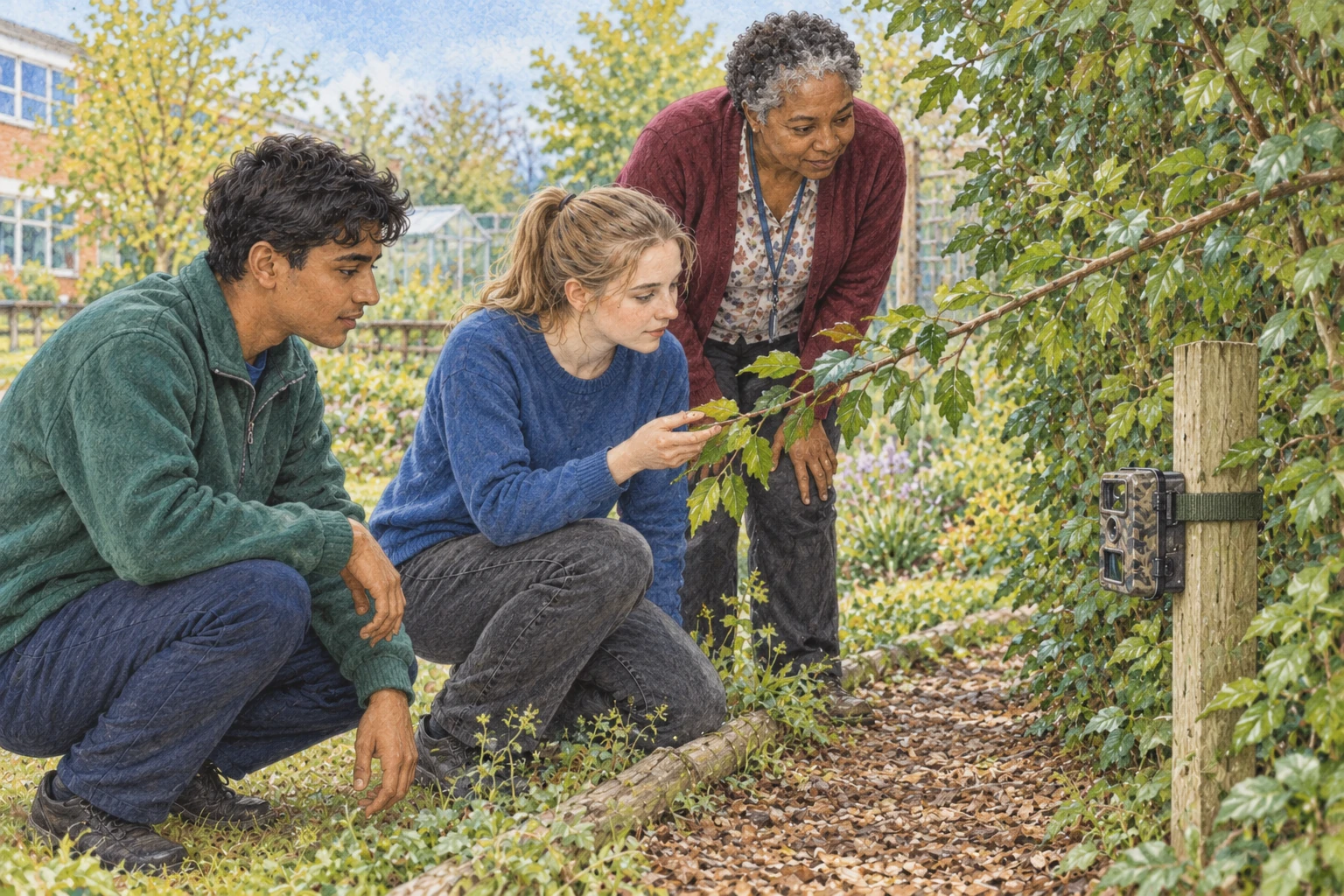
Helen notices that a branch hangs across the camera’s view. In several pictures, the same narrow shadow crosses the path, even when no animal appears. During daylight, they return with Mrs Nash to compare the scene. The branch moves in a light breeze. It could explain part of the blur, but they do not assume it explains every mark in the night picture.
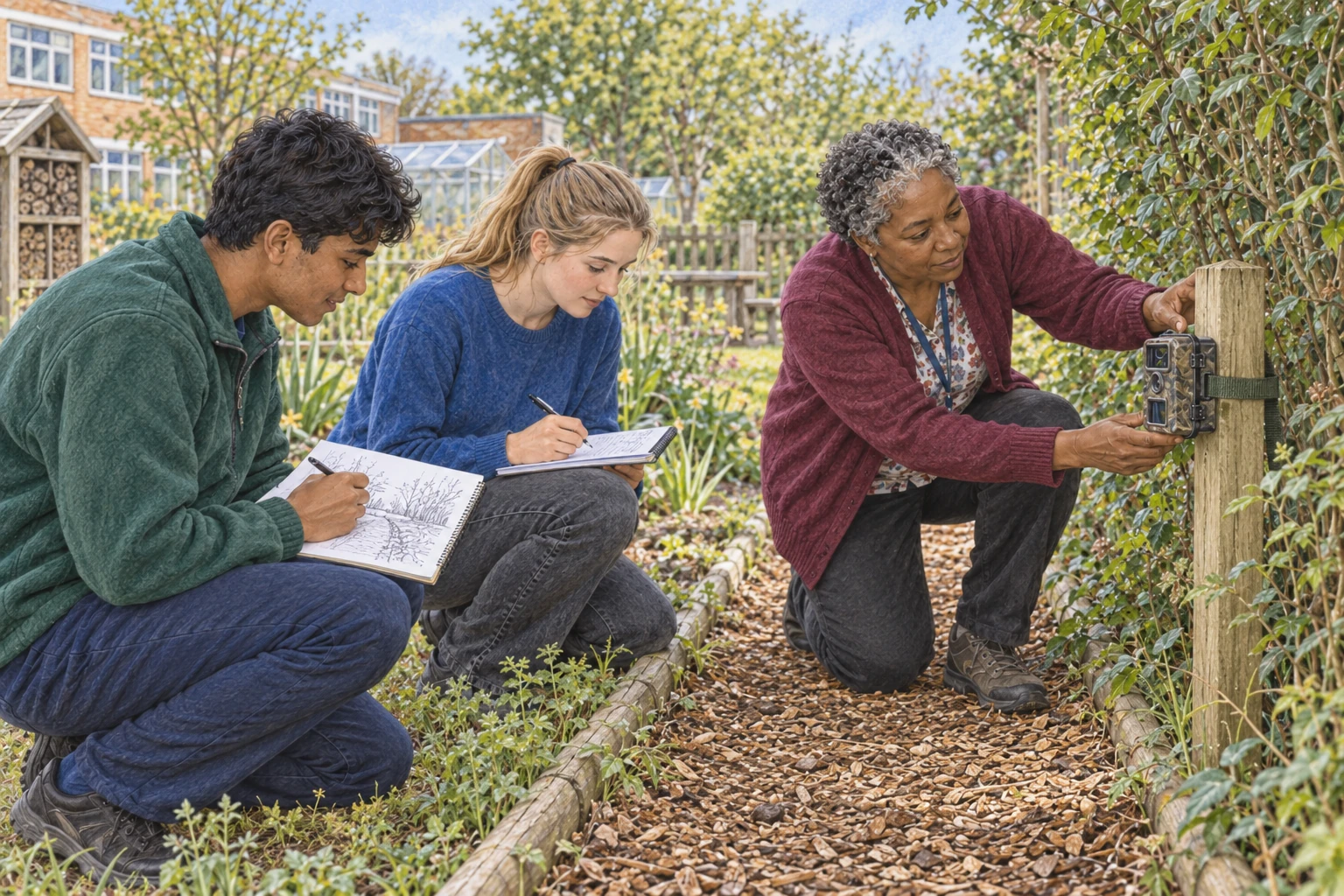
They adjust the camera’s position with their teacher, leaving the hedge and its animals undisturbed. This time, the lens looks along a clearer stretch of mulch. Philip draws the new view and notes the change. They keep the first set of pictures in a separate folder. If they compare two nights, they will need to remember that the camera did not see exactly the same patch of ground.
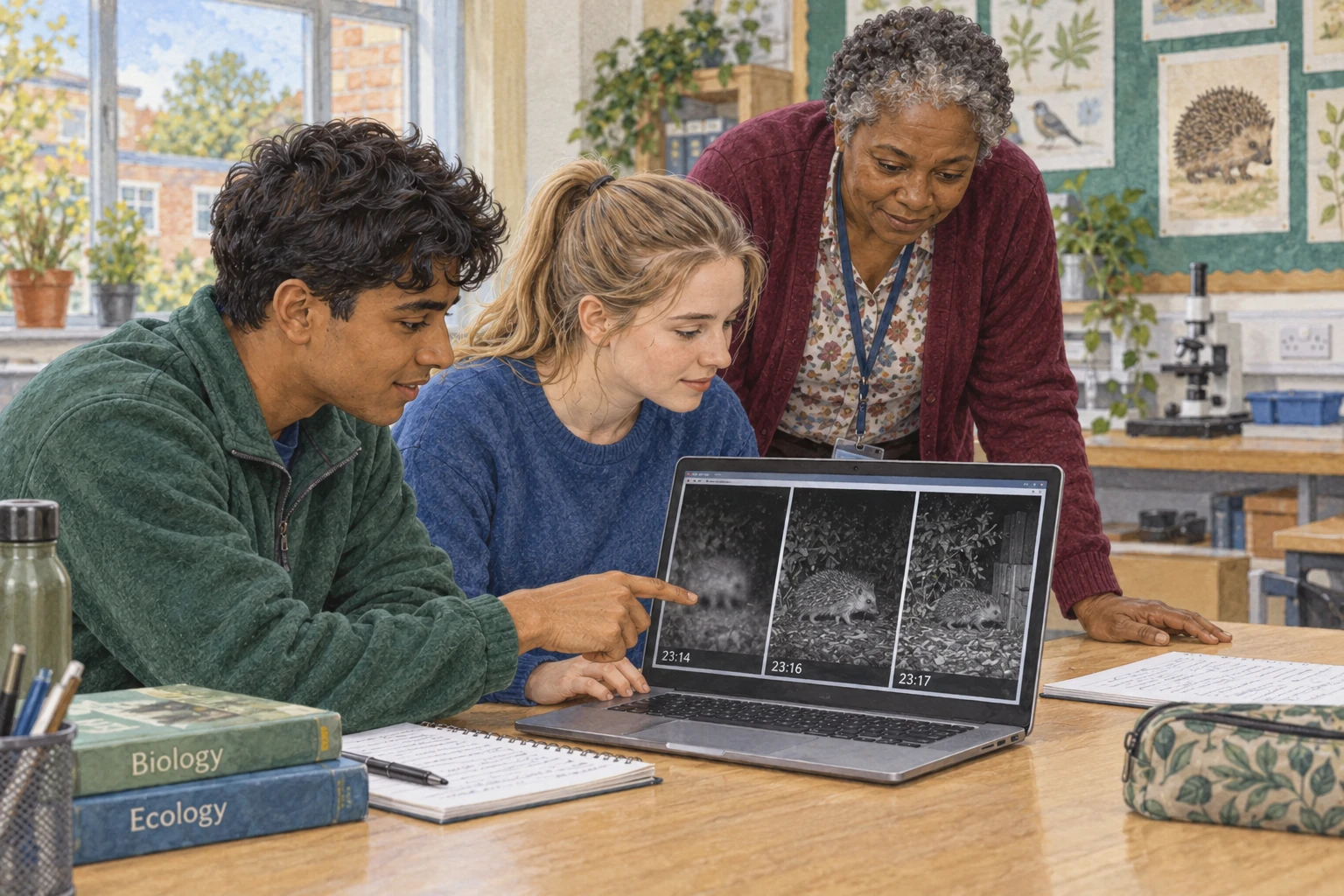
Two nights later, three clear pictures show a hedgehog crossing the path. Its shape appears in each frame, moving from the hedge towards the garden border. Helen checks the times while Philip compares the details. They are excited, but Mrs Nash reminds them that the animal needs no audience in the garden. They can learn from the pictures without searching for its daytime hiding place.
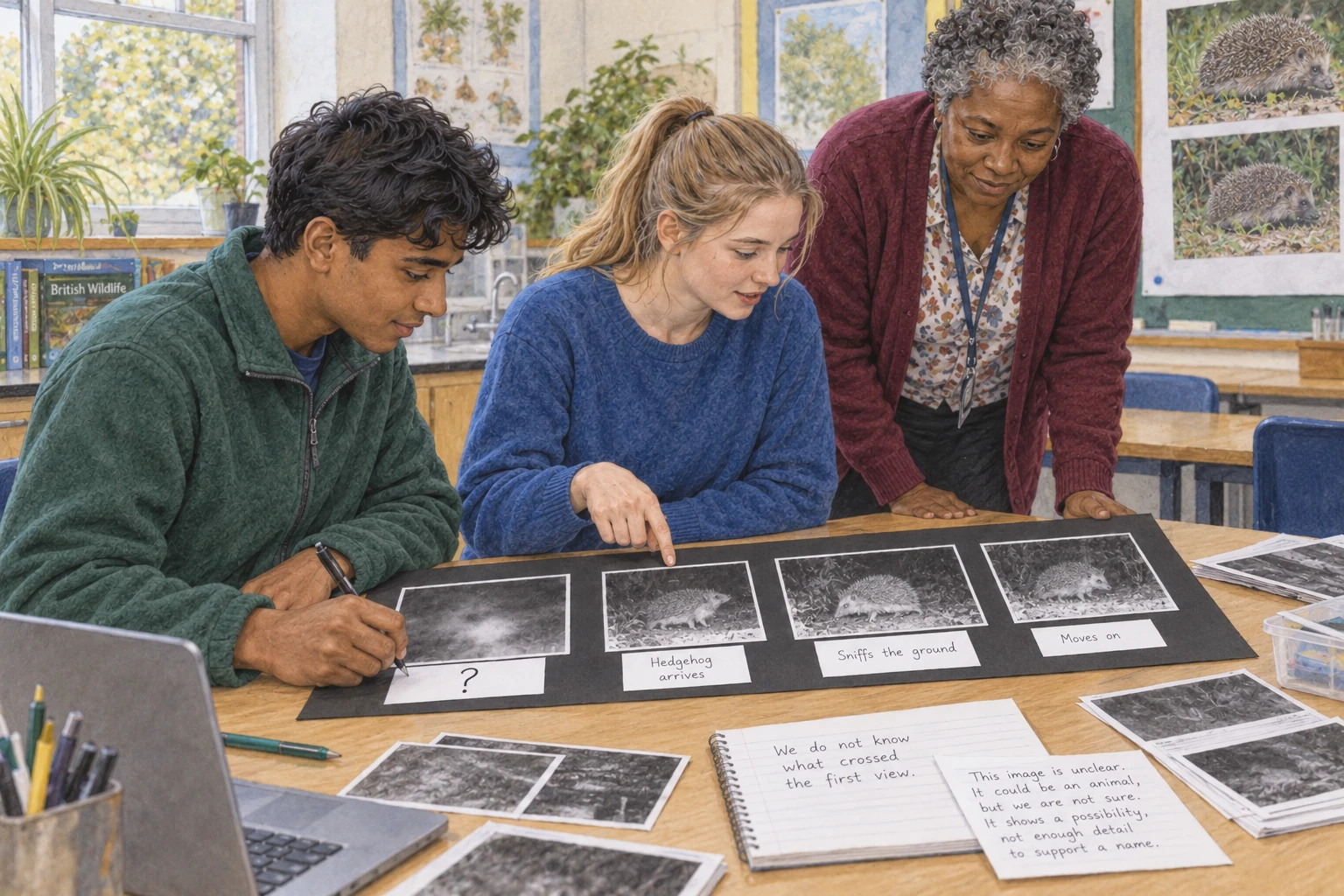
For the display, Philip chooses the clear sequence and labels what it shows. He also includes the first blurred picture under a question mark. Helen suggests explaining why it remains uncertain. The gap in their knowledge is useful: it shows the difference between an interesting possibility and a detail strong enough to support a name. Philip writes that they do not know what crossed the first view.

At the class discussion, someone asks whether the hedgehog visits every night. Helen opens their record. They have clear evidence for one night in the short period they checked, not for every night of the year. Philip explains the camera change and shows his diagram. They cannot answer for every night, but everyone can see what their record shows.
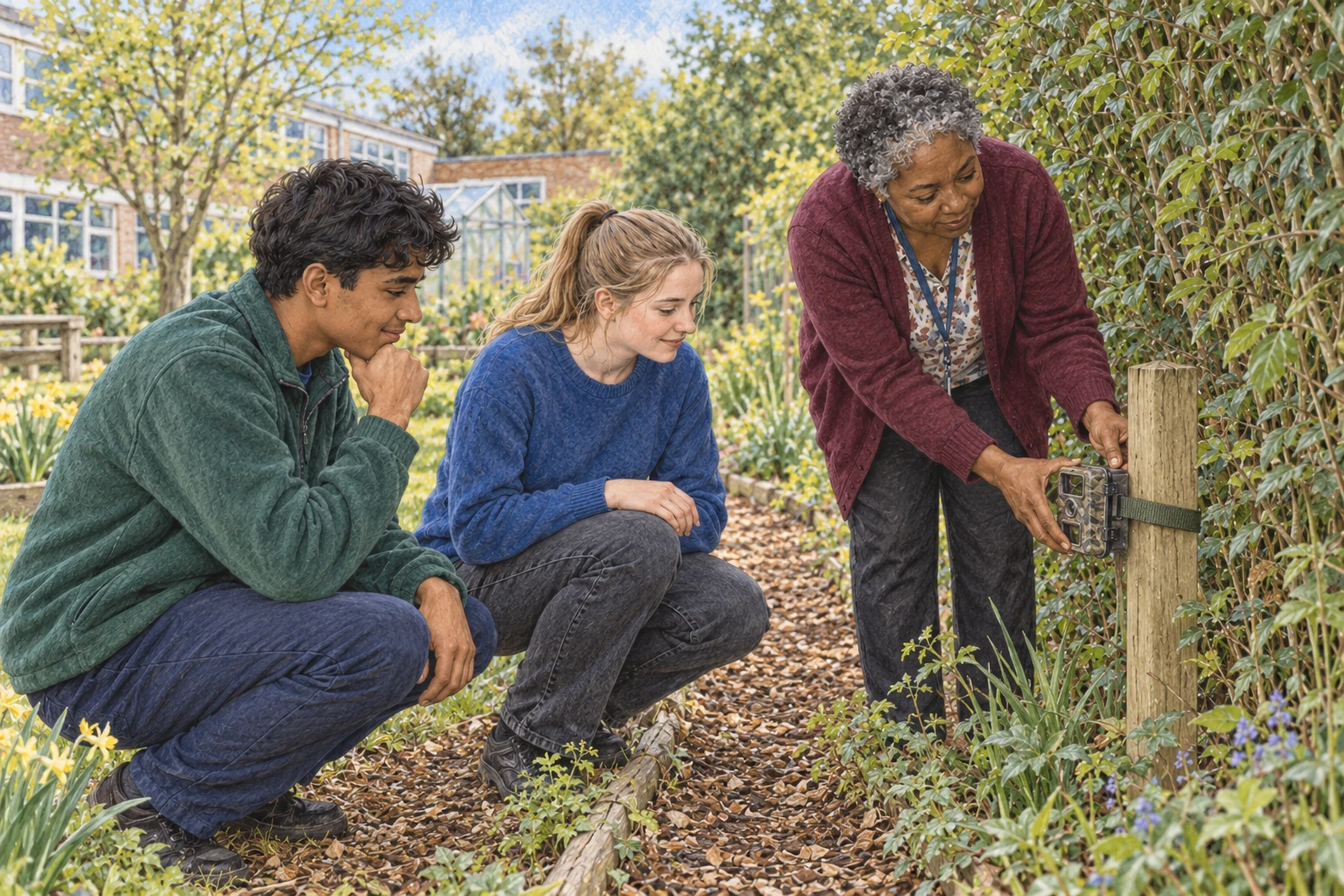
When the project ends, Mrs Nash removes the camera with them. The mulch path looks ordinary in the afternoon light. Philip pauses beside it, thinking of the quiet movement the pictures revealed. He has not solved every mystery in the hedge, and he no longer feels he must. Their best discovery is clear enough to share, while the blurred visitor keeps its place as a question for another careful observation.