The Old Sketch
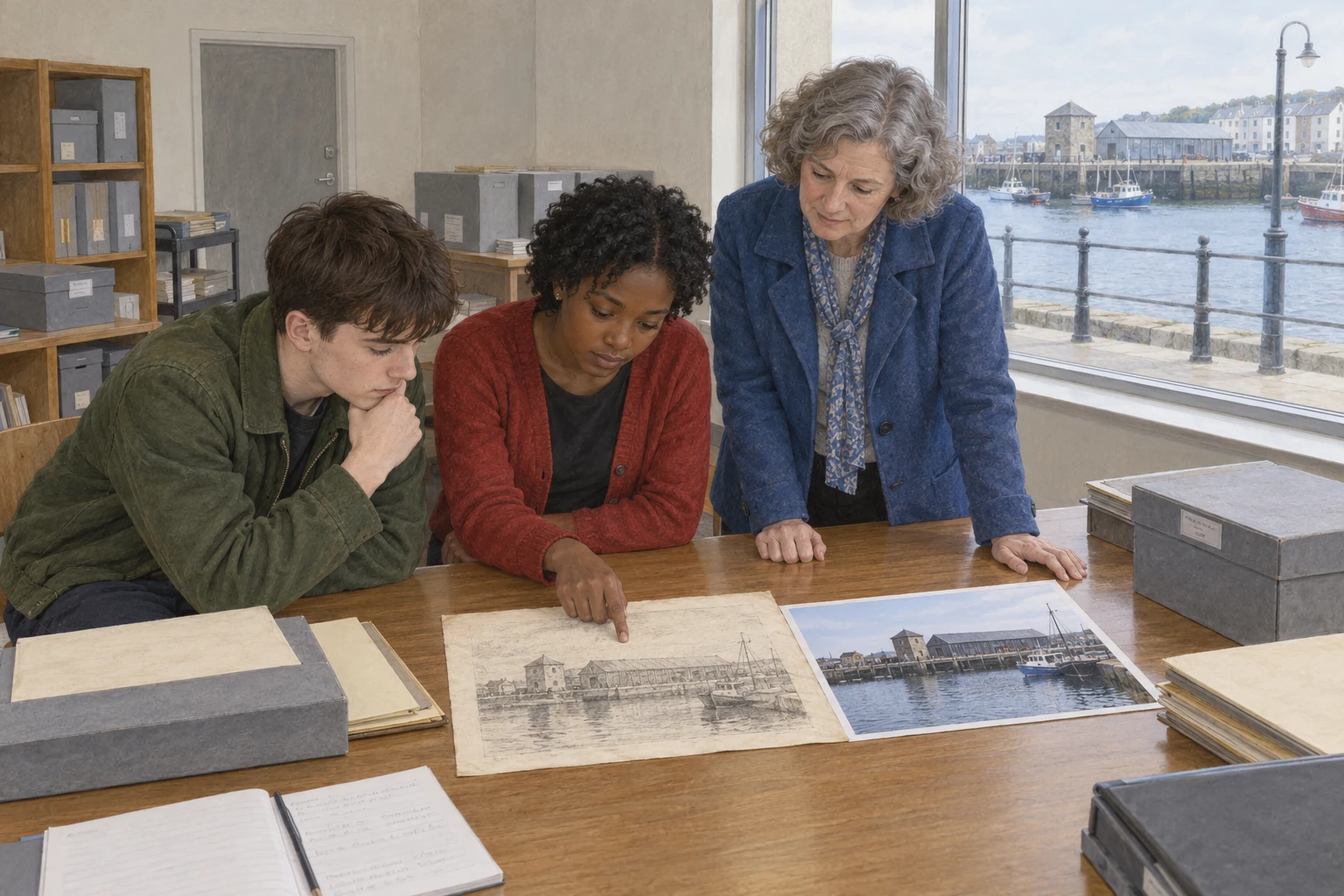
School Readers · Level 19Toby finds the sketch inside a folder at the community archive. Its corners are soft, and a faint pencil line runs across the harbour. Christine leans closer to the little square building beside a long shed. “That looks like the place where my uncle keeps his boat,” she says. Their history teacher, Mrs Ford, asks what else they can notice before deciding where the artist stood.
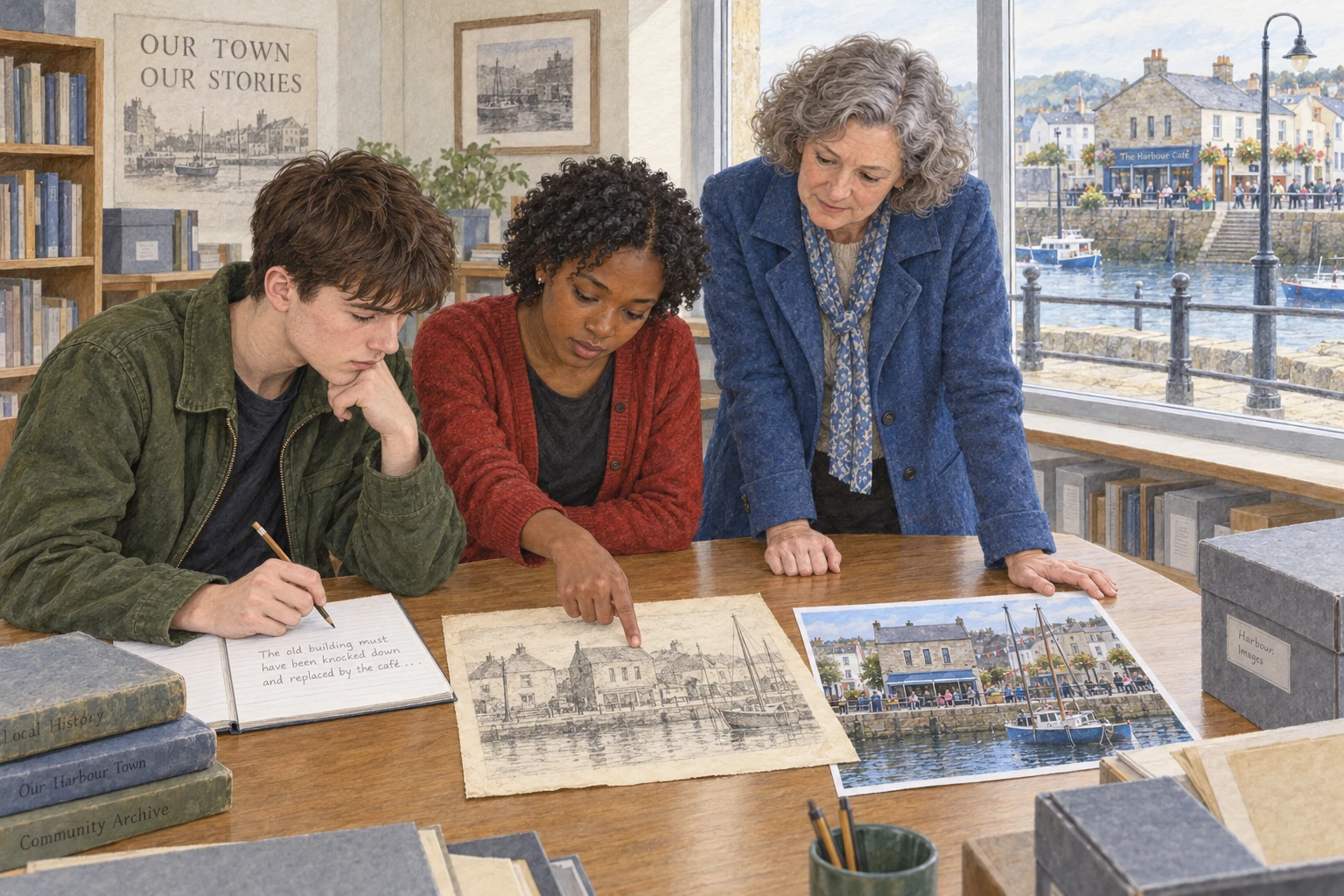
The modern photograph on the table shows a café in the same position. Toby thinks the old building must have been knocked down and replaced. He begins a caption for their school display, then stops when Christine points to three narrow windows. The sketch and the photograph have the same unusual window pattern, even though the front door and roof look different at first glance.
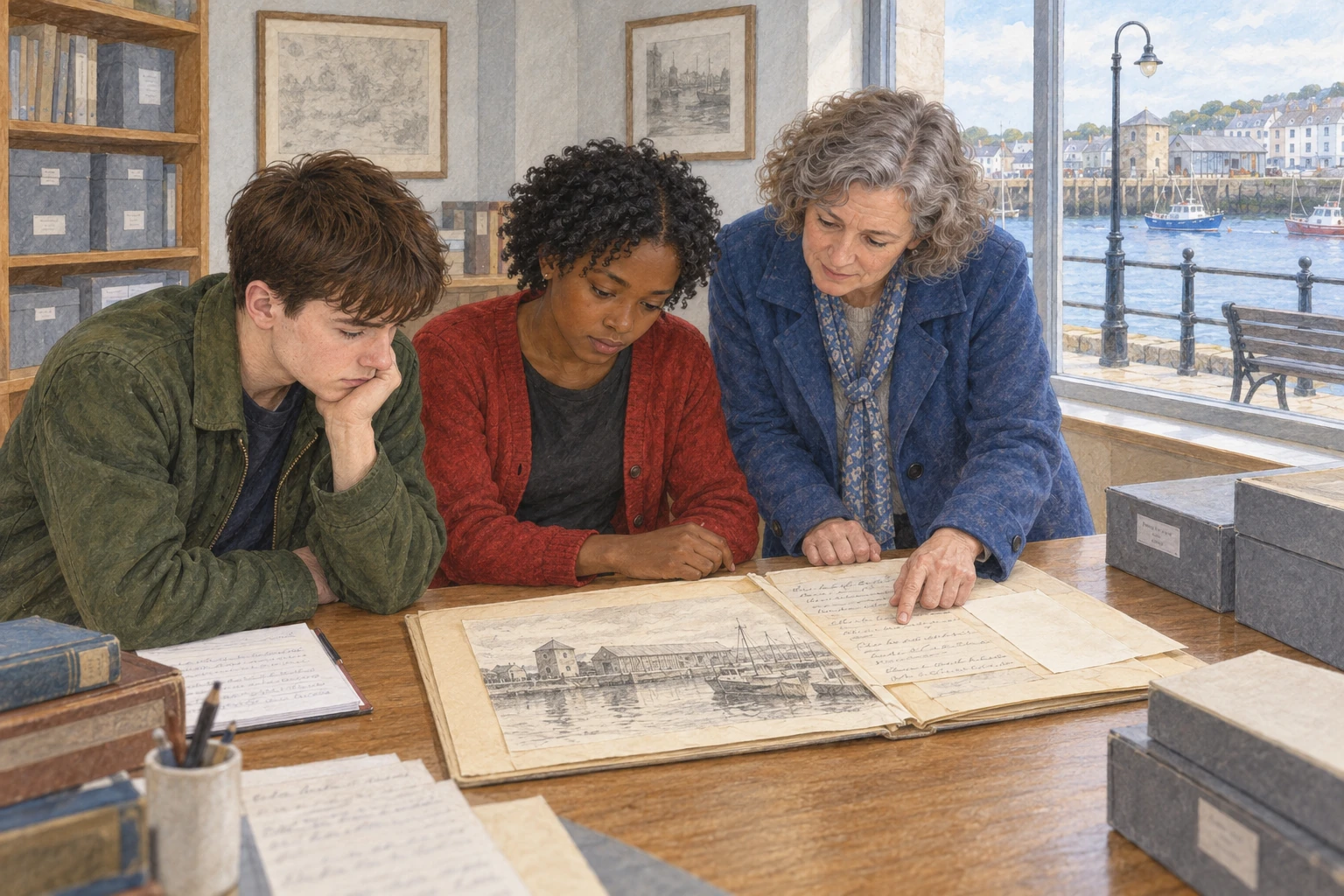
Mrs Ford helps them check the folder’s notes. The sketch was made many years before the café opened, but the date alone does not explain the building. There is no name for the artist. Toby feels disappointed. He had imagined a quick discovery that would fit neatly beneath the picture. Instead, their first clue has opened a question they cannot answer from the drawing alone.
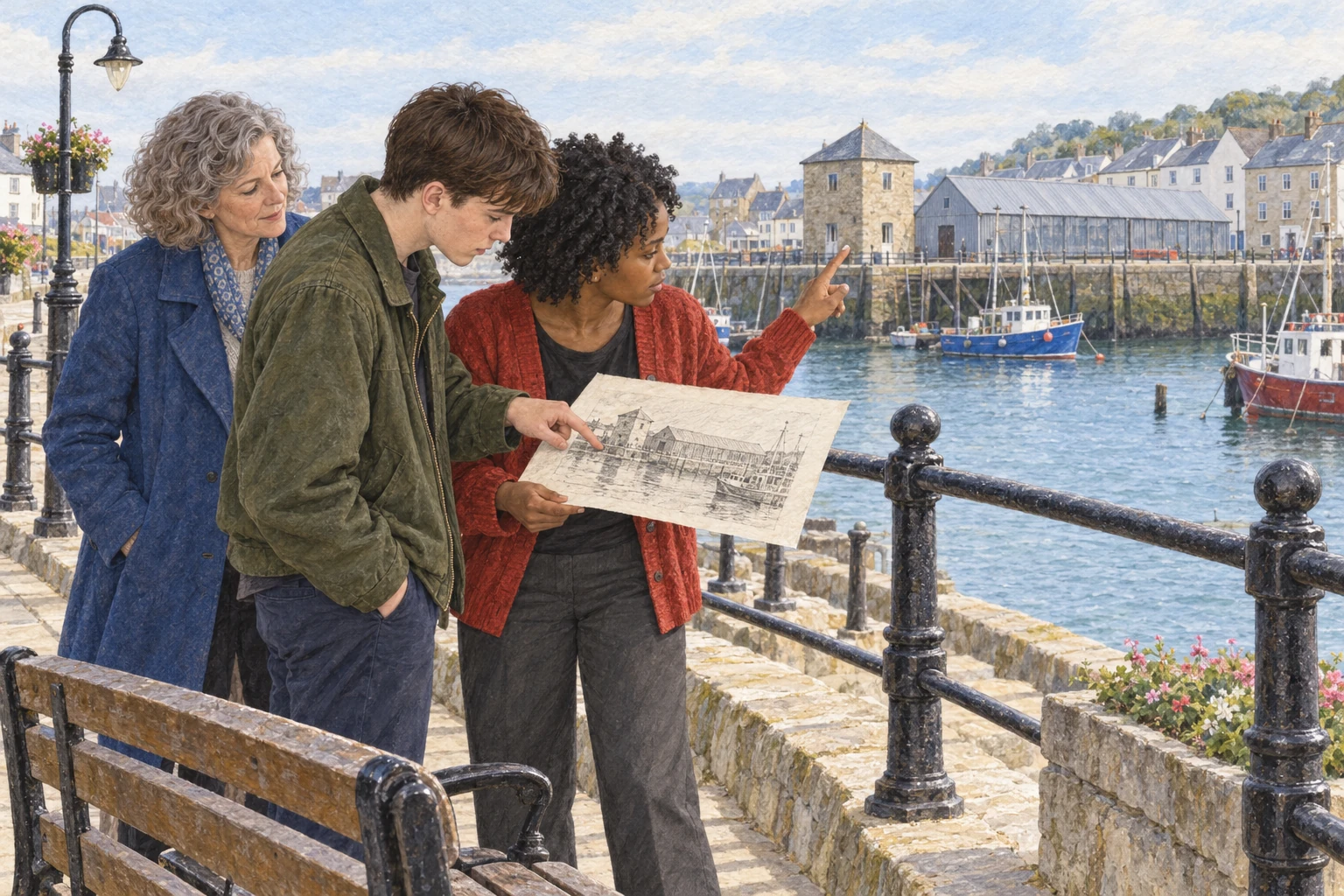
They arrange a supervised visit to the public harbour promenade. Staying behind the railing, they compare the sketch with the row of buildings across the path. Christine counts the windows while Toby checks the shape of the long shed. From a bench near the corner, the two buildings line up just as they do on the paper. They have found a possible viewpoint, although not yet the whole story.
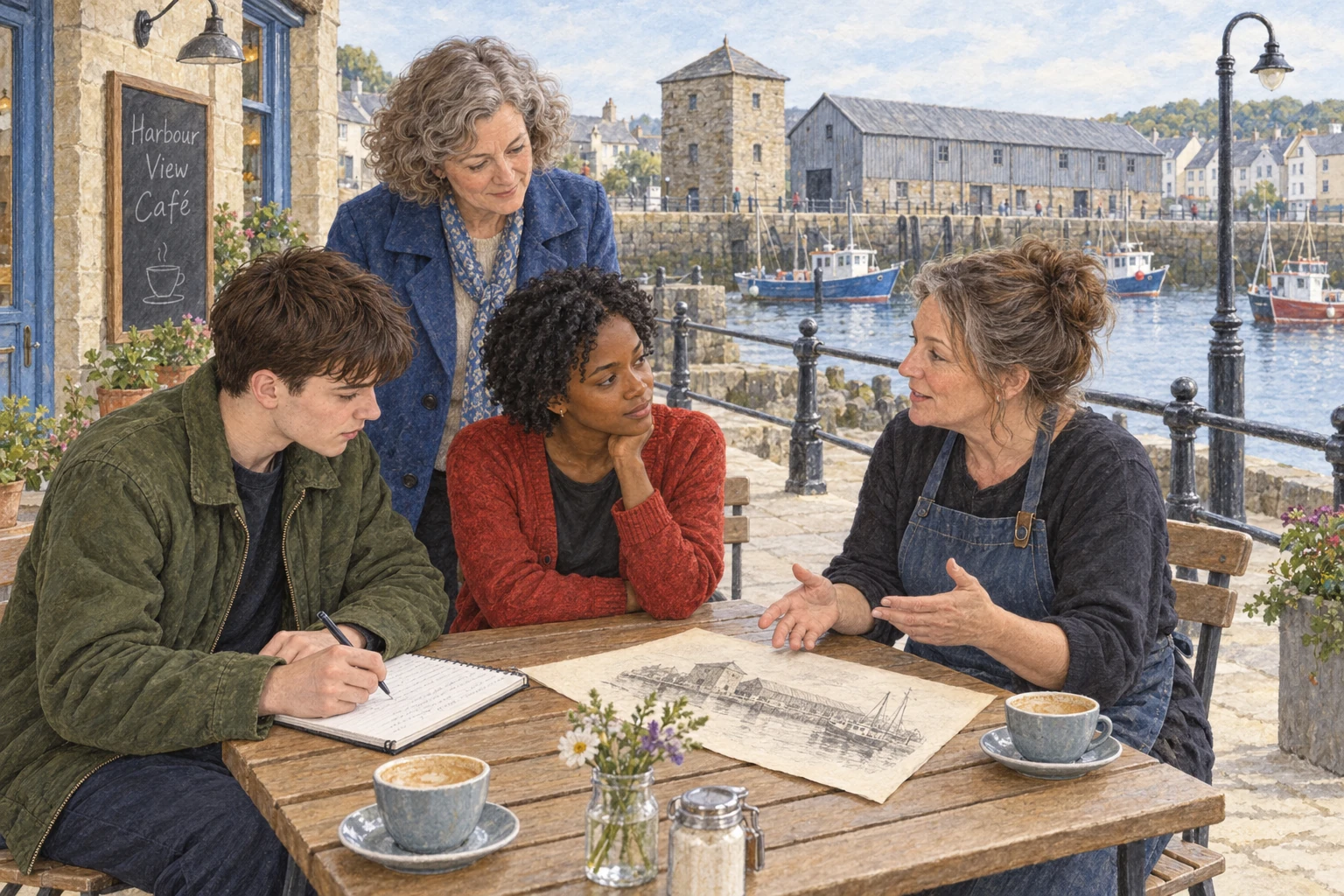
The café owner notices their sketch and asks about the project. She knows that the building once stored fishing equipment, but she is unsure when the roof changed. With Mrs Ford beside them, Toby writes down what she says as a memory to check later. He does not turn every sentence into a fact simply because someone who knows the café has kindly offered to help them.
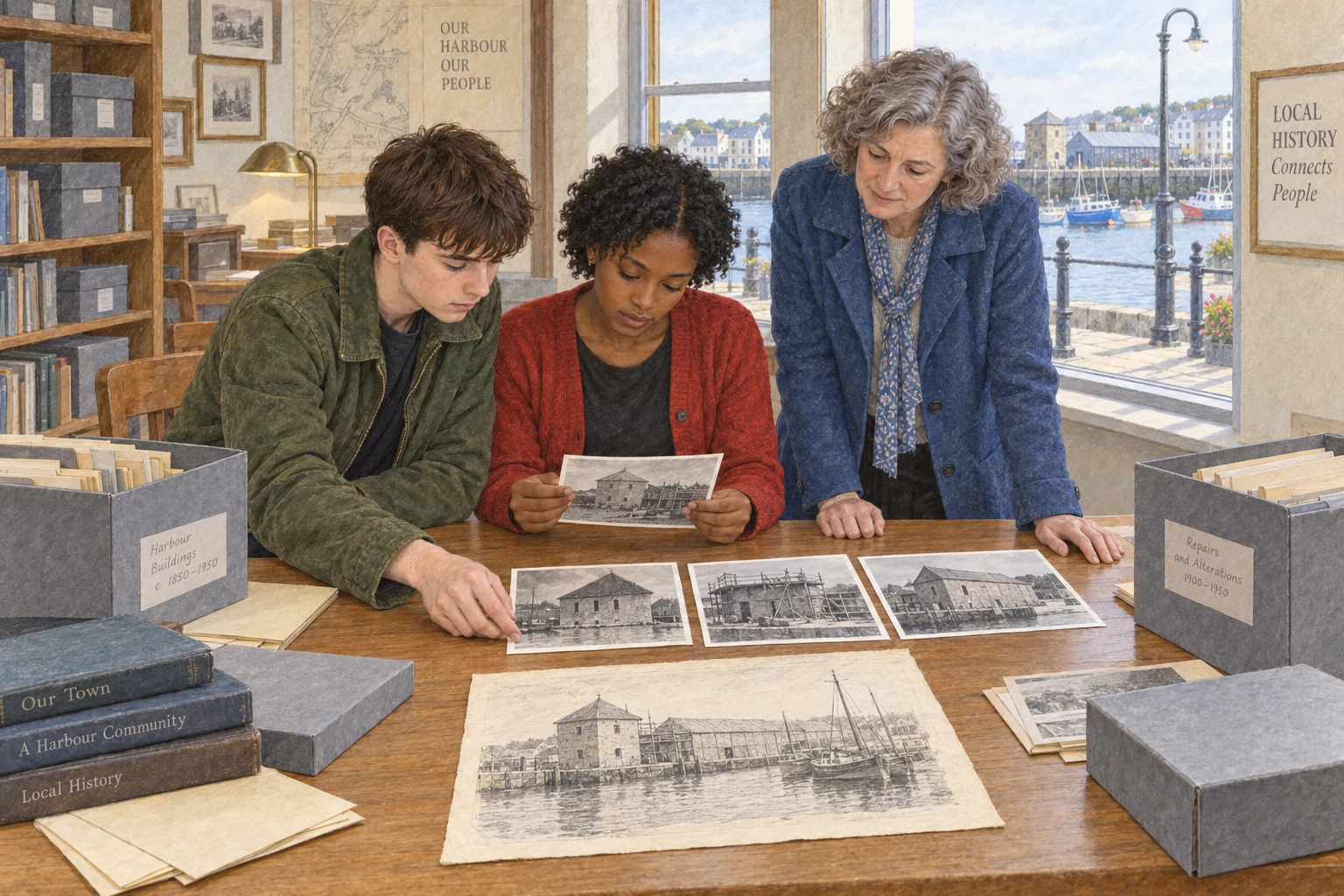
Back at the archive, Christine finds a dated photograph in another folder. It shows the square building with its old roof and three narrow windows. A later photograph shows the same walls during repairs. The building was altered rather than entirely replaced. Toby lays the pictures in order and sees how his first caption would have missed the part that stayed through all the changes.
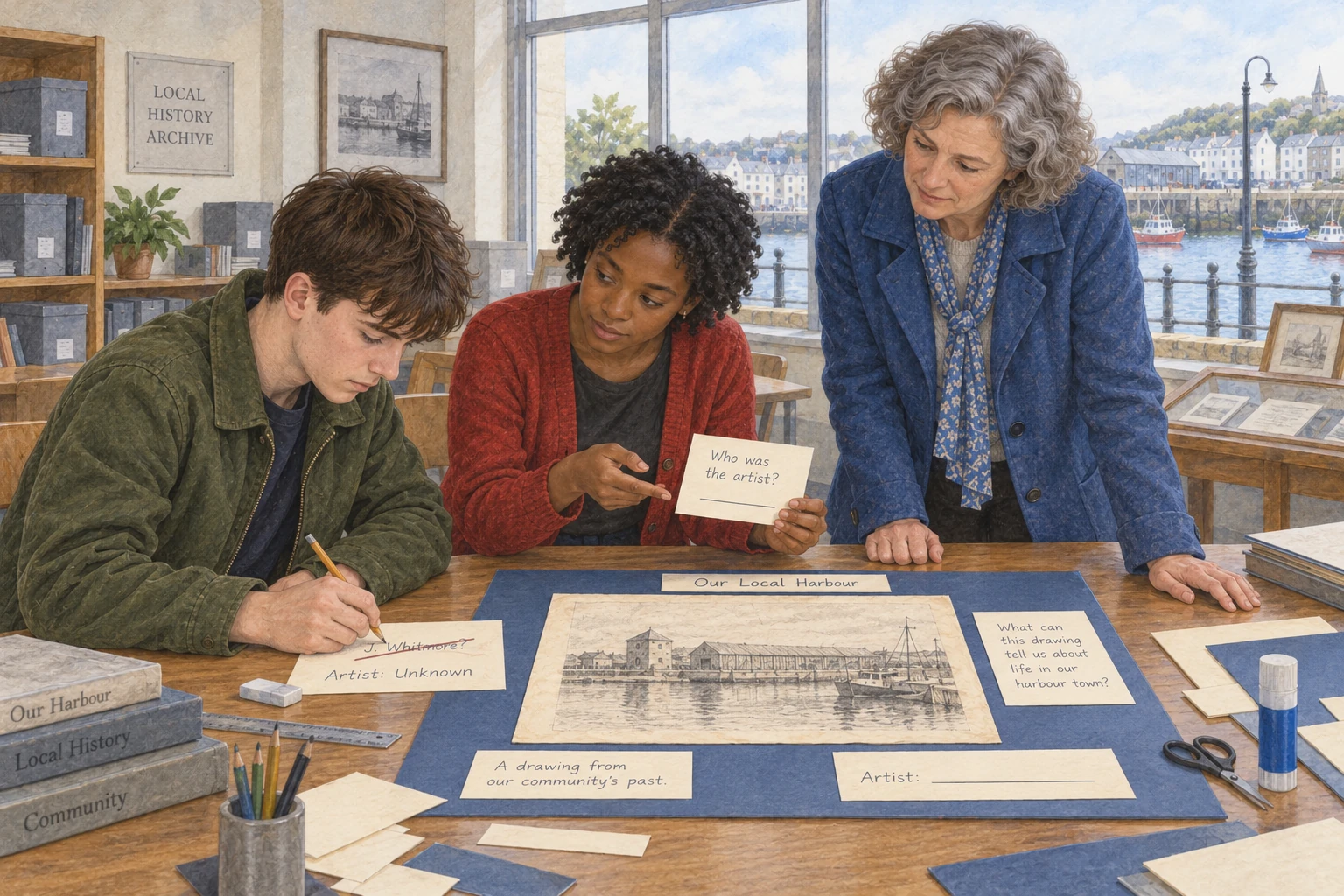
They still cannot identify the sketch’s artist. Christine suggests leaving a space for that question on the display. Toby worries that it will make their work look unfinished. Mrs Ford asks what a visitor should be able to trust. He crosses out his guessed name and writes that the artist is unknown. The blank is an honest part of the building’s story, not a reason to hide the drawing.
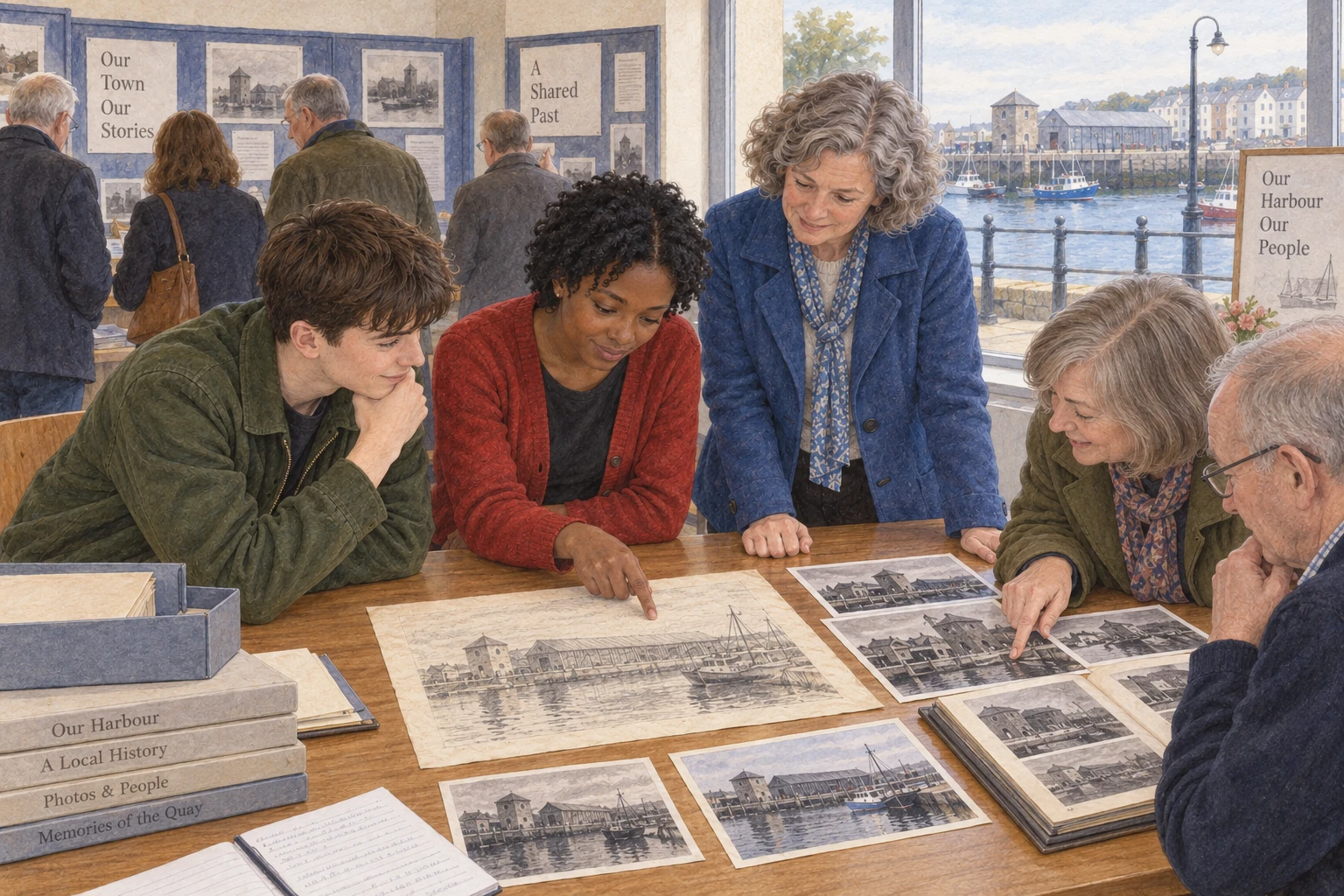
At the community history evening, visitors compare the sketch with the photographs. One person recognises the window pattern before reading their caption. Toby enjoys watching that small discovery happen again. They explain which details the pictures support and which came from memories. A visitor promises to look through a family album, but they leave the artist’s name open until there is something they can actually check.
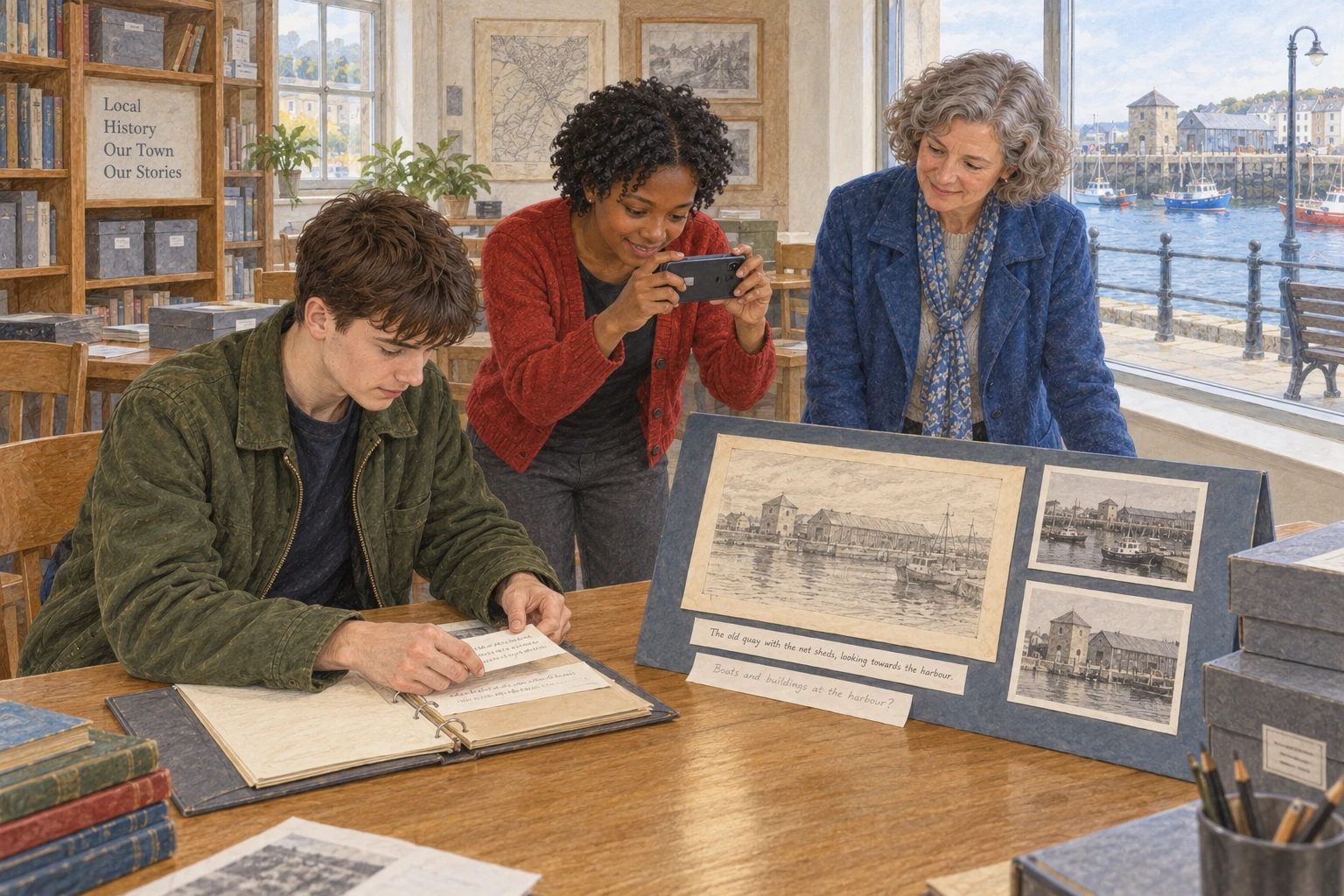
Christine photographs their finished display for the café owner. Toby keeps a copy of his first caption underneath the final one in their project folder. The old sketch has not given them every answer. It has taught them to look for what remains, listen carefully and leave room for the next clue. He thinks that makes it more interesting than the quick discovery he had first hoped to find.