The Open Mic
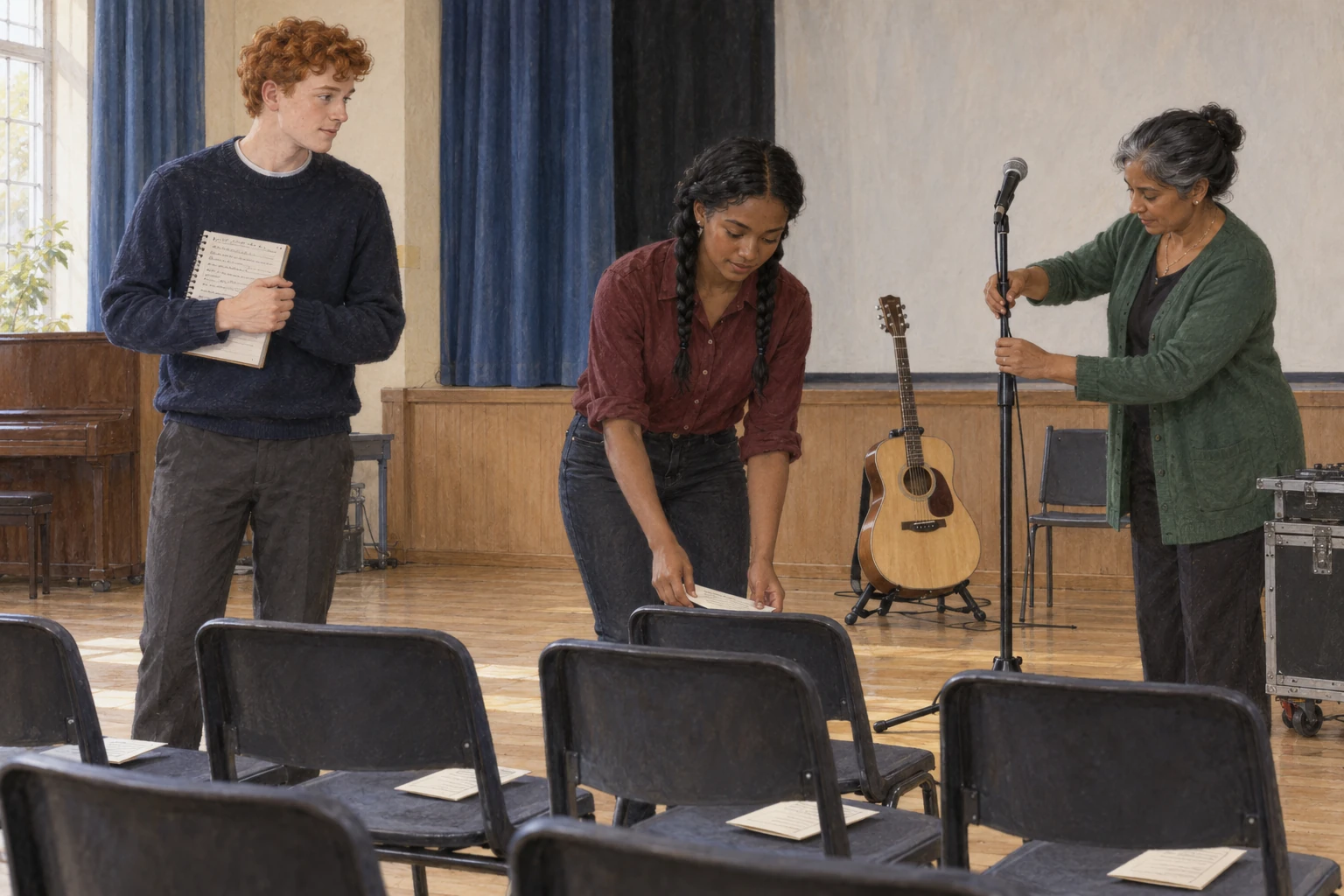
School Readers · Level 20Graham opens his notebook in the empty school hall. He has written a short poem for the afternoon’s open-mic event, but the microphone makes the front of the room look suddenly large. Elizabeth checks the paper programme with Mrs Lane. There will be music, spoken pieces and a few pauses between them. Graham’s name is halfway down the page. He wishes it looked as small on the stage as it does on the paper.
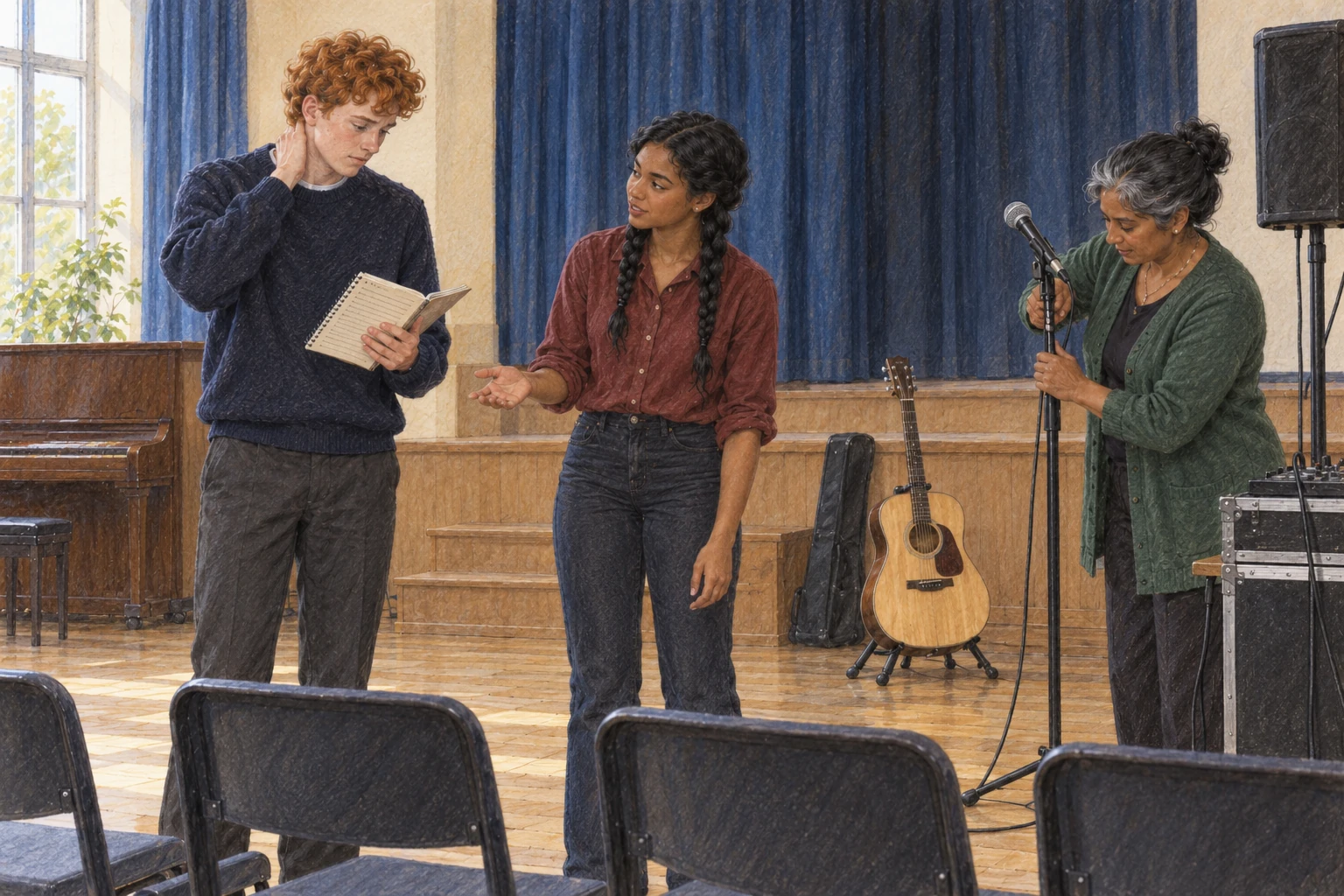
During the sound check, he reads the opening line too quickly. His voice comes back through the speaker, unfamiliar and louder than he expects. He stops before the next sentence. Elizabeth asks whether he would like another try without the microphone first. Mrs Lane checks the equipment while they step to the side. The problem is not that Graham has forgotten his words; hearing them differently has unsettled him.
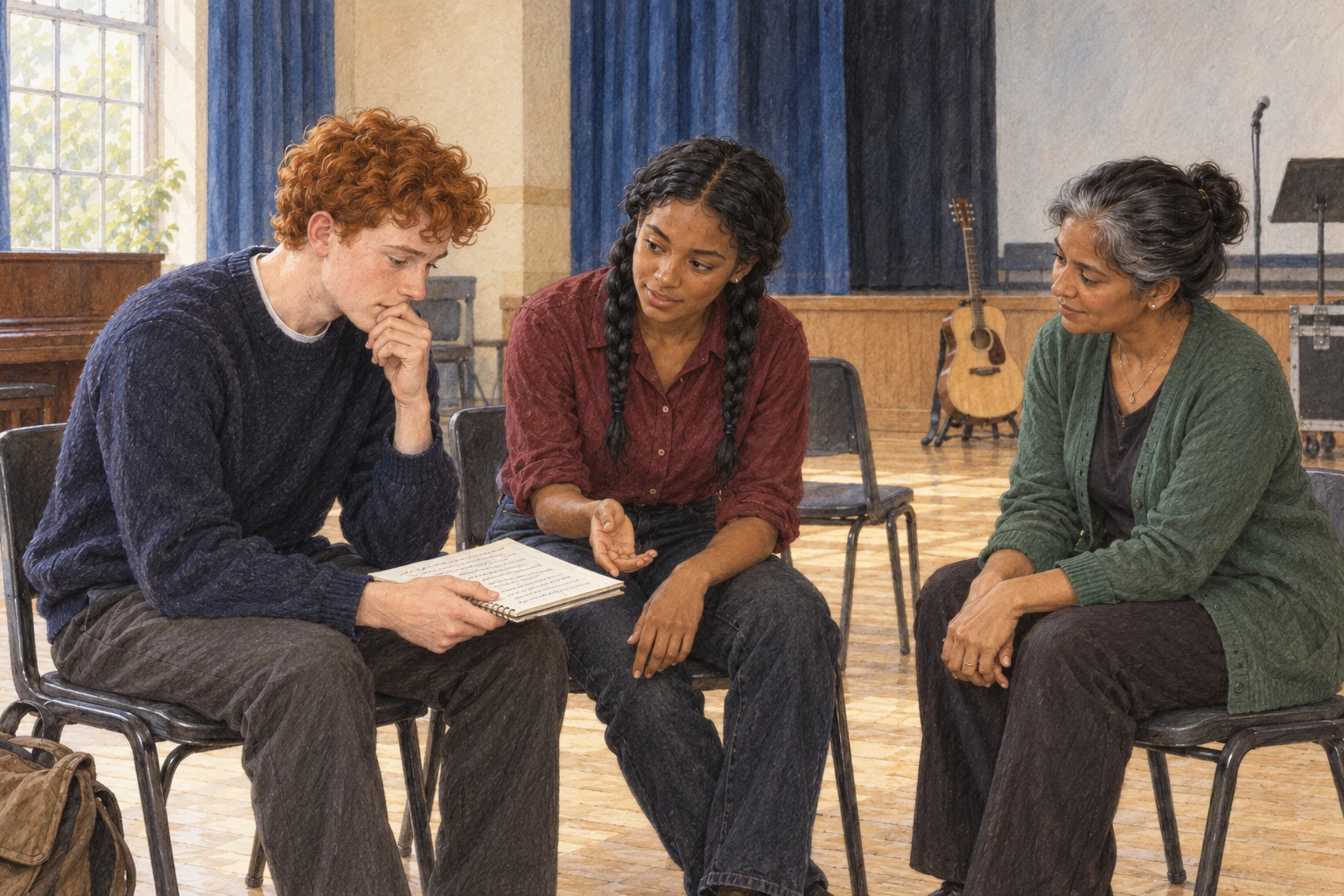
He tells Elizabeth he might withdraw his name. She says that is his choice and asks whether he wants to talk through other options. They could read together, he could share a shorter section, or someone else could read with his agreement. Graham looks at the poem’s ending, the part he most wants people to hear. He does not have to choose between a perfect solo performance and sharing nothing at all.
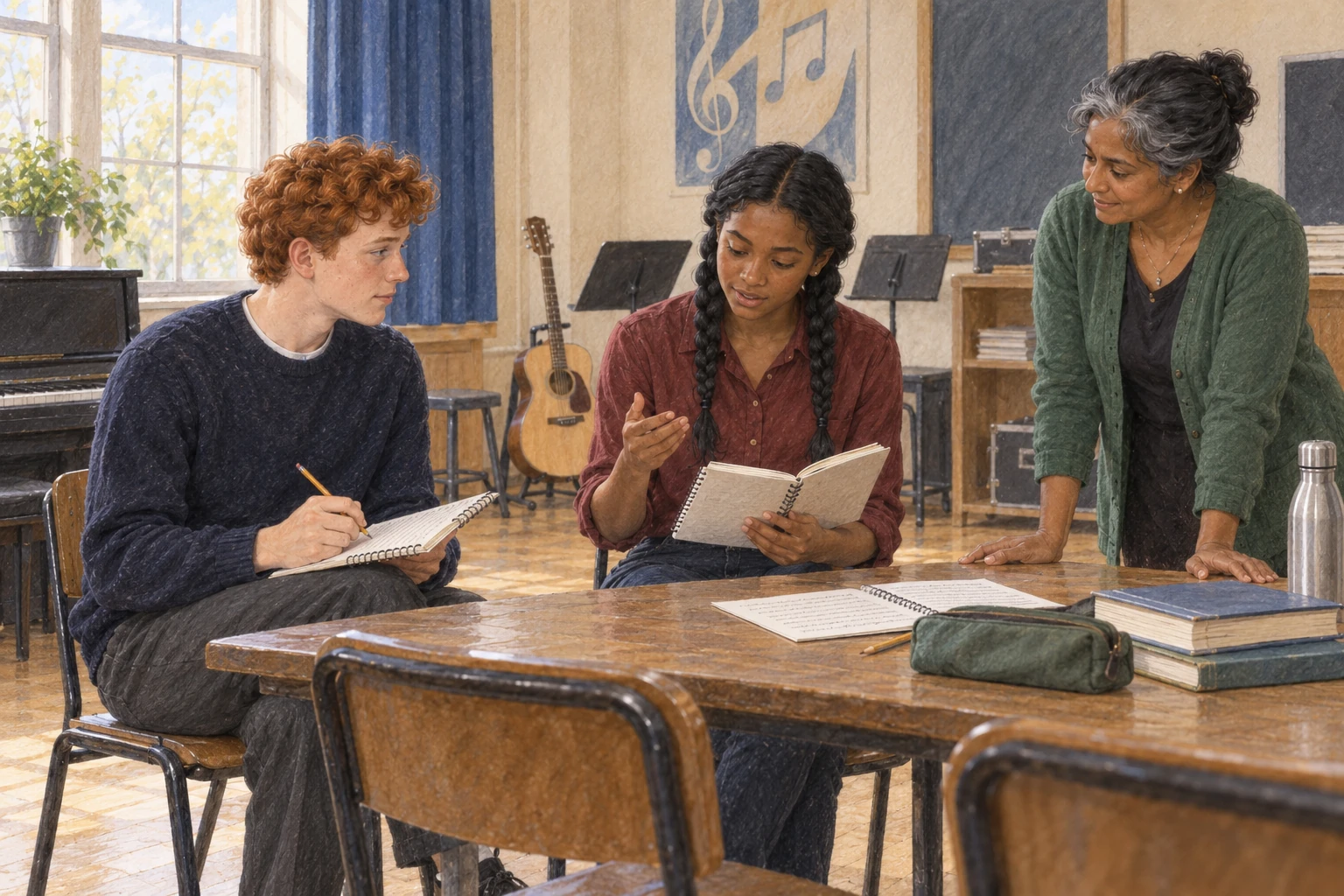
They try the poem as a conversation. Elizabeth reads a question, and Graham answers with the next lines. The piece describes a familiar street at different times of day. Their two voices give the questions a clear shape. Graham marks the shared lines in pencil, then asks Elizabeth to pause after each one. The quiet spaces make it easier for him to find his place and let the meaning settle.
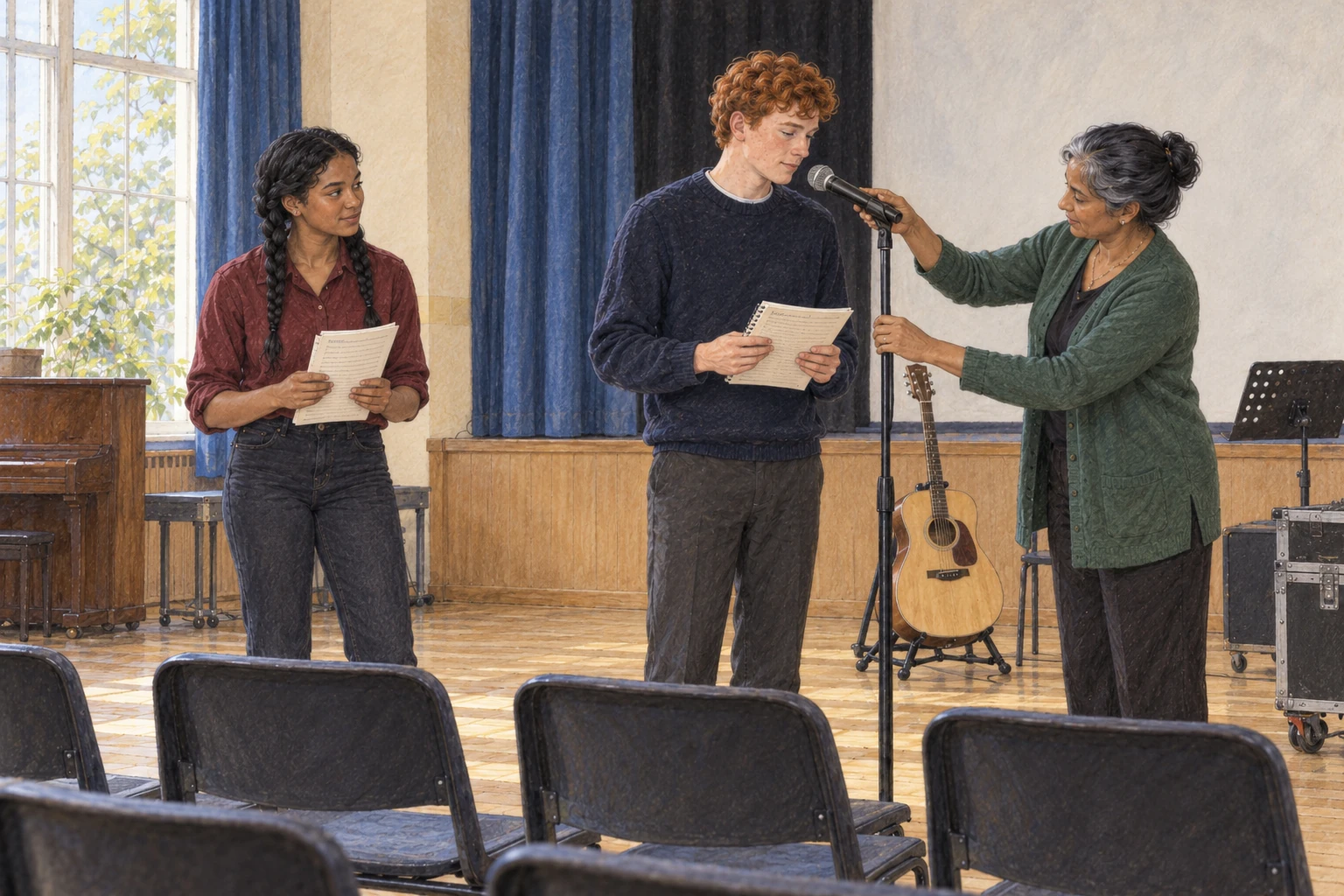
Mrs Lane updates the programme and checks that both students are happy with the plan. At the next sound check, Graham stands where he feels comfortable while she adjusts the microphone. He reads more slowly. There is a brief silence after the first question, but this time he does not hurry to fill it. Elizabeth looks towards him, giving the agreed signal for his answer to begin.
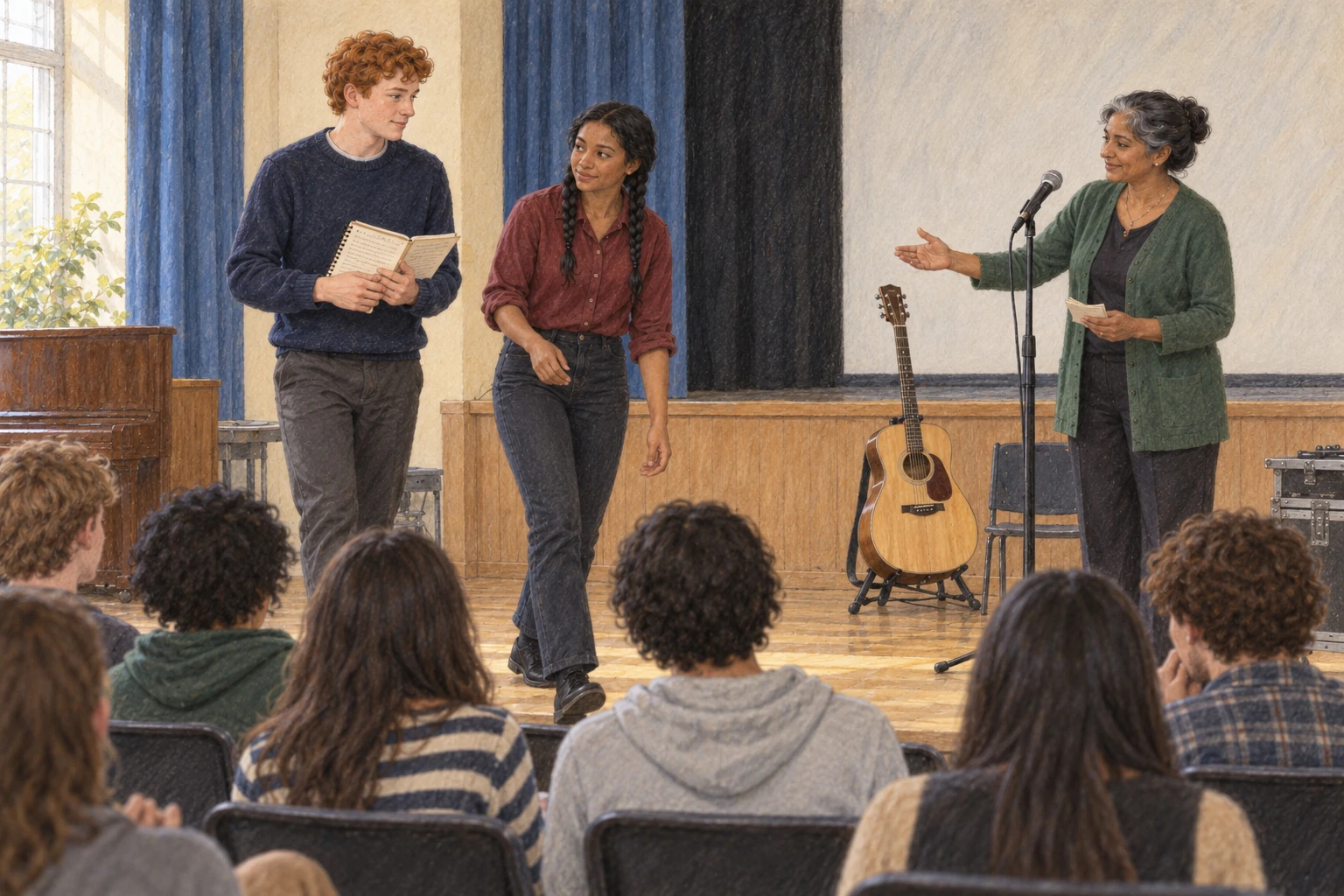
When the audience arrives, Graham can hear chairs moving and people talking. He keeps the notebook open at the right page. Just before their turn, Elizabeth asks whether he still wants to go ahead. He does. Mrs Lane introduces the piece as their shared reading, and they walk to the front together. The plan has changed, but the words Graham wanted to share are still there.
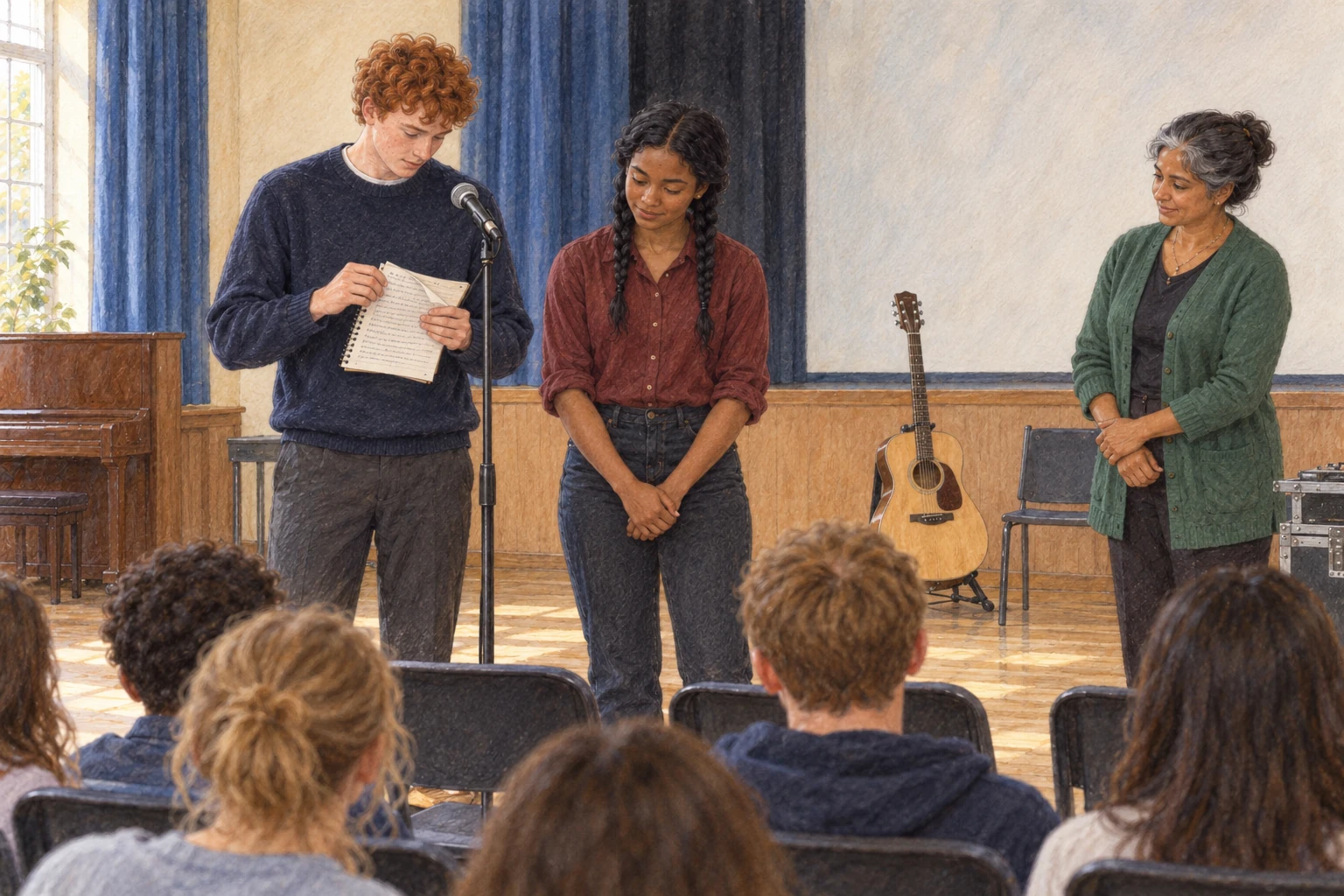
Halfway through, a page corner folds over the next line. Graham pauses and opens it flat. The audience waits. Elizabeth does not rush to supply the words, though they agreed she could help if he asked. He finds the sentence and continues. The small interruption feels much shorter than the trouble he had imagined before the event, when every possible pause seemed like proof that he would fail.
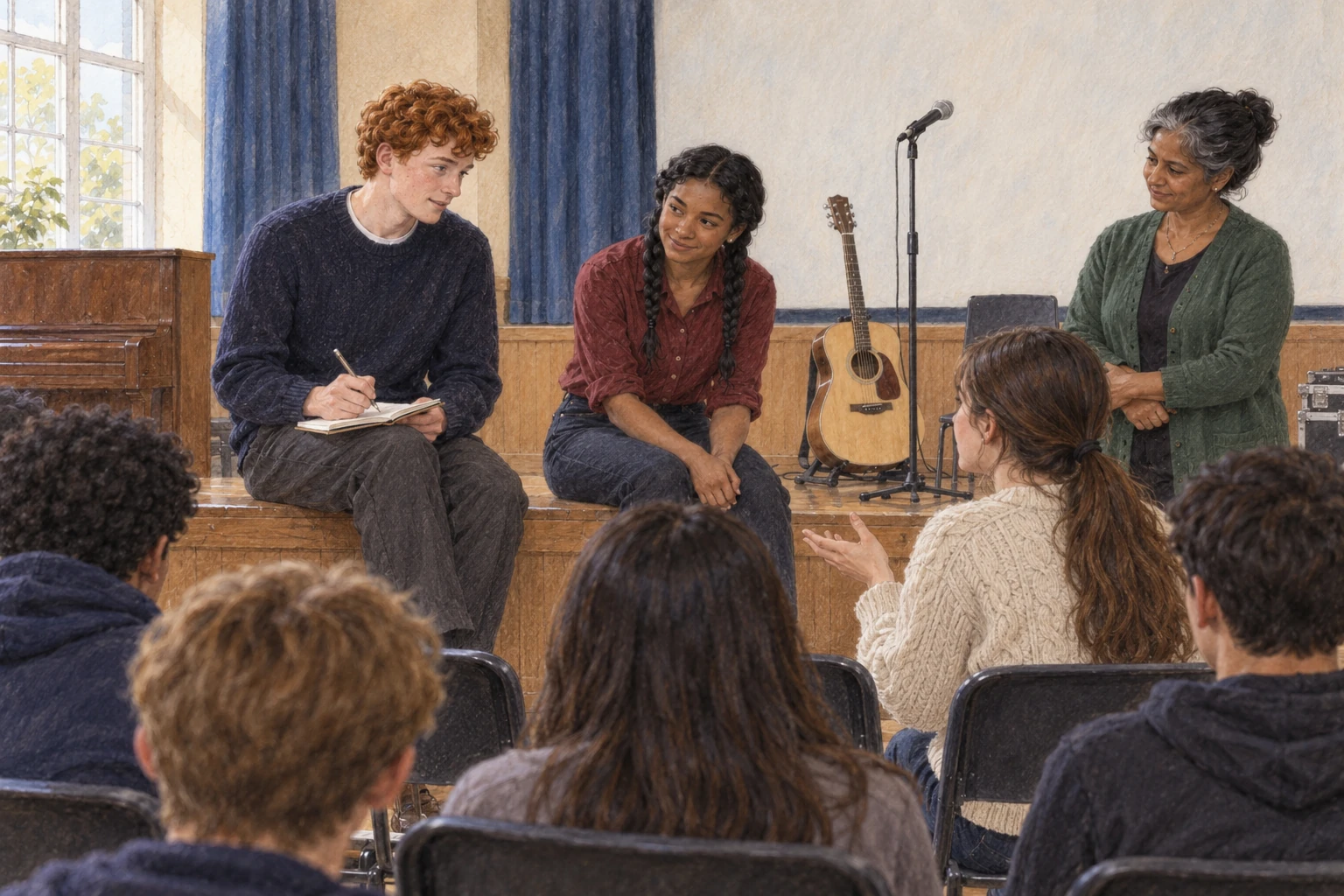
Afterwards, a student asks about the poem’s final image of a shop window reflecting the evening sky. Graham explains where the idea came from. Nobody asks why he needed to flatten a page. Elizabeth smiles when he notices that. The audience has been listening to the piece rather than measuring every movement he made while reading it. He writes down the student’s question to consider when he revises the poem.
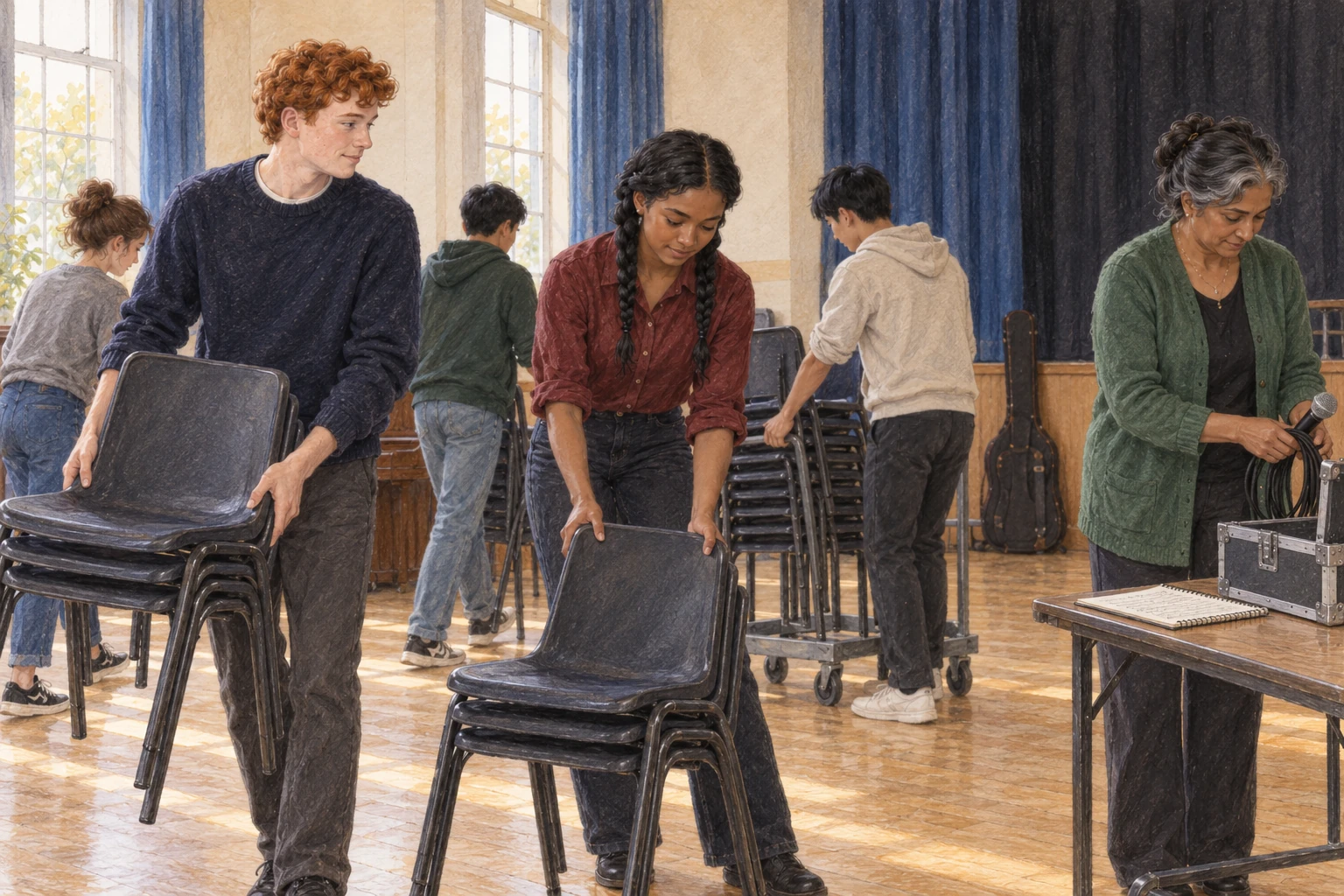
At the end, they stack chairs with the group while Mrs Lane puts away the microphone. Graham keeps the pencilled pauses in his notebook. Next time he might read alone, or he might choose another shared piece. He has no promise to make about that today. What matters is that his words reached someone, through a plan he helped choose and a voice that had time to become his own again.