The Parcel with No Name
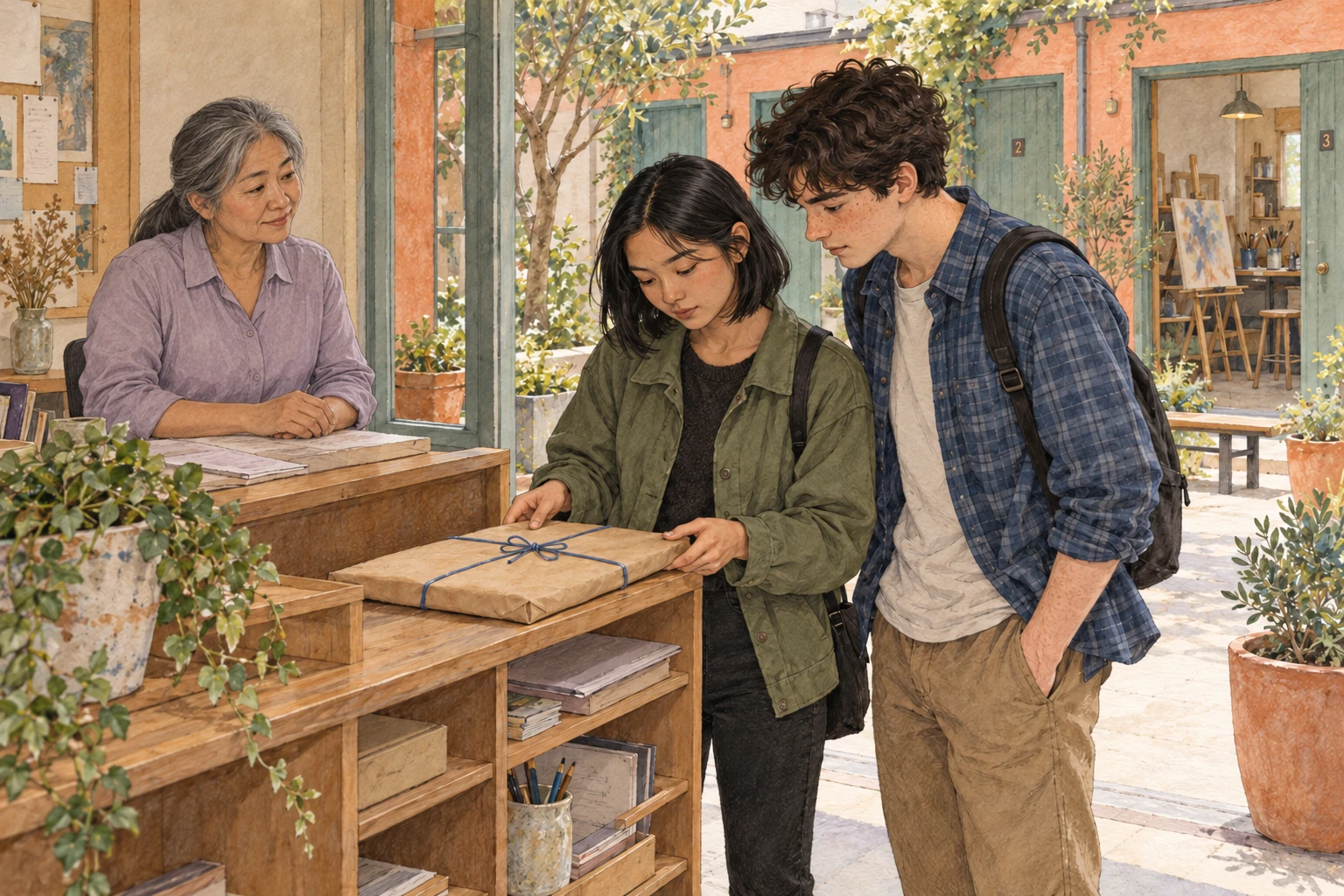
School Readers · Level 21The parcel has an address, a studio number and no name. Mina turns it over without opening it. She is helping Rory at the community centre reception, where deliveries are left on a shelf. Most are collected before lunch. This flat brown parcel has waited three days. Someone has tied it with blue string, and one corner of the label has been rubbed almost white.
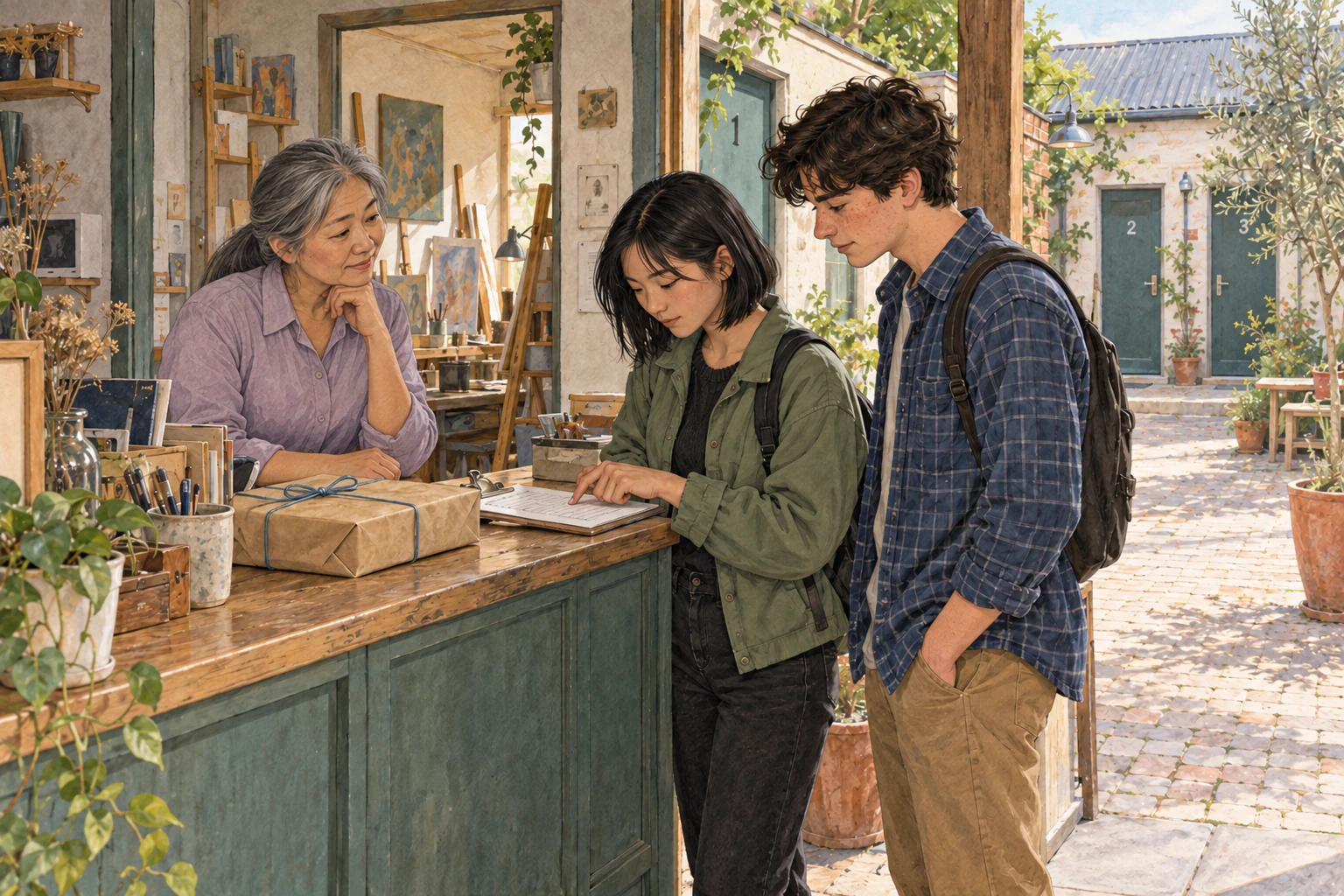
“Studio nine,” Rory reads. Mina checks the list. There are only eight studios now. The centre joined two small rooms last summer, and some numbers changed. “We could open it and look for a note,” Rory says. Mina shakes her head. “It’s someone else’s.” She places it back on the shelf and asks the centre manager how they should deal with a delivery that cannot be matched to a name.
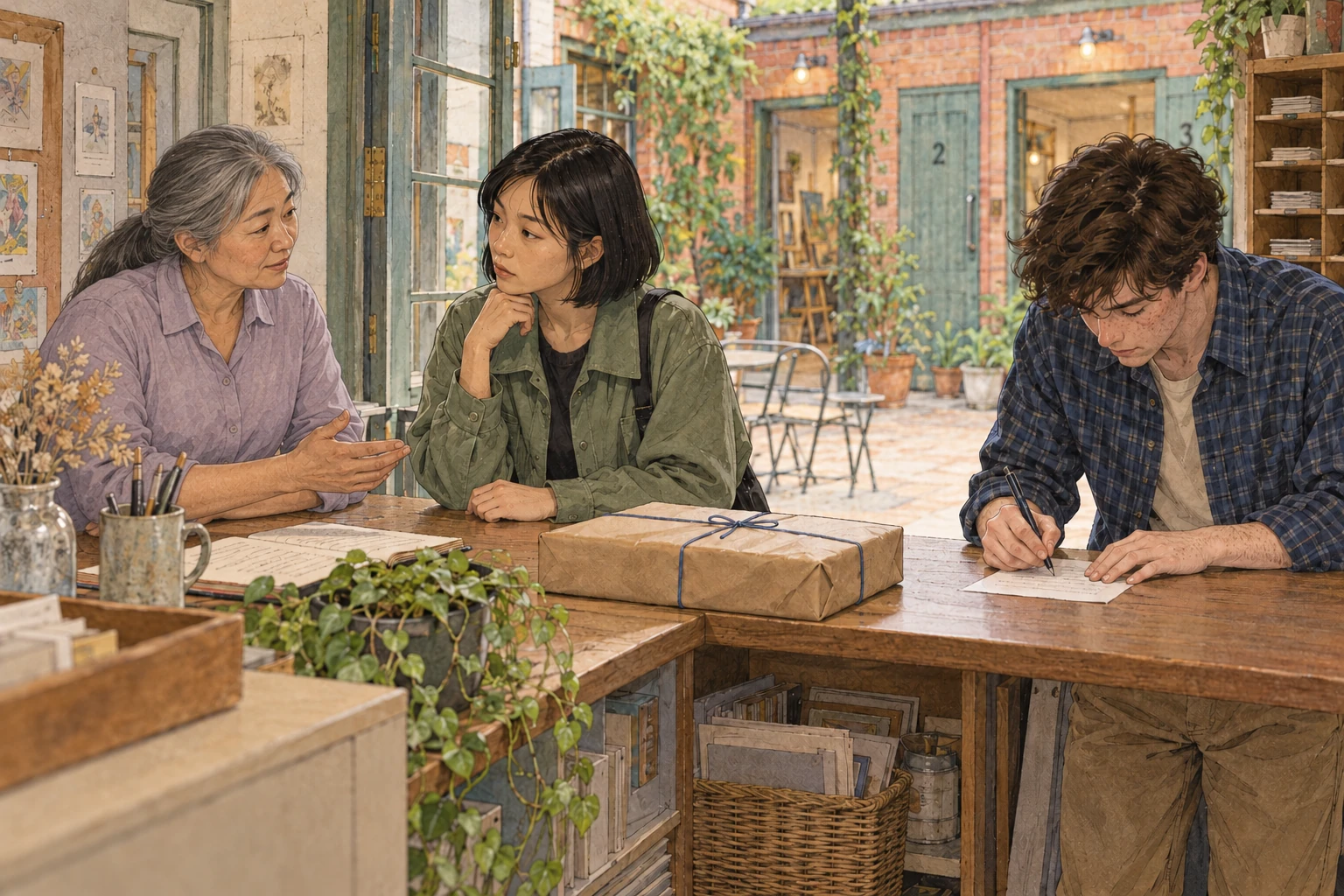
The manager checks the delivery record. It was brought by hand, so there is no company to contact. She asks them to make a notice using the details on the wrapper, but not to post the full address online. Rory draws a little parcel shape for the centre board. Mina adds the date it arrived and asks the owner to speak to reception. By afternoon, three people have looked at it.
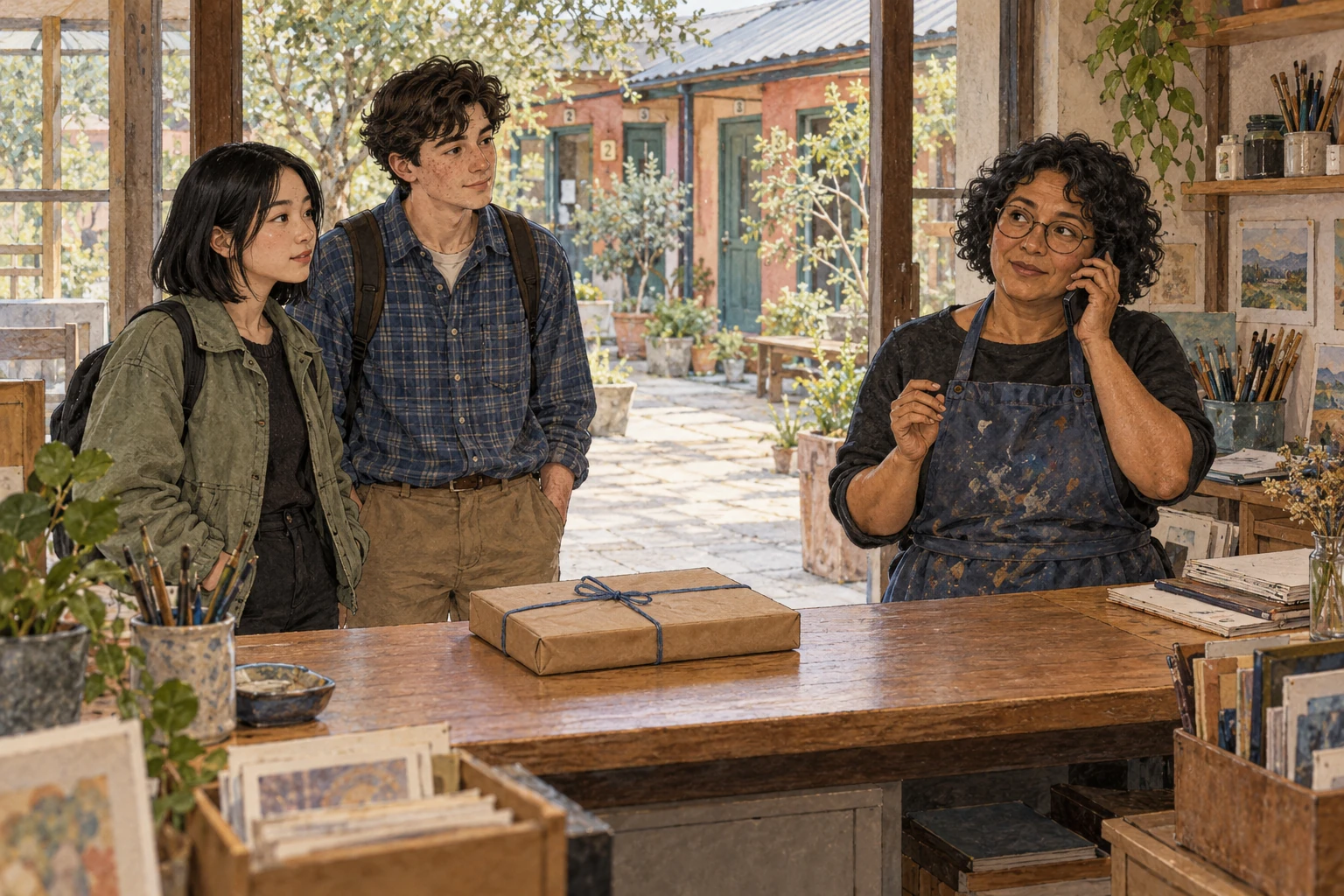
One is Jo, an artist who rents studio six. “I used to be in nine,” she says. “But I’m not expecting anything.” Mina describes the blue string. Jo puts down her coffee. She has seen string like that around her aunt’s bundles of drawings. Her aunt recently helped clear a family house. Jo takes out her phone and calls her, while Mina and Rory wait behind the desk.
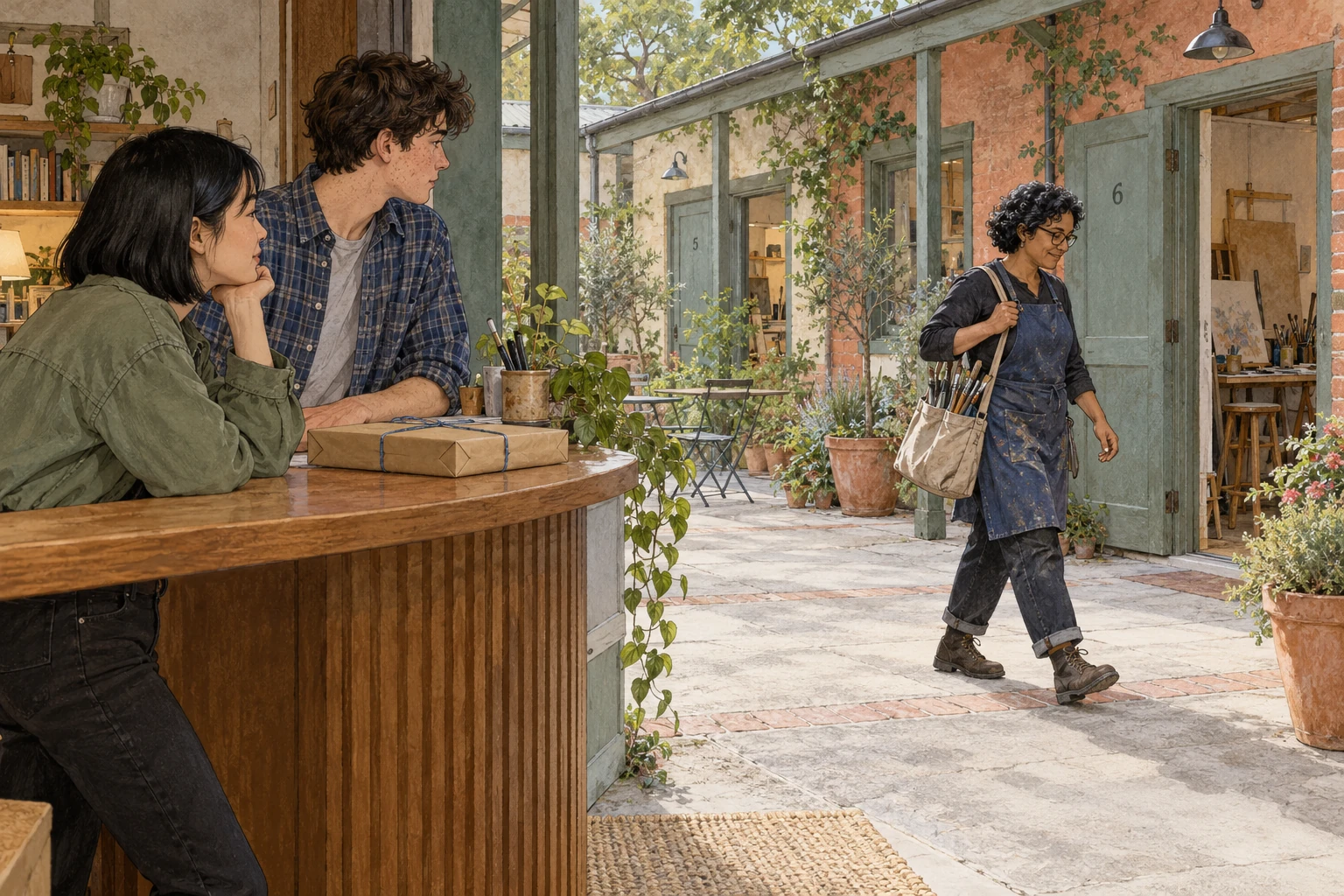
The call goes to a recorded message. Jo leaves her number, then asks if she can see the parcel. The manager checks the earlier studio list and Jo’s details. They agree to keep it at reception until her aunt replies. “It probably is mine,” Jo says. “But probably can wait until after my class.” She heads across the courtyard with a bag of brushes bumping against her leg.
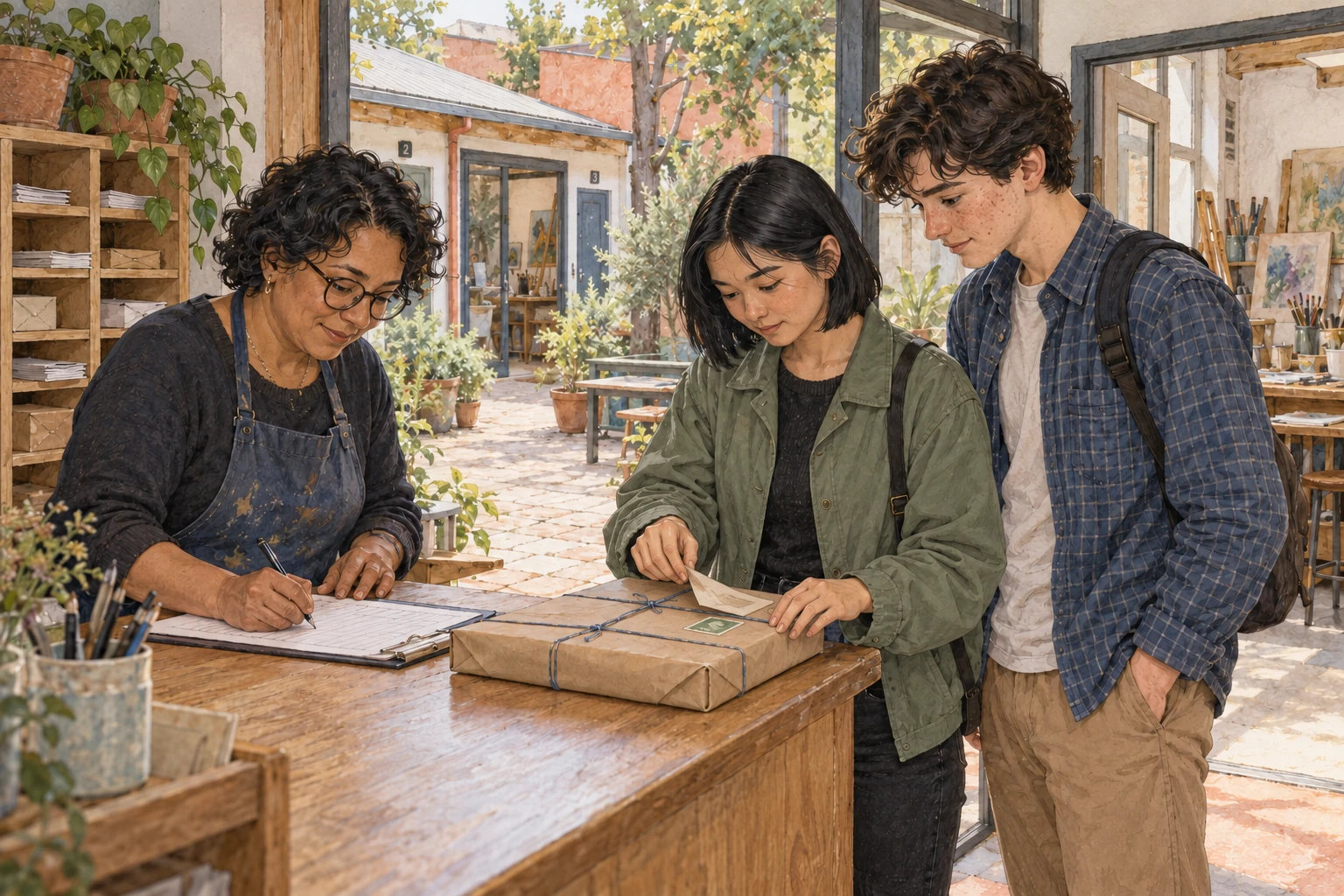
At four, Jo returns with a message from her aunt. The parcel contains drawings, she says, and there is a little green stamp beneath the label. Mina lifts the loose paper flap without tearing it. There is the stamp. The manager records the collection, and Jo signs for the parcel. Rory offers her scissors. “Now you can open it,” he says. Jo laughs and invites them to look.
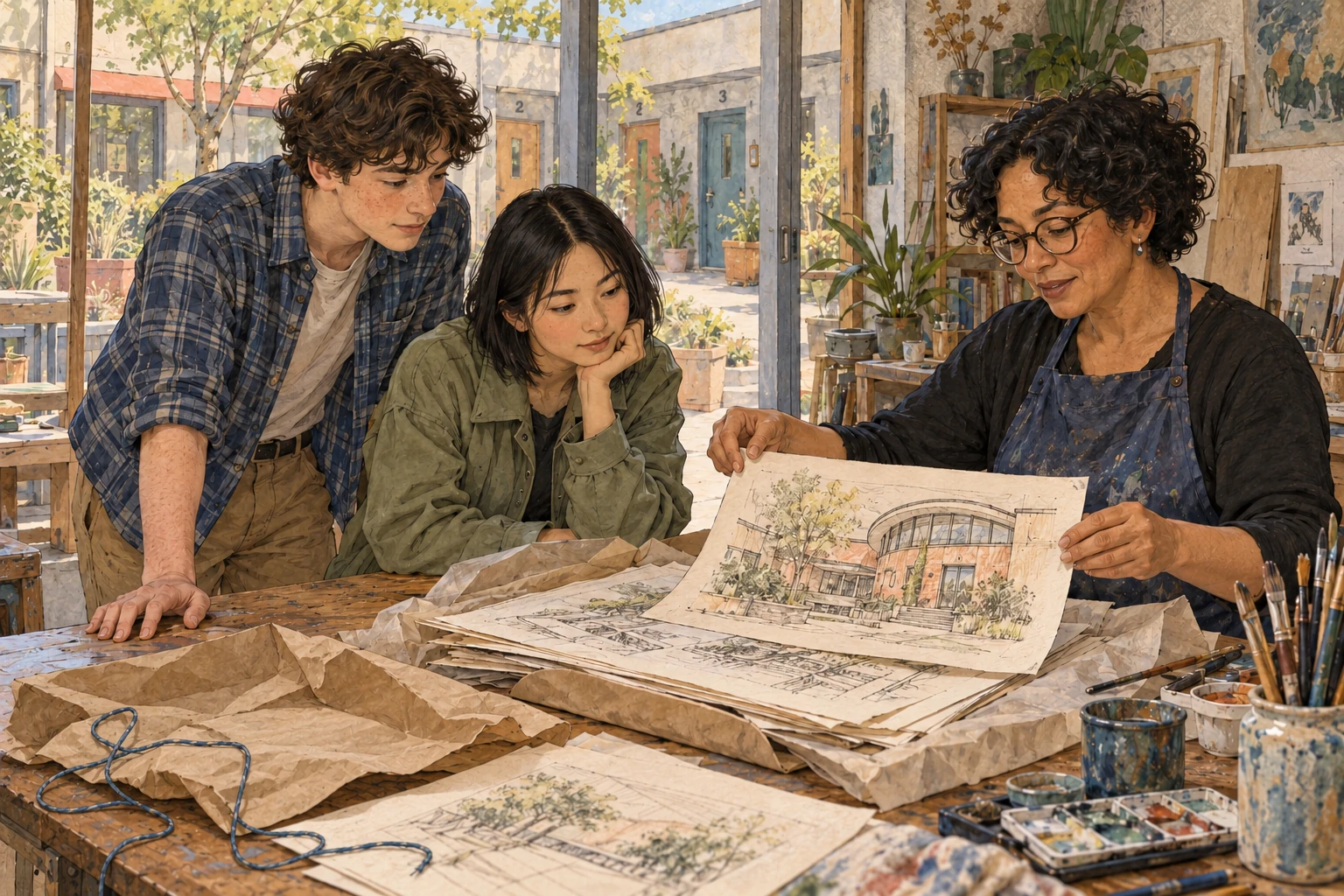
Inside are drawings Jo made when she was fifteen. There are buildings, shoes, a half-finished bicycle and the same sleeping cat on six different pages. “He was the only model who stayed still,” she says. Mina notices a careful drawing of the community centre. Its front steps are different, but the curved window is the same. Jo had attended an art club here long before she rented a studio.
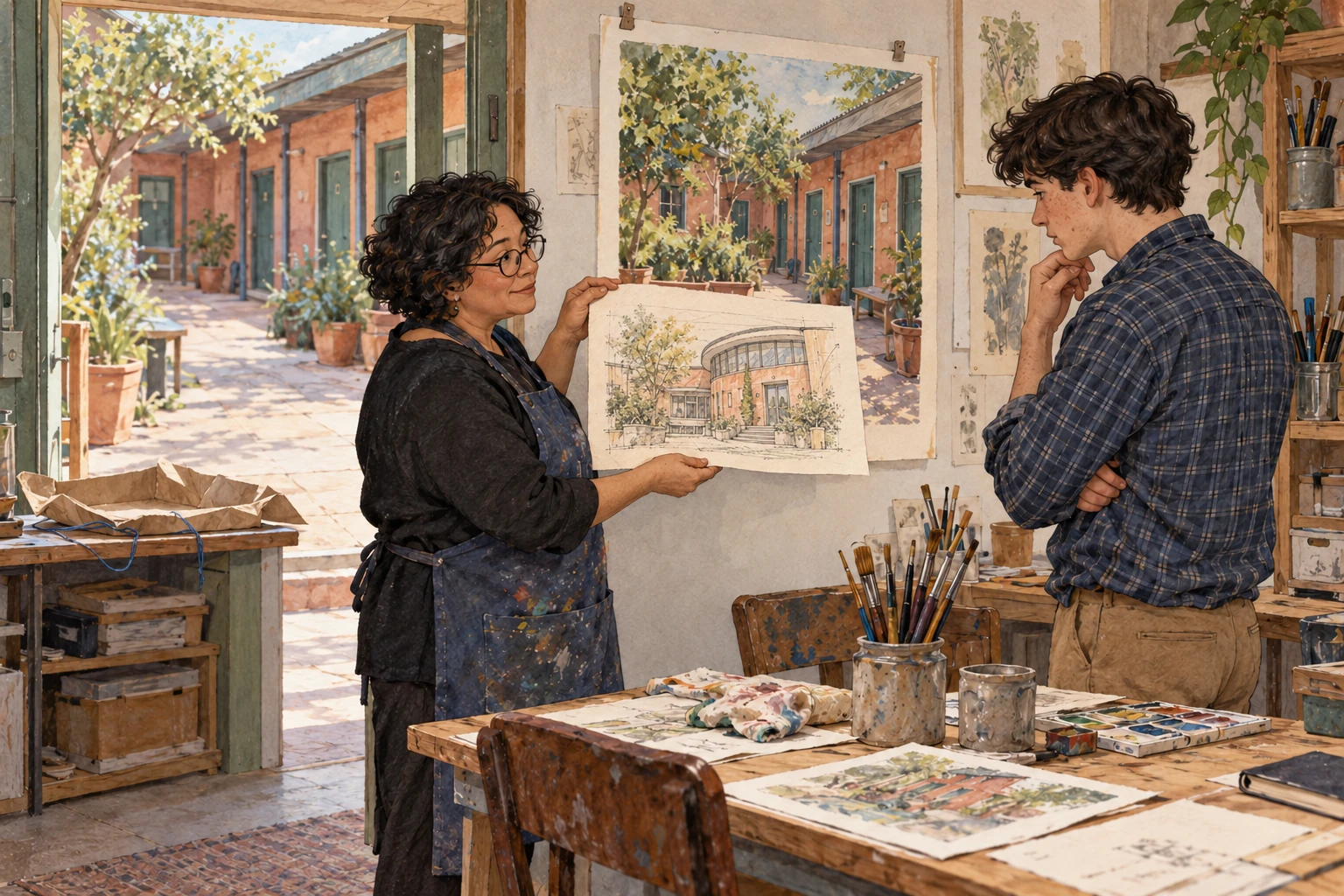
Jo chooses that drawing for a small display beside a recent painting of the courtyard. She writes the dates underneath. Rory studies the early page, where one wall leans at an impossible angle. “Would you fix that now?” “Of course,” Jo says. “But I’m not fixing it on this one.” She shows him the faint pencil marks where she tried to get the window right. “I remember working that bit out.”
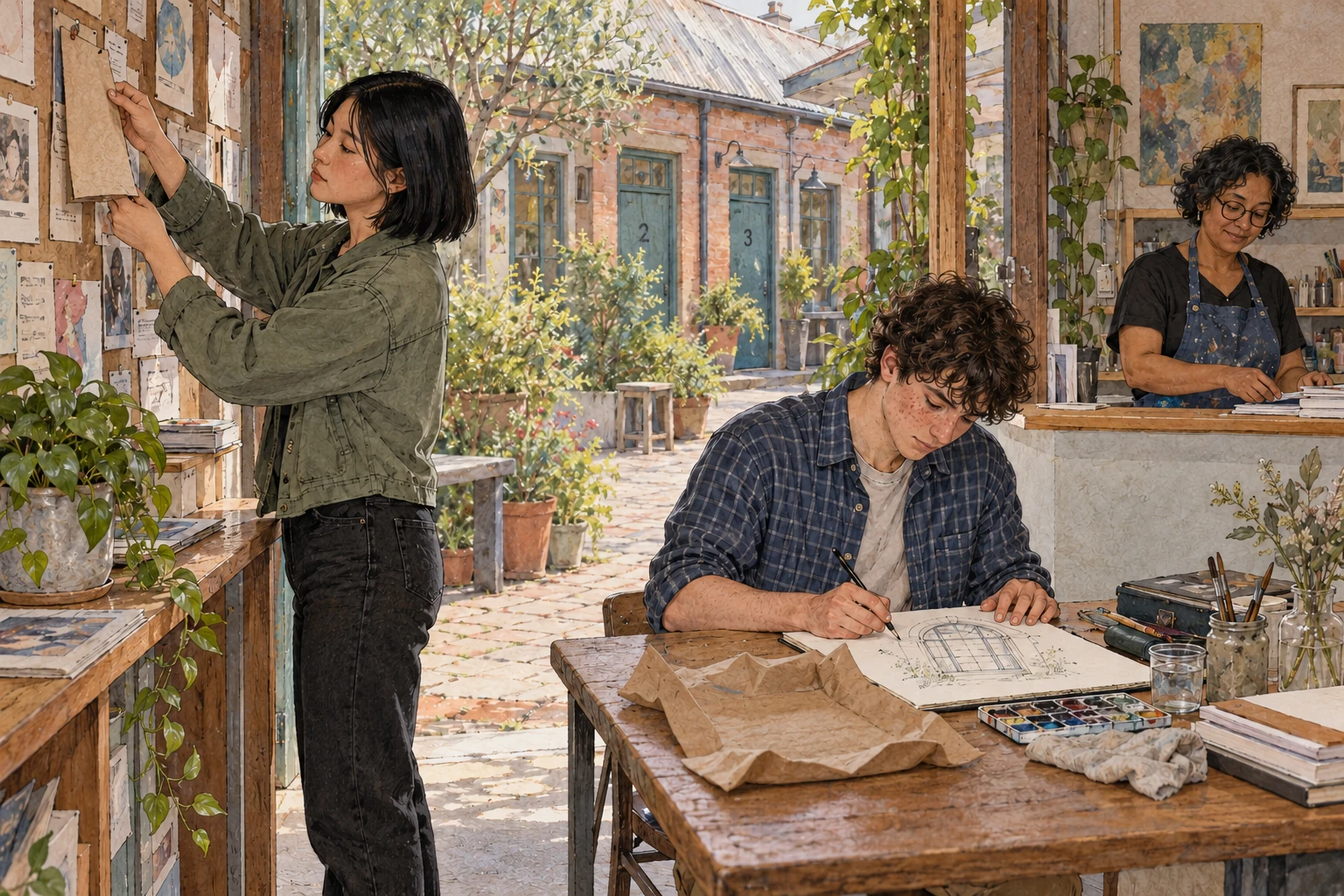
Mina takes down the parcel notice. Jo asks to keep Rory’s little sketch of the package, so he cuts it free from the words. The blue string goes into Jo’s pocket. Before leaving, she checks the address her aunt has saved and changes the studio number. Across the courtyard, Rory looks at the two drawings in the display. Then he finds a blank sheet and starts with the curved window.